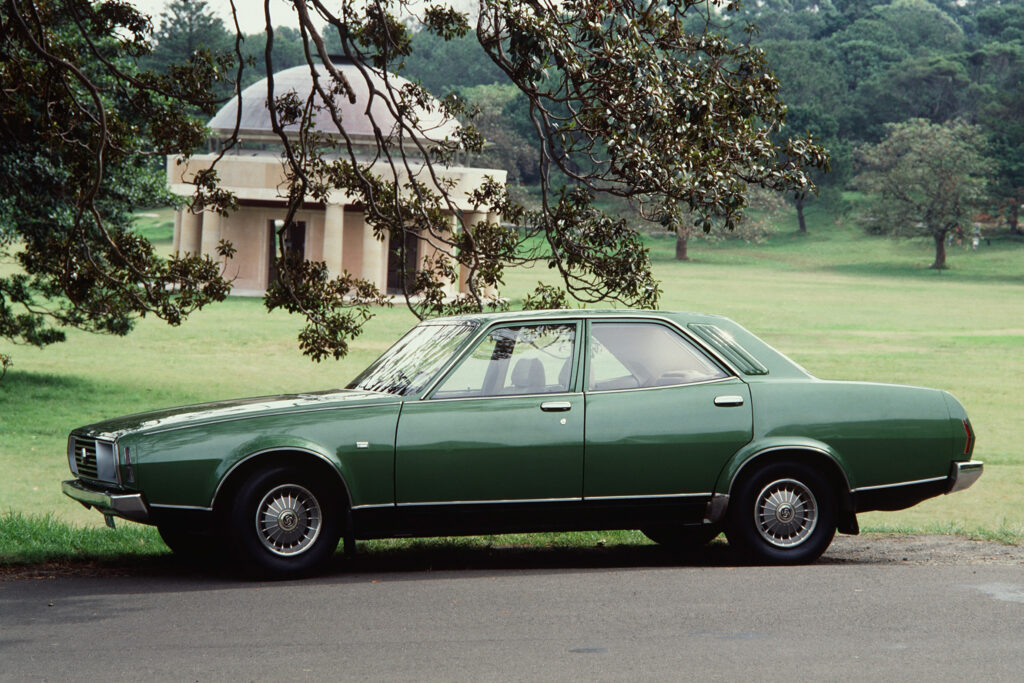
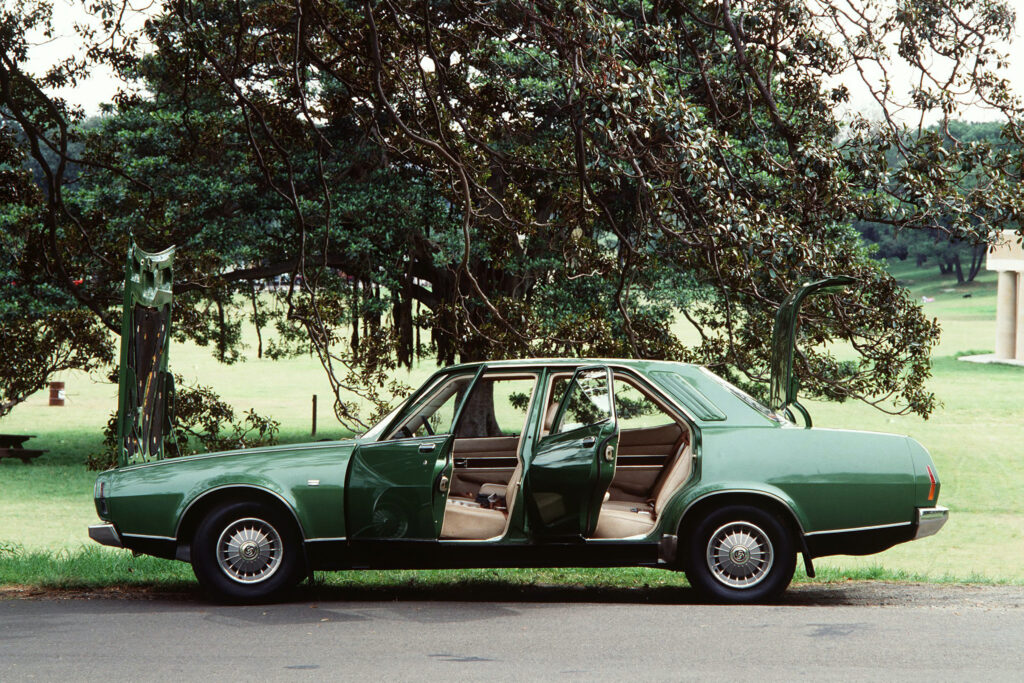
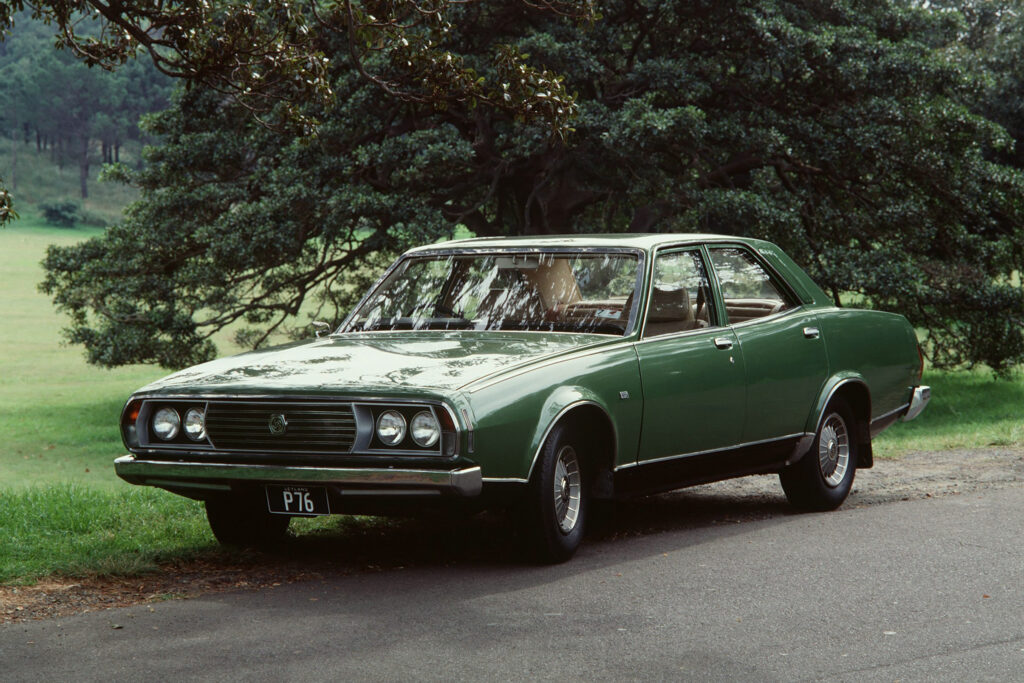
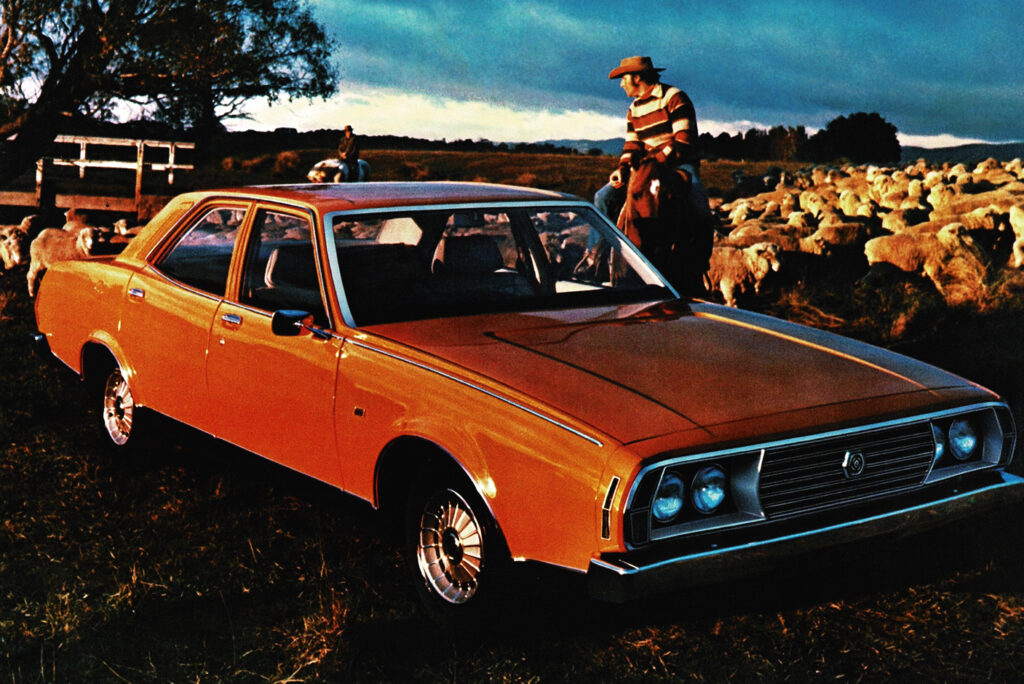

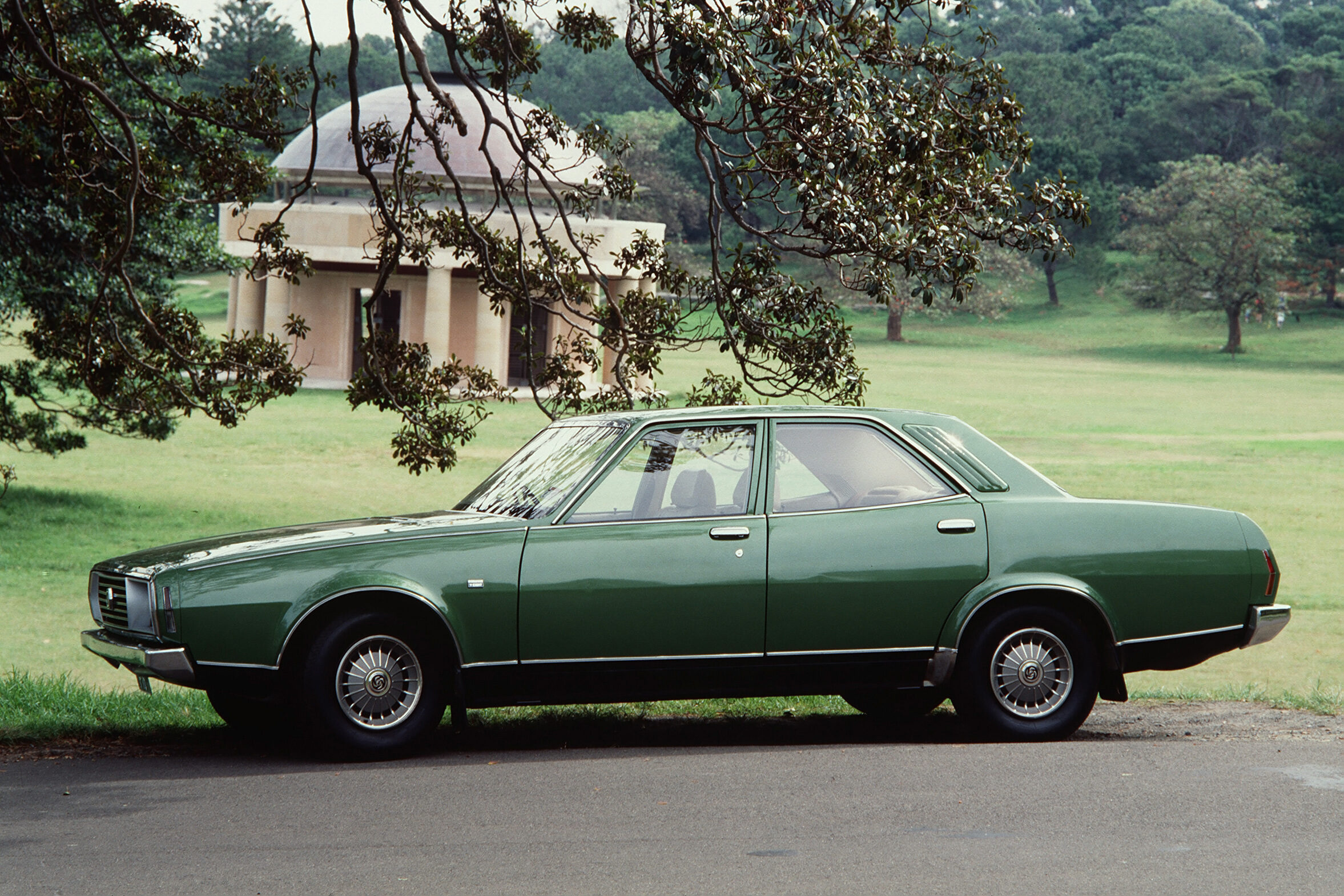

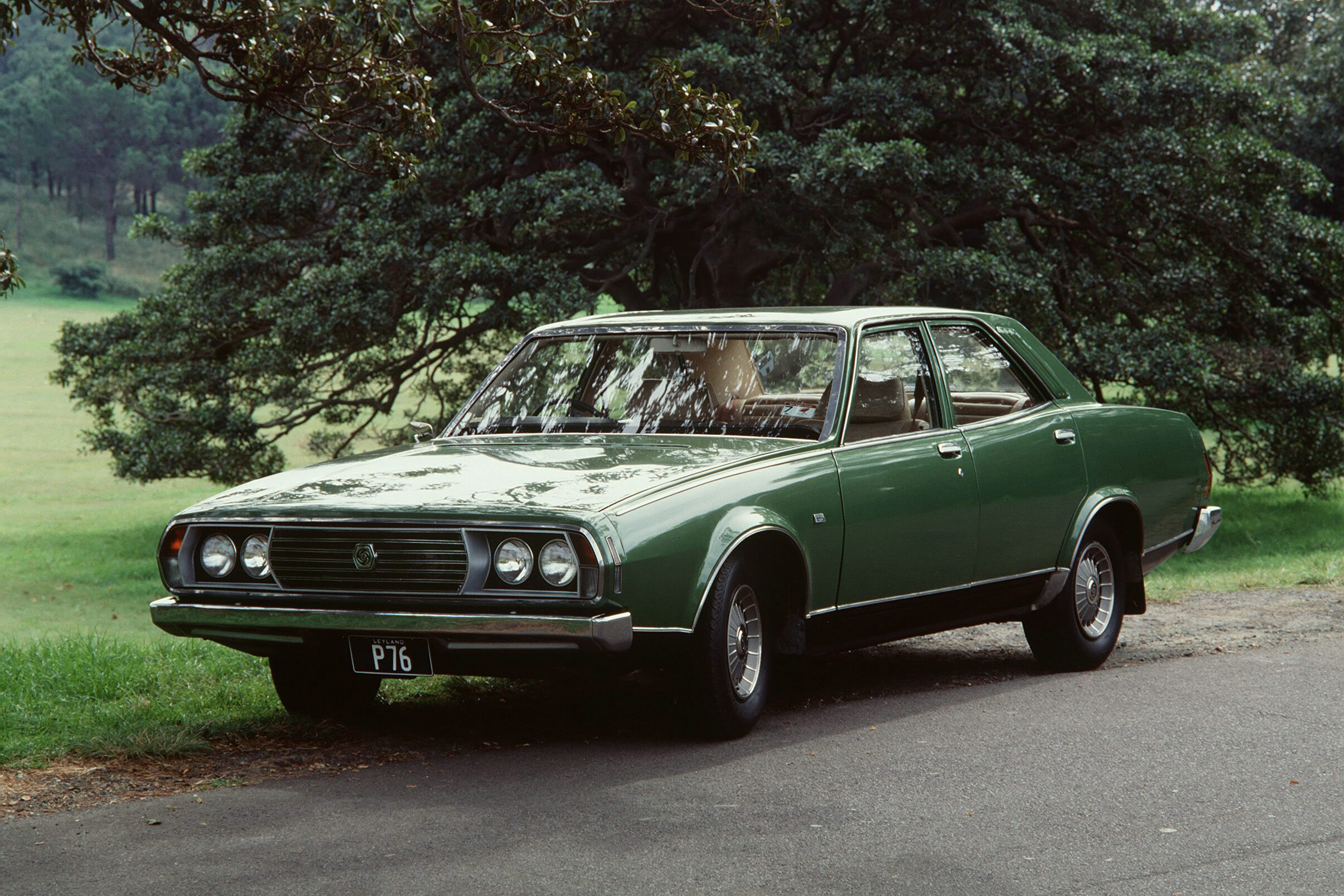
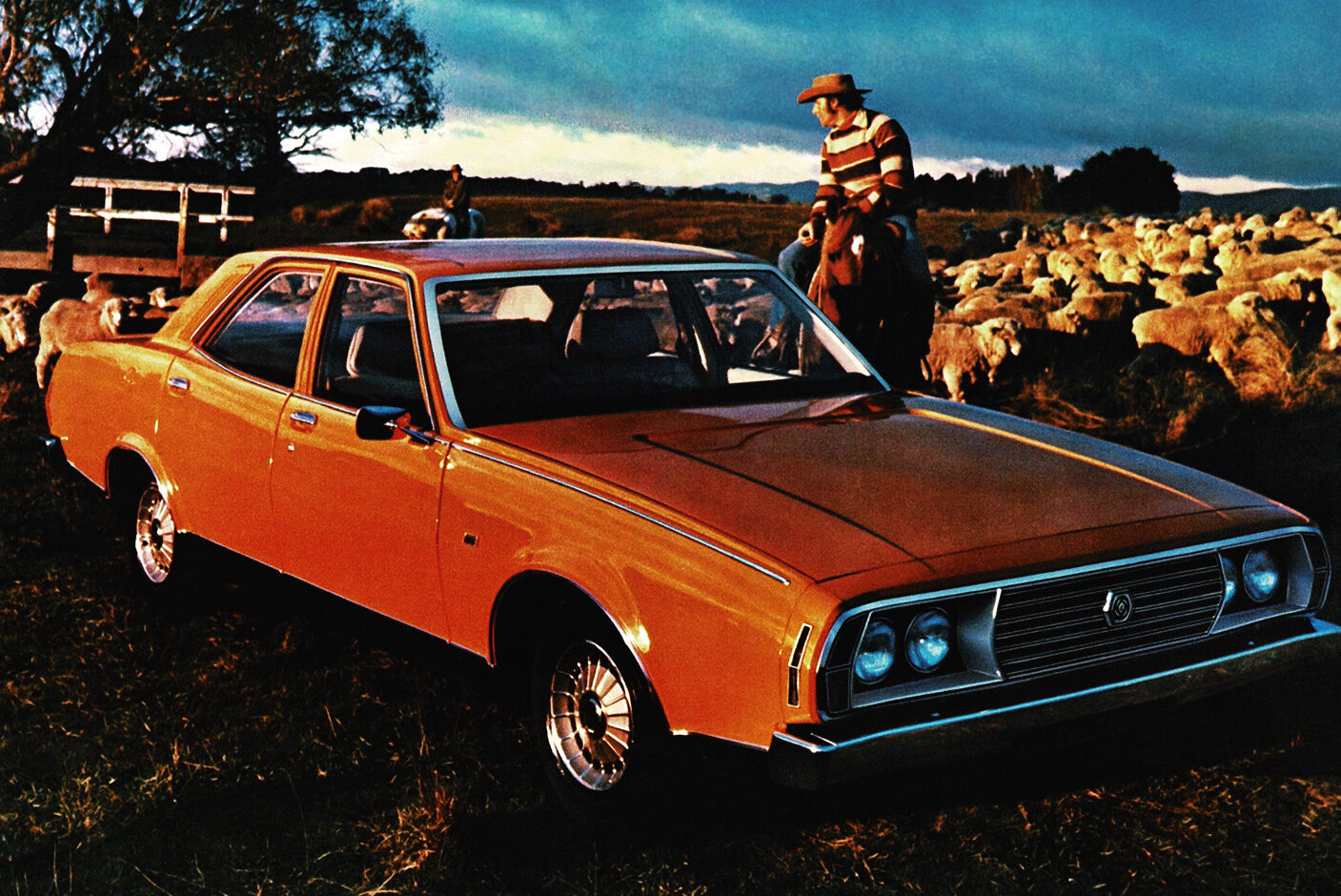
With its Italian-designed wedge-shaped body, sophisticated suspension, lightweight all-alloy V8 engine and a boot big enough to take a 44-gallon drum, the Leyland P76 seemingly had all the ingredients to tackle Australia’s Big Three. Instead, it became an Australian tragedy.
It’s become Aussie shorthand for automotive lemon, without even a romantic name like Marina or Centura to soften the indignity. The Leyland P76 was launched into an almost perfect storm of British corporate decline, union revolt and unprecedented local competition. But how bad, really, was the P76?
Like Terry Molloy in On the Waterfront, the P76 coulda had class; it coulda been a contender. But poor management got this big, capable sedan a one-way ticket to Palookaville.
By the late-1960s, Leyland Australia – the new name for the old BMC – had made a few tilts at the full-sized sedan segment, a three-way brawl among Holden, Ford and Chrysler. The Austin 1800 and successor Tasman/Kimberley were technically superior to the rear-drive Big Three, but handicapped in many buyers’ minds by their front-wheel drive.
That didn’t stop Leyland initially building a prototype Austin 1800 with a longitudinal 3.5-litre Rover V8 driving the front wheels.
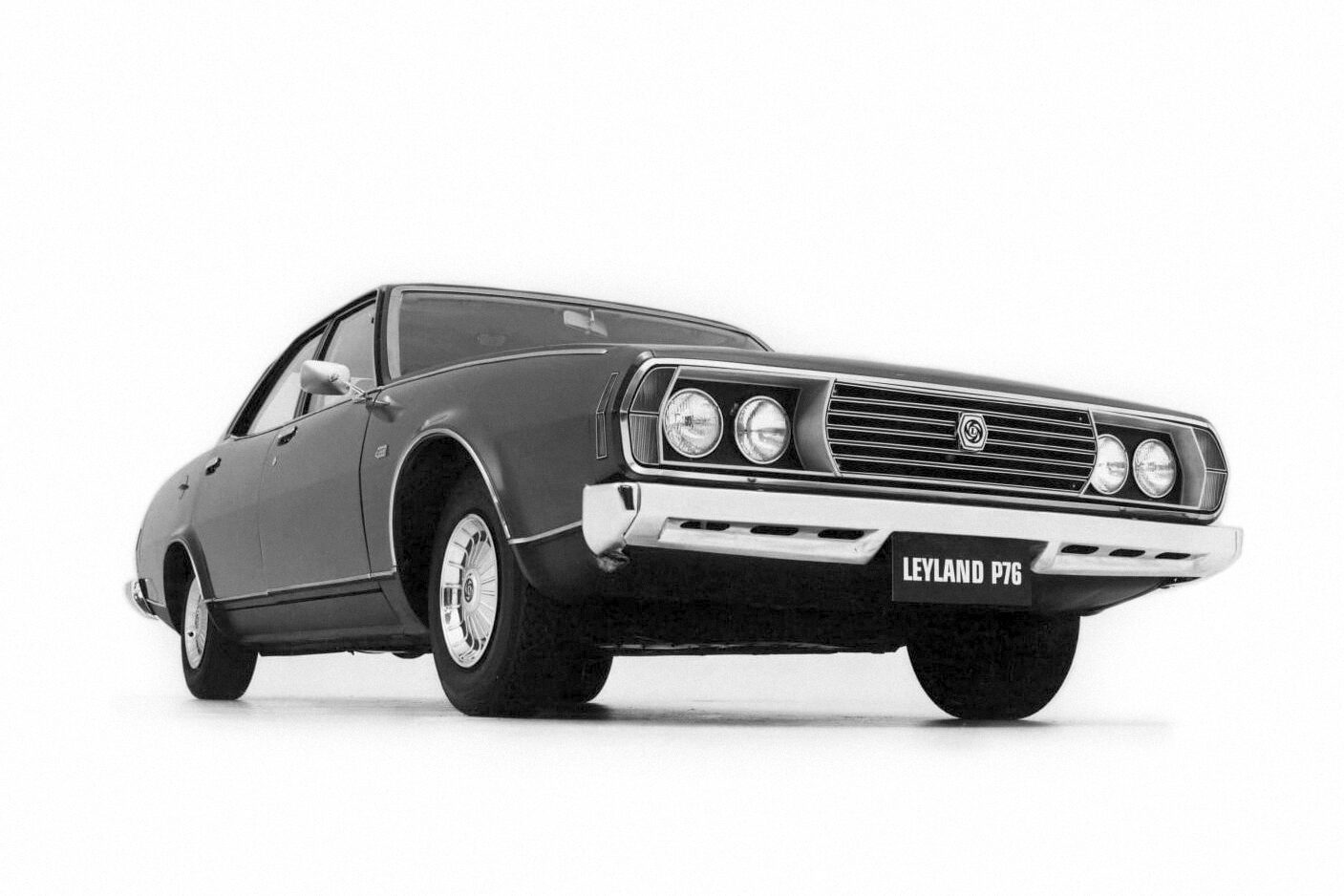
No stranger to rear-drive cars either, Leyland decided to beat the others at their own game. Their big, rear-drive sedan could use the Aussie supplier base for transmissions, suspension and other components, but would do everything better. It would be more stylish, more spacious, better handling and better equipped.
Michelotti in Turin designed a wedge-shaped body that would be rigid, durable and yet, with fewer panels, easy to manufacture. The design tapered from a narrow, European nose to a booty big enough to take a 44-gallon drum.
Both the lightweight, all-alloy V8 engine and the unworthy six-cylinder from the Tasman/Kimberley allowed a near 50:50 weight distribution.
The Buick-derived Rover alloy V8 had a unique-to-Oz 4416cc capacity and was superior to the local Big Three’s base V8s in delivering economy and performance, claiming 149kW and 380Nm. However, the 2623cc E-series six-cylinder offered a meagre 90kW and 224Nm; it was a stopgap for a V6 being developed from the V8. Transmissions were three- and four-speed manuals, and a three-speed auto for V8 versions only.
The P76 was launched in June 1973. The V8 was fulsomely praised and, in almost every department except the six-cylinder’s performance, the P76 went straight to the head of the class.
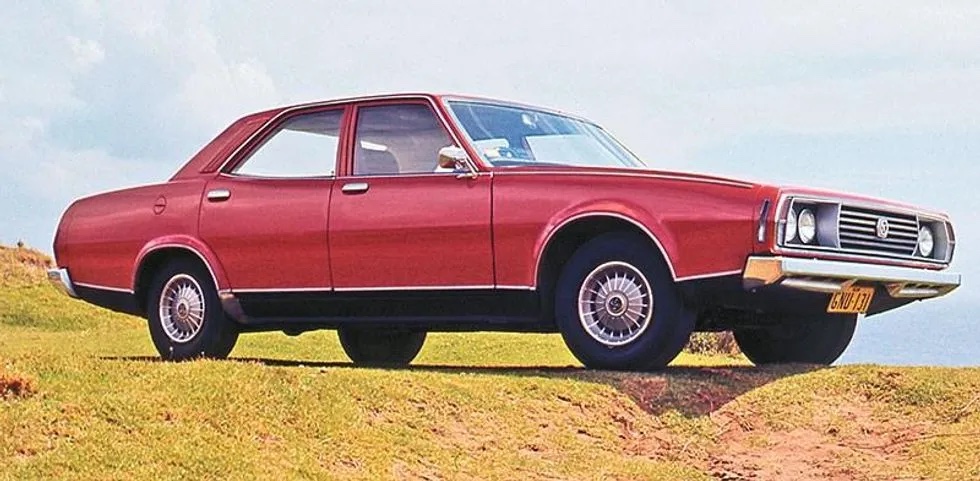
The big Leyland upped the local ante for refinement with its superior chassis stiffness, rack-and-pinion steering, MacPherson strut front and coil-sprung, four-link rear suspensions and standard front disc brakes.
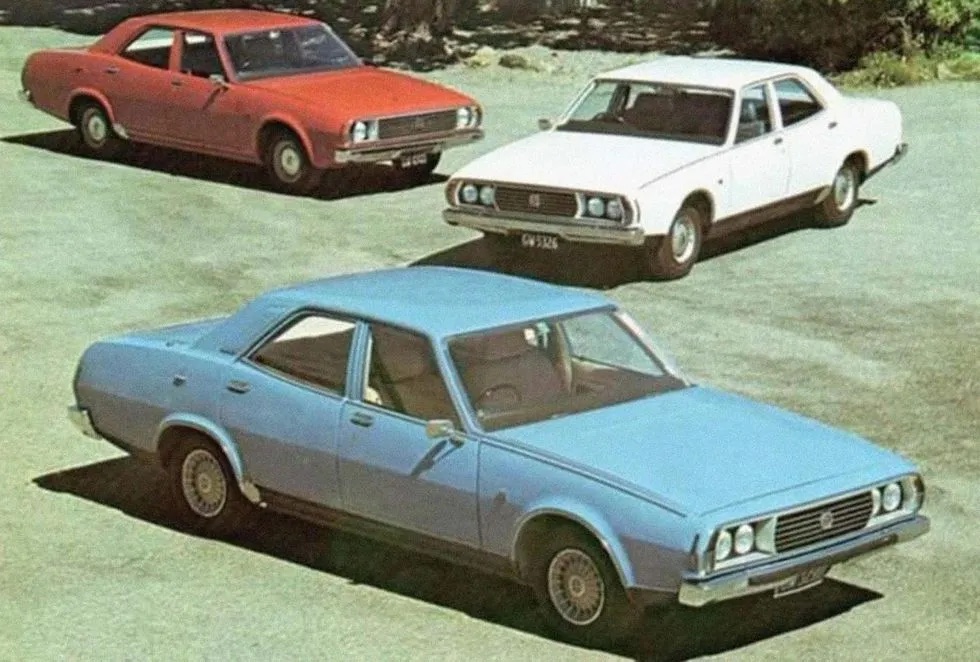
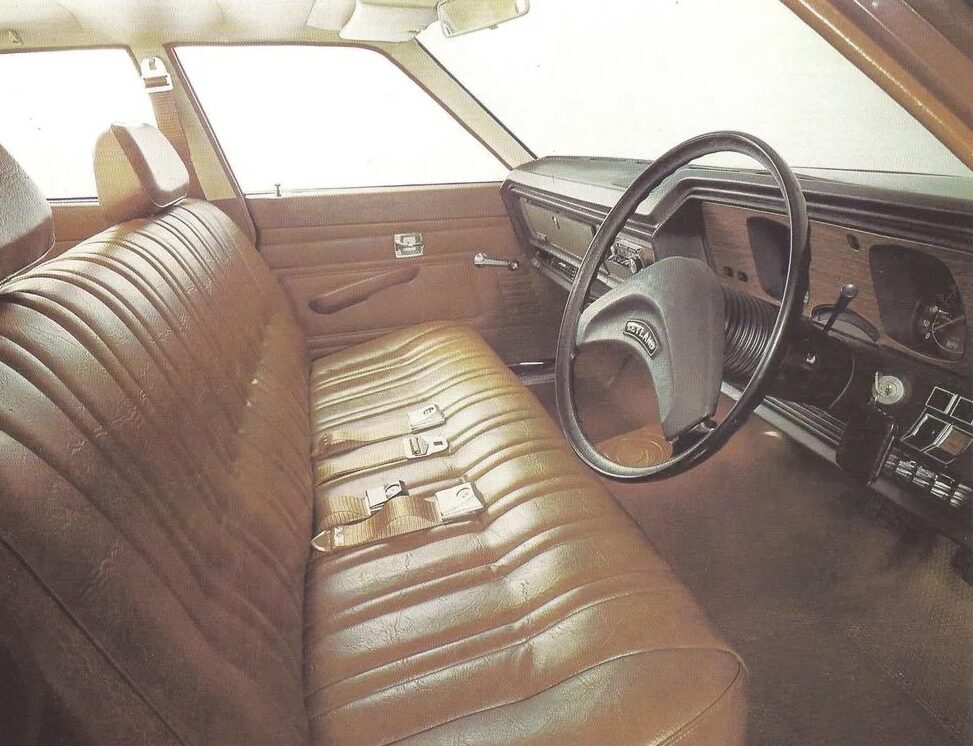
Everyone remembers the P76 for its boot, but the interior packaging blitzed the opposition, too. The base, single-headlamp P76 Deluxe had taxi-spec rubber floor mats, bench seat and column shift, but its options list was long. The boomerang-shaped steering wheel hub was a nice touch.
The mid-level P76 Super brought bucket seats, floor shift and lots of woodgrain trim, while the top Executive spec set out to challenge the long-wheelbase Ford Fairlane and Holden Statesman.
There were ’70s sensibilities in the exterior colour chart, which included Am Eye Blue, Oh Fudge, Plum Loco, Home On Th’Orange, Hairy Lime and NV Green.
A run of 300 Targa Florio variants was spawned when P76-mounted journalist, novelist and adventurer Evan Green won the Sicilian stage of the 1974 World Cup Rally. It was based on the Super, and came only in V8-auto trim and with a white vinyl interior.
Leaky doors and ill-fitting interior components across the P76 family at launch had been put down to pilot-build issues. “Once the assembly problems are overcome,” predicted Wheels magazine, “the P76 is going to be a very good car.”
The problems were not overcome. While Leyland worked on developing station wagon and “S2” coupe variants and the V6 engine, the P76’s odd styling, and poor build quality (the latter exacerbated by a restless workforce) – plus unpaid suppliers, a credit squeeze and the OPEC oil crisis – all conspired to put the P76 and Leyland Australia on the ropes.
After just 18 months and somewhere around 16,000 examples built, Leyland’s great hope for the Aussie large car segment was dead, and Leyland Australia with it. The Zetland, Sydney plant was shut down in October 1974.
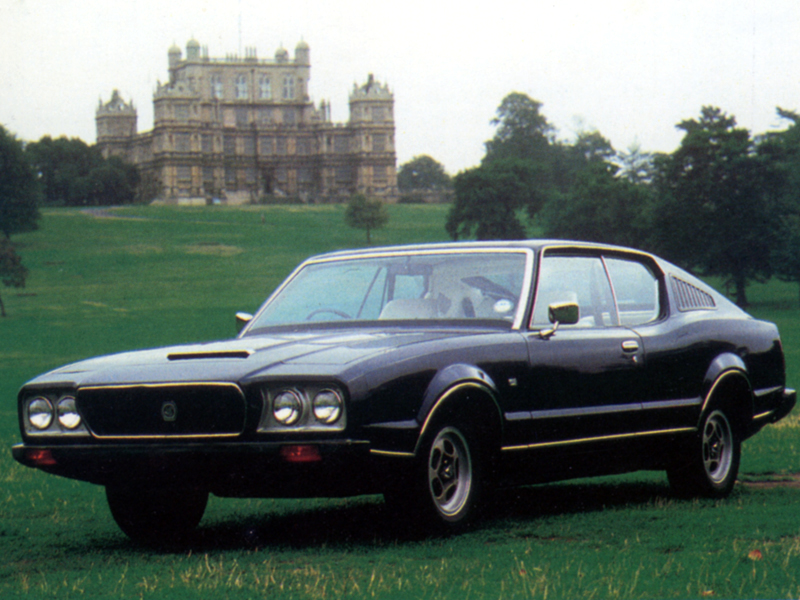
For many, the saddest part of the P76 story was the still-birth of the coupe variant, the Force 7. Some 56 pre-production coupes were built before the line was shut down. Leyland decided to crush all but 10 of them, believing their scarcity would drive up prices at auction.
History doesn’t always respect that the P76 was a victim of, and not the cause of Leyland Australia’s demise. In February 1974, parent company BLMC held a meeting in the UK. The top management of all its subsidiaries, including Peter North of Leyland Australia, were told that to help bolster the parent company’s dire financial position, all manufacturing plants outside the UK were going to be shut down as soon as possible.
North resigned on the spot but kept this news a secret when he returned to Australia. For the next few months, rather than wind down the factory, North worked in vain against his superiors to try and keep Leyland Australia afloat.
BLMC itself was dismantled and restructured by the British government in April 1975, just six months after the shuttering of its Australian subsidiary.