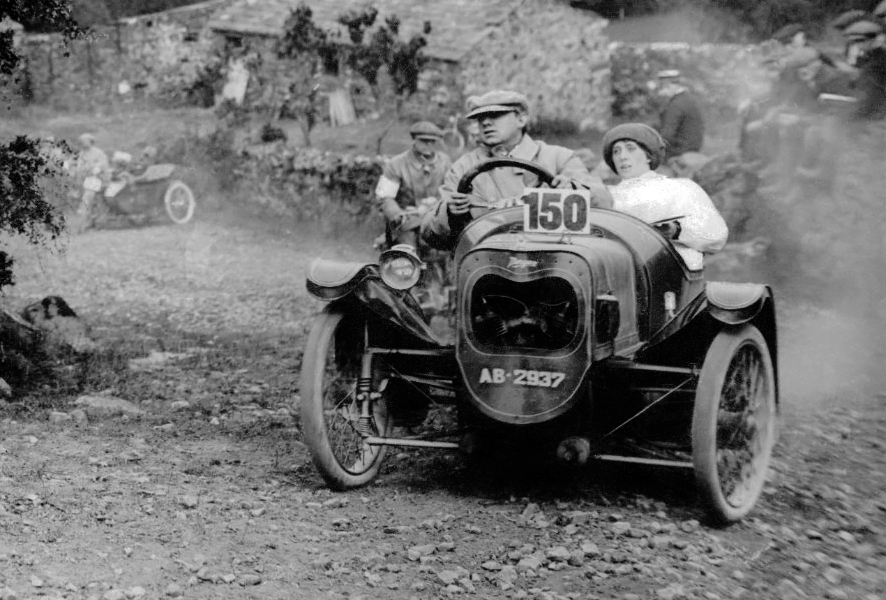
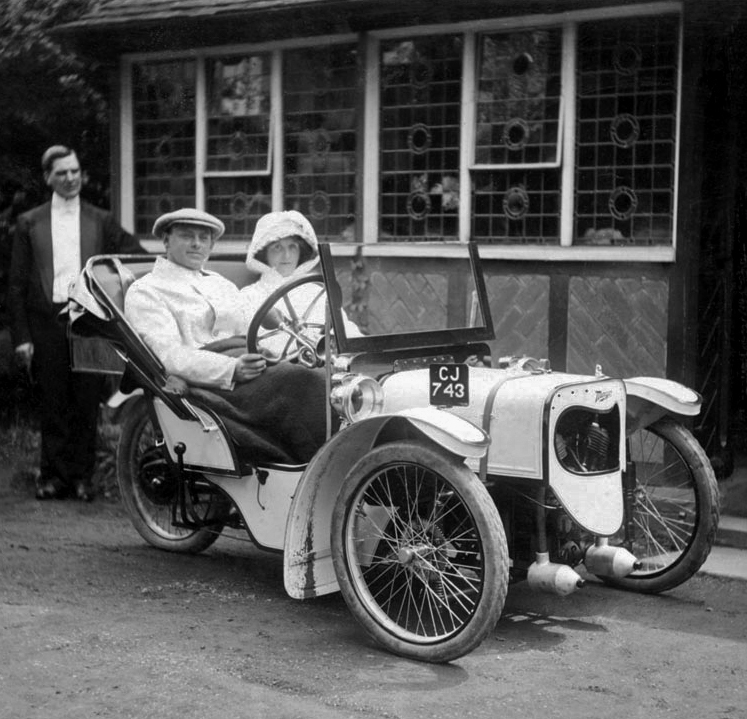
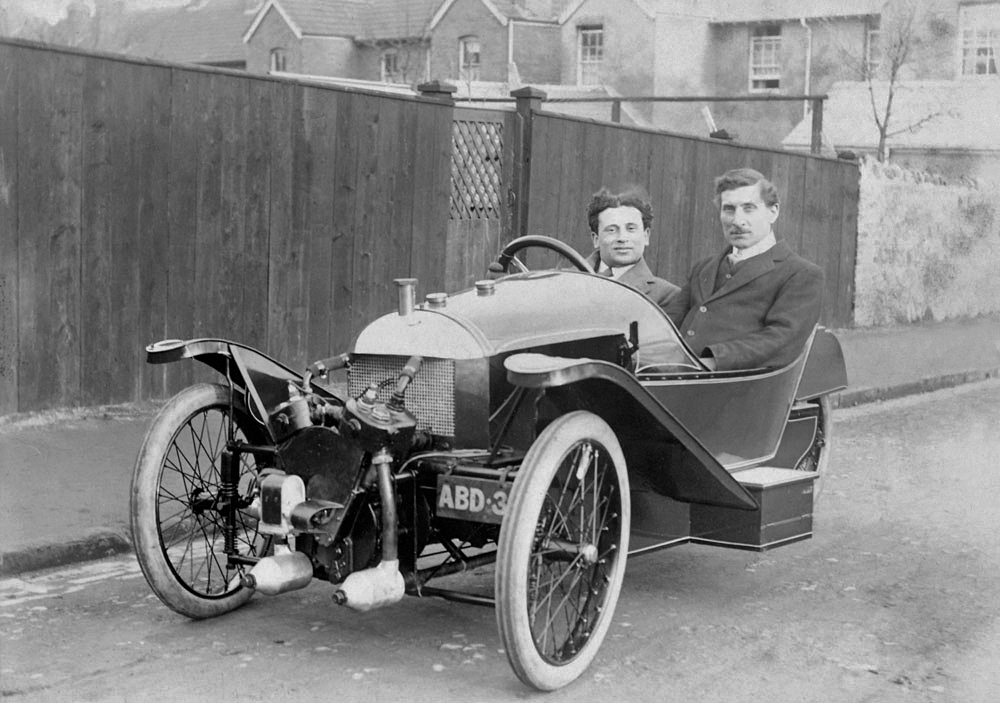
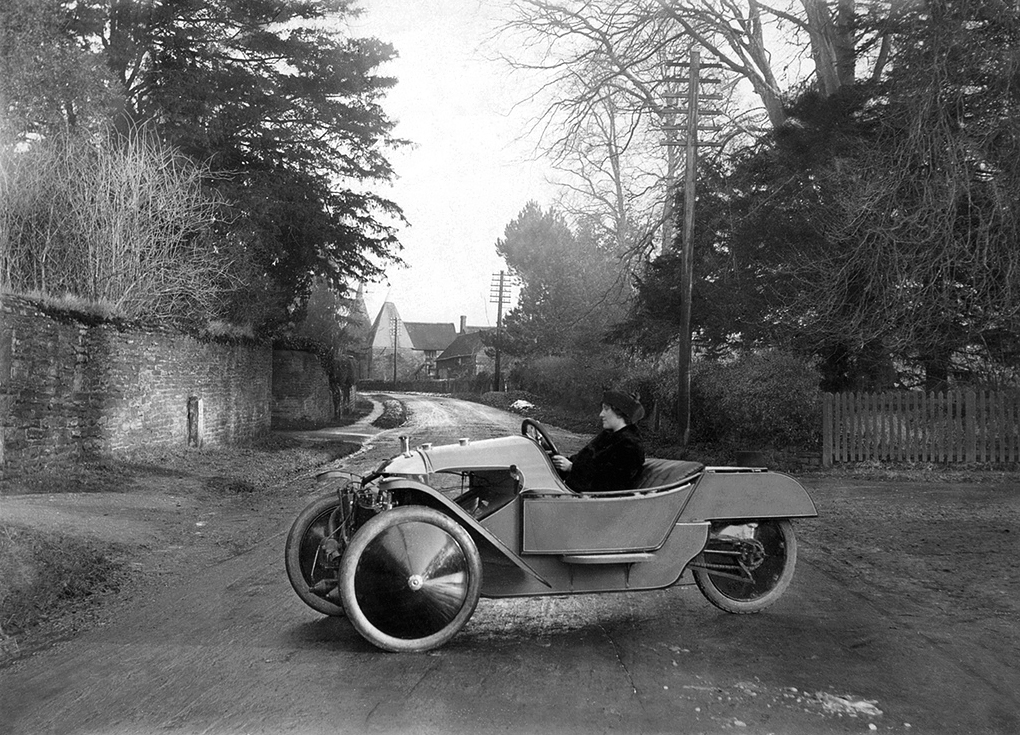


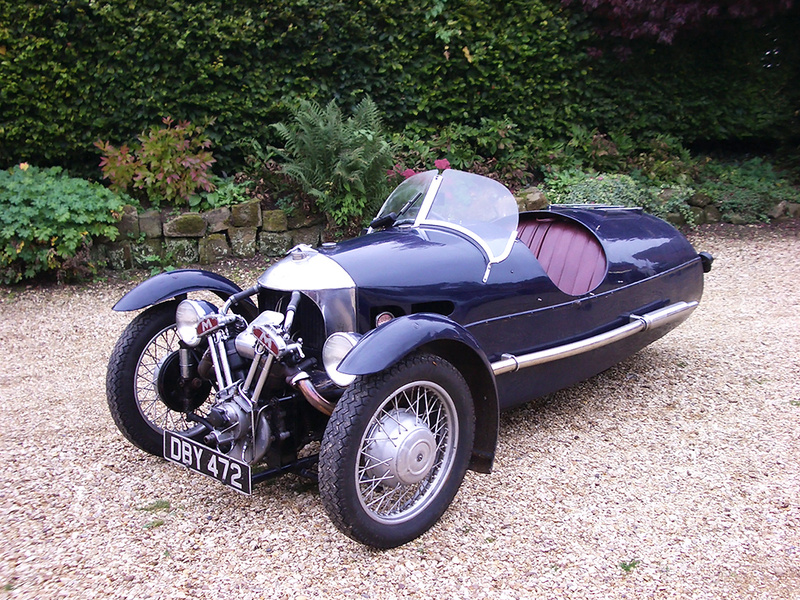
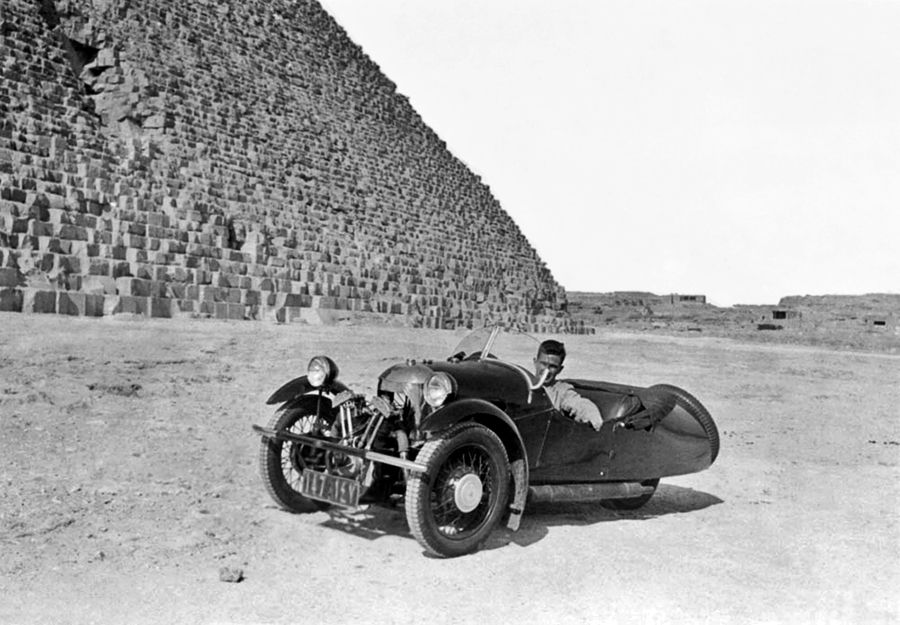
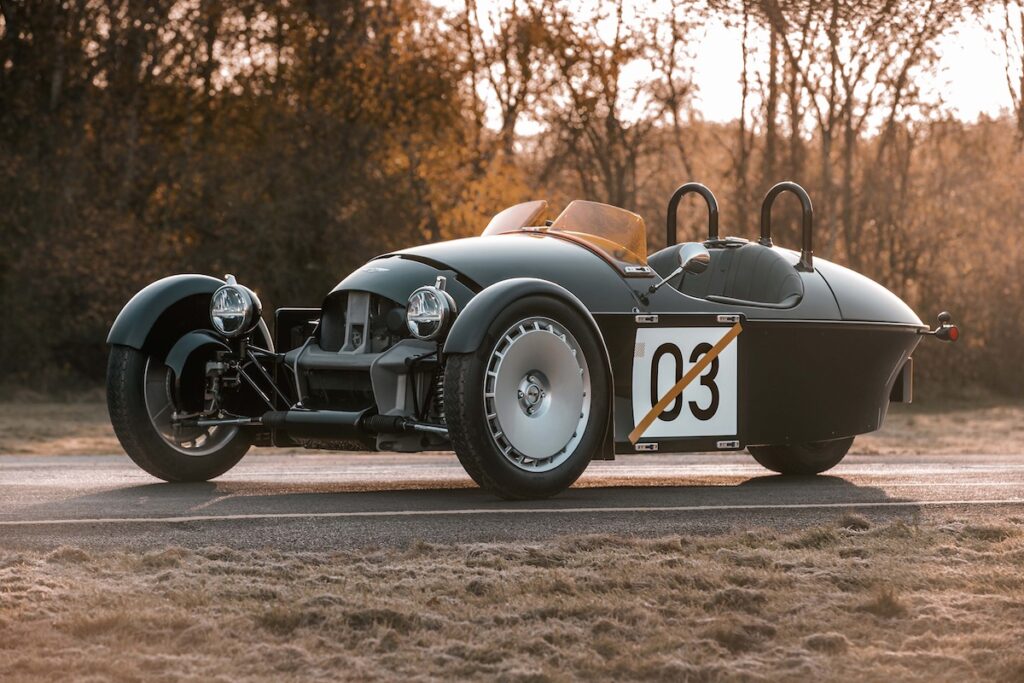

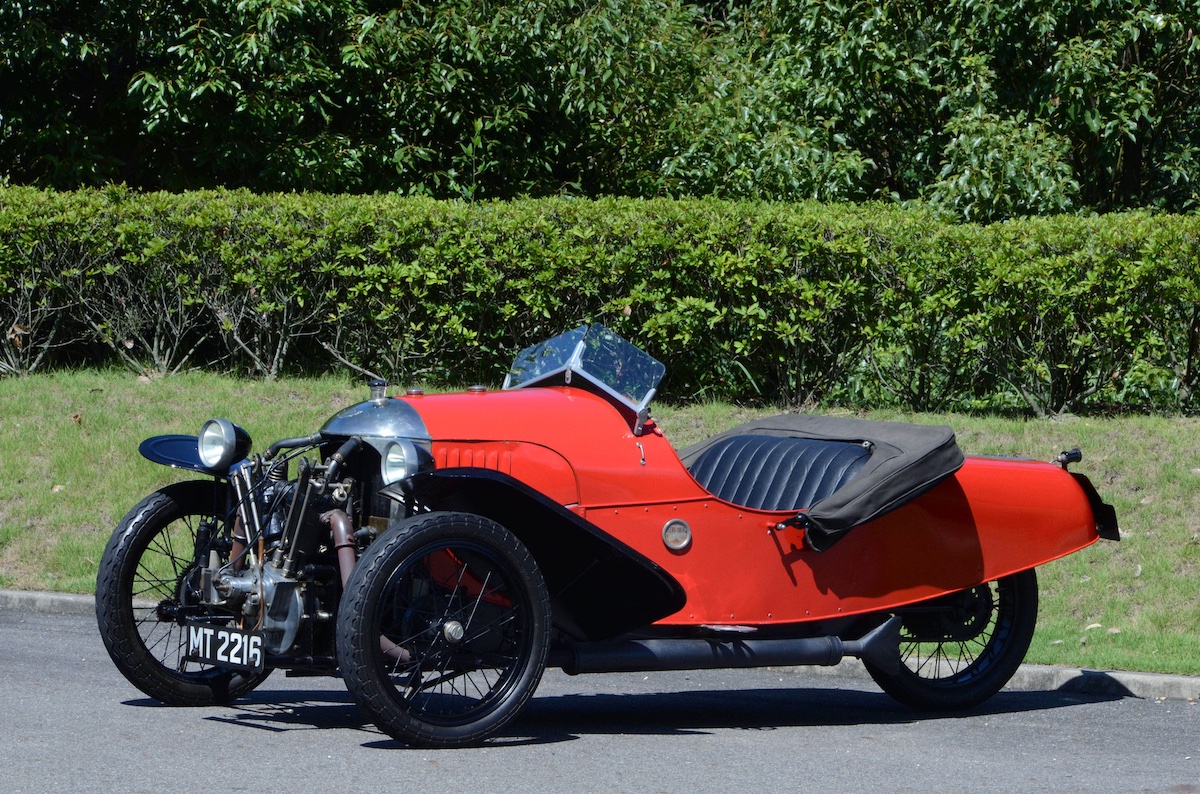
With their unusual three-wheel design and V-twin motorcycle powerplants delivering potent power-to-weight ratios, Morgans were renowned as motor racing weapons and helped lay the foundations for later lightweight ‘specials’ like the Lotus 7.
Henry Frederick Stanley Morgan was thinking outside the square when, in 1909, he set out to build himself a motorcycle in his licensed motor garage in Swindon, England. Then he remembered he didn’t actually like motorcycles very much.
Seven years earlier, at age 21, Morgan had owned an Eagle Tandem, a “tricar” with an armchair-like passenger seat between its wide-spaced front wheels, and a single rear wheel driven by a small De Dion engine beneath the rider’s feet.
A French machine of similar configuration, the 1896 Léon Boullée Voiturette, had earned the nickname “Mother-in-Law Killer”.
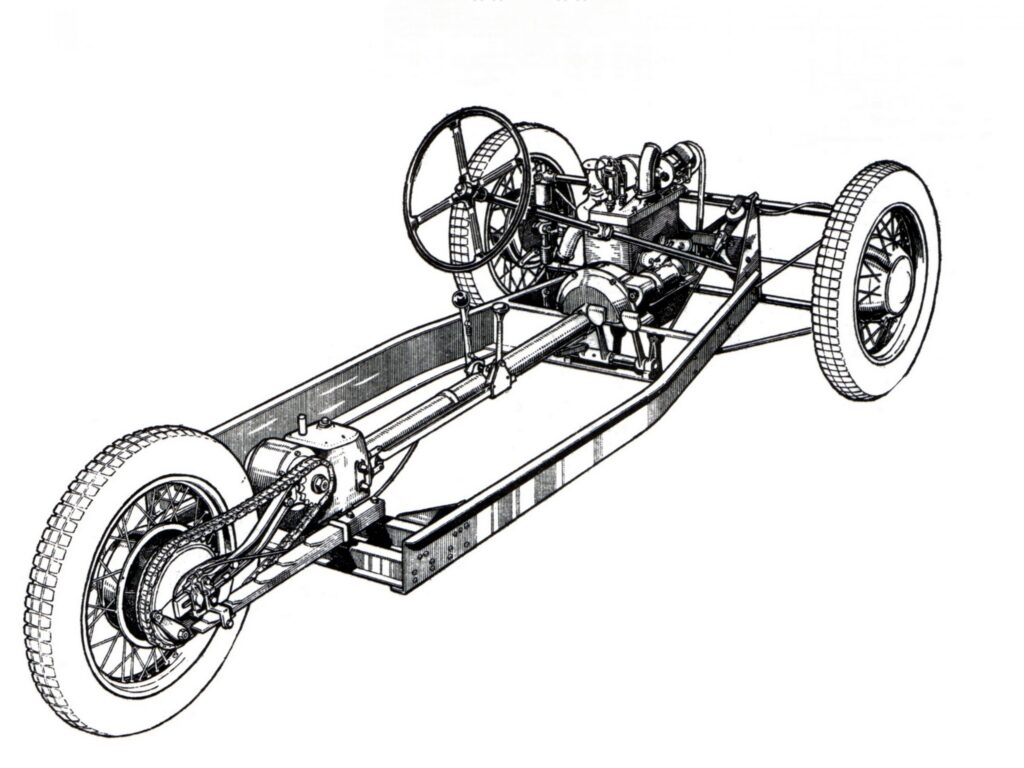
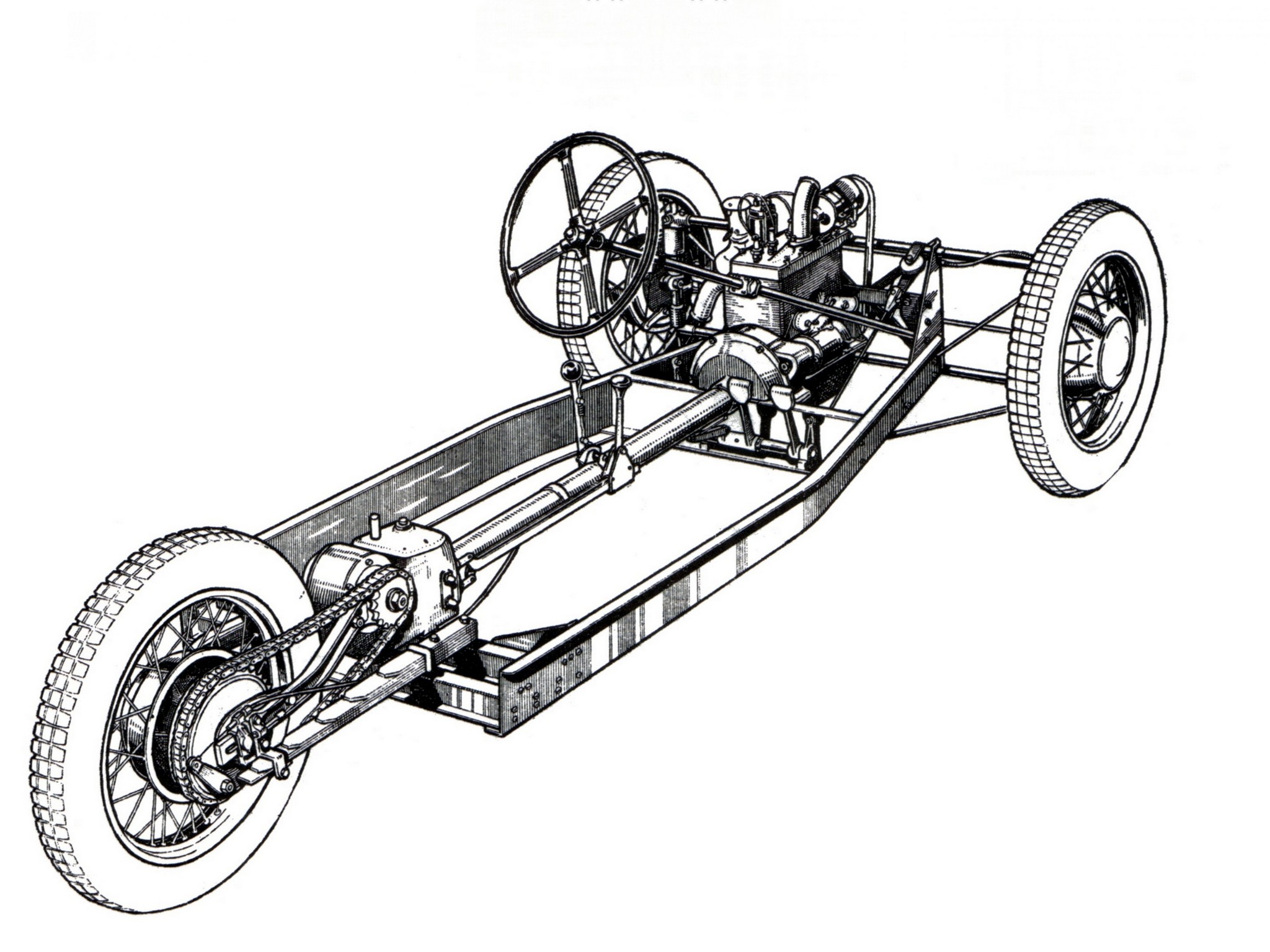
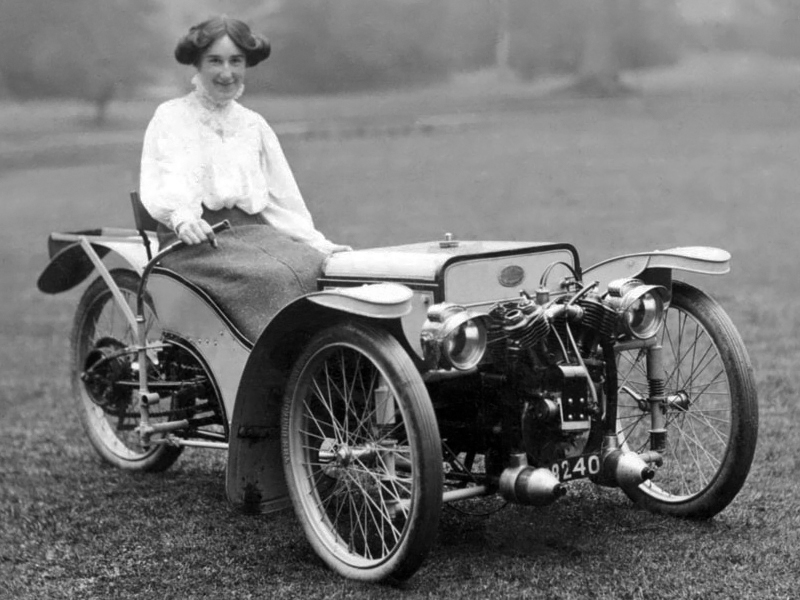
Morgan had a V-twin Peugeot engine awaiting his motorcycle. He designed a simple, three-wheeled chassis, mounting the V-twin transversely between the independently suspended front wheels. Unlike the earlier machines, the driver now sat quite low behind the engine, the single rear wheel at the back.
Drive ran via a propeller shaft to a bevel gear near the rear wheel, where dual chain drives allowed two forward speeds.
Morgan later reported: “The power weight ratio was about 90hp per ton (66W/kg), and it was therefore more than capable of holding its own with any car on the road at that time.”
Small-scale production of Morgan’s “Runabout” began in 1910. After further refinement, much of it in racing, Morgan favoured the British-made JAP V-twins for series production, which began in 1911.
Mainstream models – Standard, De Luxe and four-seat Family – looked just like small cars, albeit with one leg missing. But headline victories in the inaugural cyclecar race at Brooklands in 1912 and in Amiens, France the following year cemented a performance image, and so Morgan launched sleek, 100km/h-plus Grand Prix and Sporting models in 1913.

Henry FS Morgan was one of the most enthusiastic and successful racers of his own products, competing in hill climbs, time trials and Brooklands speed record attempts.
Morgans were a weapon in motor racing, their potent power-to-weight ratios (up to 40kW, for 430kg) a precursor to the likes of the Lotus 7. A career-ending 1924 crash for UK ace E B Ware had three-wheelers temporarily banned from racing; they bounced back and were still kick-starting racing careers beyond WW2.
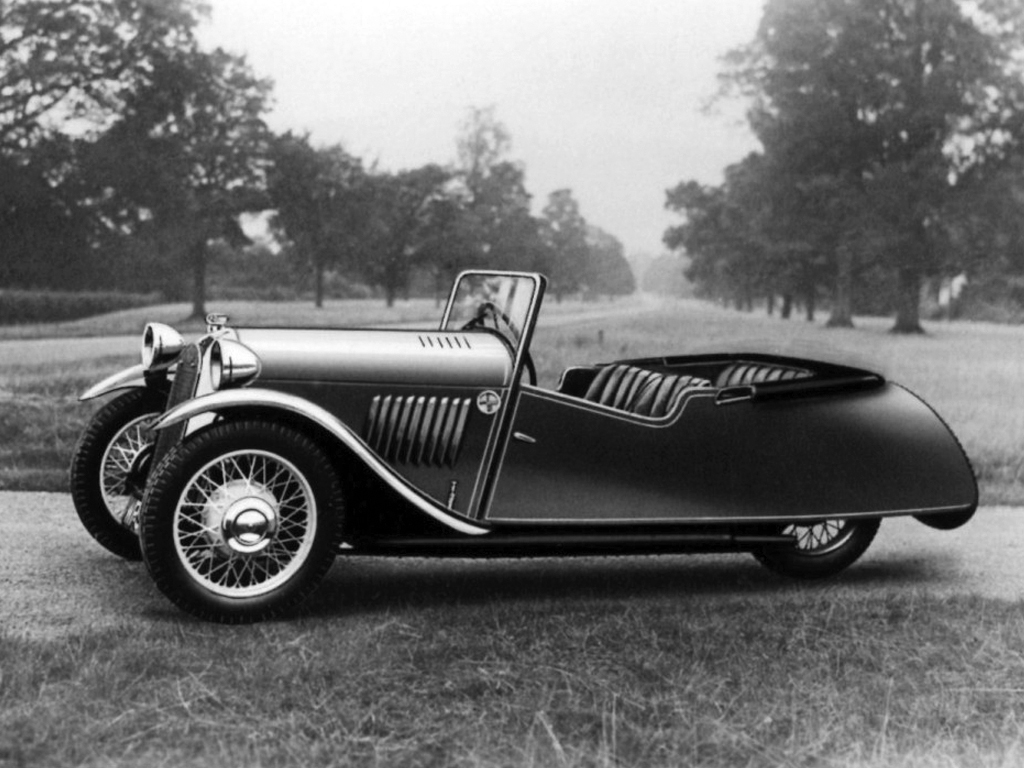
Arguably the best-known production ‘Moggies’ started with the disc-wheeled Aero (1920), then the delicious Super Sports (1927-39) and Sports (1932-39). Body styles were either the “beetleback” or spare wheel-carrying “barrelback”. There was no roof. Opening doors were an option.
Cooking models mainly used JAP’s 50-degree V-twin, in 980cc, 996cc and 1096cc guises and, from 1932, the water-cooled, 60-degree “dog-ear” engine. Blackburn, MAG and Anzani V-twins were also used. From 1933, Sports and Super Sports models were powered by 1.0-litre Matchless MX2 (air-cooled) or MX4 (water-cooled) 50-degree V-twins producing 31kW.
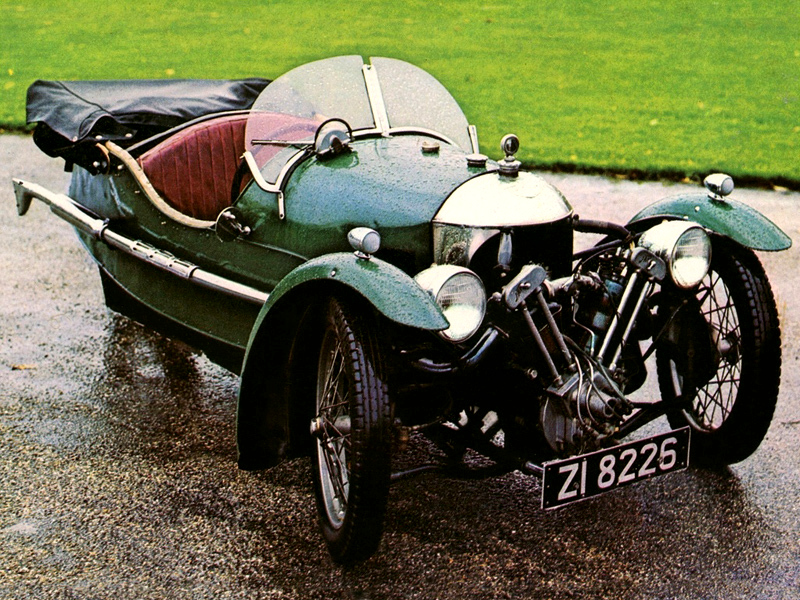
Morgan’s simple steel tube chassis, with a wheelbase that evolved from 1829mm to 2515mm, held the engine with just four bolts. The steel body was mounted on an ash timber frame. Independent front suspension was by Morgan’s unique “sliding pillar” design with internal springs, and a motorcycle-type trailing fork at the rear.
In 1931 came a new three-speed transmission (plus reverse) and conventional front and rear drum brakes operated by hand lever and pedal, respectively. These replaced the original rear-only, external band-type drum brake.
By then, however, the three-wheelers’ days were numbered with the arrival of affordable, enclosed cars like the Ford Model Y (1932). Morgan countered with a steel-bodied, Ford-powered ‘F-4’ three-wheeler in 1933, and in 1936 with his first four-wheeled car, the 4/4.
The V-twin three-wheelers were not revived after WW2 although, curiously, a final batch of 12 V-twin cars was assembled from leftover parts in 1946 – and exported to Australia. The F-4 continued in production until 1952.

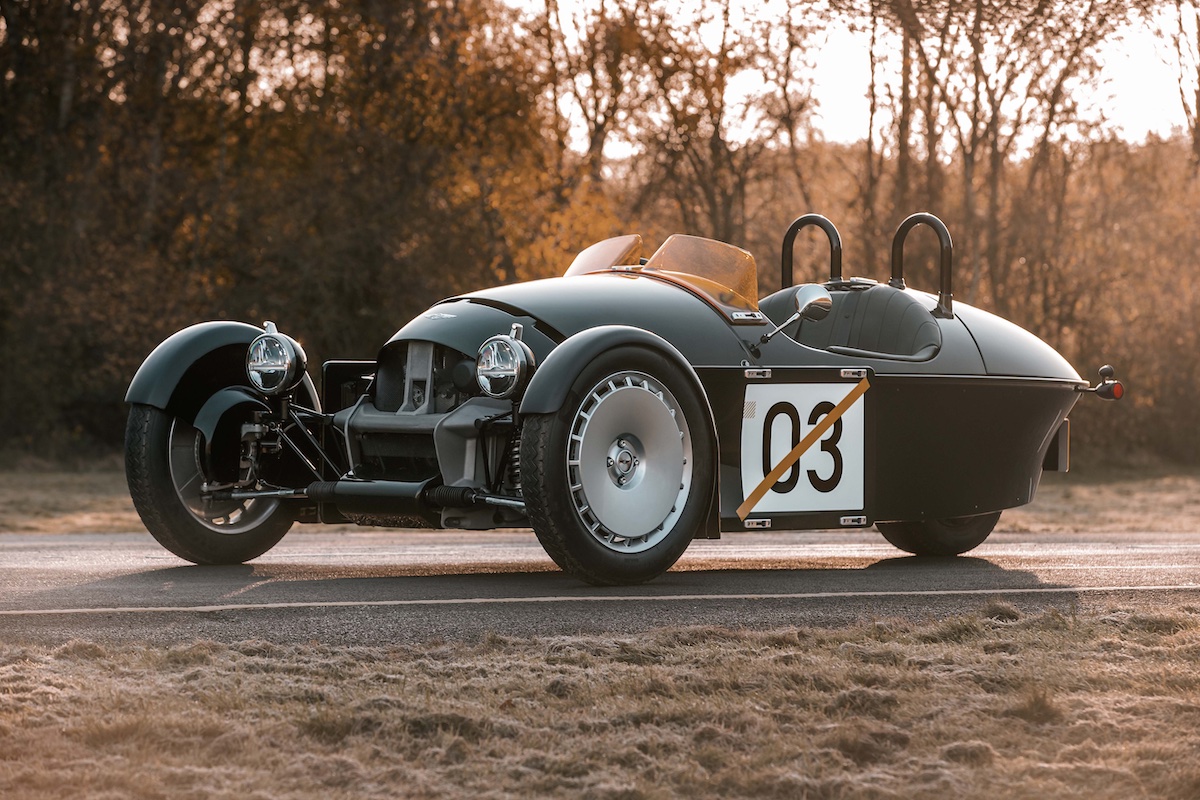
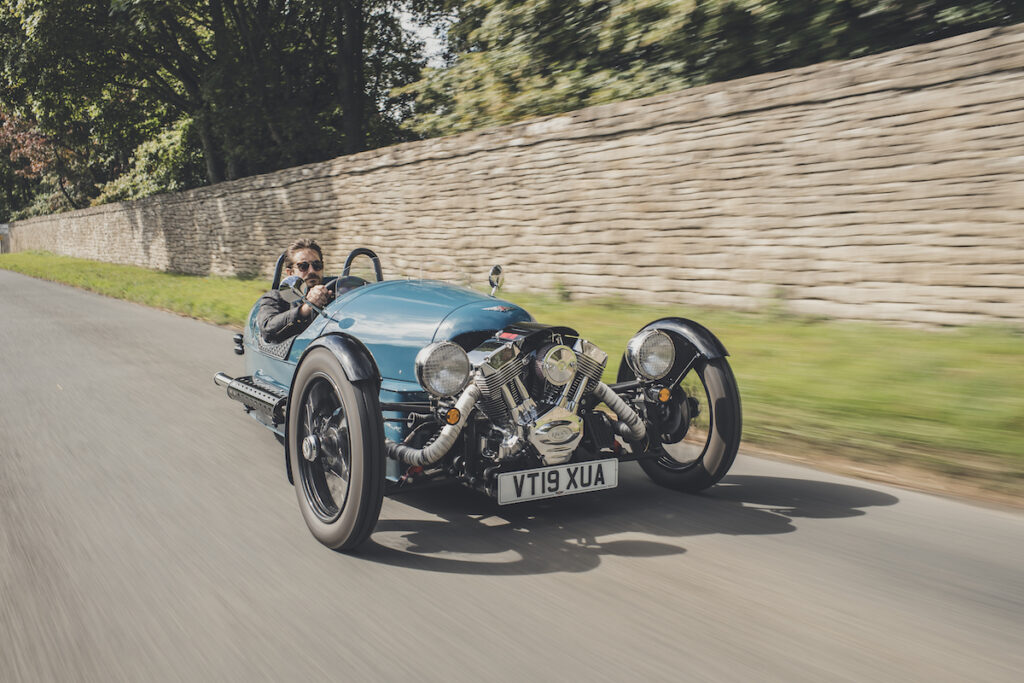
Morgan revived the design in 2011 with a completely modern 3-Wheeler, powered by a 2.0-litre S&S V-twin engine. Around 1500 were produced before production ended in 2021.
The following year, Morgan launched the Super 3 which continues to embody the same three-wheeled design, albeit with a 1.5-litre three-cylinder Ford engine in place of the big two.