
Cars named after F1 drivers are nothing new but some are clearly more desirable than others.
Given that a total of 782 individual drivers had competed in the world’s premier motorsport series at the time of writing, you might think our list would be longer. But even finding these 10 contenders, ranging from the sublime to the ridiculous, required more digging than we anticipated.
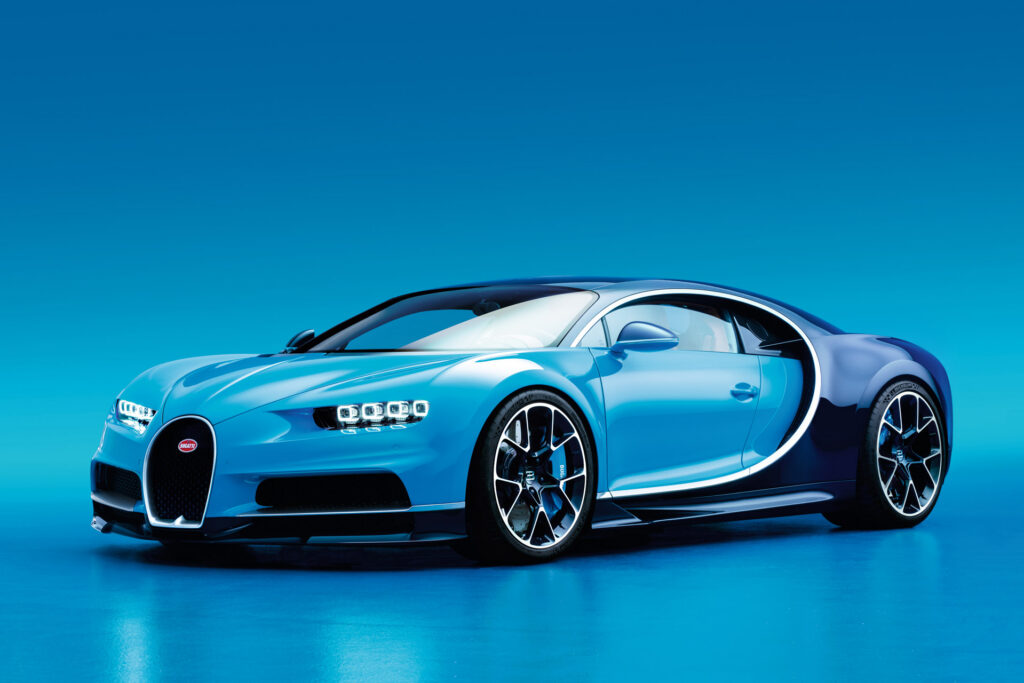
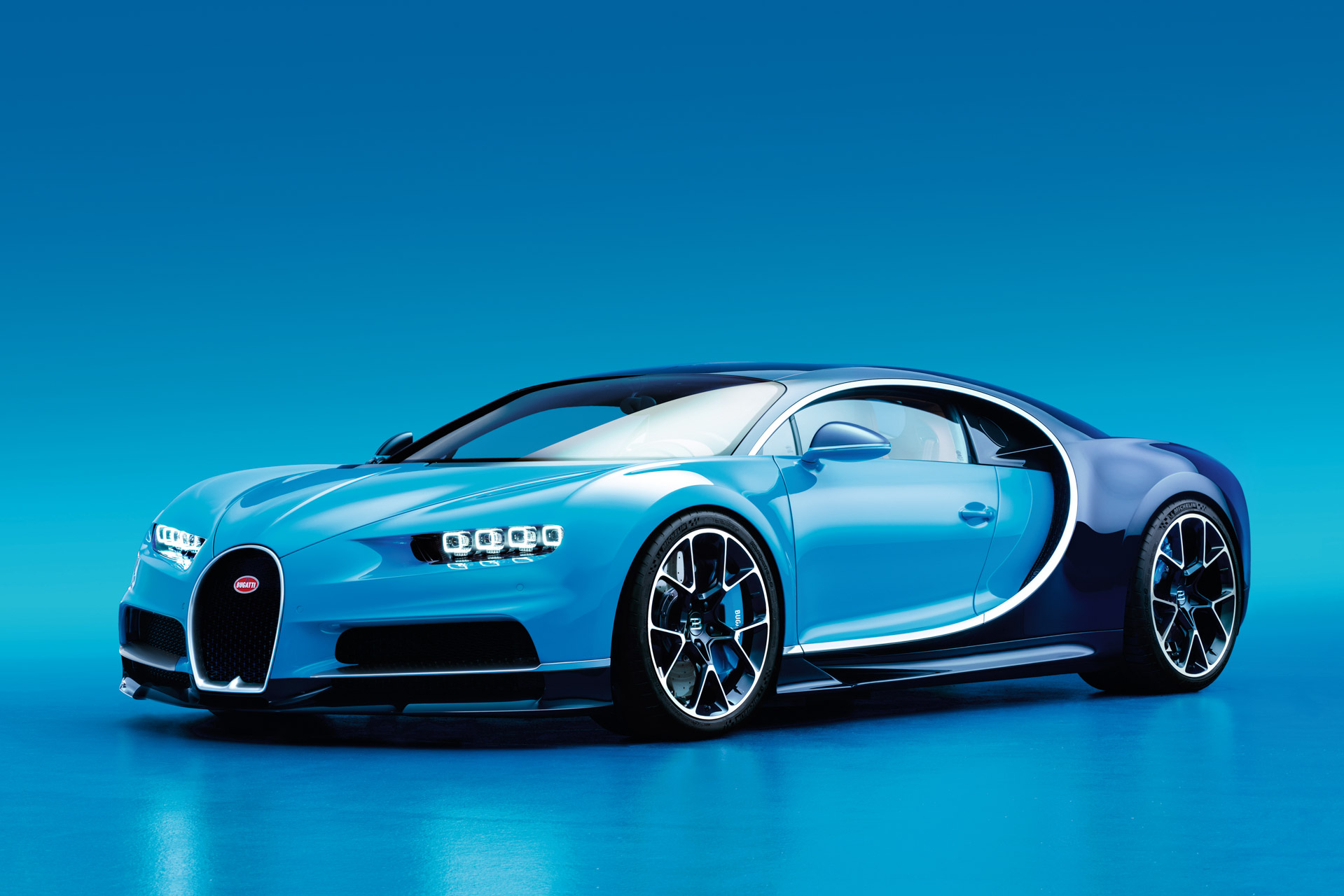
Bugatti Chiron (2016-2024)
Volkswagen set the template for motorsport-inspired naming conventions of modern Bugatti vehicles with the ground-breaking Veyron 16.5. Launched in 2005 and capable of an extraordinary 407km/h the mid-engine two-seat hypercar is named after 1939 Le Mans winner Pierre Veyron.
But it was the Veyron’s successor that scored the F1 naming honour.
Louis Chiron started his Grand Prix career in 1926 and won the Italian, German, Belgian, Monaco and French Grands Prix. He drove on into the F1 era and scored a podium in the category’s second-ever race with a third place in Monaco – at the age of 49!
No doubt he would have approved of his name adorning Bugatti’s 8.0-liter quad-turbocharged W16-powered missile with its stratospheric 1103kW/1600Nm outputs and eye-popping 420km/h top speed.
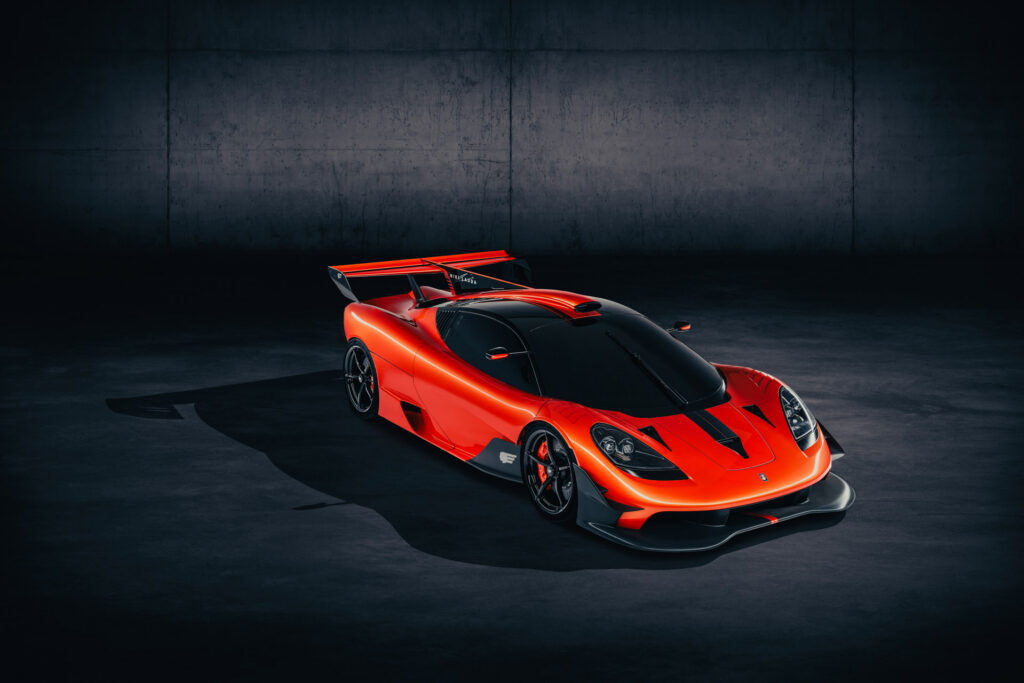
GMA T50 S Niki Lauda (2026)
Based on the Gordon Murray Automotive T50 three-seat supercar, the ‘S Niki Lauda’ is named after the three-time F1 world champion, who worked with Gordon Murray during his stint at Brabham.
Limited to 25 units, this track-only monster weighs less than 900kg, summons 567kW at 11,500rpm from its 4.0-litre V12 and generates 1200kg of downforce thanks in part to the giant fan at the back that sucks the car to the ground.
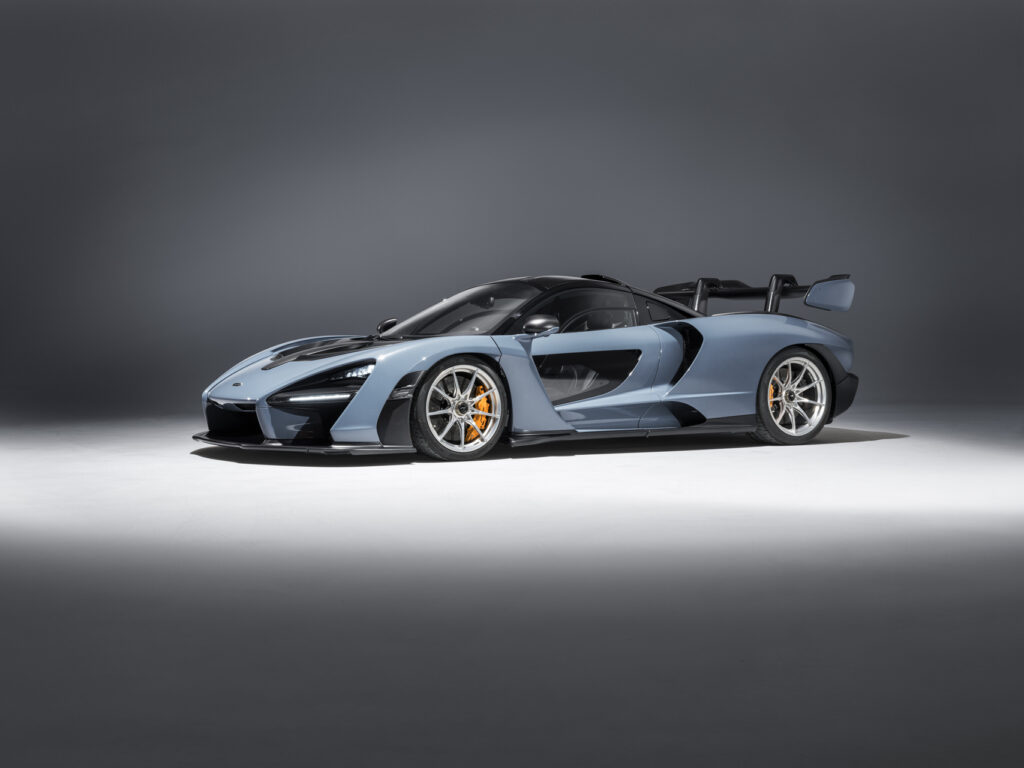
McLaren Senna (2018-2020)
Putting aside the brand itself, named after the four-time F1 race (and 1966 Le Mans) winner Bruce McLaren, the English supercar maker made the bold move of calling its second Ultimate Series car after one of the most beloved drivers of all time, Ayrton Senna.
It lived up to the billing as one of the most extreme track-focused road cars ever created, with hitherto unseen levels of downforce. Just 500 were built.
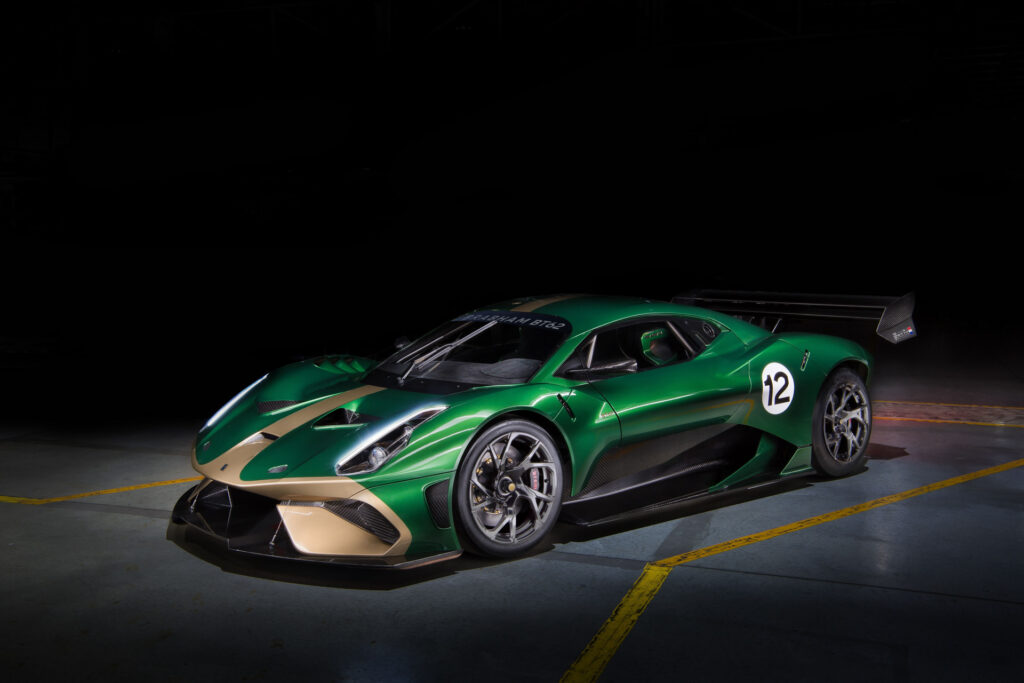
Brabham BT62 (2018-2024)
It’s remarkable how many F1 family dynasties there have been over the years: Graham and Damon Hill; Gilles and Jacques Villeneuve; Michael, Ralf and Mick Schumacher; Jos and Max Verstappen; Mario and Michael Andretti; Emerson, Wilson Jr, Christian and Pietro Fittipaldi; Keke and Nico Rosberg, and many more.
But when it comes to Australia there’s no question the Brabham family are our most high-profile F1 dynasty, with three-time world champion Jack being arguably Australia’s greatest ever motor racing export.
Youngest son David had his own F1 story, competing in 30 Formula One Grands Prix across two seasons (1990 and 1994), driving for the Brabham and Simtek teams.
David created the limited-run, mid-engine Brabham BT62 track-day car in 2018, and later the Brabham BT62R hypercar, to honour his legendary father, with production based in Adelaide.
Sadly, the project never really got going, despite having a modest projected target of 70 cars. It’s unknown exactly how many were eventually built, with some estimates suggesting it may have been single digits, but a couple of examples of the 522kW V8 weapon were completed and are still active today.
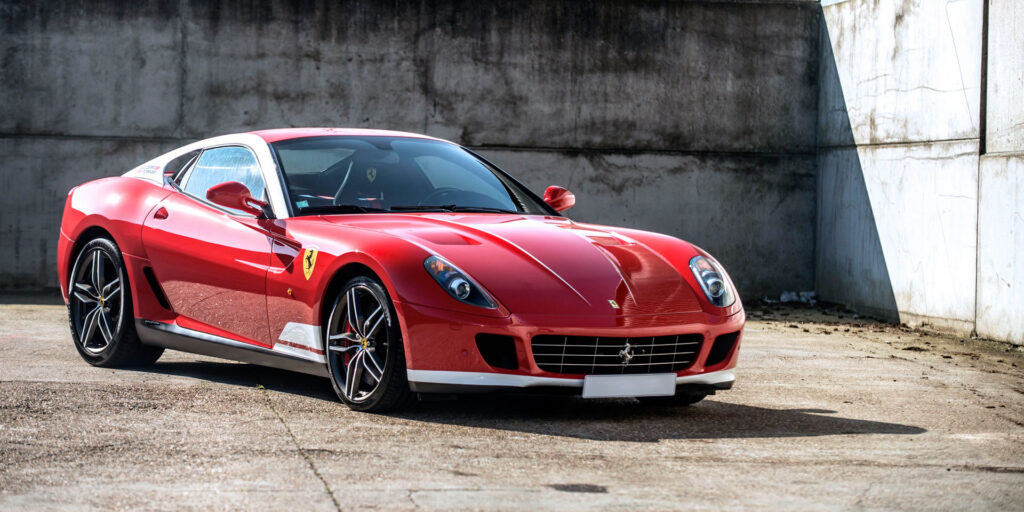
Ferrari 599 GTB 60F1 Fernando Alonso (2011-2012)
It’s a sign of Fernando Alonso’s skill and longevity that he has had two special edition cars named after him during an F1 career that began with a stellar 2001 to 2018 stint, and recommenced in 2021 through to today, with his Aston Martin contract extending into 2027.
Ironically, the first car named after the two-time world champion was not a Renault, the brand he so successfully campaigned for in 2006 and 2006, but a Ferrari.
The Spanish champion drove for the Scuderia between 2010 and 2014, claiming 11 race wins and 44 podiums, prompting the Prancing Horse to name the V12-engined Ferrari 599 GTB 60F1 Fernando Alonso in his honour.
Renault did get around to honouring their former world champion in 2022 with the limited-edition 32-unit Alpine 110 R Fernando Alonso Edition. You could even argue there are three cars named after Alonso, as although the 2024-25 Aston Martin Valiant doesn’t bear his monicker it was a personal commission built especially for the 444-race (at the time of writing) veteran.
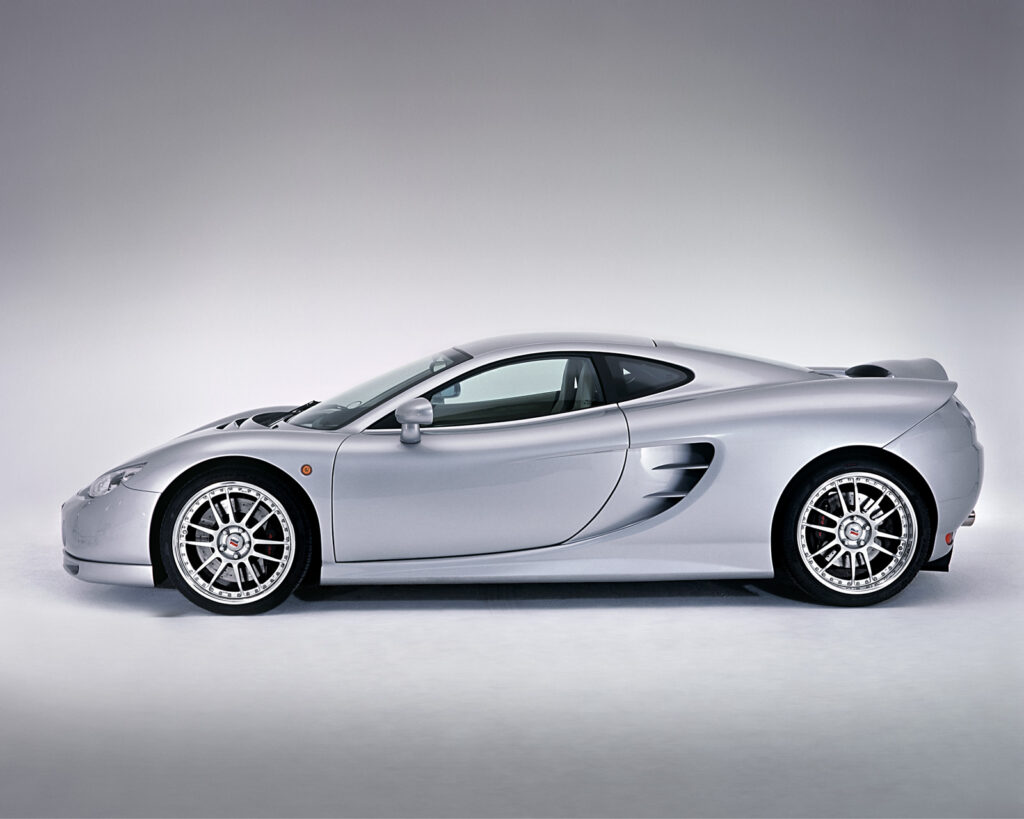
Ascari KZ1 (2003-201)
The Ascari KZ1 had all the right ingredients: carbon construction, an A-tier list of suppliers and the early prototypes were said to be polished in terms of ride, handling and quality. It also had a suitably exotic name courtesy of two-time F1 world champion Alberto Ascari.
Power came from a BMW M-sourced version of the S62 4.9-litre V8 as seen in the E39 M5 and S8 Roadster, with the engine benefiting from Ascari’s own modifications including dry-sump lubrication, new camshafts and a specialized exhaust to deliver a formidable 375kW/550Nm.
Unfortunately, only 14 of the projected 50-unit British-built mid-engine supercars were ever manufactured, thanks to a combination of factors including high manufacturing costs of the hand-built carbon-fiber monocoque, low sales volumes, and inability to get the car certified for the lucrative US market.
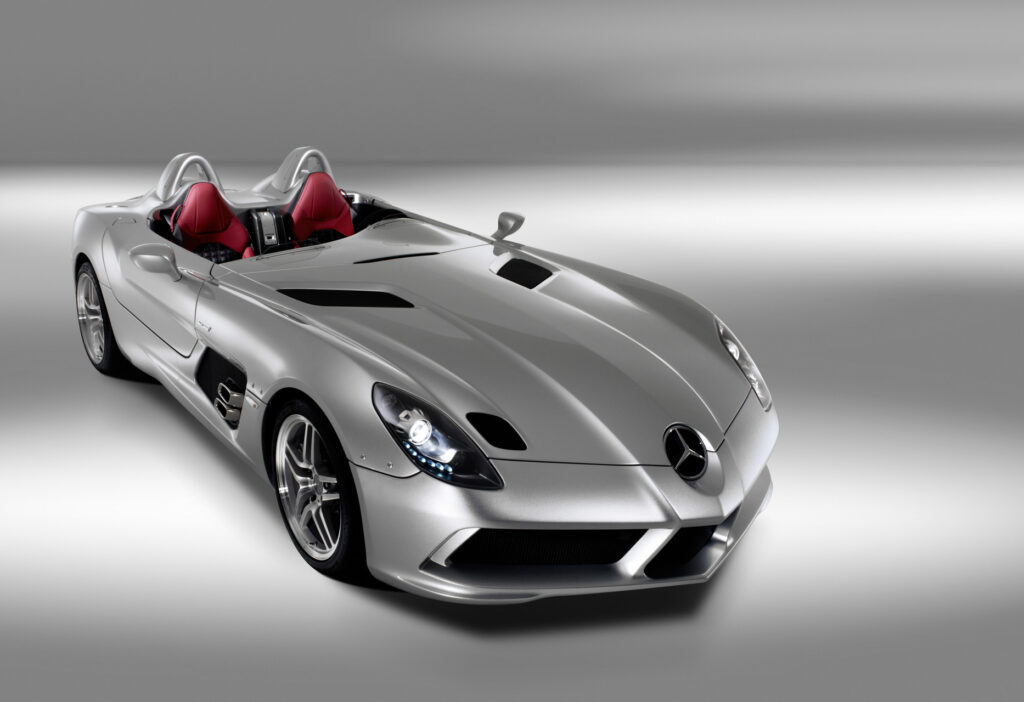
Mercedes-McLaren SLR Stirling Moss (2009)
With the benefit of hindsight, the SLR Stirling Moss was a bit of a trendsetter, inspiring the likes of the Ferrari Monza, Aston Martin V12 Speedster and McLaren Elva. Its lack of roof and windscreen were a nod to the driving heroics of its namesake, Stirling Moss, and his iconic drive in a Mercedes-Benz 300 SLR at the 1955 Mille Miglia.
Only 75 of the 5.4-litre supercharged V8-powered beasts were built, and in a strange Antipodean twist, four of these are believed to reside in the collection of Australian trucking magnate Lindsay Fox.
The SLR is quite unloved, largely courtesy of its difficult gestation – regarded as something of a rushed farewell tribute to mark the end of the seven-year Mercedes-McLaren road-car partnership – but few machines attract the smartphones of supercar spotters like this rare, 478kW/820Nm open-top speedster.
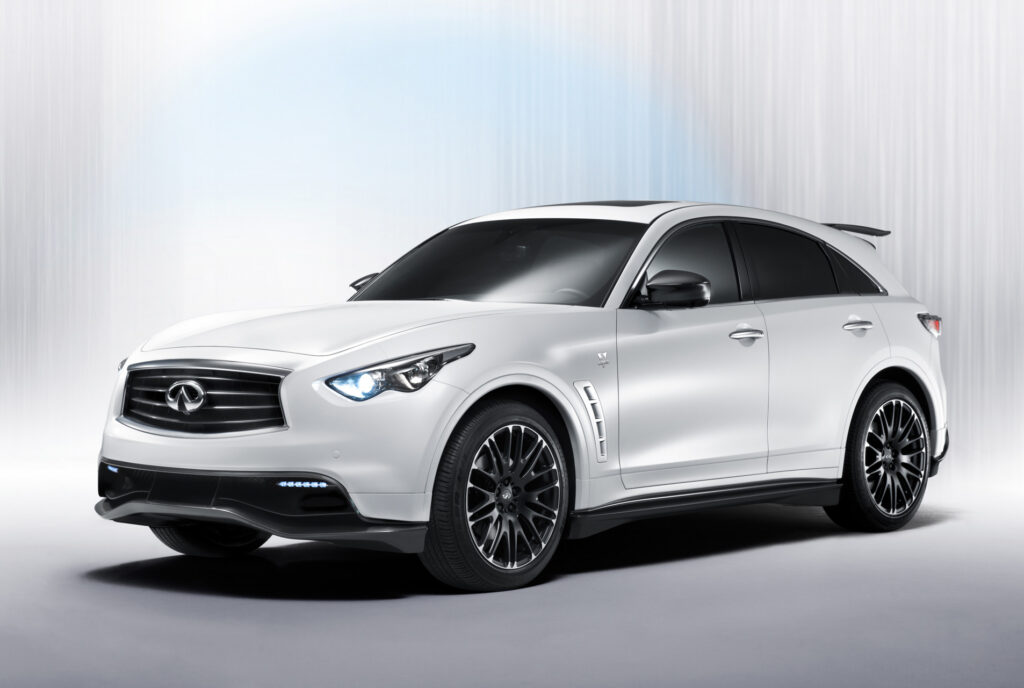
Infiniti FX50 Vettel Edition (2012-2013)
There’s almost an inverse relationship between the success of the driver and the quality of the road car that bears its name. To be fair, Infiniti – which sponsored the Red Bull F1 team at the time – didn’t have much in the cupboard to work with when it wanted to pay tribute to then-dual F1 world champion Sebastian Vettel.
Despite being based on Infiniti’s luxury sports SUV, the FX50 Vettel Edition wasn’t just a badging exercise. Its 5.0-litre V8 was massaged to deliver an extra 23kW/20Nm, lifting outputs to 313kW/520Nm, while stiffer springs and a 20mm lower ride-height improved handling, as did lighter wheels and a carbon-fibre aerodynamic body kit designed to reduce drag and increased downforce.
Just 150 examples were produced, with buyers also able to access unique experiences with the Red Bull F1 team like simulator sessions and three-seater F1 car rides.
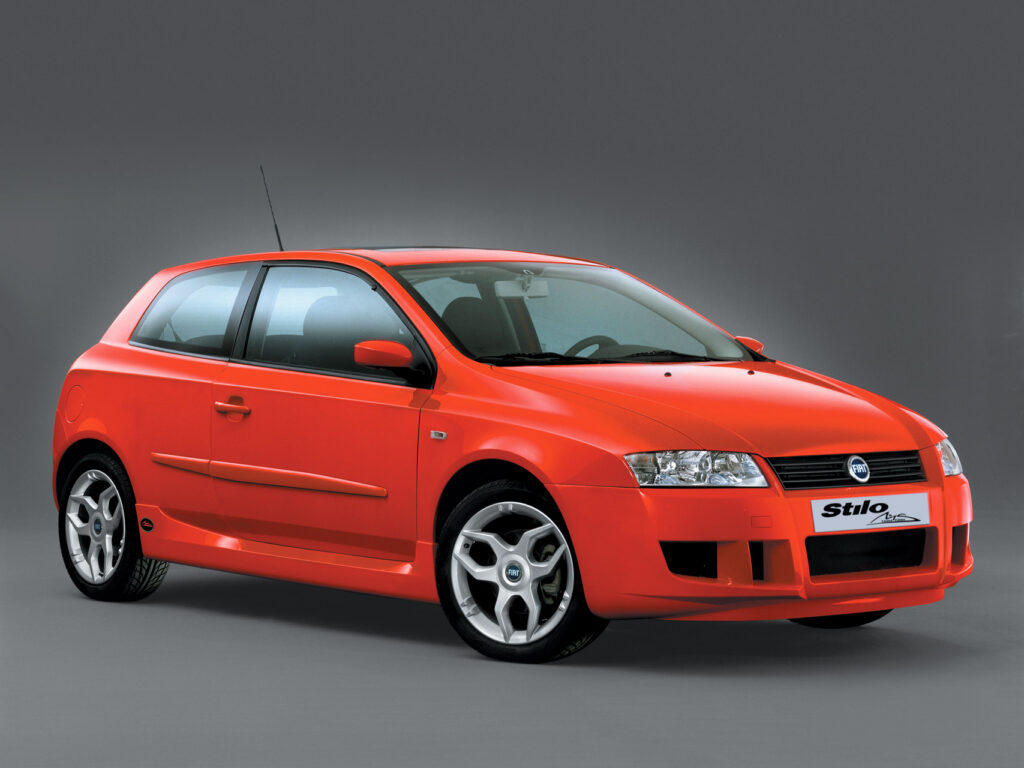
Fiat Stilo Schumacher (2005-2006)
You should have said no, Michael.
The Fiat Stilo on which this ill-conceived tribute was based was already a disaster before the champion German driver was convinced to add his initials to various parts of the car’s anatomy.
Launched in 2001, with forecasts of 400,000 sales per year, by 2004 the Stilo was in trouble, having managed less than that number in its first three years on sale.
Fiat-owned Ferrari, meanwhile, was riding high, with Schumacher on the way to claiming the Scuderia’s fifth consecutive F1 World Championship title and his seventh world-championship title overall.
Fiat conceived the Stilo Schumacher Edition to mark the occasion and hoped it might provide a halo effect and sales boost for the rest of the range, despite being limited to just 200 examples across two variants.
Both used the Abarth Stilo’s 127kW/221Nm 2.4-litre five-cylinder powerplant, for a warm-rather-than-hot 0-100km/h time of around 9.0sec. The GP Edition looked the part with 18-inch OZ Racing alloys as well as Prodrive-tuned Bilstein dampers and a louder exhaust, but as F1 driver tributes go, it was more Luca Badoer than his Schuminess.
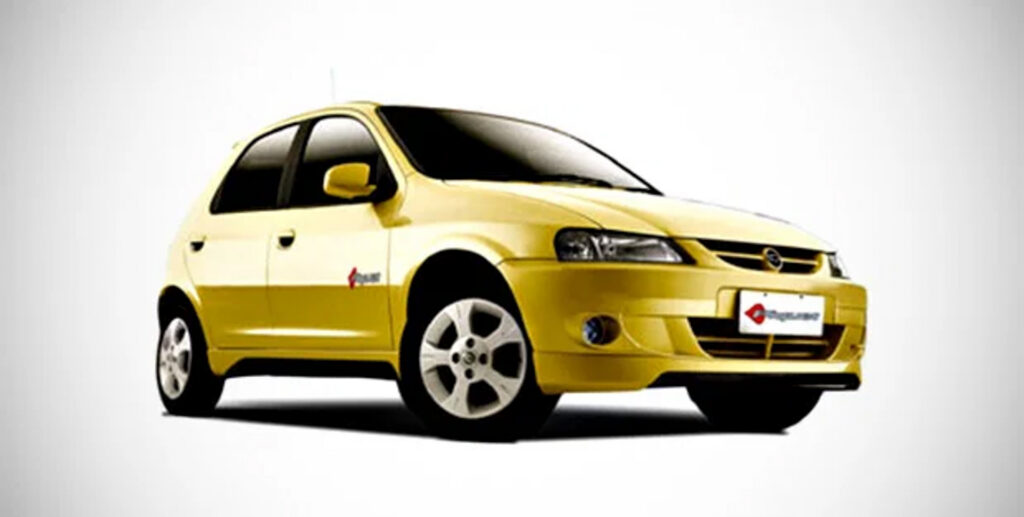
Chevrolet Celta Piquet (2003)
Three-time F1 champion Nelson Piquet was well-known for his sense of humour and presumably that’s why he agreed to put his name on this small Chevrolet hatchback. Offered only in his native Brazil, its 1.0-litre engine produced a furious 52kW for a 0-100km/h stroll of 13.5sec. Interestingly, you couldn’t buy a Chevrolet Celta Piquet but could only win one of the 30 cars built, via a nationwide sweepstakes promotional campaign. There were no under bonnet mods but every car was produced in the same vibrant shade of yellow and came equipped with factory modifications including rear spoiler, side skirts, custom bumpers, 13-inch alloys, and “Piquet” helmet-shaped logos. The limited production run means finding an authentic Celta Piquet today is something of a holy grail for Brazilian car collectors. The Aussie equivalent would be the Lada Samara Deluxe by Brock, but that’s a whole other story…