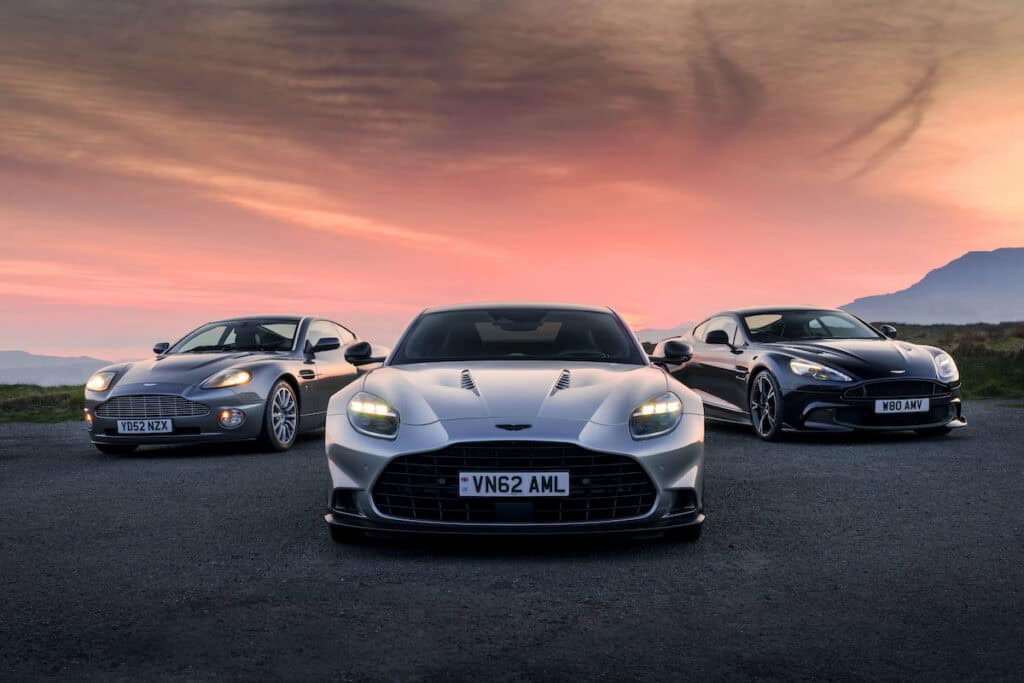
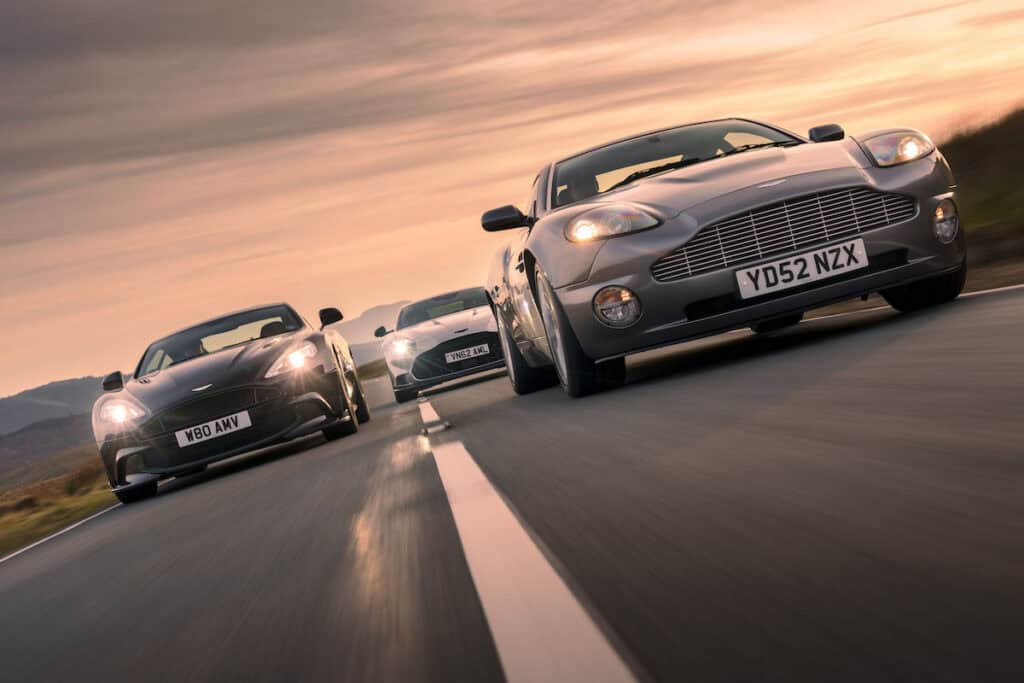
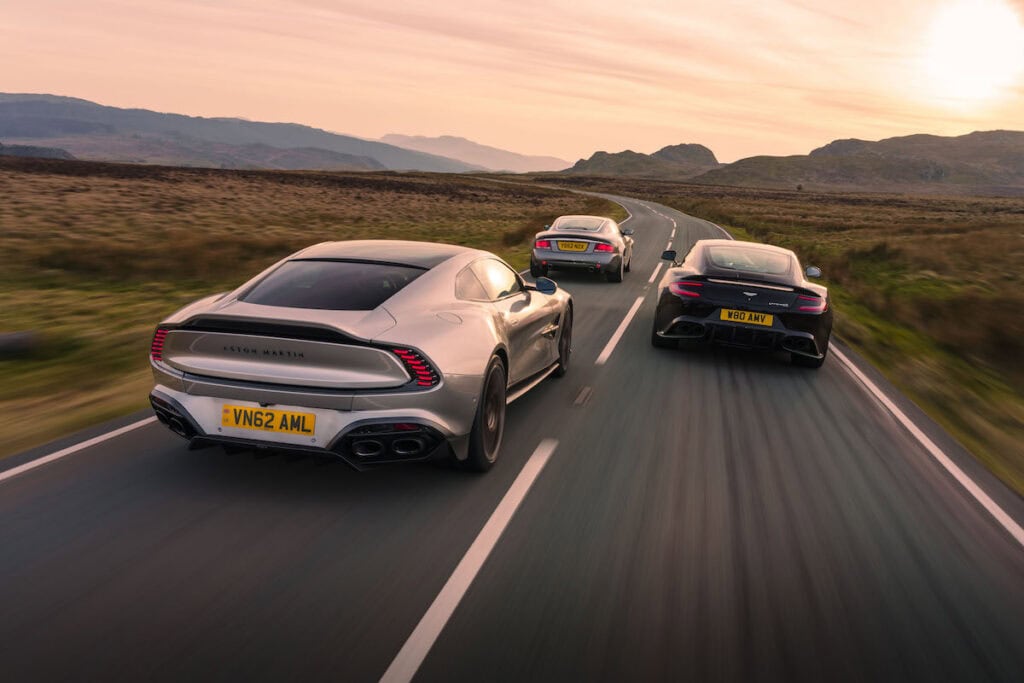
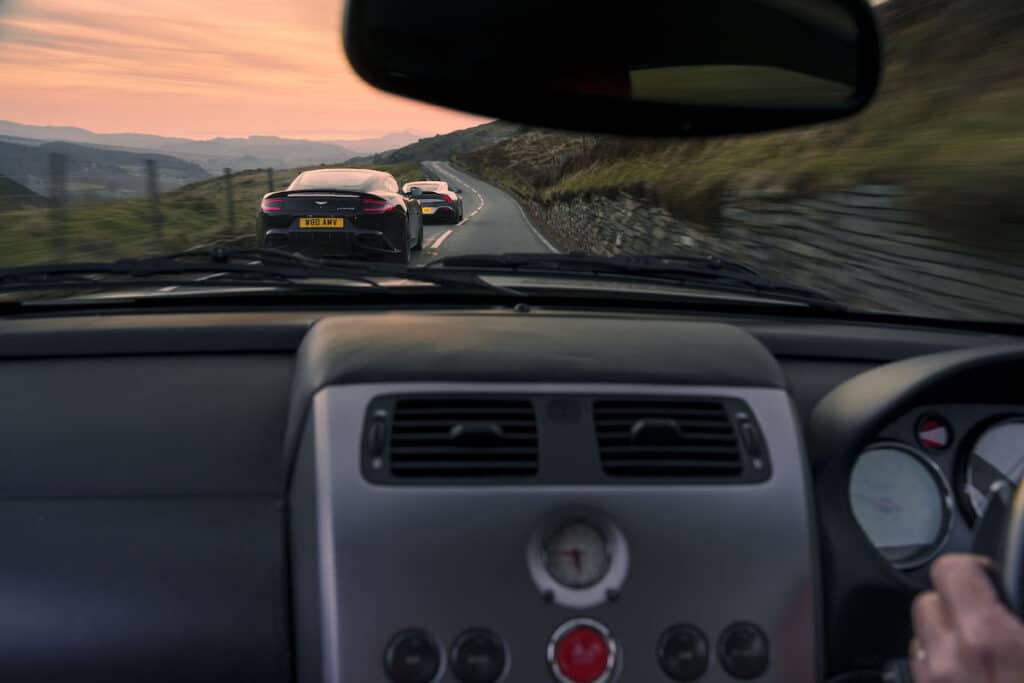
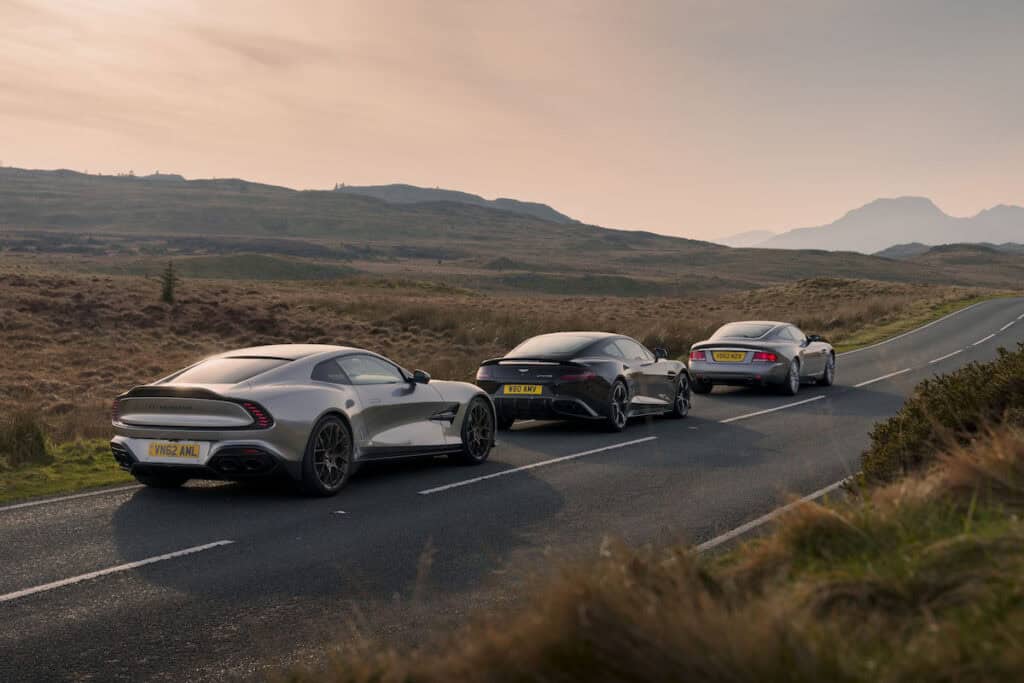
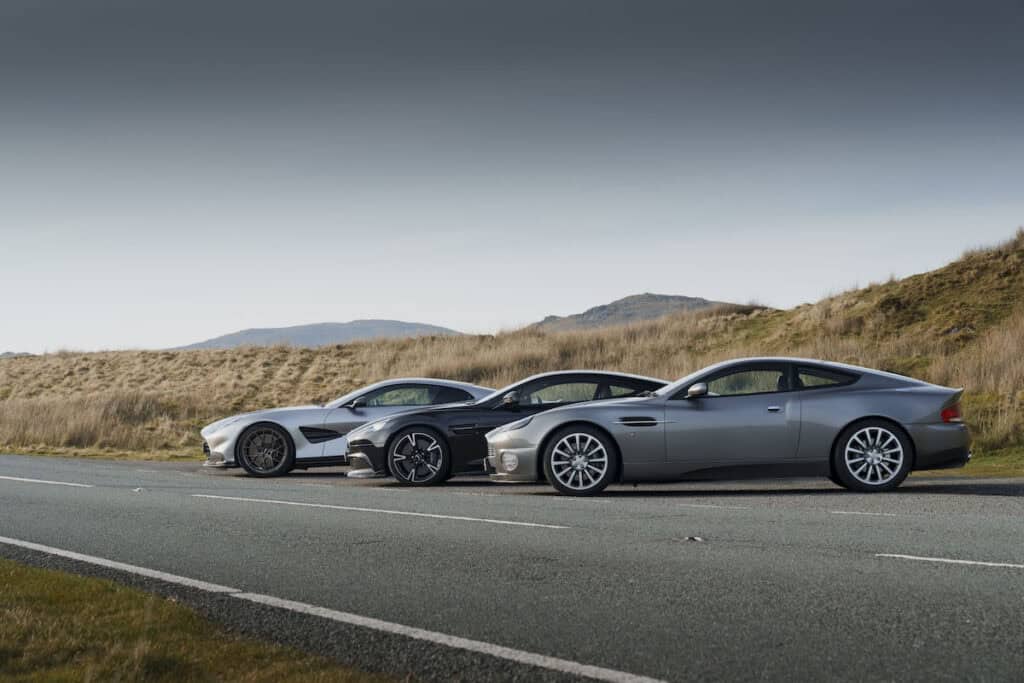
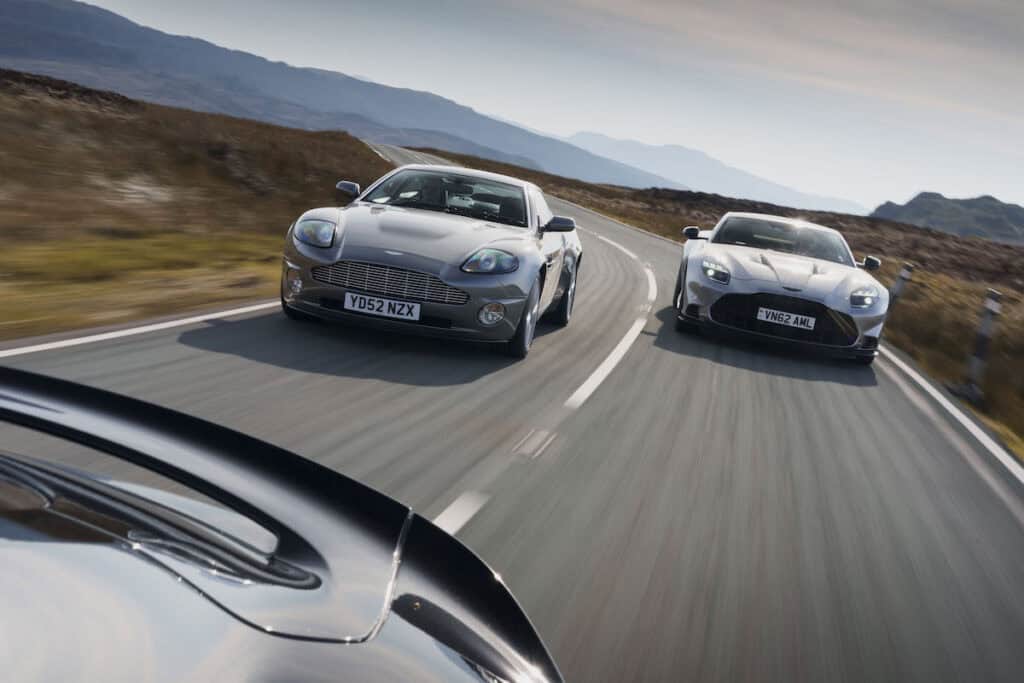
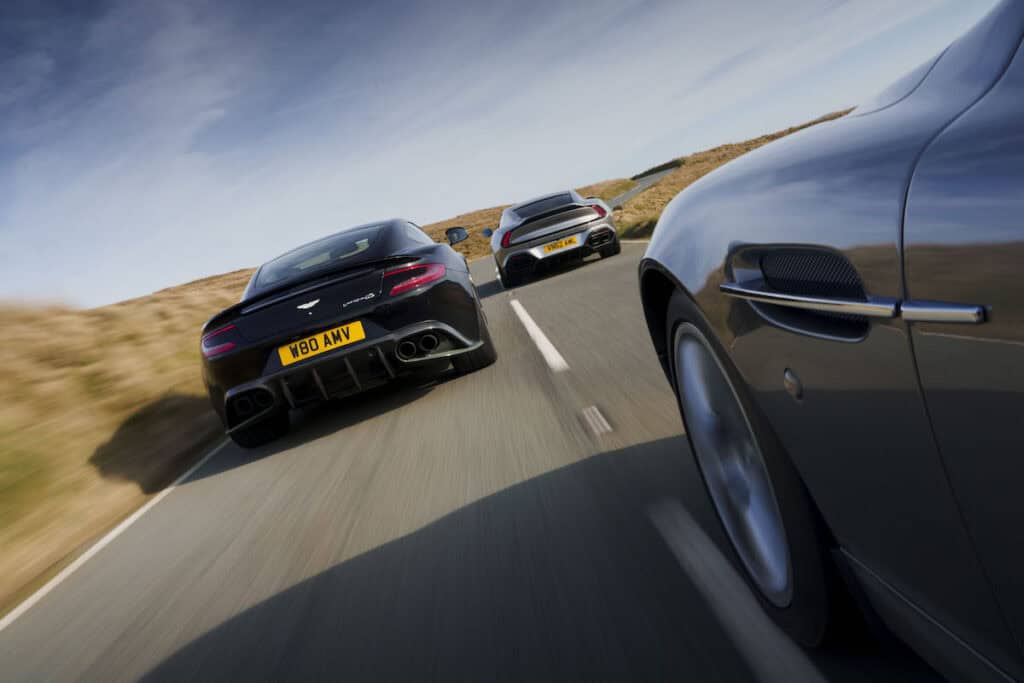
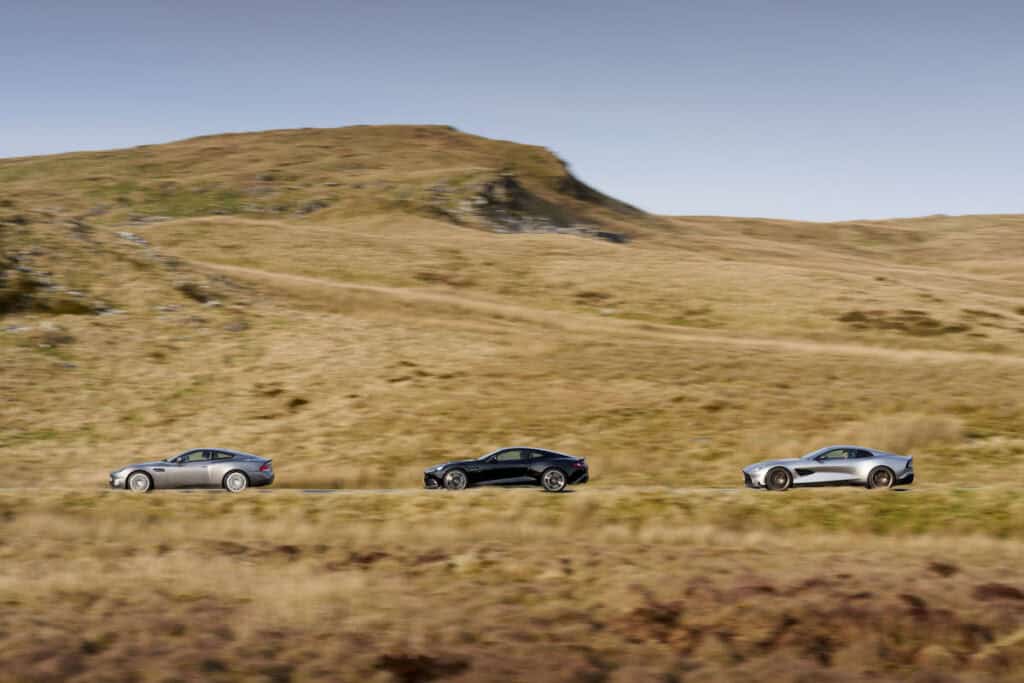

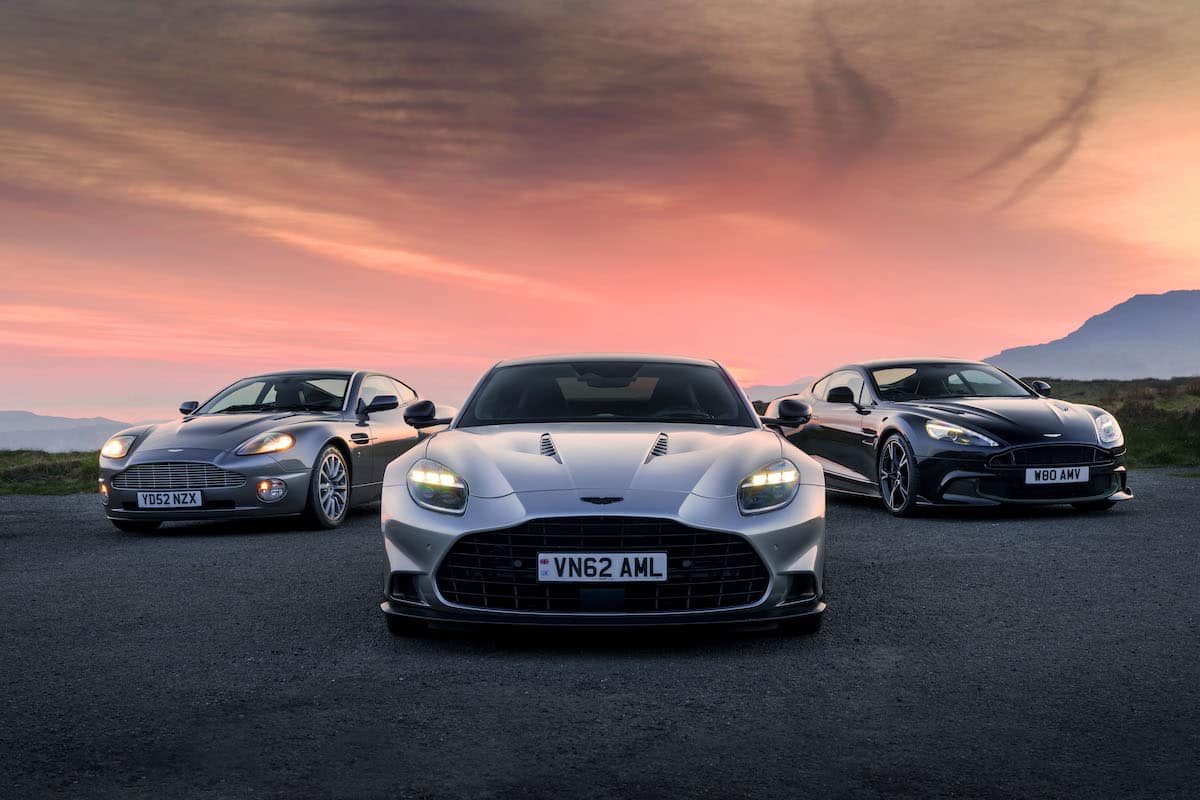
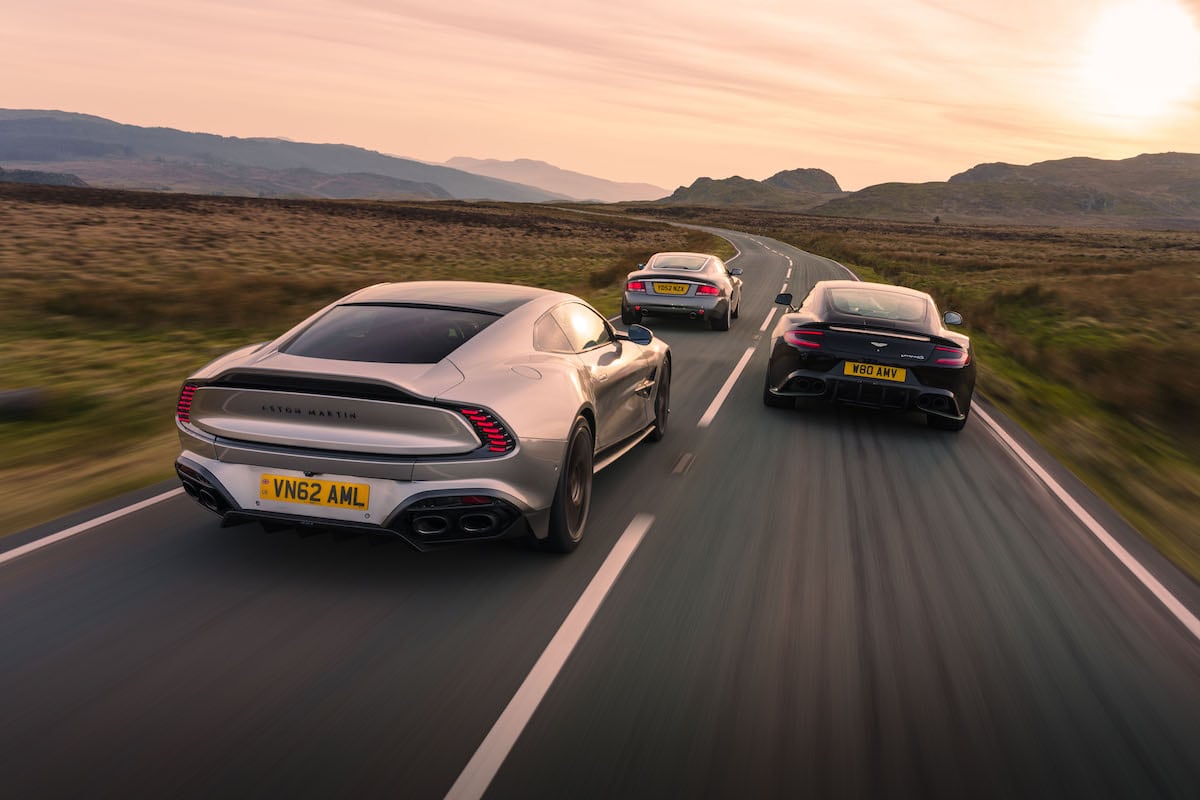
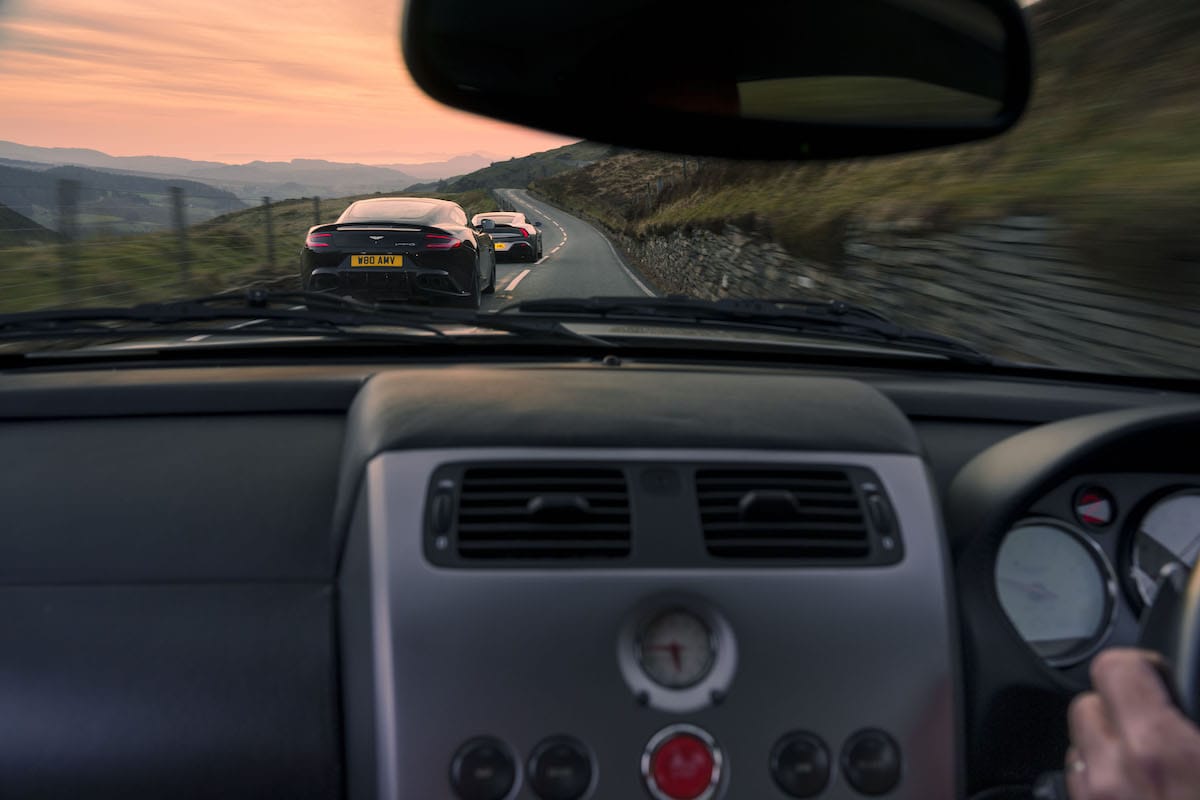
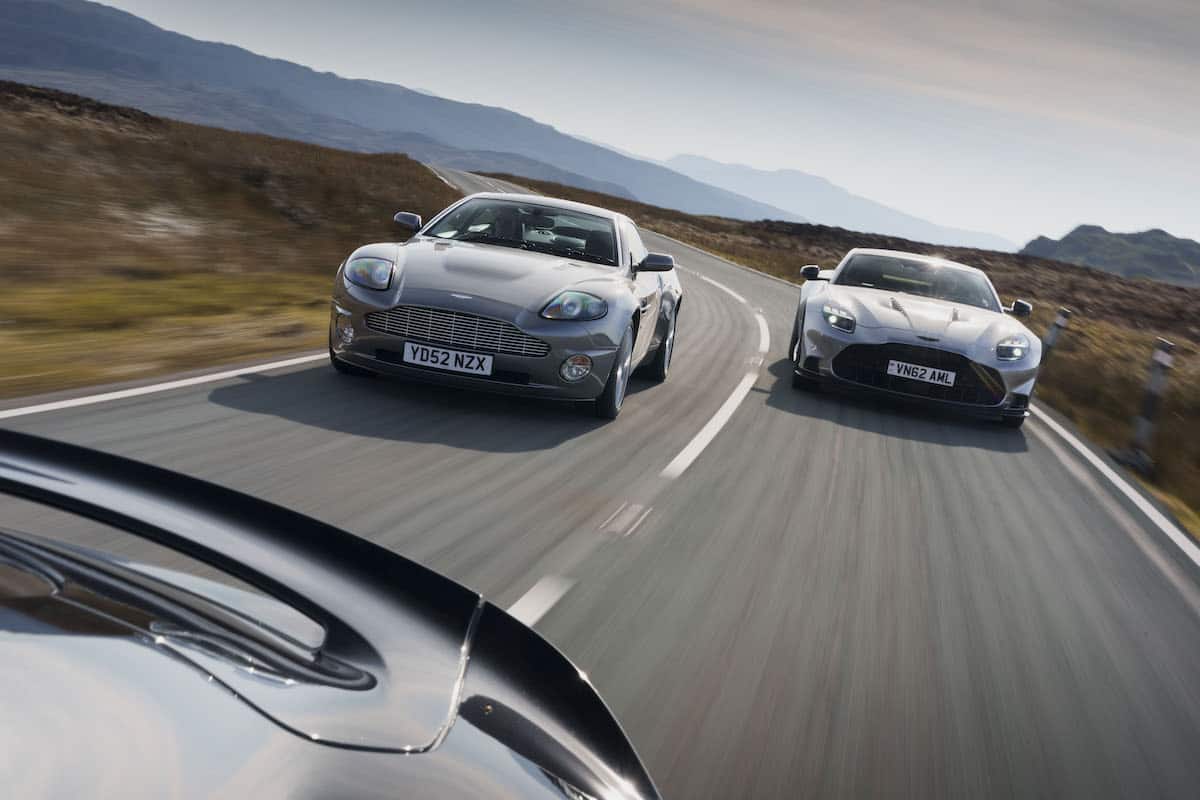
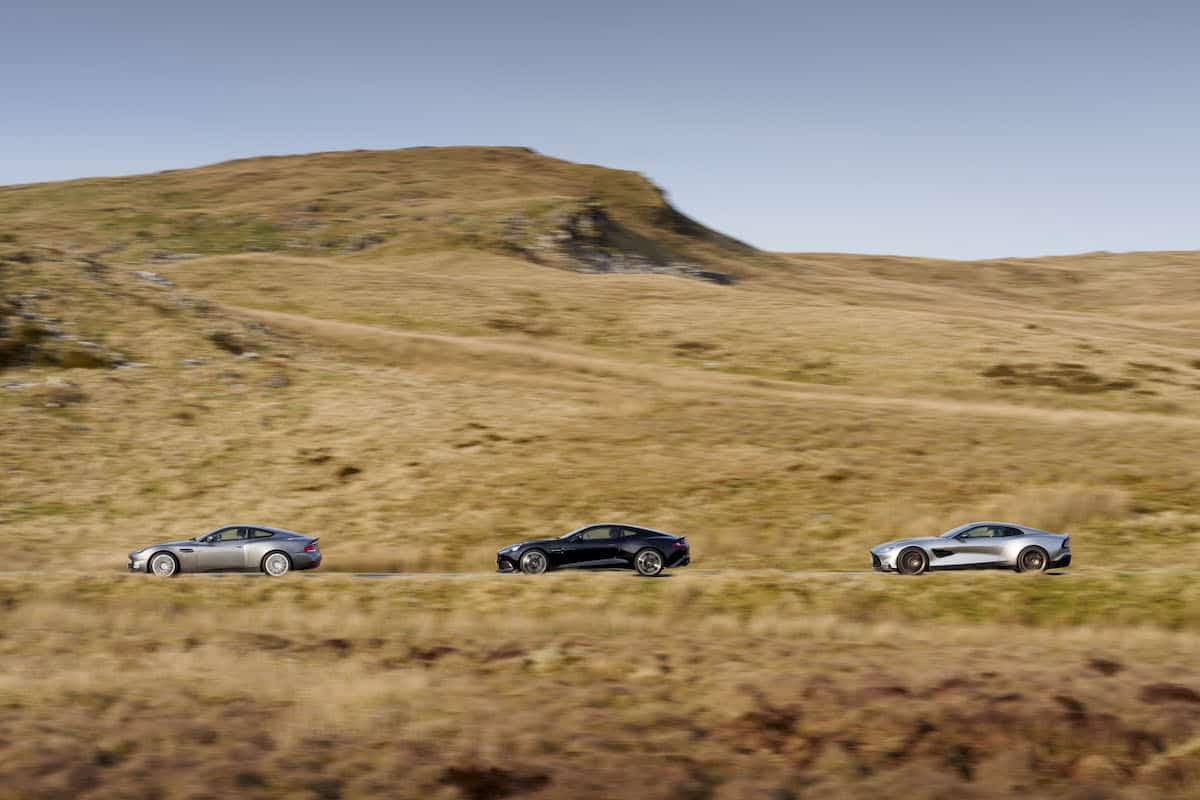
Turn the clock back 25 years and Aston Martin was readying to reveal an all-new, V12-powered flagship model for the brand. Wearing a brand new nameplate and riding on an all-new platform, it was quite simply the most sophisticated and technologically advanced sports car designed and developed by the brand yet.
That car was the V12 Vanquish, entering production at Newport Pagnell in 2001 – the last model to be produced in the historic facility. Described as “the ultimate Grand Tourer” by US outlet Road & Track, it was well received by the motoring press of the day.
Appearances in the 2002 James Bond film Die Another Day and the 2003 remake of The Italian Job only cemented its legacy as a star of the silver screen, too.
Fitted with a 343kW (460hp) naturally aspirated 5.9-litre engine paired with an F1-inspired automated manual gearbox, the V12 Vanquish incorporated cutting edge technologies for the time.
Built around an aluminium tub, carbon fibre transmission tunnel and A-pillars, and extruded aluminium structural elements, its stunning bodywork utilised also-advanced composite panels. Drive-by-wire throttle control and gearshift paddles also served as a sign of advancement at the time.
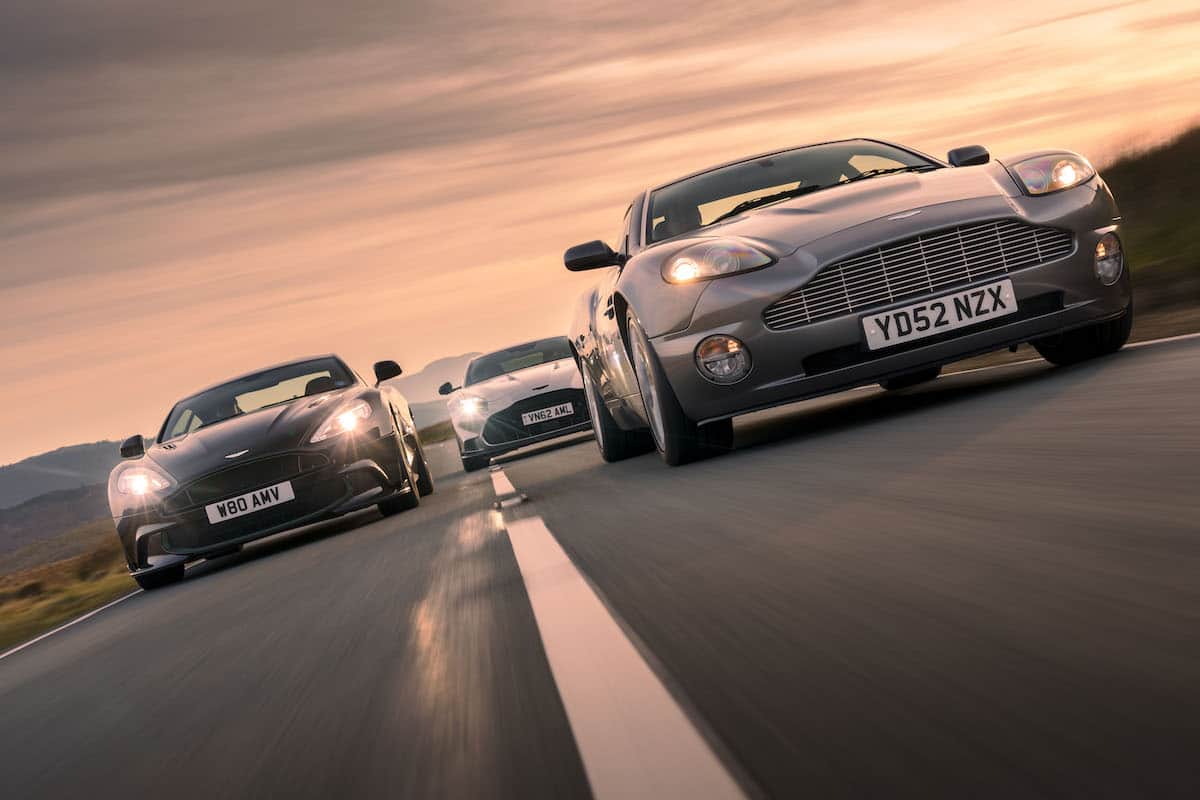
Designed to deliver new performance benchmarks for the brand, it was dispatched from 0-97km/h (0-60mph) in just 4.5 seconds en route to a 306km/h (190mph) top speed. The uprated V12 Vanquish S of 2004 only improved on those numbers, delivering 388kW (520hp), a 4.2 second sprint time, and a top speed of 322km/h (an even 200mph).
When production concluded in 2007, a combined 2578 units had been built.
After a hiatus for several years, the nameplate made a return in 2012 with the second-gen model. While the ‘V12’ part of the name had been dropped and it was now simply ‘Vanquish’, the 5.9-litre engine hadn’t been.
Featuring significant revisions compared to its predecessor including bigger throttle bodies, dual variable valve timing, and new fuel pumps and air boxes, performance was up to a muscular 421kW (565hp), translating to 0-100km/h (0-62mph) in 4.1 seconds and a 294km/h (183mph) top speed.
With an all-new exterior form inspired by the One-77 hypercar, its carbon fibre bodywork was 25 percent lighter than the DBS it superseded. Carbon Ceramic Matrix braking technology was also utilised to reduce brake fade and improve heat dissipation.
Like its predecessor, an even more powerful Vanquish S later joined the range in late 2016, boasting 444kW (595hp). Uniquely, an open-roof Volante was also part of the range.
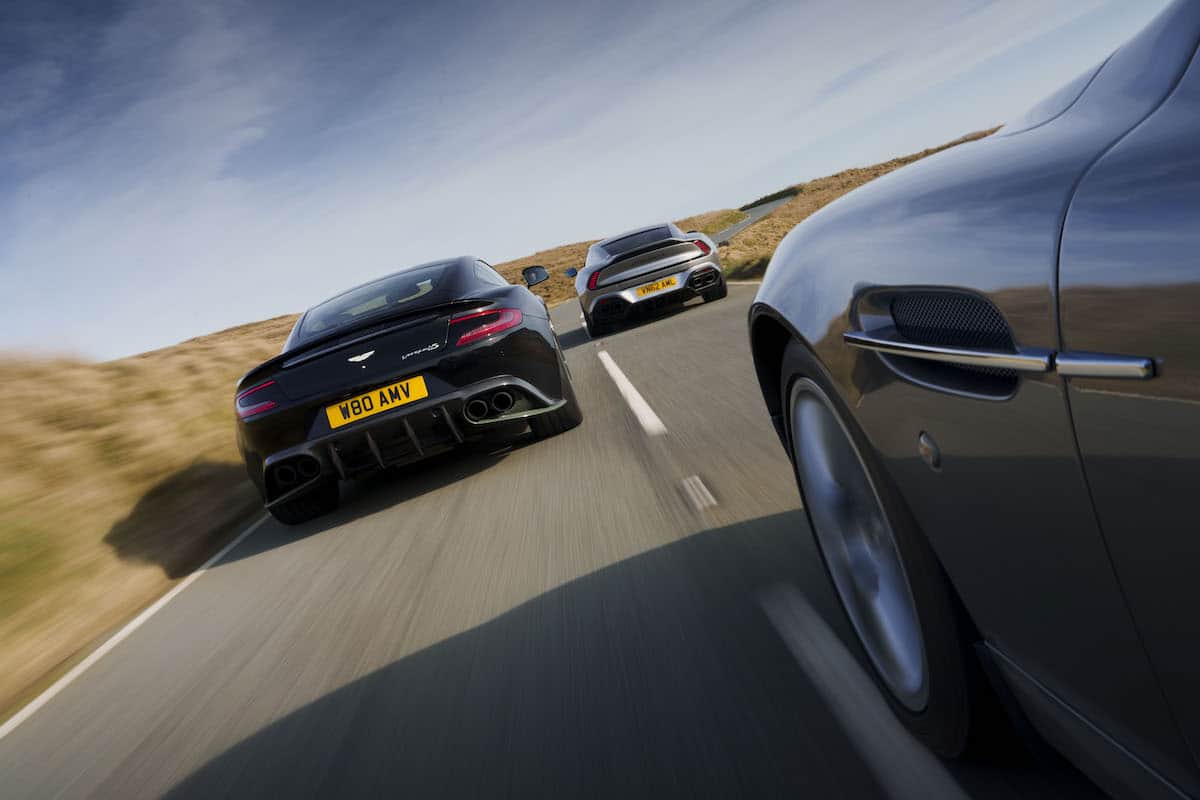
Today, the Valkyrie may be Aston Martin’s crown jewel, but the Vanquish is still the front-engined flagship of the brand’s lineup. The current model launched in 2024, adding forced induction for the first time and taking the Vanquish into a new performance stratosphere.
Although the V12’s capacity was reduced to 5.2-litres, the fitment of twin-turbochargers means that the new Vanquish delivers an absurd 614kW (835PS) and 1000Nm of torque.
Its immense in-gear acceleration is such that it’s dispatched from 0-97km/h (0-60mph) in a mere 3.3 seconds. At the time of its launch, its 344km/h (214mph) top speed made it the fastest Aston Martin series production model to date.
Like its acclaimed stablemates, DB12 and Vantage, the current Vanquish is built around a bonded aluminium body structure with double wishbone front suspension and multi-link rear suspension.
A Carbon Ceramic Brake system with 410mm front and 360mm rear discs is fitted as standard, with the system offering increased braking performance, reduced brake fade at temperatures up to 800°C, and a significant reduction in unsprung weight.
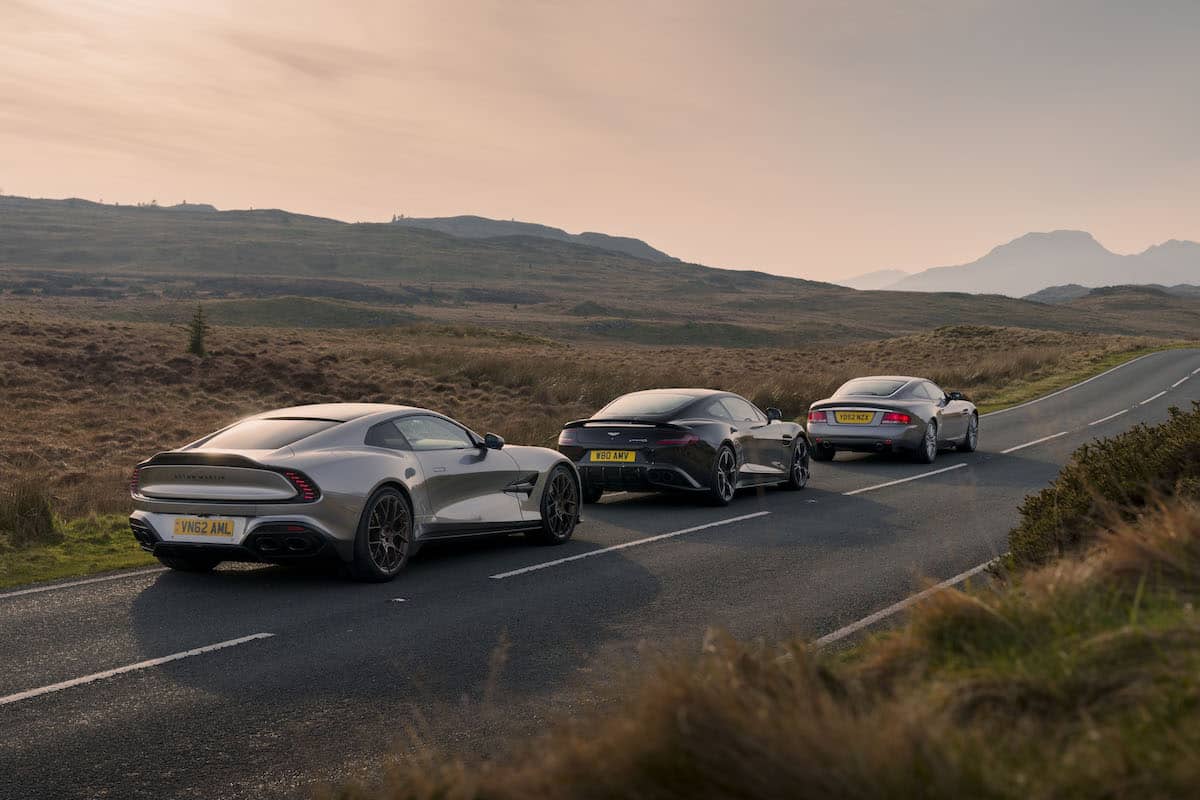
All-new design language sees the current Vanquish express contemporary elegance through its toned physique, broad stance and fluid curves. An increased wheelbase has extended the distance between the A-pillar and the front axle being extended by 80mm to lengthen the bonnet for a rakish and dramatic profile, a key element of its design.
“Look up the word ‘vanquish’ and you will find it has, in my opinion, one of the best dictionary definitions in the English language,” notes Aston Martin historian Steve Waddingham.
“Terms such as ‘conquer’ and ‘overwhelm’ pop up as synonyms and that, broadly speaking, is what the first Aston Martin to bear the now legendary name set out to do; both in terms of its competitors, and in the hearts and minds of buyers.
“The second, and now third generations of our exceptional flagship Super GT have continued to live up to that aspiration and all those associated with Vanquish over the last 25 years can be rightly proud of the cars they have created.
“Any Aston Martin is, of course, a rare and special thing. But for a car to grow and develop as Vanquish has, through three distinct and exceptional generations, is, to my mind, an extra-special achievement, and it is therefore only right that we now celebrate 25 years of this flagship model.”
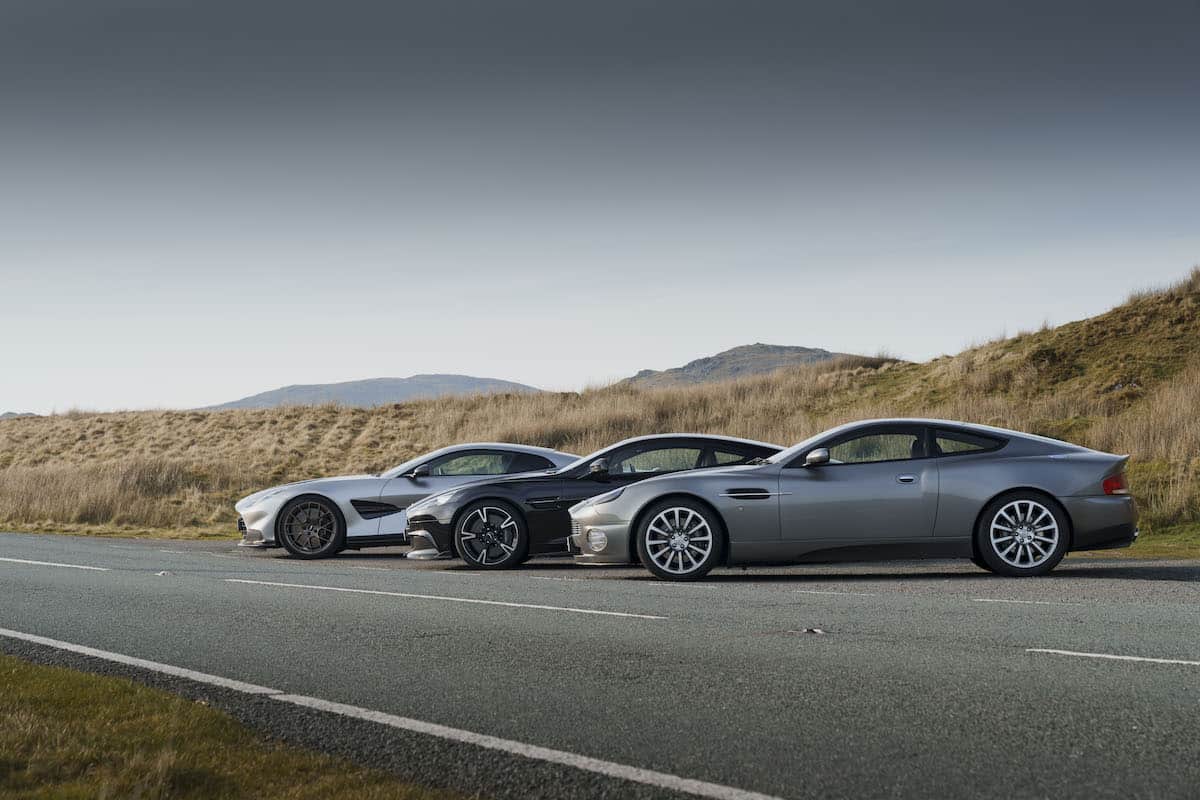
Aston Martin CEO Adrian Hallmark also reflected on the silver anniversary of the Vanquish, saying: “Since its arrival 25 years ago, the Vanquish nameplate has been synonymous with something special; something ambitious, different and daring.
“Over those years Vanquish has grown into a true Aston Martin icon and, in 2026, it remains nothing less than a symbol of what this exceptional British marque is capable of creating.
“Like the fortunate owners who have chosen to add one, or more, of the three generations of Vanquish to their collections since 2001, I am immensely proud of what this model represents.”