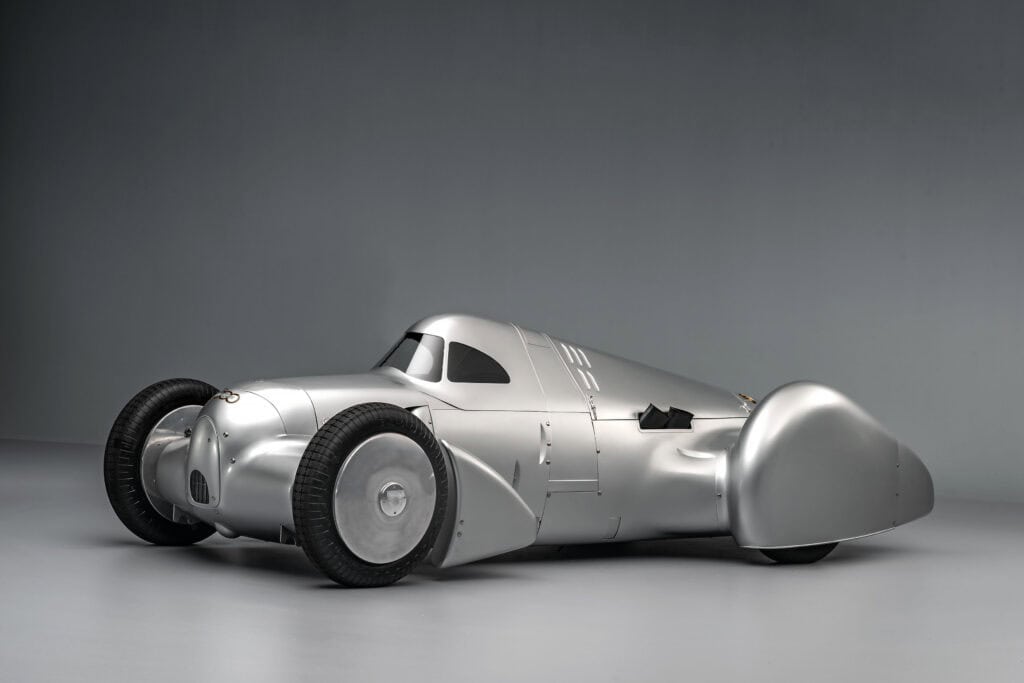

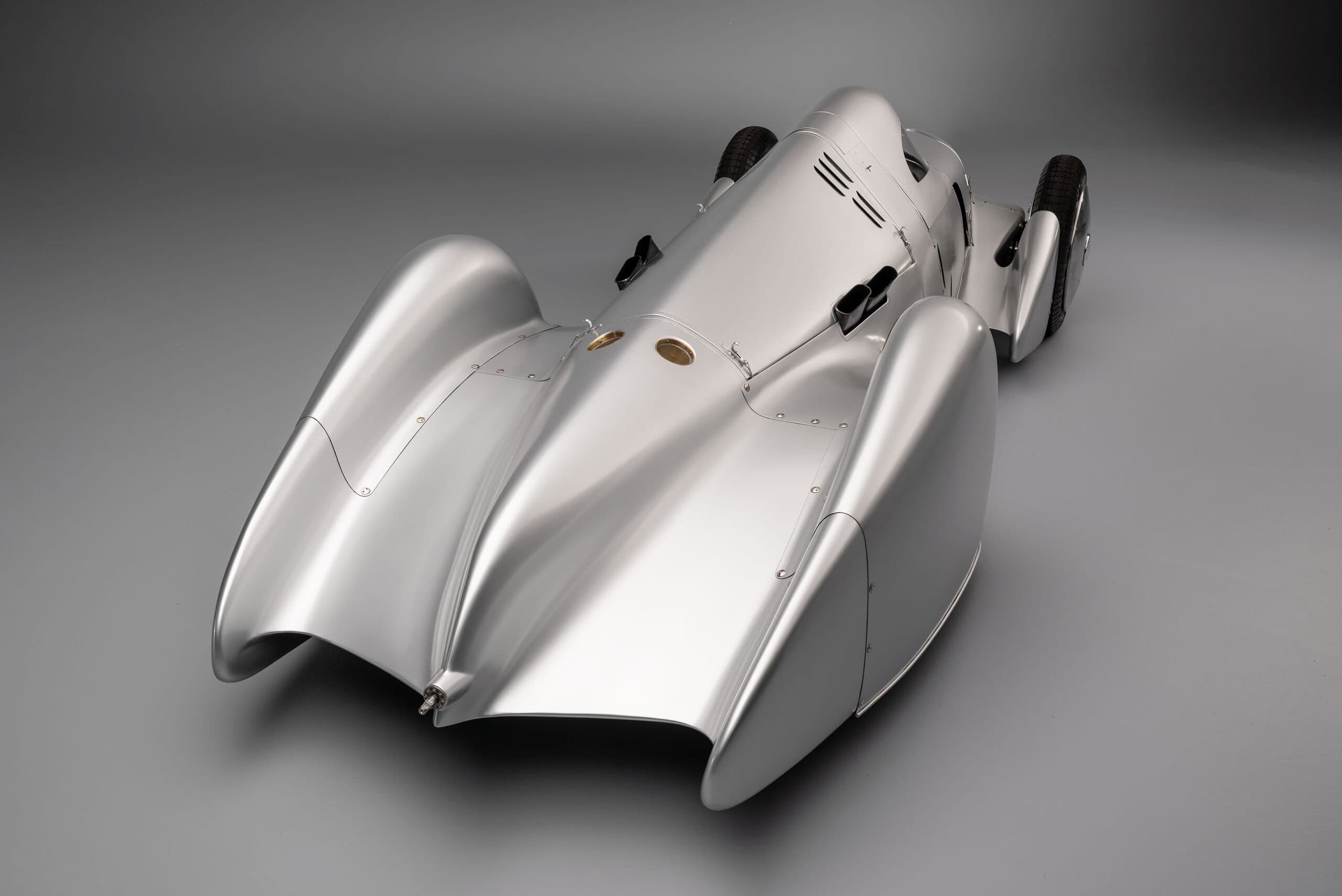
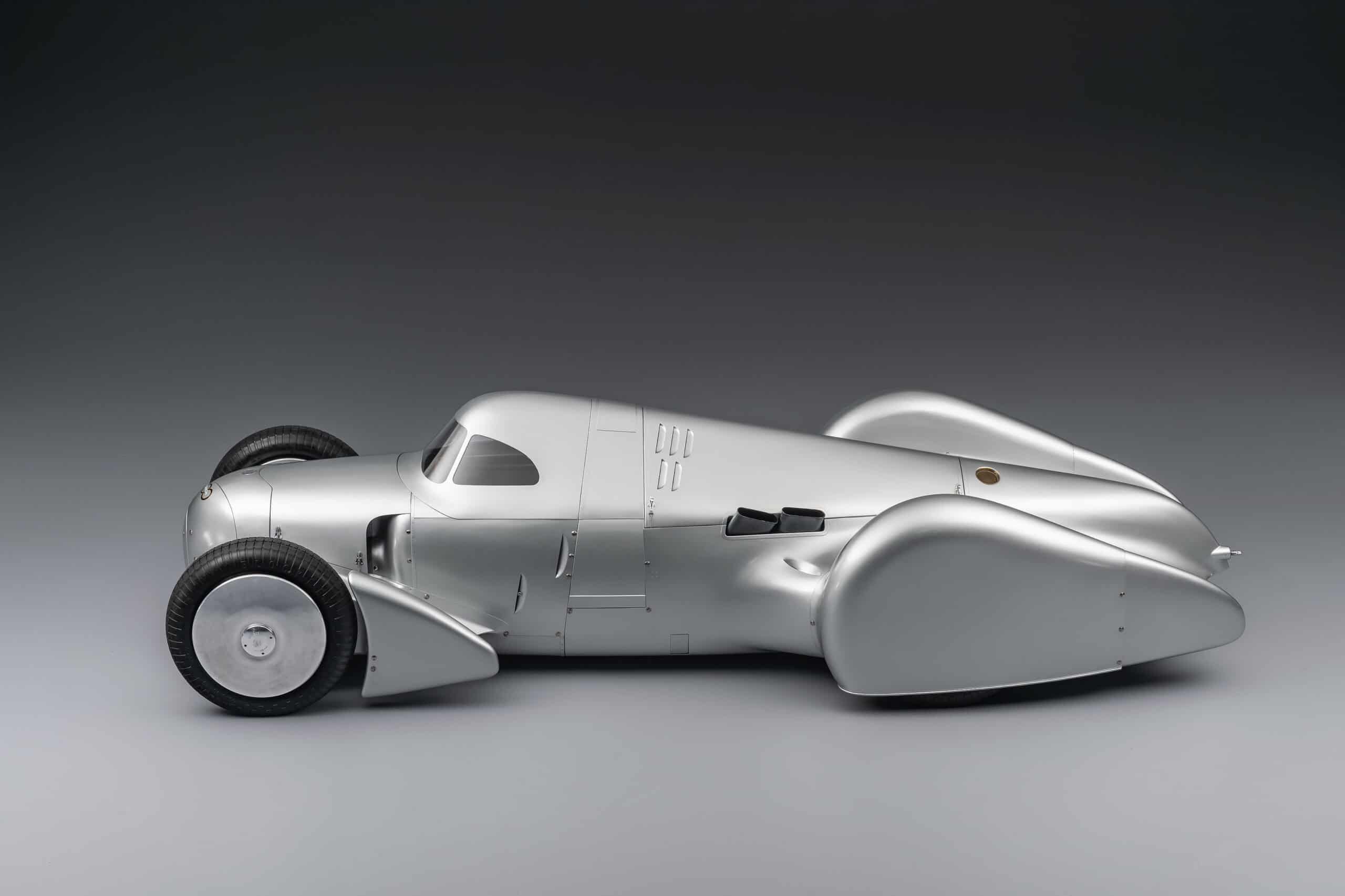
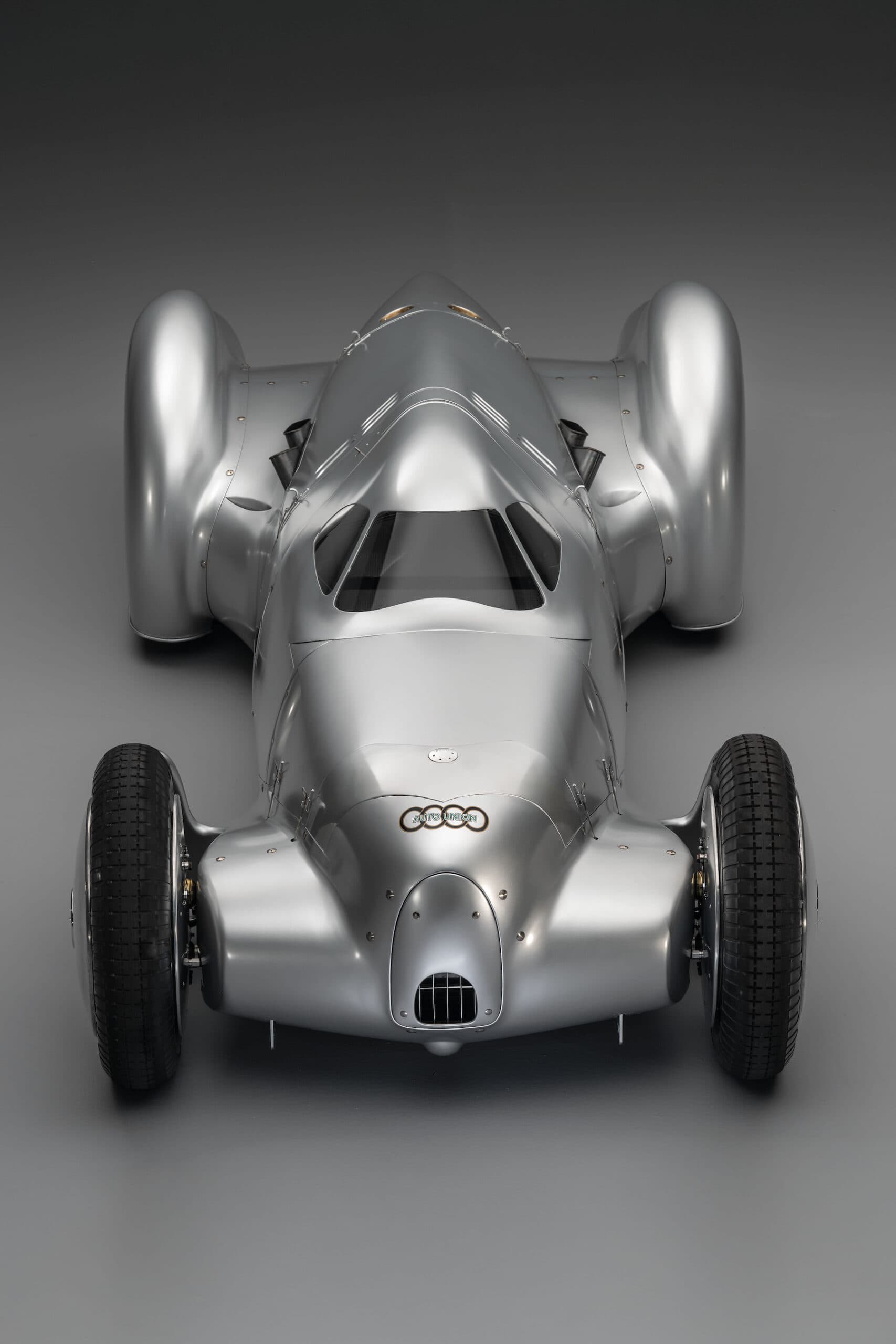
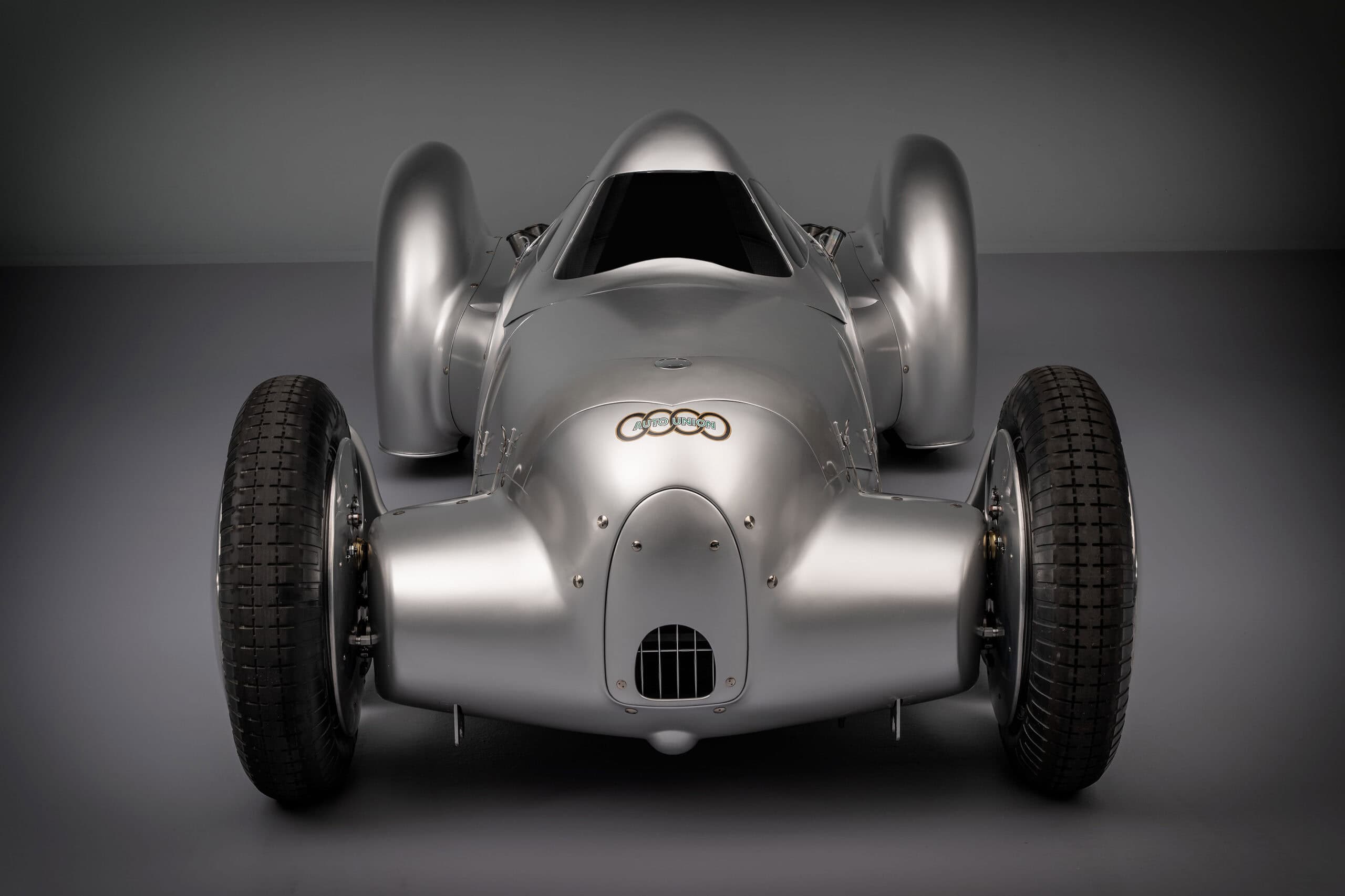
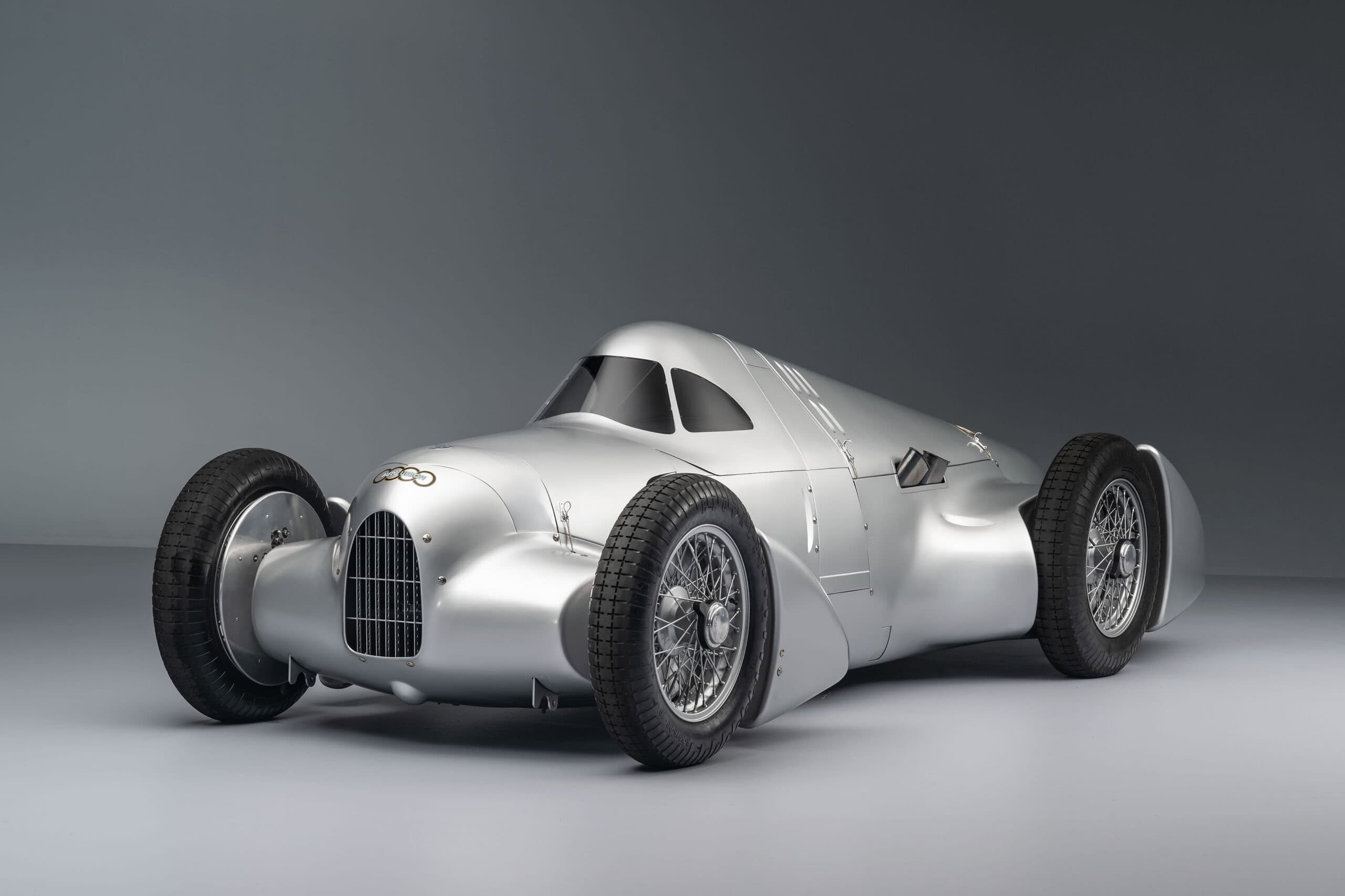
The 1930s was a busy time for the brand we now know as Audi, and the German marque’s Tradition division has recently completed work recreating one of its most iconic record-breaking cars from that period.
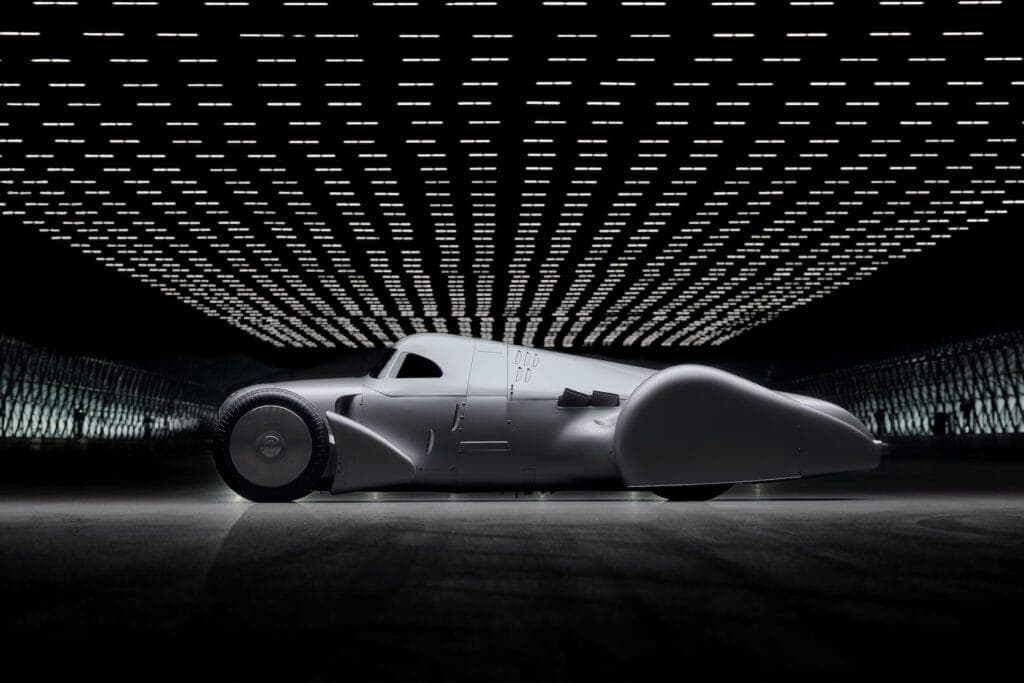
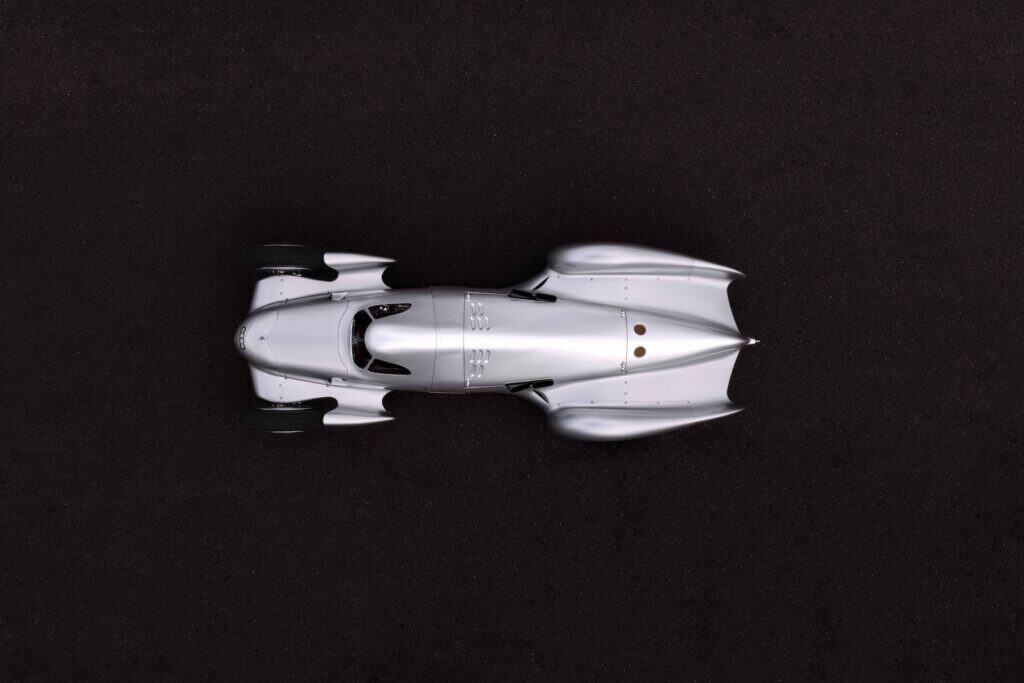
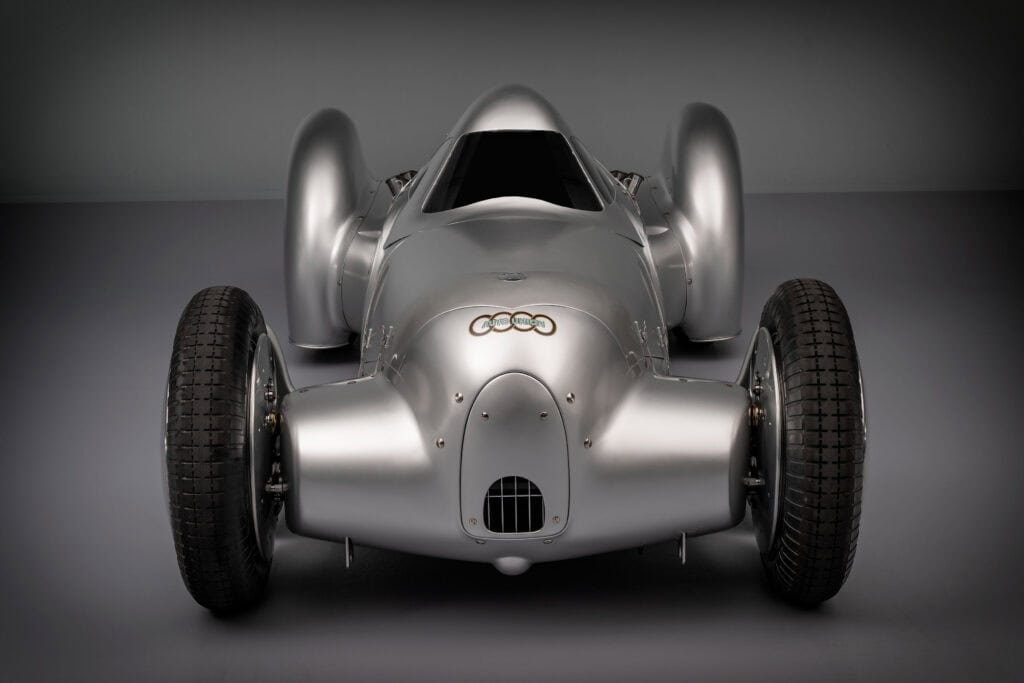
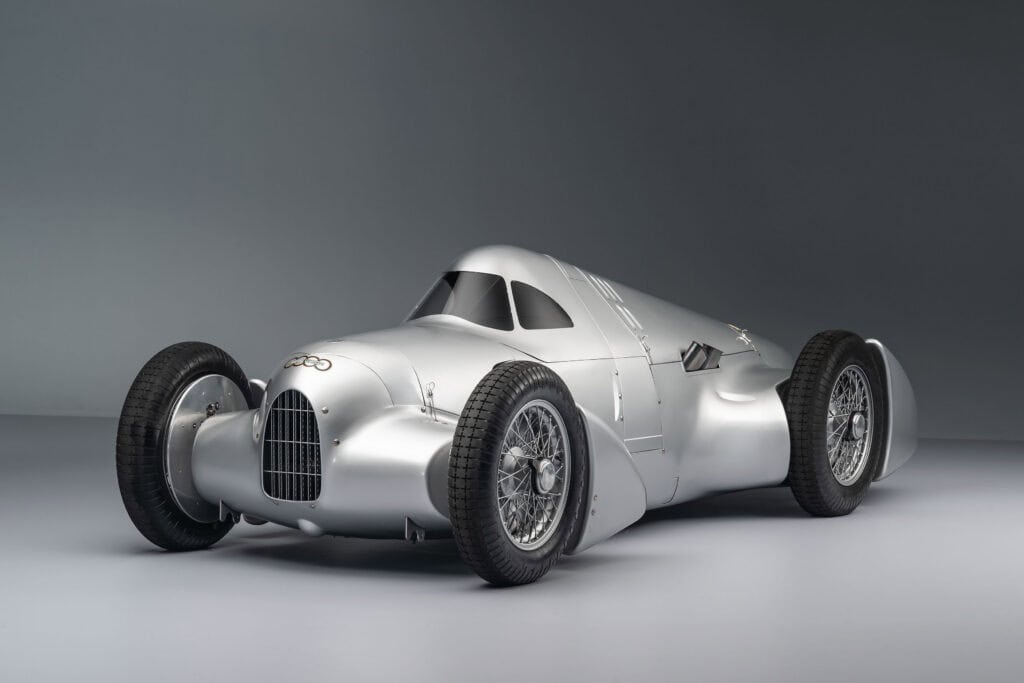
While the company developed a number of speed record cars at the time, none remained in the company’s heritage fleet, leading to the construction of this authentically recreated model of a 1935 car that set the fastest flying mile and highest top speed of any racing car recorded at the time.
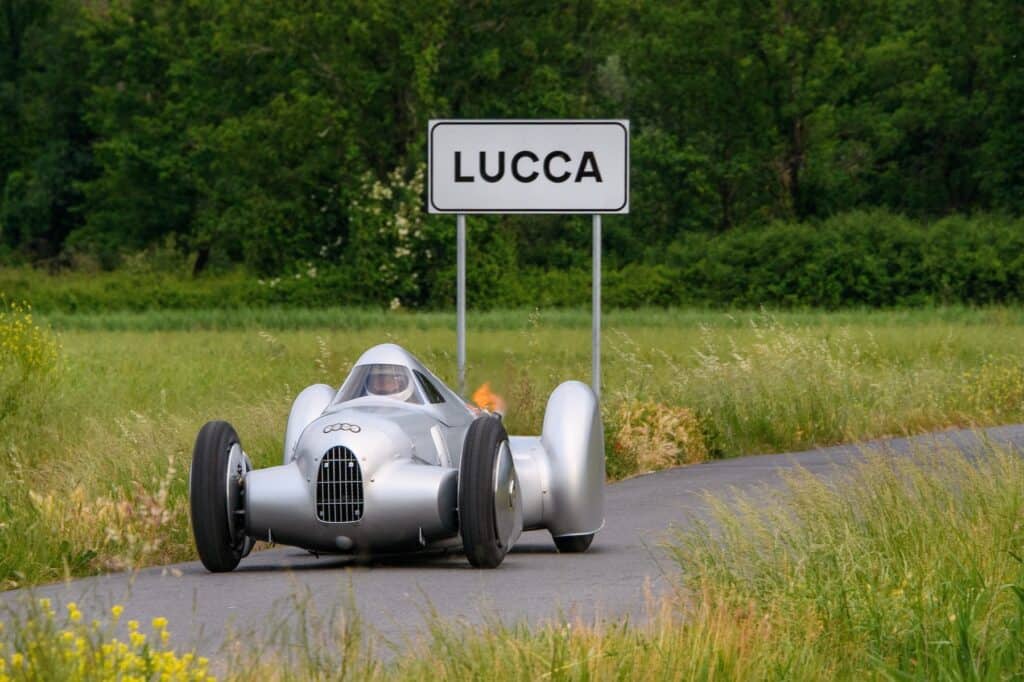
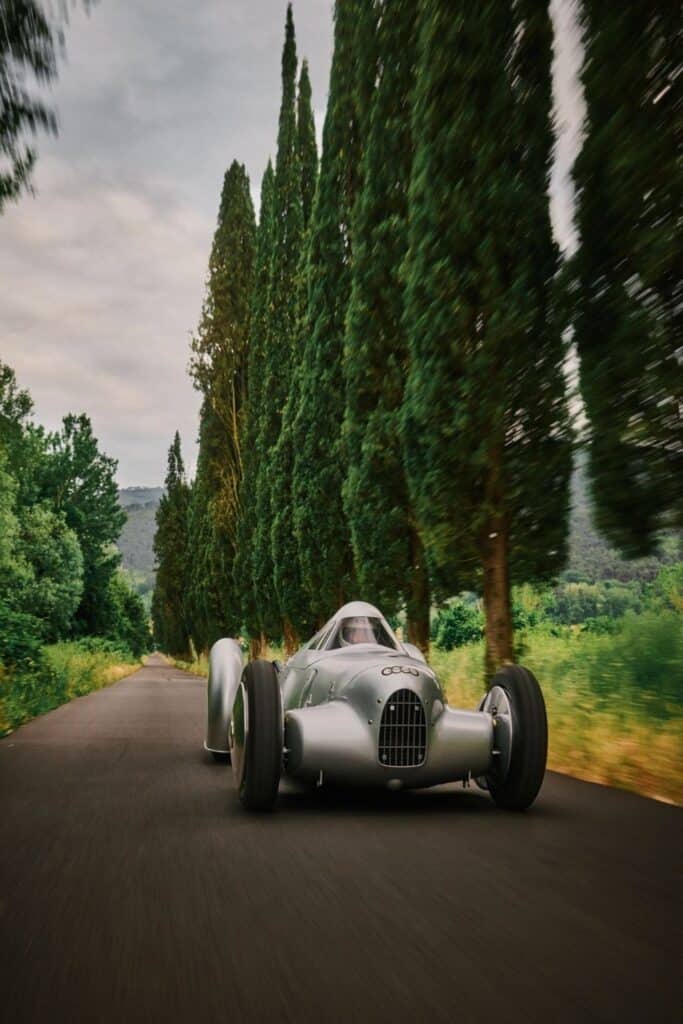
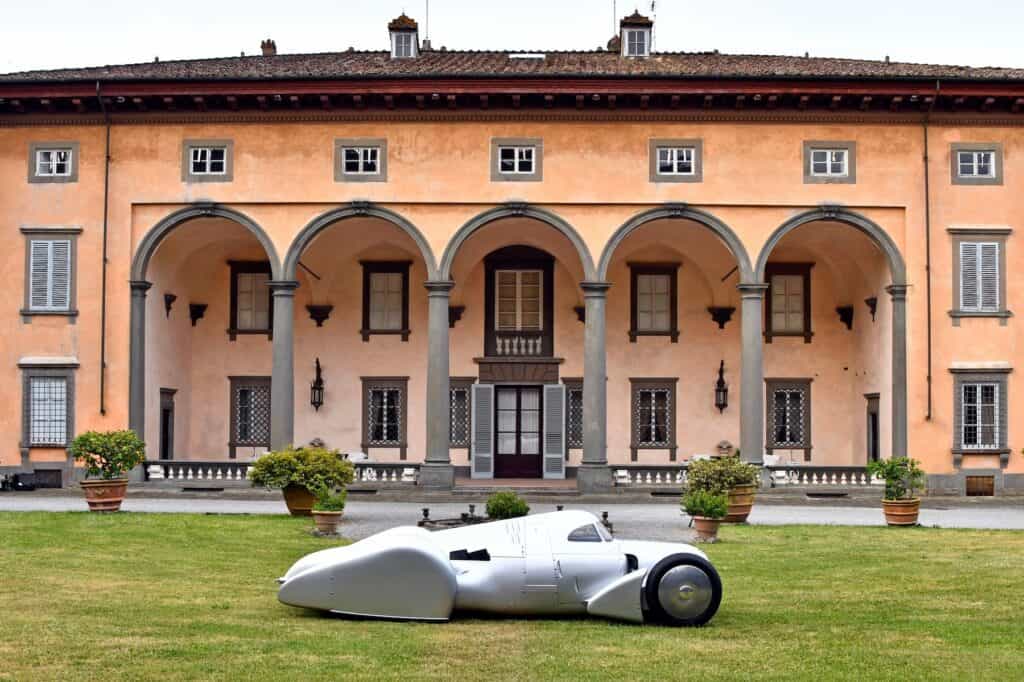
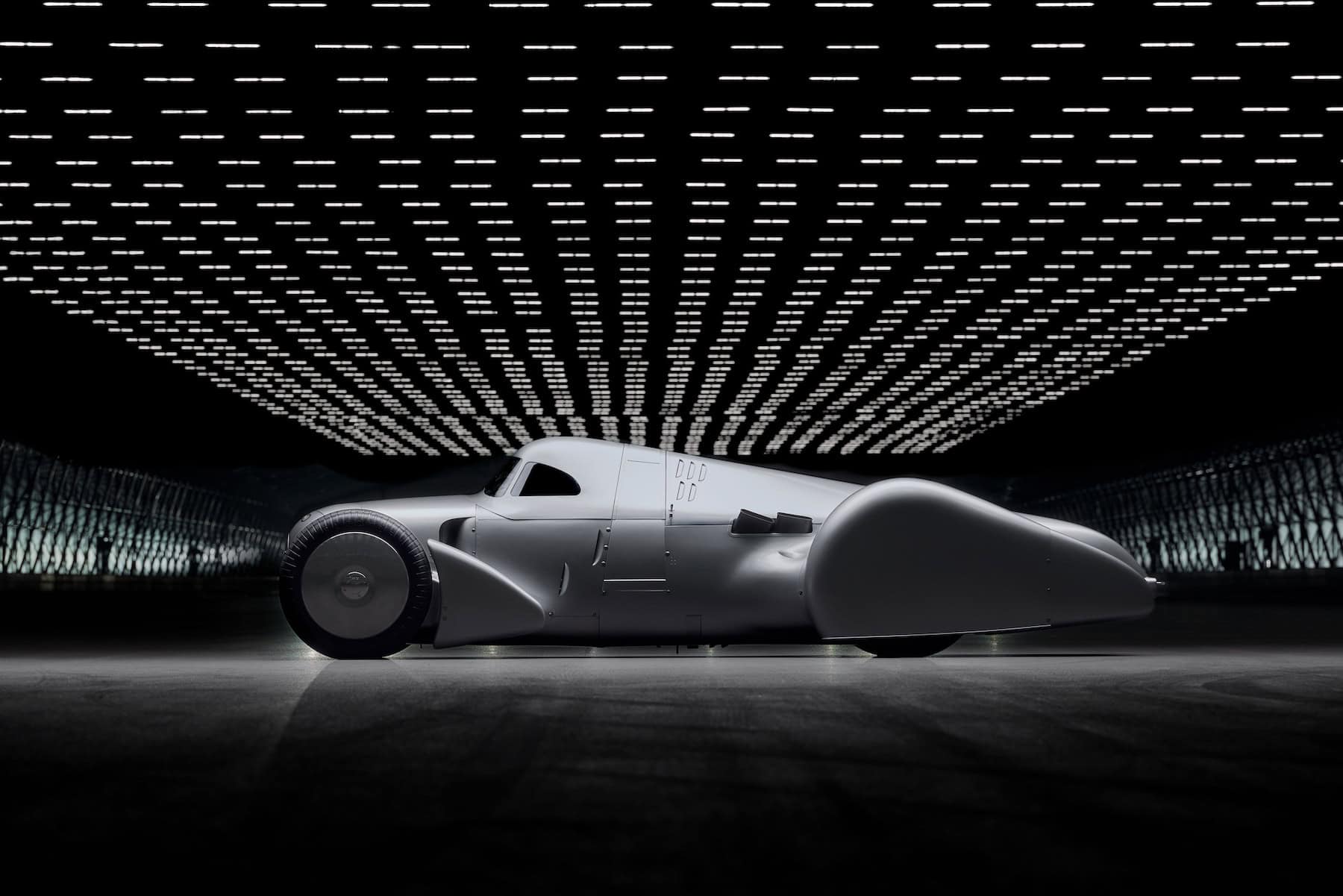
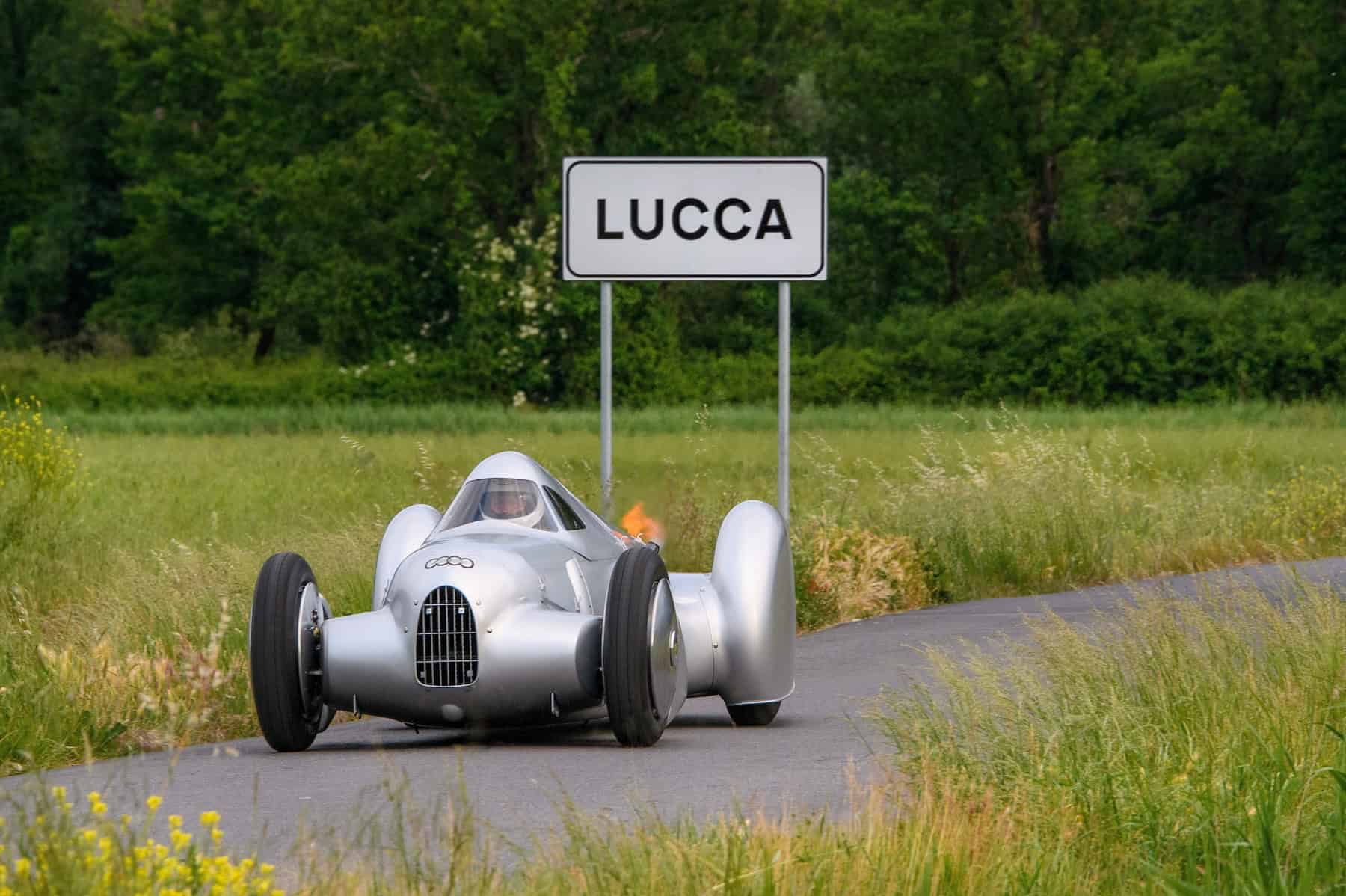
Known as ‘Lucca’ after the Italian city where the records were set, this Audi-commissioned recreation was hand-built in England over the course of three years, with work completed in early 2026 ahead of a planned on-track debut at the Goodwood Festival of Speed in July.
How the Auto Union Lucca came to be
When the ‘four rings’ first came to be in 1932 after Audi, DKW, Horch, and Wanderer merged to create Auto Union AG, the company quickly became entrenched in on-track competition with Daimler-Benz AG.
Grand Prix races and the constant breaking of speed records were followed almost obsessively by the media and public alike at the time, and celebrated in equal measure as well.
1934 marked Auto Union’s first Grand Prix season with the first of its ‘Silver Arrows’ cars – a line of aluminium-bodied, 16-cylinder racers designed by Ferdinand Porsche.
On track, a rivalry was brewing between Auto Union drivers Hans Struck and Bernd Rosemayer against Mercedes’ Rudolf Caracciola and Manfred von Brauchitsch. Off the track, the competition was just as hot with the brands and drivers battling on closed European motorways for top speed records.
That year, Auto Union set three world records on March 6 and five more on October 20 – all in a car driven by Stuck, normally a hill climb specialist.
Daimler returned serve shortly after in late October 1934, setting several international records on the highway near Gyón, Hungary in a specially built record-attempt car driven by Caracciola. Among other records, he reached an average speed of 316.592km/h over the flying mile.
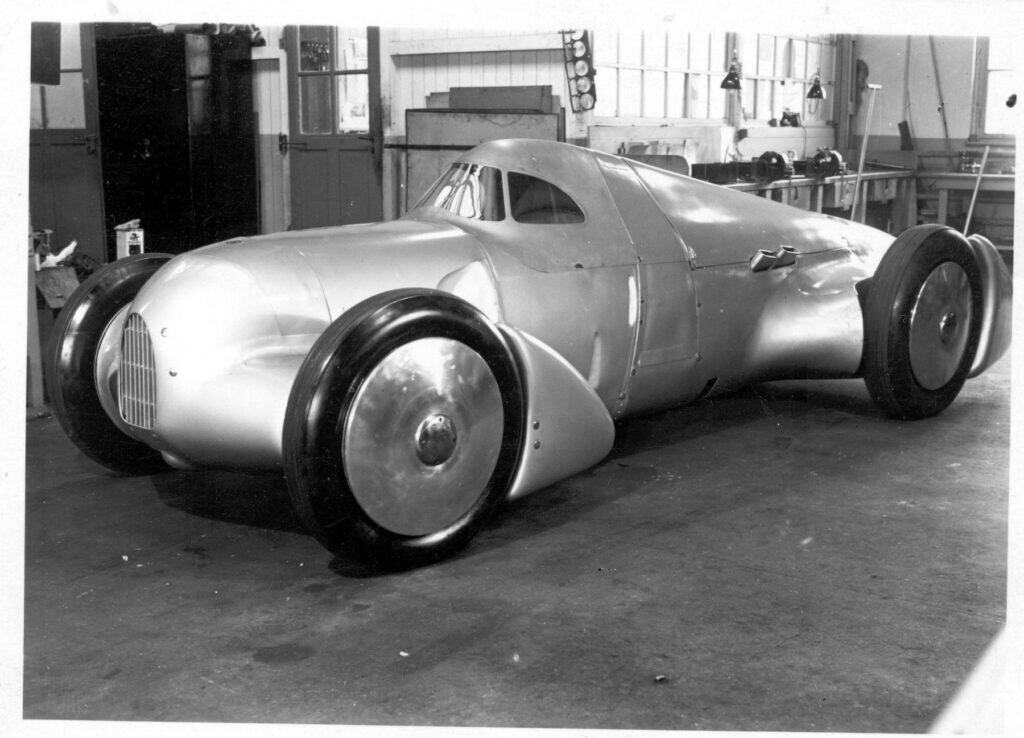
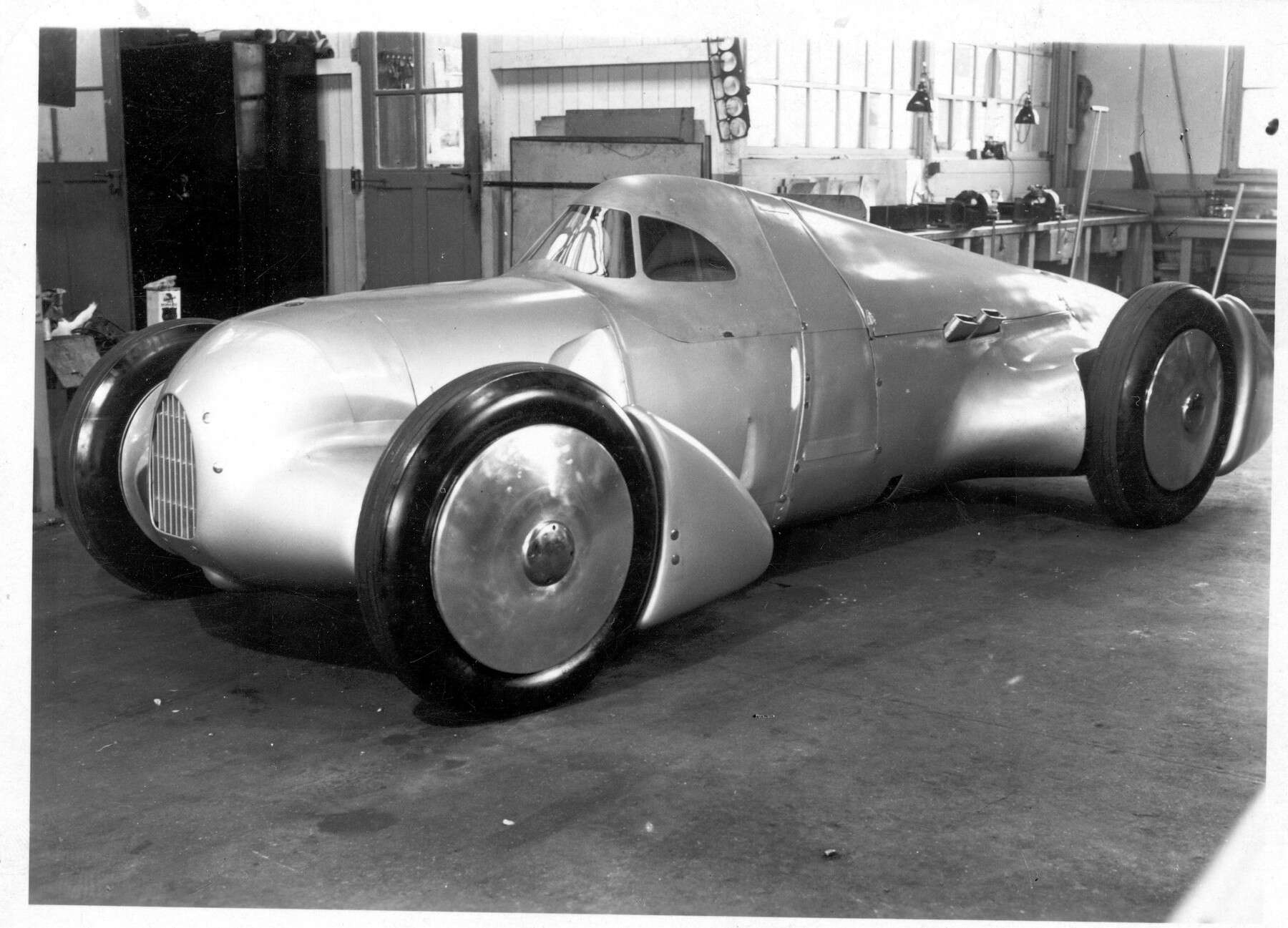
Auto Union was already planning its next record attempts for early 1935, but knew it needed to step its game up. After testing design models in the wind tunnel at the Berlin-Adlershof Aeronautical Research Institute, the company had a design nailed down for what became known as the “Rennlimousine”.
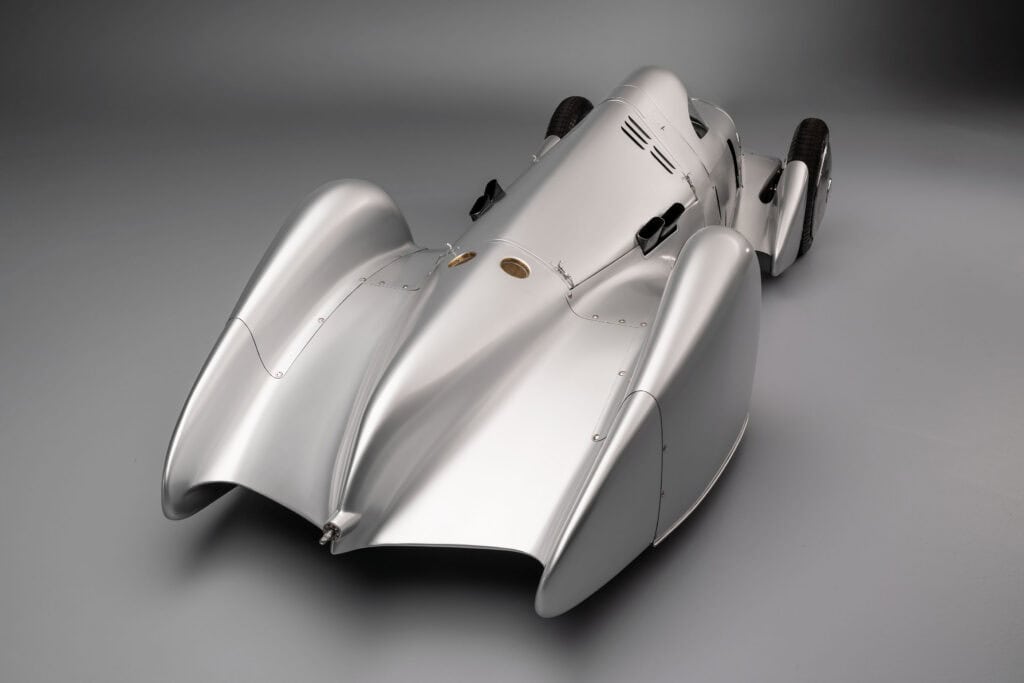
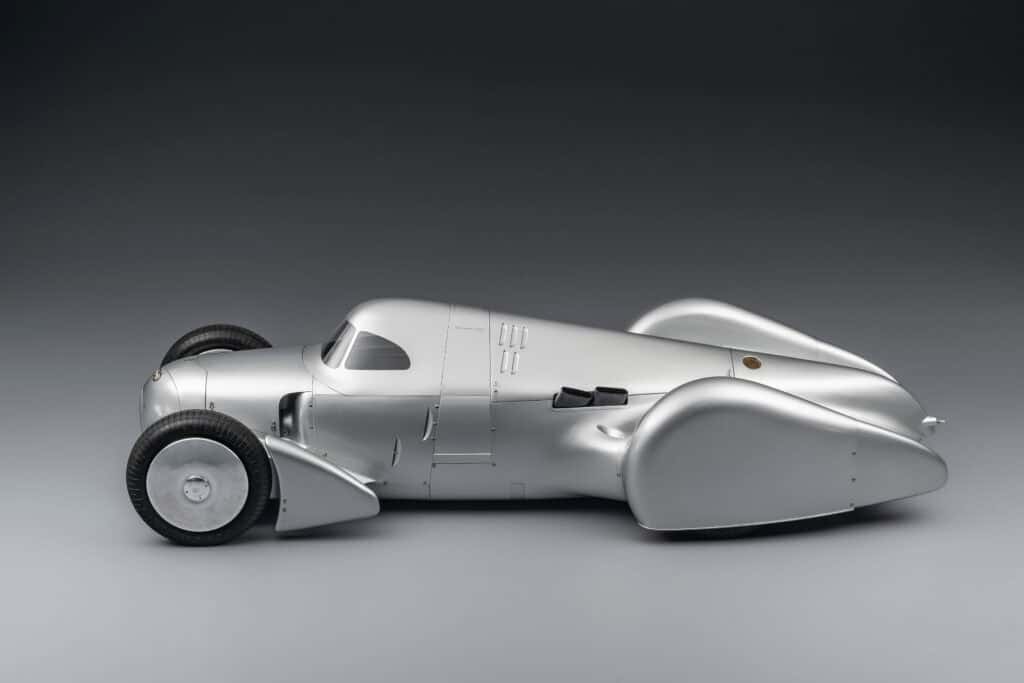
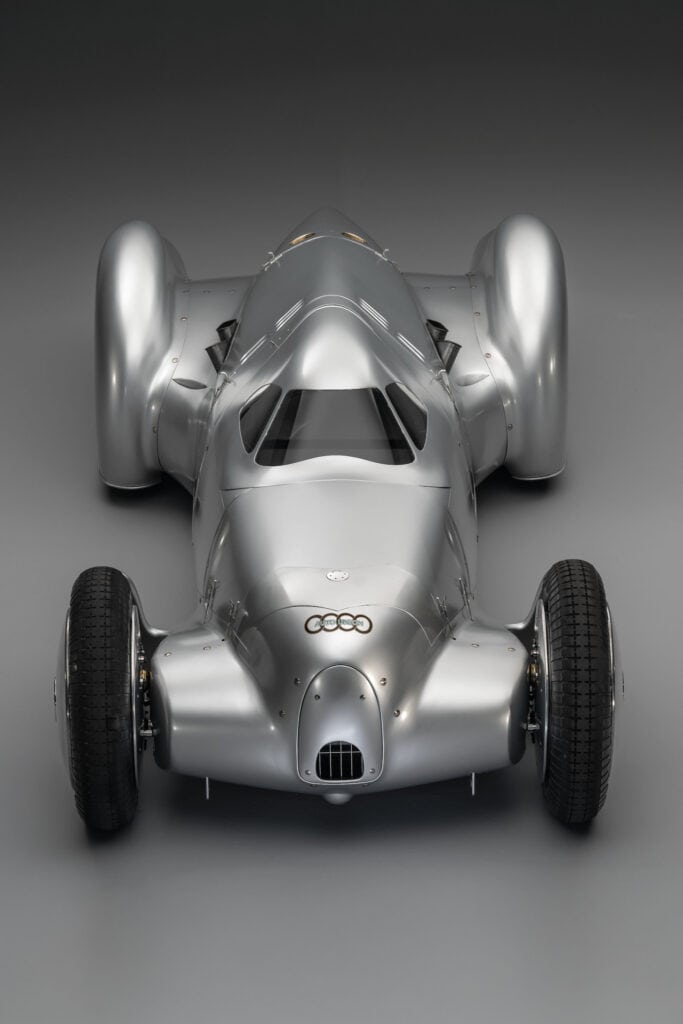
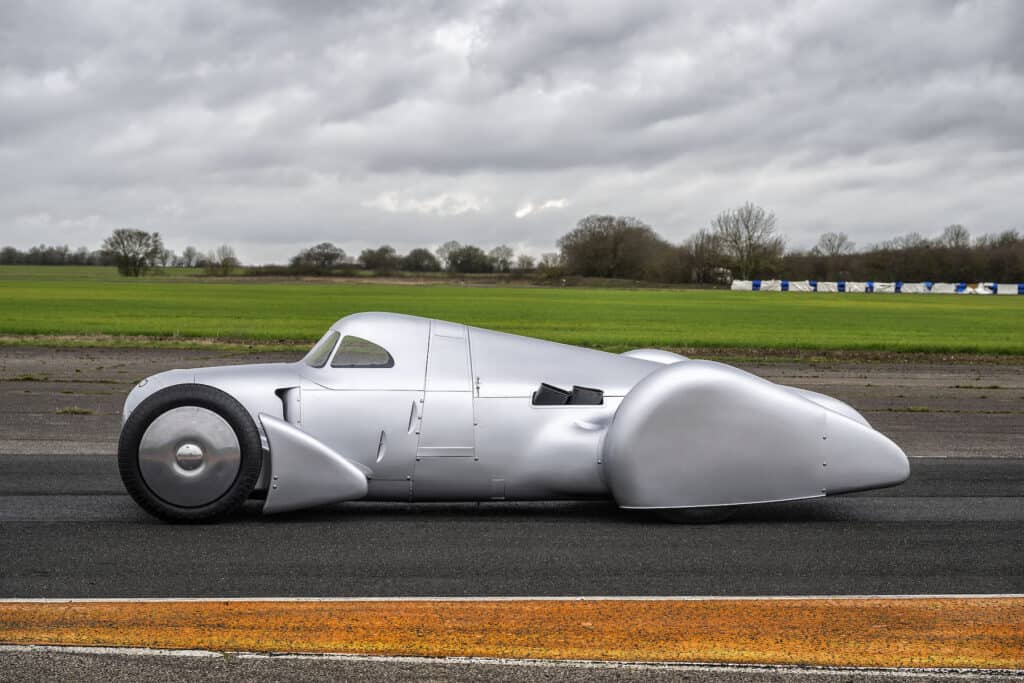
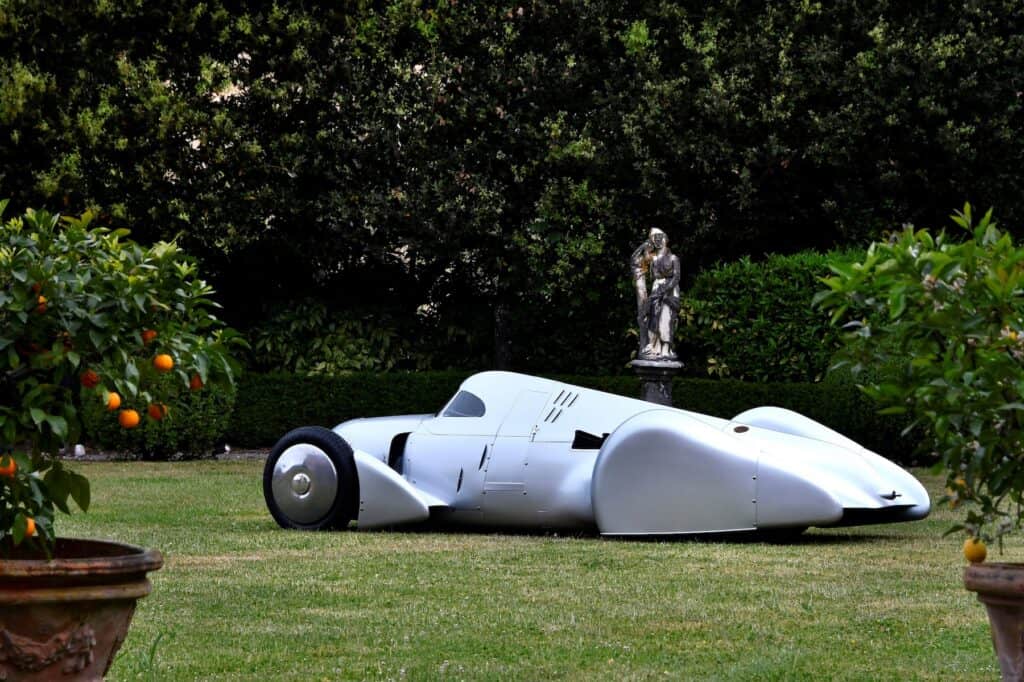
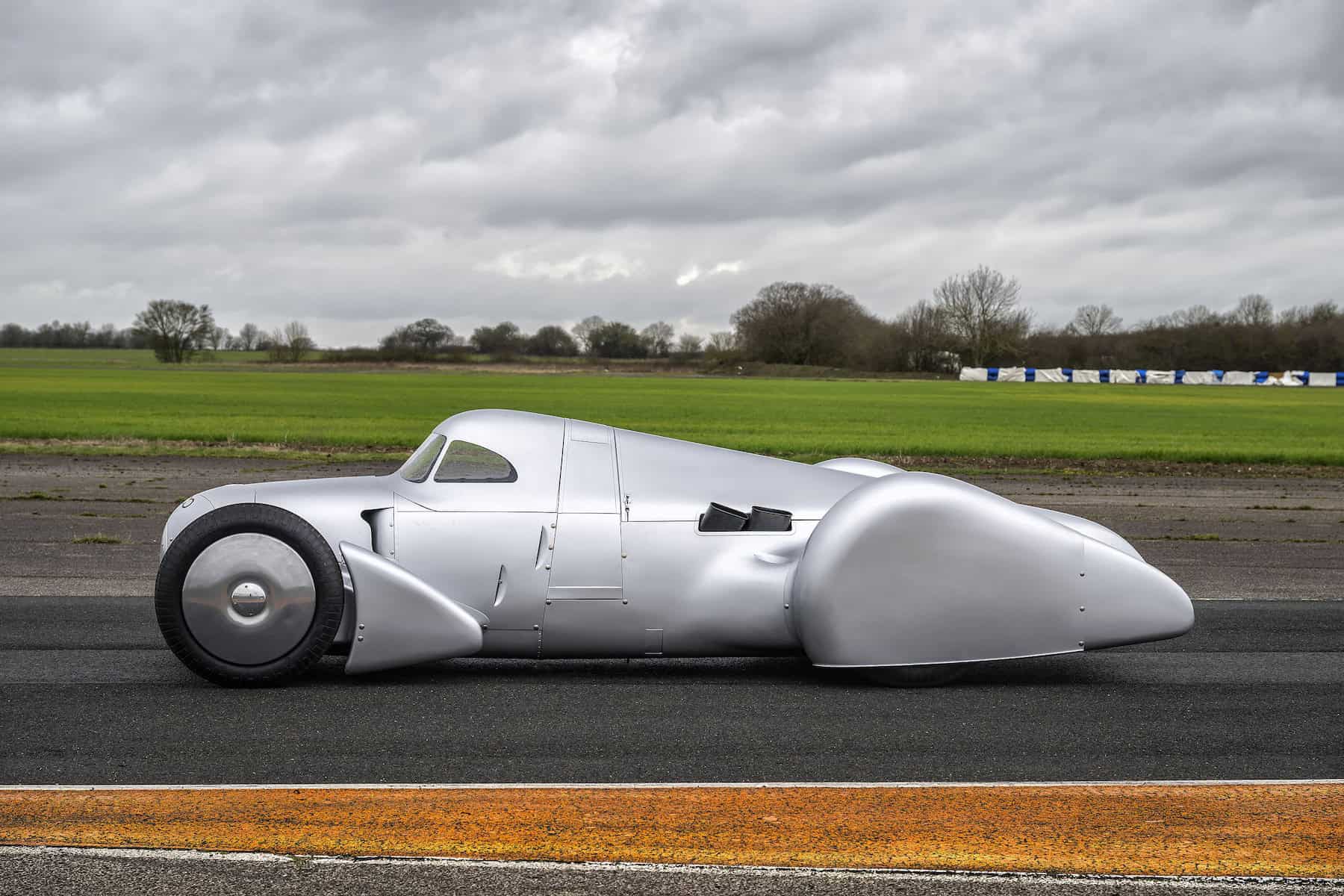
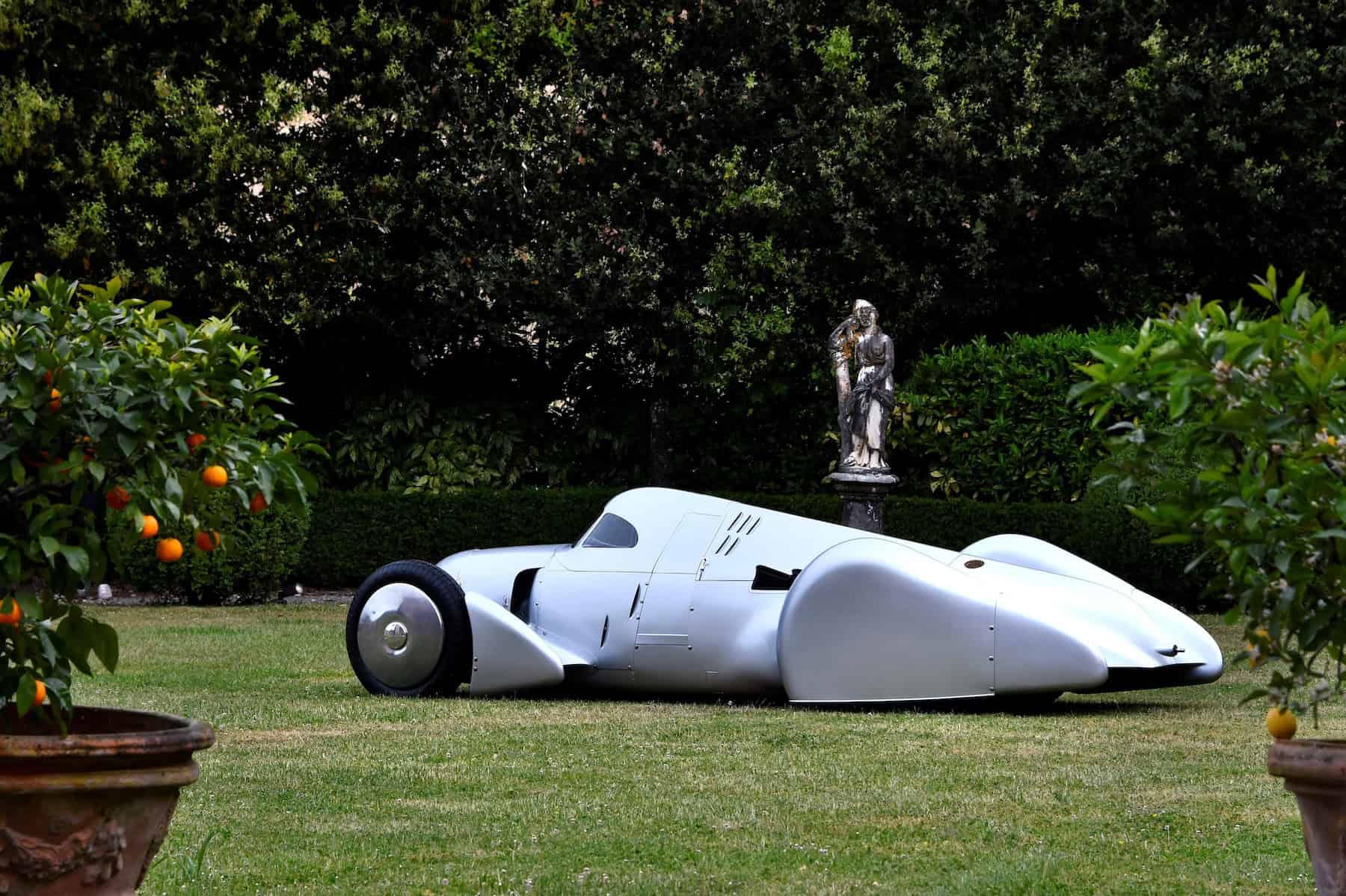
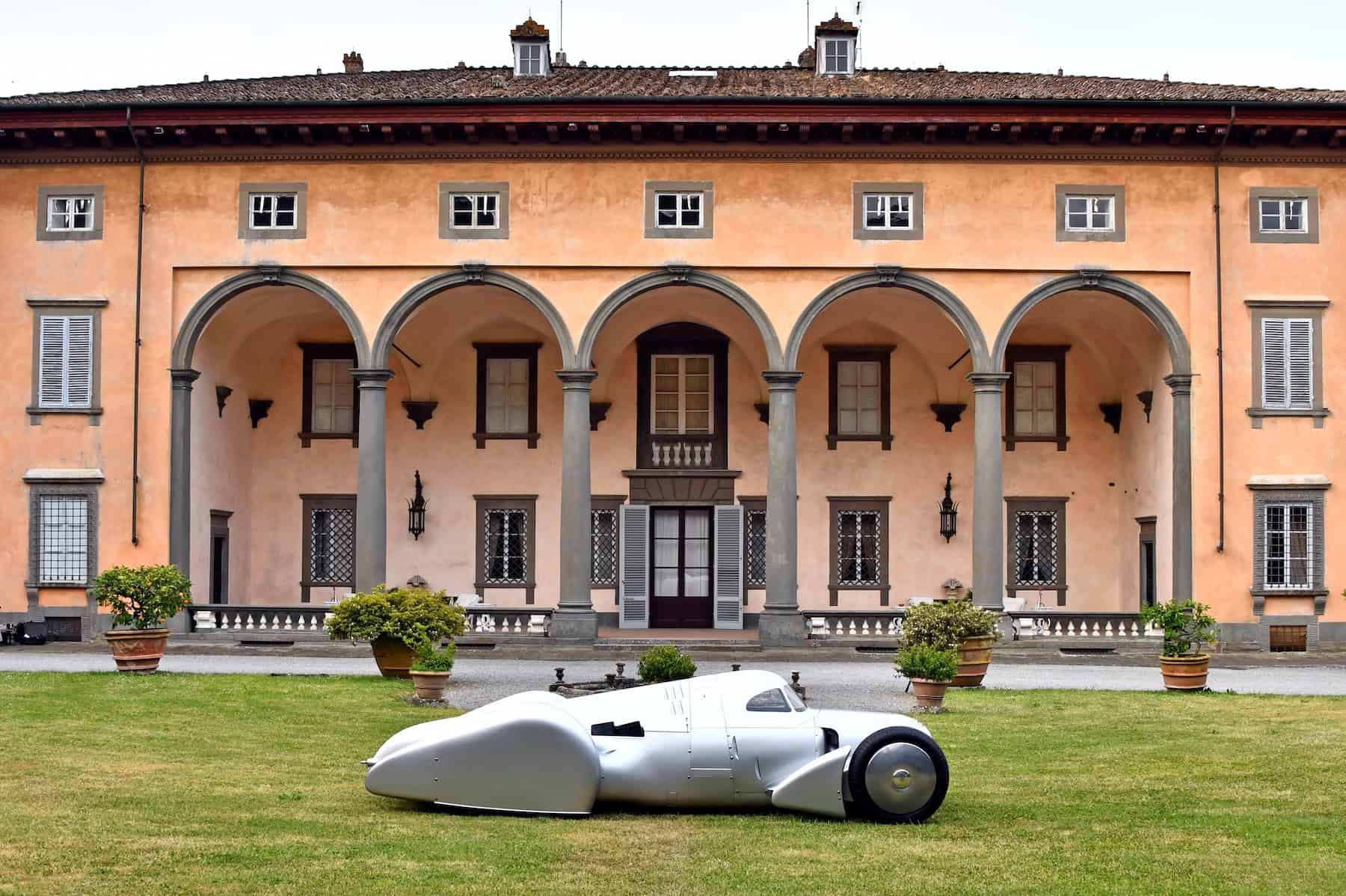
Although based on the same chassis as the 1934 Grand Prix car, it wore a finely sanded body coated with clear lacquer and rode on spoked wheels with aerodynamic covers. Its aerodynamic silhouette with a fin-like rear end and teardrop-shaped wheel arches clearly separated it from its racing counterparts of the previous season.
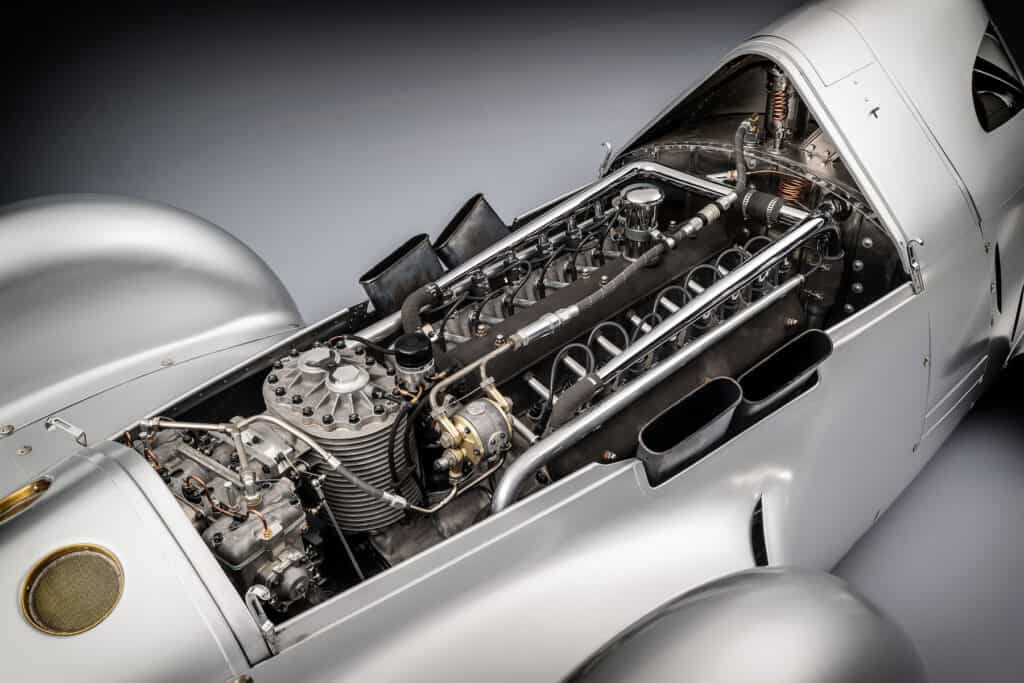
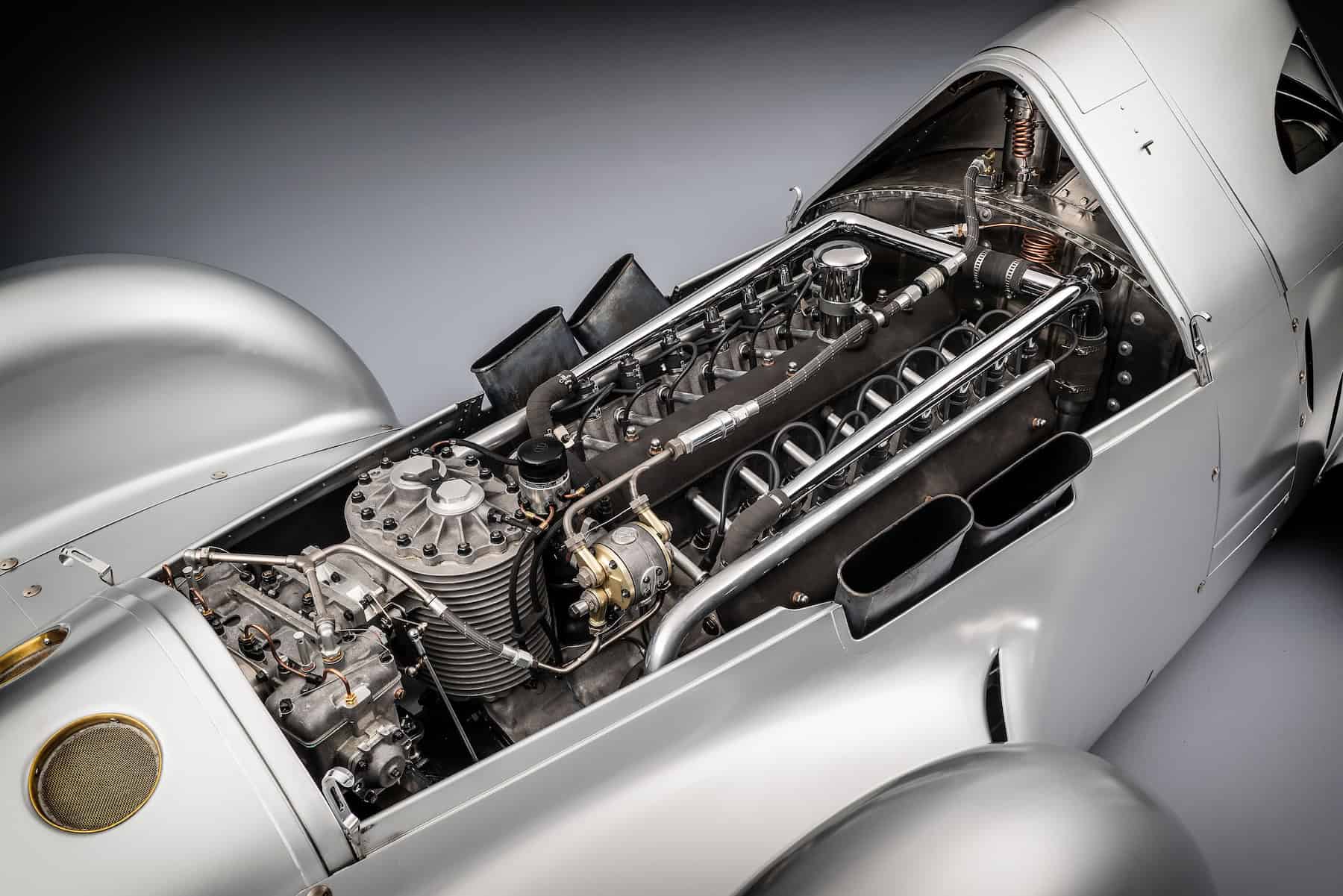
It was also fitted with the enlarged 16-cylinder engine the company would use for the 1935 Grand Prix season, now displacing 5.0-litres, although only developed 252kW (343PS) compared to the 276kW (375PS) it could churn out later in the season.
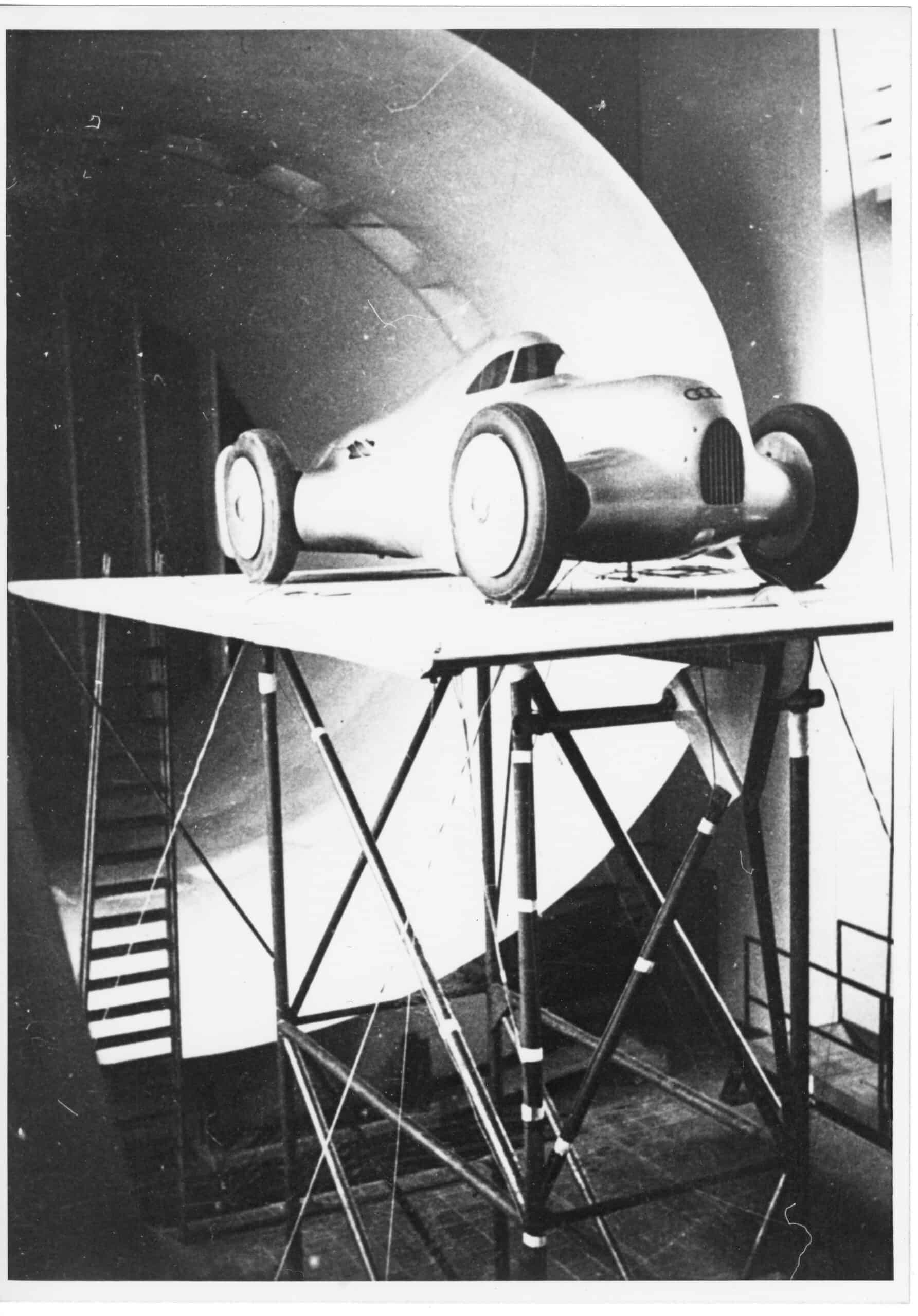
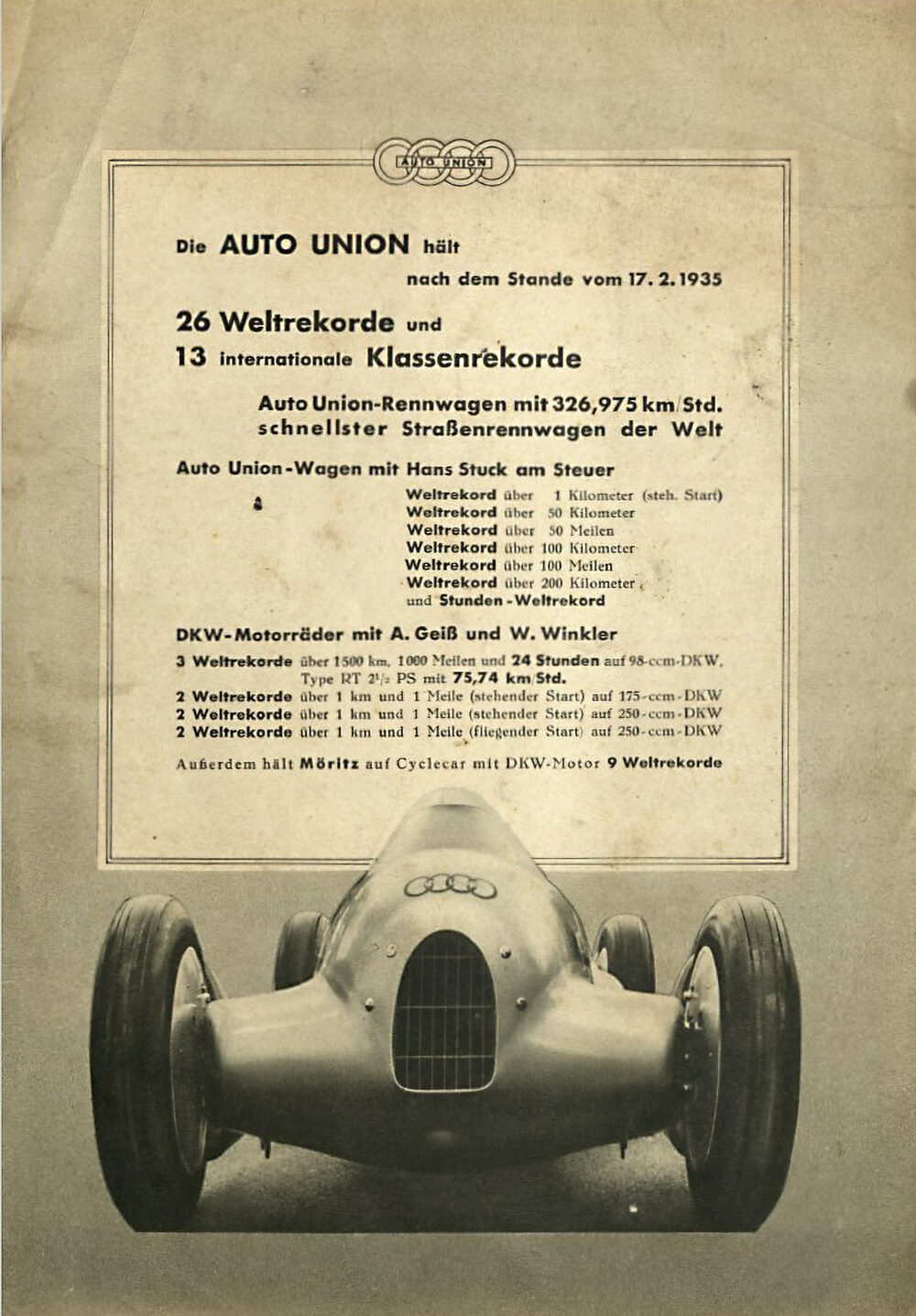
After merely weeks of development work, the car was completed in December 1934 and first test-driven on the Avus circuit in Berlin on the 17th. Quickly, the decision was made to send it to the same highway stretch in Hungary used by Mercedes. Due to unpredictable weather and the exhaust burning through during a test run, initial attempts at the record were suspended.
Instead, the decision was made to attempt the record south of Milan, although conditions also proved unfavourable there where the planned route was covered in snow. Finally, Auto Union decided to head even further south, identifying a suitable stretch of tarmac on the Florence-Viareggio Road near the city of Lucca.
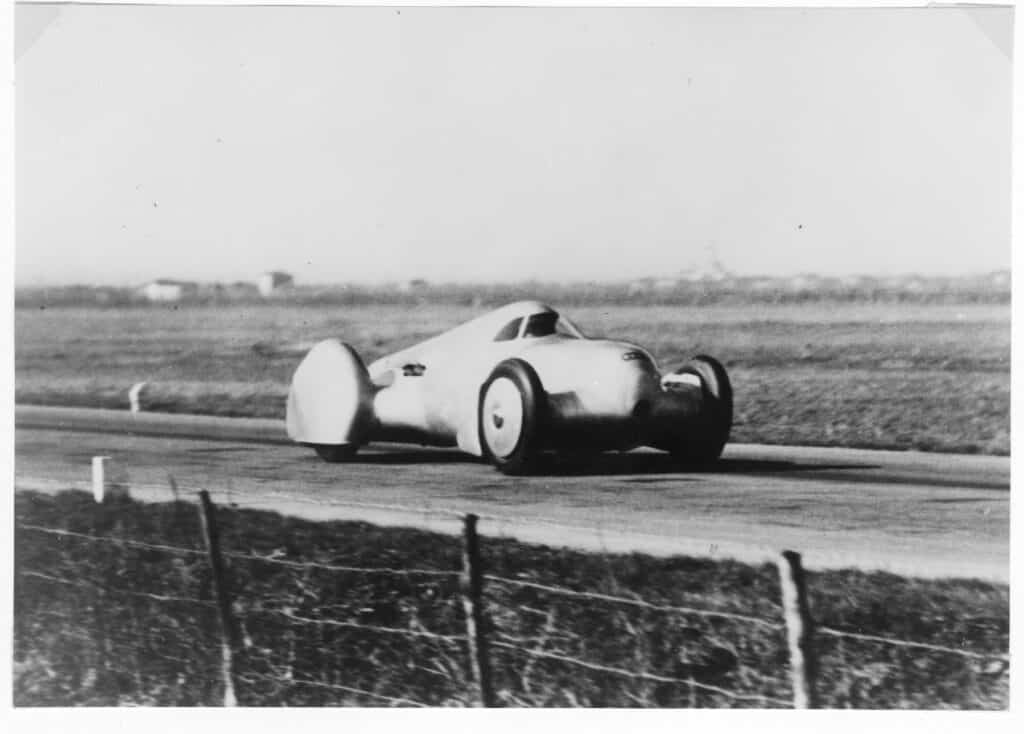
After initial test drives on Valentine’s Day, trialling various grille and wheel cover configurations, Hans Stuck jumped behind the wheel the following morning for the first proper runs. Word had already spread quickly of the planned attempts, and thousands of spectators had turned out.
Official timekeepers were also on hand, with these “independent chronometrists” using state-of-the-art chronometers equipped with electrically triggered photocells to ensure accuracy in timing the run.
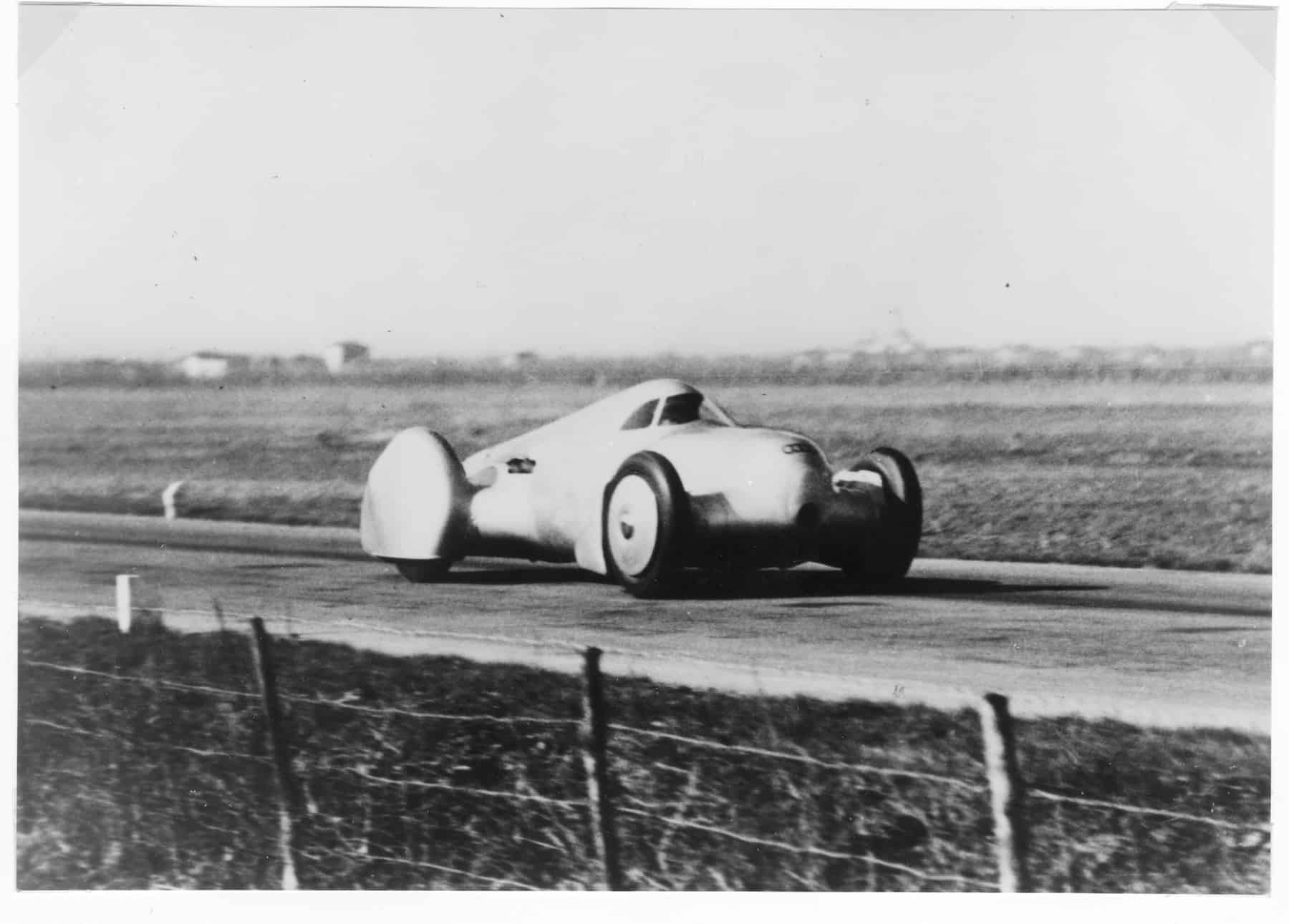
After a few initial attempts, the car’s radiator grille was entirely covered save for a small opening, while other aero optimisations were made. On the next run, Auto Union’s goal was finally achieved, setting the flying-start mile record in International Class C at an average speed of 320.267km/h across two averaged runs.
On top of that, the measuring devices calculated a top speed in one section of the return run of exactly 326.975km/h, enough to certify it as the “fastest road racing car in the world” as denoted by promotional posters at the International Motor Show in Berlin that same week, where an almost identical car was unveiled to the public.
How Audi recreated this legendary speed record racer
Despite the success of this and other Auto Union speed record cars from the time, “Audi does not yet have any Auto Union racing or record-attempt cars from the early Grand Prix era in its historic vehicle collection” notes Stefan Trauf, head of Audi Tradition.
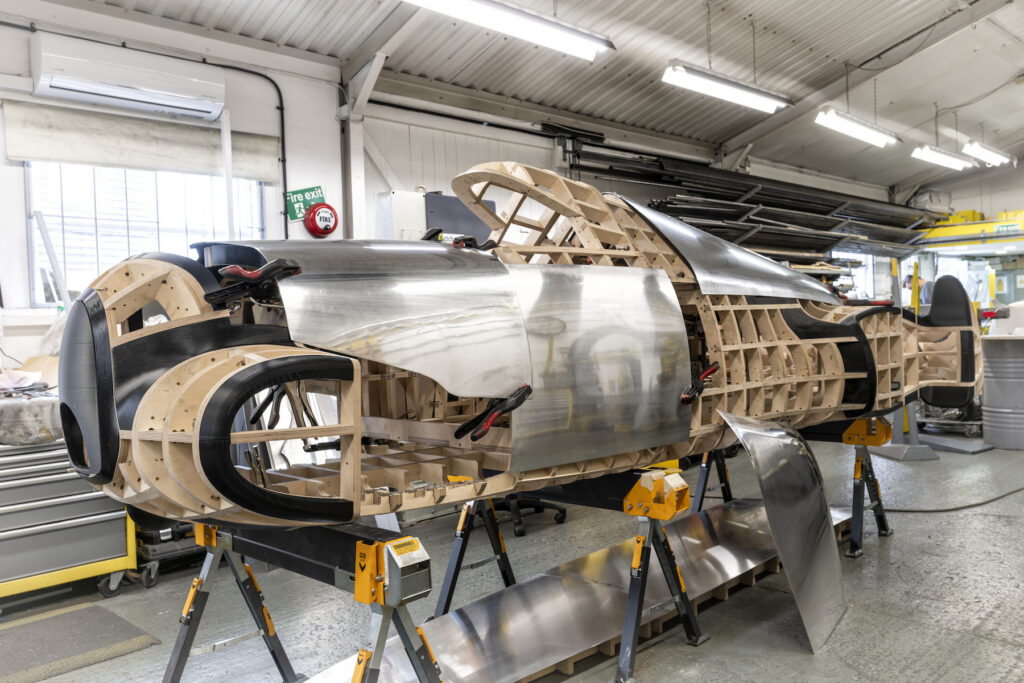
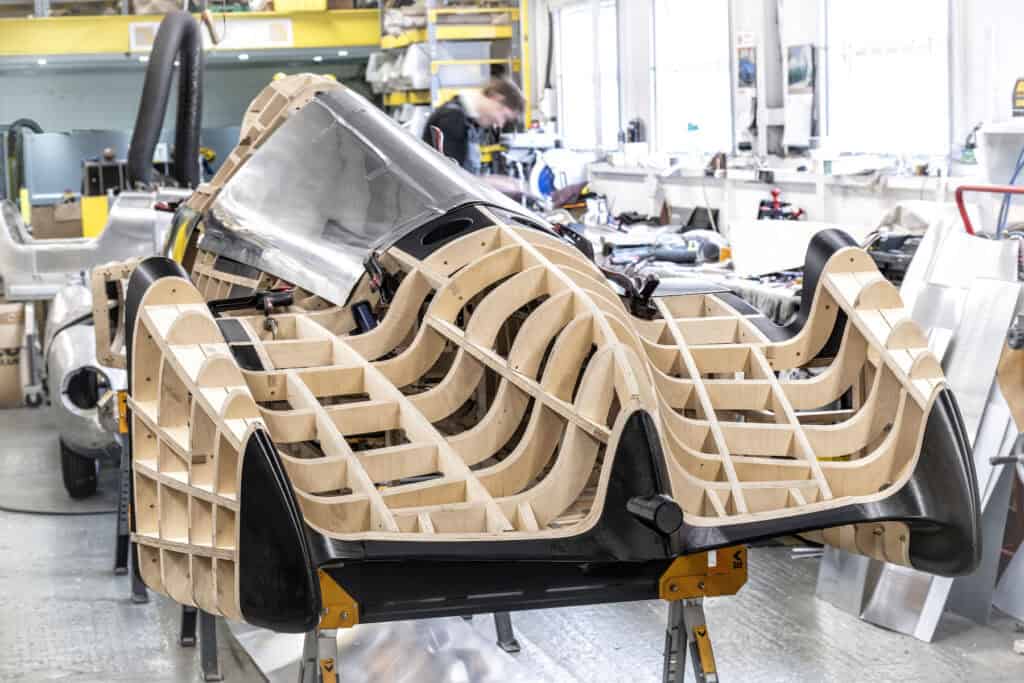
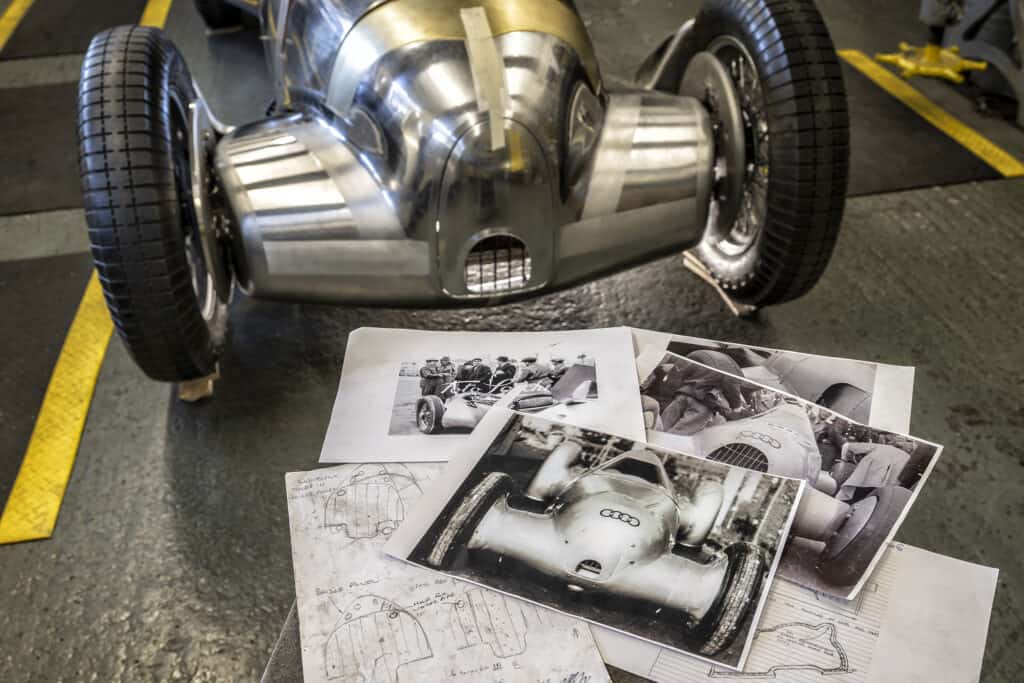
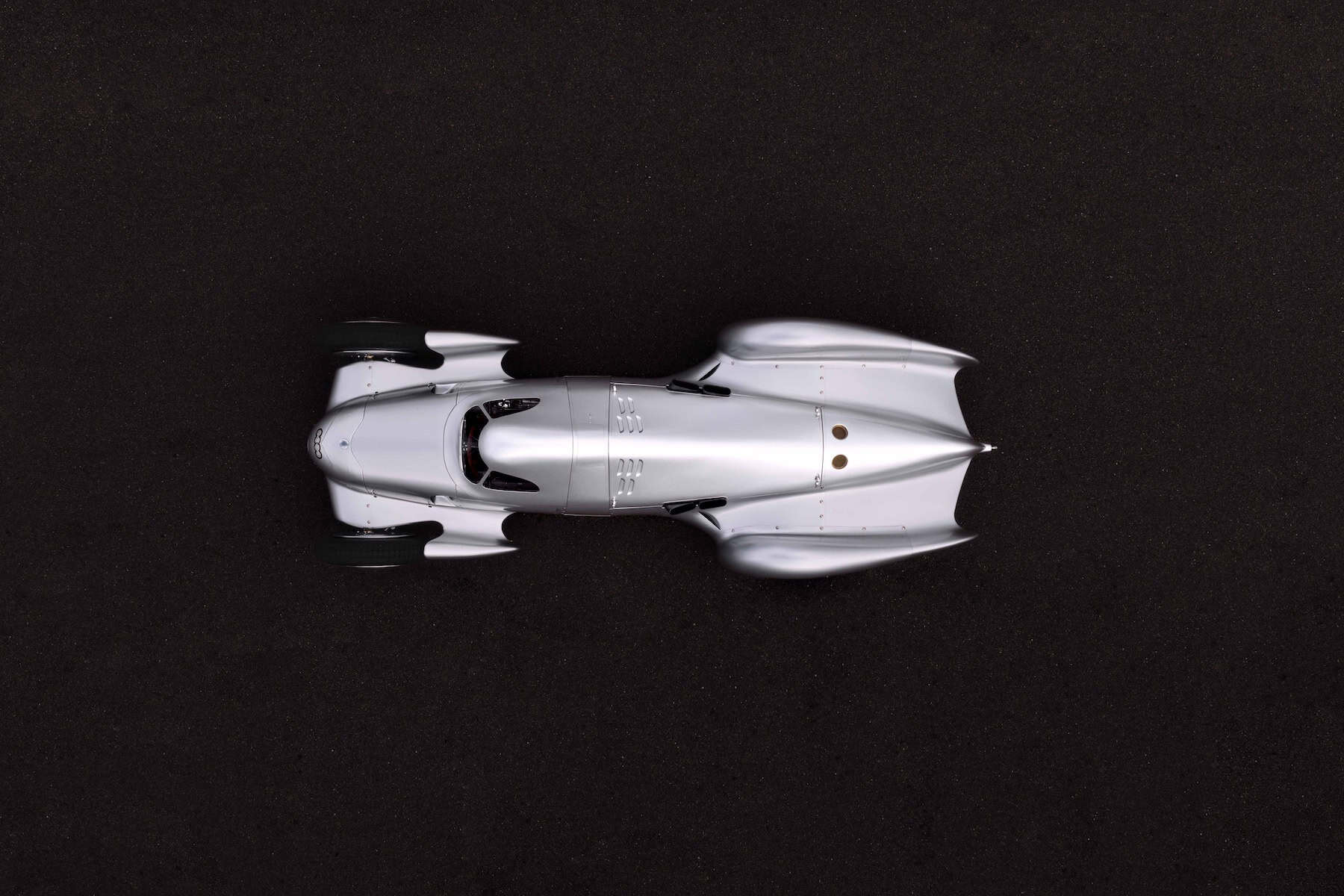
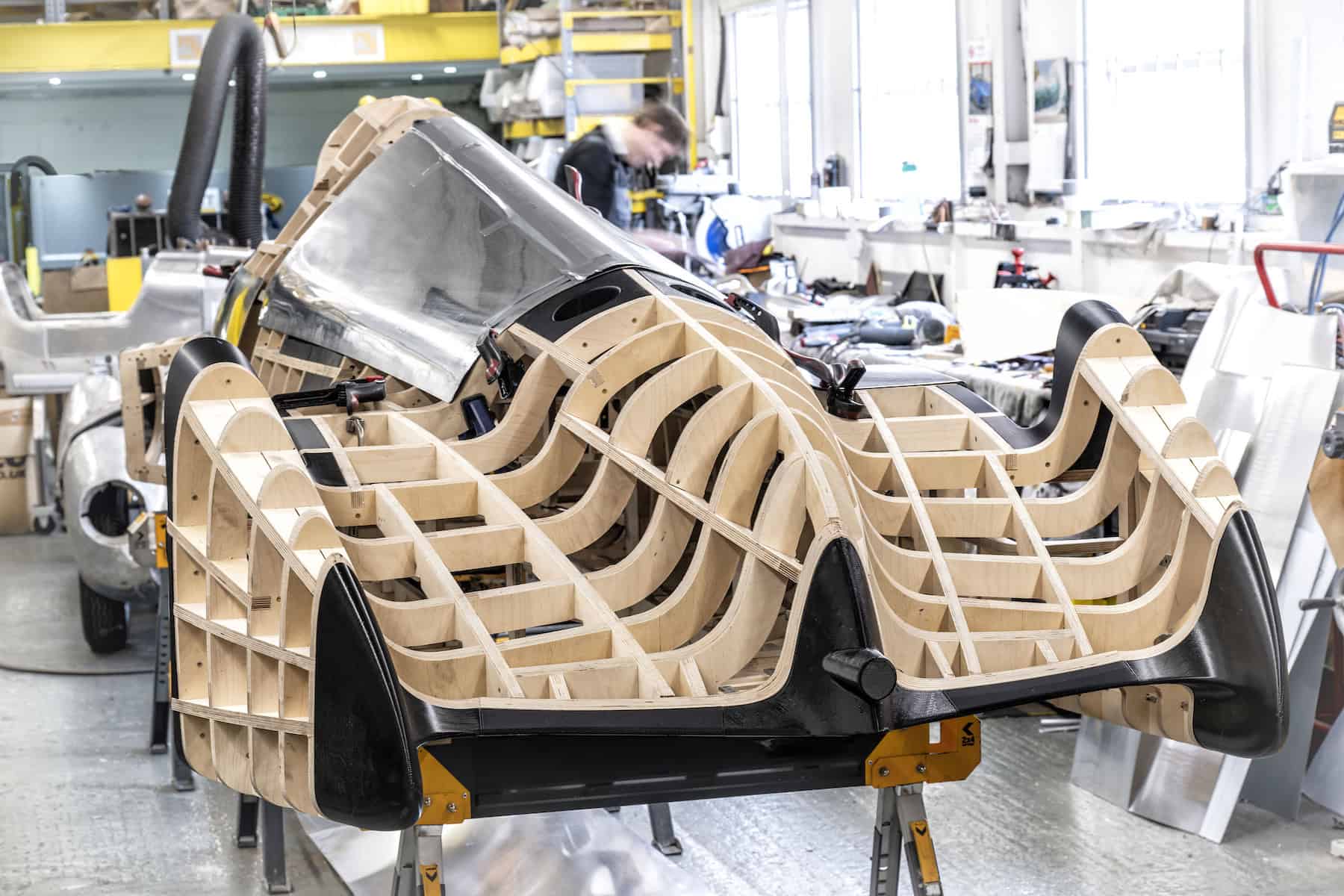
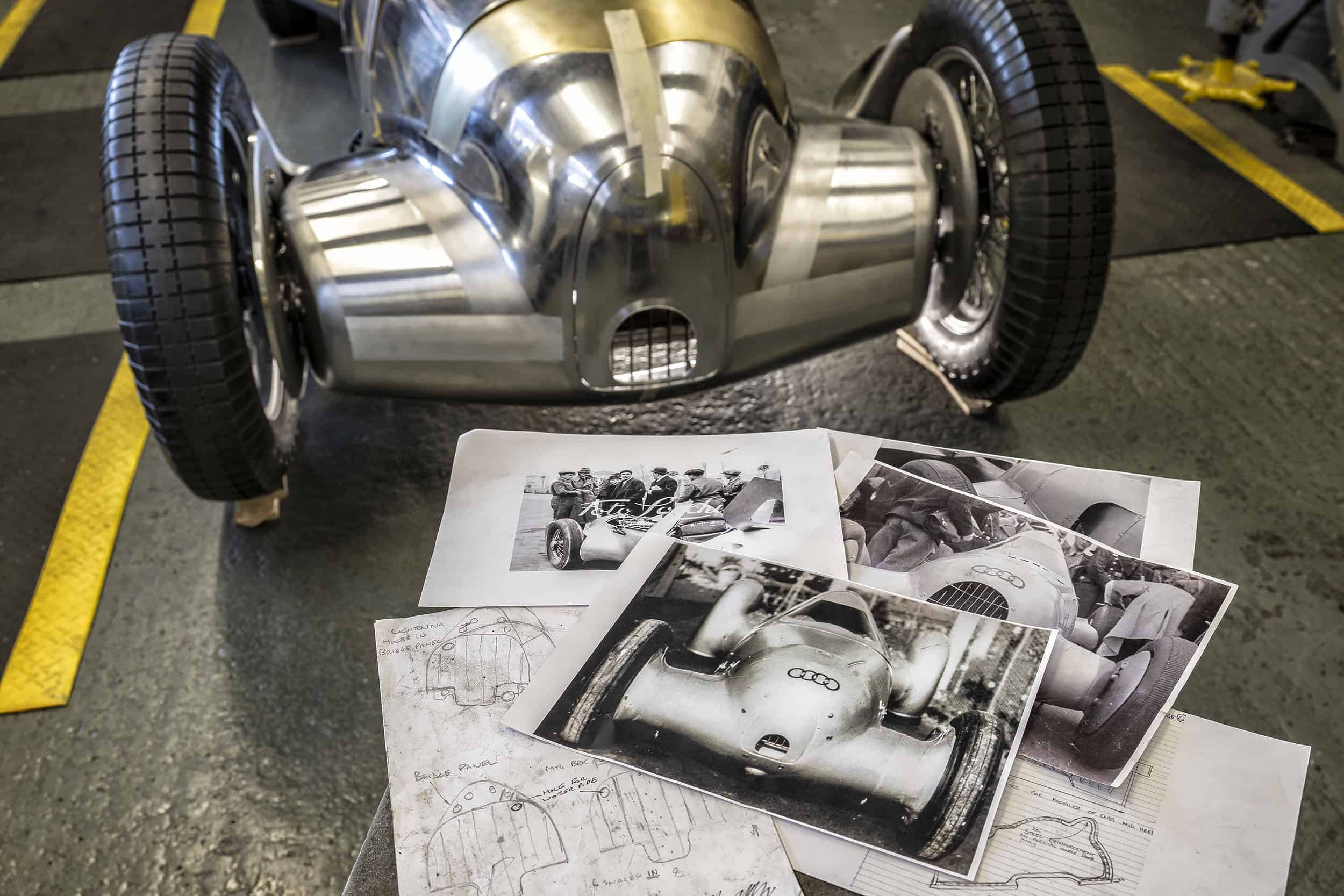
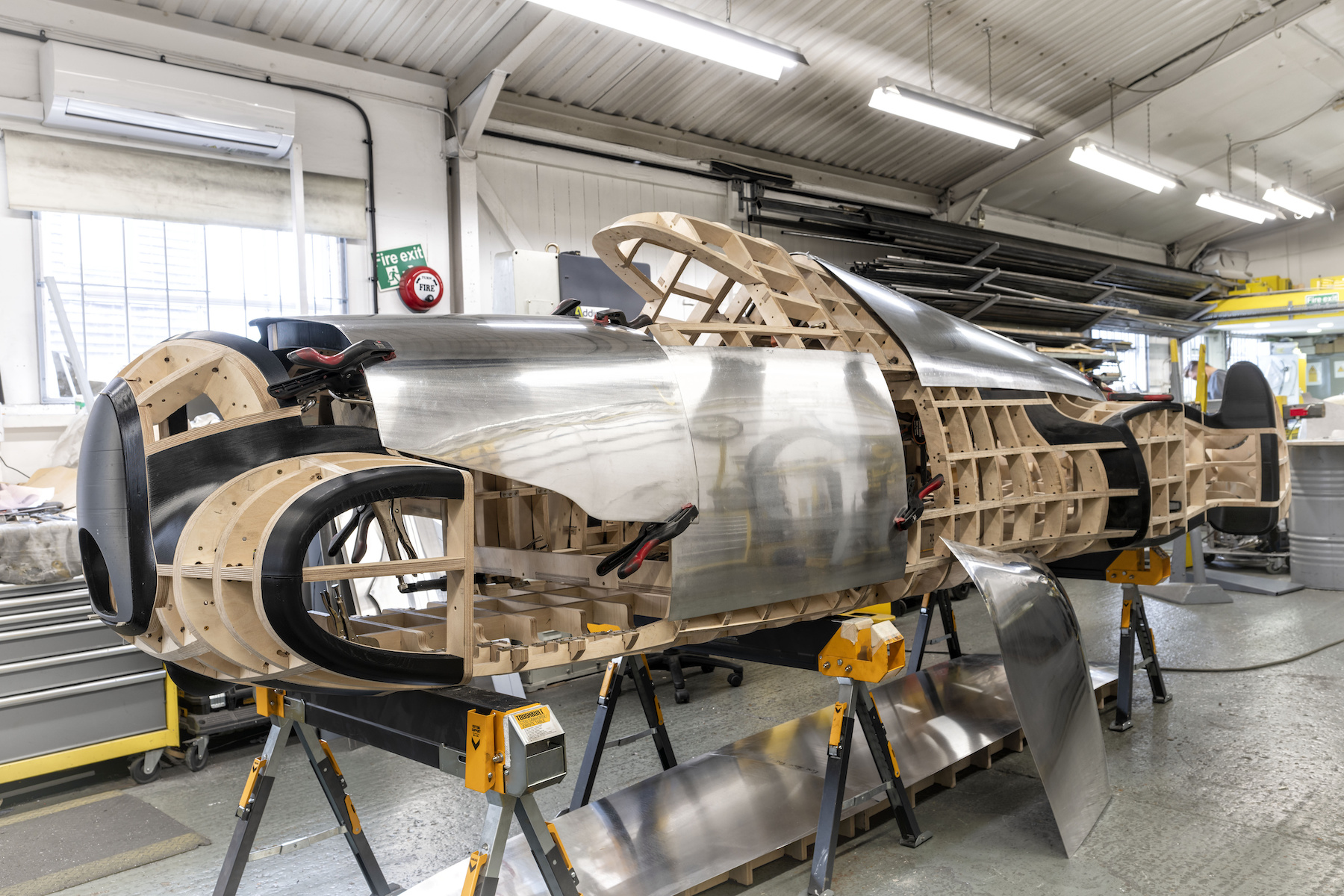
As a result, Audi made the decision to recreate the iconic Auto Union Lucca car, electing British restoration specialists Crosthwaite & Gardiner to handle the task. Based on historical photos and archival documents, the project took just over three years to complete.
All components were handcrafted specifically for this car, with the streamlined bodywork – such as the cockpit canopy and the tapered tail – proving particularly labour-intensive. However, a 0.43 drag coefficient as measured in Audi’s wind tunnel in late April 2026 proves the hard work paid off.
Timo Witt, manager of Audi Tradition’s historic vehicle collection since 2015 and a former motorsport engineer, served as project manager for the construction of the Auto Union Lucca, noting how impressive and adaptive the engineering of the original car was for the time.
“I’m impressed by the agility and speed with which they responded to the competition back then – in the technical realm, in vehicle development, and in organisational matters,” he explains.
“When the weather takes a turn, the whole team moves on without hesitation. Without this high degree of flexibility or the ability to adapt to new situations at lightning speed, the record-breaking drive in Lucca would not have been possible.”
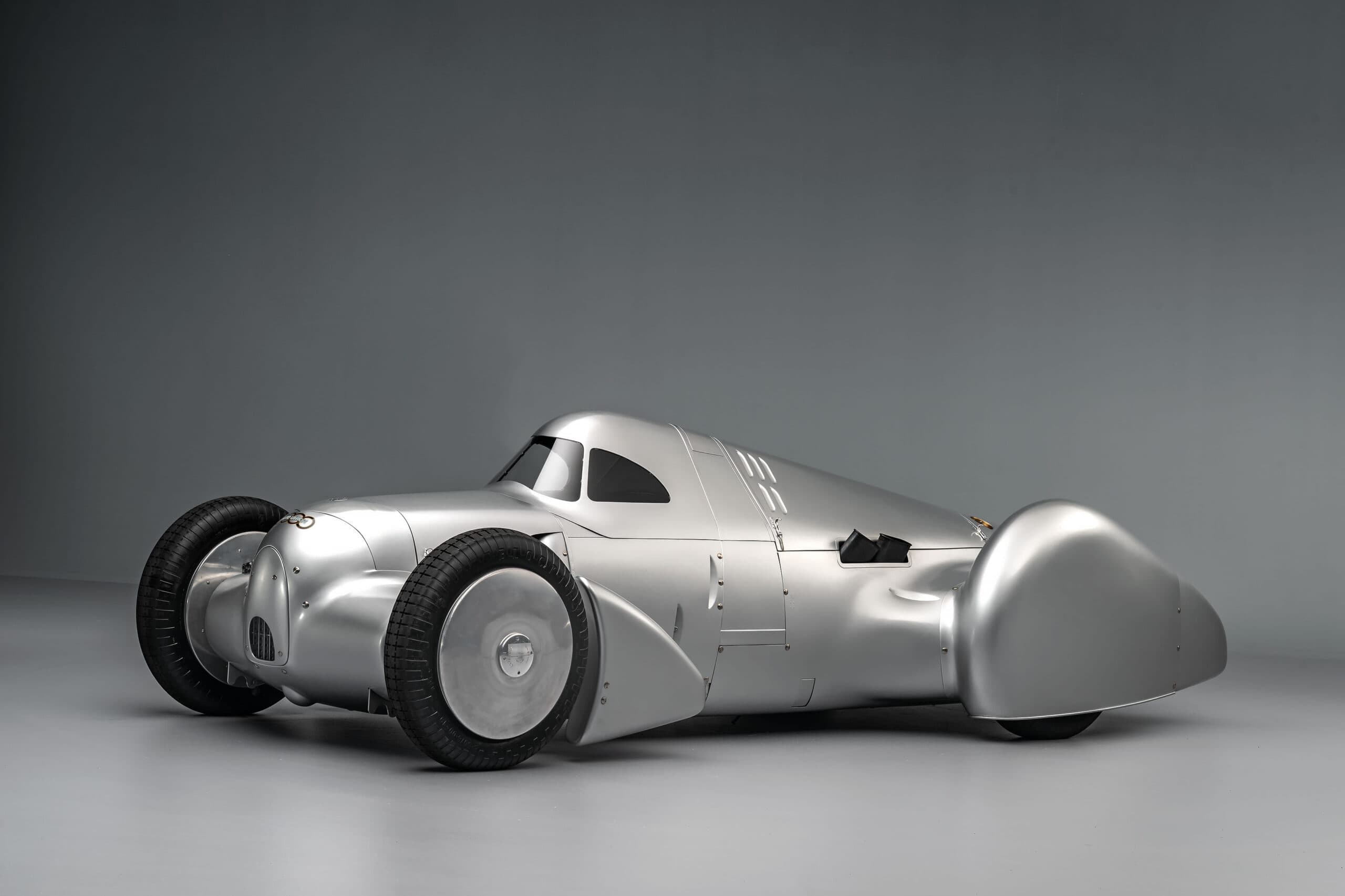
Not all elements of the Lucca are strictly accurate to the original record-setting car, however. It was chosen to be fitted with the V16 engine from the Auto Union Type C; as its 6.0-litre engine is visually indistinguishable from a 5.0-litre engine, the engines are interchangeable within the Silver Arrow family.
Several other modifications were also made to reflect changes implemented for the Avus race in Berlin in May 1935, such as its ventilation system, which Witt says was because “the vehicle would have been subjected to excessive thermal stress during our upcoming demonstration runs”.
Auto Union Lucca scheduled for Goodwood dynamic debut
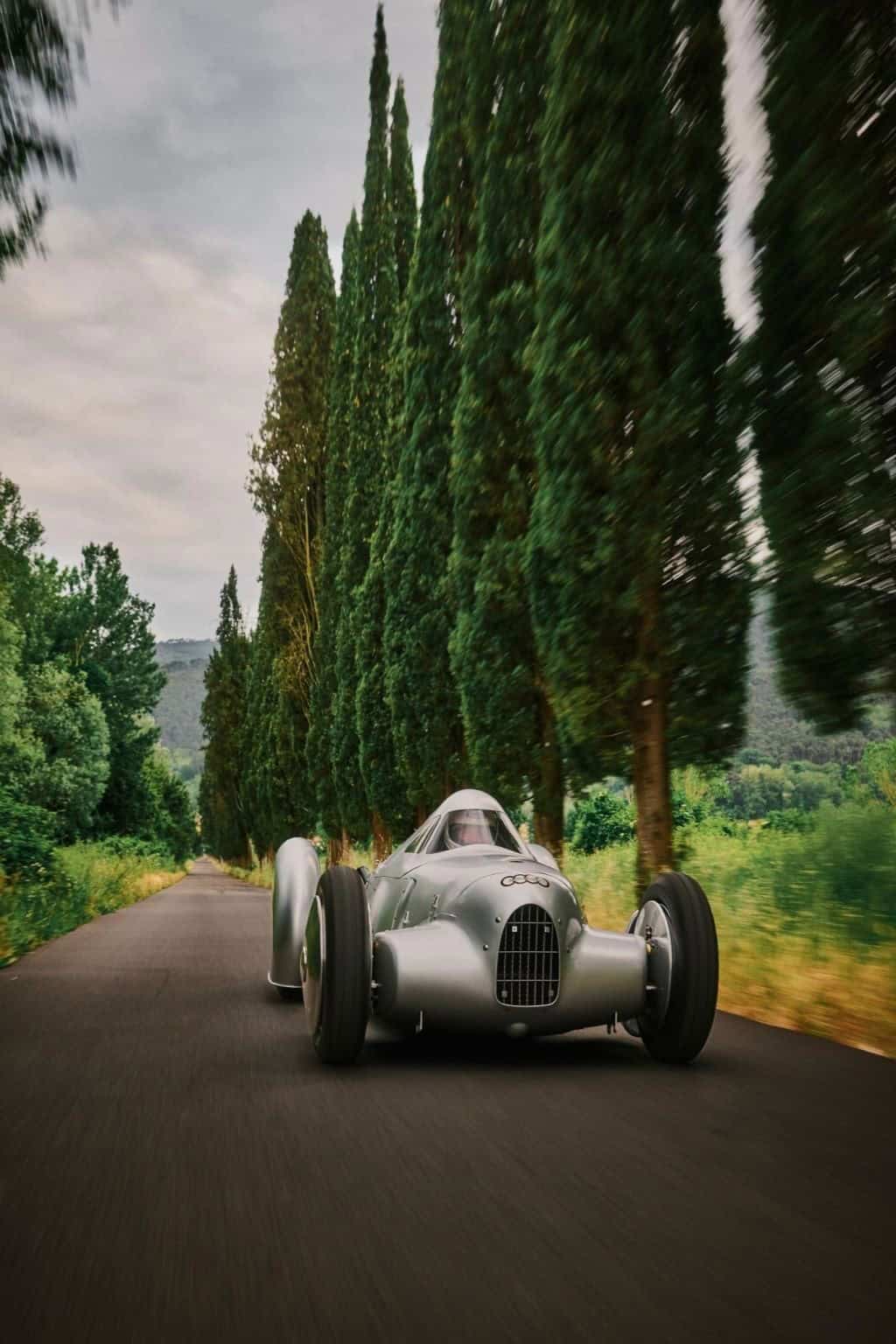
After this initial unveiling of the car in Lucca, Italy, the first of those on-track runs is already booked into the calendar, with the recreated Auto Union Lucca set to take to the circuit at the 2026 Goodwood Festival of Speed from July 9-12.
“With the Auto Union Lucca, we are adding a highly evocative member of the Silver Arrow family to the Audi AG collection,” adds Trauf.
“The car is a testament to the technical innovation of the four rings and shows how ‘Vorsprung durch Technik’ was achieved in the 1930s.
“To me, the Auto Union Lucca is a masterpiece of engineering, tuned for high speeds and maximum performance, yet at the same time a beautiful car – in my view, this combination is unique.”