
It is never fun being outshone. Even if you’re content being a quiet achiever, there comes a point where you want some recognition for your excellence, especially if someone else is copping the plaudits.
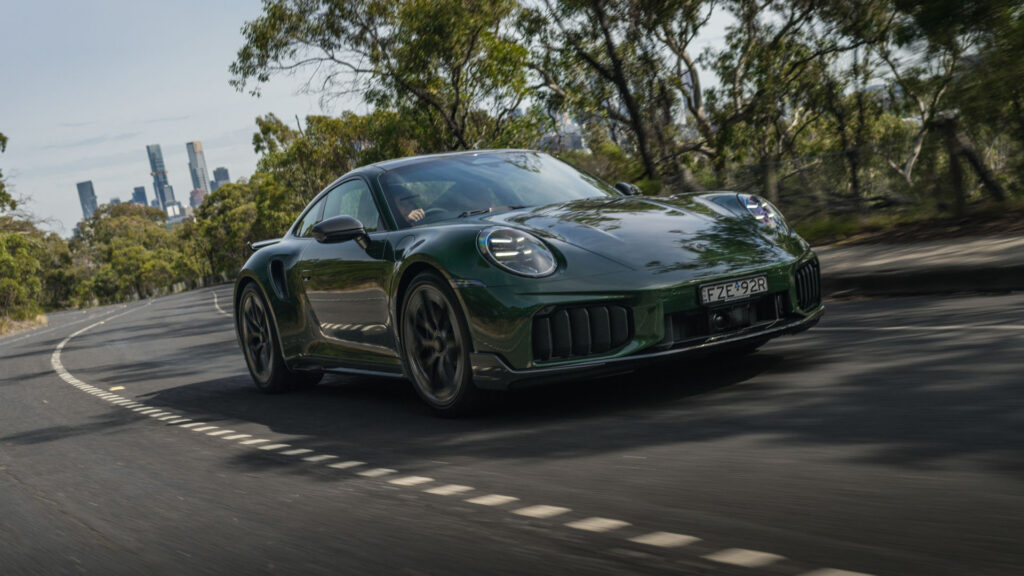
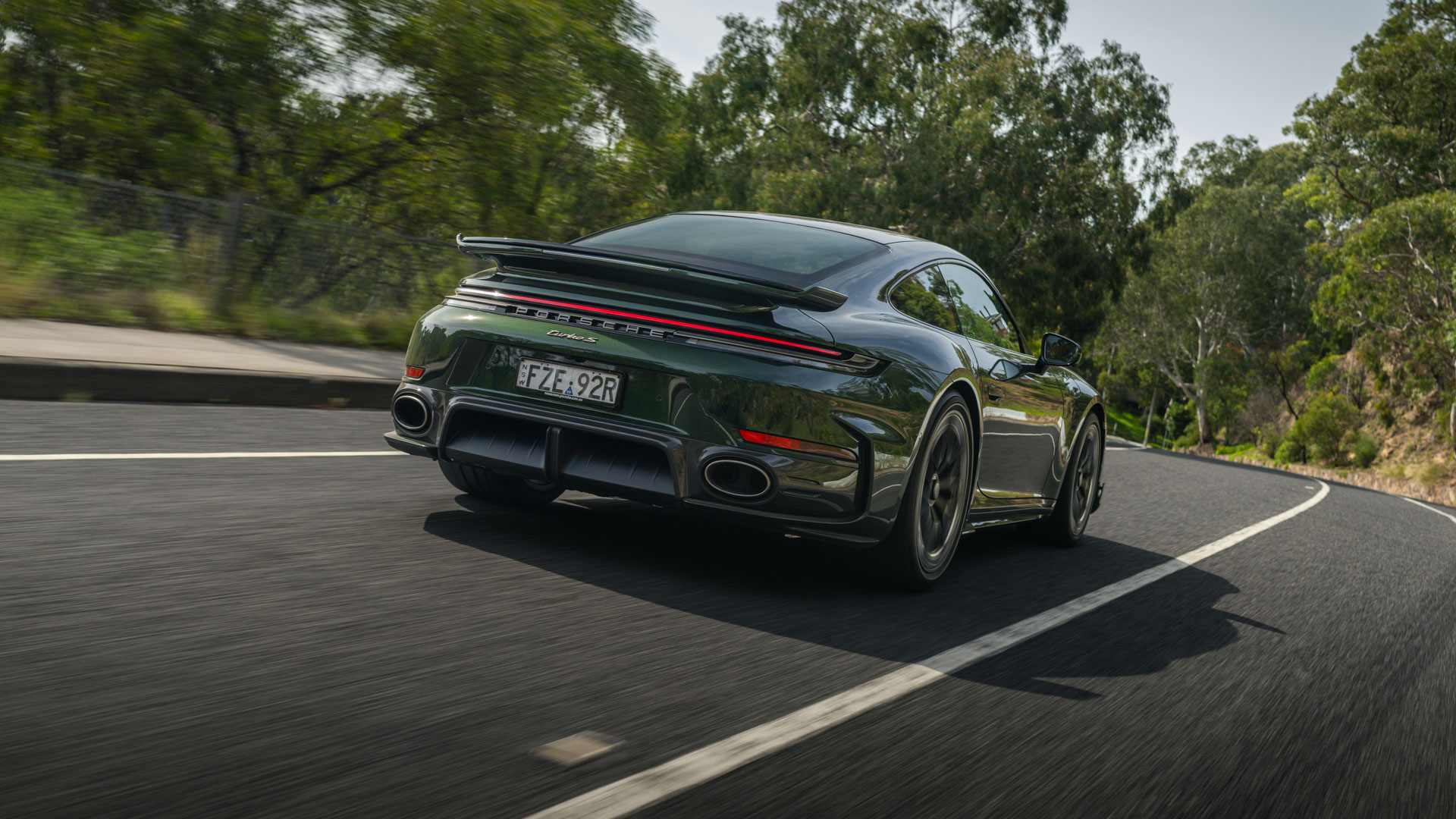
Such is the case with the Porsche 911 Turbo S. For generations it’s been quietly toiling away as arguably the world’s greatest all-round supercar while everyone ‘oohs’ and ‘aahs’ about the GT3 with its fancy wings and screaming naturally-aspirated engine.
But is the Porsche 911 Turbo S even a real supercar? It’s certainly priced like one these days, with the current 992.2 generation starting at $577,300 plus on-road costs, an increase of more than $100,000 over its 992 predecessors. Porsche Australia tells us the average as-tested price of the two cars on press fleet is around $650,000.
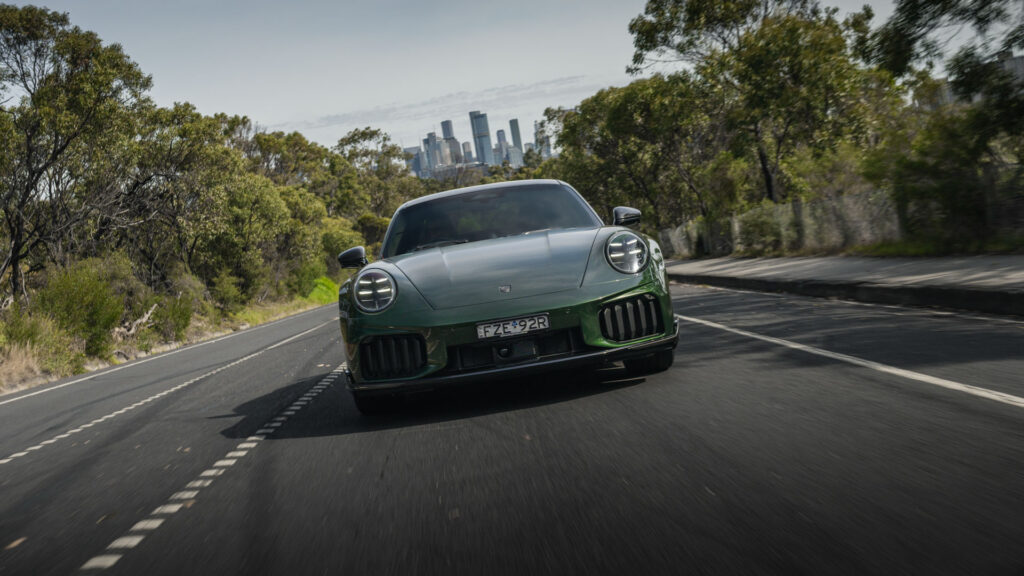
This puts the 911 Turbo S alongside the likes of Aston Martin’s DB12 S, Bentley’s Continental GT Speed, Ferrari’s Amalfi, Maserati’s MCPura and McLaren’s Artura. That’s a lineup of heavy-hitters if ever we saw one.
The 911 Turbo S undoubtedly performs like a supercar. It’s now 0.2sec quicker to 100km/h (2.5sec) and 0.5sec quicker to 200km/h (8.4sec), with previous experience suggesting those figures might actually be pessimistic, while top speed is limited to 322km/h, or 200mph in the old money.
This despite the fact that, somewhat unusually, the latest iteration of Porsche’s boosted beast boasts a smaller engine that produces marginally less grunt. Capacity has reduced from 3745cc to 3592cc (smaller bore, longer stroke), the turbos have shrunk but compression has increased, resulting in 471kW/760Nm instead of 478kW/800Nm.
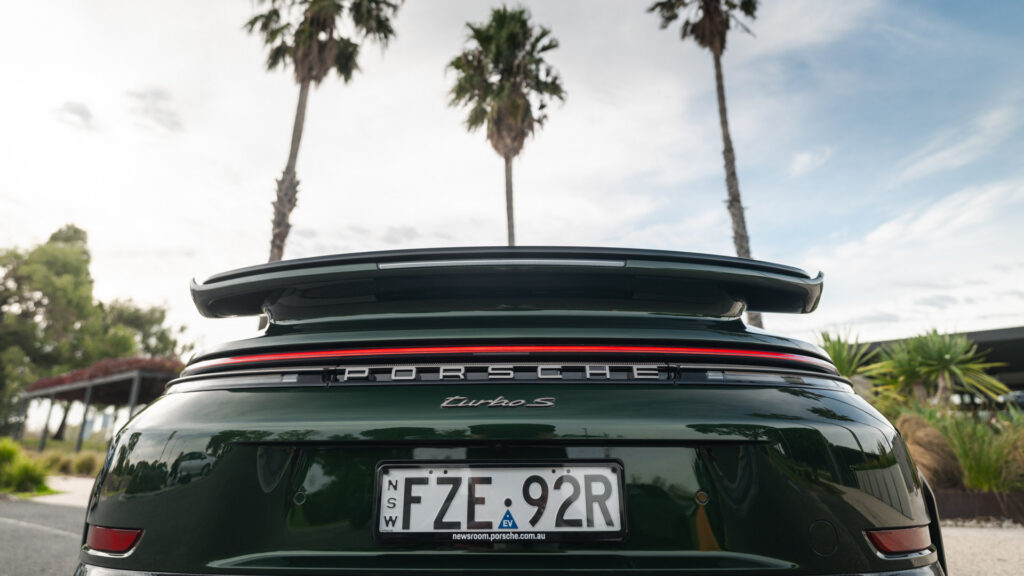
Enter electrification. A 60kW/188Nm electric motor is wedged into the eight-speed dual-clutch gearbox, fed by a 1.9kWh battery located in the car’s nose, increasing total system outputs to 523kW between 6500 and 7000rpm with all 800Nm available between 2300 and 6000rpm.
Compact electric motors integrated into the turbochargers – called eTurbo electric motors – spin up the compressor wheels instantly, bleeding off excess boost as required without the need for wastegates, and feeding excess energy generated back into the battery.
It’s clever and remarkably compact technology but the hybrid setup has contributed to the latest Turbo S gaining 85kg to tip the scales at a hefty 1725kg. But the hybrid system’s use extends beyond the powertrain to include the 400-volt architecture that powers the car’s electro-hydraulic anti-roll control.
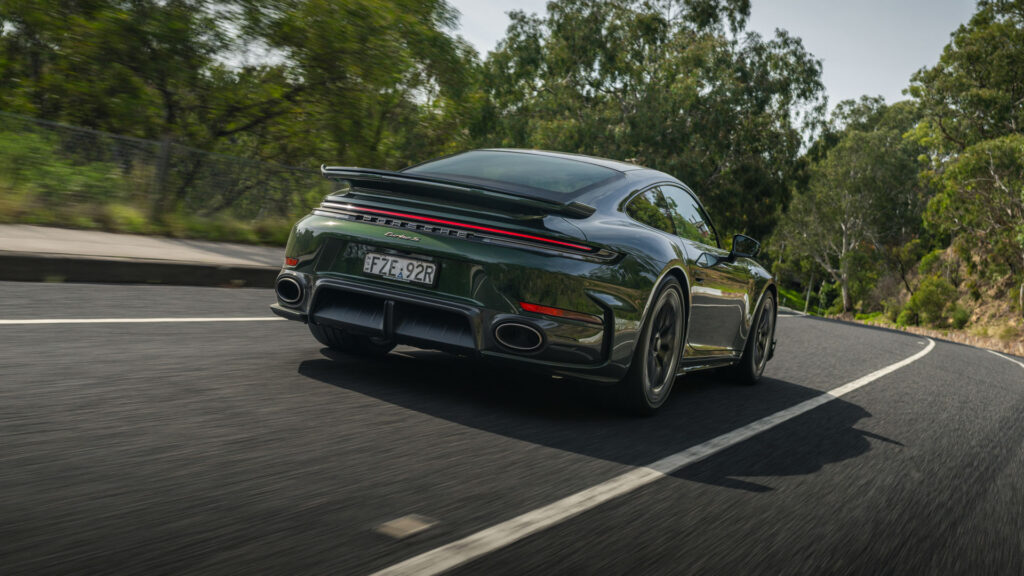
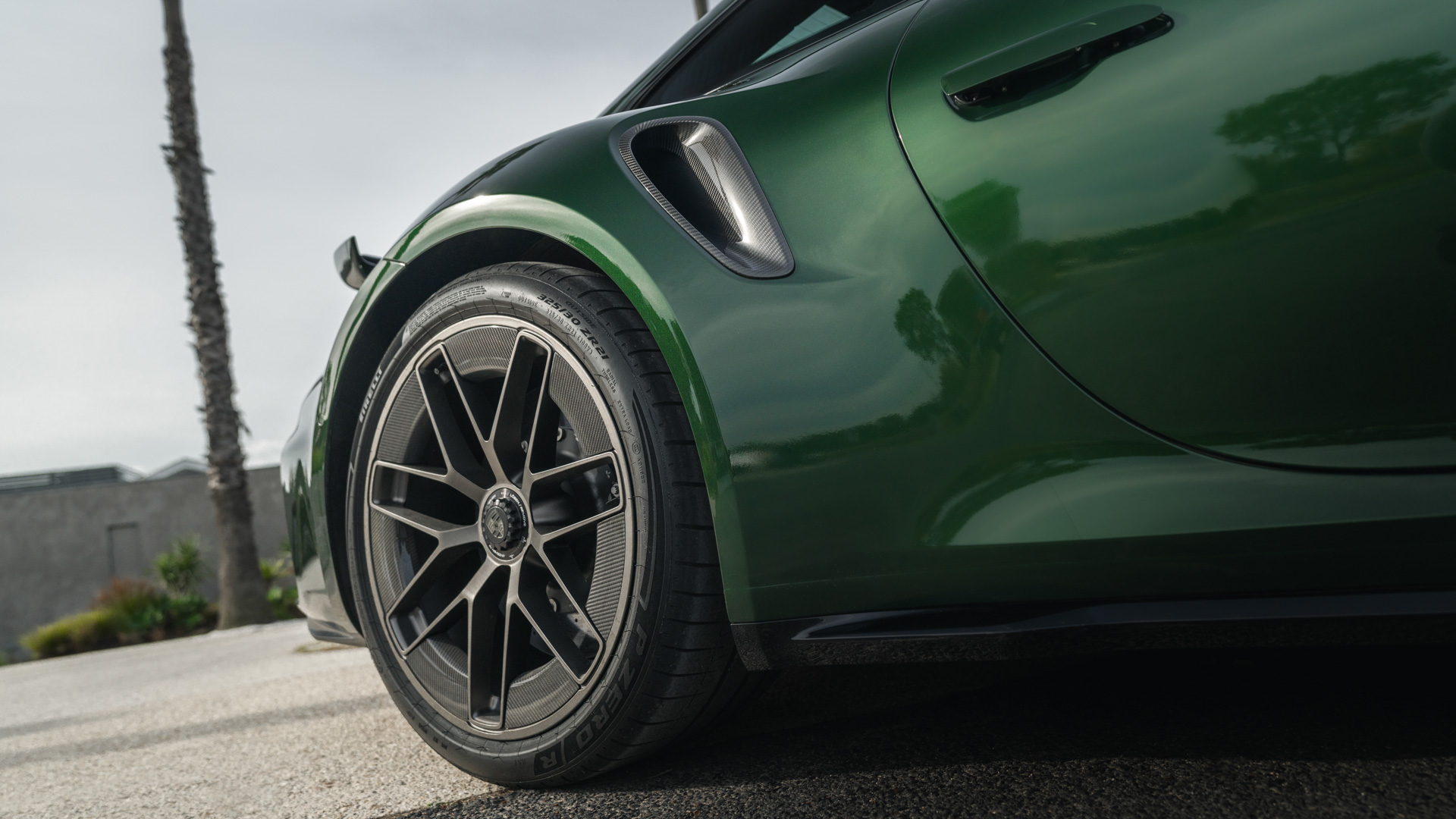
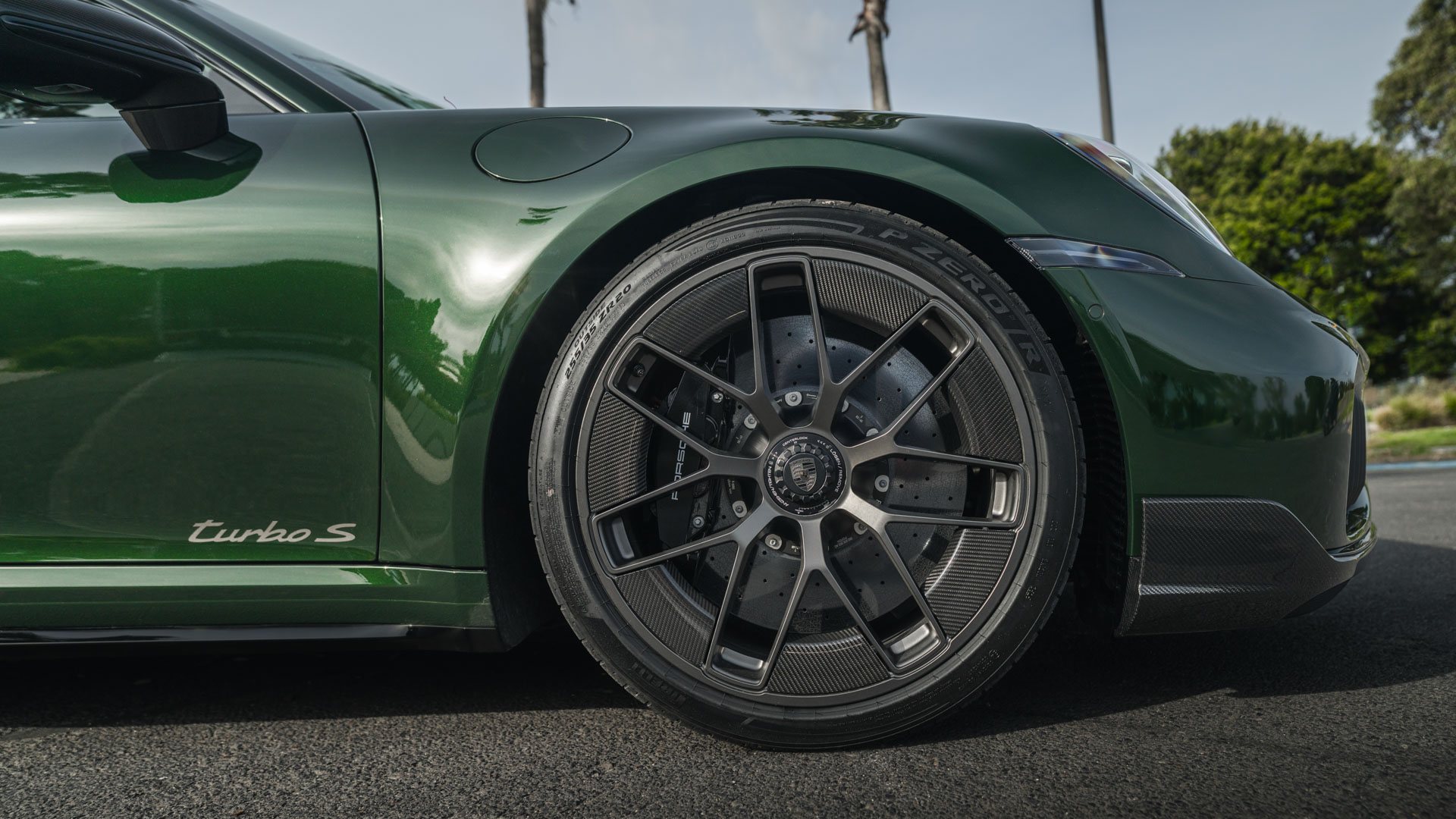
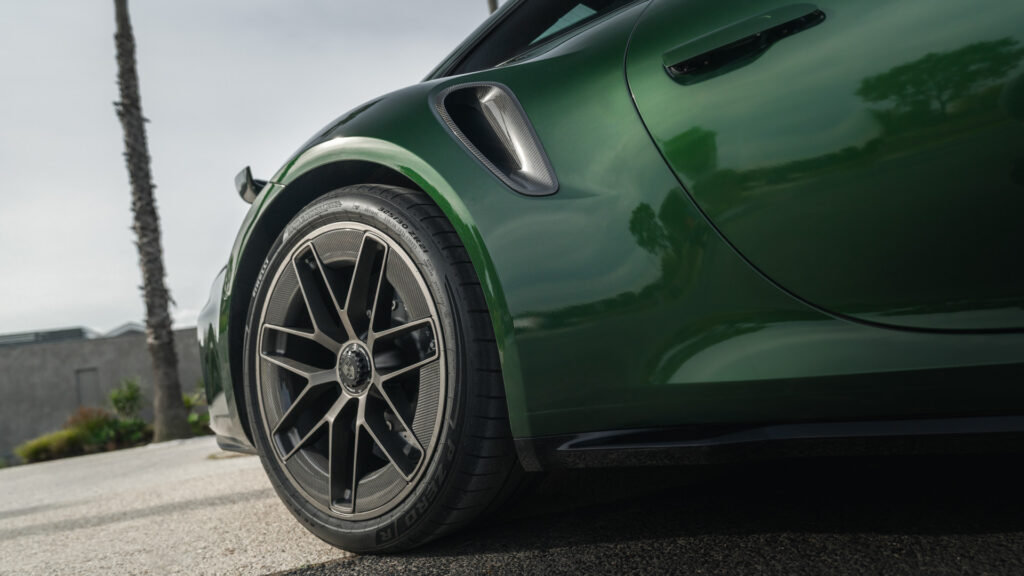
Along with wider rear wheels and tyres – now 21 x 12.0-inch wearing 10mm-wider 325/30s – new engine mounts, revised adaptive dampers, a stiffer bodyshell and active aerodynamics, the 992.2 shaved 14 seconds off its predecessor’s Nürburgring Nordschleife lap time.
Of course, all these numbers count for naught unless it actually improves the driving experience, which they most certainly do. The hybridity (S. Newman, copyright) wastes no time in making its presence felt, the engine firing without a single crank the instant you press the starter.
It’s there every time you leave a set of lights, too, the e-motor helping guide the Turbo S off the line like a patient parent teaching their kid to ride a bike, although the eight-speed dual-clutch can still occasionally stumble at low speeds.
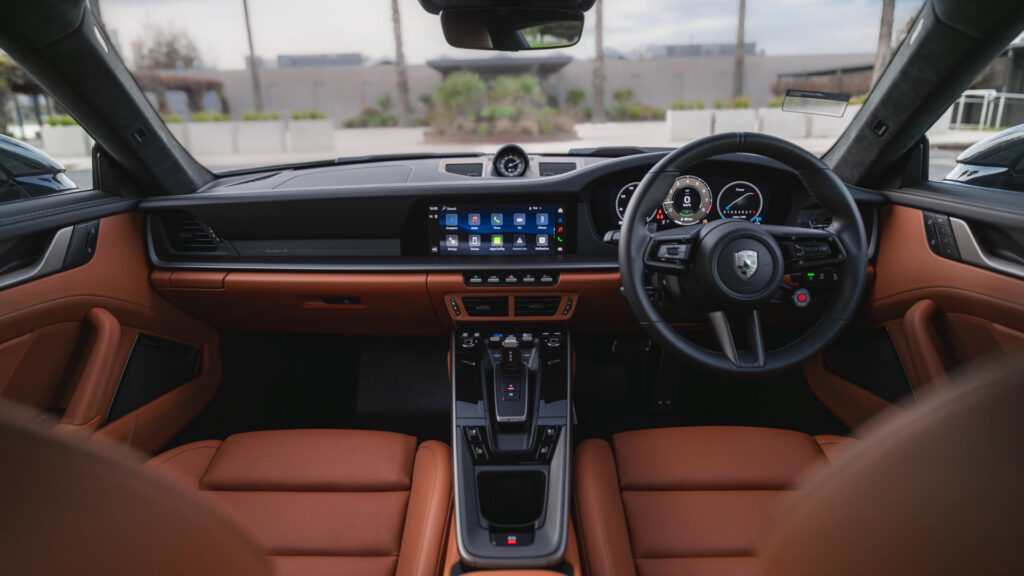
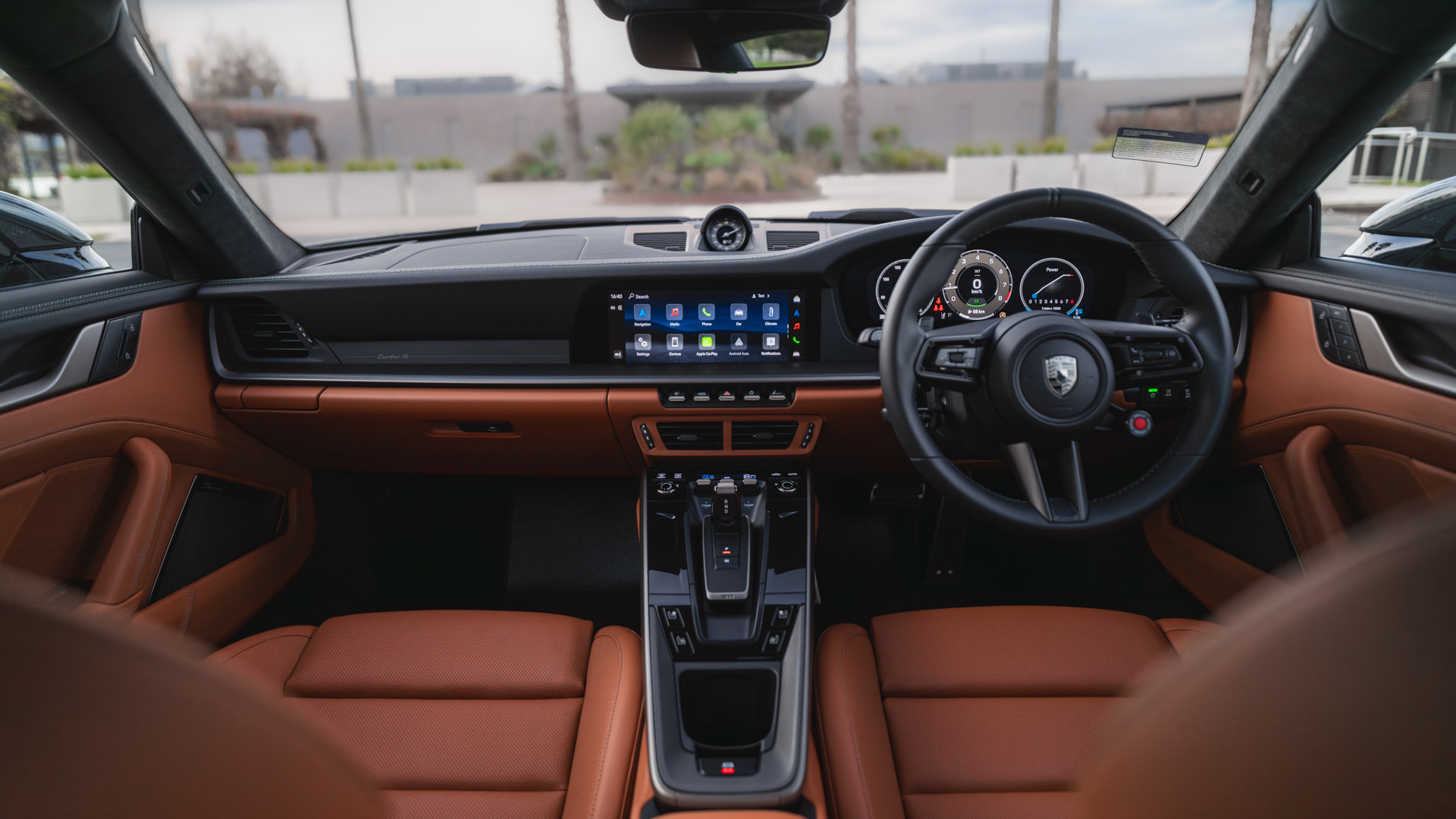
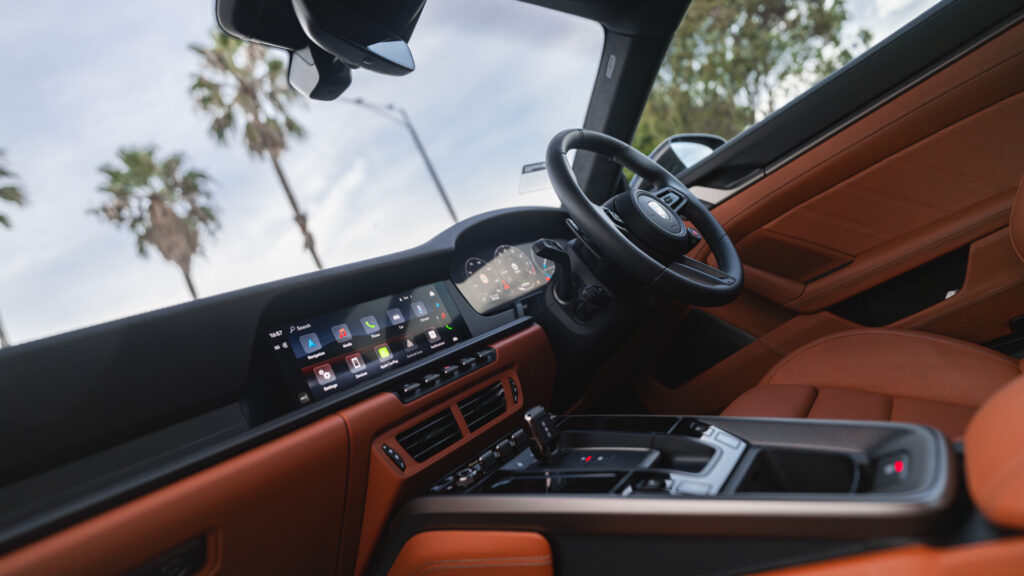
The driver sits ensconced in a rather nice interior, with heated and ventilated seats, a good stereo and modern infotainment with wireless smartphone mirroring and app connectivity, though it’s little different to that of a regular Carrera.
Coarse-chip road-noise will probably forever be an issue with 911s, as it is with the 992.2, but that aside the firm ride is just compliant enough to make the Turbo S an adept cruiser. In this regard it sits in the middle of its competitor set, superior to a carbon-tubbed McLaren but without the calm insouciance of a Bentley.
Then again, a Continental GT would last all of three corners before it lost sight of the Porsche on a twisty road. As you probably surmised from its performance claims, the 911 Turbo S is unconscionably fast, your body almost levitating under full acceleration until the national speed limit has long been passed (under controlled conditions, of course).
The 992.2 nomenclature may sound like a new FM radio station but this particular Porsche frequency makes a far more interesting sound, the deep growl of the engine accompanied by pops and crackles on the overrun in its sportier modes. It may not have the vocal prowess of a GT3, but it’s still music to the ears of performance car buffs.
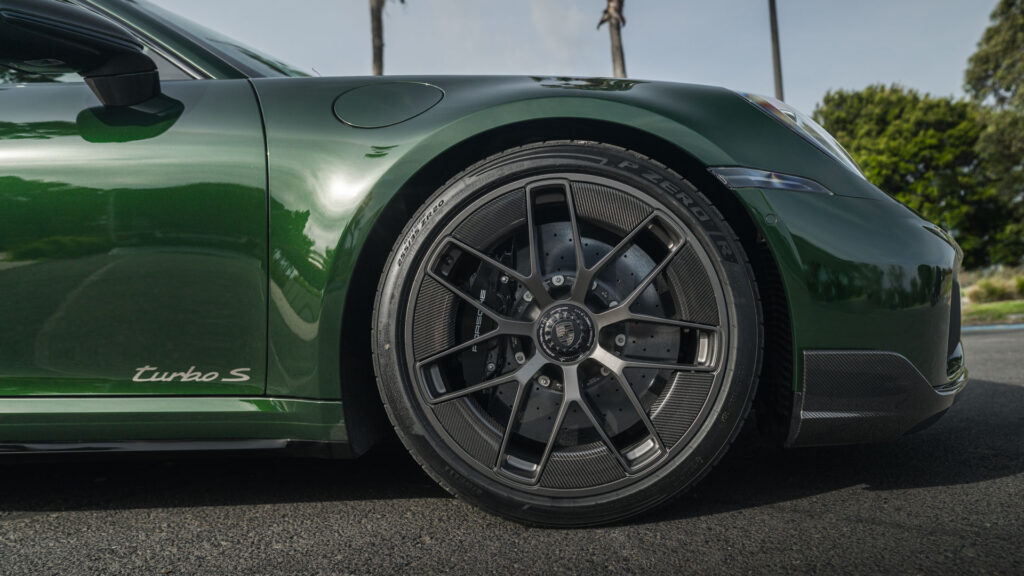
Happily, the gargantuan brakes – 420mm carbon-ceramic discs with 10-piston calipers at the front; 410mm carbon-ceramic discs with four-piston calipers at the rear – have the stamina of an Ironman competitor, never wilting in the slightest.
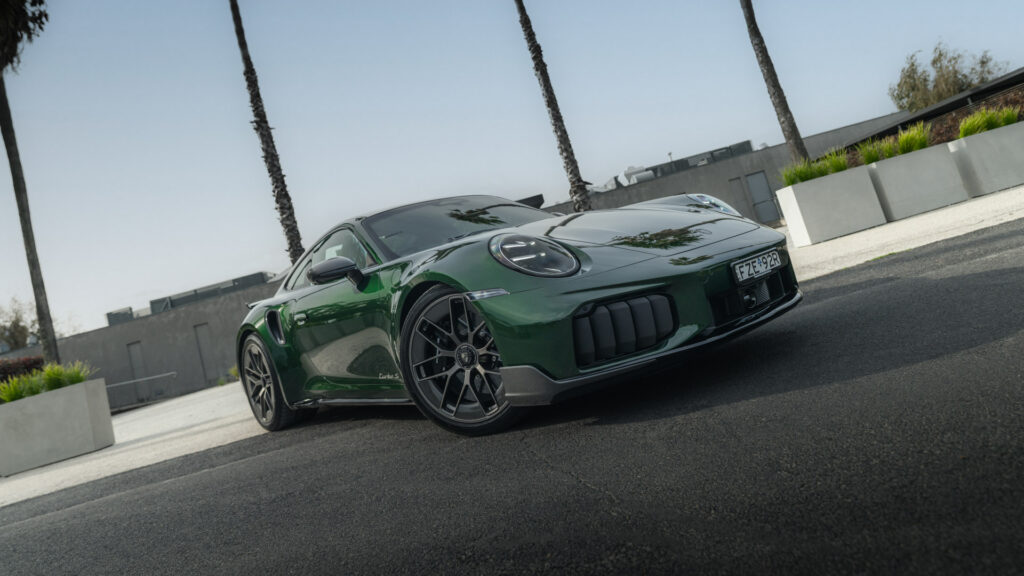
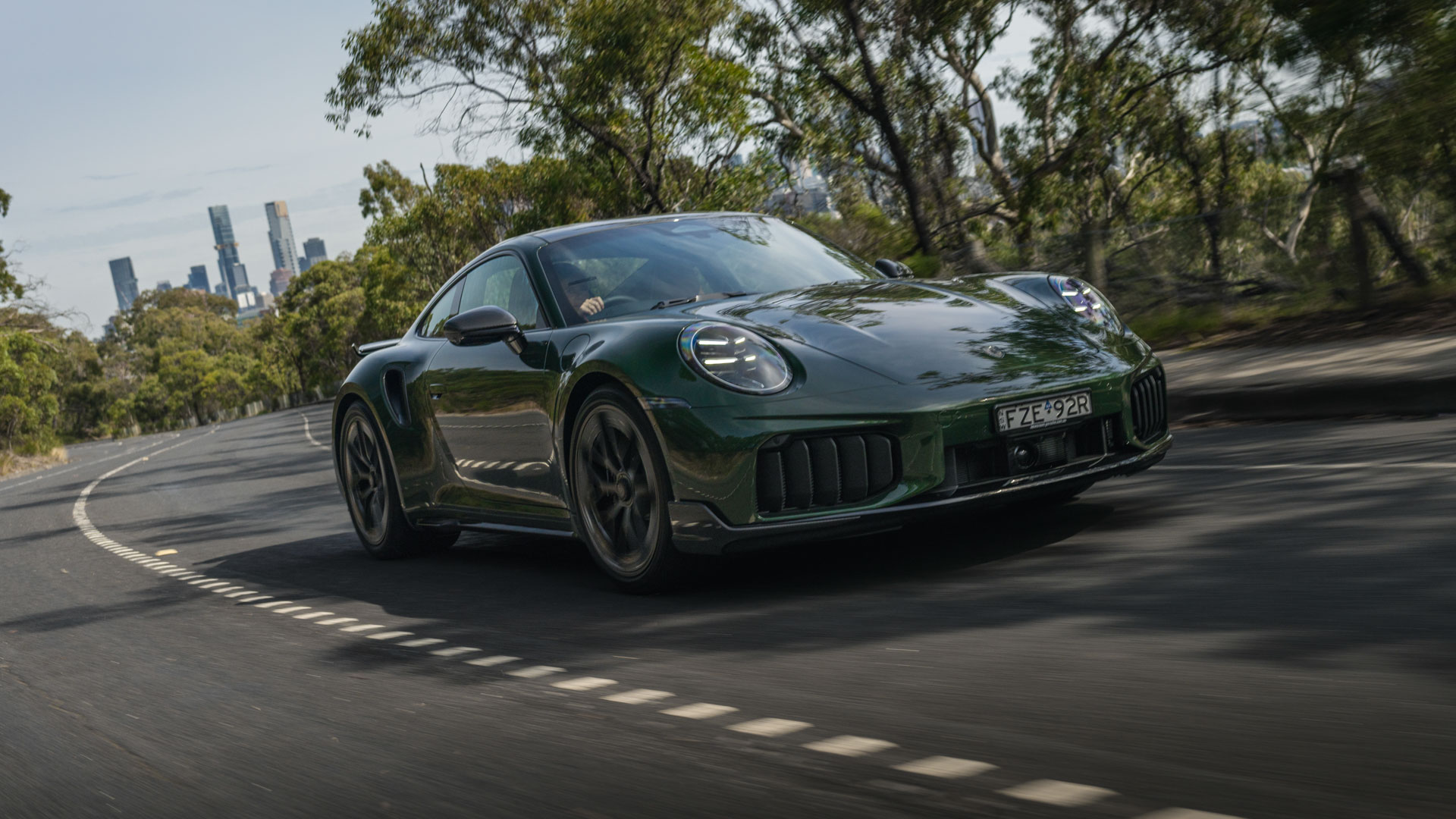
There is probably an assumption that the all-wheel drive Turbo is a bit staid, concentrating on being fast at the expense of fun, but nothing could be further from the truth. The steering dances in your hands in response to bumps and cambers – though if you’ve driven a 911 GT3 with its double-wishbone front end you’ll notice the reduction in response and communication – and the chassis is extremely expressive.
It takes room and confidence, as there’s sufficient grip to make your neck ache, but the combination of monster power, a rear-biased all-wheel drive system and very lenient Sports ESP calibration will have the Turbo S painting its Pirellis across the tarmac on corner exit like a four-wheeled Picasso.
It is a wild ride that leaves you breathless and wired with adrenaline, as it’s possible there is no faster point-to-point vehicle on the planet. Some will argue the GTS – itself now capable of 0-100km/h in 3.0sec – is all the 911 you will ever need; indeed, it’s an argument I made myself with the previous 992, as it had the sweeter, more manageable power delivery.
Now, though, with the hybrid system filling in the gaps, the latest Turbo S is a glorious exercise in excess. Its price now puts it firmly in “If you have to ask!” territory, at which point the quality of the experience becomes the defining factor.
Porsche’s flagship sports car might speak relatively softly, but it carries an almighty stick.
The Spec Sheet
2026 Porsche 911 Turbo S
Engine: 3.6-litre twin-turbo flat-six hybrid
Transmission: 8-speed dual-clutch
Drivetrain: All-wheel drive
Power: 523kW @ 6500-7000rpm
Torque: 800Nm @ 2300-6000rpm
0-100km/h: 2.5sec (claimed)
Kerb weight: 1725kg
Price: $577,300 plus on-road costs