
With the 24 Hours of Le Mans on this weekend, running from June 13-14, those watching on will no doubt be keenly watching the four Aussies set to take to the track.
Jack Doohan and James Allen are set to compete in the LMP2 class, while Martin Berry and Yasser Shahin are among the LMGT3 entries. Three Kiwis are among the flagship LMP1 competitors, a class in which Hyundai’s luxury arm Genesis is making its Le Mans debut.
But back in 1999, the Aussie to watch out for was one who got airborne beyond belief during qualifying and again in the warm-up, before his teammate infamously did the same during the race itself.
That Aussie was future nine-time Formula 1 Grand Prix winner Mark Webber, his teammate was Scotsman Peter Dumbreck, and the car both met misfortune in was the Mercedes-Benz CLR.
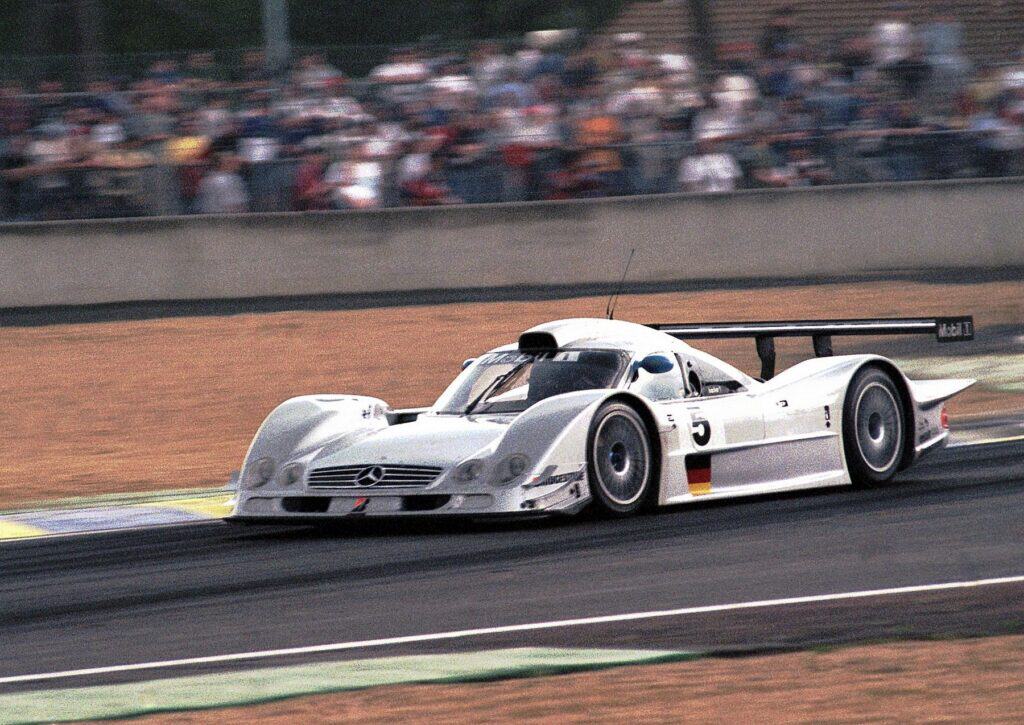
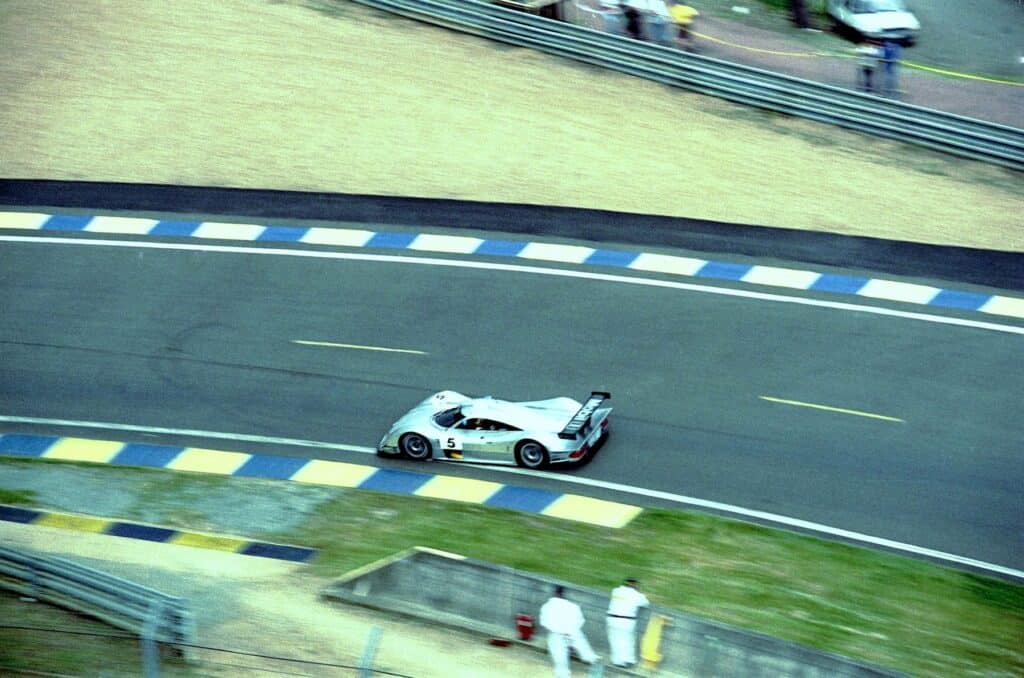
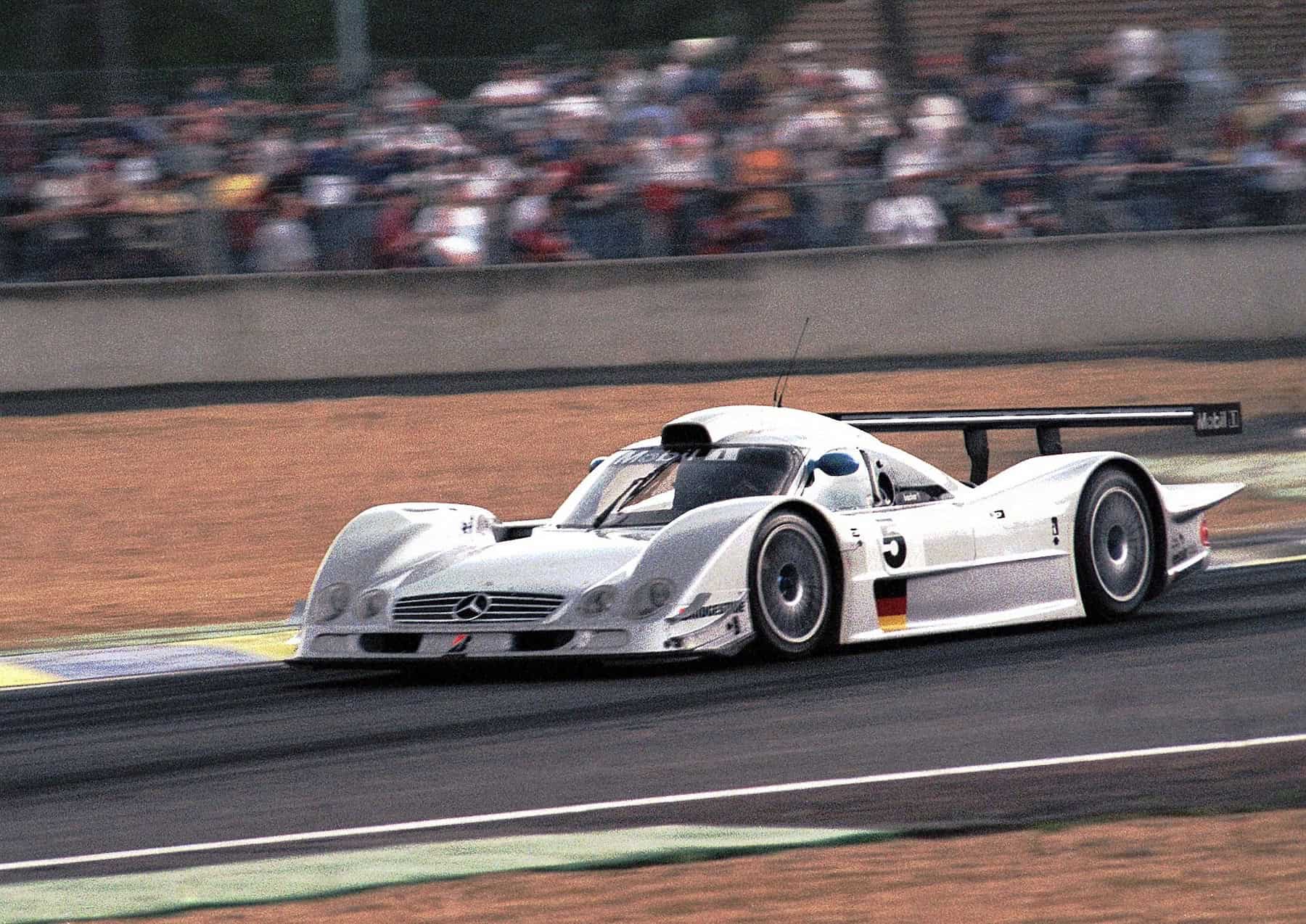
Ahead of the race, Mercedes proudly showed off what it would be competing with at Le Mans in 1999, noting, “the new, only one-meter high Silver Arrow is lower than a Formula 1 car”.
Powered by a tuned-up 600hp version of the 5.7-litre V8 offered in Mercedes’ road cars of the time, the 900kg racer made from carbon fibre and aluminium honeycomb would go on to become one of the event’s most infamous cars ever.
While Mercedes touted the fact it had completed 35,000km of testing, the majority of it hadn’t been done at Le Mans. Most of those developmental miles were actually racked up in the US.
Three CLRs were entered into the race. Webber was one of three drivers in car number 4, Dumbreck was part of the trio in car number 5, and the remaining three drivers were in car number 6.
While the main 24 Hours of Le Mans race itself is often the source of most of the drama, it was during qualifying that Mercedes’ drama began. During the second day of qualifying sessions, Webber was behind Frank Biela’s Audi R8R in a section between Mulsanne Corner and Indianapolis.
After beginning his overtaking manoeuvre, Webber’s CLR suddenly lifted its nose and front wheels off the circuit and became airborne after exiting the Audi’s slipstream. The silver Merc flipped upwards and completely somersaulted backwards before rotating onto its right side and crashing down into the tarmac. Webber suffered from a sore neck, chest, and back, but had no major injuries.
Fortunately for Mercedes’ PR, this occurred on a section of the track that wasn’t covered by television cameras or accessible to the general public. Unfortunately for Mercedes, this wasn’t the only time Webber would have this issue with the car, and the next time the world would be watching.
On the morning of the 1999 race, a half-hour warm-up session was held for teams to conduct their final preparations. Mercedes had managed to cobble car number 4 back together, and Webber had managed to shake off the pain from a few days prior.
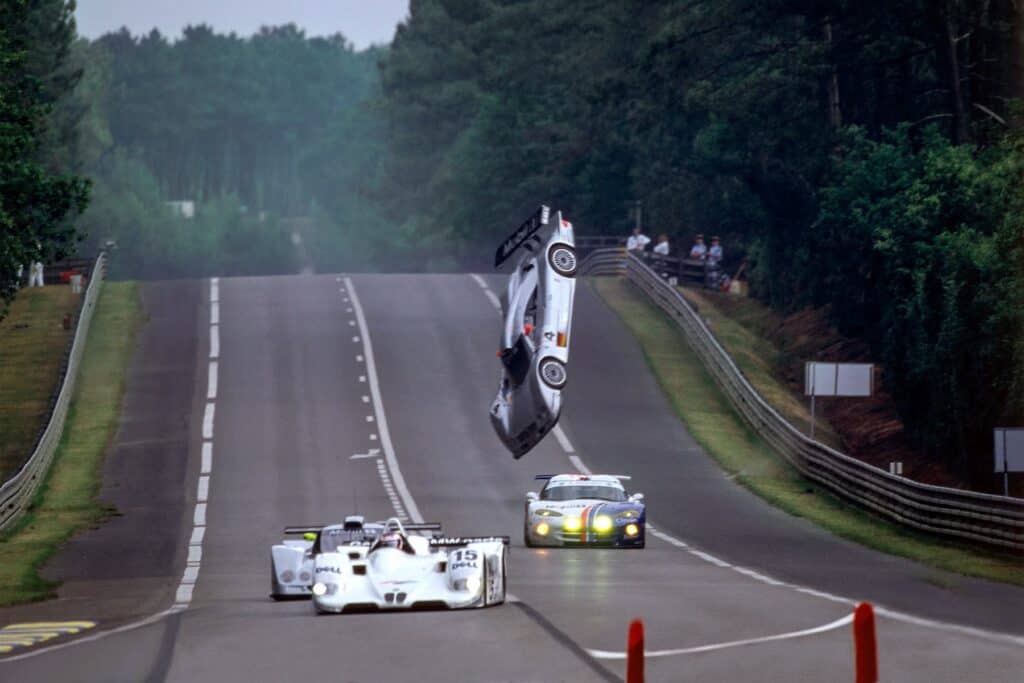
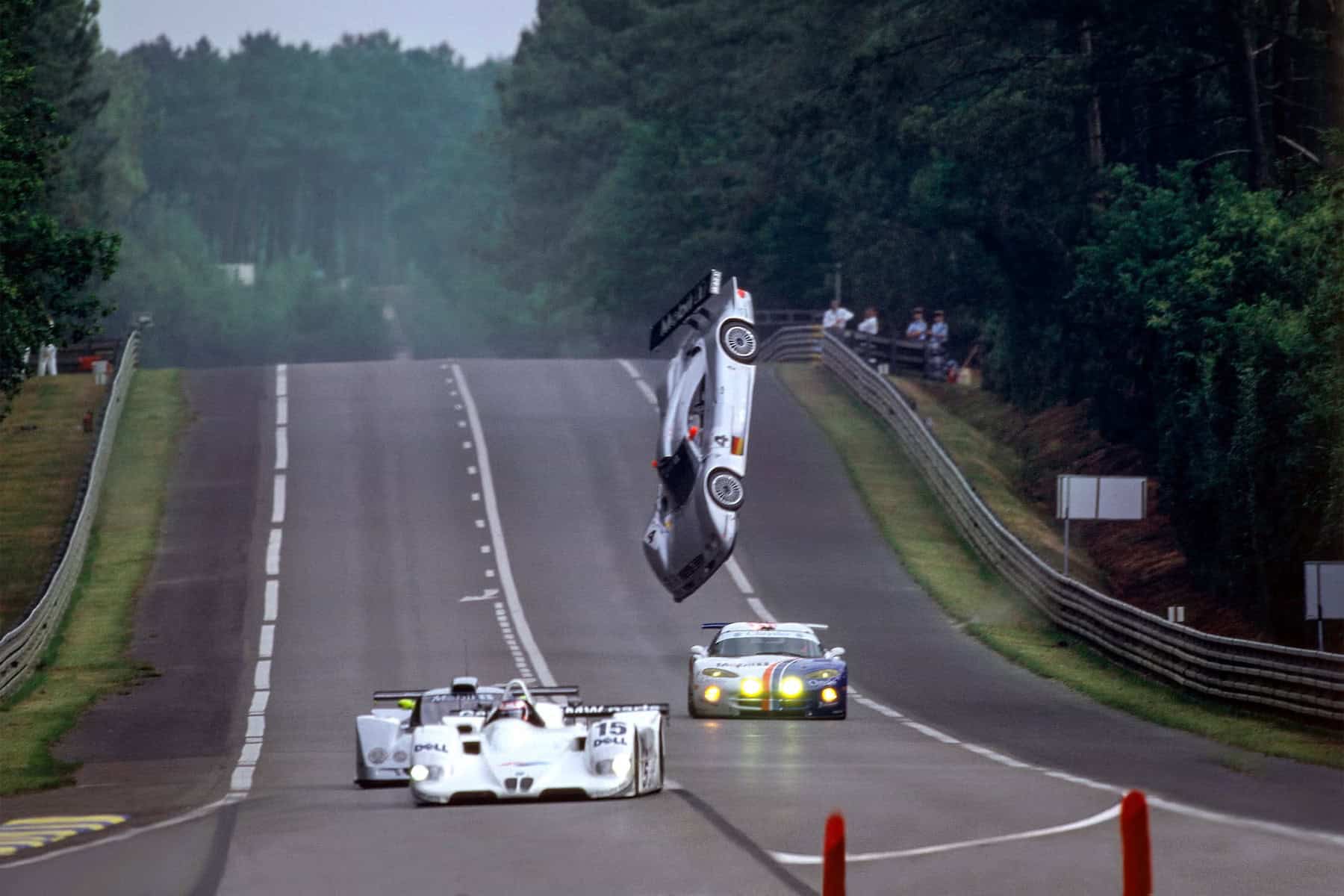
As the trio of Mercs were coming down the Mulsanne Straight, Webber was the last of the three cars, at the time sat just behind a Chrysler Viper GTS-R. As he crested the hill on approach to the famous Mulsanne Corner, the nose of his CLR lifted its nose once again, rising nine metres into the air, somersaulting backwards, and crashing down on its right side once again.
Webber recalled the incident in his 2015 autobiography, Aussie Grit, noting:
Two thoughts went through my head. The first was for the team: “What the f*** were those guys doing, giving me a car like this?” And then: “There’s no way I can be that jammy again; I don’t want any pain, I want it to be over quick.”
Webber was lucky again to report no major injuries, but the press all had their cameras out this time around. Following this, Mercedes withdrew car 4 from the race and put in a call to Adrian Newey, then chief aerodynamicist for McLaren Formula 1, to see how they could modify the remaining two cars to prevent further accidents.
Dive planes were fitted to the front guards to increase downforce, despite the fact French driver Christophe Bouchut was the only one of the six remaining Mercedes competitors to voice concerns over the car’s safety.
The minor modifications clearly weren’t enough. Just six hours into the race the same fate Webber experienced twice would befall car number 5.
On lap 76, Dumbreck was in third place, sat nose-to-tail with Thierry Boutsen’s Toyota GT-One. On the run between Mulsanne and Indianapolis once again, where Webber flipped in qualifying, Dumbreck hit the small apex kerbing on a slight right kink in the straight while dealing with sunset glare and travelling at 320km/h.
This crash would prove to be the biggest of all. Car number 5 rotated three times as it flew almost 15 metres up in the air. As the track curved to the right, the airborne CLR missed a marshalling post and advertising billboard as it went over the safety barrier before landing behind the trees. Luckily, the area was not accessible to spectators.
It was all captured by TV cameras and broadcast on the live world feed.
After the dramatic, acrobatic crash, Dumbreck was left unconscious. “My first memory is of being carried away on a stretcher,” he recalled in 2015.
It only got more puzzling for him from there. “I also remember being tested for alcohol,” he explains.
“I thought they were crazy… but French law stipulates that all victims of accidents on public roads, such as the Le Mans circuit, must be tested!”
Following this, car number 6 was ordered to return to the pits immediately, after which all three Mercedes-Benz garage doors were shut, signalling its retirement from the race. In a bitter twist, its rivals BMW won the 1999 race the following day.
For our Aussie Webber, it signalled the end of his time with Mercedes and start of his Formula 1 career, first as a test driver in December ’99 before finally earning a race day seat in 2002.
Webber clearly wasn’t put off from Le Mans forever by these accidents, however. From 2014-16, he returned to endurance racing with Porsche in the 919 Hybrid, achieving a best result of second overall at Le Mans in 2015.
Keen to find out more about Aussie-linked history at Le Mans? Click here to find out how the 1928 Bentley 4½ Litre helped write our country into the history books.