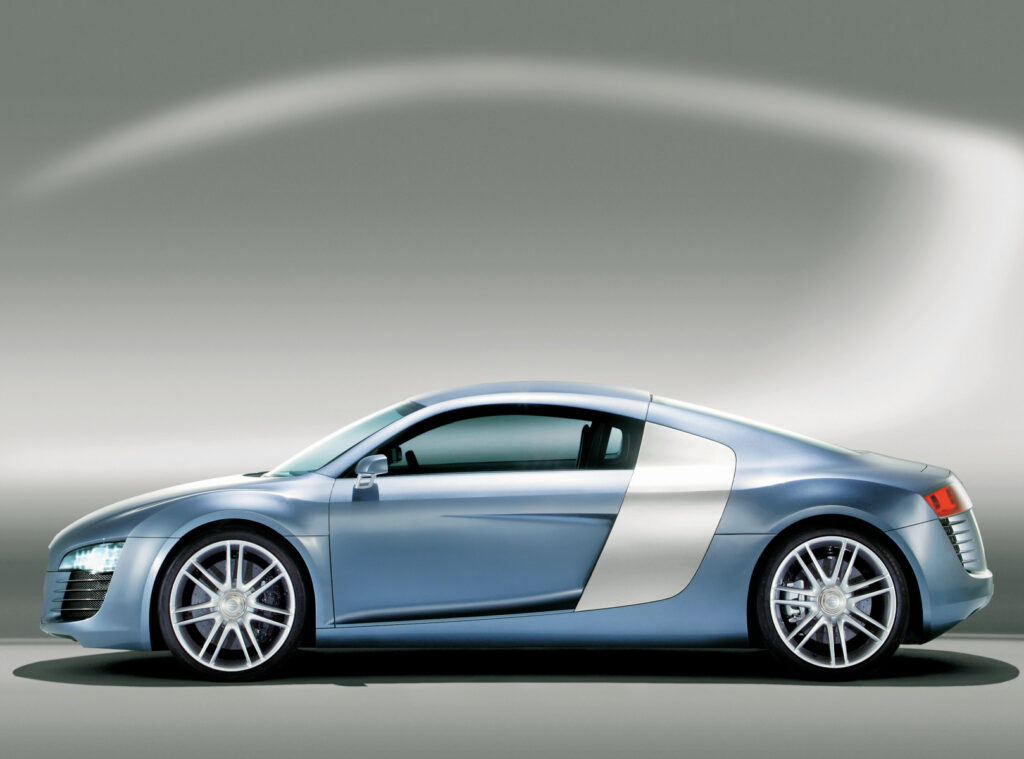
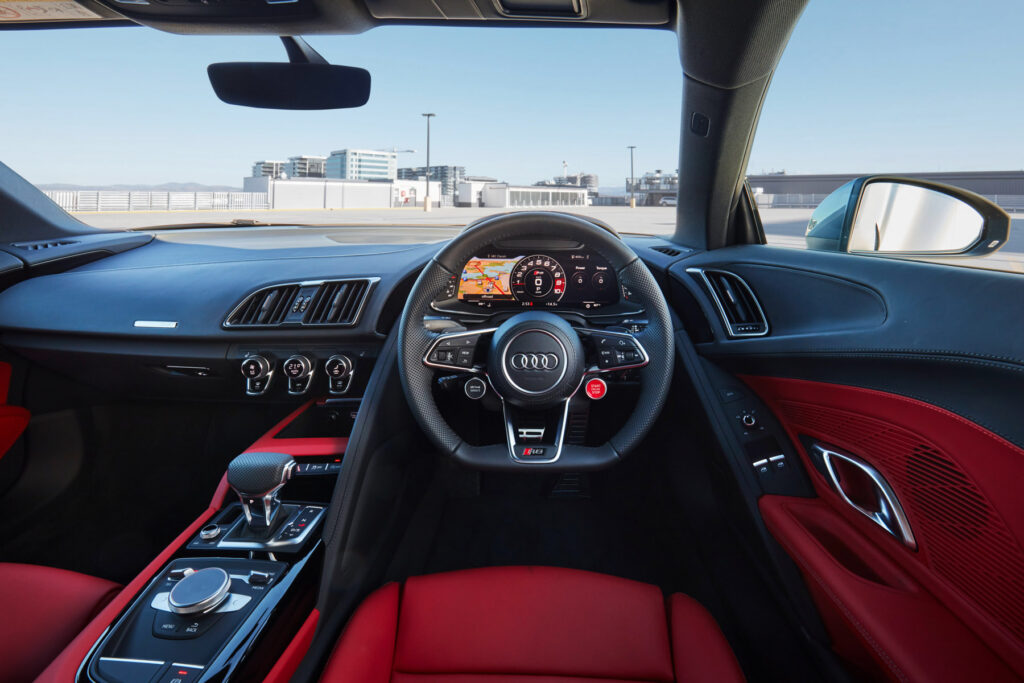
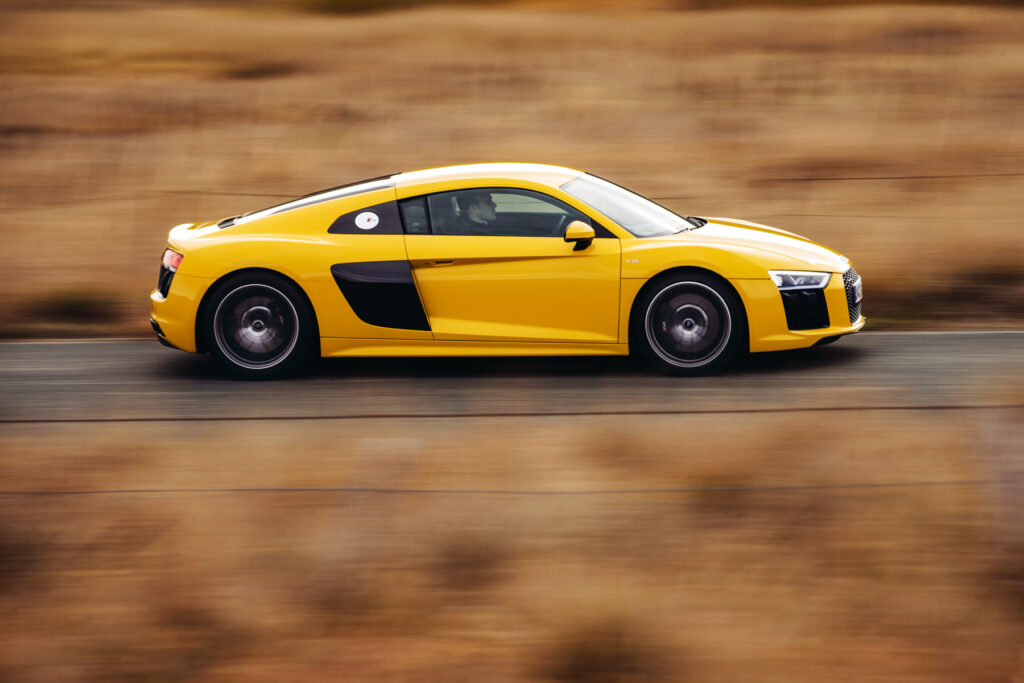
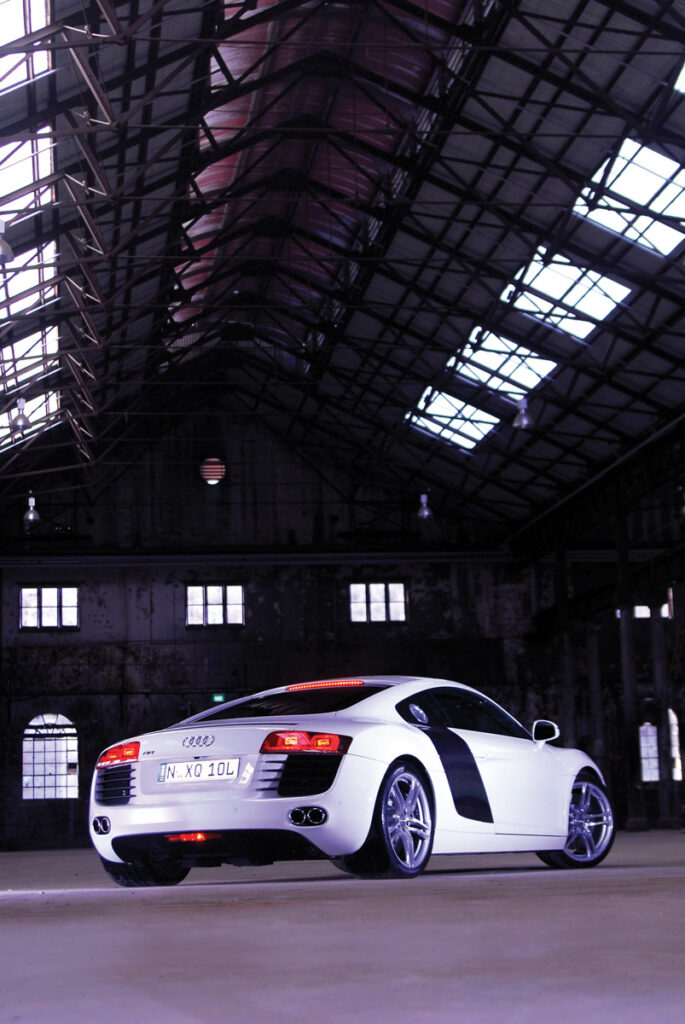
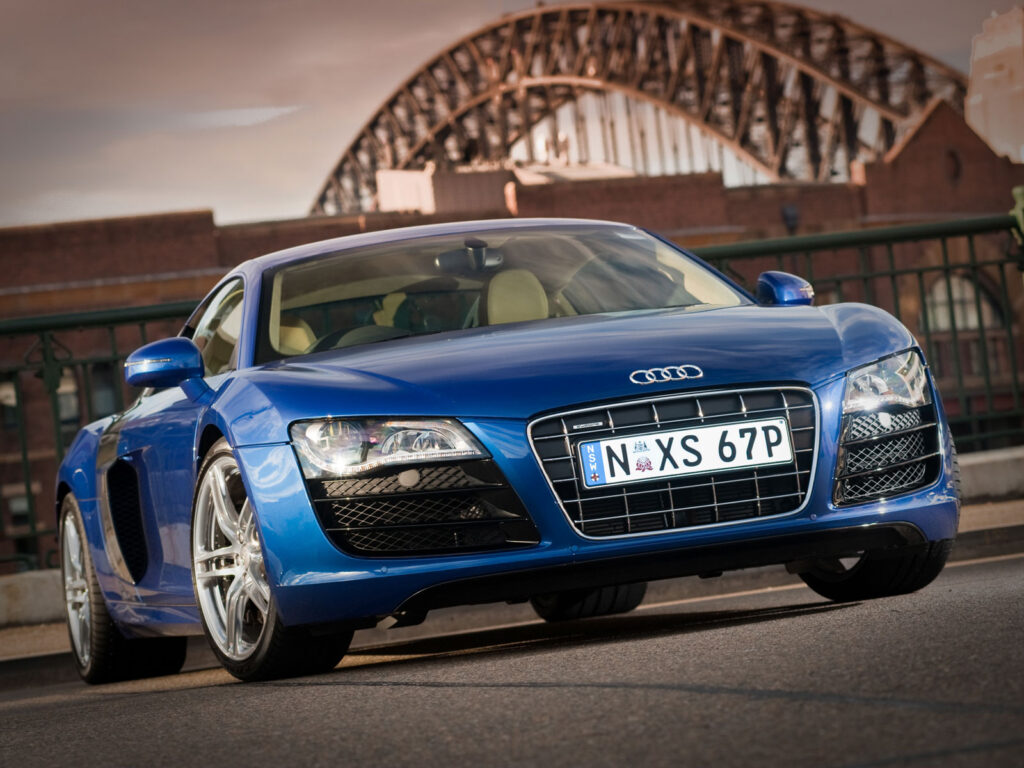
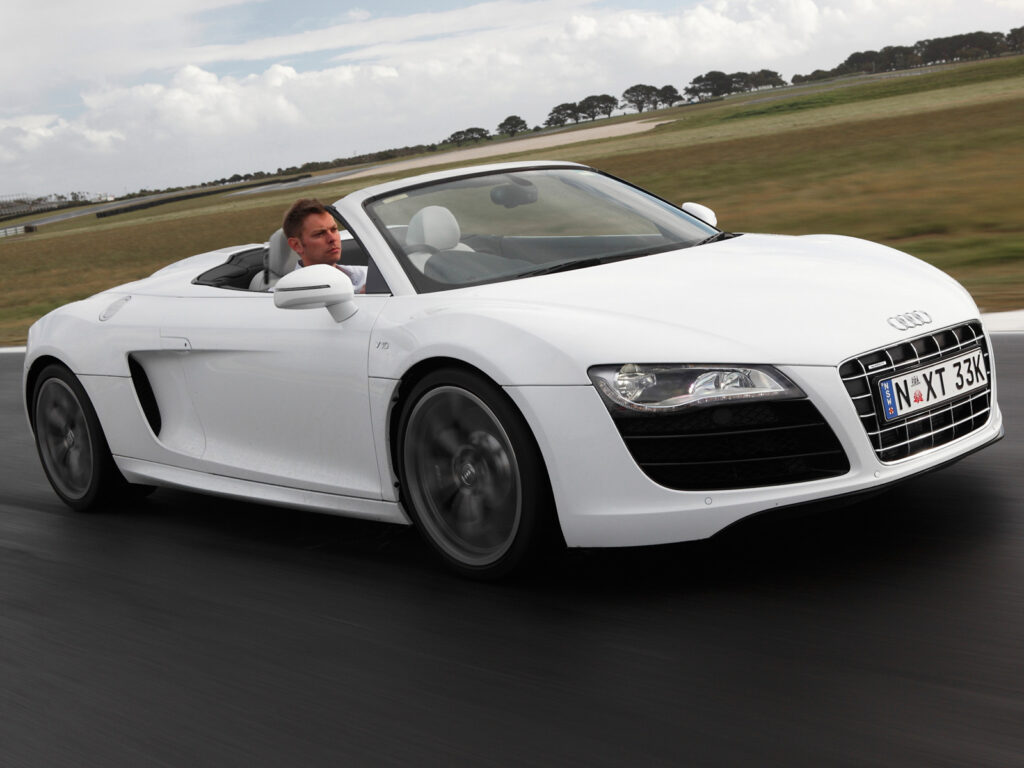
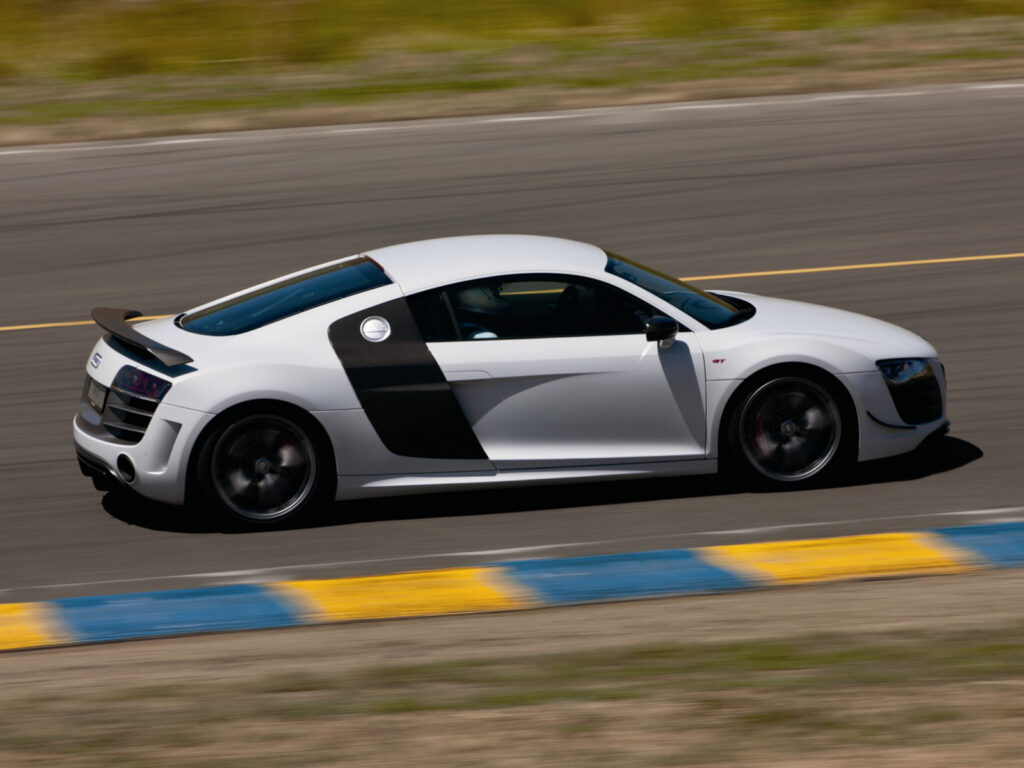
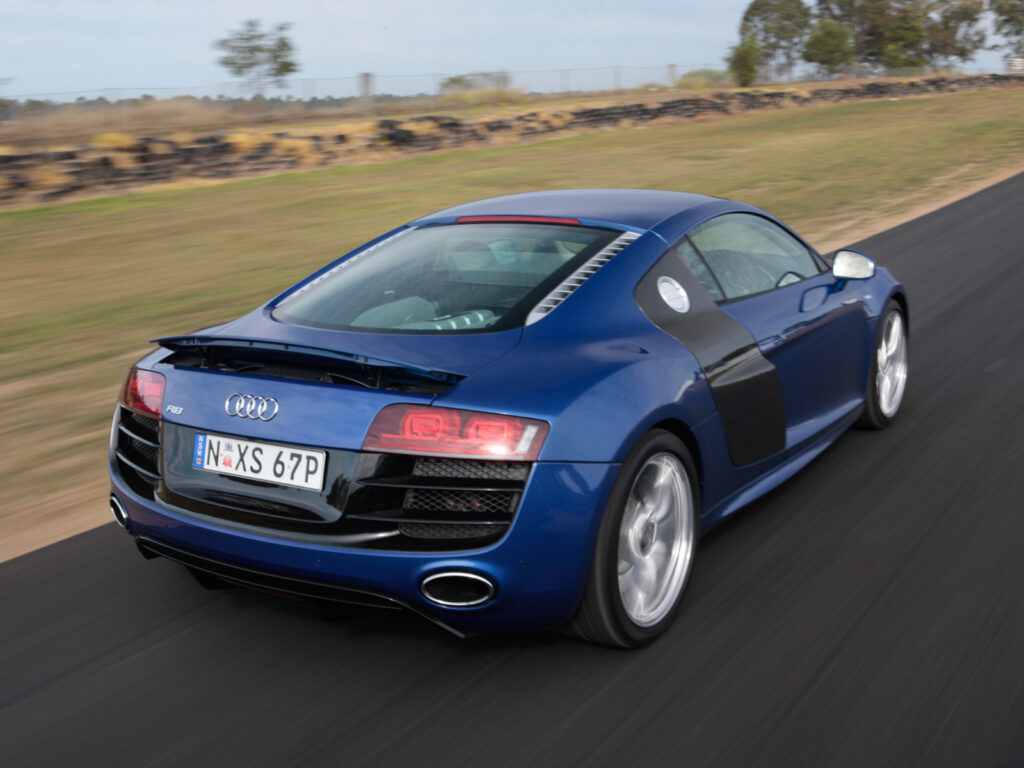

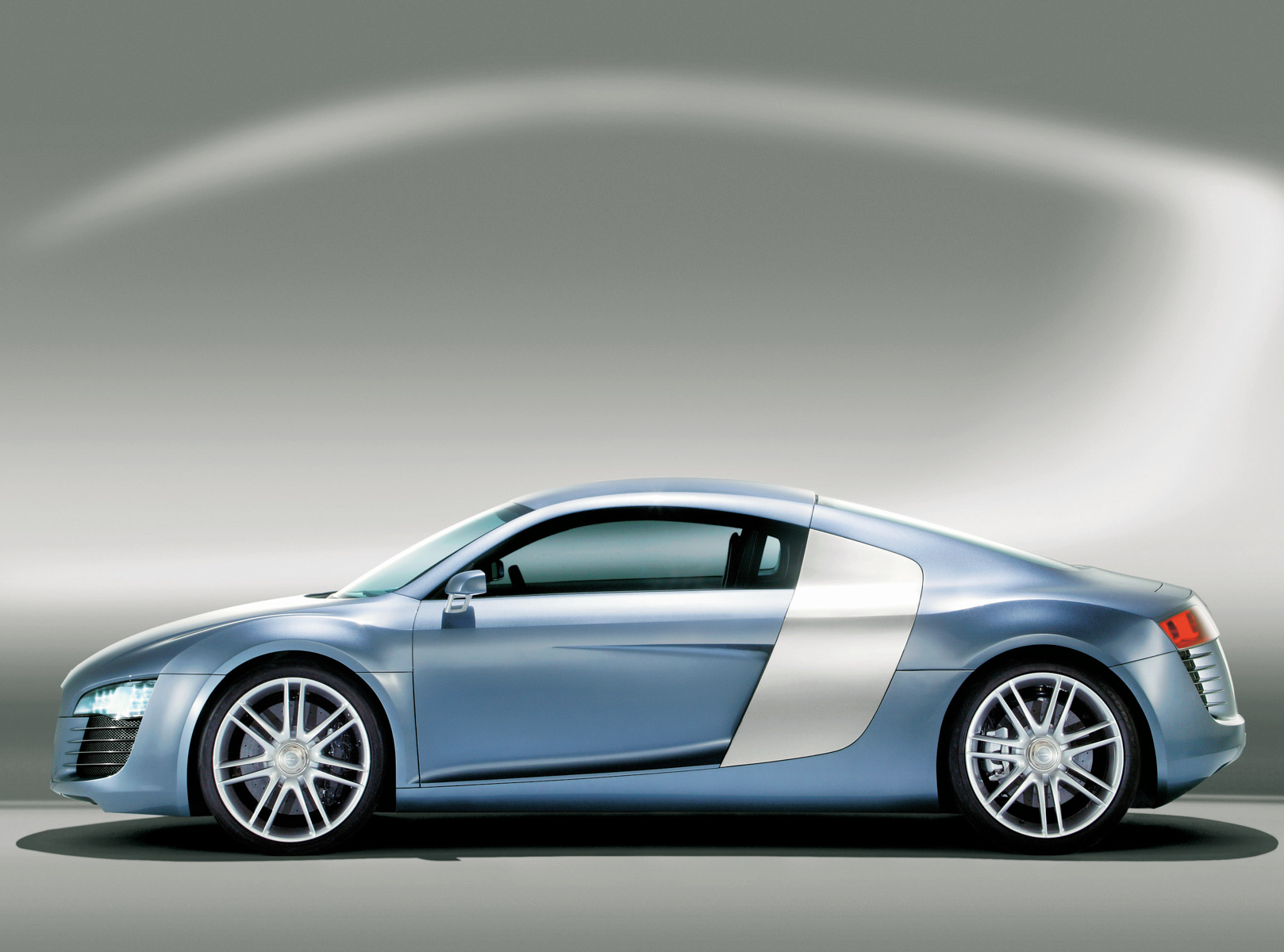
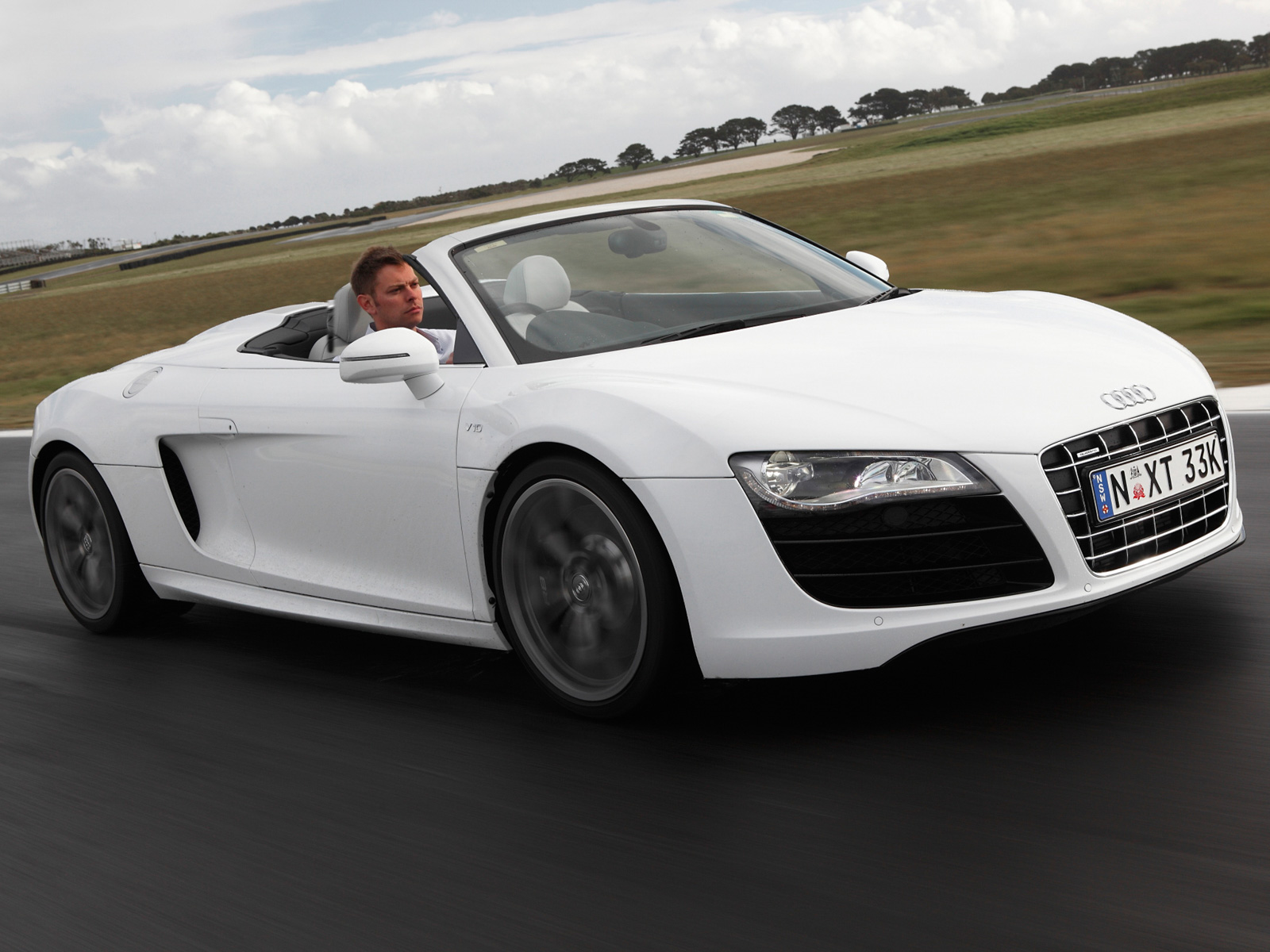
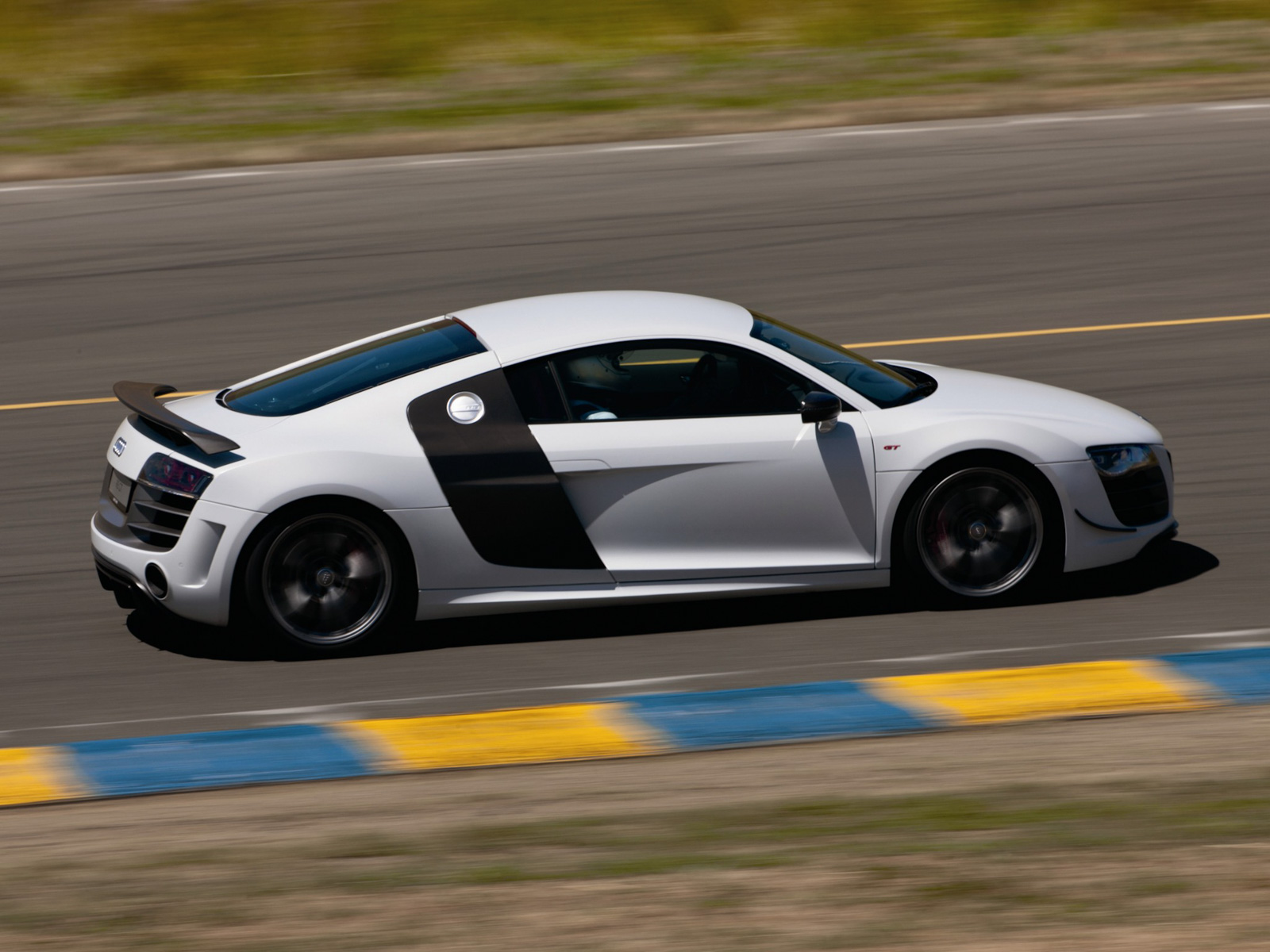
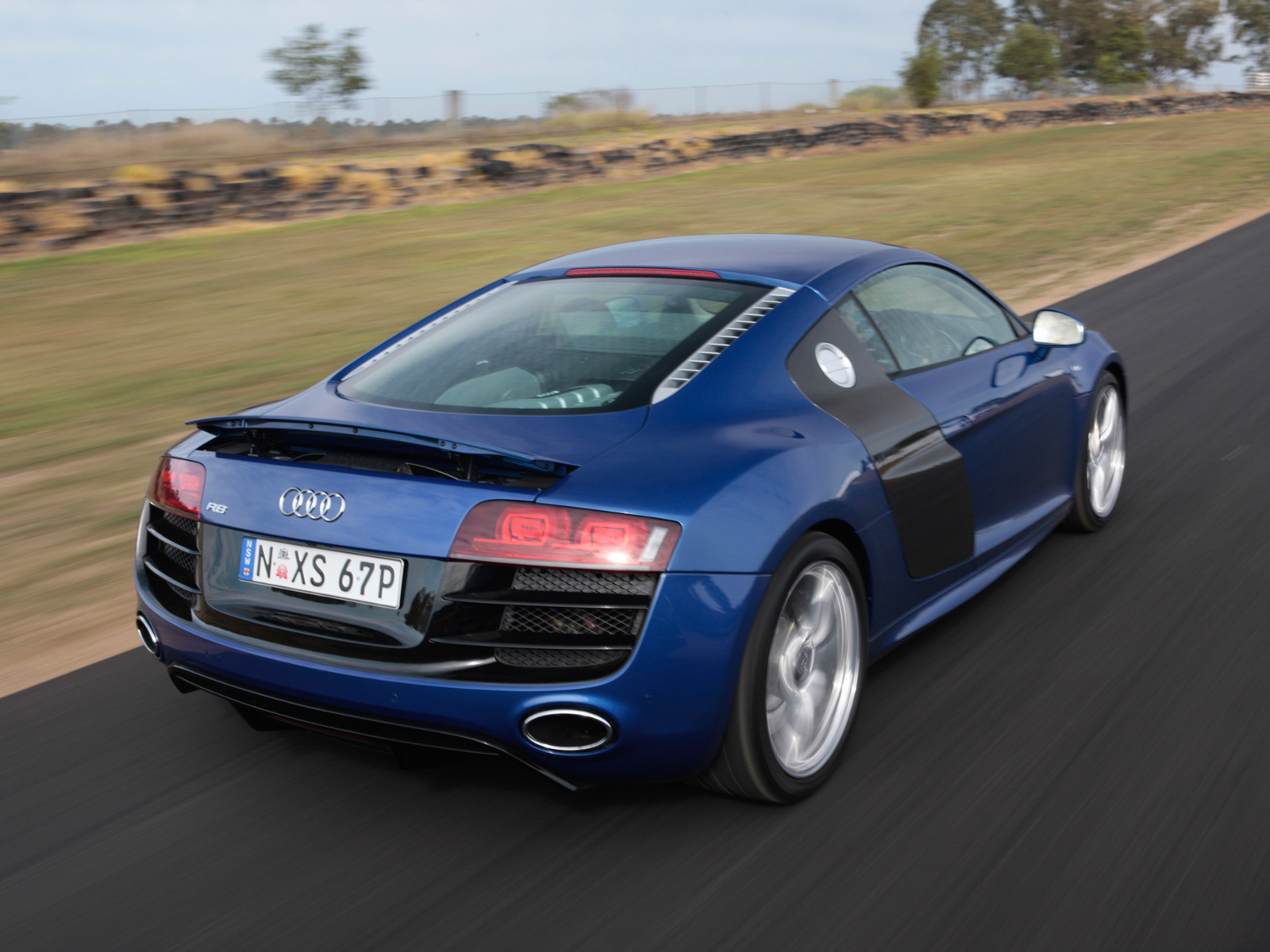
The Audi R8 appeared like a bolt from the blue. In hindsight, its arrival was telegraphed by the 2003 Le Mans quattro concept, but that was just the latest in a long line of mid-engined Audi concepts – including the Avus, Quattro Spyder and Rosemeyer concepts – none of which had reached production.
Built to celebrate Audi’s hattrick of wins at the Le Mans 24 Hour from 2000-2002, the quattro concept used the chassis of the newly released Lamborghini Gallardo with a 449kW/750Nm 5.0-litre twin-turbo V10 mated to a six-speed automated manual and all-wheel drive.
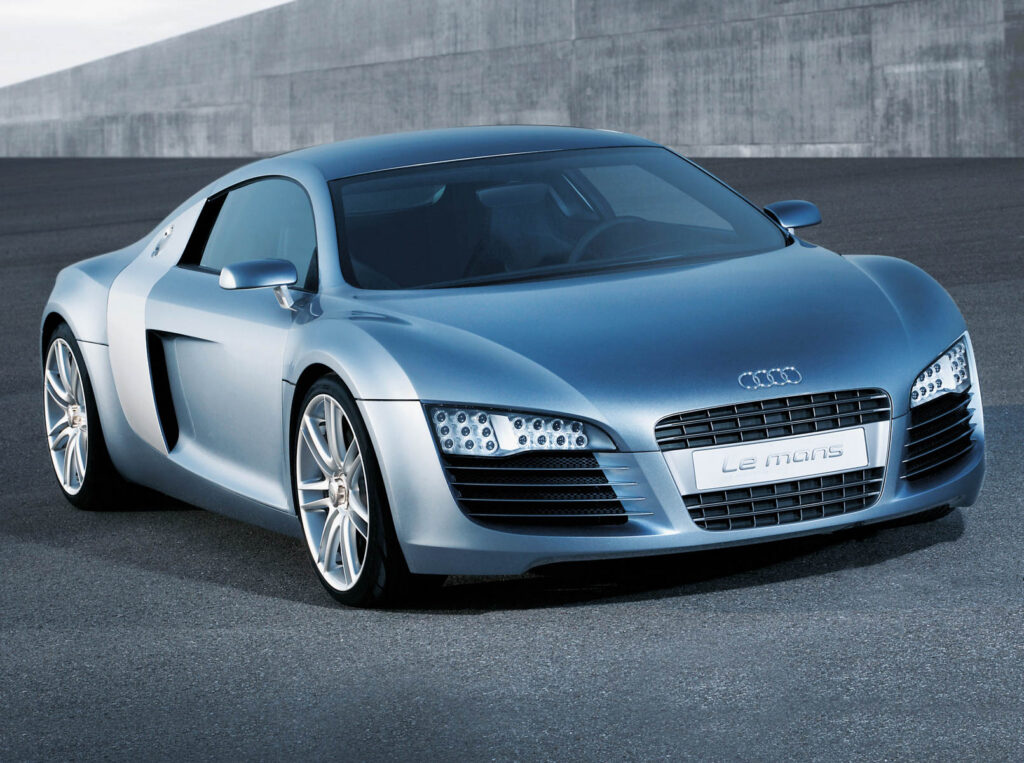
In a pre-GFC world, sports car sales were booming and Audi made the decision to put the Le Mans quattro into production in 2006 as the R8, sharing the name of its phenomenally successful Audi R8 Le Mans Prototype (LMP) race car that won 63 of the 79 races it entered.
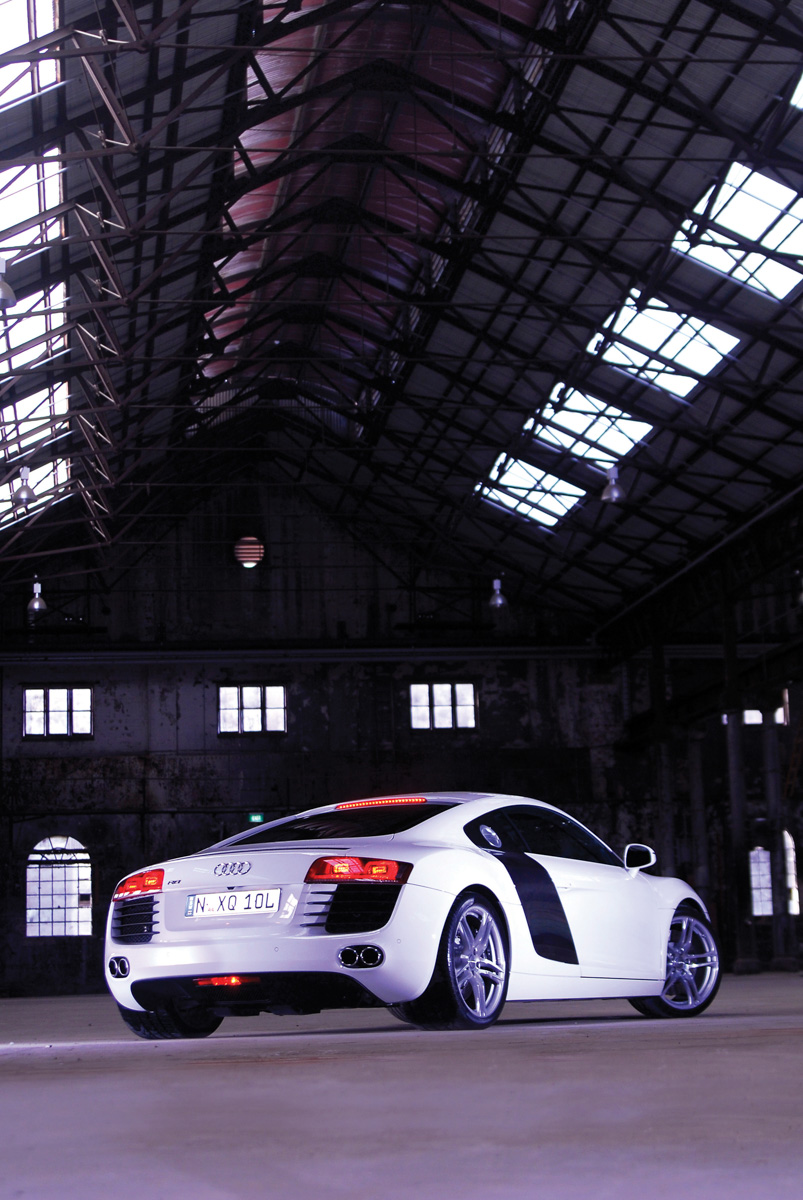
The production car’s styling was almost a facsimile of the 2003 Le Mans Quattro Concept designed by Frank Lamberty and Jens Sieber, but the twin-turbo V10 had been replaced by a 309kW/430Nm 4.2-litre V8 from the delectable B7-generation RS4, placed behind the two-seat cabin and converted to dry-sump lubrication.
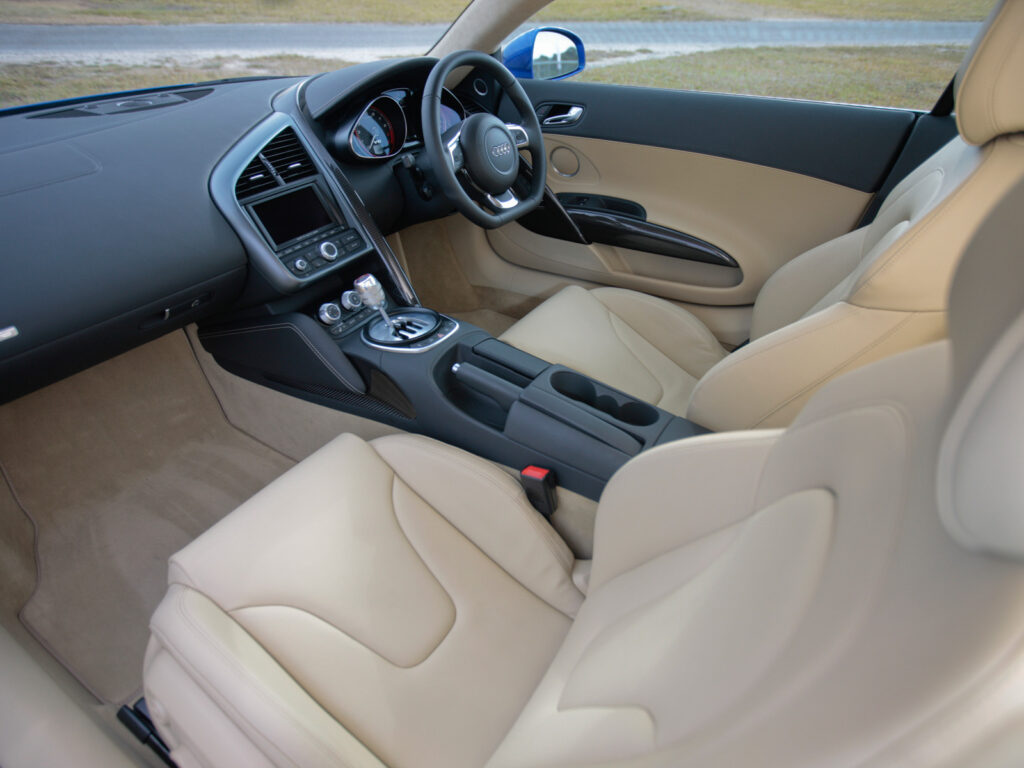
A six-speed manual was technically the only available gearbox, but you could choose to operate the third pedal yourself or have the computer do it for you in the ‘R-Tronic’ mode, such as in this example currently being auctioned on Retro Rides <<< https://rrauctions.com.au/lot/317 >>>. Being Audi, the R8 had to be quattro all-wheel drive, but drive distribution was biased towards the rear.
The resultant R8 production car turned out to be a revelation. This wasn’t the first time Audi had changed the performance game, but whereas 1980’s Ur Quattro changed the rules with turbocharged power and all-wheel drive traction, the R8 outplayed the opposition on almost ever front.
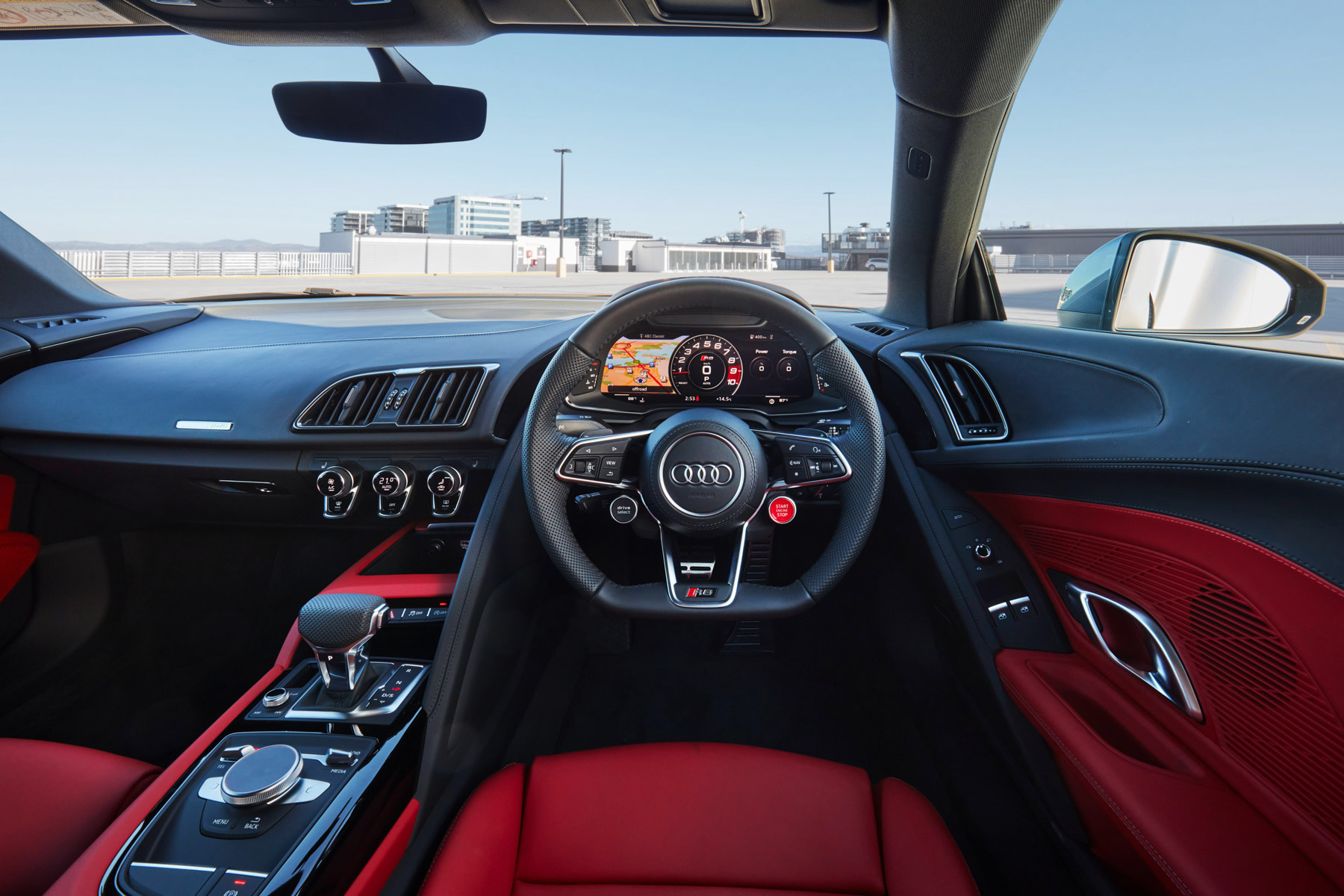
While grip, traction and speed had long been Audi hallmarks, delicate, communicative steering, a willing, adjustable chassis and controlled, compliant ride had not. The R8 addressed these issues beautifully, adding to the appeal with its eager 8000rpm+ V8, click-clack open-gate gearbox, beautifully built interior and sci-fi styling. It swiftly became the new sports car benchmark, leaving even the mighty Porsche 911 in its wake.
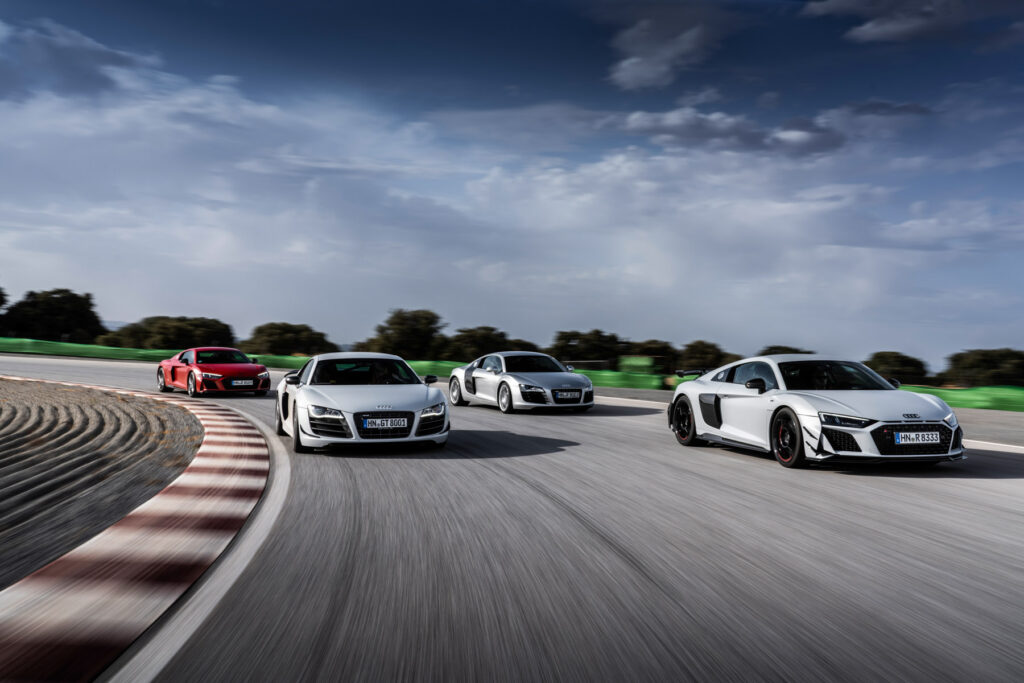
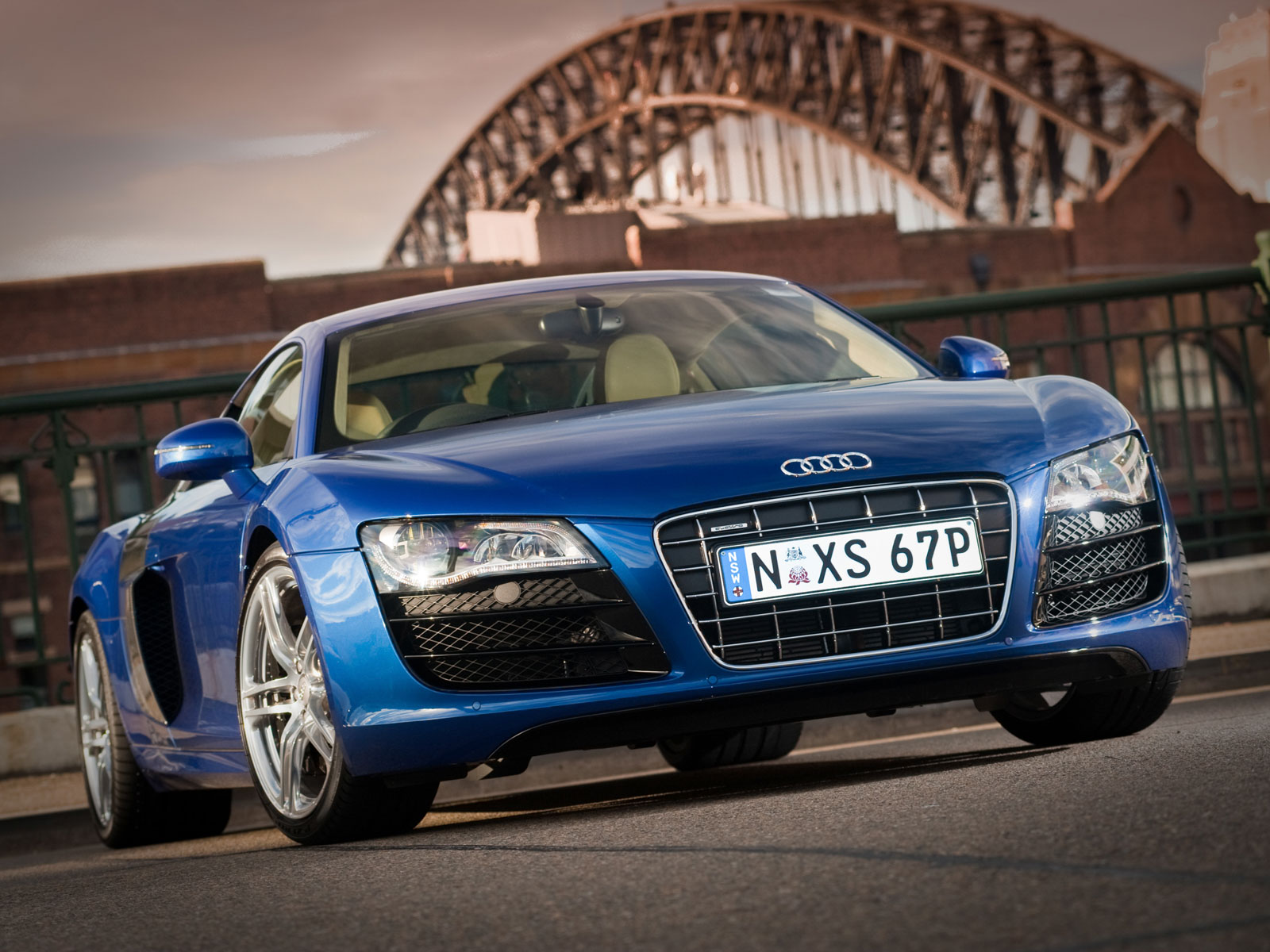
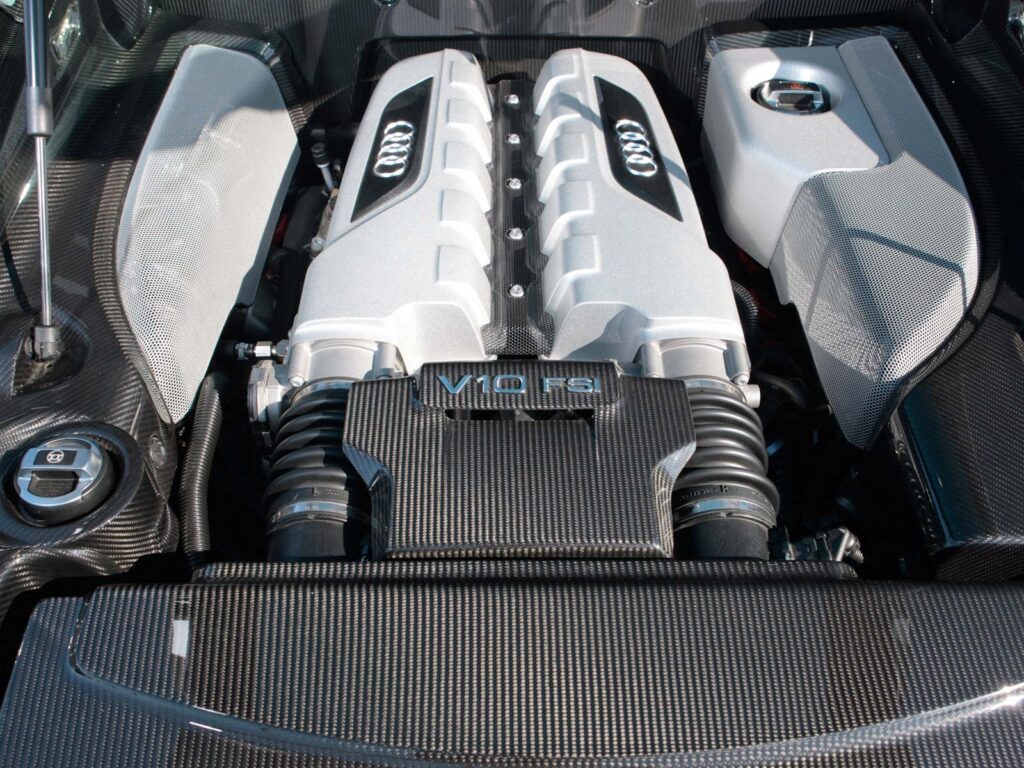
In a rare case of ‘more is more’, the R8 V10 arrived in 2009 boasting a 386kW/530Nm 5.2-litre V10 which cut the 0-100km/h time from 4.6sec to 3.9sec and lifted top speed from 301km/h to 316km/h. It promoted the R8 from sports car to supercar and gave Audi a genuine rival to the likes of the Ferrari F430, Lamborghini Gallardo and Porsche 911 Turbo.
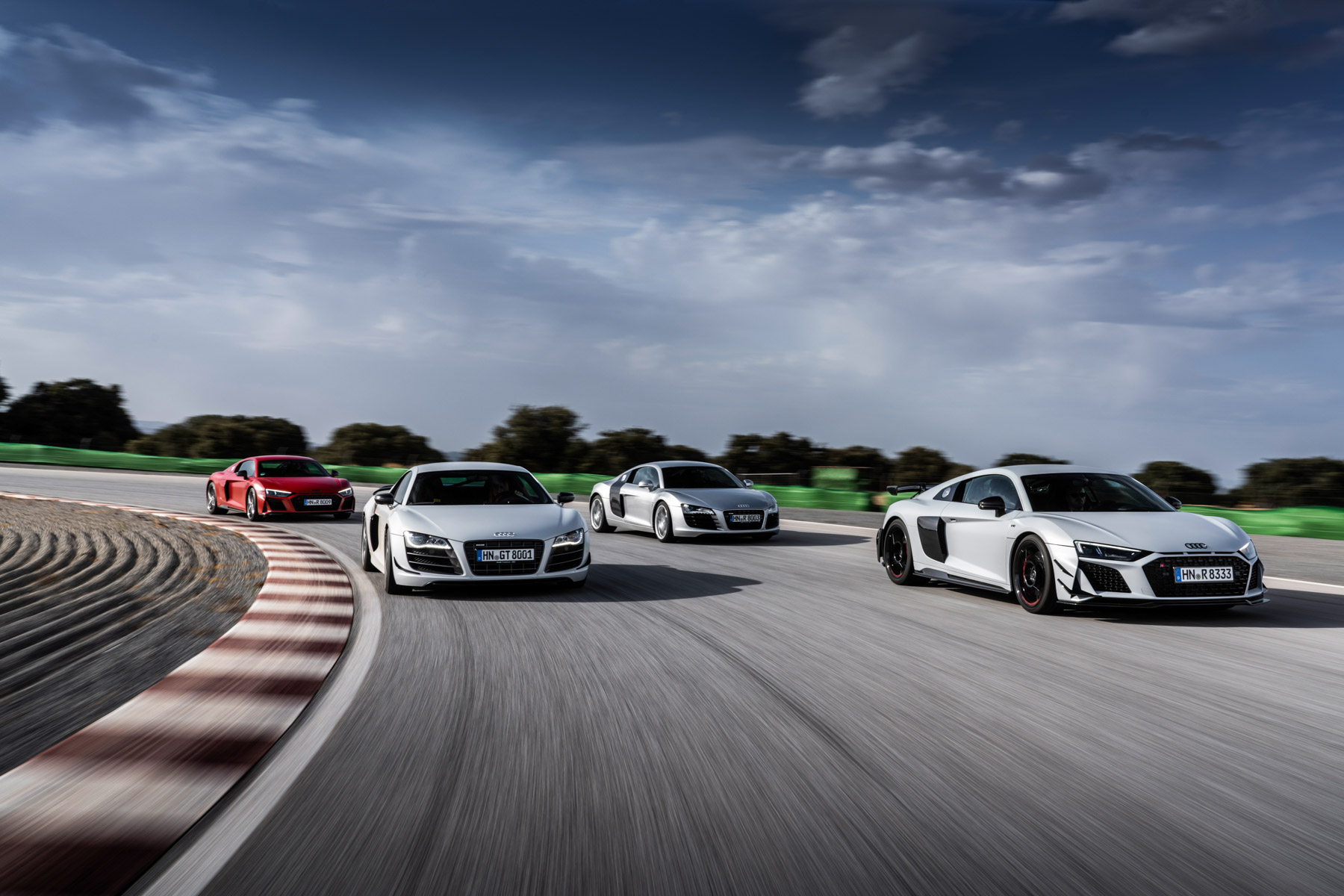
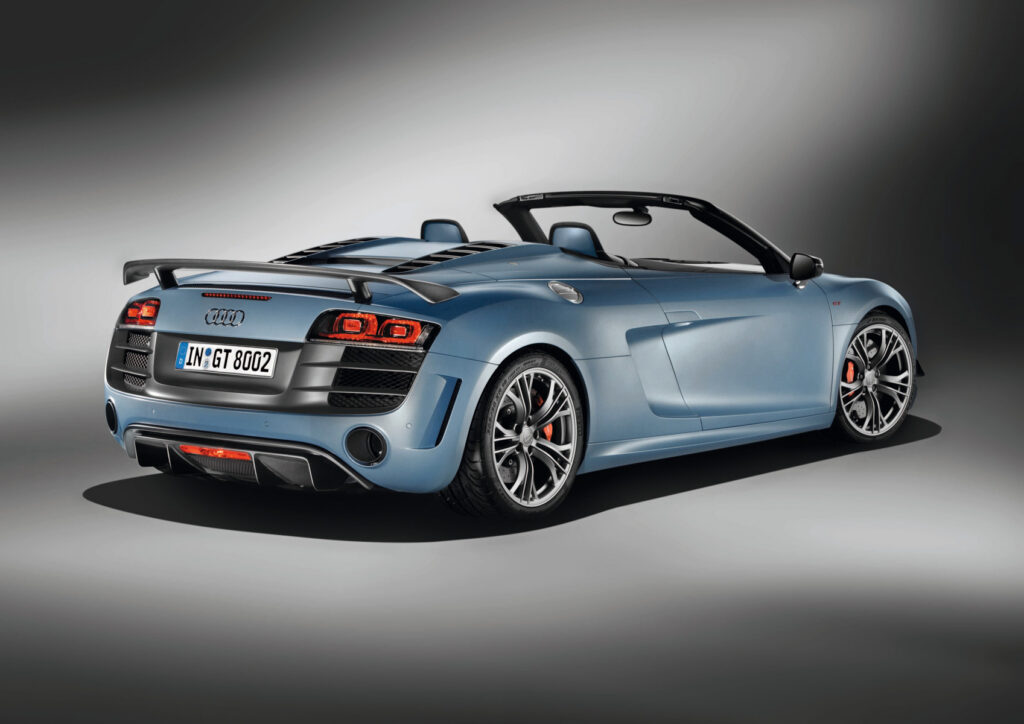
Variants followed thick and fast. A convertible V10 Spyder joined the range in 2010 along with a V8 version in 2011, at which point the V8’s peak power was bumped to a healthy 316kW. The same year the more focused R8 GT was launched. Limited to 333 examples each of coupe and Spyder, it lifted the V10’s outputs to 412kW/540Nm and cut weight by 100kg (85kg in the soft-top).
The biggest change for the 2012 facelift was the introduction of a seven-speed dual-clutch gearbox in place of the automated manual. Time has been relatively kind to the latter if you drive them like a conventional manual, lifting the accelerator during upshifts to smooth the changes. The dual-clutch also made the R8 smoother and faster, cutting 0.3sec from its 0-100km/h sprint.
At the same time the ‘plus’ (Audi isn’t fond of capital letters) was installed as a new flagship with more carbon fibre, carbon-ceramic brakes and a 404kW/540Nm tune for the V10. It provided your author with his first supercar experience.
The speed was eye-opening, the deep howl from the engine all-consuming, but it was the handling that left a lasting impression. The way the chassis could be manipulated, front-end-push easily neutered by more throttle to induce oversteer, making it a tremendously satisfying and involving driver’s car.
As a final hurrah, Audi created the 419kW R8 LMX, the first production car to be fitted with laser headlights. Just 99 were produced, with three of those coming to Australia at $440,000 apiece in 2014 money.
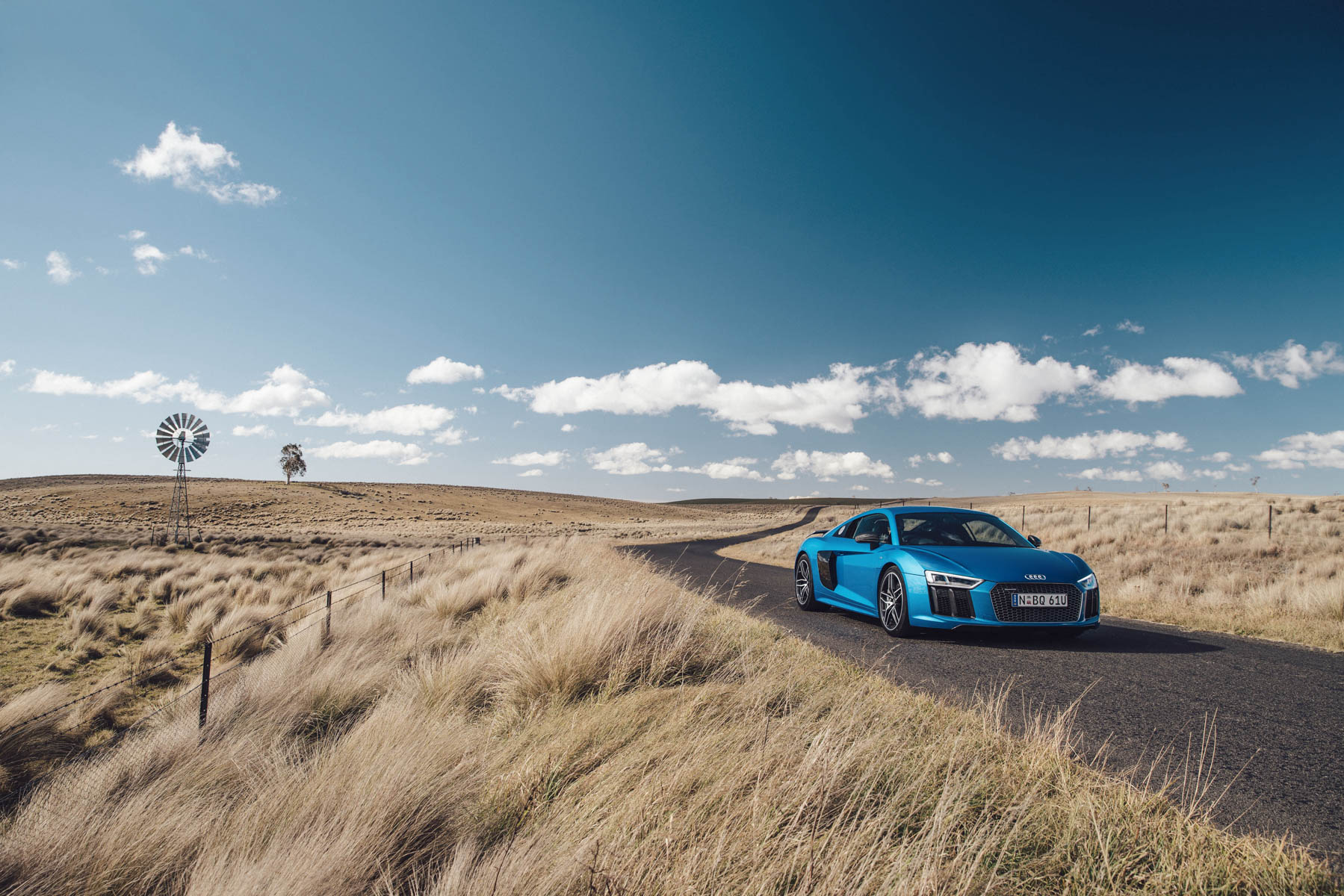
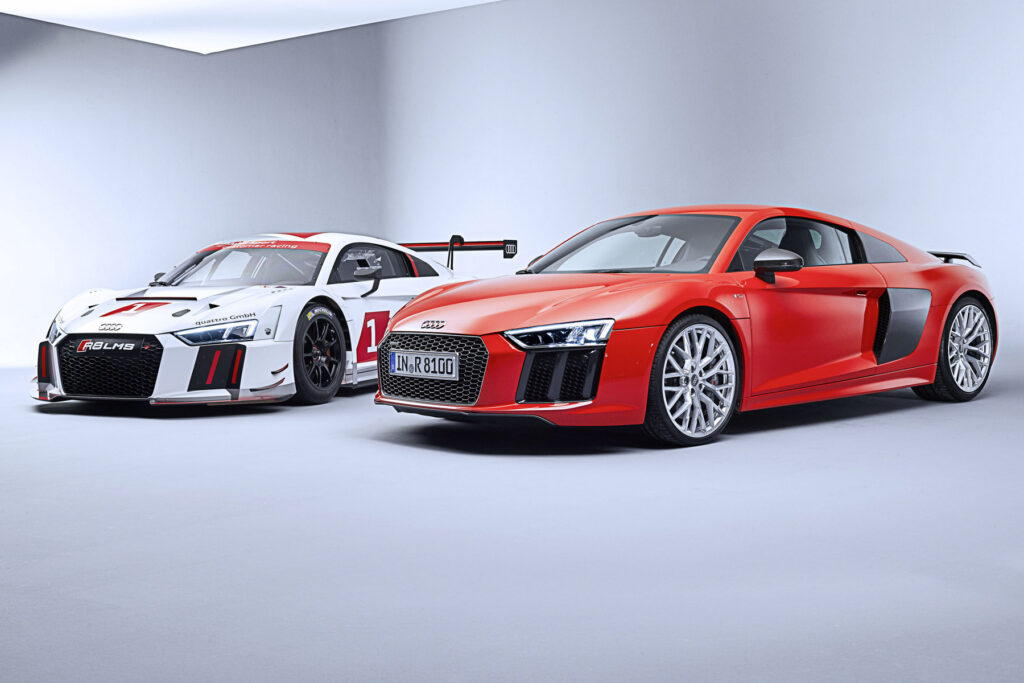
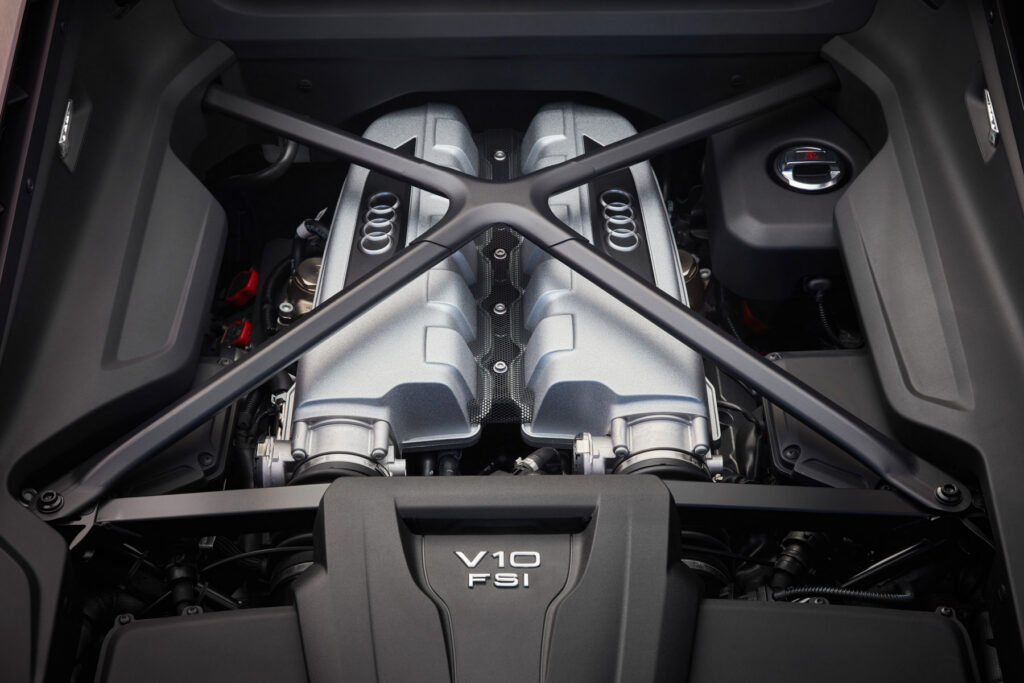
Formulating a replacement for the groundbreaking original could not have been easy. The second-generation R8, revealed at the 2015 Geneva Motor Show, dropped the V8, offering the 5.2-litre V10 in two states of tune.
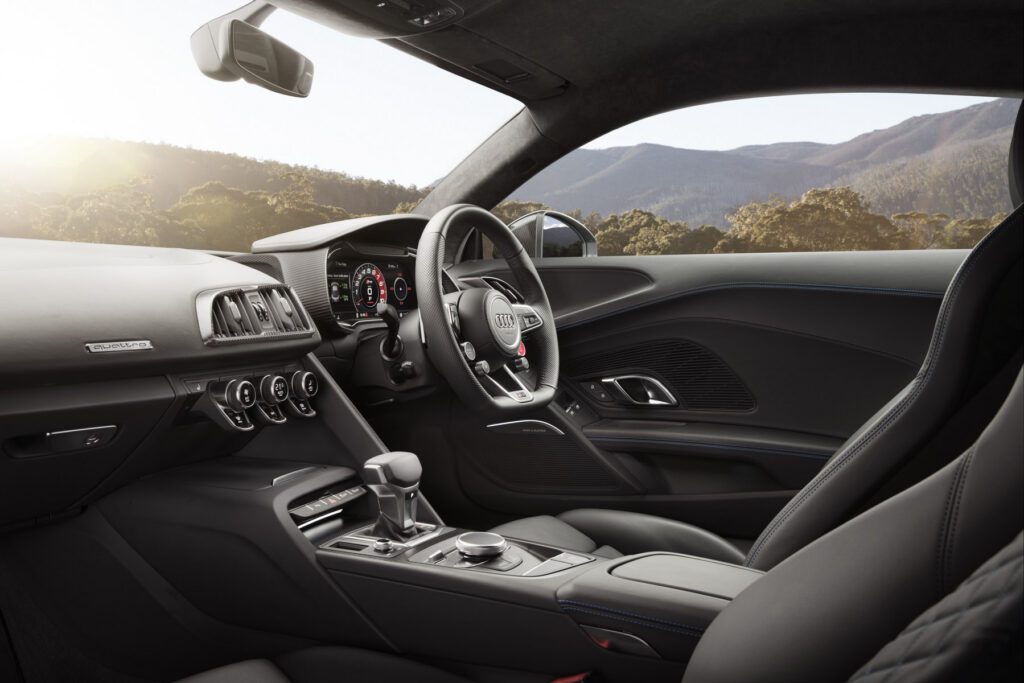
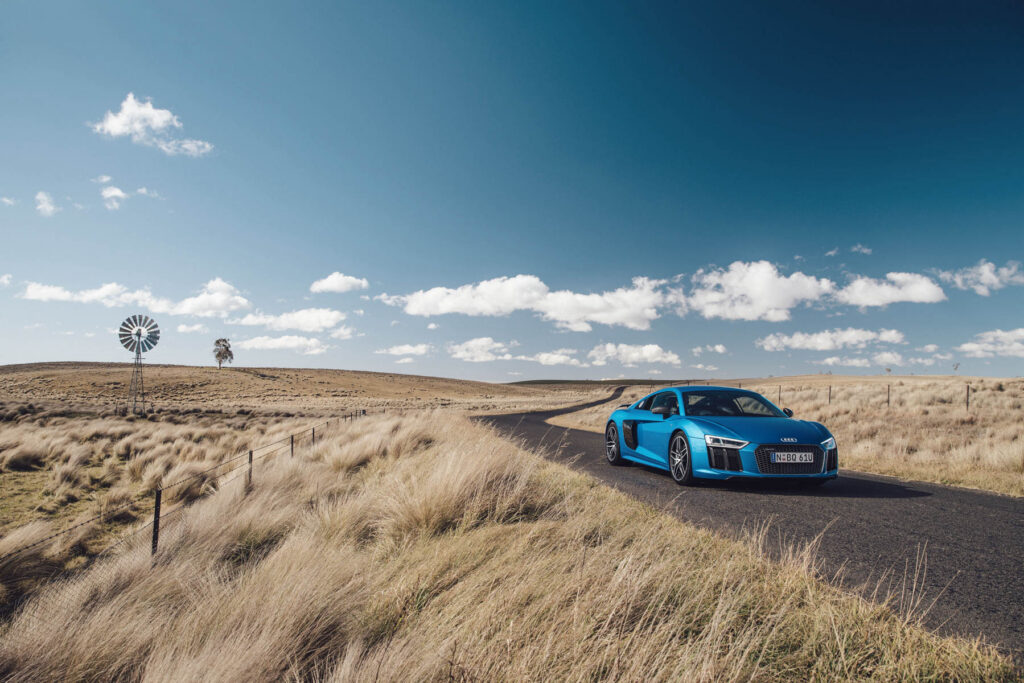
Even the 397kW/540Nm ‘base’ car, such as this one currently being auctioned by Retro Rides <<< https://rrauctions.com.au/lot/319 >>> could match the old plus at 0-100km/h in 3.5sec and a 319km/h top speed, while the new 449kW/560Nm plus further upped the ante.
Audi claimed 0-100km/h in 3.2sec and a 330km/h top speed, but with launch control primed it managed 3.18sec on its way to a 10.93sec quarter mile when I tested one back in 2016.
Optimised for the track, the firm setup of the ‘plus’ was arguably too much for the road, though it remained easy to drive and retained Audi’s first-rate interior design and finish.
While it may never have been the purist’s first choice, I have hugely fond memories of the Spyder; roof down on a warm summer’s night, attacking a deserted mountain road with the V10’s bark reverberating through the trees. It shared its predecessor’s knack of offering ample grip if you wanted, but being able to overcome it and play with the car should you desire.
When it comes to expressive handling, however, nothing matches the R8 RWS. In 2018 Audi forgot it was Audi – the company that had spent nearly the past 40 years extolling the virtues of all-wheel drive – and created the ‘Rear Wheel Series’. As the name suggests, it was a rear-wheel drive R8.
Based on the standard 397kW/540Nm car, the deleted front driveshafts shaved 50kg off its weight, lightening the front-end while having negligible effect on the now two-wheel drive supercar’s accelerative prowess. Audi claimed 3.7sec from 0-100km/h but the Aussie press car managed an even keener 3.57sec.
Curiously, that was the exact same time as the previous generation quattro plus, while being much quicker over the quarter mile. That’s progress for you.
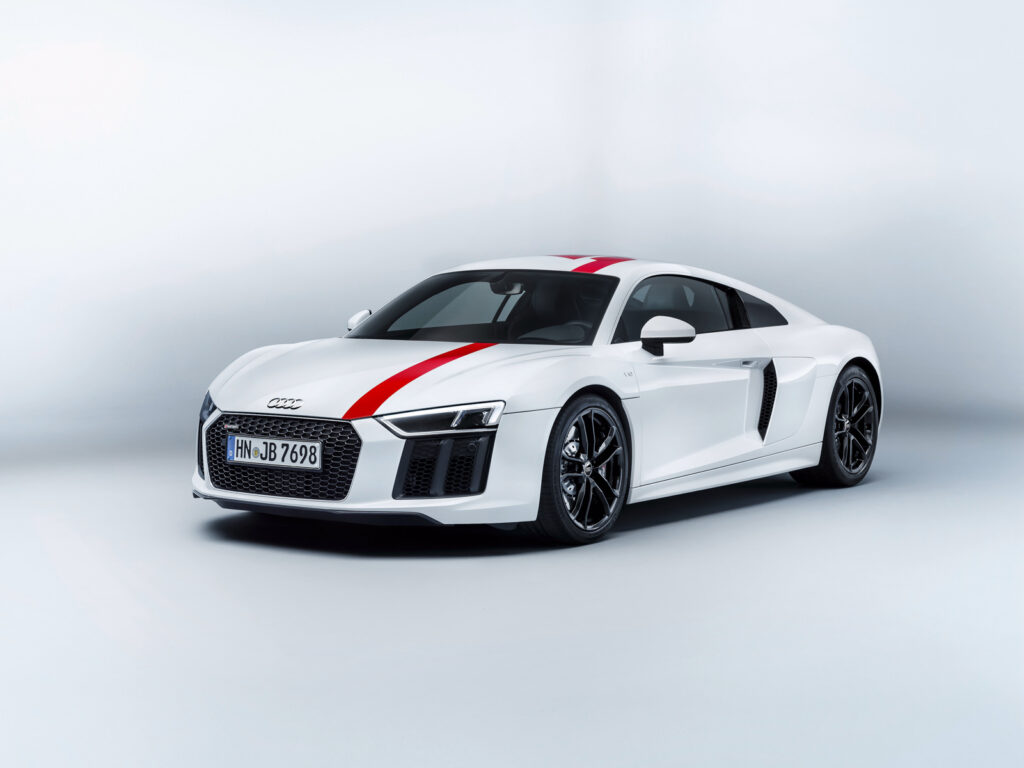
The R8 V10 RWS was limited to 999 units worldwide, with an unknown split between coupe and Spyder, which these days would guarantee a wildly-inflated price tag. Back in 2018, manufacturers hadn’t yet discovered cottoned on to this arbitrage and the limited-edition, spectacularly involving RWS was just $299,500 plus on-road costs.
A huge amount of money, for sure, but also the cheapest way into R8 ownership (and thus the cheapest supercar available in Australia at the time). It promised to be a sure-fire collectable in years to come.
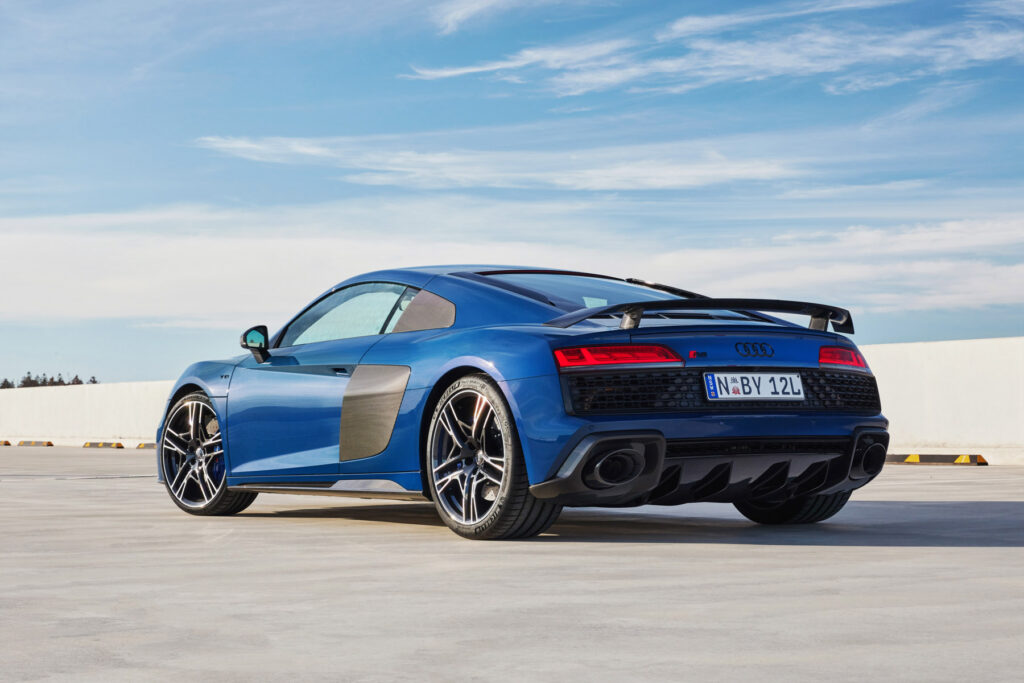
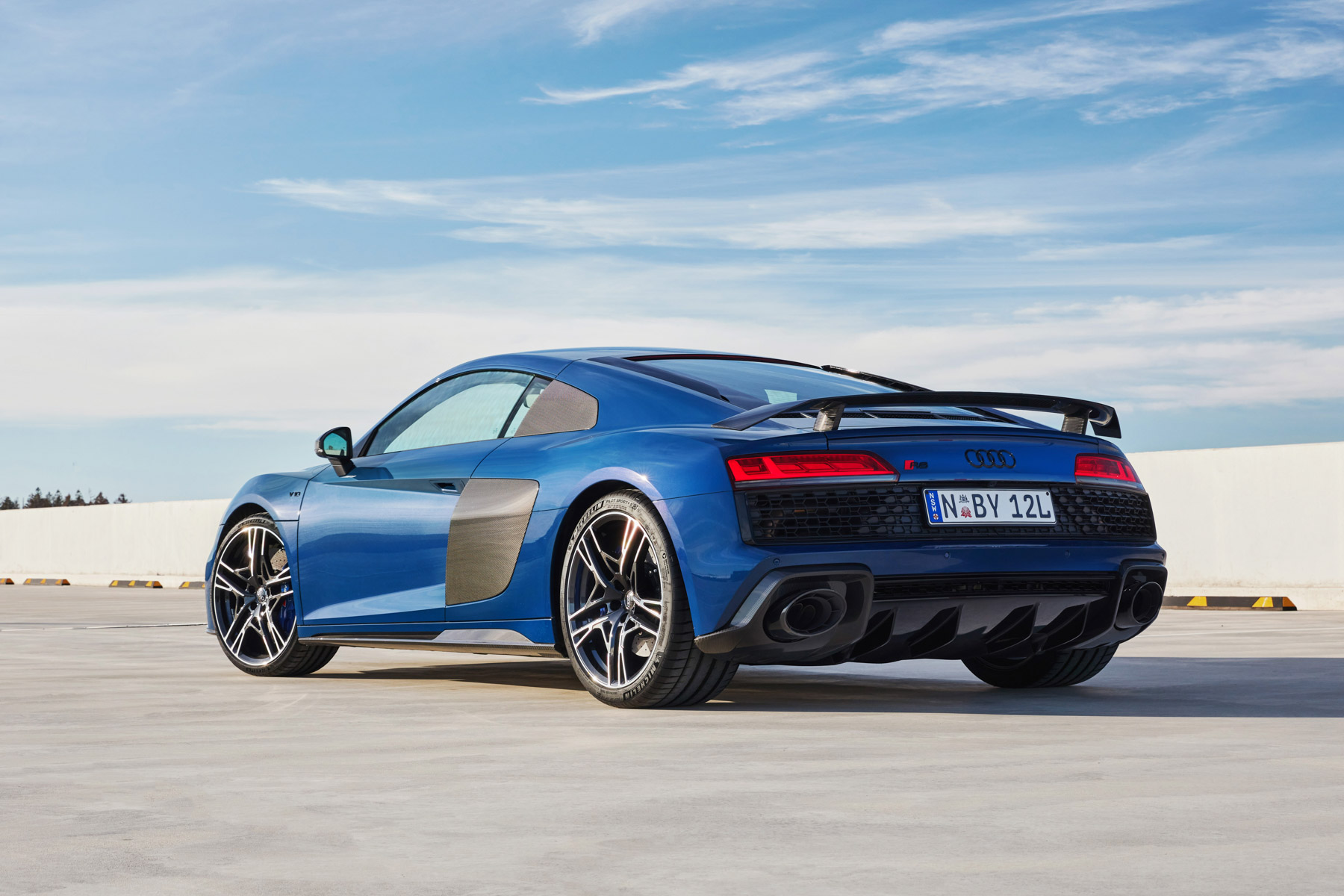
A final facelift in 2019 lifted the base car to 419kW/560Nm and the flagship – now called Performance – to 456kW/580Nm. This was the culmination of more than a decade of supercar knowledge, so it’s fitting that the Performance was akin to an R8 Greatest Hits Collection.
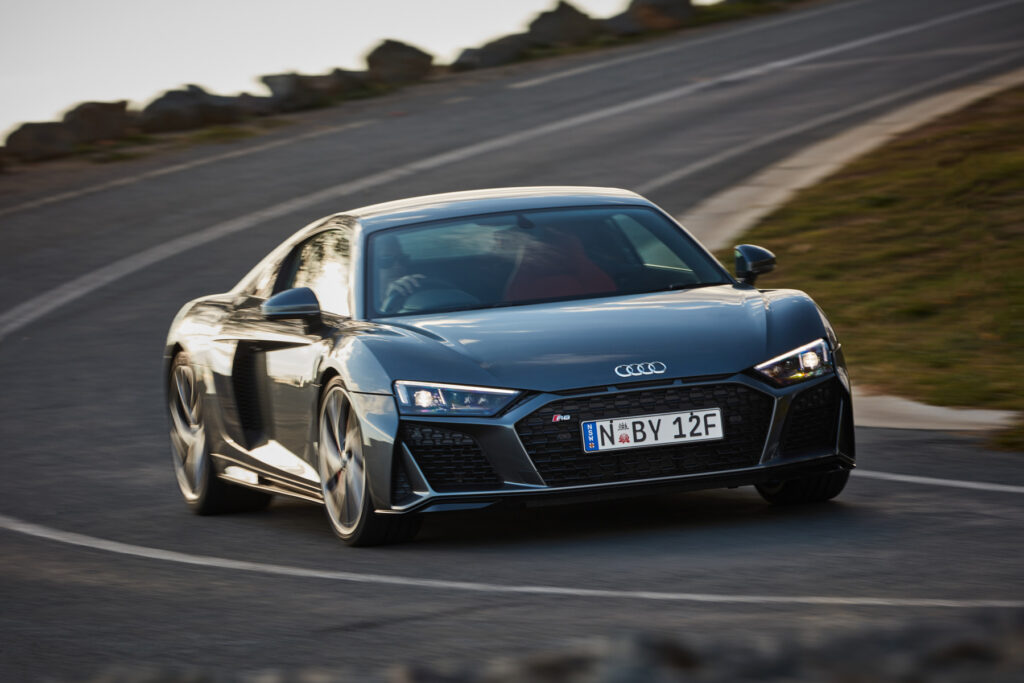
More compliant adaptive suspension made it the quintessential everyday exotic, with handling that was more accessible than ever, tireless brakes and that sonorous 5.2-litre naturally aspirated V10 delivering the sound and the fury of an all-time great. I was fortunate enough to spend many hundreds of kilometres in it on road and track and every minute behind the wheel was a guilty pleasure.
Given its looks, noise and remarkable breadth of ability, it has always puzzled me why the R8 didn’t find more buyers, its sales tally a mere 45,000 over a lengthy 18-year lifespan.
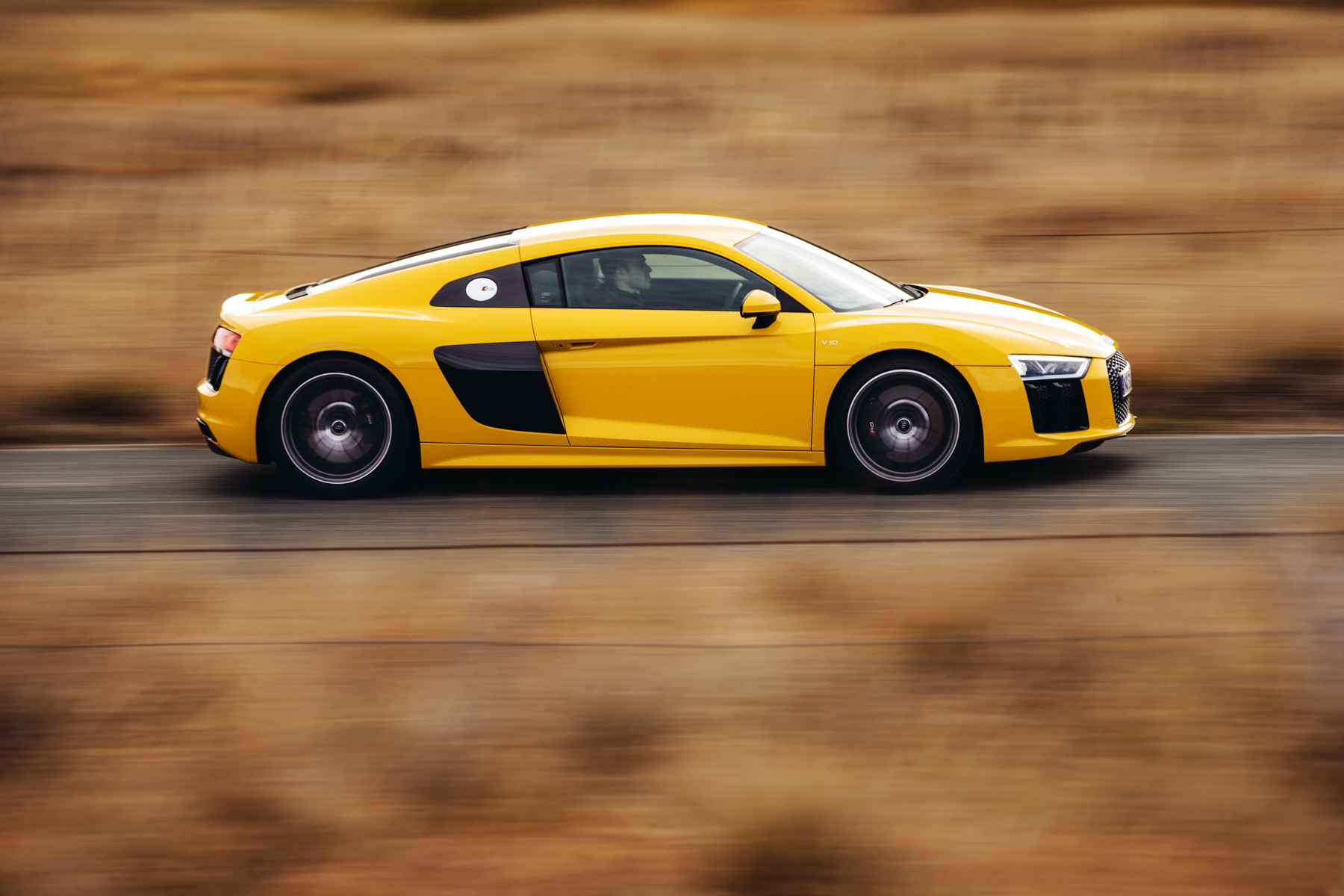
The final Audi R8 was a Vegas Yellow Performance with the exterior carbonfibre pack, completed on March 22, 2024. With it, the age of the combustion Audi supercar was thought to have ended, but the Lamborghini Temerario-based Nuvolari – while limited to just 499 units – provides hope that a volume successor to the R8 may grace showrooms in the future.