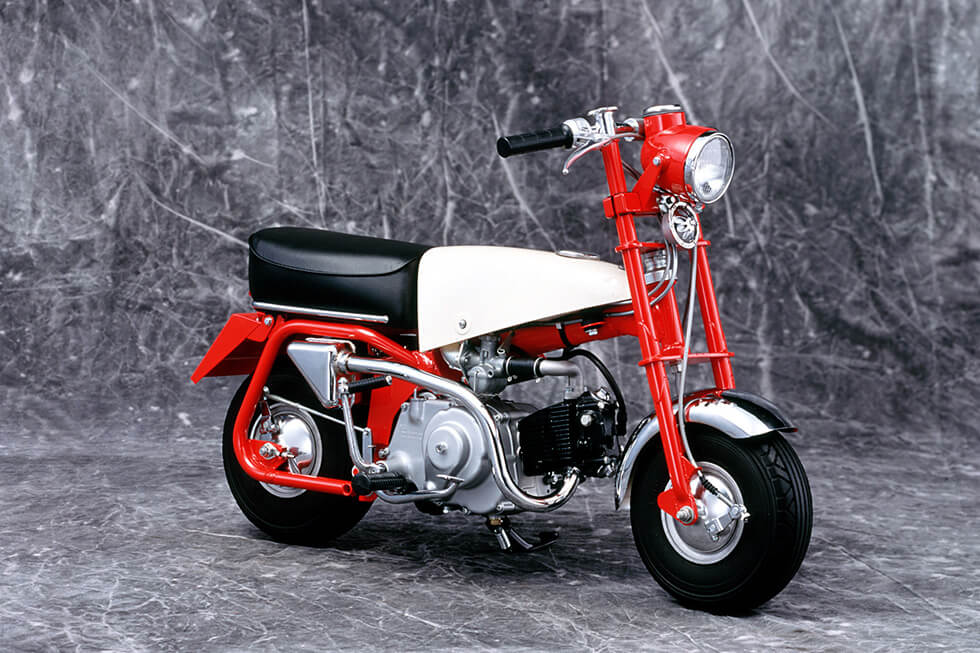
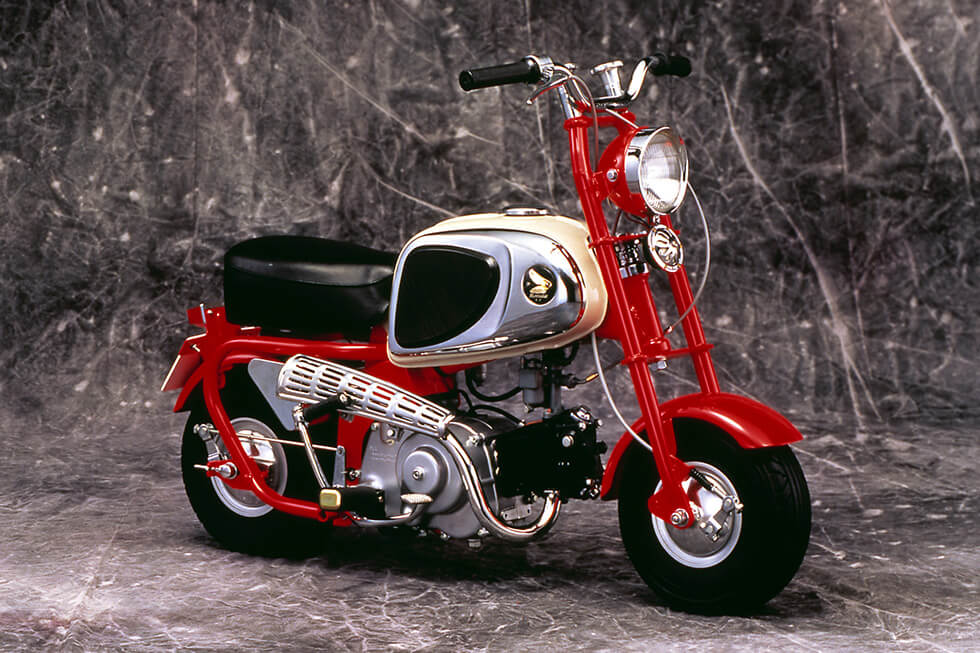
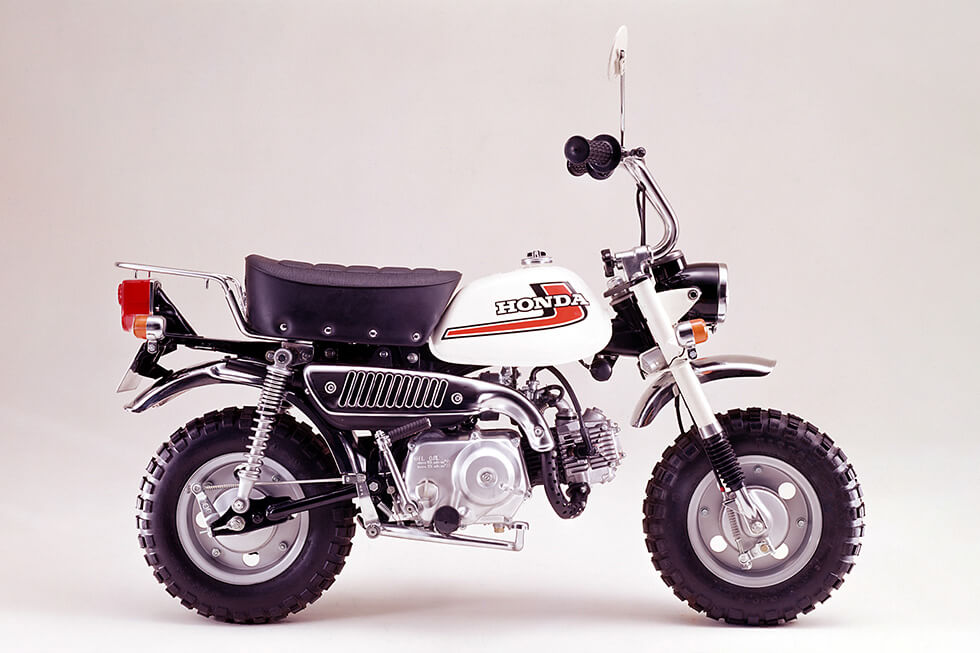
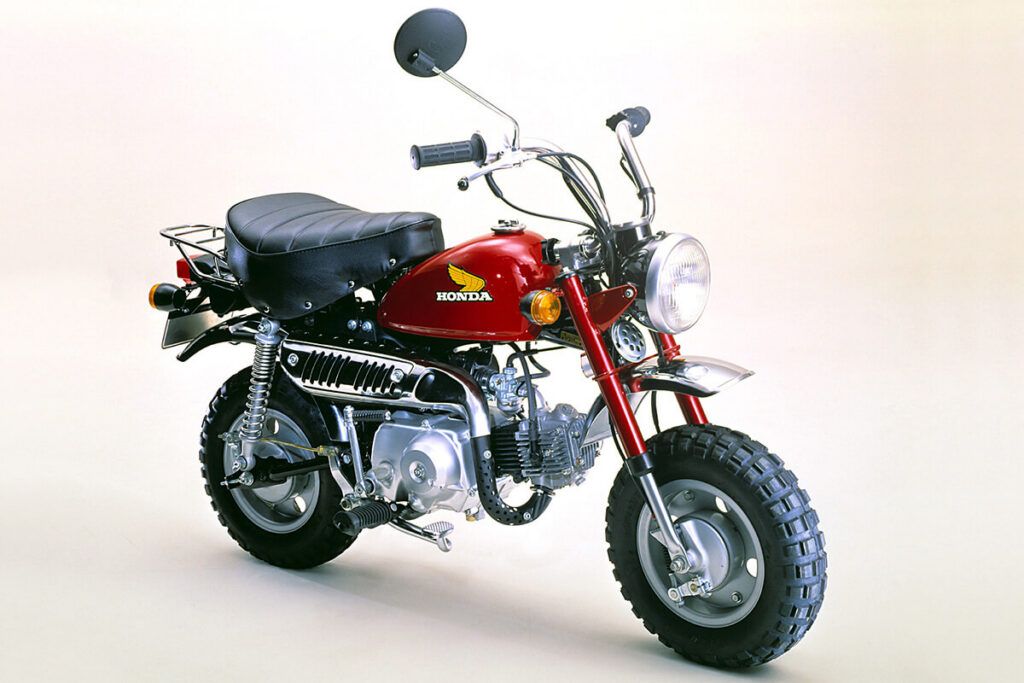
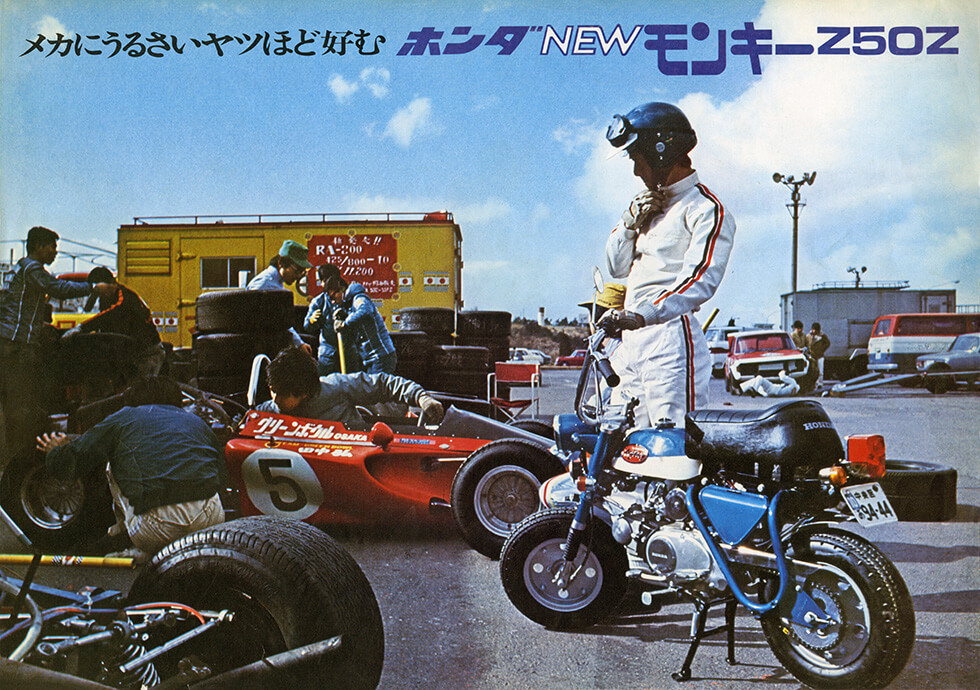
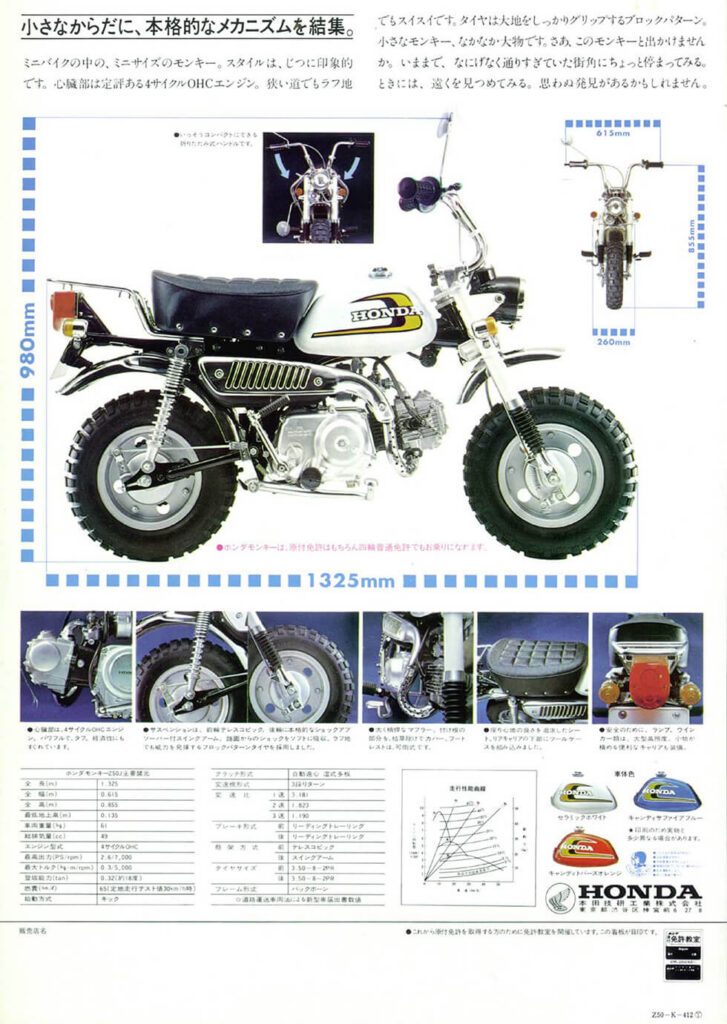

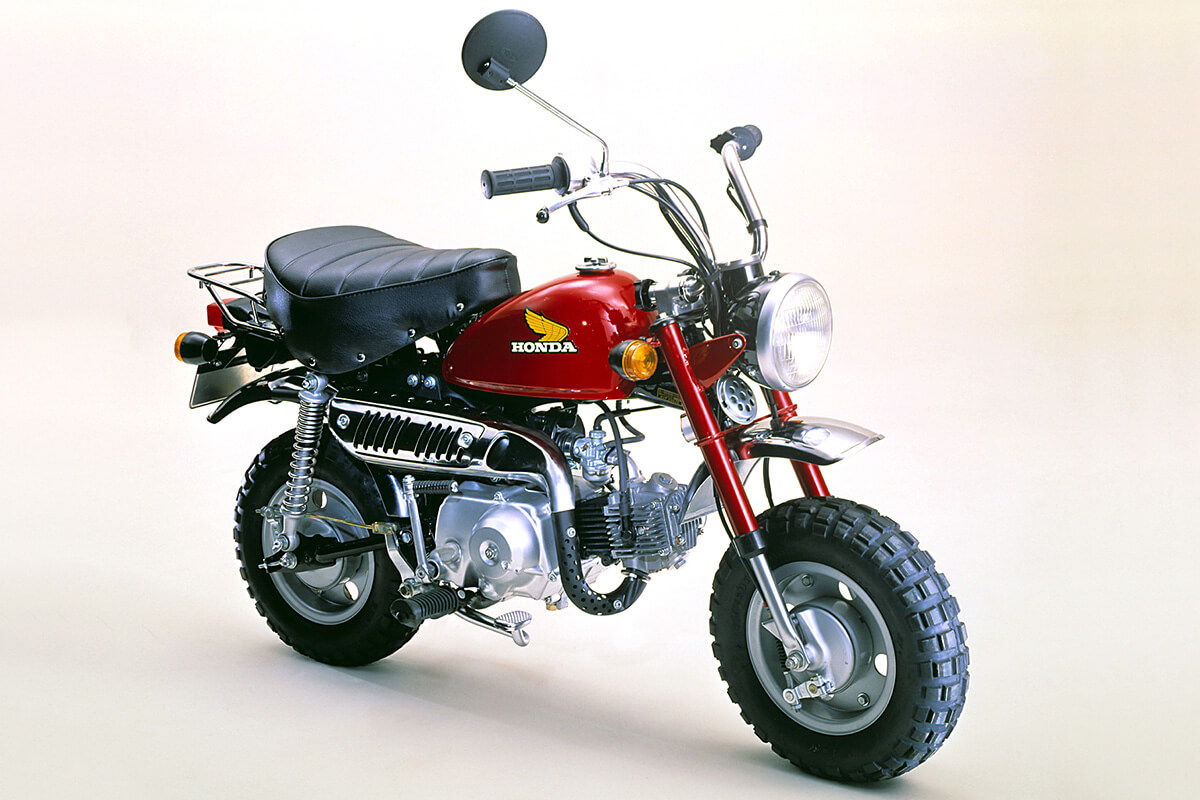
The Honda Z50 Monkey is the lumpy little minibike that put at least three generations of bourgeois brats on wheels and today fetches up to five-figure prices among collectors. You were the ‘Boss’ of Year 5 if you had one of these.
The Monkey has proved to be one of the world’s most enduring motorcycle designs, second only perhaps to its 1958 stablemate, the Honda Super Cub step-through (more than 100 million served).
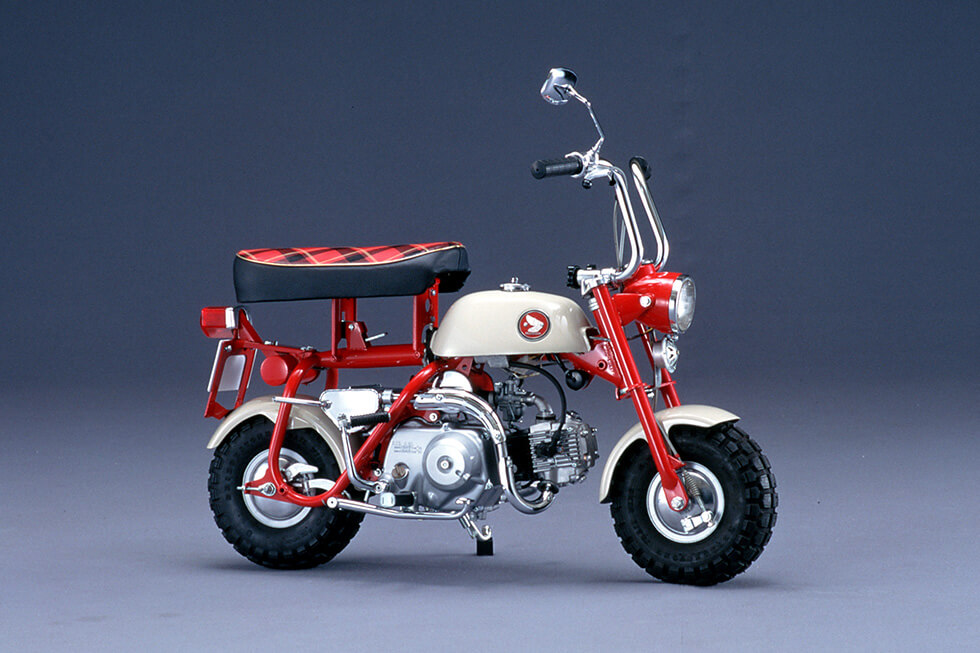
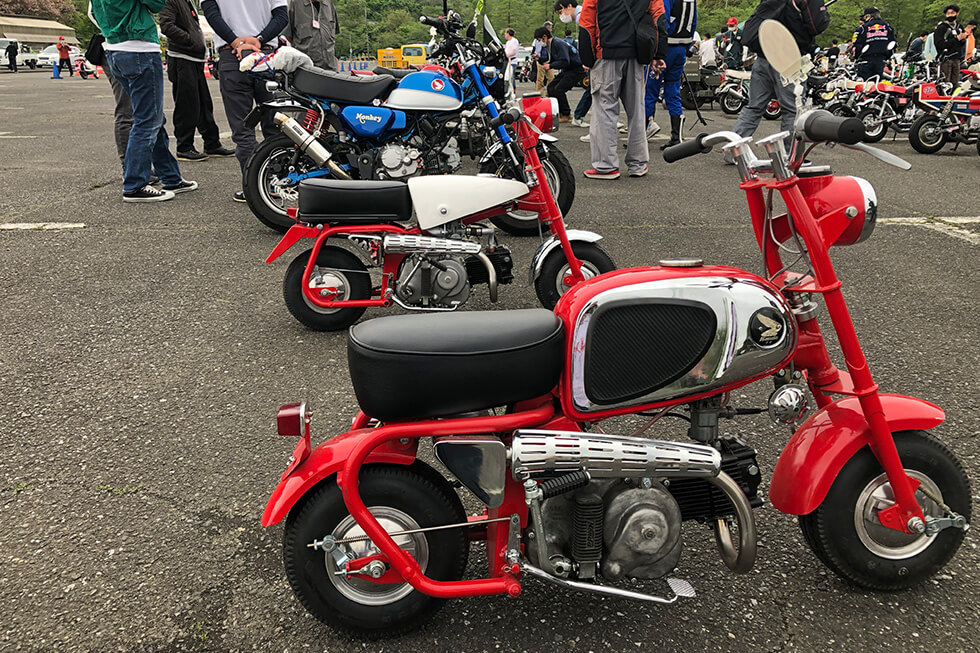
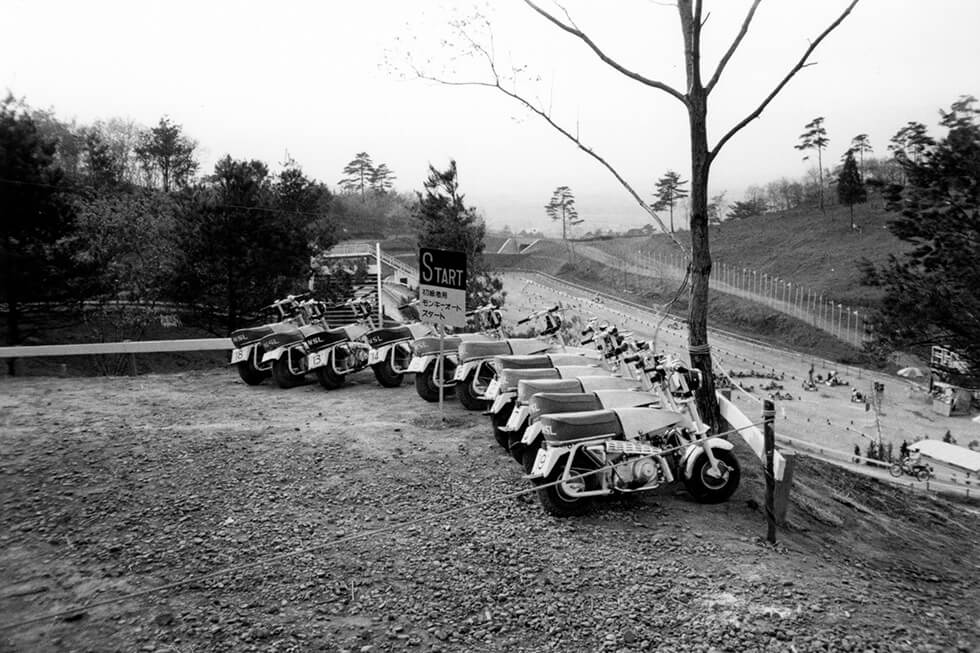
The Monkey (a.k.a. Honda Mini-Trail) traces its origins to the Z100 of 1961 – a child-friendly, 49cc machine built for the Tama Tech theme park in Hino, near Tokyo. The rigid-framed, doughnut-tyred pocket bike shared its bulletproof engine with the Super Cub and proved so popular that Honda put it into production in 1964 as the CZ100.
Honda had twigged that its mini’s market went beyond children; the Monkey was finding a niche as a spare vehicle that could be stored in a boat, caravan or truck. Still on five-inch wheels, the CZ100 had a strengthened frame to carry adults and borrowed its six-litre fuel tank from the Sports Cub C115 road bike. Only 2500 CZ100s were made, almost all of them exported to France and Germany.
This was a busy time for Honda: the company only made its move onto four wheels in 1963, with the T360 kei (light) truck. Honda’s first car, the N360, would follow in 1967.
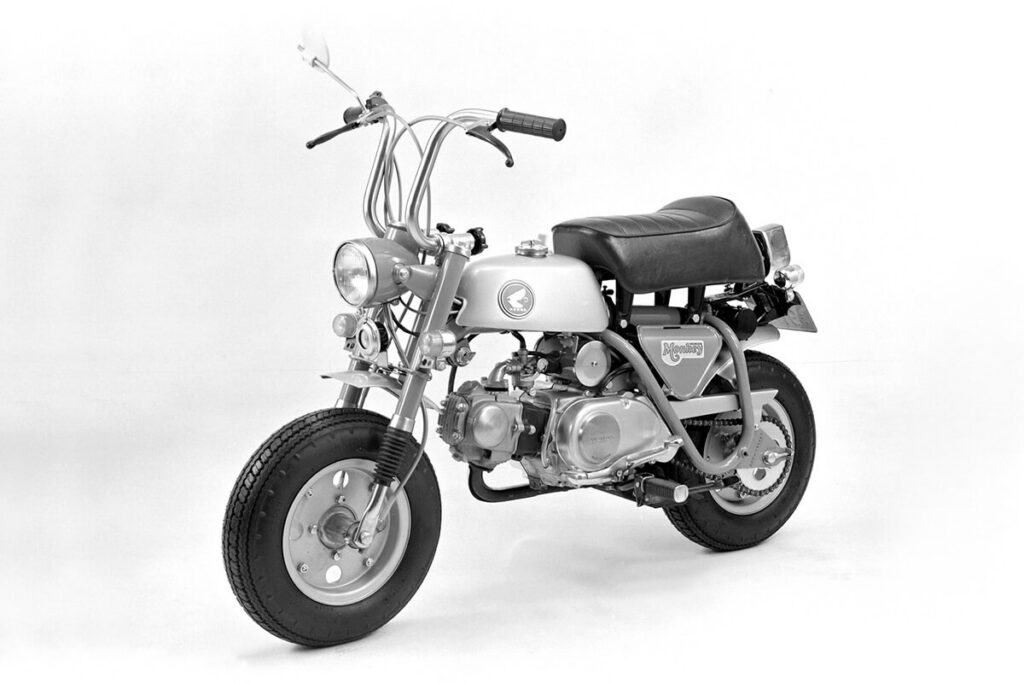
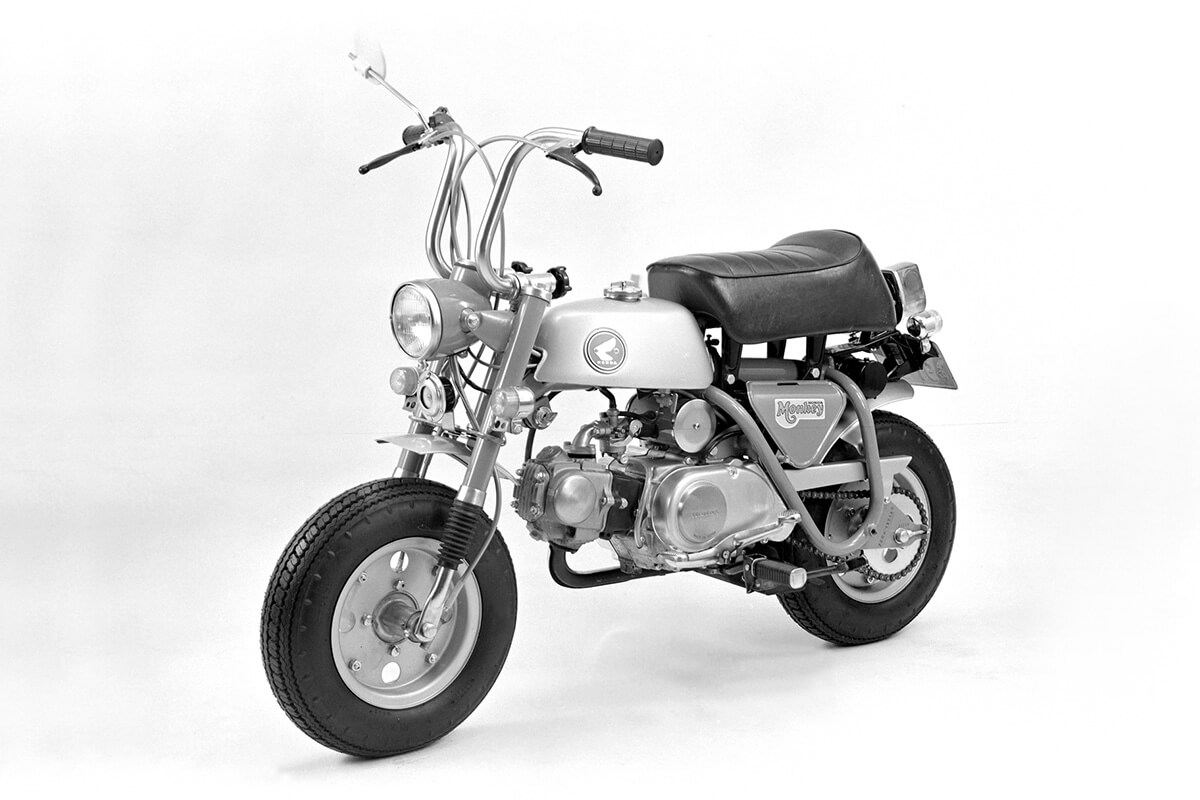
In that same year, encouraged by the European success of the CZ100, Honda substantially developed the Monkey design to produce the road-legal Z50M model.
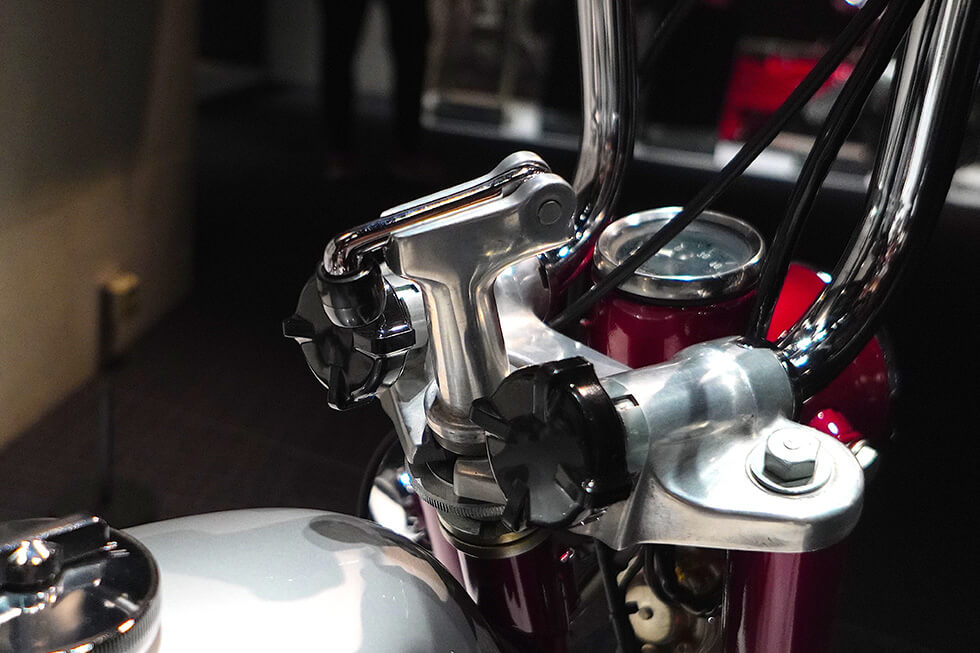
The Z50M capitalised on the Monkey’s portability and adult-rider popularity by introducing swing-down handlebars and a collapsible seat. The 49cc four-stroke overhead-cam single was mated to a three-speed, centrifugal-clutch transmission.
Weighing just 47kg, the bike could be easily carried in a car boot, as well as road-registered thanks to the fitment of lights and mirrors.
When folded, the Z50M occupied a space just 1191mm long by 650mm high by 355mm wide. Ironically, Honda did not yet produce a car of its own big enough to accommodate the tiny motorcycle.
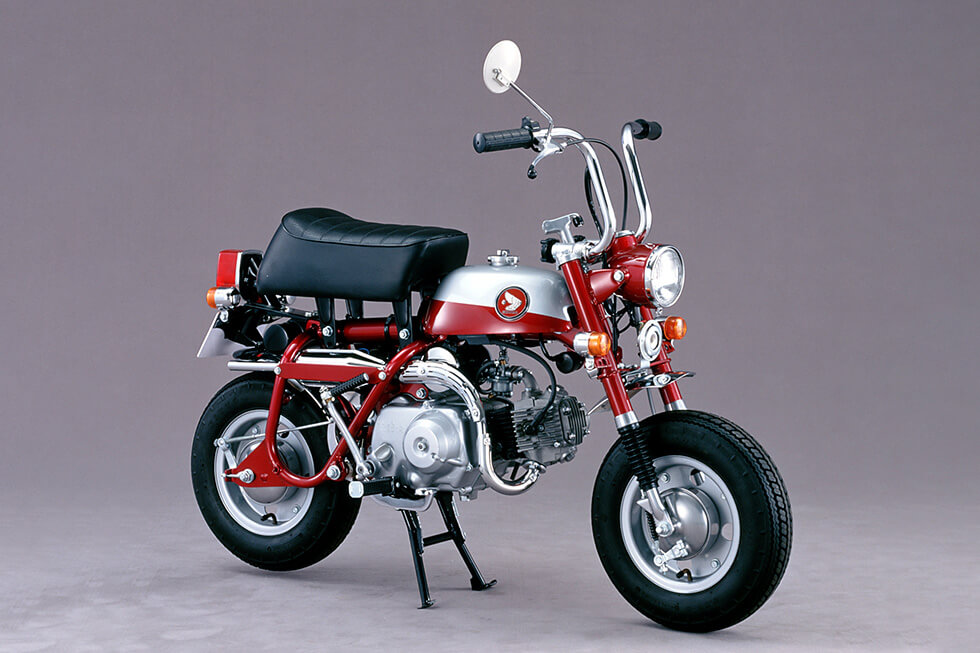
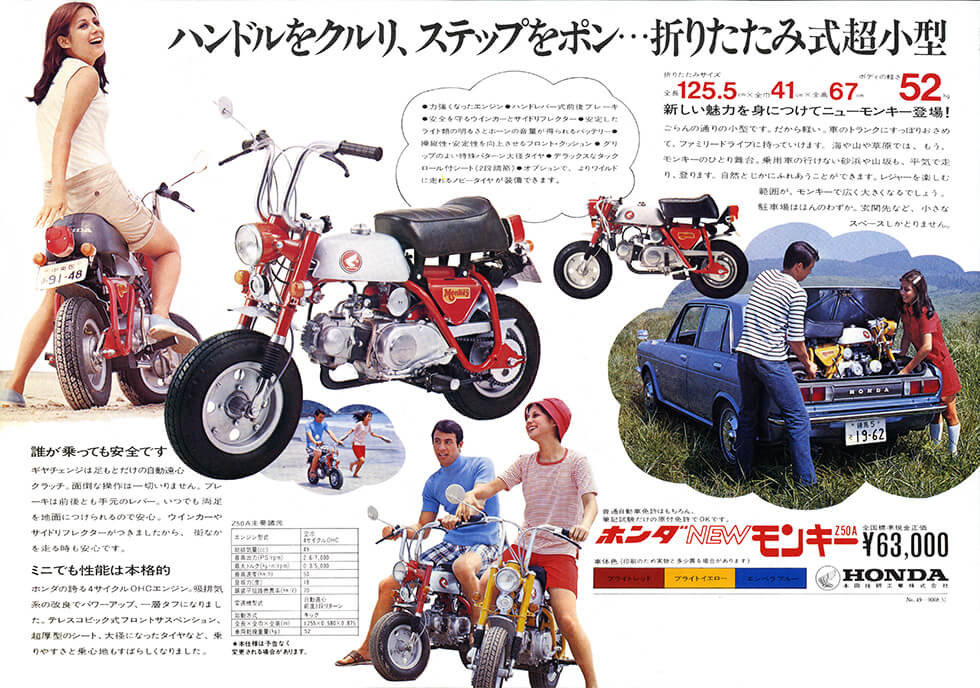
With the Monkey a runaway success – and Honda producing a Monkey-compatible car, the 1300 sedan, in 1969 – the upgraded Z50A of that year introduced eight-inch wheels and telescopic front suspension. The rear brake operation moved from a foot pedal to the left handlebar, with the front brake remaining on the right.
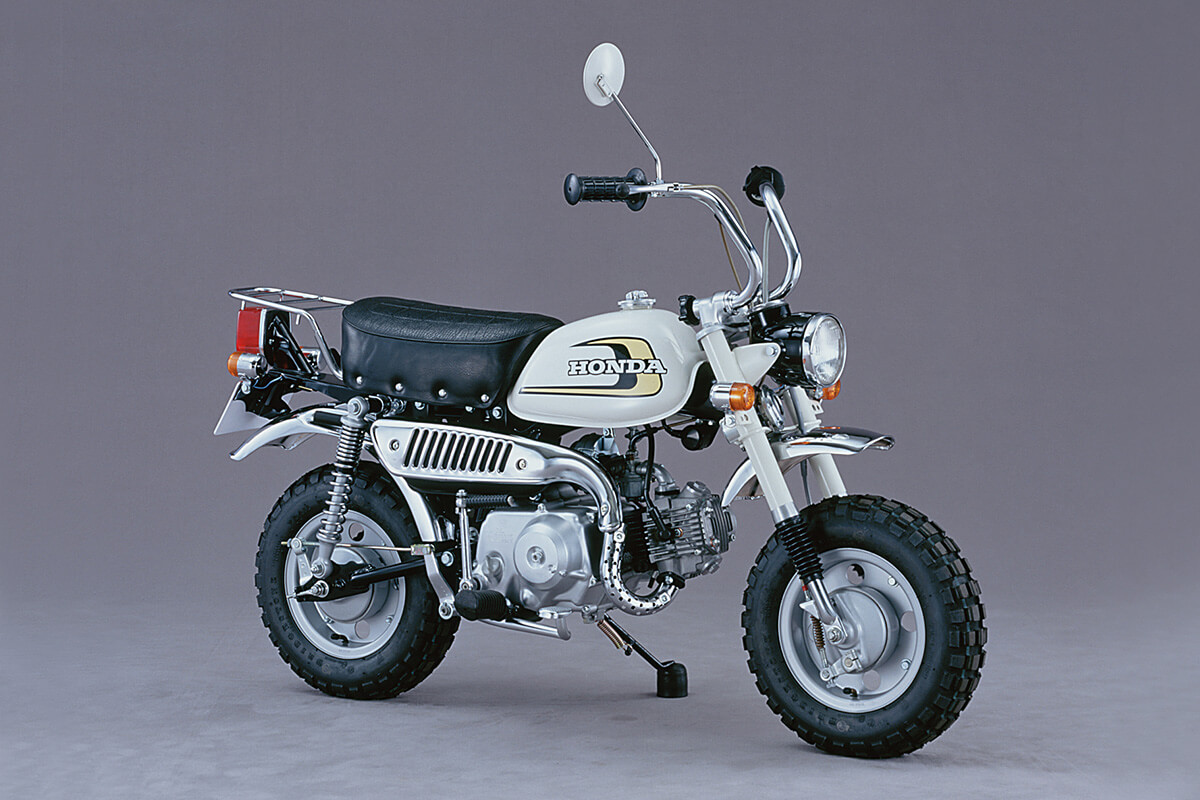
This two-tone “Mini-Trail” was the model that put the Monkey on the map in Australia.
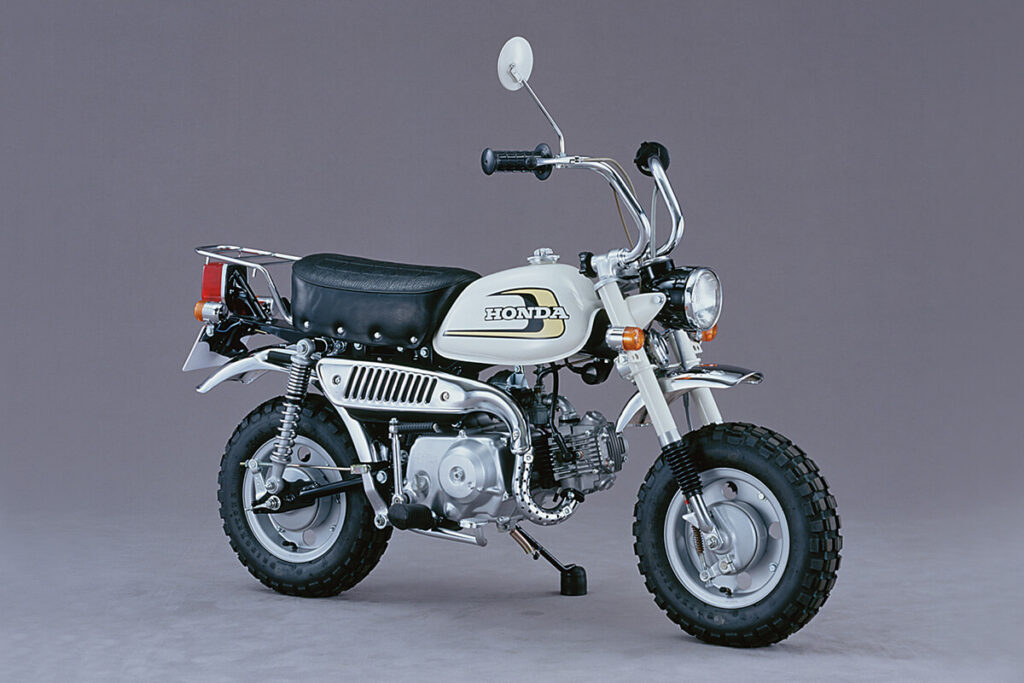
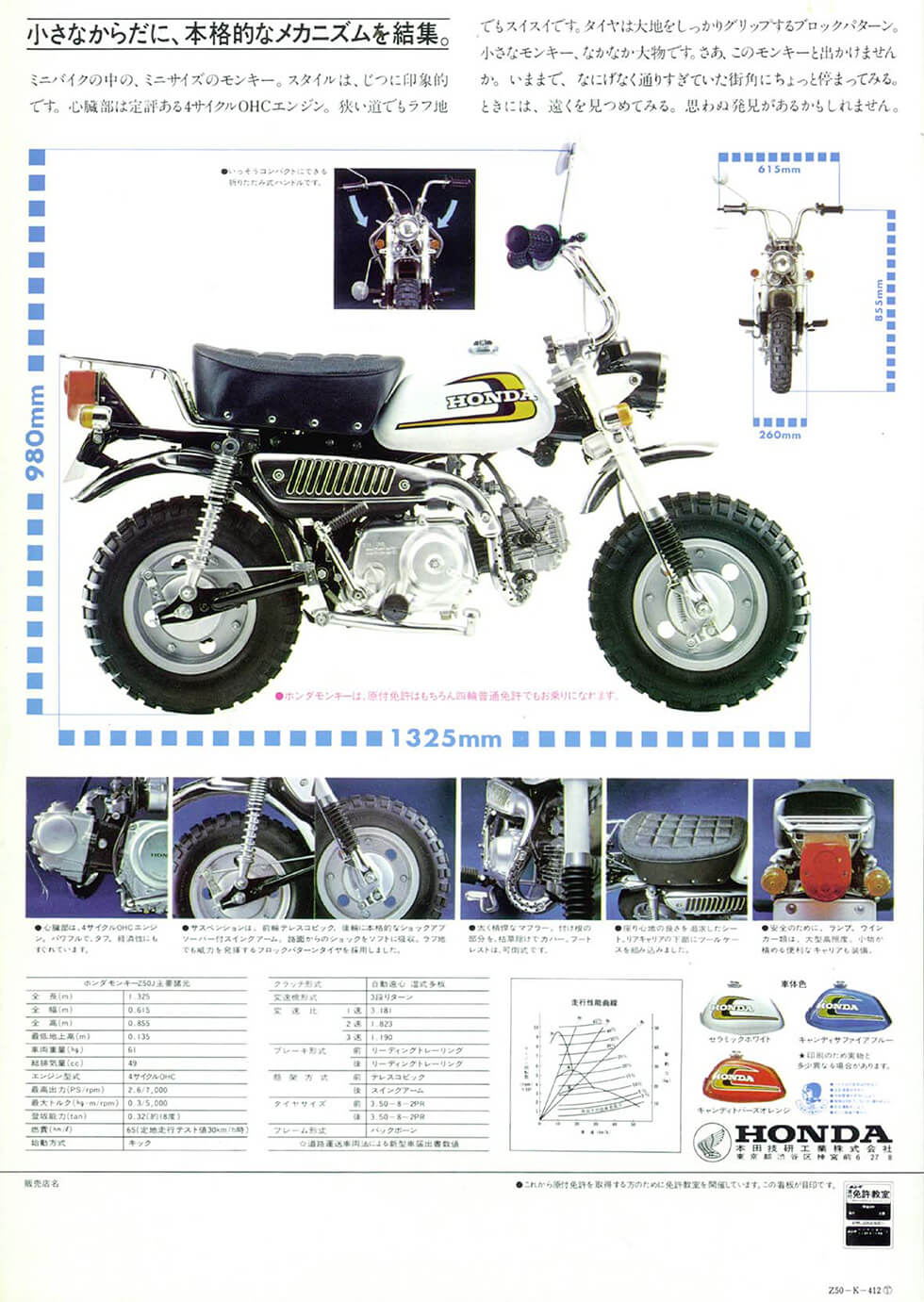
Recreational and off-road motorcycling was in full swing Down Under by the early-1970s and the third-generation Monkey, the Z50J of 1974, answered that with an all-new frame design, rear suspension, chunky off-road tyres and an enlarged, four-litre fuel tank.
From this point, the Z50 Monkey basically didn’t change until production ended 45 years later. The horizontal, single-cylinder, 49cc four-stroke engine developed around 2.3kW in standard trim, its most evident change in 1978 being the uprating of the auto clutch three-speed transmission to a manual clutch four-speed, with the rear brake reverting to a foot pedal.
As the Monkey had grown in sophistication, in 1970 Honda introduced a down-spec sister model, the Q50 with no rear suspension and an auto clutch two-speed.
Right up until the end of Z50 production in 2017, Honda regularly produced special-edition Z50 models for the Japanese domestic market, and cheaper copies are now built in China using pensioned-off Honda tooling. In 2018, Honda’s new 12-inch-wheel, 125cc Grom commuter bike appeared in a Monkey 125 homage version to the beloved Mini-Trail.
However, a true gauge of the world’s affection for the Monkey is the customising culture that’s been in full swing for at least the last 20 years. And it’s not just happening among middle-aged guys with fat wallets and festering resentments against their parents: along with the newer Grom model, old-school Z50s are a hot-rodding target for younger urban riders.
Monkey riders have their own battle of the brands: the Japanese hot-up specialists like G-craft, Takegawa and Kitaco that specialise in turning Honda’s mini-models into ankle-maulers. A superbike-style alloy frame and suspension swing-arm, race-compound tyres, disc-brake kit and a big-bore engine from an ST90 can transform a meek, 49cc Monkey into a 136cc, 150km/h gorilla.
Takegawa offers a 124cc engine kit that includes, incredibly, the company’s own design twin-cam cylinder head with Ducati-style, desmodromic valve actuation.
The twin-cam desmo engine upgrade is yours for just AU$8500. Go bananas.