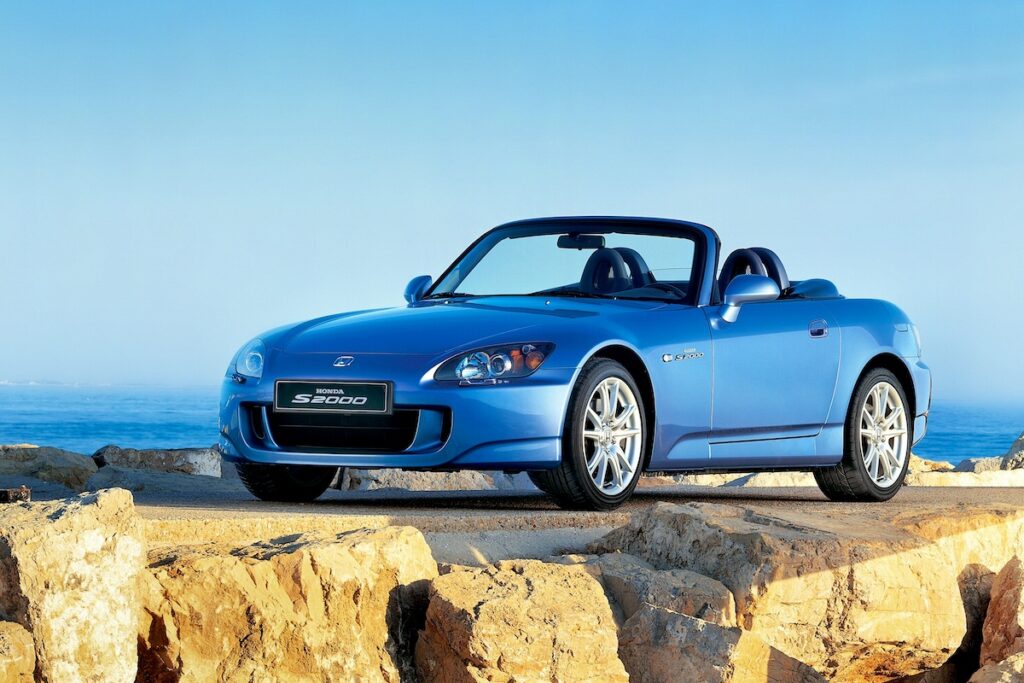
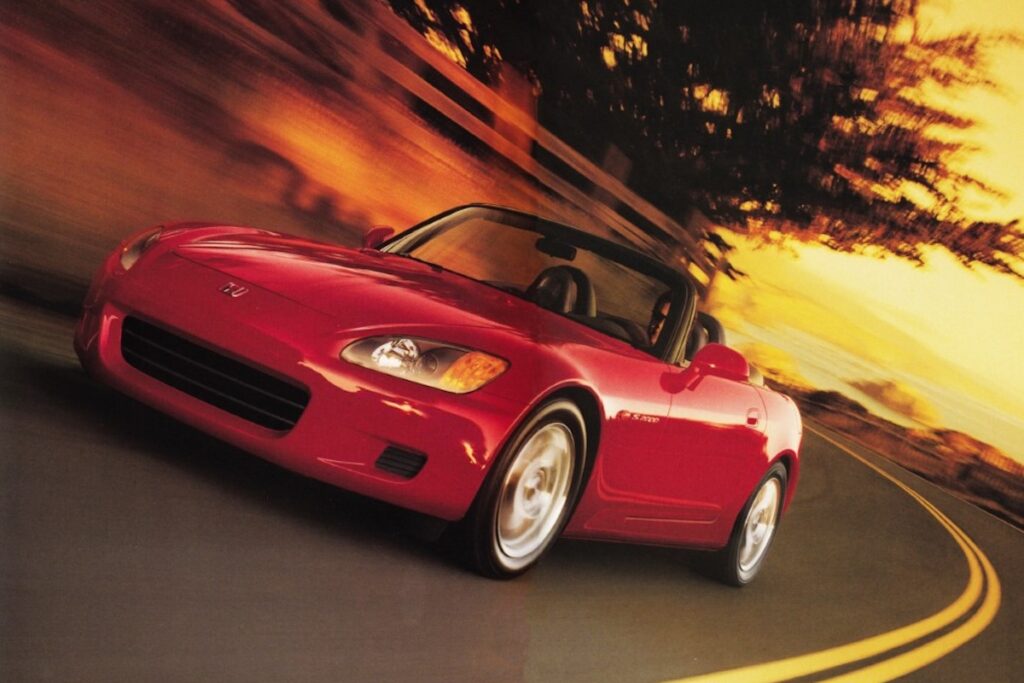


Honda’s life as a car manufacturer began in 1962 with its quirky and innovative S500 sports car. Production of S-prefix models ended in 1970 and for almost 30 years the company studiously ignored opportunities to market a full-sized soft-top.
That absence ended at the 1995 Tokyo Motor Show when Honda revealed the open-top SSM (Sport Study Model), a thinly-veiled concept that previewed the S2000 roadster that would eventually go on sale in April 1999 to mark the Japanese brand’s 50th anniversary.
Australia saw its first S2000s late that same year, priced at almost $70,000. An electrically powered vinyl top with internal cloth lining and plastic rear window came standard, as did integrated roll hoops. An optional hardtop arrived later, upping the ante by a further $2000, making the sleek, two-seater roadster around $20,000 more expensive than the brand’s popular Integra Type R sports coupe.
Despite being a pricey anomaly in the contemporary Honda lineup, the S2000 (named for its engine displacement of two-litres and “S” for sports) was in fact targeting BMW’s 2.0-litre Z3 roadster, over which it claimed a $5000 price advantage.
The Z3, like its Euro contemporaries the Mercedes-Benz SLK and Porsche Boxster, drove its rear wheels, prompting Honda to follow suit in what was a major departure from the company’s steadfast dedication to front- and all-wheel drive models (the original mid-engine NSX being the other notable departure).
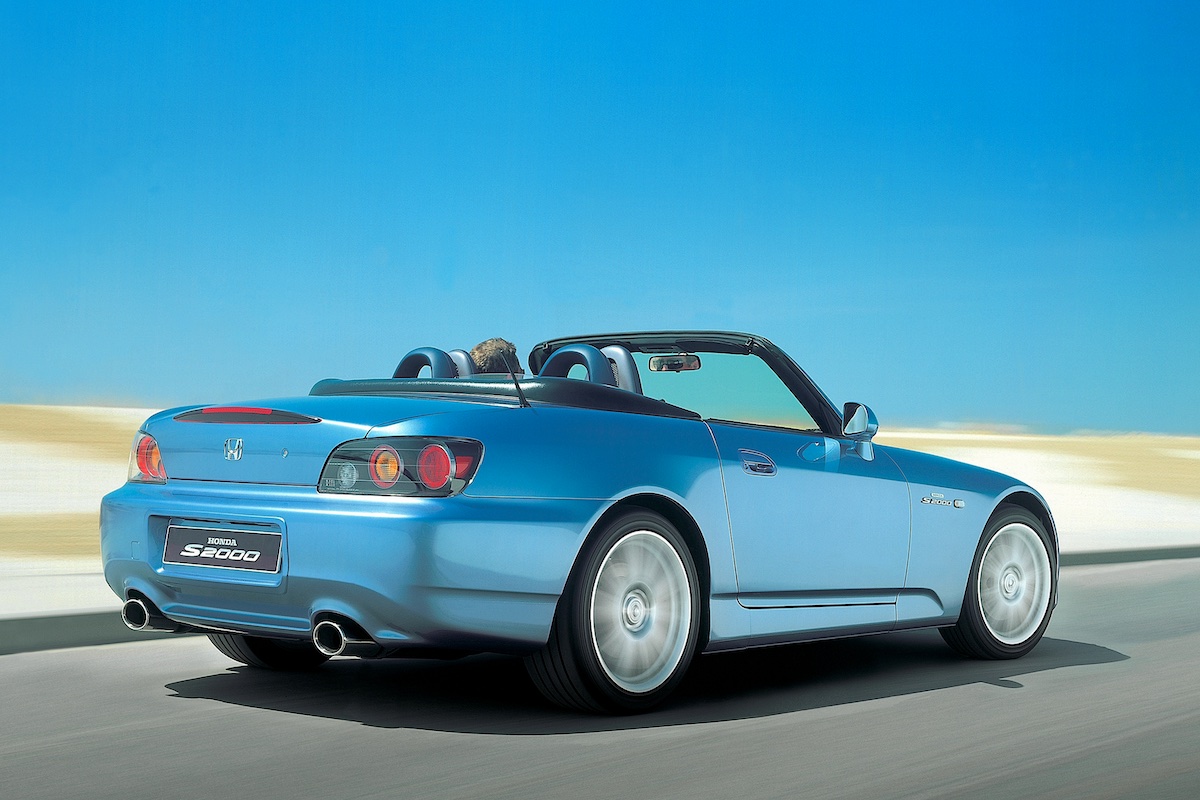
Mechanically, the S2000 was no NSX but it was also quite unlike anything else in the Honda range at that time, being a front-mid engine, rear-wheel-drive roadster with innovative features like an aluminium ‘X-bone’ frame, 50:50 weight distribution, and a 2.0-litre inline-four-cylinder VTEC engine hitched to a six-speed manual transmission and Torsen limited-slip differential.
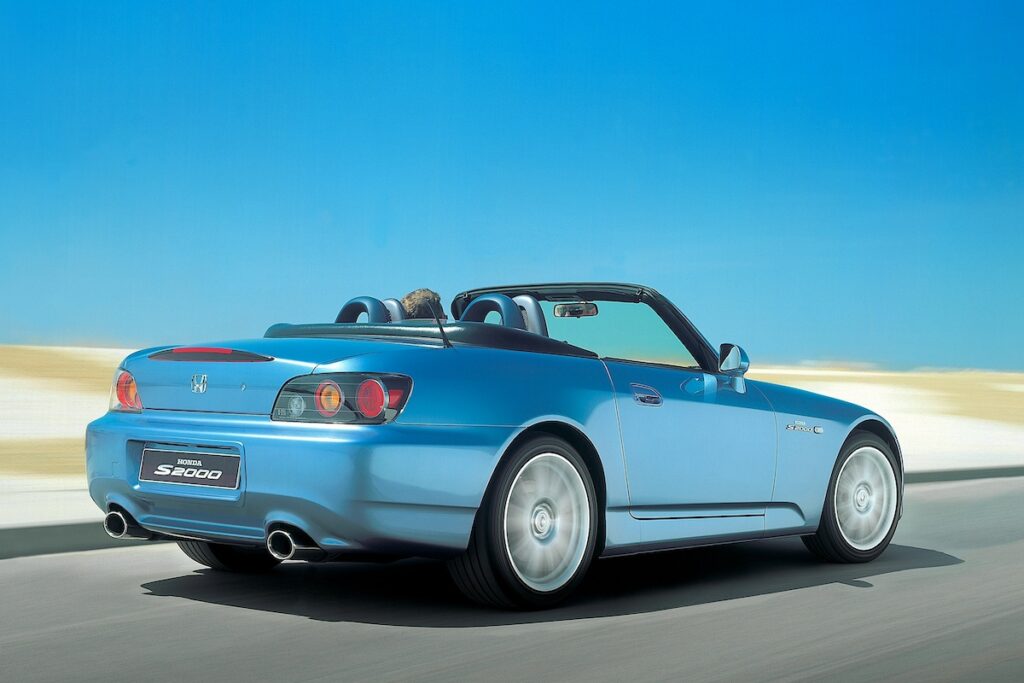
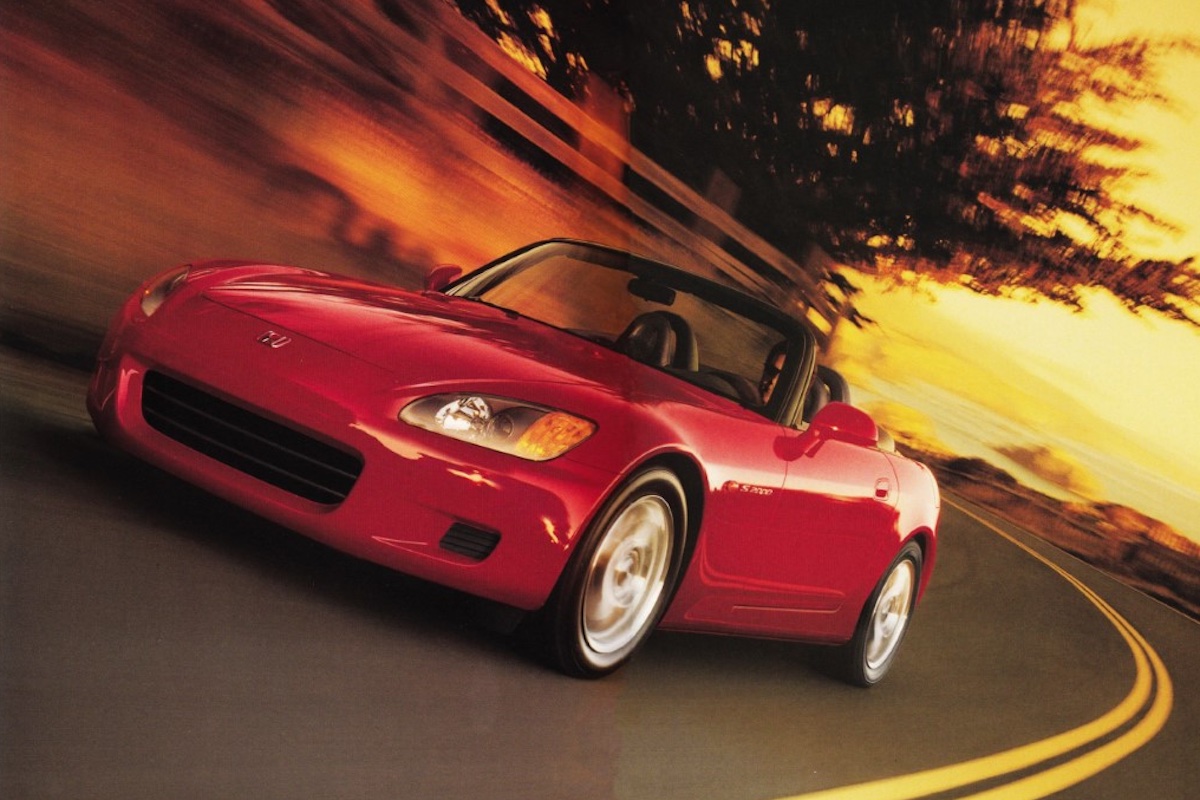
Sitting as it did on handsome 16-inch alloy wheels clad with Bridgestone Potenza S-02 rubber the compact, wedge-shaped Honda cut a striking silhouette, but it was what sat beneath its elongated bonnet that makes this such an extraordinary car.
Depending on the target market the inline-four-cylinder ‘F20C’ generated between 177-184kW and 208-218Nm, remarkable outputs for its relatively modest 2.0-litre capacity. In fact, Honda claimed it had the highest specific output of any naturally aspirated production automobile engine in the world.
Cars sold in Australia came with a lower compression ratio than in some other markets and slightly less power. Premium fuel of 95RON or better was recommended, but at the time of the S2000’s local release much of Australia still had limited access to higher octane fuels. Hence, Honda pulled back on the compression ratio and adjusted engine management to ensure that a tank or two of 91RON wasn’t going to send the knock sensor nuts.
With its VTEC variable valve timing system coming on stream from 6000rpm, the S2000 engine was prepped to do its best work in a rev range where rival models were running out of puff.

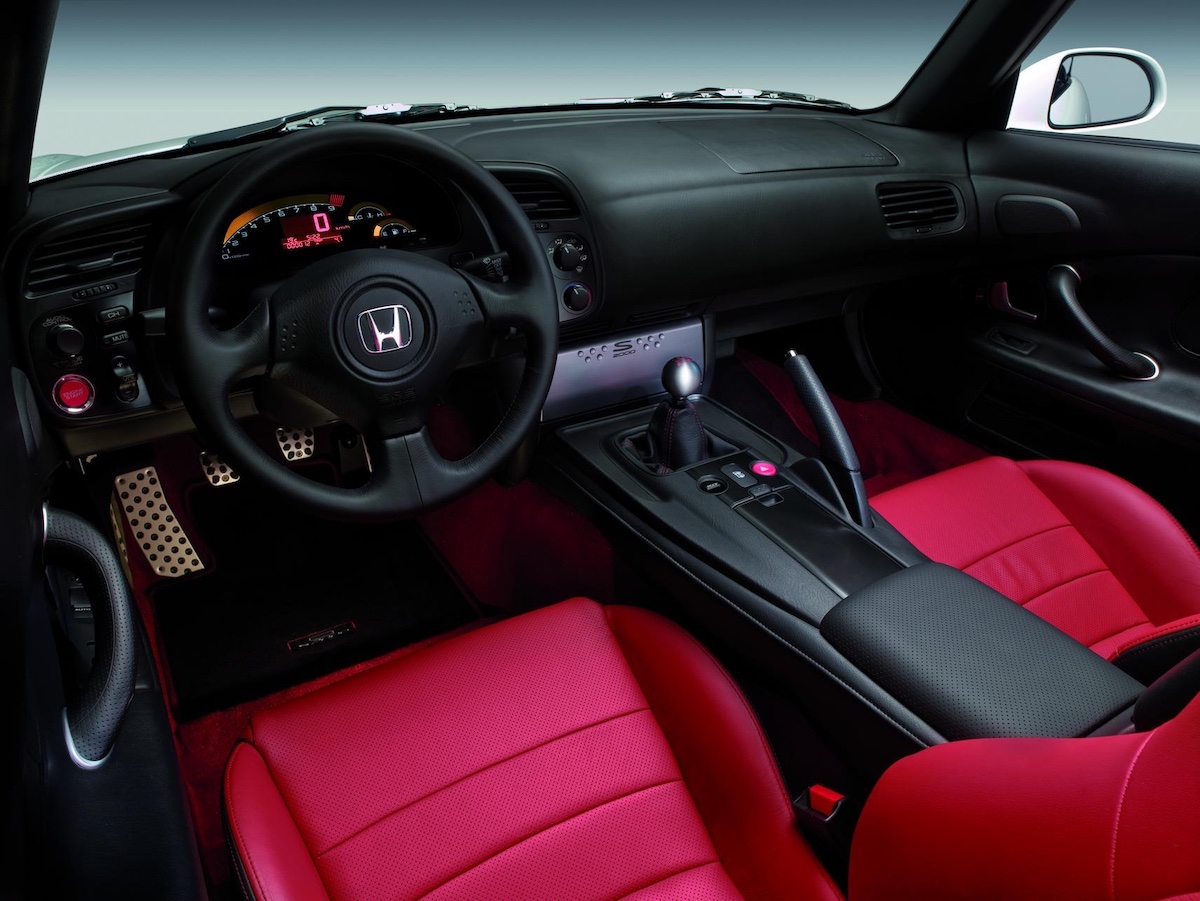
The roadster’s bar graph tachometer (designed to emulate late eighties-early nineties McLaren-Honda Formula 1 cars) featured a lofty 9500rpm redline. And you needed to chase it, with peak power of 178kW arriving at a heady 8300rpm, and the 208Nm of peak torque not fully available until 7500rpm.
The VTEC engine’s exhilarating rush to 9500rpm was accompanied by a thrilling, orchestral exhaust note courtesy of a tuned four-into-two-into-one system, large-diameter stainless steel pipes, a muffler with pre-chamber and two main silencers, and a unique “U-turn” exhaust pipe arrangement.
Adding to the visceral S2000 driving experience was Honda’s beautifully weighted manual gear lever featuring short, precise, rifle-bolt-like throws, and a light but feelsome clutch.
Road test reports from across the globe confirmed the S2000 to be a genuine 150mph (241km/h) sports car. Away from rest it was quick as well, with 0-100km/h taking 5.8 seconds (if launched cleanly) and the standing 400m flying by in 14.0 seconds.
Sitting as it does on a 2400mm wheelbase the S2000 looks relatively roomy, but the front-mid-mounted positioning of the engine behind the front axle line impinges on cabin space, meaning taller drivers can find the driving position cramped.
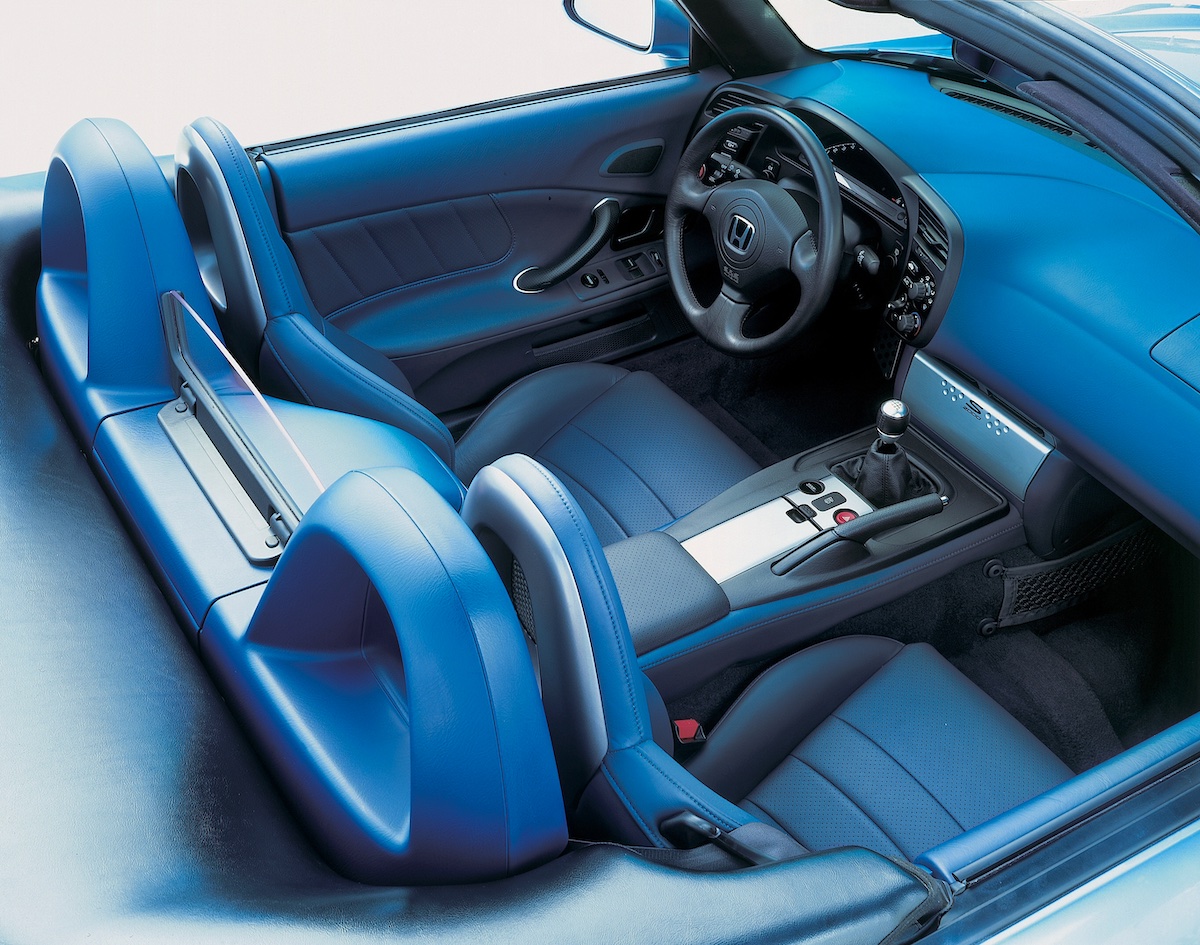
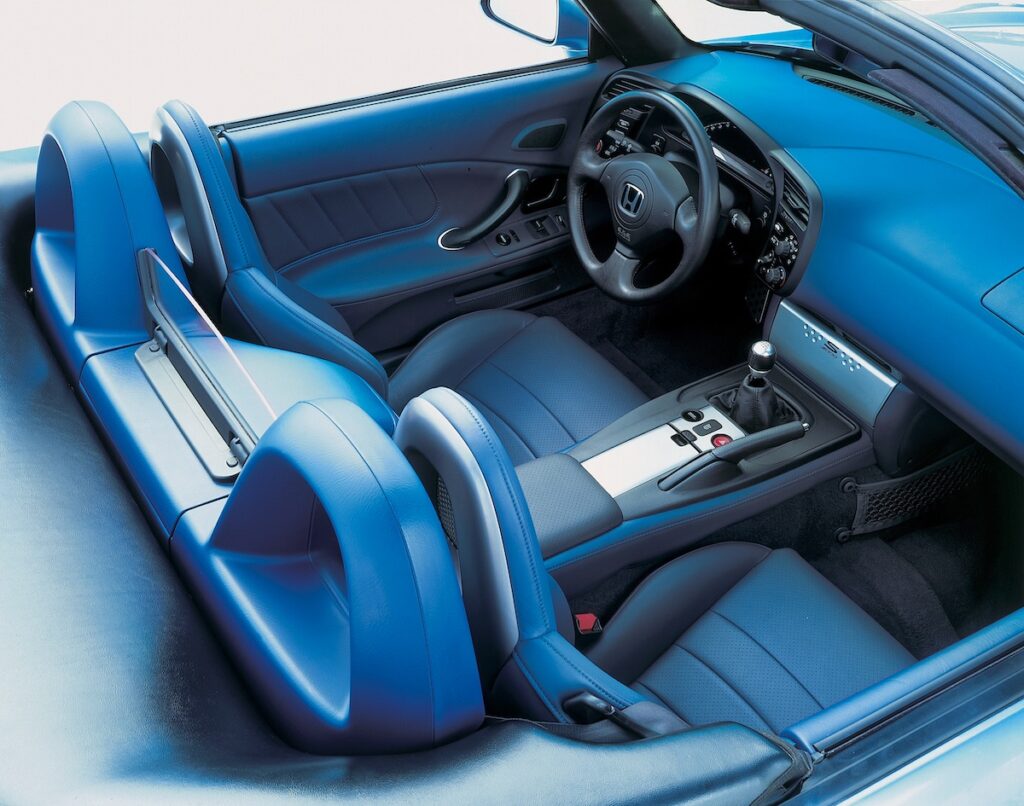
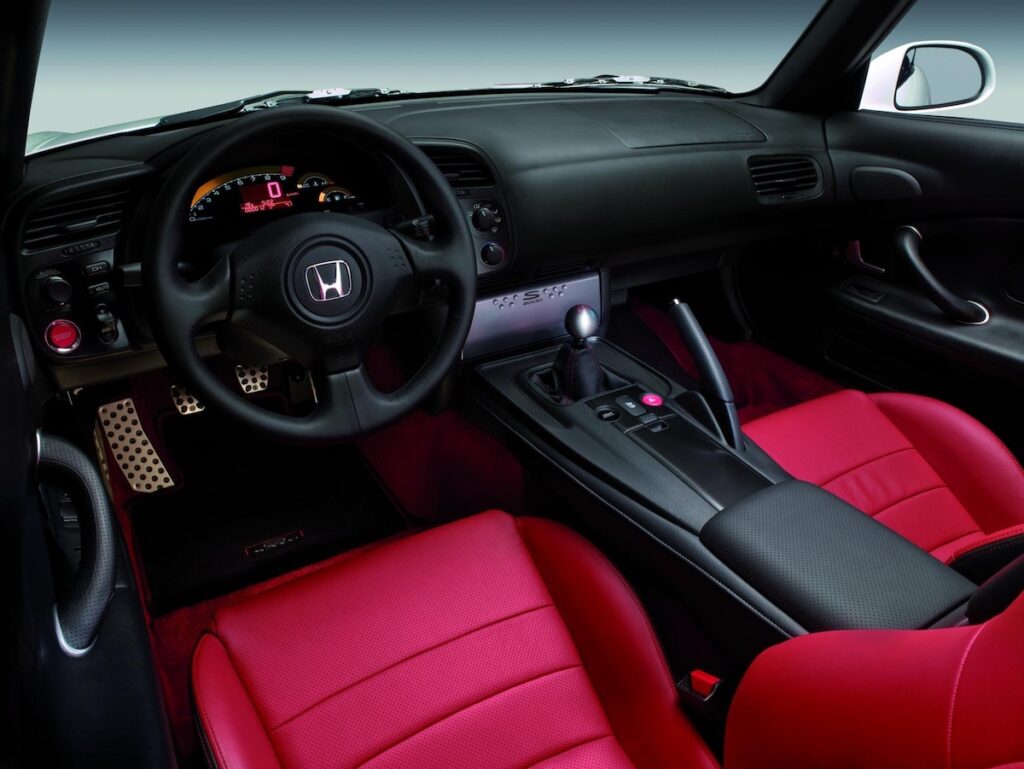
Making up for this is the near-perfect positioning of the gearshift and steering wheel, meaning the busy shifting hand is never far from the lovely leather-trimmed tiller with its super-quick electrically-assisted ratio.
Dynamics were also top notch, thanks to the engine being set back behind the front axle line to give perfect 50:50 weight distribution, independent double wishbone suspension all-round, staggered width tyres (205/55 R16 front, 225/50 R16 rear) and four-wheel disc brakes.
Standard fittings on these first 1999-2003 Australian-delivered S2000s, known as ‘AP1’ models, included leather seats and steering wheel, an eight-stack CD system, power windows and power-operated convertible top.
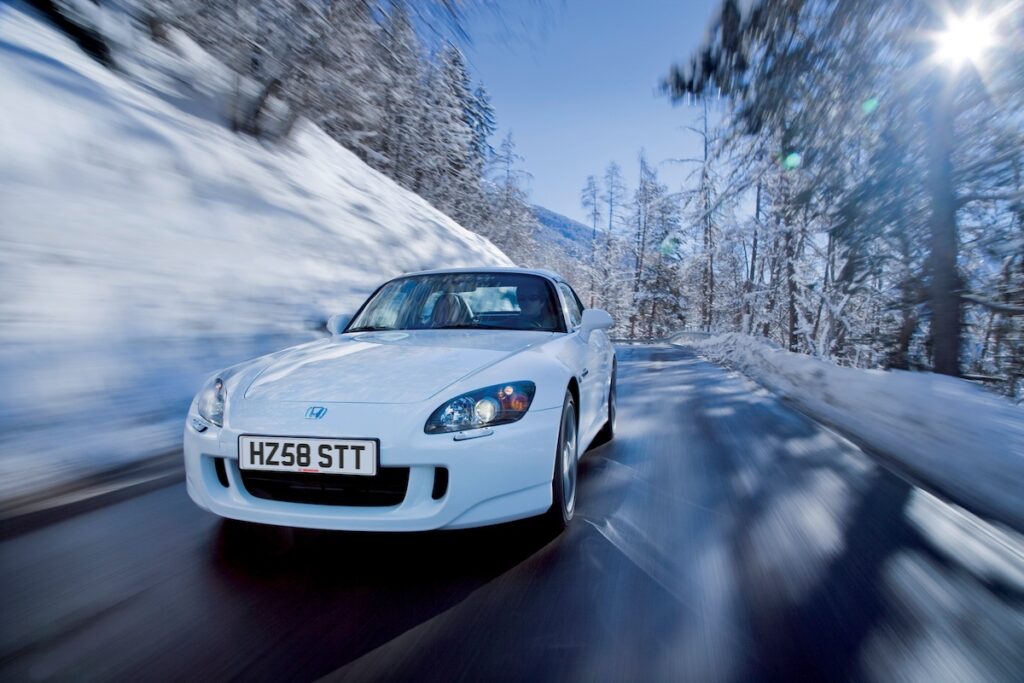
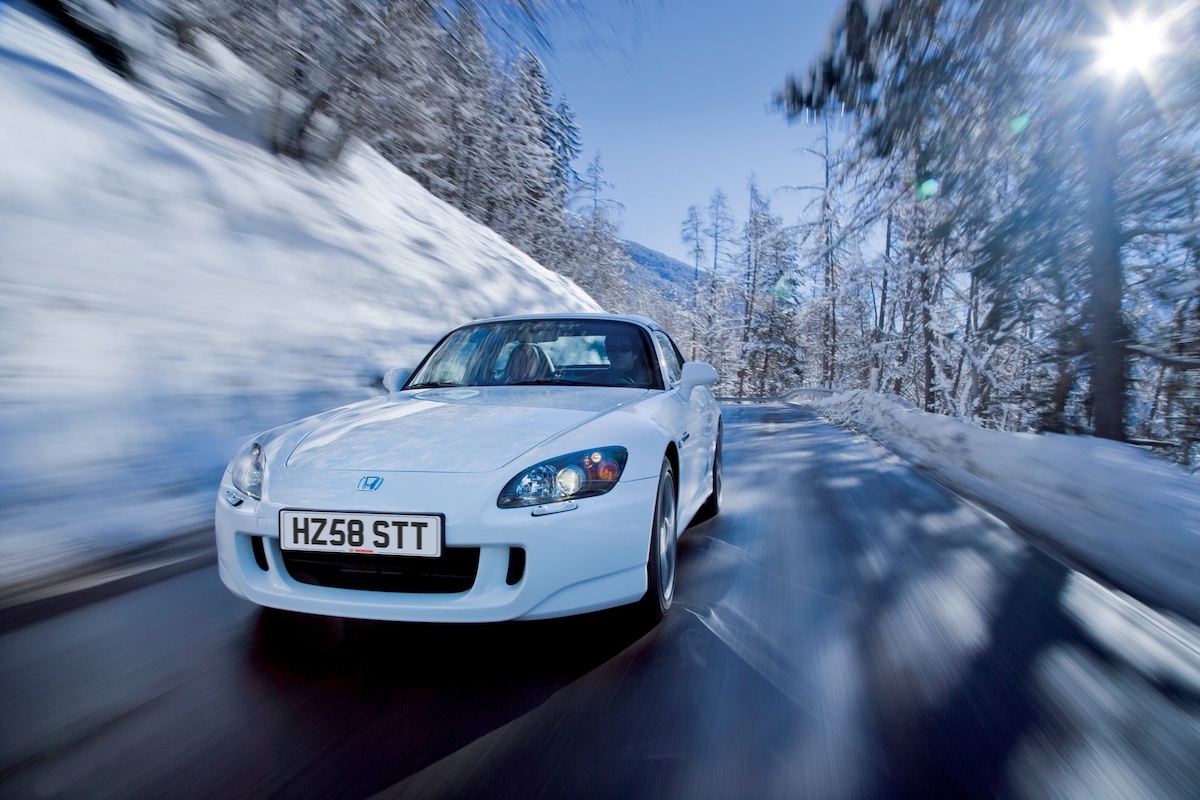
From 2004, the second generation ‘AP1 update’ versions arrived featuring a restyled nose to accommodate HID (High-Intensity Discharge) headlights, new front and rear bumpers, oval tipped exhaust pipes, reshaped seats and an improved sound system, with four speakers and a 10-CD stacker.
Wheels were now 17-inch alloys in a distinctive 10-spoke design and came clad with Bridgestone Potenza RE050 rubber, measuring 215/45 R17 front, and 245/40 R17.
Other technical changes included revised suspension geometry, modified electric power steering and revised spring and damper rates, to reduce the twitchy handling caused by toe-in changes under cornering loads. The subframe was also modified to improve overall rigidity, while other unseen improvements included reshaped footwells and less intrusive door trims, to help make the snug cabin more comfortable.
While the ‘F20C’ engine was retained for most markets including Australia, North America and later Japan received a larger 2.2-litre ‘F22C1’ engine in the facelifted model, with these variants given the chassis designation ‘AP2’. The 2.2-litre might’ve offered more torque than the 2.0-litre sold here, but its longer piston travel necessitated a lower 8000rpm redline.
Given the price of early S2000s when new and their exploration of uncharted market territory the model’s initial sales performance was outstanding. Detail from the now defunct Glass’s Black and White Data Book shows sales during 2000, the S2000’s first full year in Australia, at 521 cars. That saw the new Honda outselling the Audi TT (435 sales), the BMW Z3 (267) and Mercedes-Benz SLK (360).
By 2003 the party was over, however, as the S2000’s annual tally plunged to just 79 cars and would continue to wither until mid-2009 when the last 2006-plated S2000s were sold.
The declining sales trajectory means the chances of finding a post-2003 AP1 or AP1 update car are slim, with so few being sold here. Pre-2003 versions in decent condition remain easy to find, but used values have risen significantly since 2020.
Cars that have travelled 100,000km to 140,000km were making $35,000 in late 2025, while those showing 60,000km or less could top $45,000. These lower mileage cars also have the best chances for long-term appreciation.
Things to Watch Out for When Buying a Used Honda S2000 (1999-2008)
- Use the highest quality lubricants with oil and filter changes at least every 5000km to stop the valve train becoming contaminated with sludge
- Oil consumption can reach 1L/1000km, so check the level regularly
- Transmission noise can indicate worn bearings or an incorrect grade of oil
- Differential noise is likely due to pinion wear which can cause the diff to fail and incur major expense
- All S2000s came standard with a limited-slip differential, but high-rpm starts could shred the internals and require replacement with something stronger, such as the centres produced by Tenaci Motorsport or Quaife Engineering.
- Make sure the convertible top raises and lowers smoothly. When in place check for rips and worn areas
- Leather trim fades and hardens with excessive exposure to harsh sunlight
- Check the inner edges of wheels for cracks and buckling. Correct replacements are scarce in Australia and may need to come from Japan or the USA.
Valuation Timeline: Valuation Timeline: Honda S2000 (1999-2008)
-
2010$20,000
-
2015$22,500+12.5%
-
2020$28,000+24.44%
-
2025$42,500+51.79%1999-2003