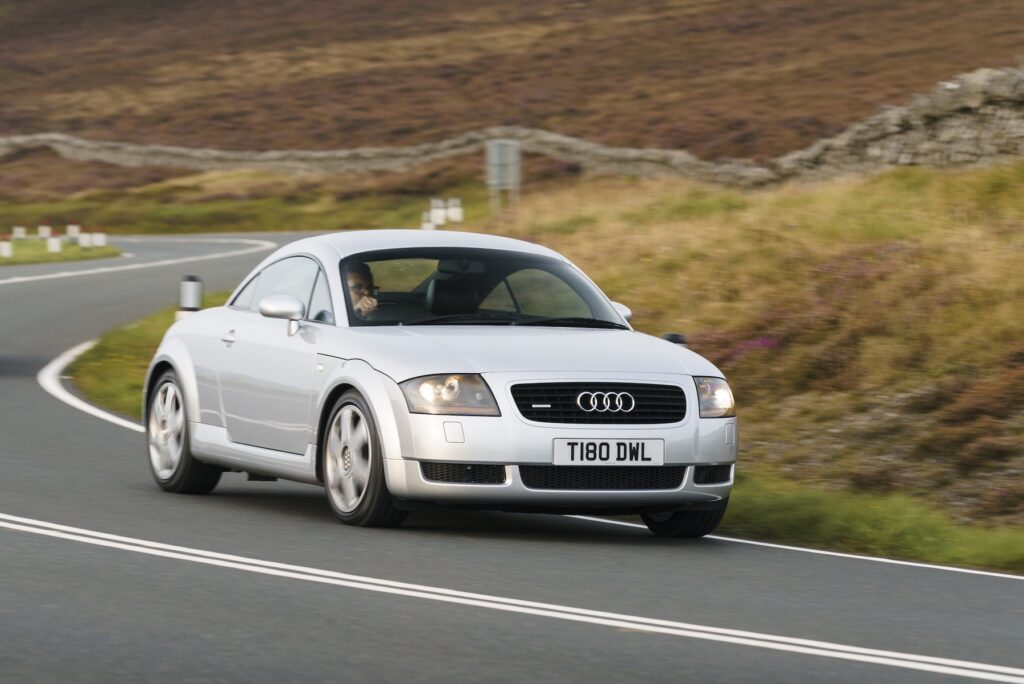
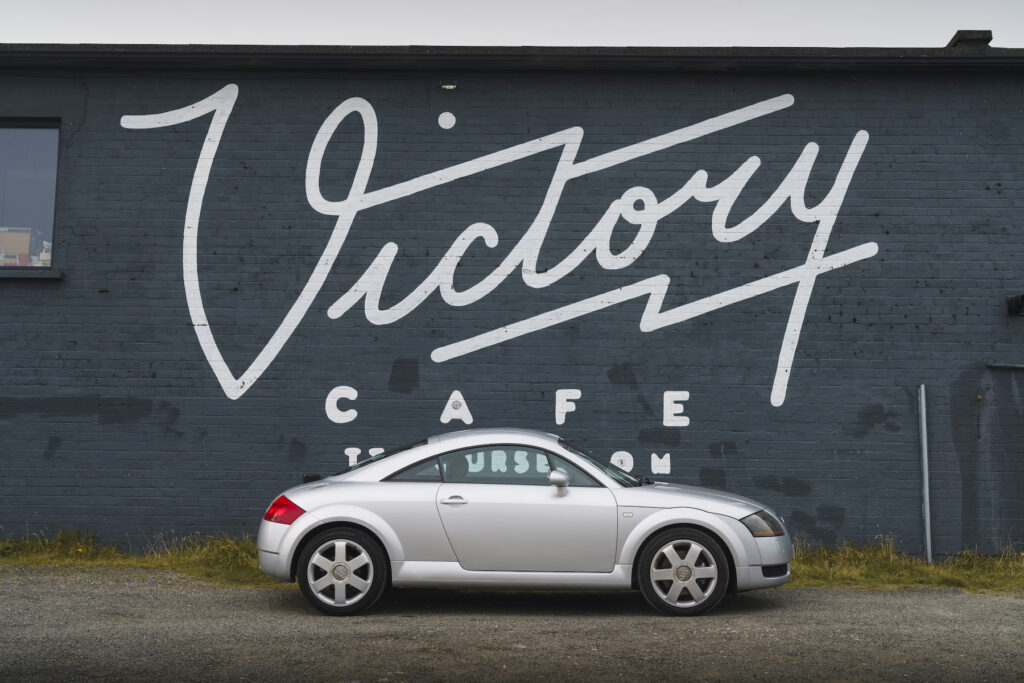
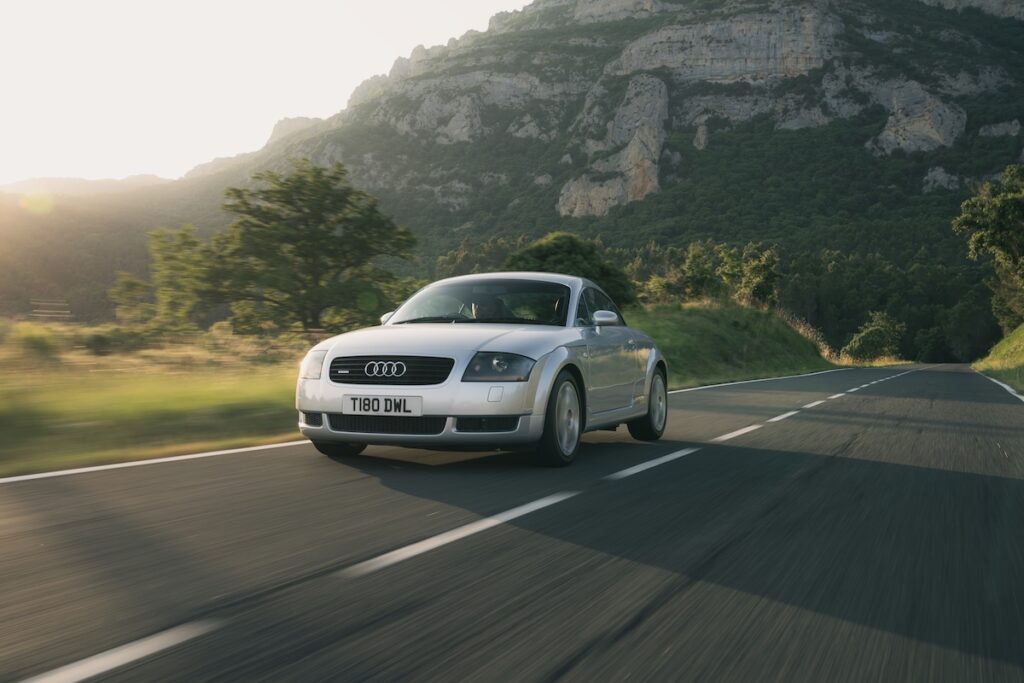

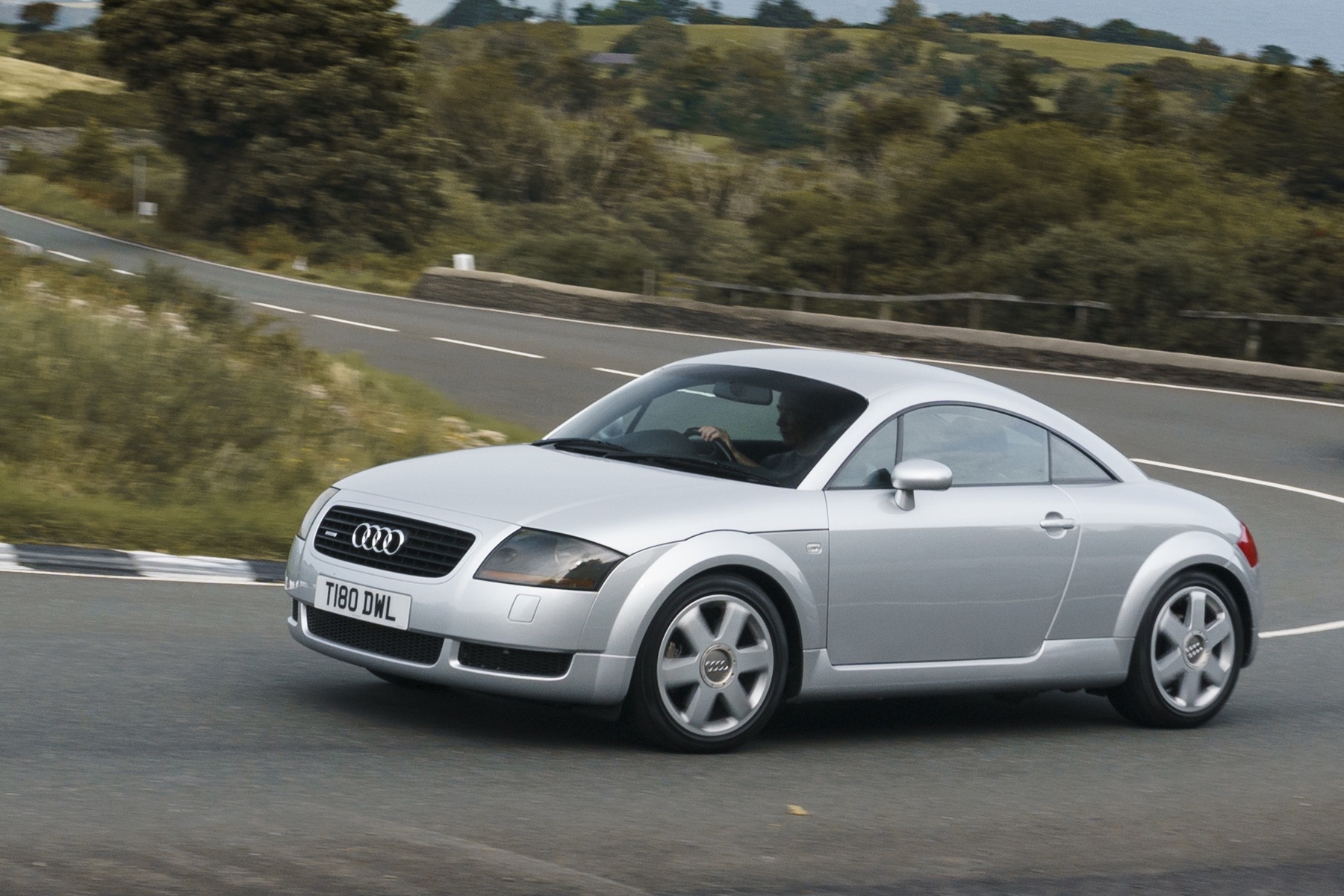
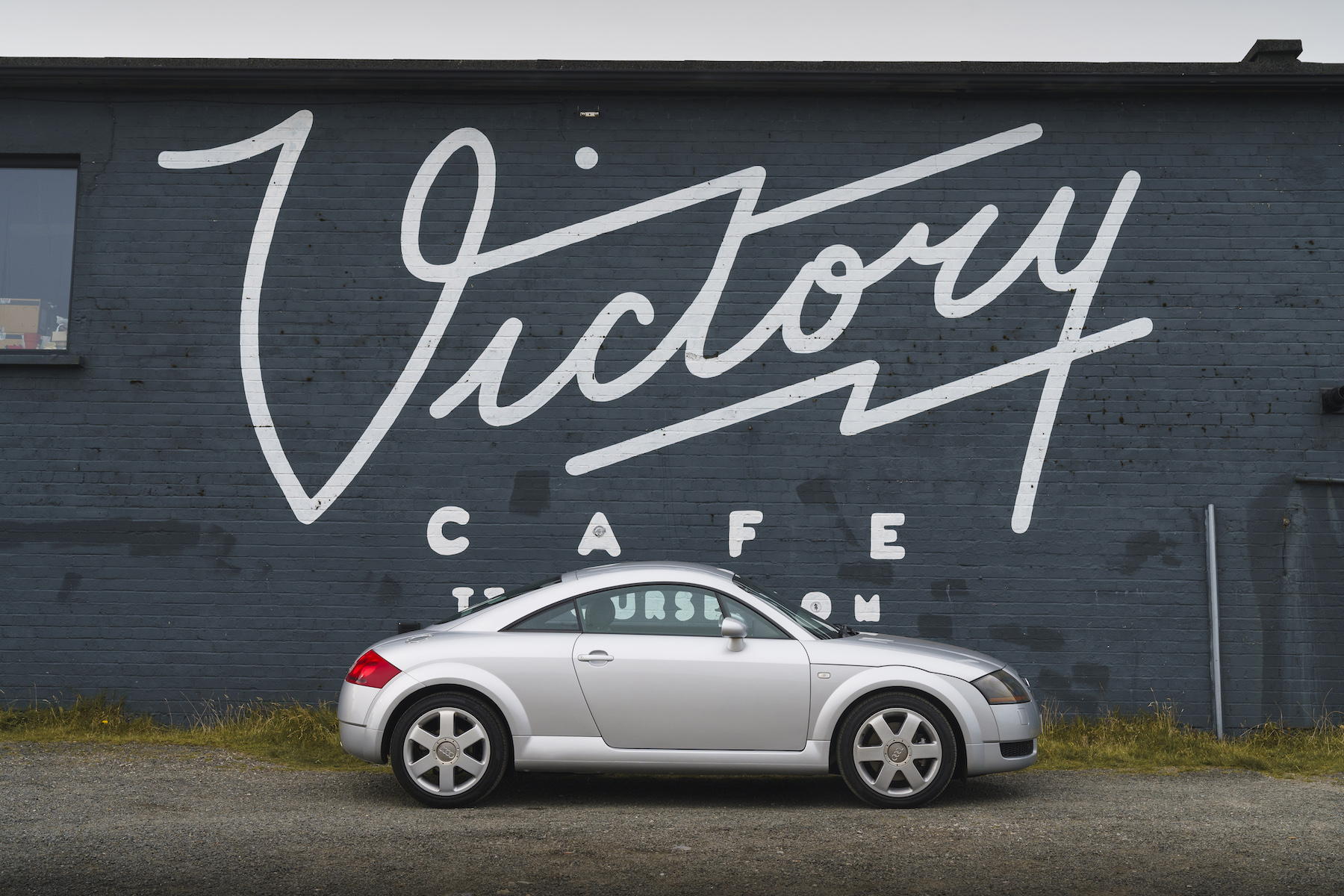
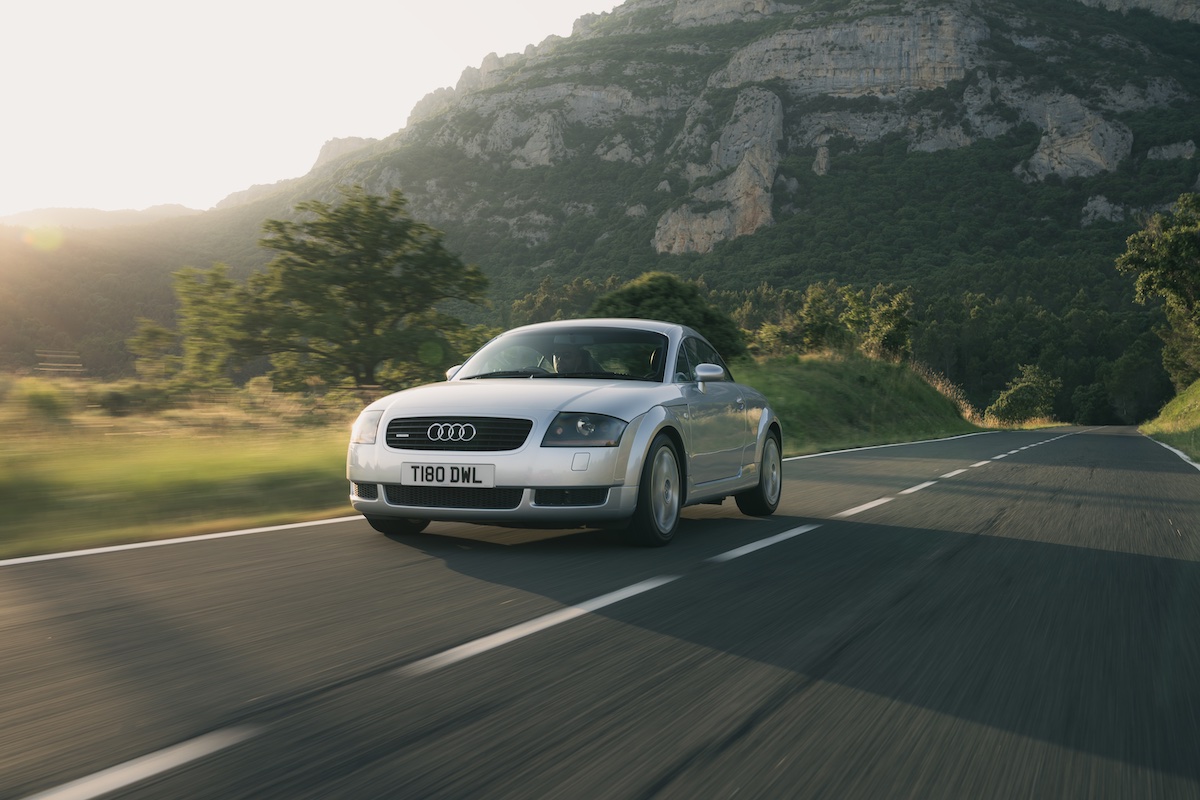
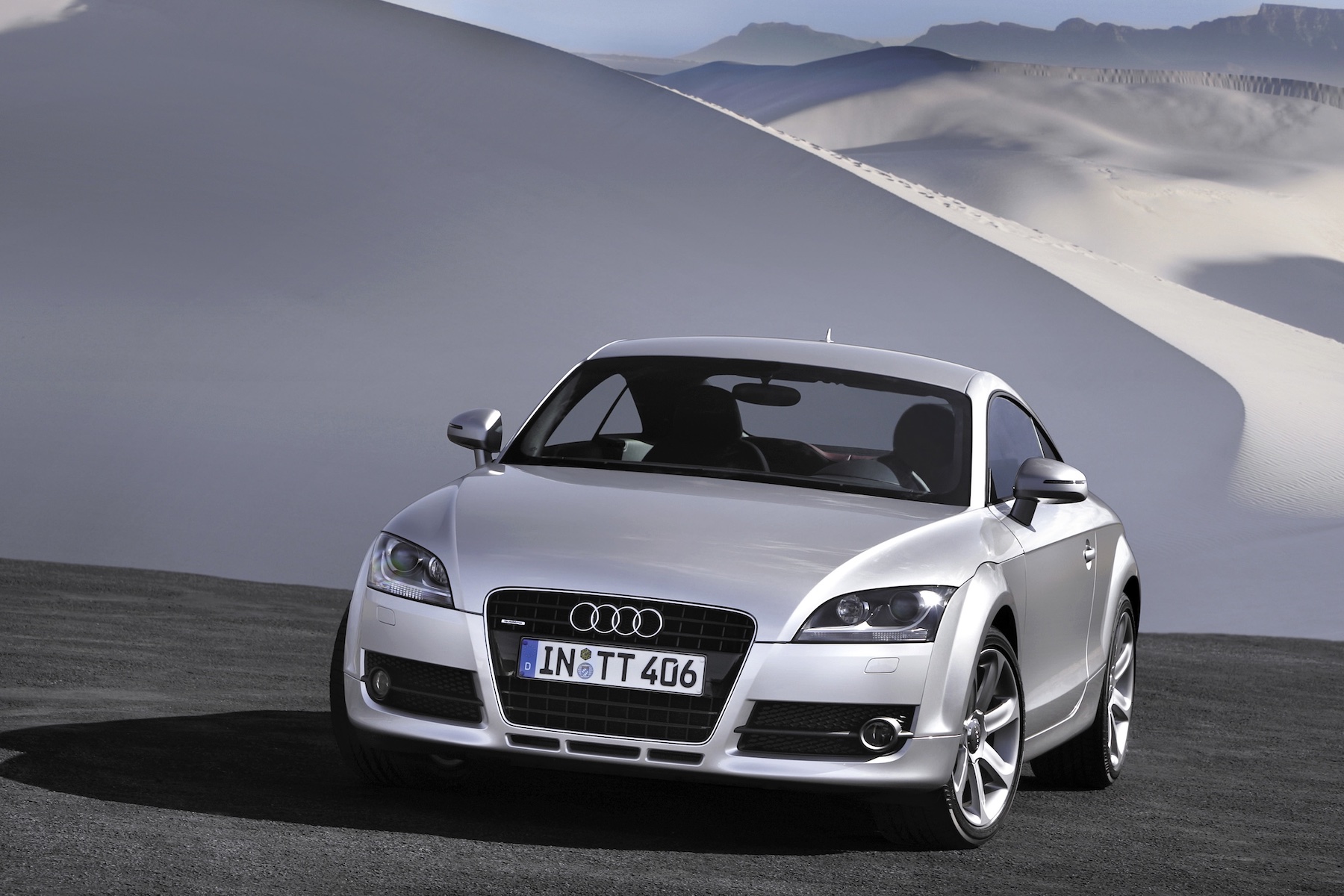
Twenty years after savagely awakening world rallying with its fearsome Quattro Turbo, or “Ur-Quattro” as the Germans refer to the original, Volkswagen’s Audi subsidiary would obliquely apply Quattro imagery to a commercially viable sports car.
Similarities between the new design and Quattro rally cars were tenuous, but under the swoopy coupe’s abruptly curved bonnet was at least a turbocharged engine, while later high-end variants also came equipped with optional all-wheel drive drivetrain.
The first hint of the eventual Audi TT production car came at the International Motor Show (IAA) in Frankfurt am Main in 1995, when Audi presented the Audi TT concept sports car.
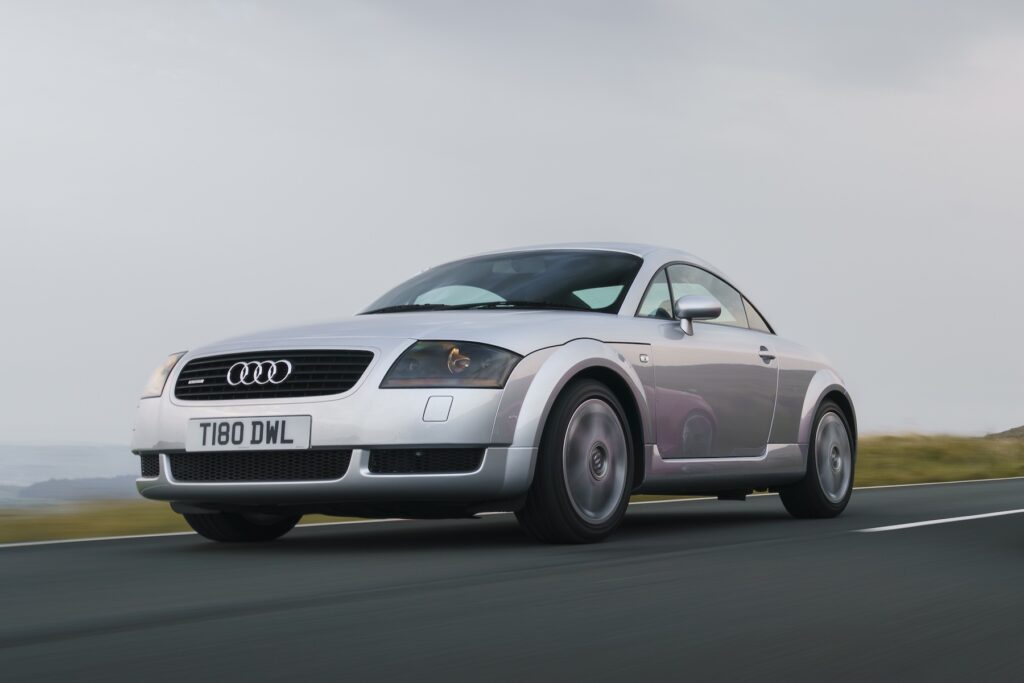
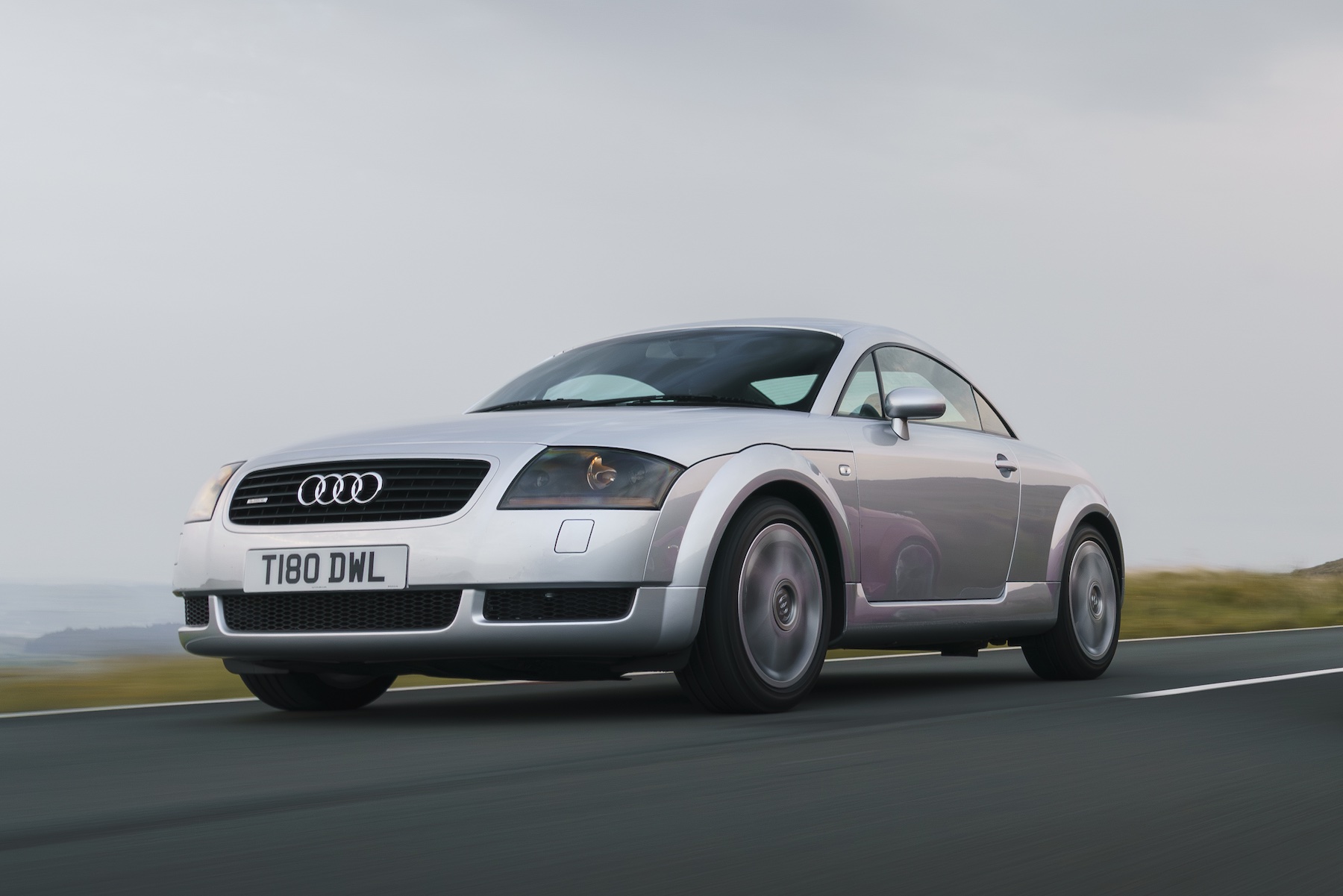
The striking silver concept featured softy curved but dramatic styling that channelled the rounded shapes of pre-war racing cars and post-war Auto Union sedans.
The TT with its unique, Bauhaus-inspired curves was the work of American designer Freeman Thomas, working under the auspices of Audi’s then head of design, Peter Schreyer.
The concept channelled elements of the Audi Avus show car of 1991, designed by J Mays and Martin Smith, but it was smaller and lacked such exotic attributes as an aluminium space frame and mid-mounted engine.
This was because its designers had been briefed by Audi owner Volkswagen to deliver a commercially viable design that could share components with established Volkswagen Group product.
The New Beetle was still three years away but the TT Concept clearly channelled elements of the iconic original, while the short nose-long tail profile was claimed by Audi to honour the immensely powerful, mid-engined Auto Union racing cars of the 1930s.
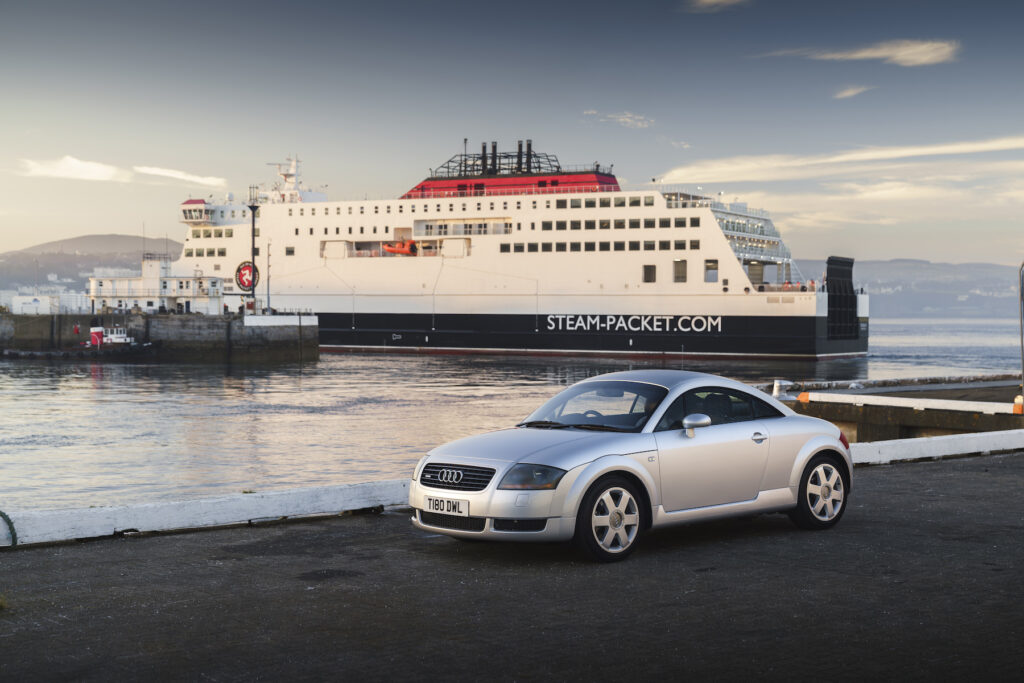
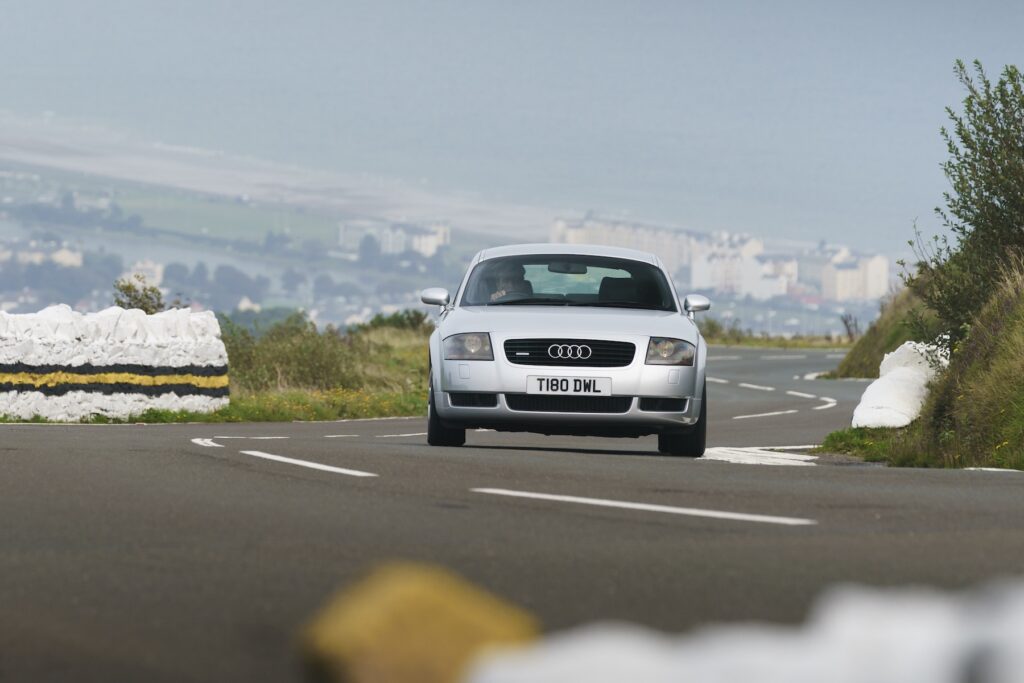
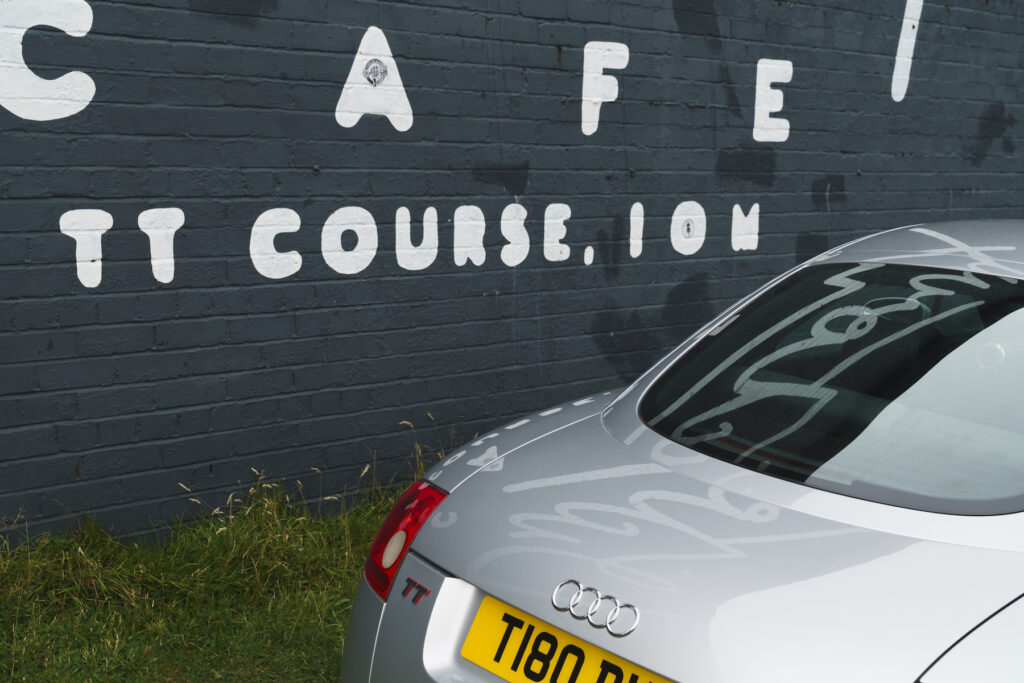
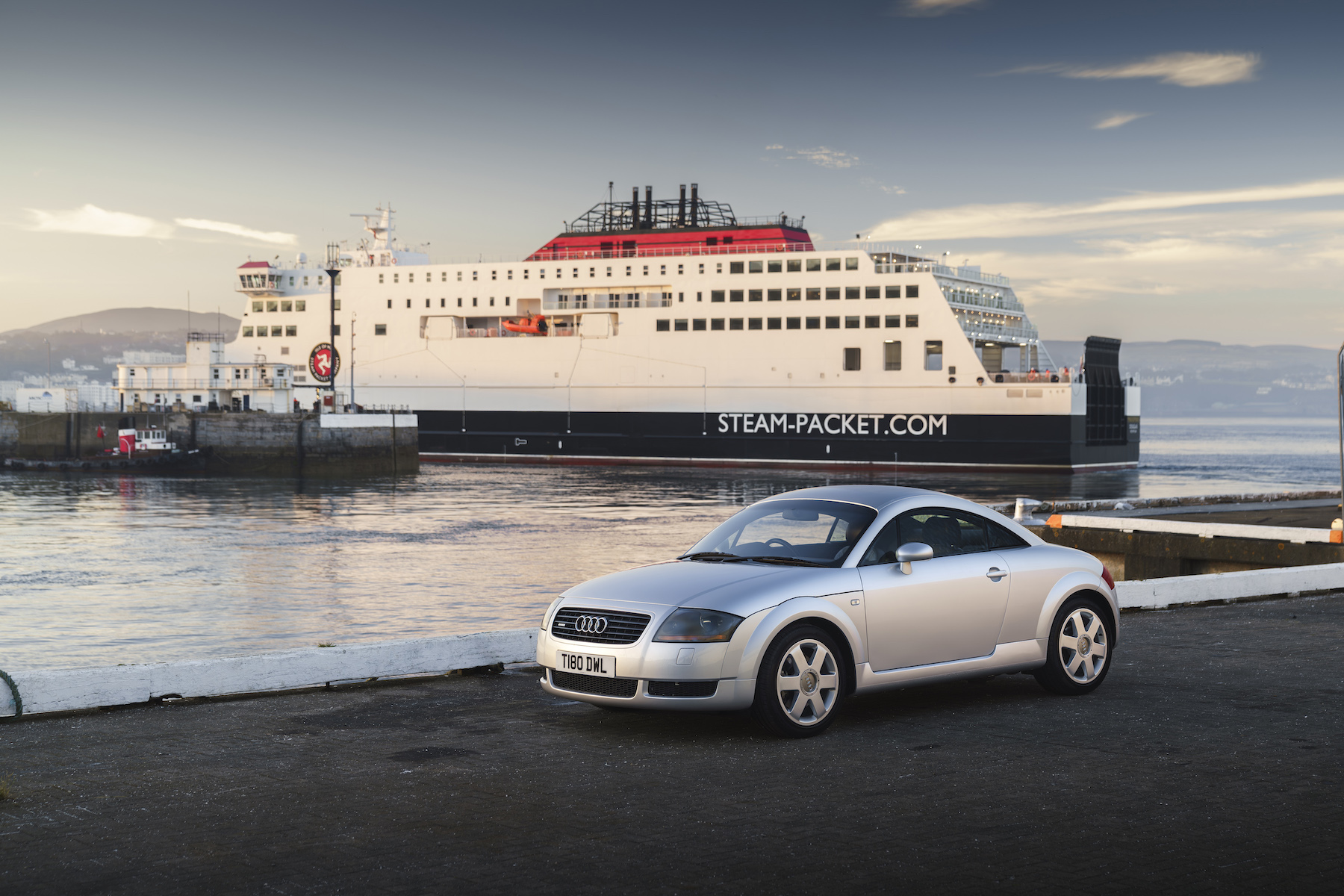
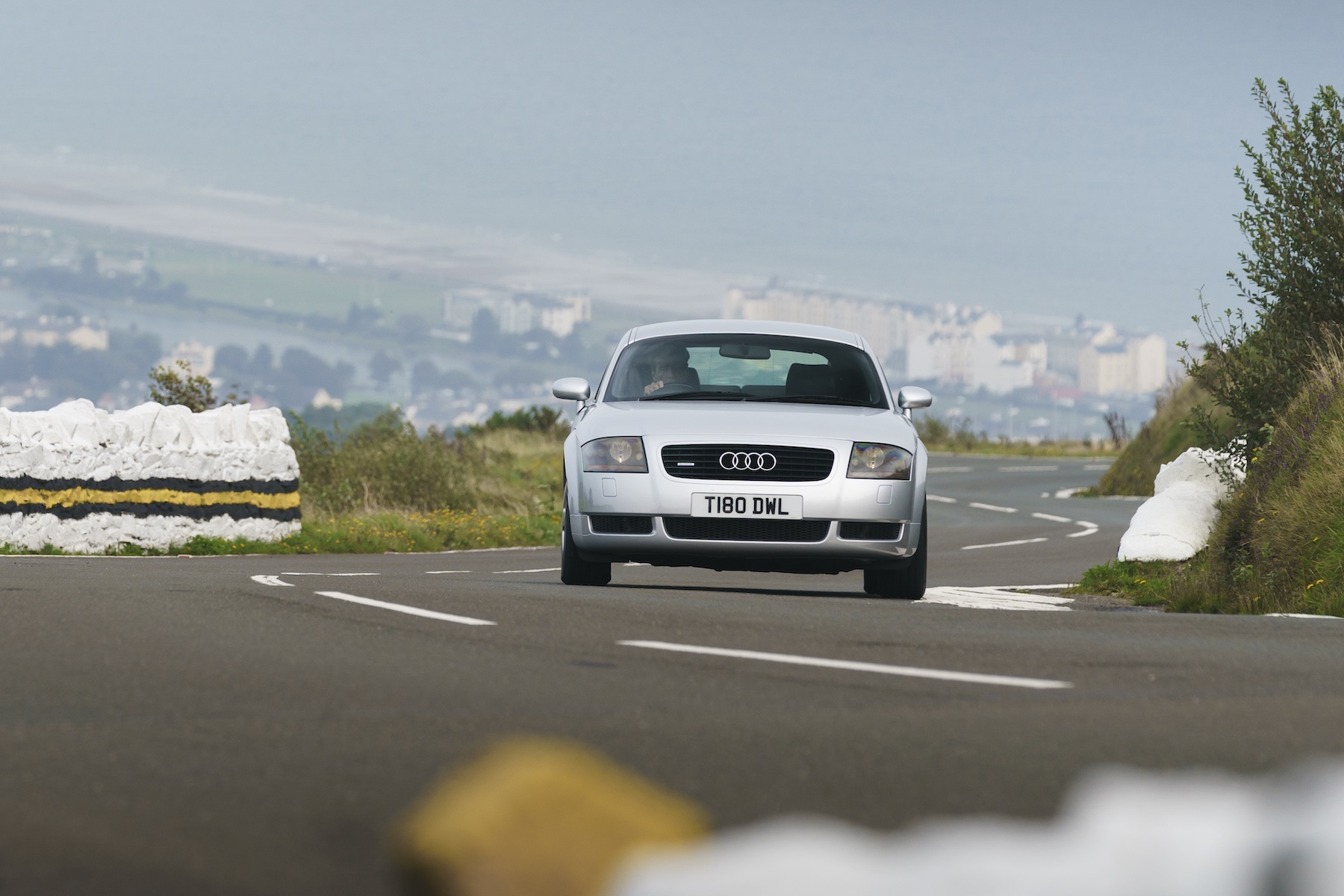
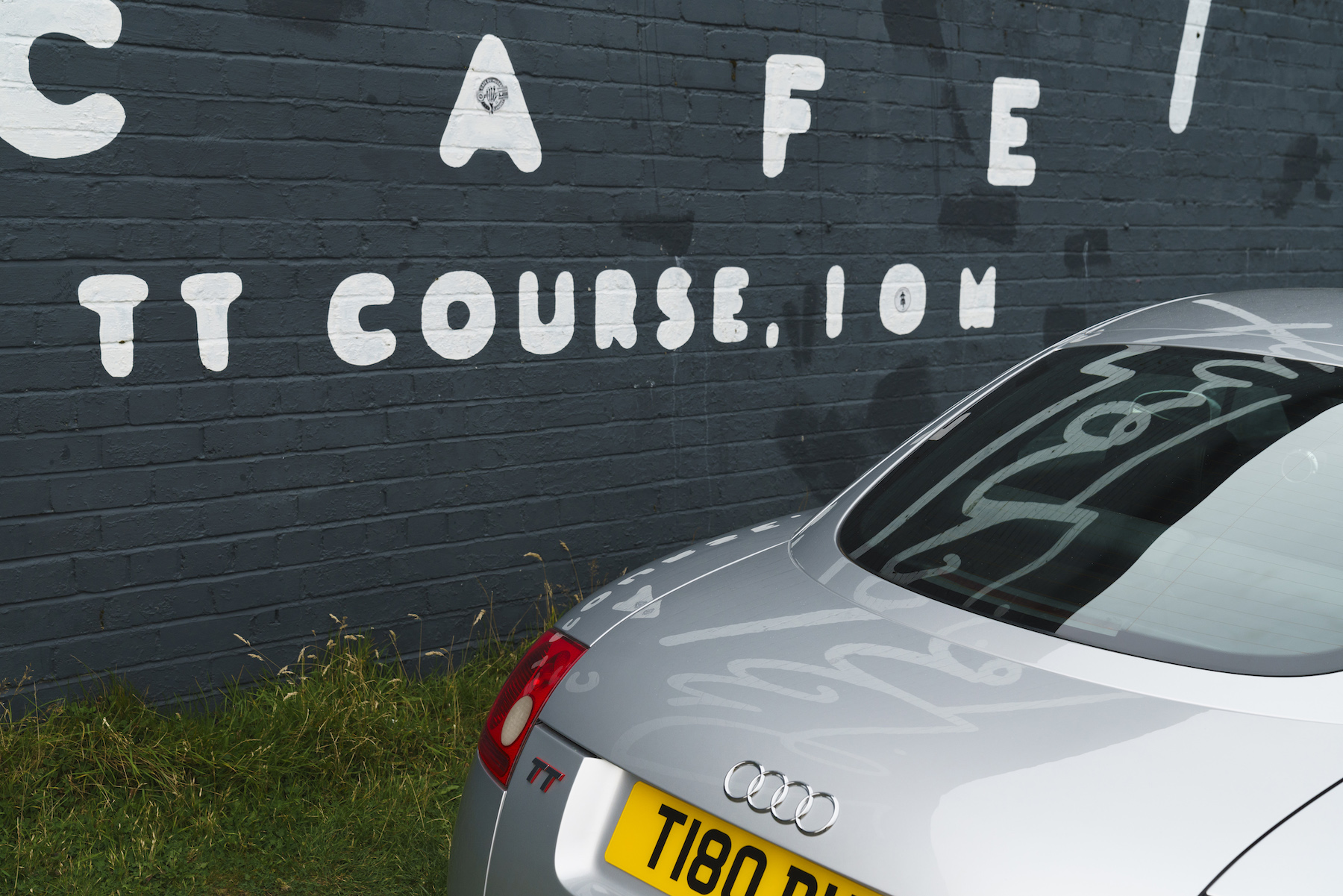
The origins of the tiny coupe’s ‘TT’ designation may not have been immediately obvious, but the name was taken from the legendary Tourist Trophy on the Isle of Man, where Audi ancestors NSU and DKW achieved great success with their two-wheeled creations.
More obvious, perhaps, was that the TT Concept sat on the Volkswagen Group’s PQ34 platform, also known as the A platform, which would underpin the Mk4 Golf of 1997.
Under the bonnet was another notable nod to the common components mandate, where the Volkswagen Group’s prolific 1781cc turbocharged four-cylinder sat mounted transversely and sending drive to the front wheels.
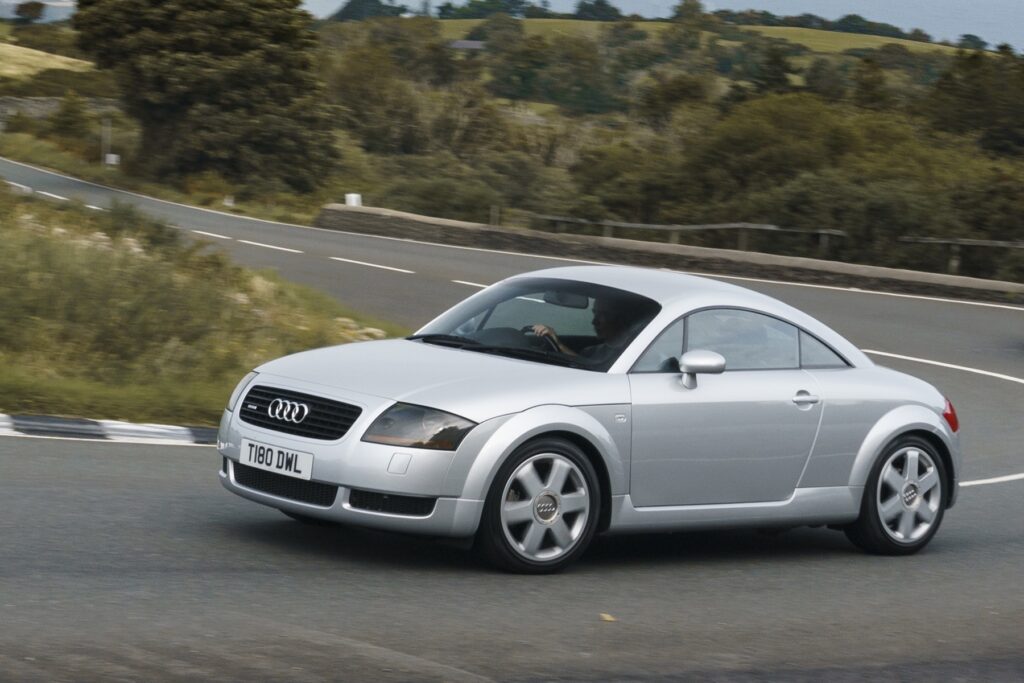
The production version of the TT Concept stayed very close to the concept, with the most obvious exception being the addition of rear quarter windows behind the doors, which allowed more light into the cabin and trimmed down the concept’s thick C-pillars.
Mass manufacture looked good to go in 1995 but production was delayed while Audi updated its Hungarian factory to produce the bodyshells. These were beneficiaries of a new laser-based welding system that made panel fit so tight the bodies appeared almost seamless.
The engine had already passed emissions tests in most global markets, significantly the USA and Canada where 5193 TTs (Coupe and Roadster totals combined) would be sold in 1999, followed by a jump to over 12,000 units in the final year of the second millennium.
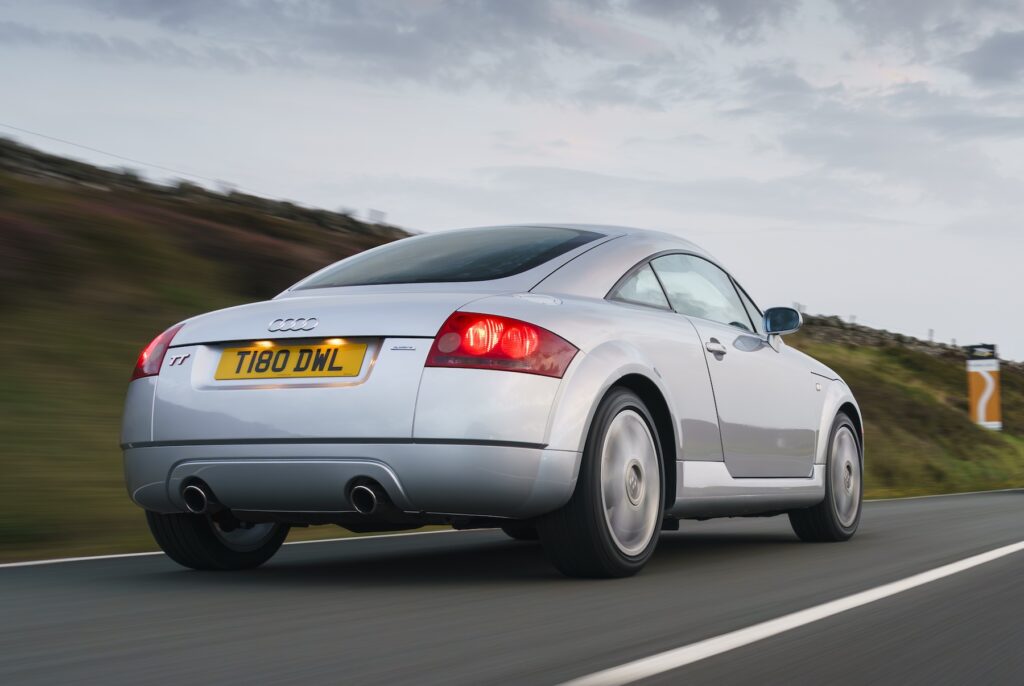
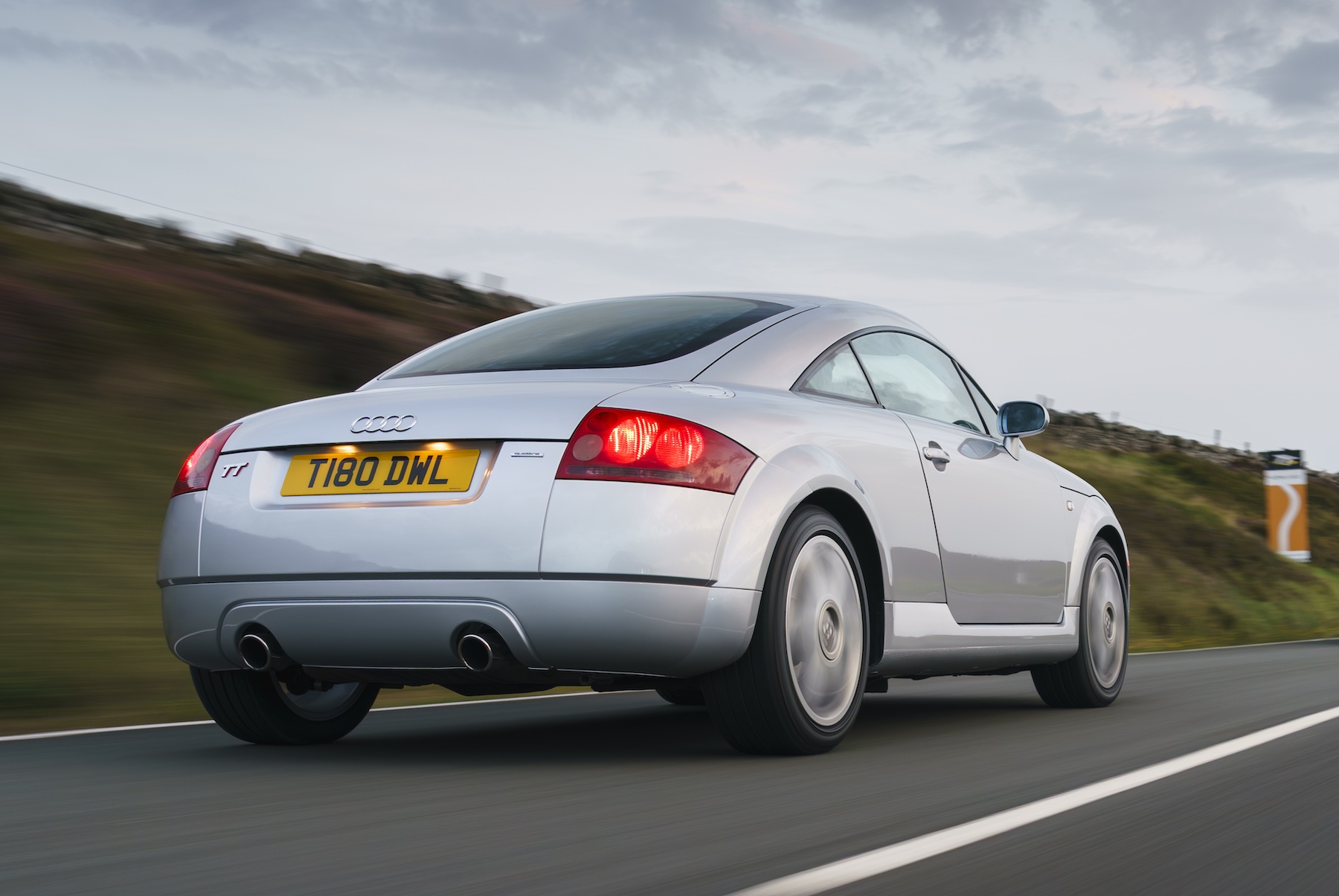
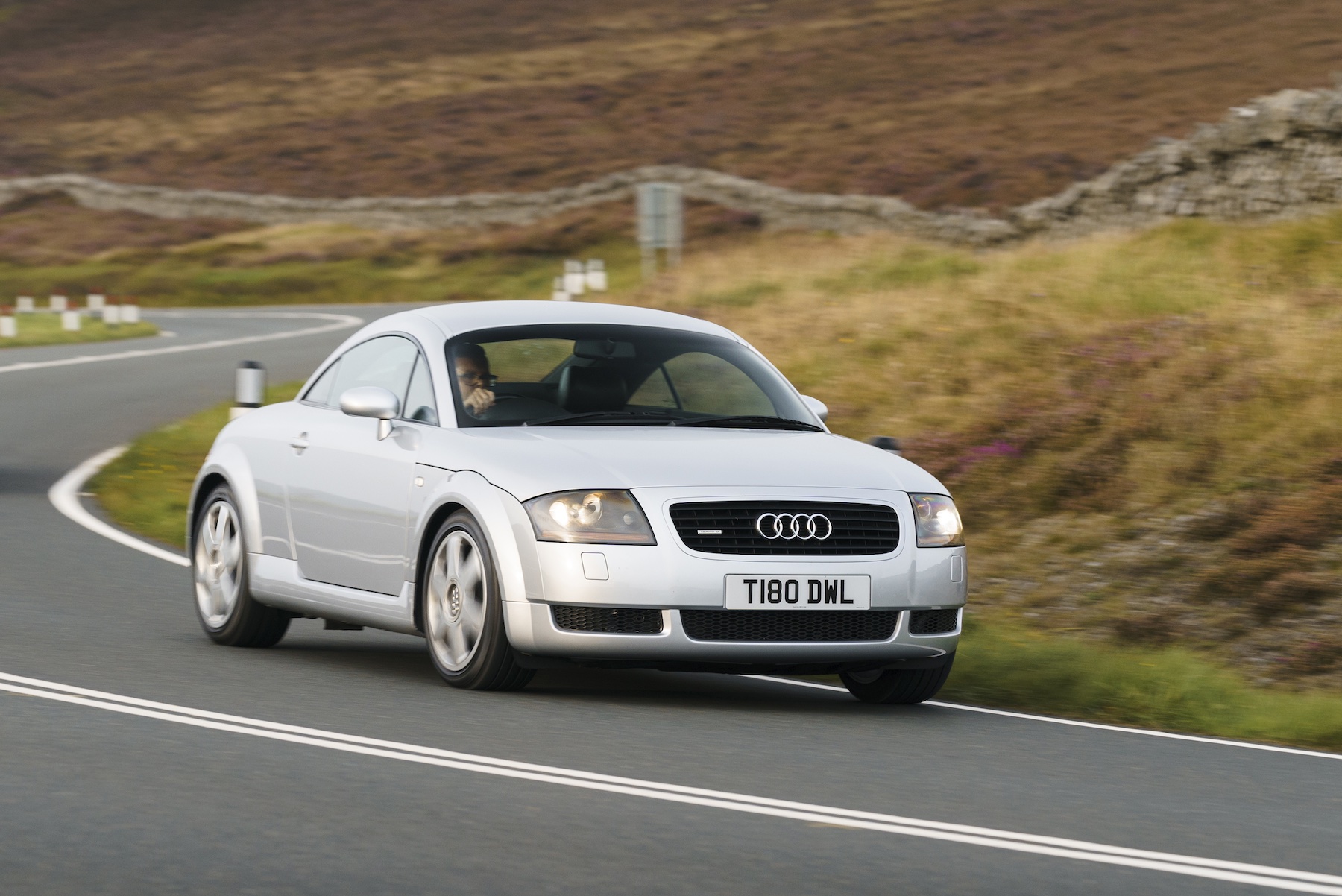
Early TTs were undeniably sleek, but their wind-cheating curves came with a less welcome attribute. On high-speed roads like Germany’s autobahn network their lack of rear downforce led to instability and was blamed for several fatal crashes.
A rear spoiler had not been included in the original design to maintain the coupe’s clean, aerodynamic design. However, after several high-speed accidents and reports of instability at autobahn speeds, Audi issued a global recall in late 1999 for all pre-2000 models.
The recall mandated the addition of a small rear spoiler, the addition of Electronic Stability Program (ESP), and suspension changes including larger bushes, stiffened rear springs, and anti-roll bars.
The first Australian cars that landed in May 1999 would have been the original ‘unadulterated’ vehicles, and these along with subsequent Mk1 TT’s were powered by a turbocharged 1.8-litre four-cylinder engine, developing 132kW/235Nm and driving the front wheels via a five-speed manual transmission.
Five months later, and in time for display at the annual Sydney International Motor Show, the AWD (All Wheel Drive) coupe was launched in proper quattro form with the wick turned up on the 1.8-litre engine to deliver 165kW/280Nm, and a six-speed manual fitted in place of the five. The quattro coupe also delivered a soaring $13,000 price increase over the original car’s $73,000 sticker.
Fast forward to May 2000 and Audi had the TT Roadster ready for Australian launch with tasty integrated roll hoops mounted behind optional saddle-stitched leather seats. Along with access to sunlight and fresh air, the Roadster brought with it a further hefty price increase to $92,850, although by late-2006 when the last of the 165kW S Line Roadsters were being cleared this had dropped to $89,000.
Safety was, by this time becoming a priority for most luxury brands and all variants of the two-seat TT boasted airbags at the front and sides, along with ABS braking and a rudimentary traction control system.
Climate control air-conditioning, leather seats and a six-stack CD sound system were expected inclusions on early cars, with little else available as optional equipment.
The distributor probably expected Roadster versions to sell well in a country like Australia with our fondness for open-top motoring. However, looking at the relative numbers of TTs still available via our used car market – and the numbers are significant – fewer than half of the 1999-2008 models offered at or near the time of writing have been Roadsters.
Aussie TT sales began with a flourish achieving a combined Coupe/Roadster tally in 2000 of 437 cars, but sales fell away quickly and Audi delivered just 217 units during 2005.
Sales bumped along until late-2006 when the second-generation model arrived sporting a less powerful 2.0-litre TFSI engine but also a considerably cheaper base price of $72,900.
These cars used a 147kW/280Nm version of the 2.0-litre engine with a six-speed manual or six-speed S Tronic semi-automatic transmission.
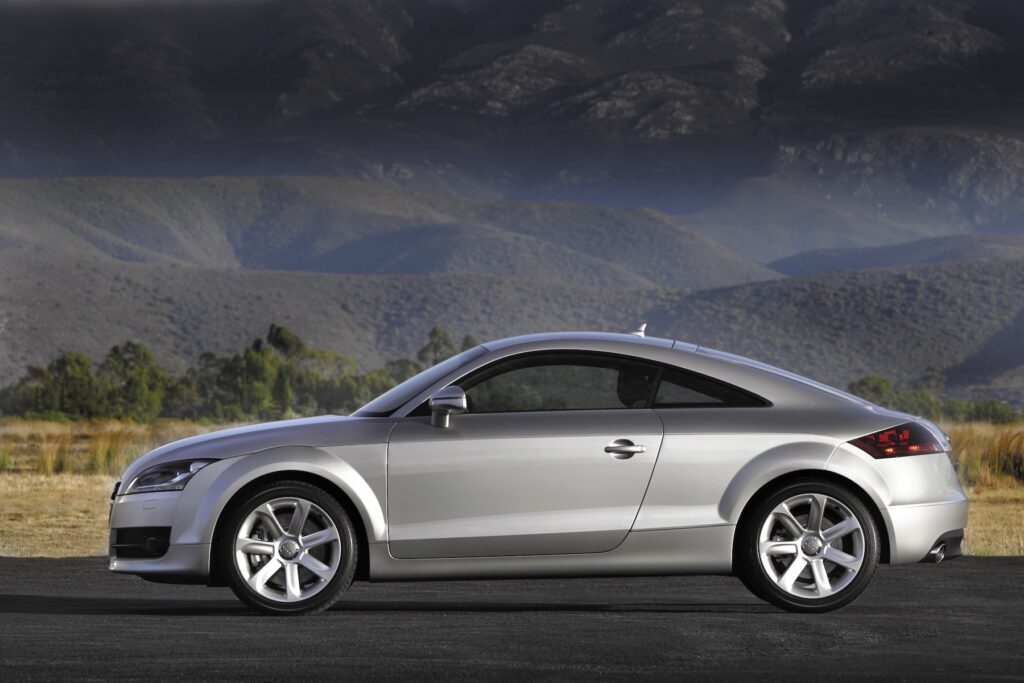
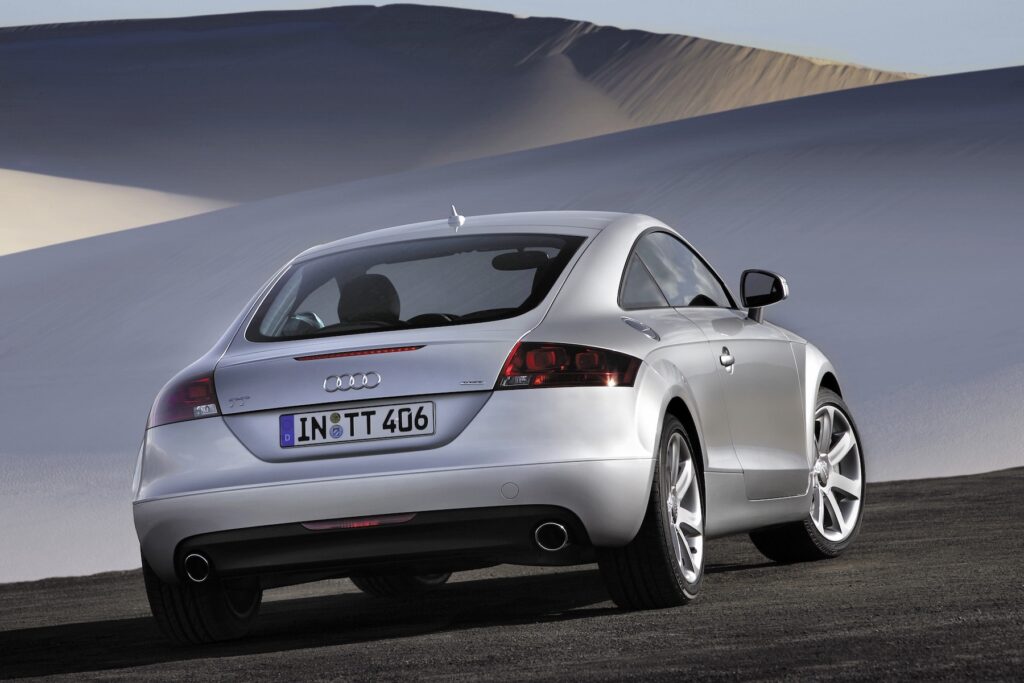
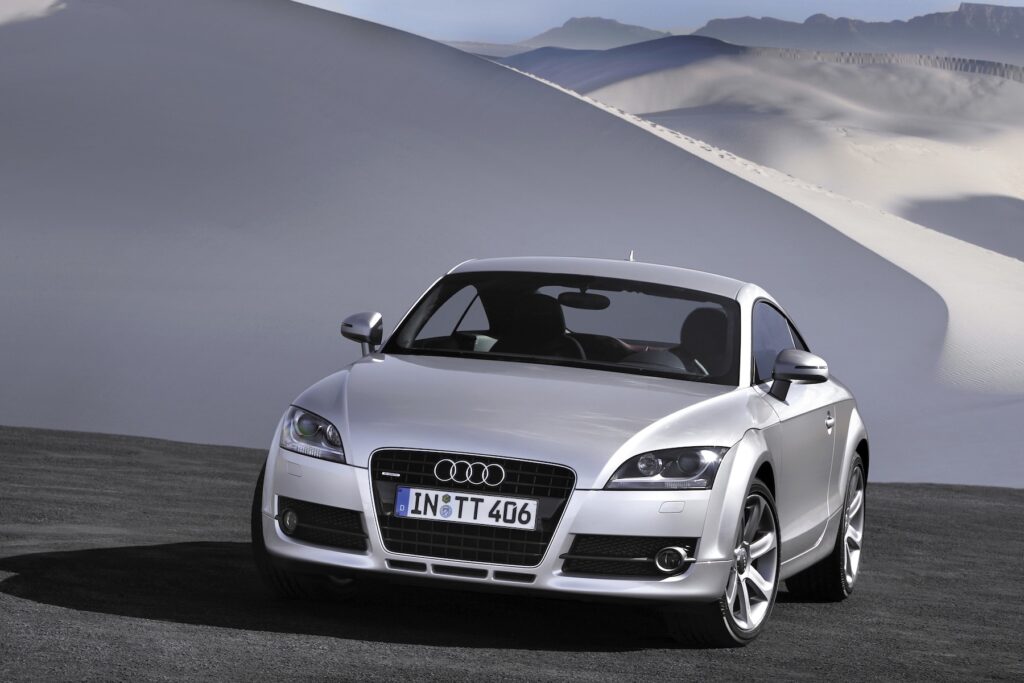
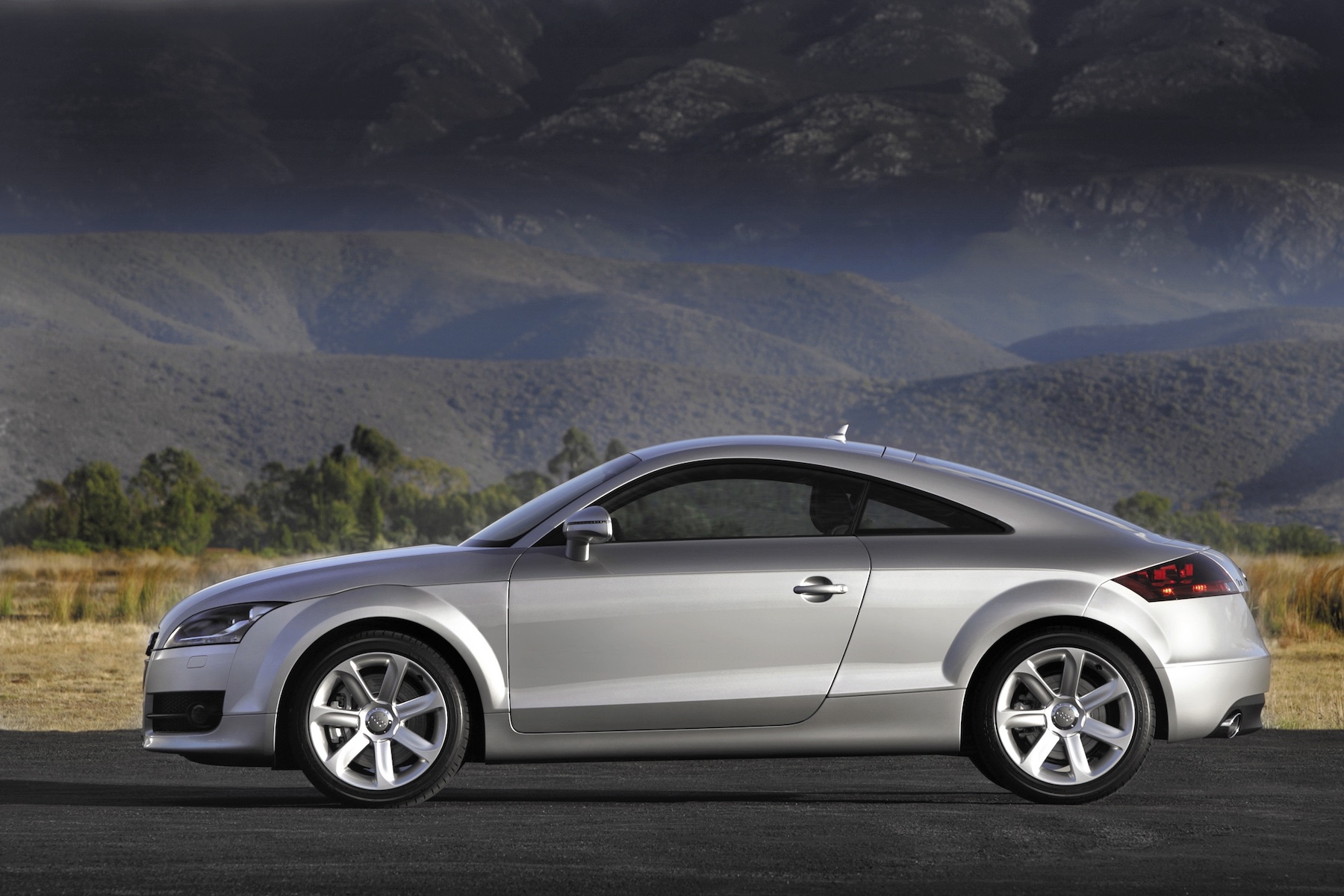
The TT Mk2 was longer and wider than the original, with sharper and more aggressive styling, an electrically operated rear spoiler, a lighter hybrid aluminium and steel chassis, and a more functional interior with slightly more space and better rear visibility.
Buyers who wanted more power, albeit in a heavier car and at greater expense, could opt for the TT 3.2 with its 3184cc, 184kW V6 engine and mandatory six-speed DSG transmission. These in coupe form arrived during 2005 in the Mk1 at a cost of $95,800, surviving for only a few months before returning in revised form and a list price that had been pruned to $88,900 ($92,890 as a Roadster).
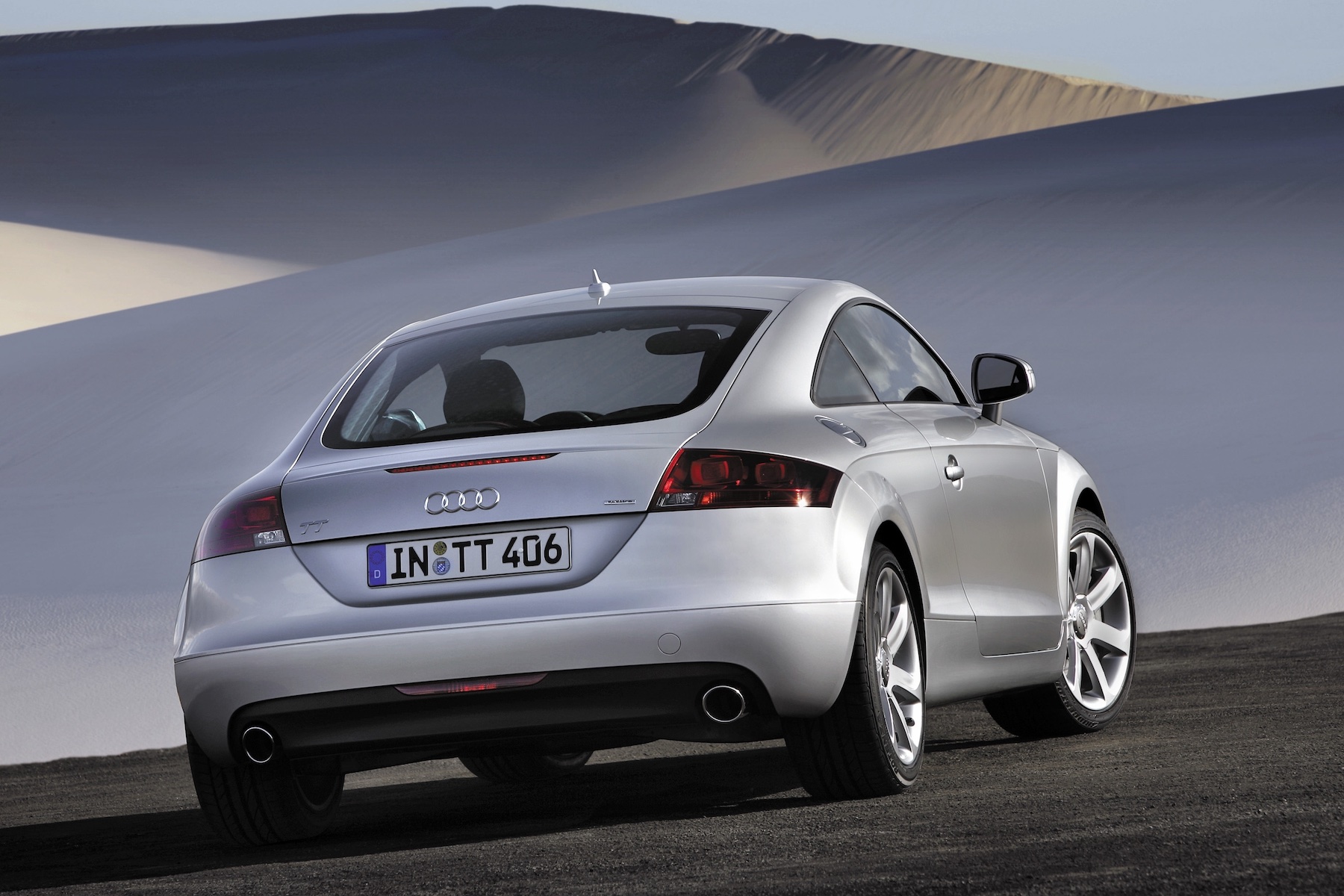
The TTS 2.0 Coupe that appeared in mid-2008 produced 200kW/350Nm from its enhanced version of the 2.0-litre turbocharged engine and was priced at $98,890 with the Roadster $103,265.
That was almost $20,000 above the price of a 2006-build S Line coupe but buyers seemed not to be bothered, registering 933 during 2008 and placing the TT third in the ‘Over $80,000 Sports Car’ segment behind BMW’s 3 Series convertibles and the Mercedes-Benz CLK.
No matter which TT you choose, except perhaps the very early 1.8-litre, the low-slung Audi will deliver sharp acceleration, responsive steering and great grip, if you opt for the all-paw quattro. With 17- or 18-inch wheels concealing 312mm brake rotors, the lightweight TT also has impressive stopping power.
Early 1.8-litre cars with 165kW or later 2.0-litre models with 200kW deliver similar performance and a top speed – academic in most parts of Australia – of 242km/h. Acceleration is of interest though, ranging from 6.2 to 6.9 seconds for 0-100km/h.
Yes, the coupe cabin can be a struggle to enter and once inside you can feel cramped, but that is curable by opting for a Roadster and cruising about with the top stowed, wind deflector deployed, and rollover protection provided by thick A pillars and its gleaming individual roll hoops.
Things to Watch Out for When Buying a Used Audi TT (1999-2010)
- Cabin and boot carpets for dampness due to water entering via blocked drain holes.
- Clear-coat delamination can be an issue and buyers should pay significantly less for these.
- Any form of exhaust smoke, especially white with an acrid smell indicating oil being burned by the turbocharger.
- Clutch shudder in both manual and S Tronic semi-automatic transmissions
- Damage to lower edges of the air dam due to kerb strikes.
- Cracked or yellowed plastic window on early convertible tops.
Valuation Timeline: Valuation Timeline: Audi TT (1999-2010)
-
2010$36,500
-
2015$23,000-36.99%
-
2020$14,500-36.96%
-
2025$13,250-8.62%1999-2005 Coupe (1.8/2.0T)