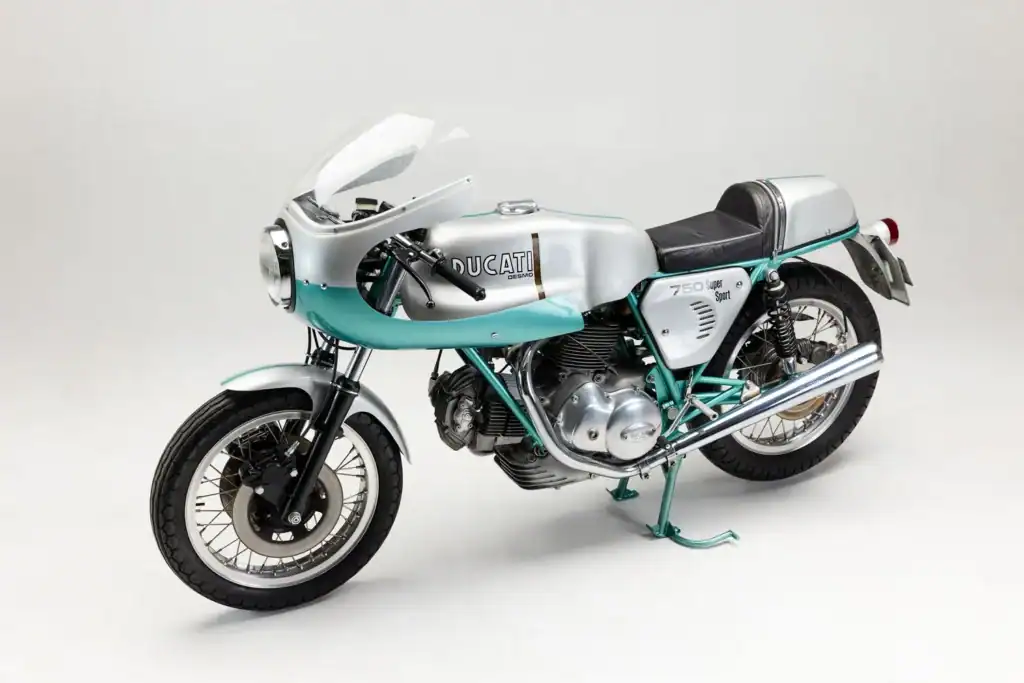
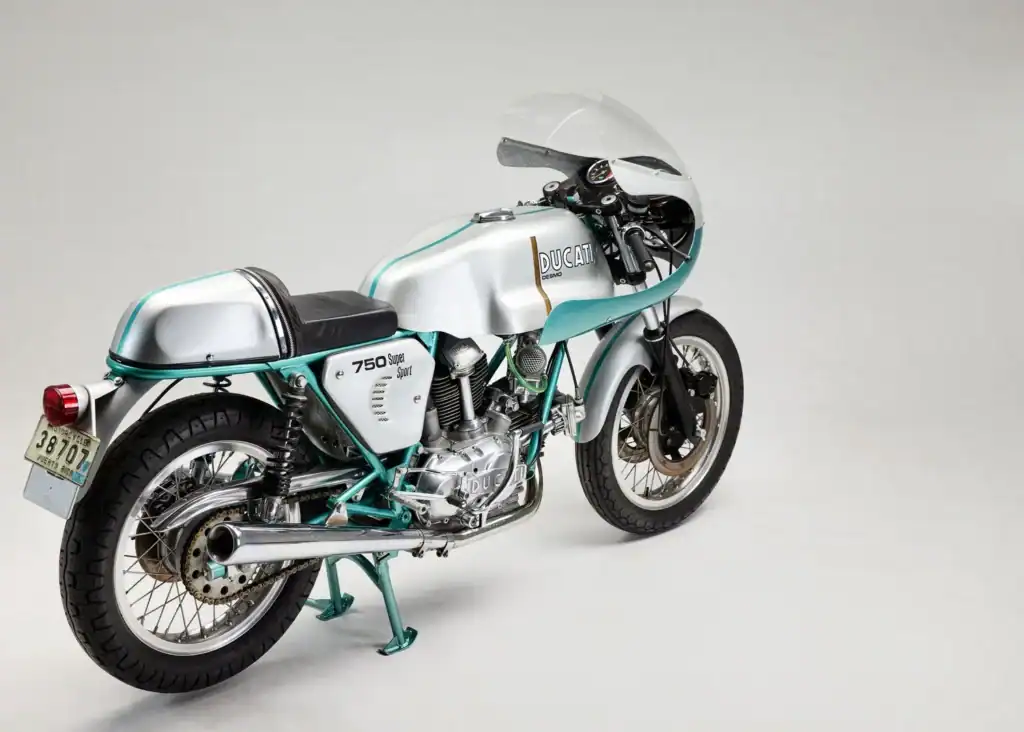
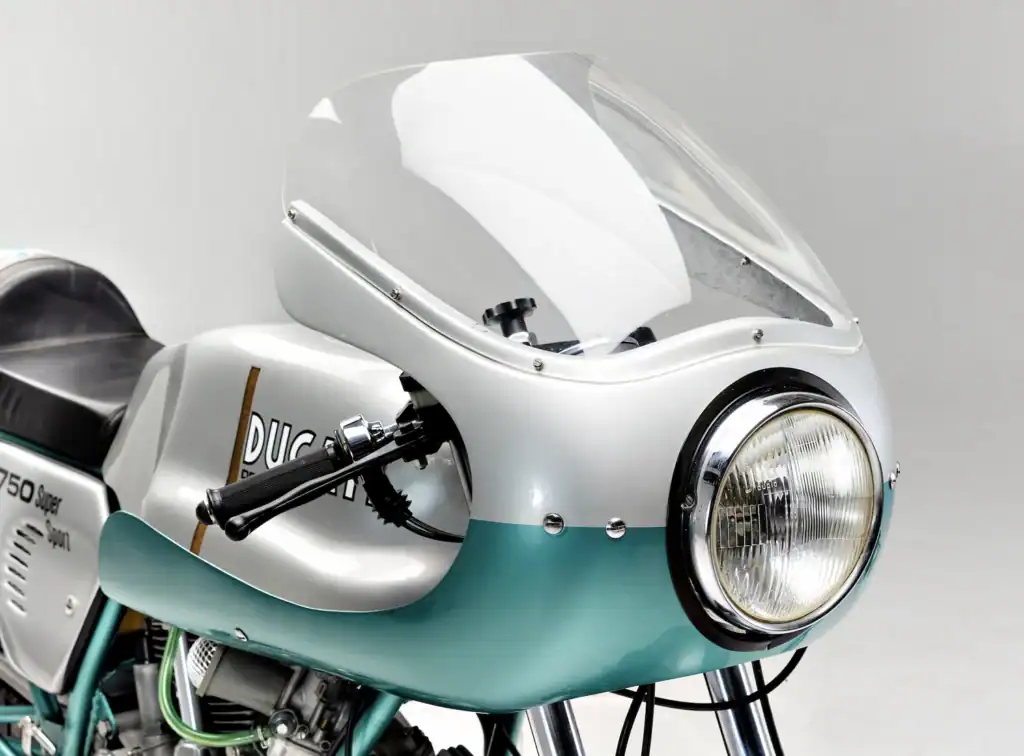
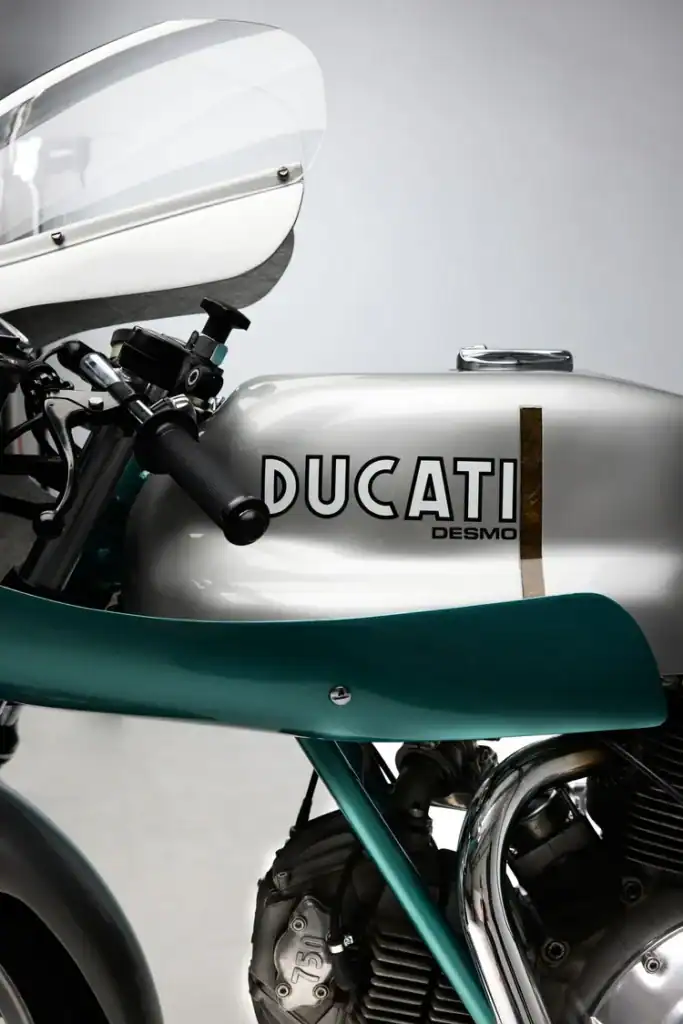
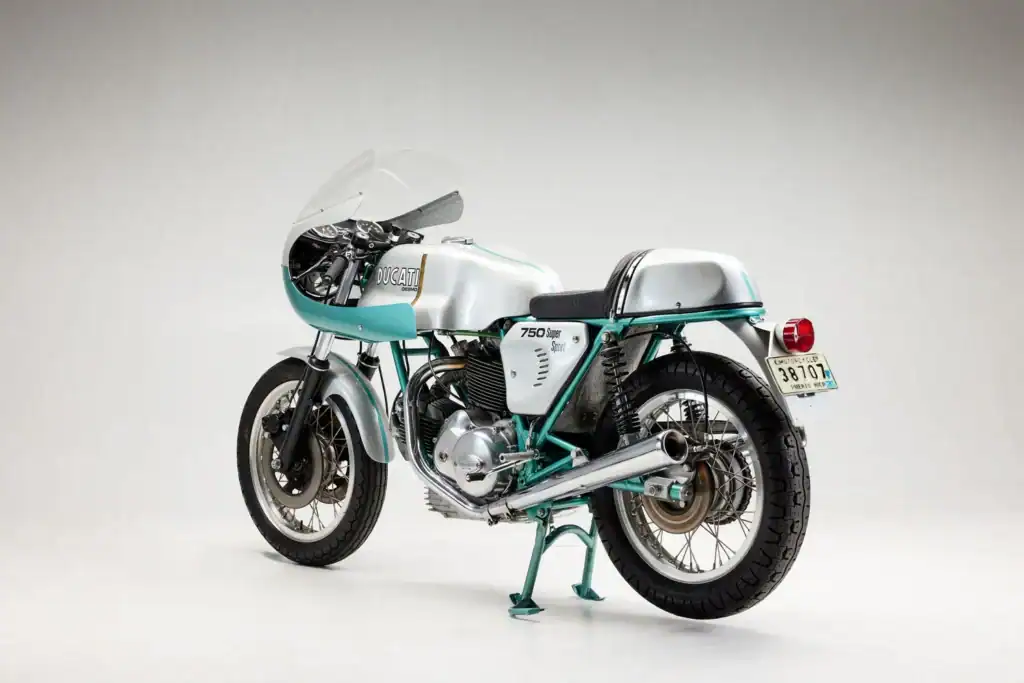
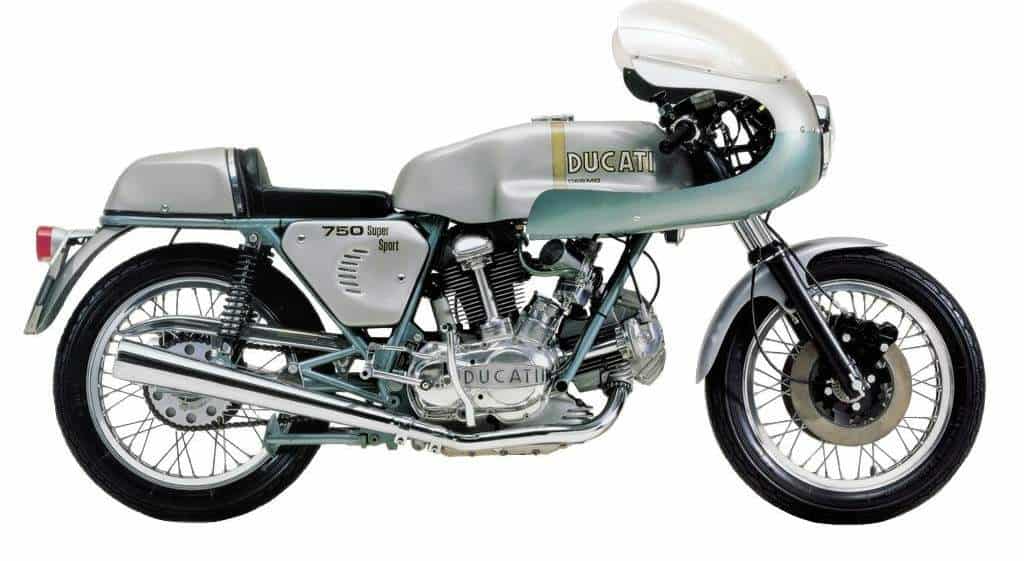
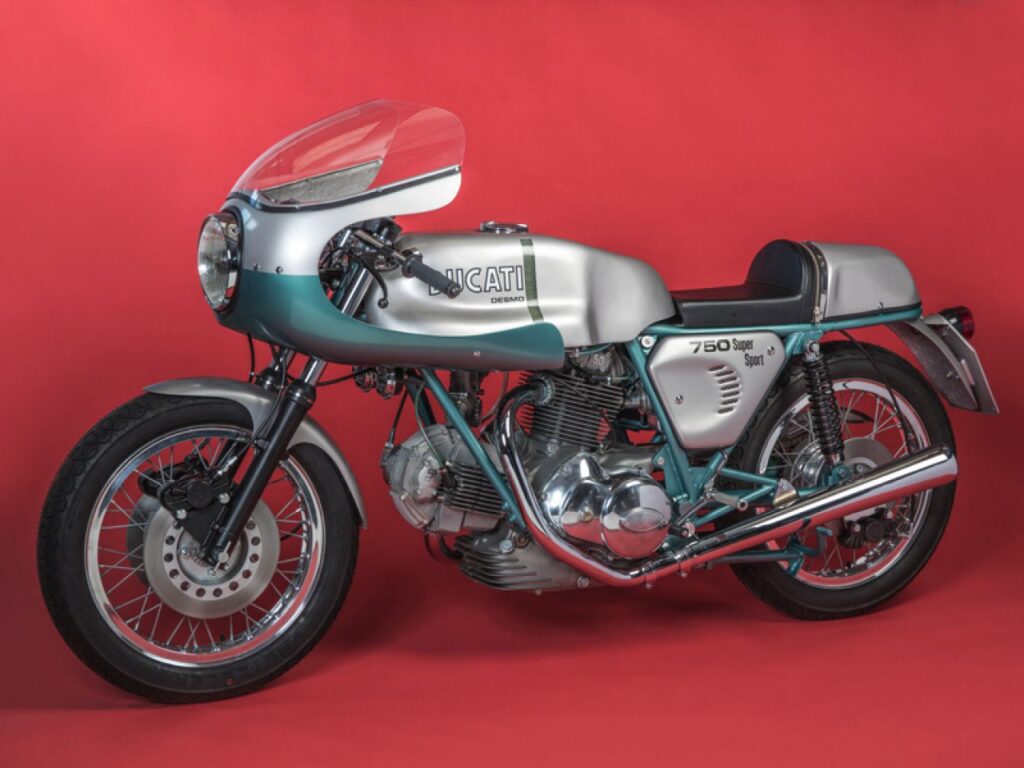

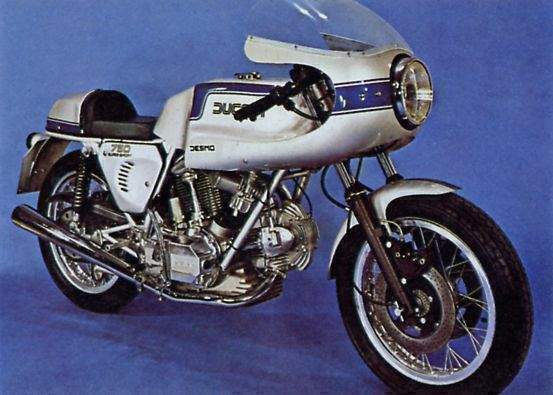
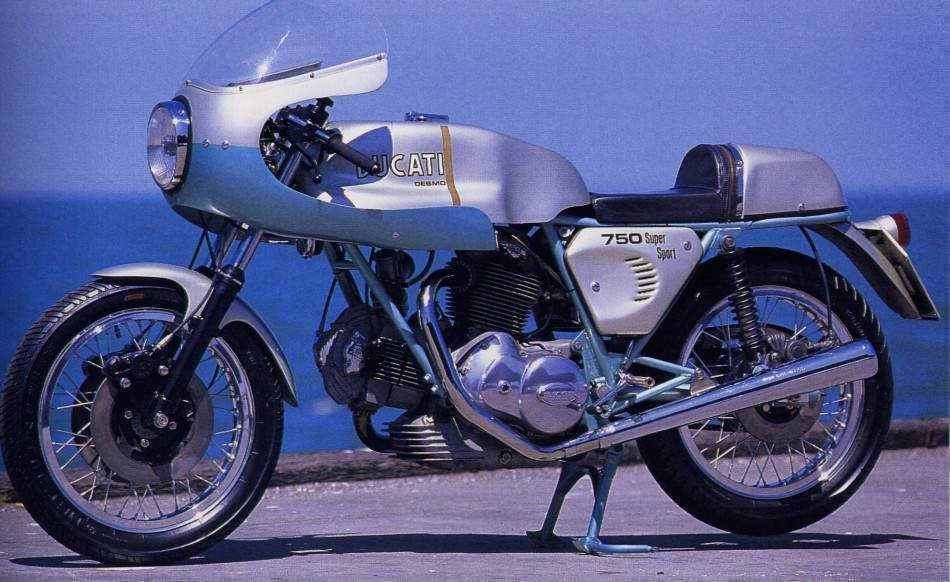
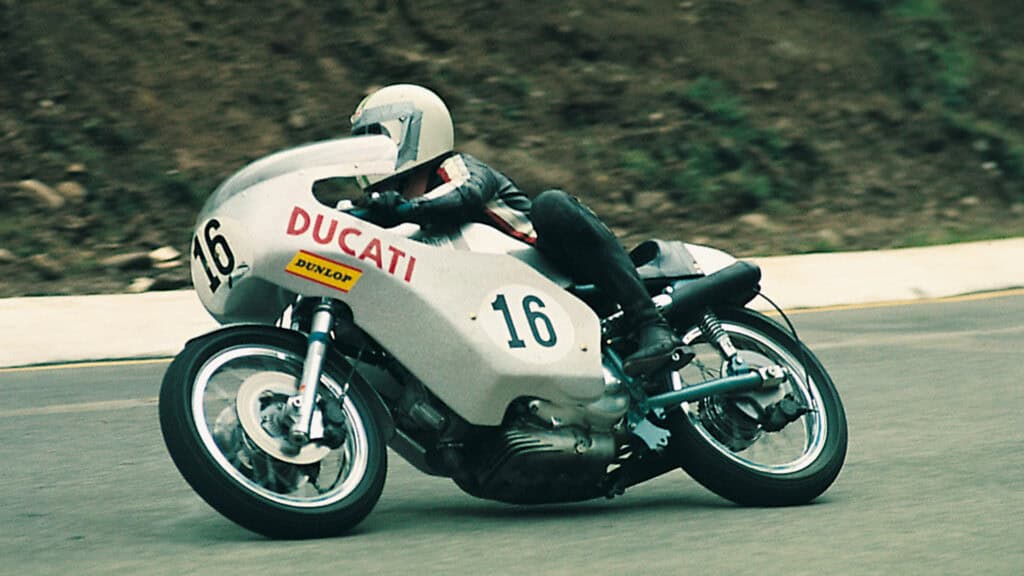
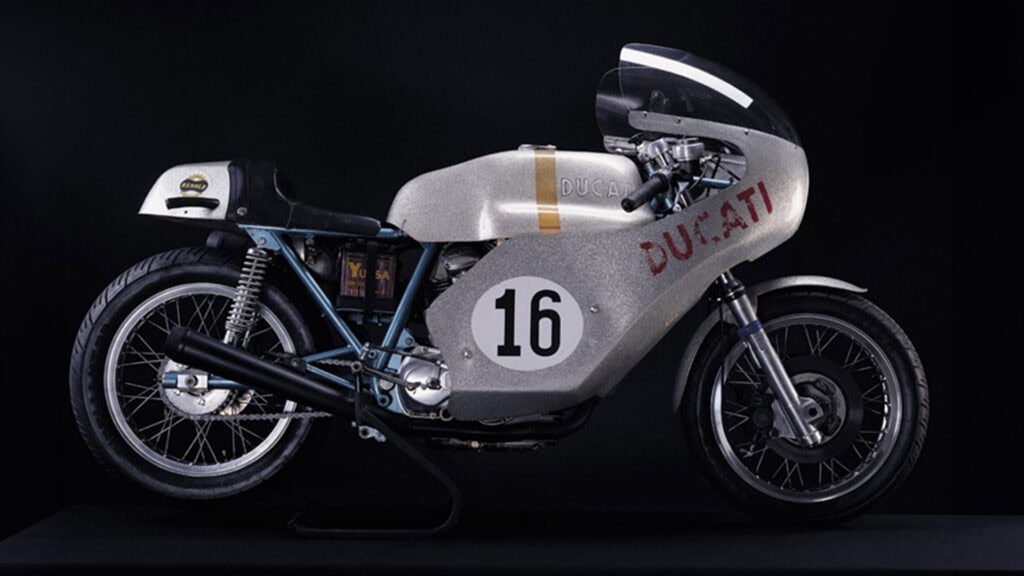
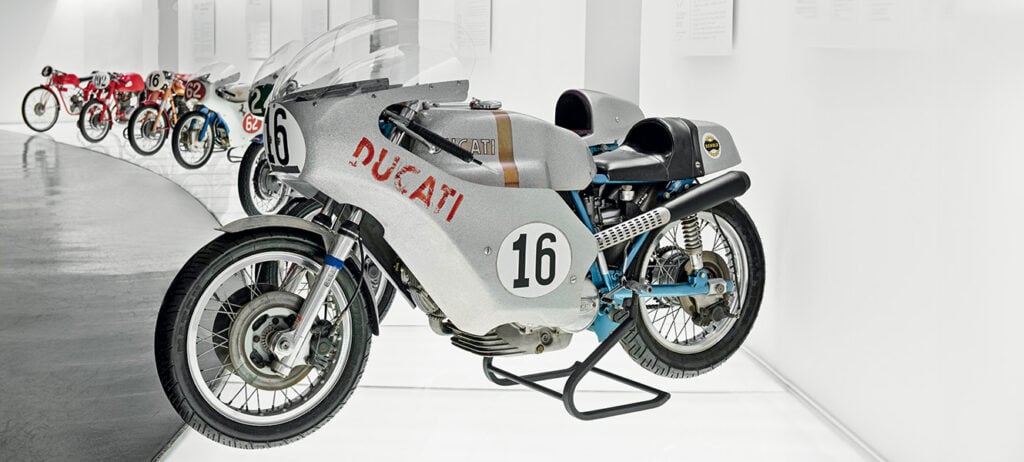
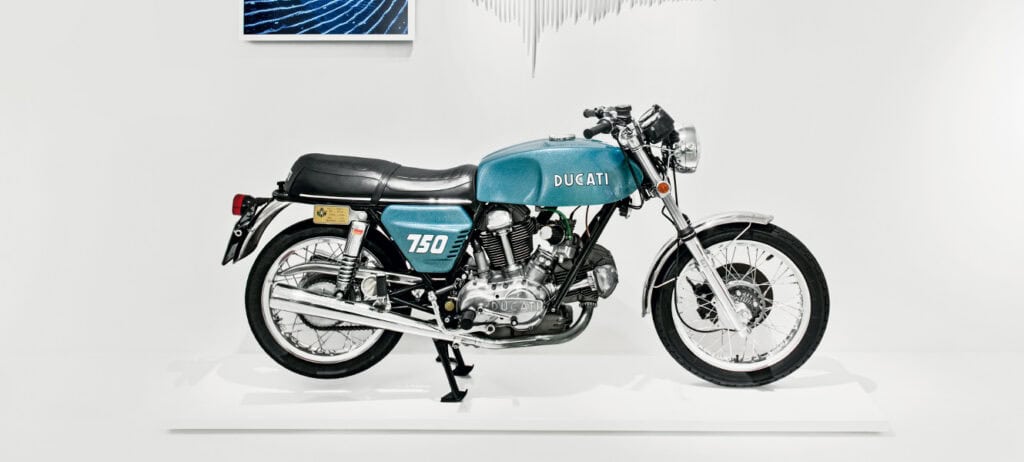

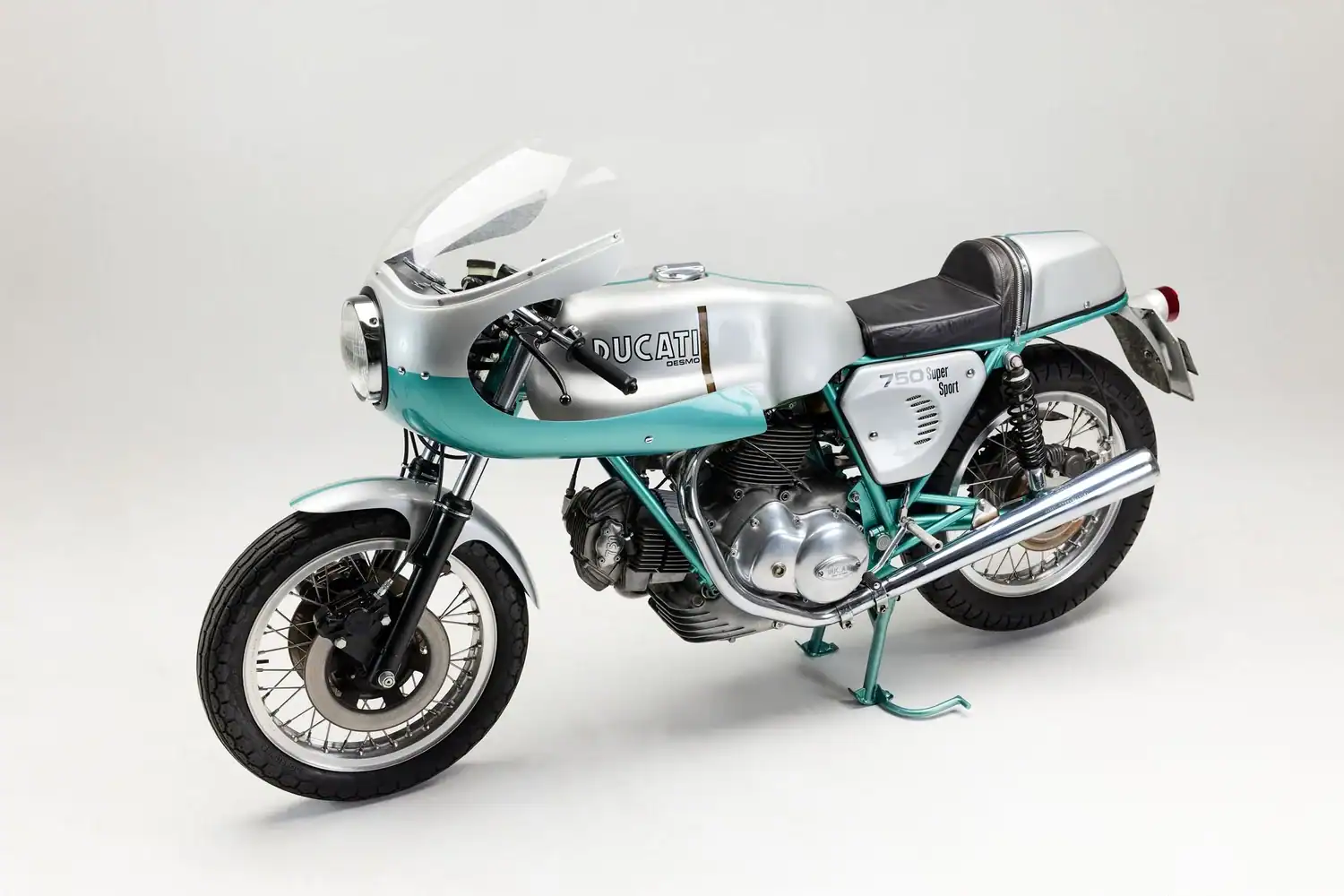
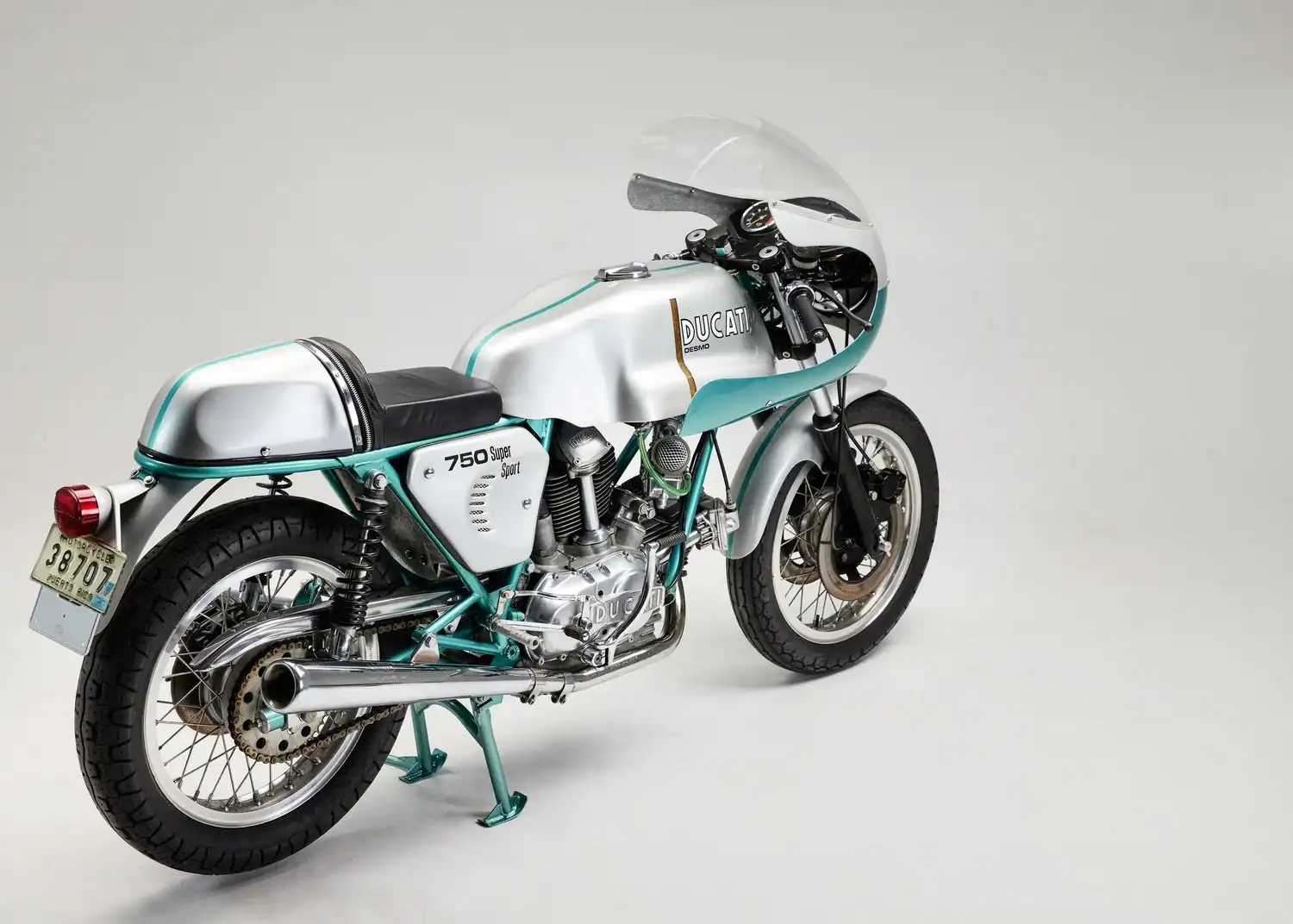
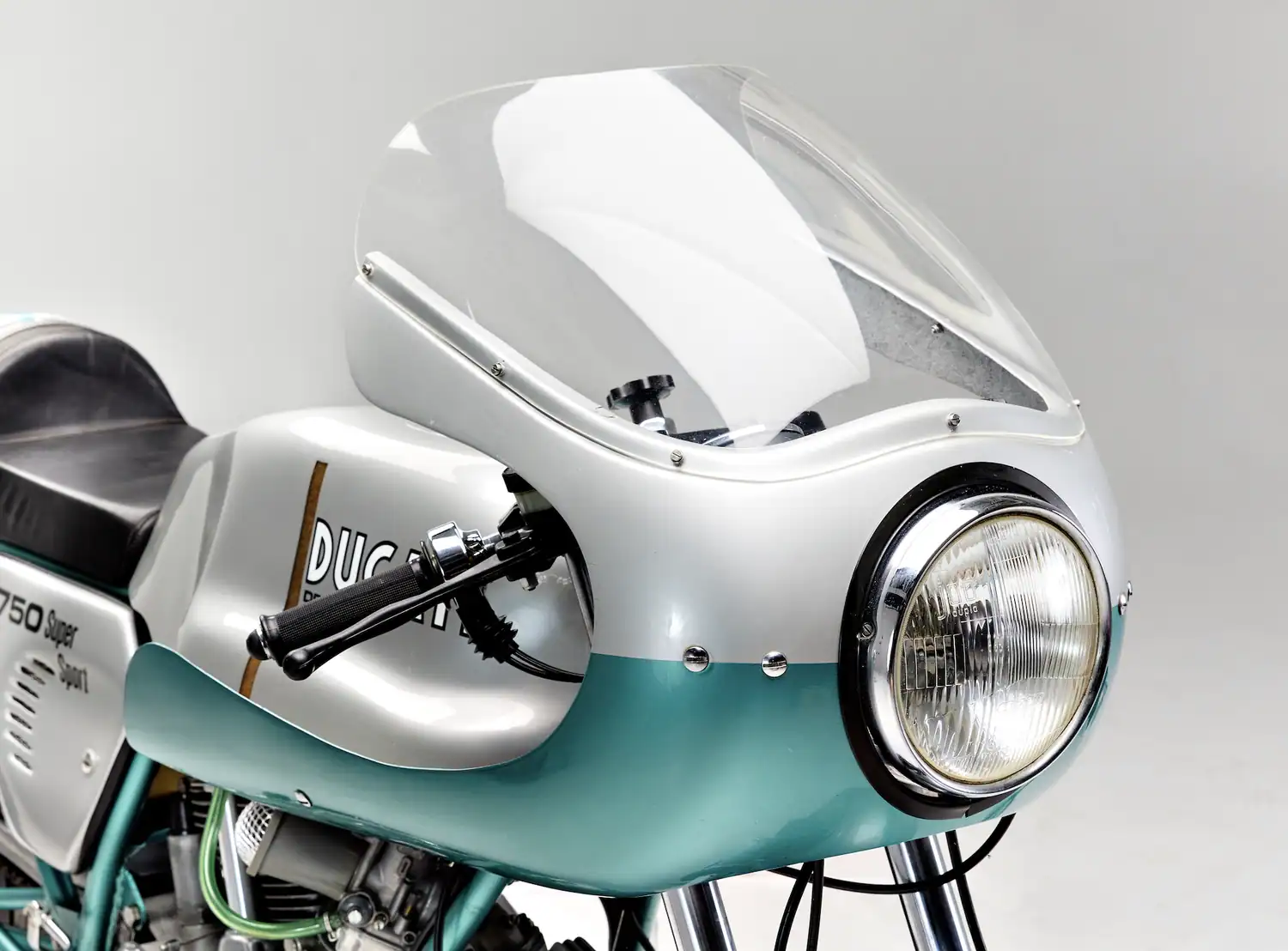
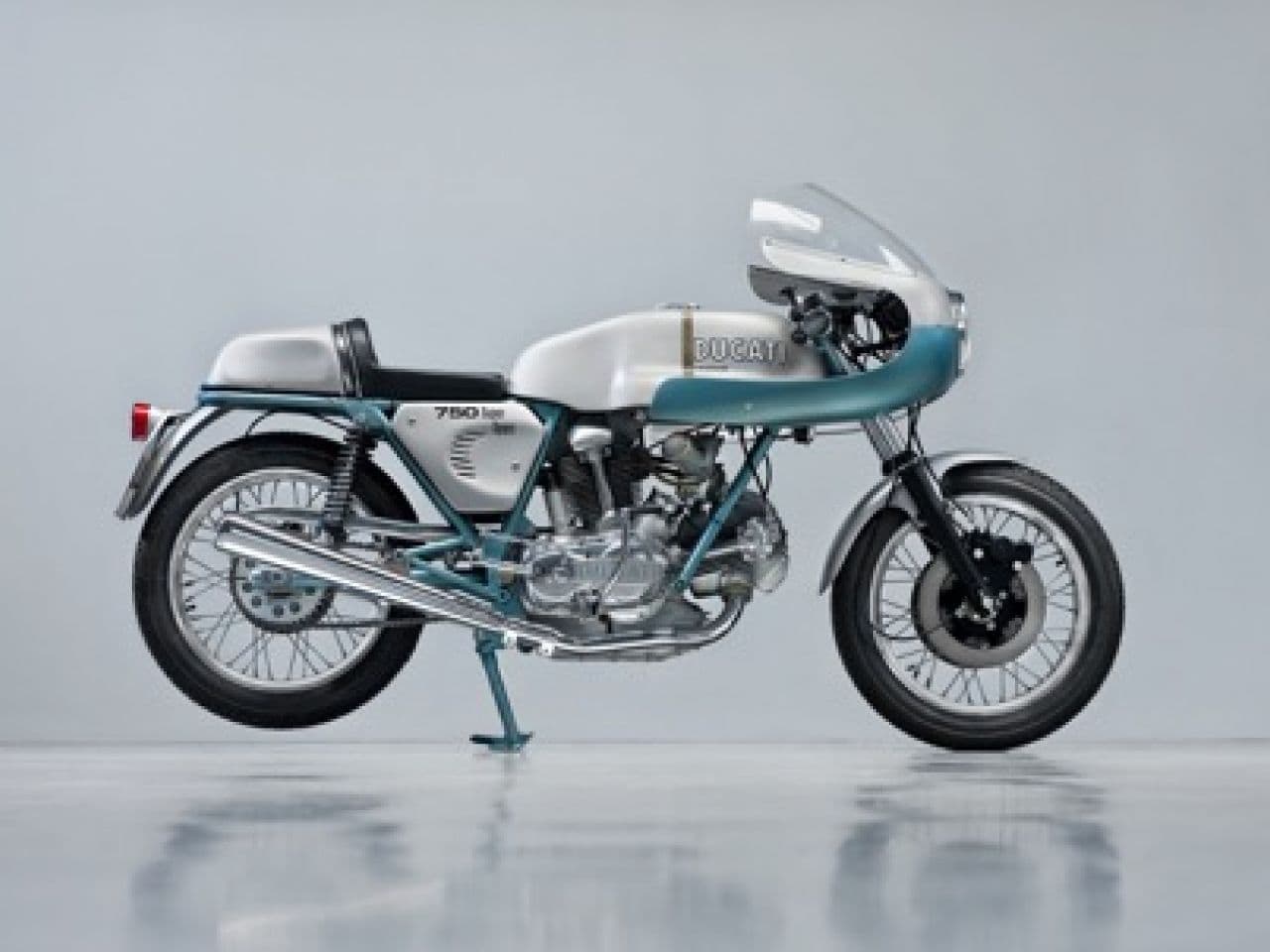


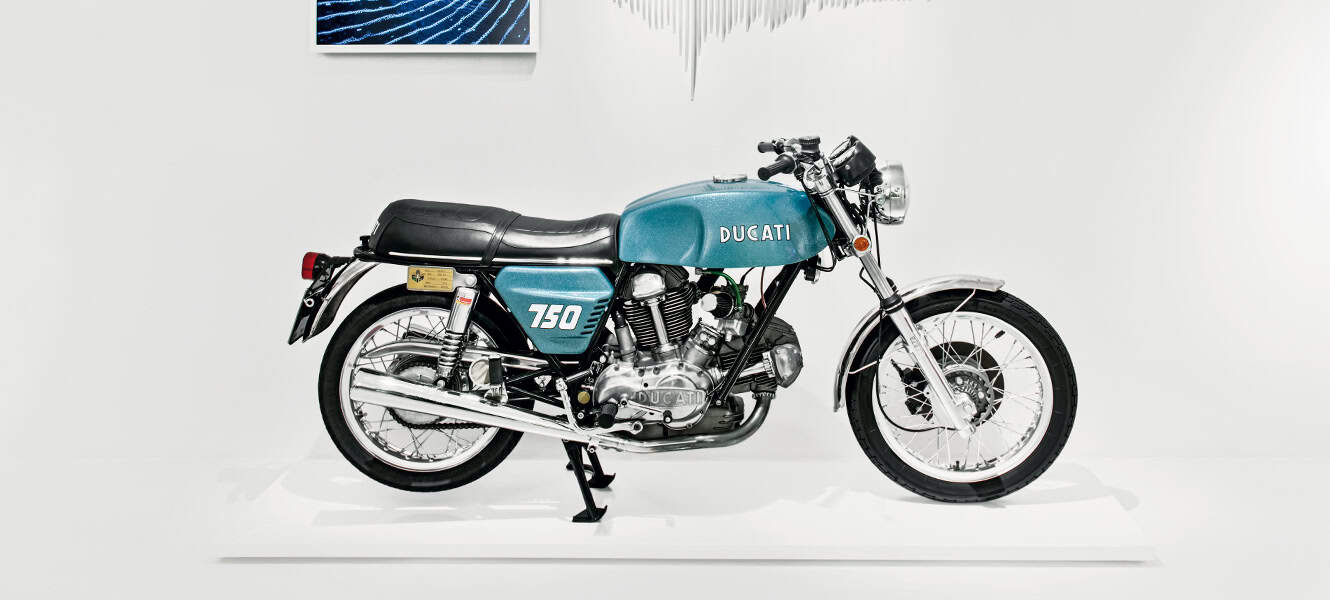
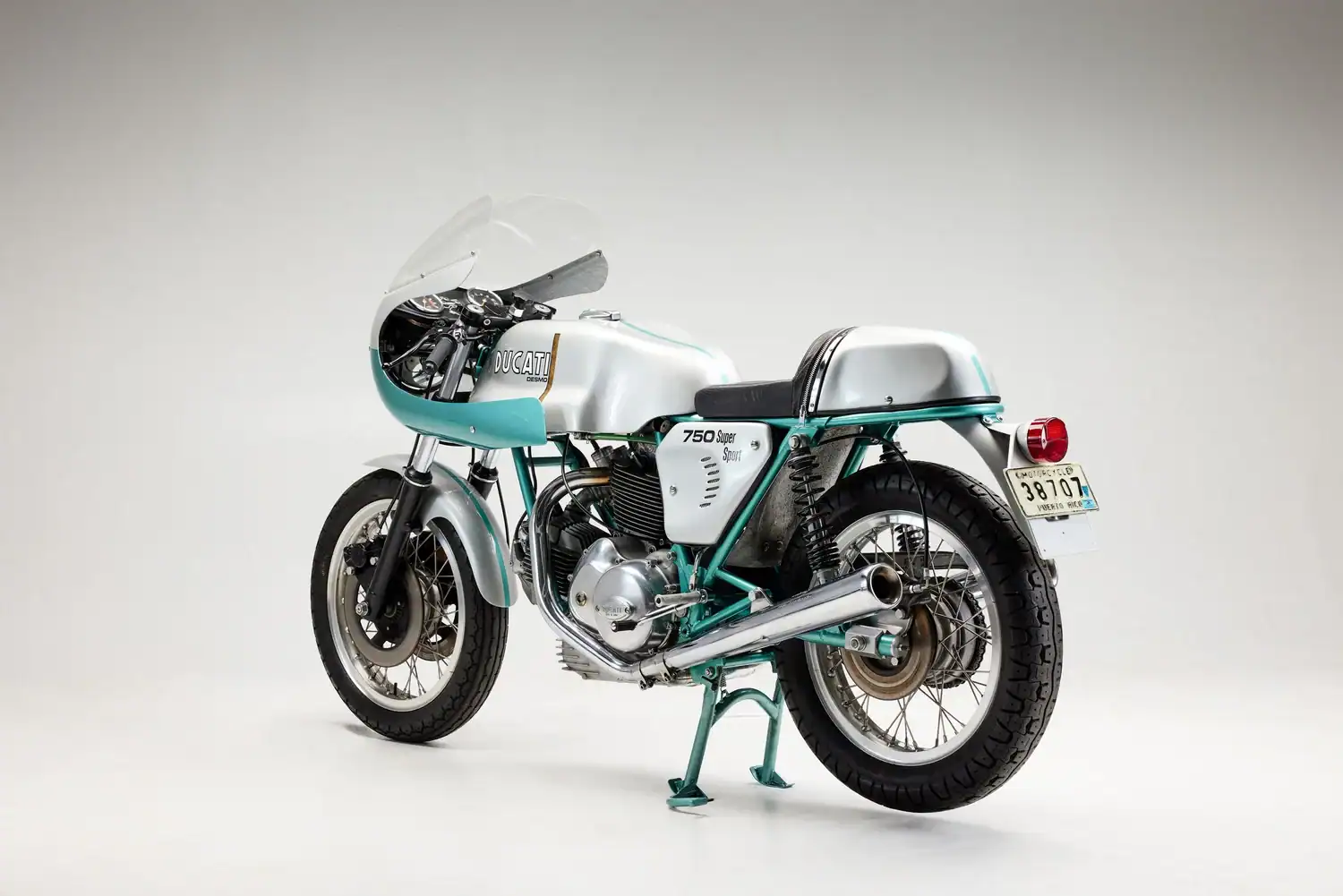
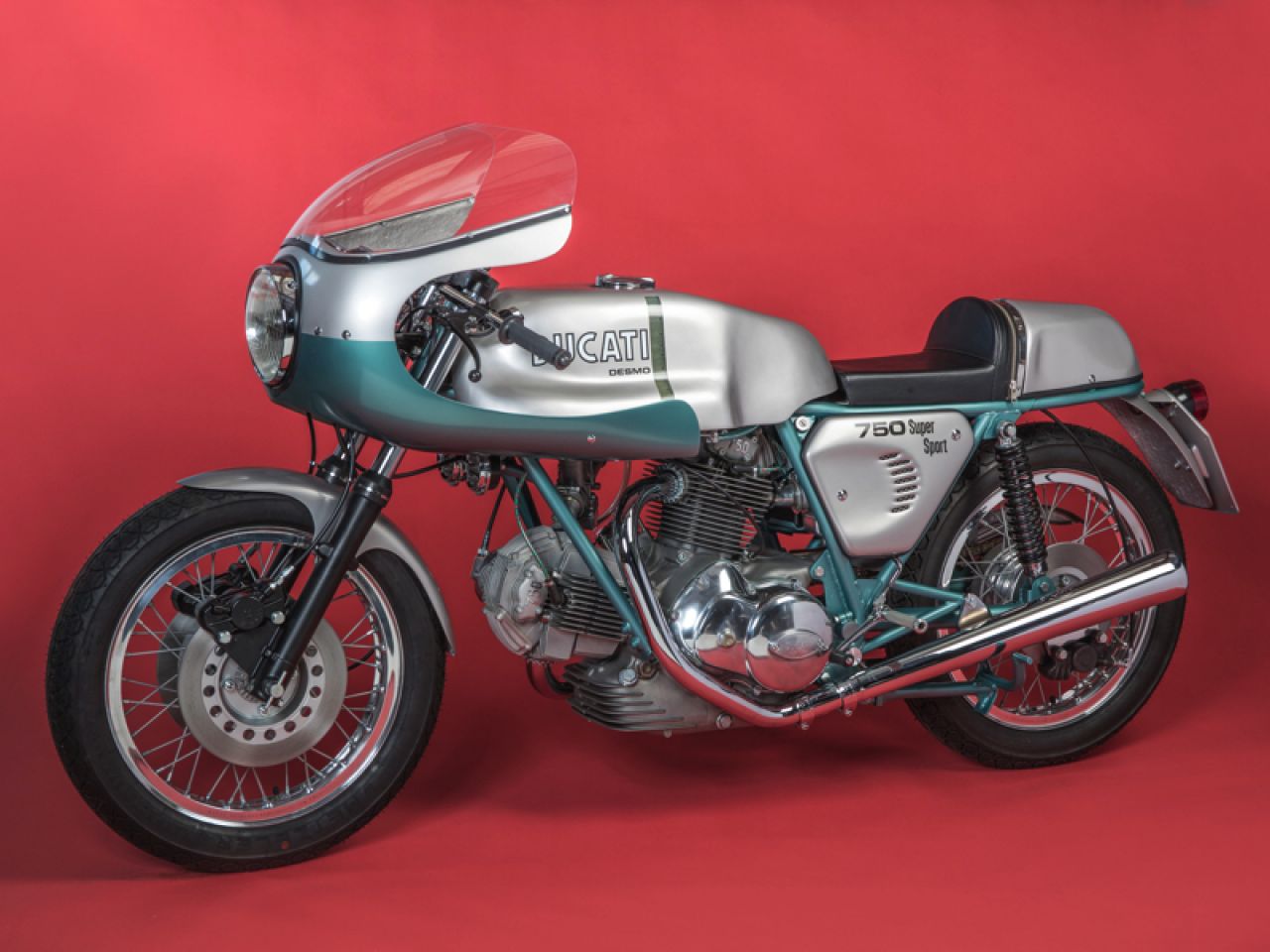
Perhaps the most beautiful motorcycle ever built and certainly one of the most collectable, Ducati’s legendary “green frame” 750 Super Sport of 1974 put the Italian manufacturer on the road to being the Superbike and MotoGP powerhouse it is today.
The collector car world has its own, bizarre shorthand; words that mean plenty if you’re in the know. If you mention a “flat floor”, you must be talking about one of the first 500 or so Jaguar E-Types of 1961 to early ’62. “Vetroresina” signals one of the 700-odd fibreglass-bodied Ferrari 308s, while an “oil flap” will be a Porsche 911 from, specifically, 1972.
Motorcycling has its own shorthand identifiers, and perhaps the best known is the “green frame” – the 1974 Ducati 750 Super Sport.
In Ducati tradition, there’s plenty that’s weird and illogical about this most iconic of bikes, built in early-1974 after being unveiled at the Milan Motor Show the previous November.
For starters, either 200 or 401 examples of the 750cc V-twin machine were built to homologate the bike … for a race it had already won two years earlier.
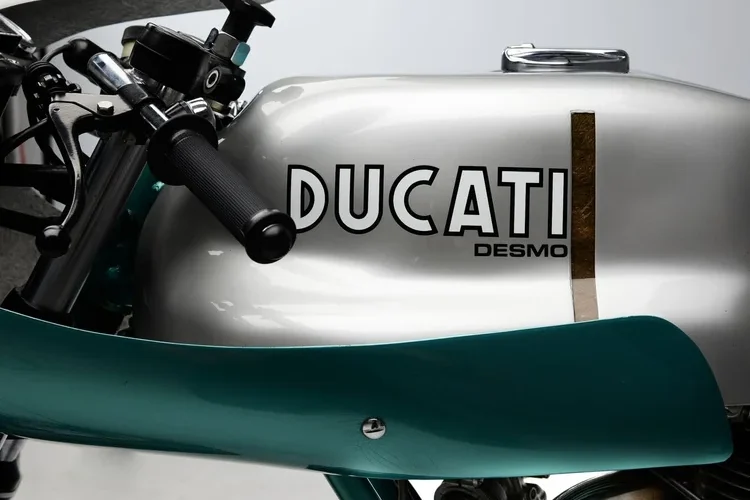
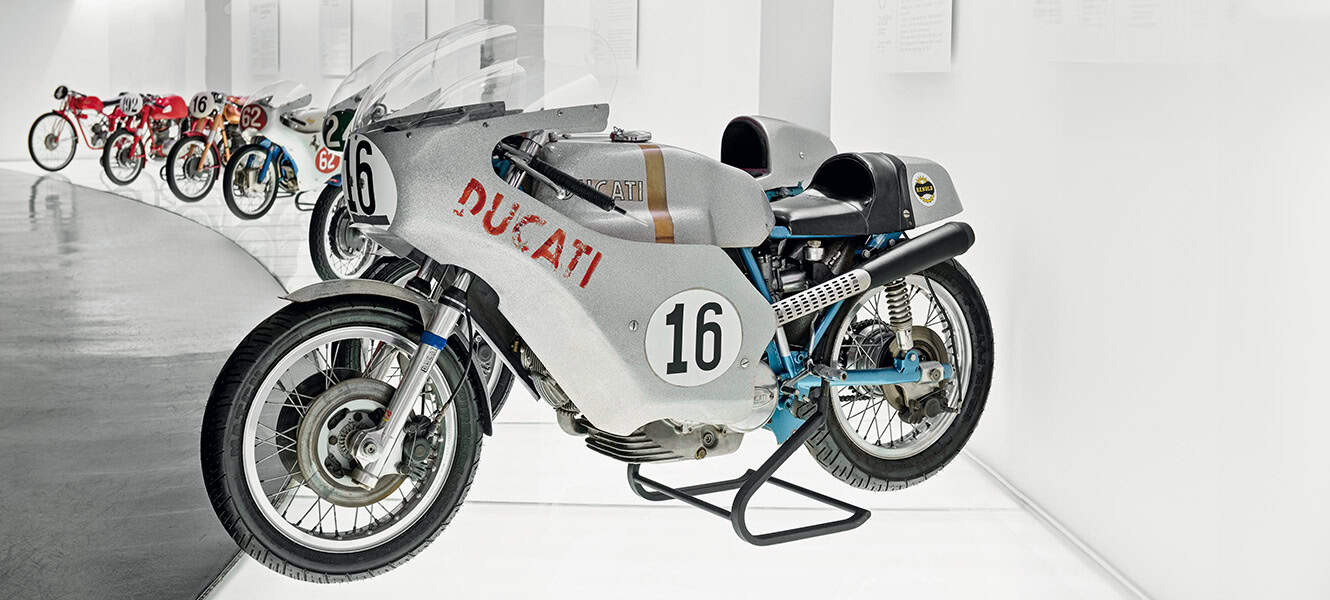
And the famous green frame wasn’t actually green, but a turquoise blue, reportedly left over from sister company Ducati Elettronica’s marine outboard motor production.
The 750 SS put Ducati on the road to being the Superbike and MotoGP powerhouse that it is today. It is also one of the most collectible of all motorcycles, with genuine examples today fetching upwards of $250,000.
Ducati was already justly famed for its high-performance single-cylinder models, notably in the popular 125cc category. Engineer Fabio “Dr. T” Taglioni, legendary technical director of Ducati from 1954 until 1989, upped the ante in 1956 by introducing desmodromic valve actuation to the company’s 125cc grand prix racers.
Taglioni was directly inspired by Mercedes-Benz’s desmo-equipped W196 Formula 1 and 300SL road cars in 1954. The method of closing valves using direct rocker arms, rather than relying on springs, overcame valve float and enabled the 125cc single to rev to 15,000rpm.
Desmo valve actuation spread to Ducati’s road-going range with the 250 and 350 Mark II in 1968. These elite single-cylinder machines were, however, very soon overshadowed by a new wave of “superbike” 750cc twins from rivals like Moto Guzzi, Laverda and Norton, the three-cylinder Triumph Trident and, in 1969, the Honda 750 Four.
Back in 1964 Taglioni, at the urging of Ducati’s US importer, had designed a police bike to compete with Harley-Davidson. The Ducati Apollo was powered by a radical, 1260cc 90-degree V-four engine. However, tyre technology of the day could not cope with the bike’s weight and power and the Apollo was shelved.
In early-1970, Taglioni set about designing Ducati’s first big twin: essentially two of the bevel-driven OHC singles, joined (with shades of the Apollo V-four) in L-formation at 90 degrees, with the front cylinder at 15 degrees from horizontal. The 90-degree layout enabled perfect primary balance and allowed cooling air to reach the rear cylinder.
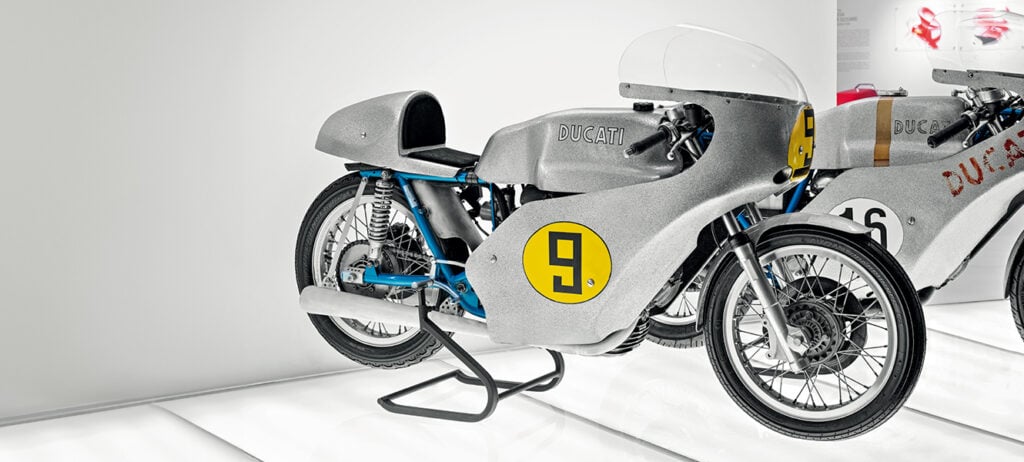
By the end of 1970 Ducati had showed prototypes of its 750cc V-twin (already dubbed an ‘L’-twin), but the new engine was also to endure a baptism of fire in 500cc Grand Prix racing. Equipped in this guise with desmo heads, the Ducati 500 GP failed to make a dent in these latter years of rival MV Agusta’s 17 consecutive 500cc world championships.
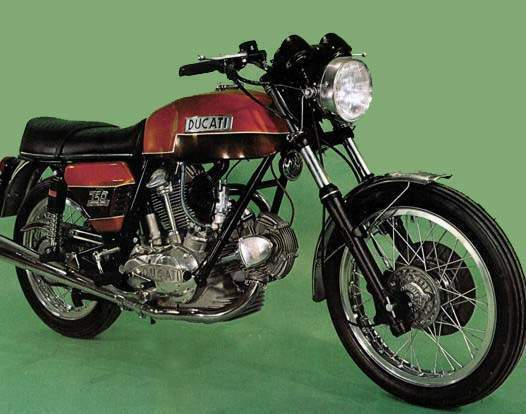
Ducati launched its milestone 750 GT road bike in June 1971. The long, lean bike favoured stability over agility and with its bevel OHC and conventional valve springs, had no power advantage over the established British café racer kings of Norton and Triumph.
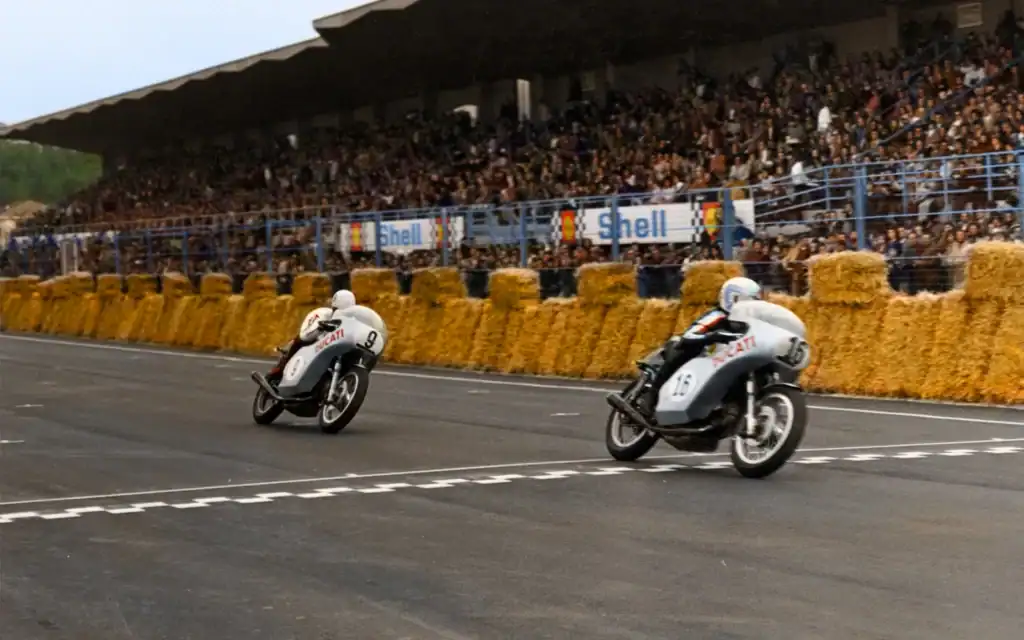
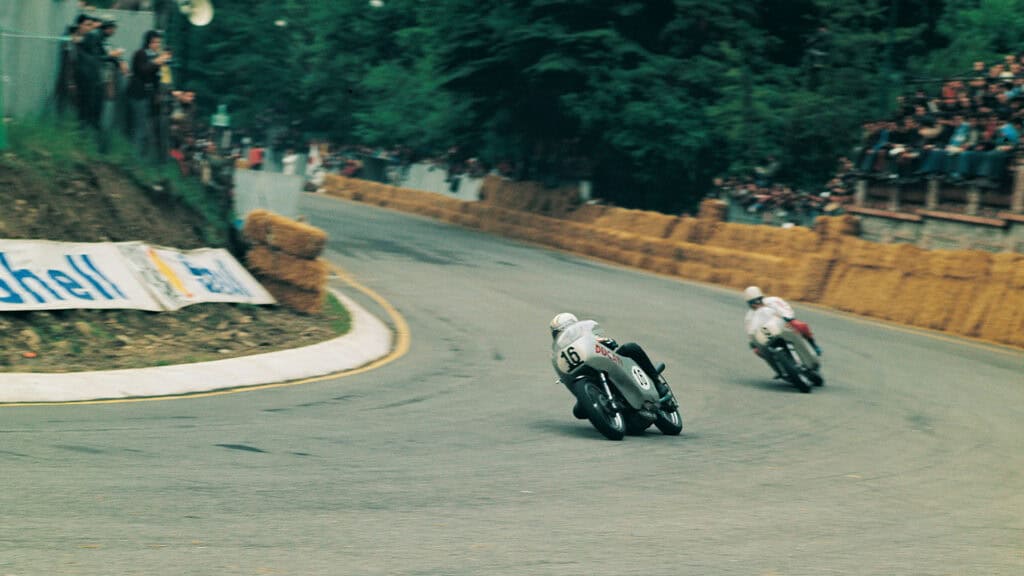
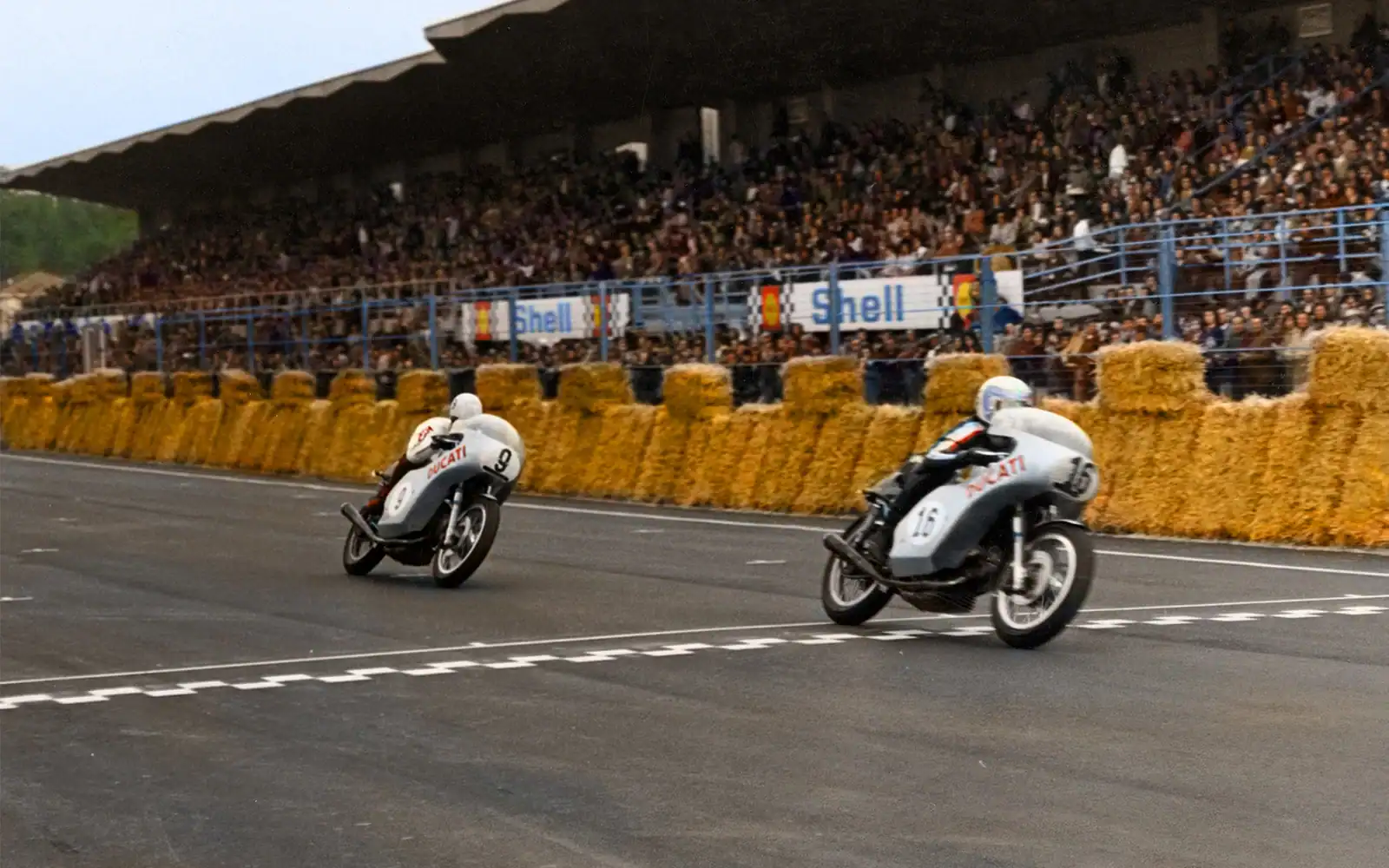
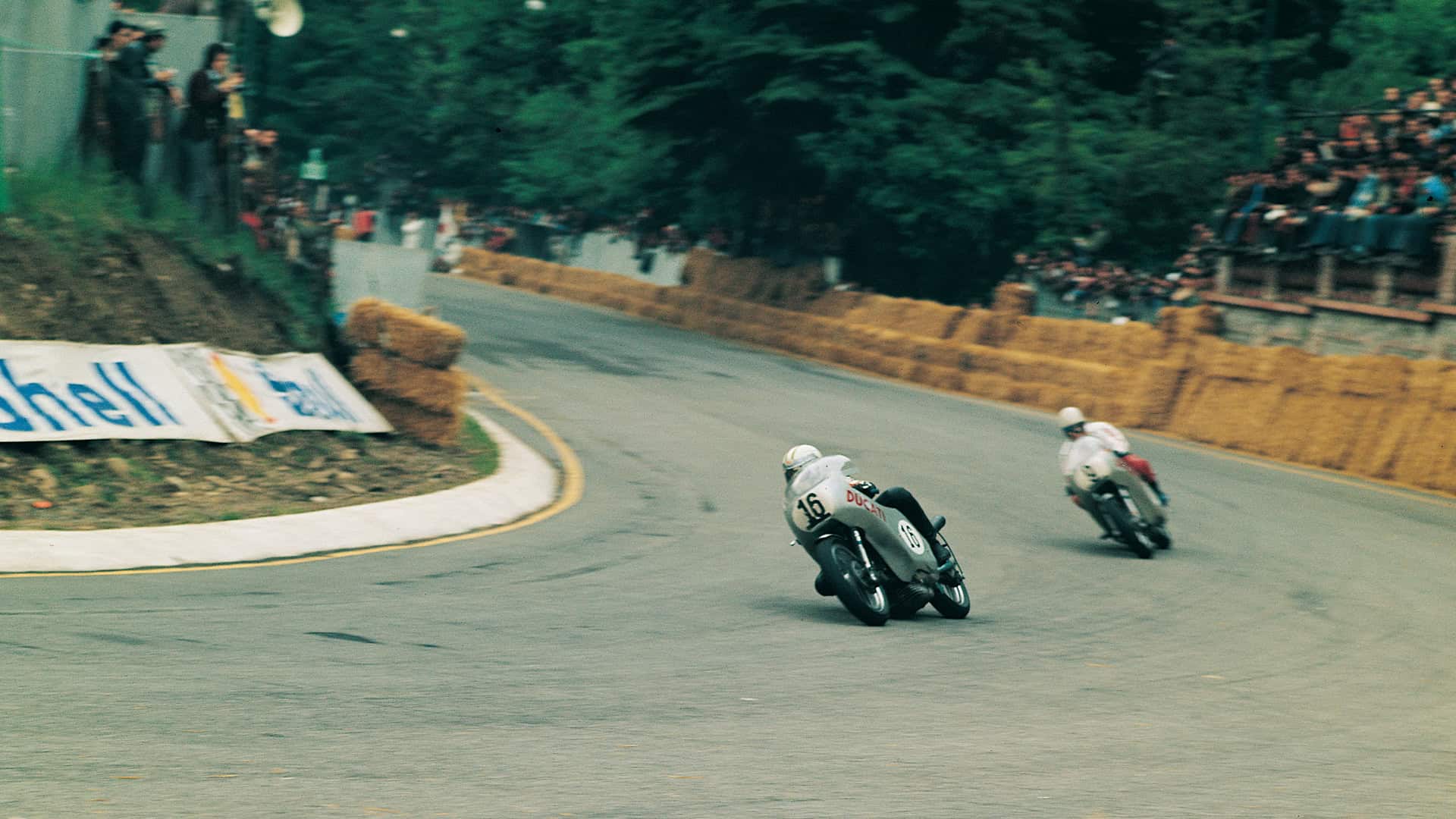
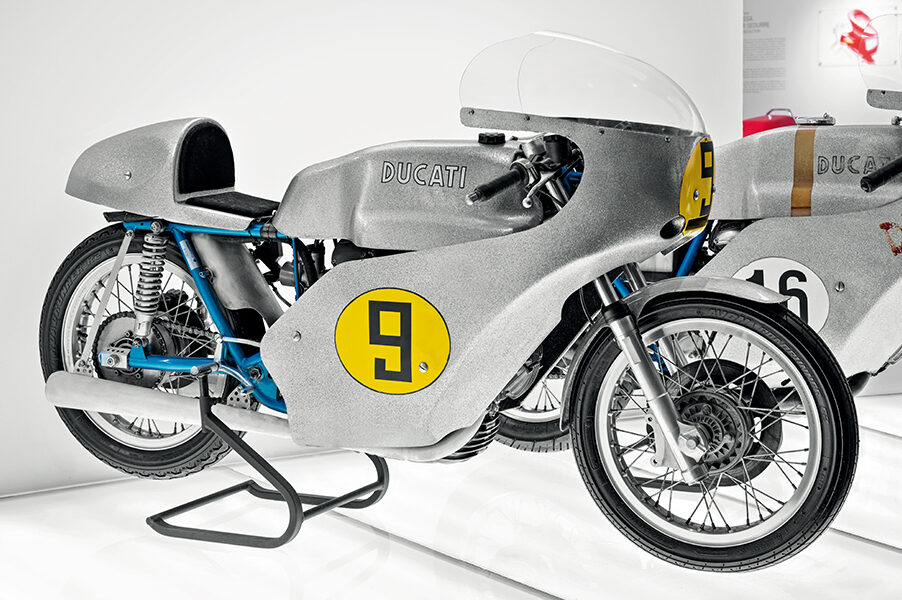
That image was to change overnight in April 1972, with the inaugural Imola 200 race. It was run for the new Formula 750 category, using production-based engines.
Ducati recognised both the marketing potential of Formula 750 race success for its expensive and somewhat overlooked 750 GT, and the ingredients for a racer in the desmo engine of the 500 GP bike.
Further, the Italian interpretation of the homologation rule that “200 examples must have been, or be intended, to be made” was suitably accommodating.
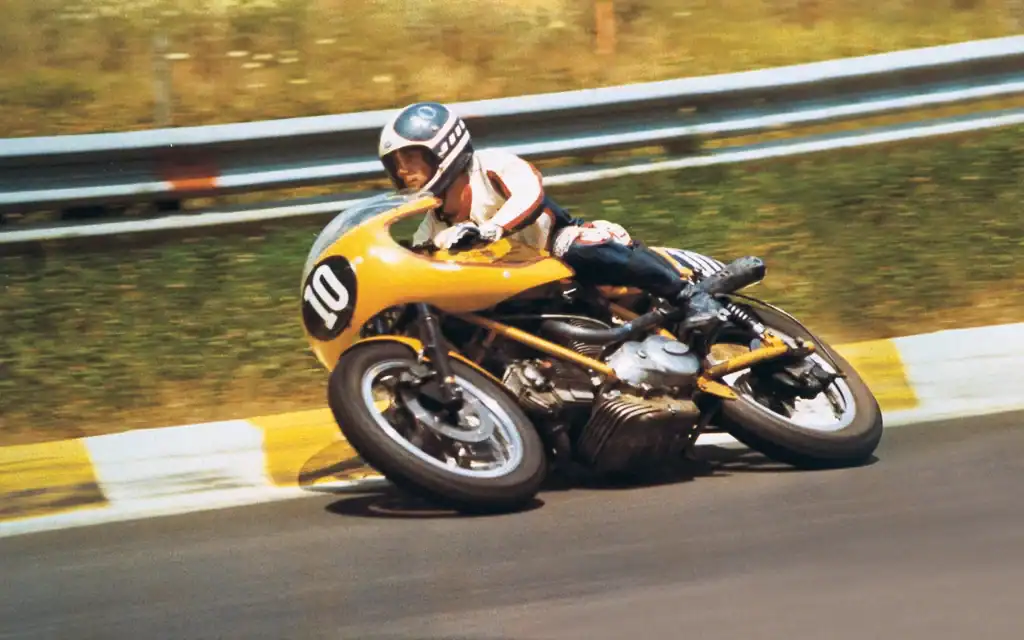
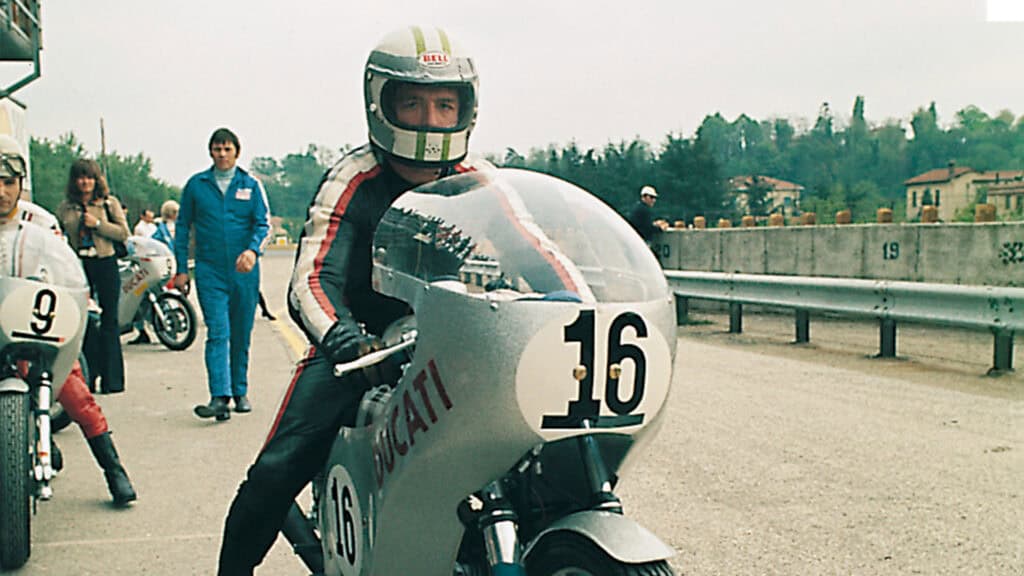
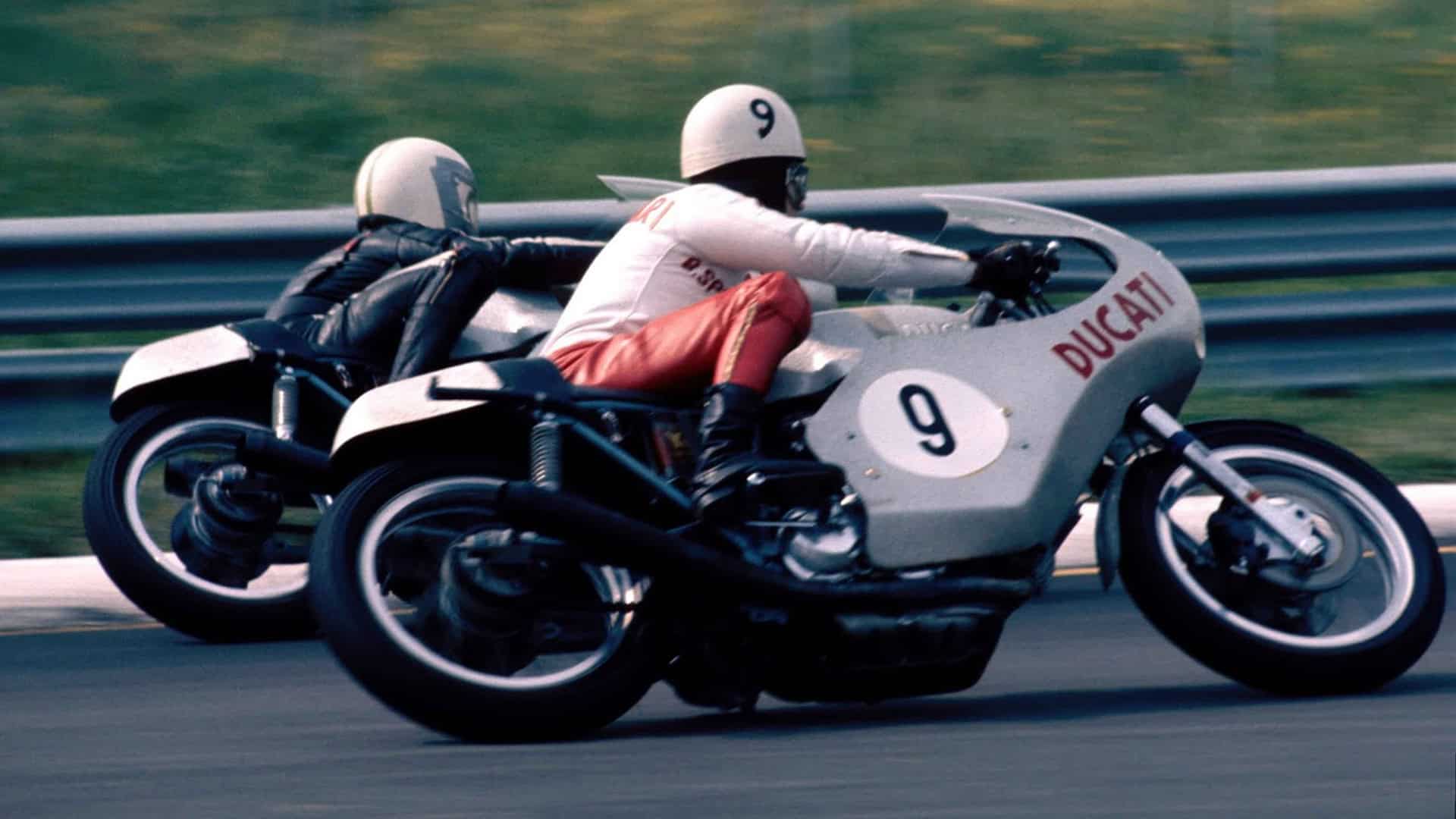
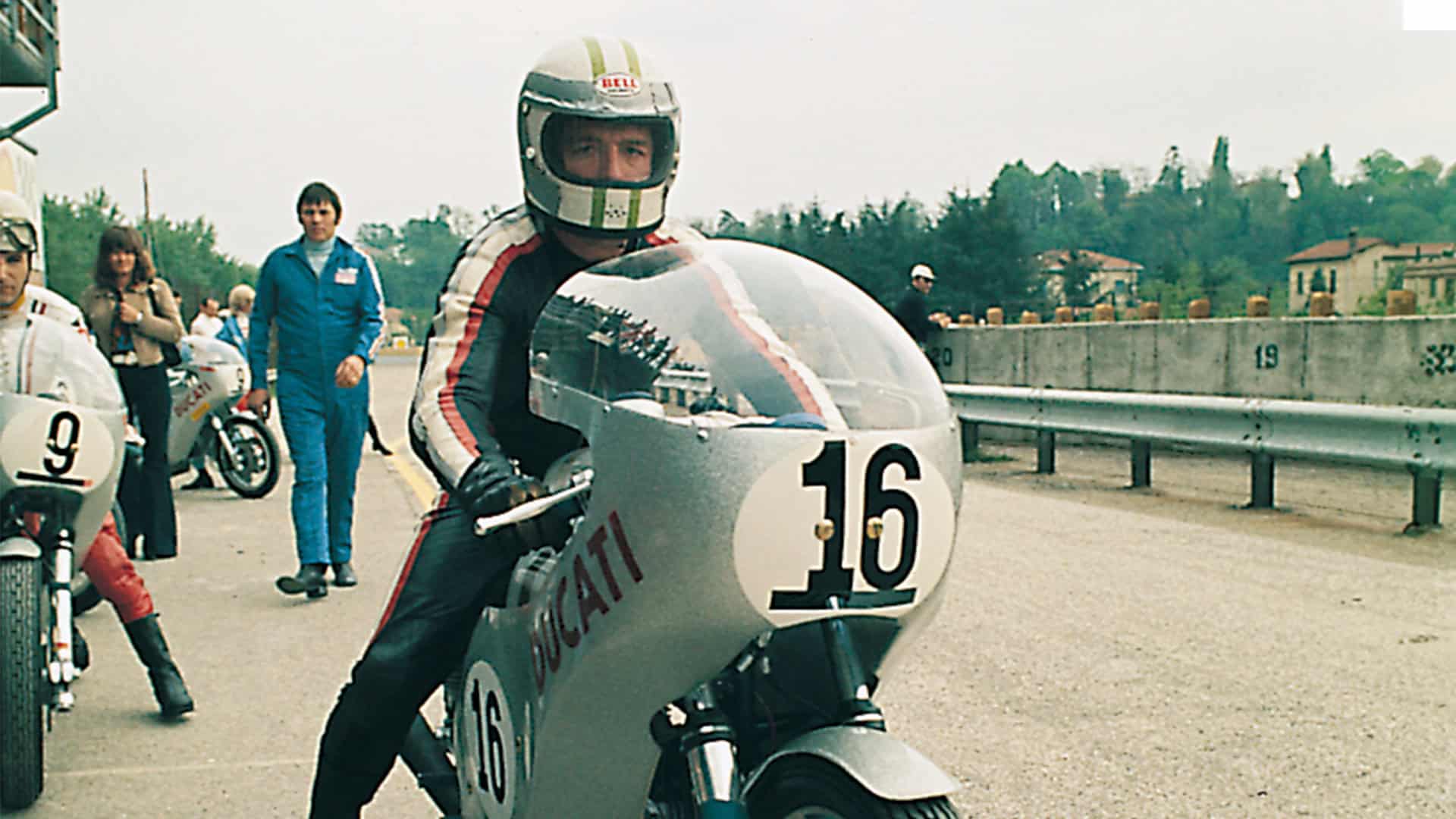
Against fierce opposition from more than half a dozen works teams, headed by Giacomo Agostini on an MV Agusta 750 four, Ducati’s Paul Smart and factory test rider Bruno Spaggiari simply rode past the already 10-times world champion and on to an apparently effortless 1-2 victory.
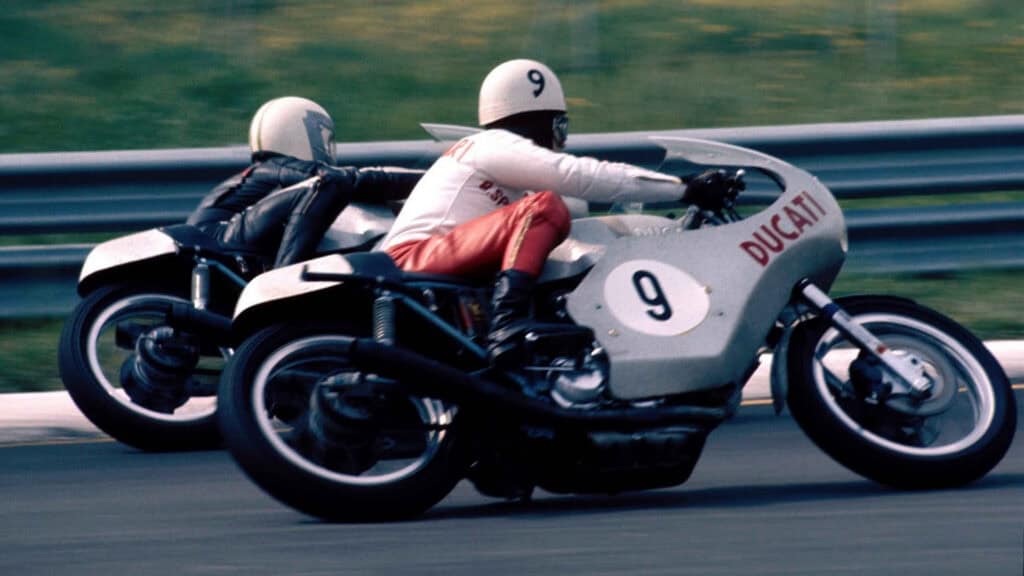
When Ducati finally produced the 750 Super Sport in early-1974, the inspiration from the 750 Imola race bikes was unsurprising. The “green” frame paint, presumably applied to the racers after modifications to the donor 750 GT frames, was evident, as was the silver paint scheme and fibreglass fuel tank with transparent strip for quickly gauging the fuel level.
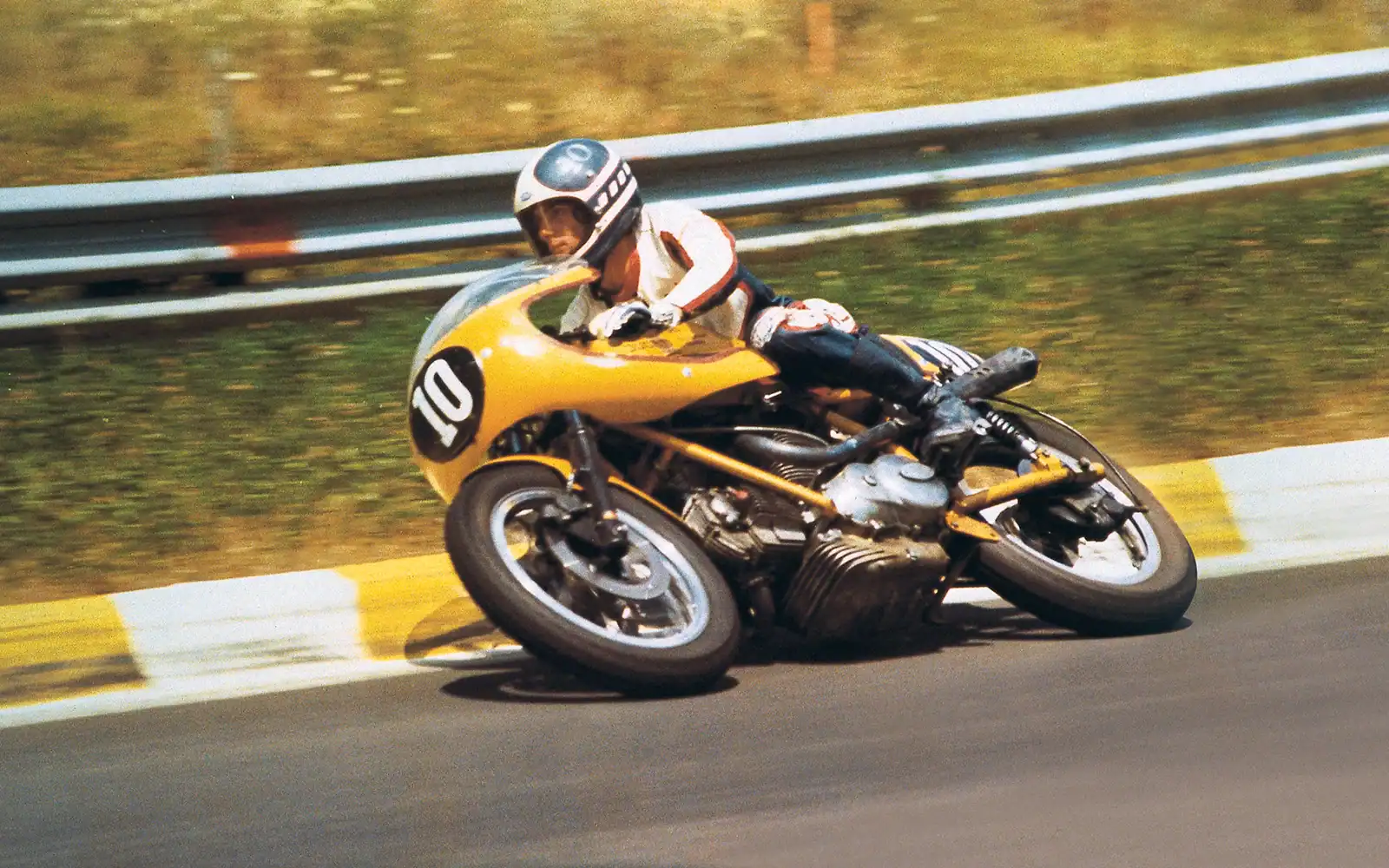
Along with its desmo cylinder heads, the SS differed from its 750 GT sister in its frame, engine cases, camshafts and various hand-fabricated parts. Ready for road or race, the 750 SS weighed a lean 151kg and produced 52kW at 9000rpm.
Ducati was determined that the customer 750 SS was as true as possible to the Imola racers – a marked contrast to MV Agusta, whose 750s were equipped with shaft drive to discourage privateers from competing against the factory.
A single batch of Ducati 750 SSs was built in early-1974. Some historians put the figure at 401 examples, but Australian author and leading international Ducati authority Ian Falloon has the figure of 200 directly from Taglioni himself.
As Ducati was already in the process of replacing the aesthetically beautiful “round case” engine with the Giorgio Giugiaro-modernised “square case”, these precious few 750 Super Sports would also be the only Ducati round-case desmo L-twin – just one element of what is perhaps the most beautiful motorcycle ever built.