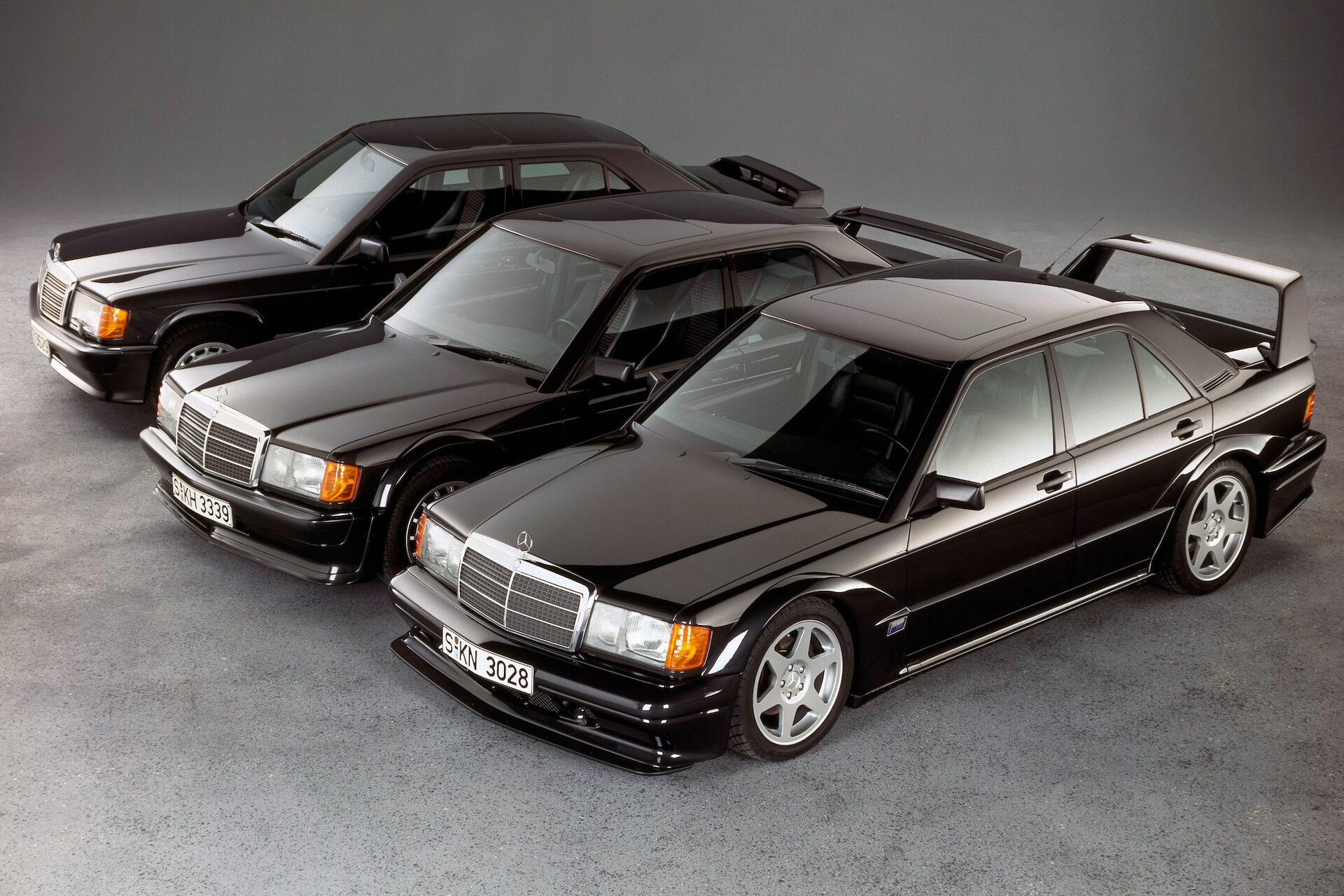
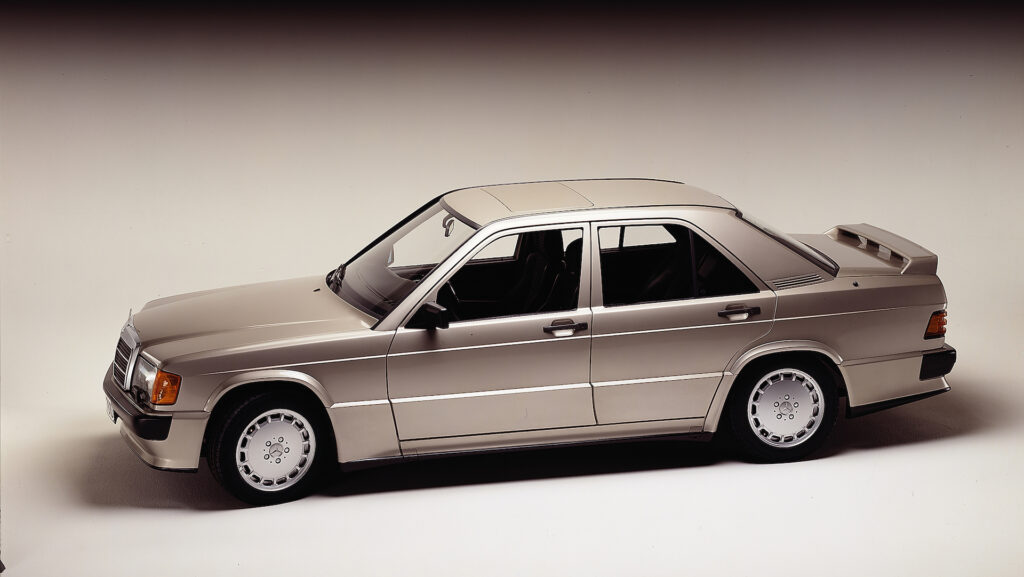
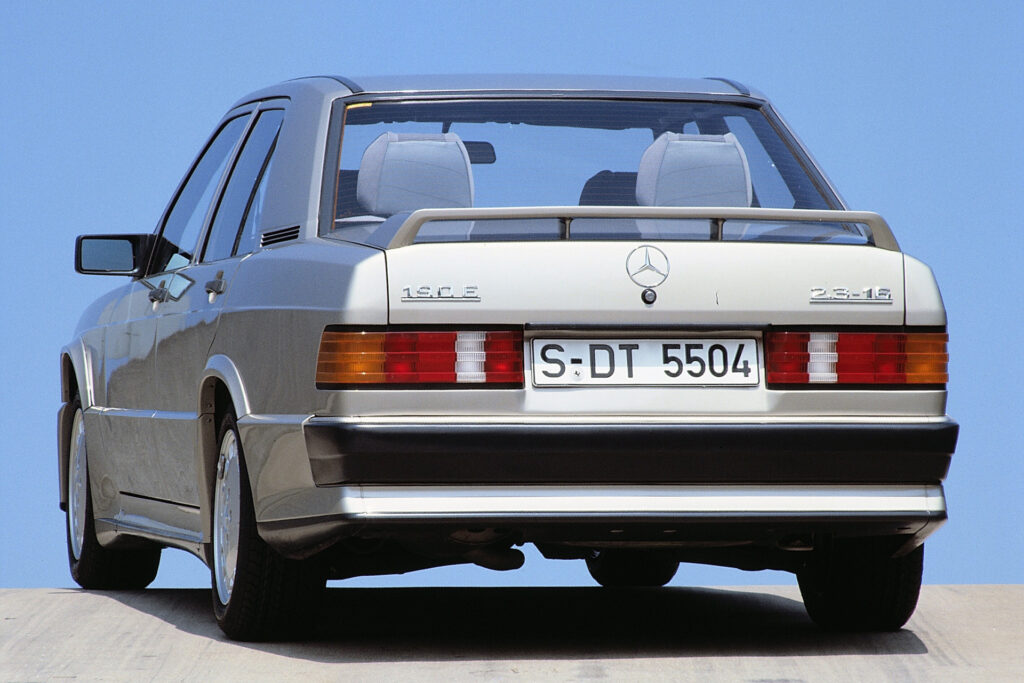
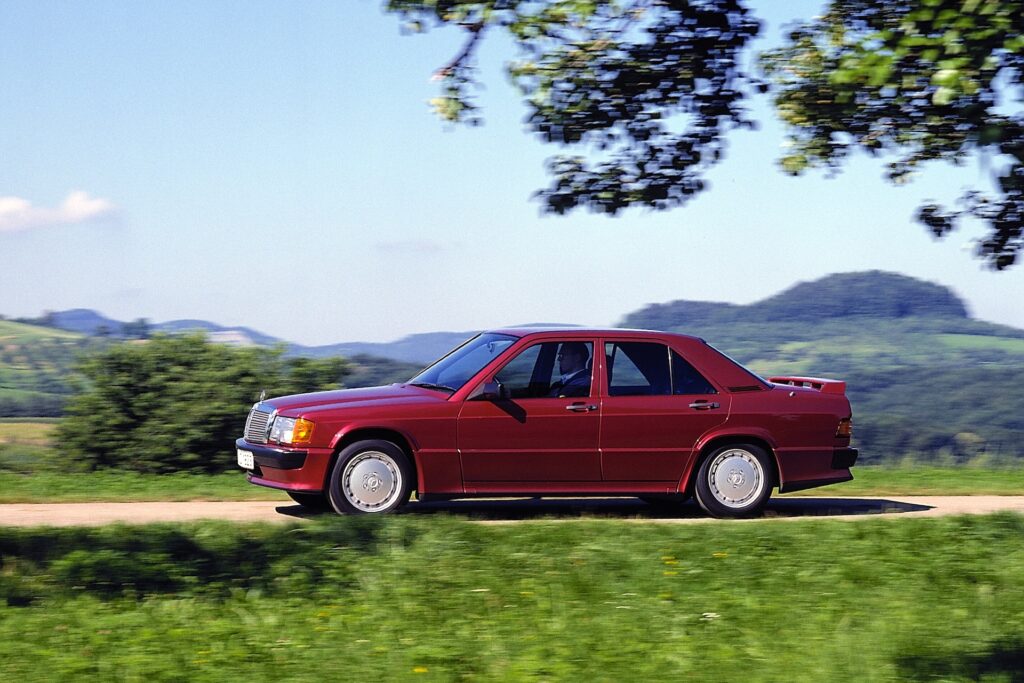
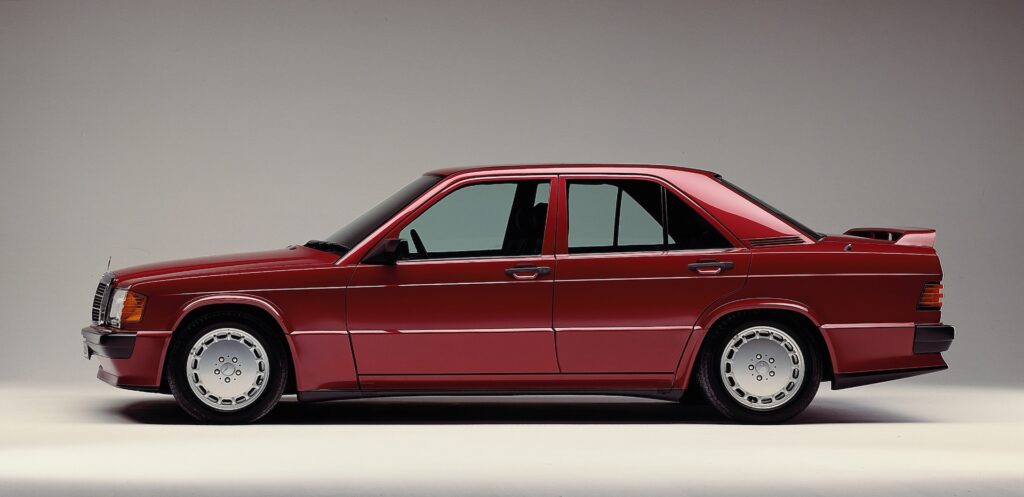
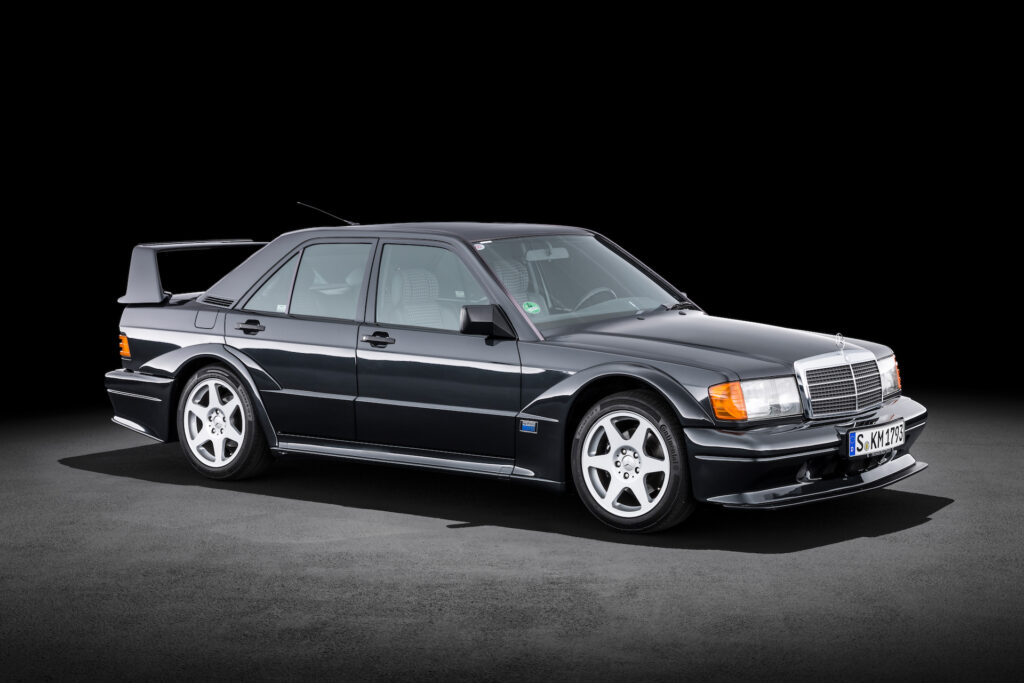
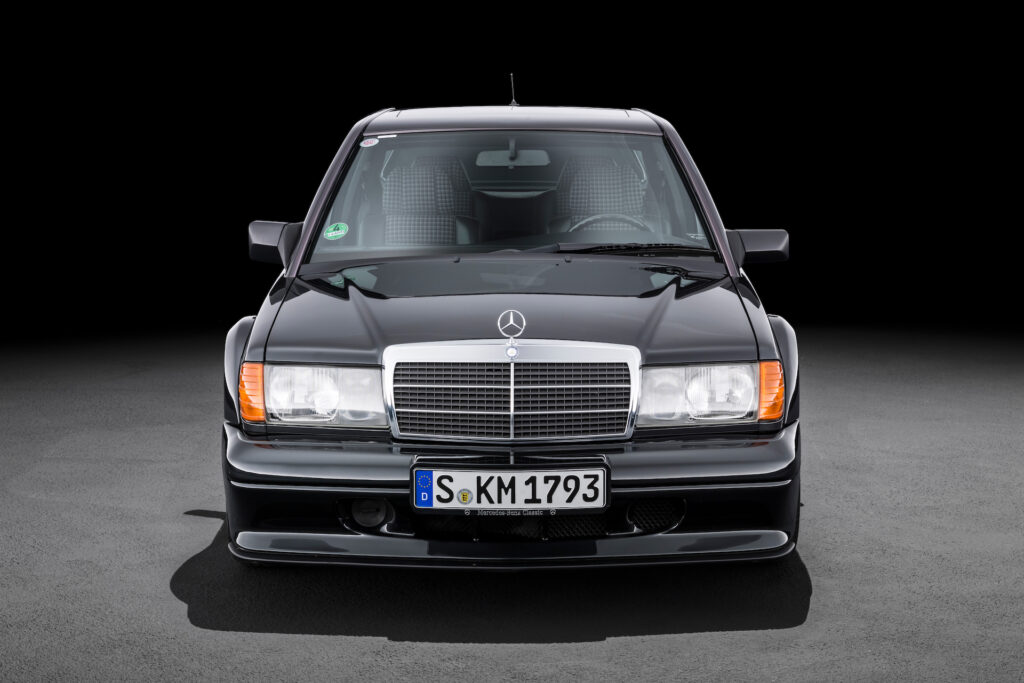
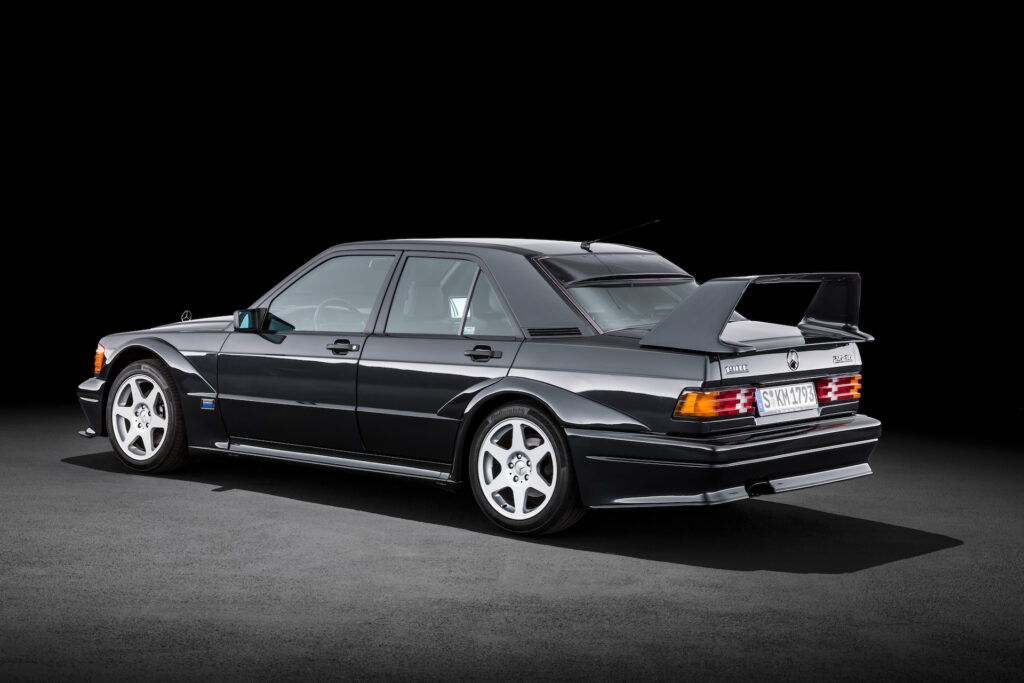
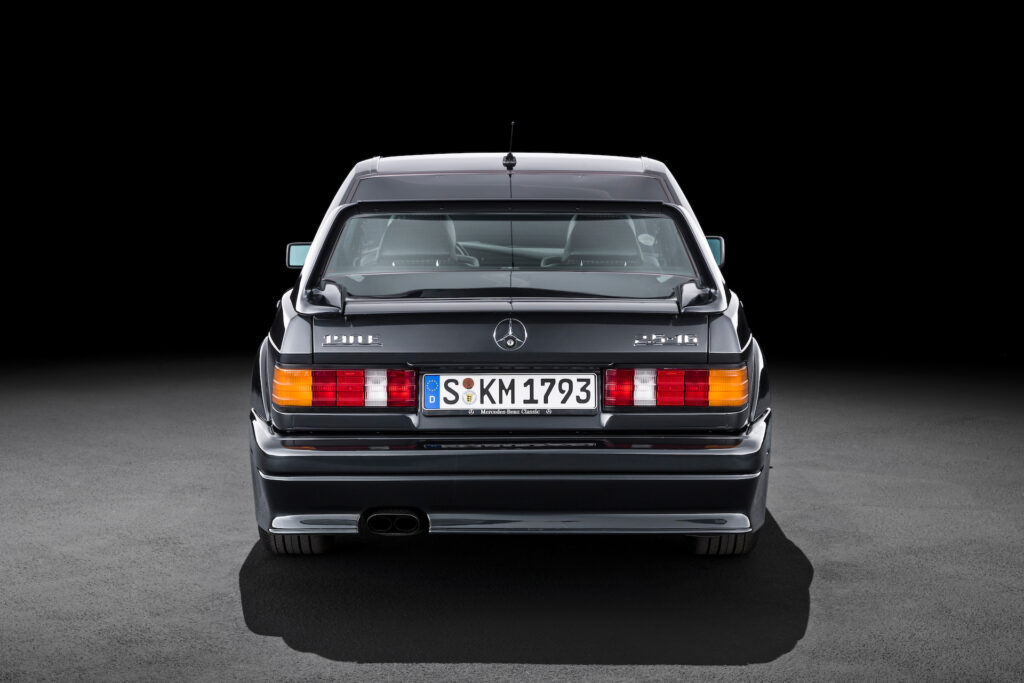
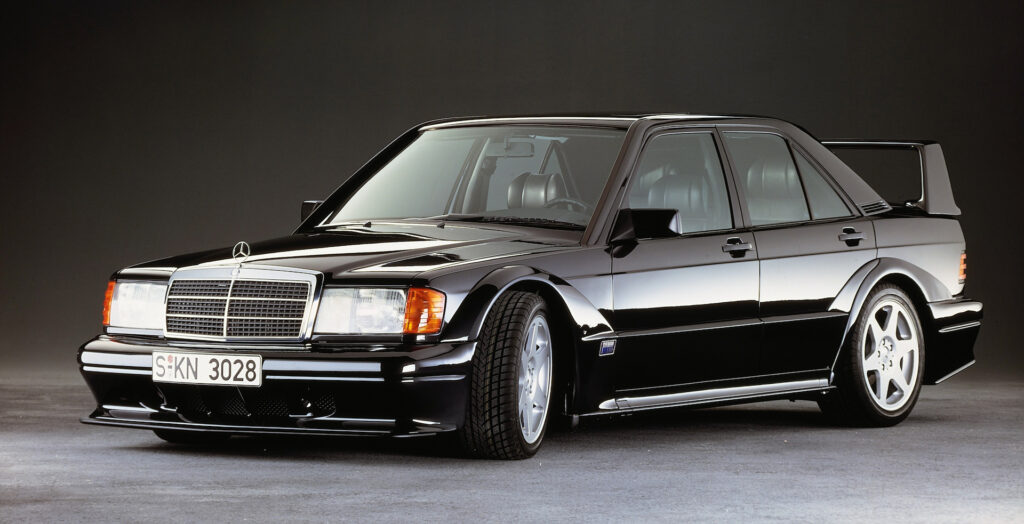
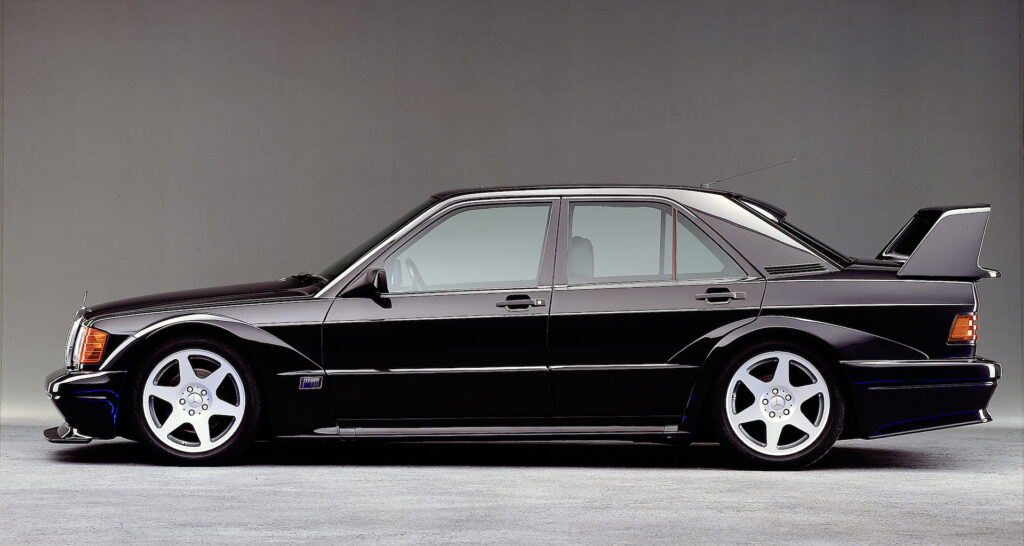
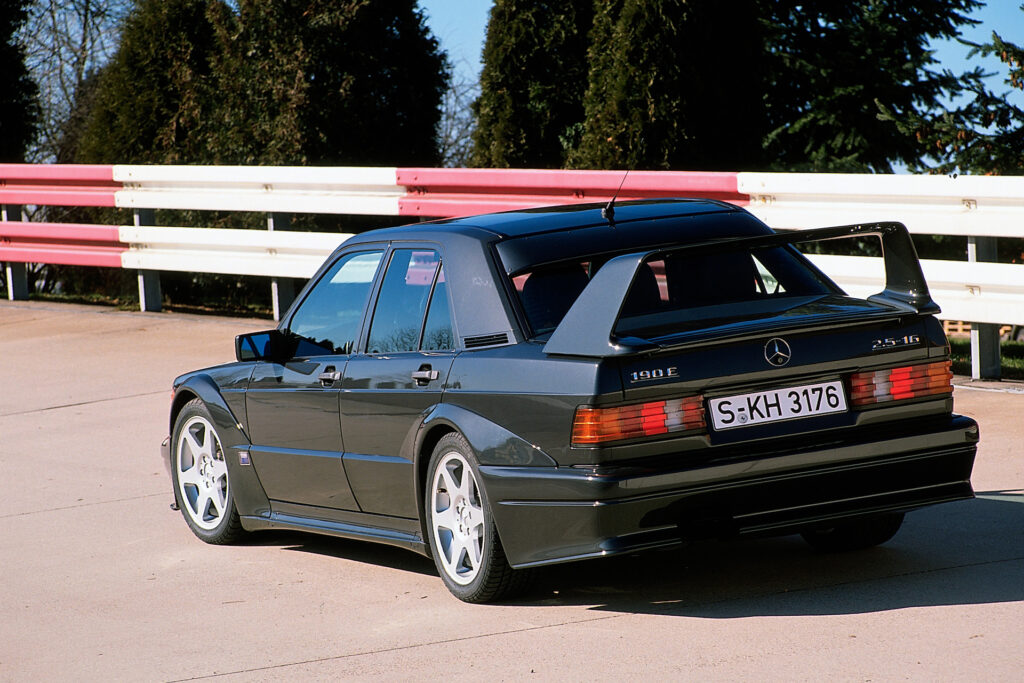

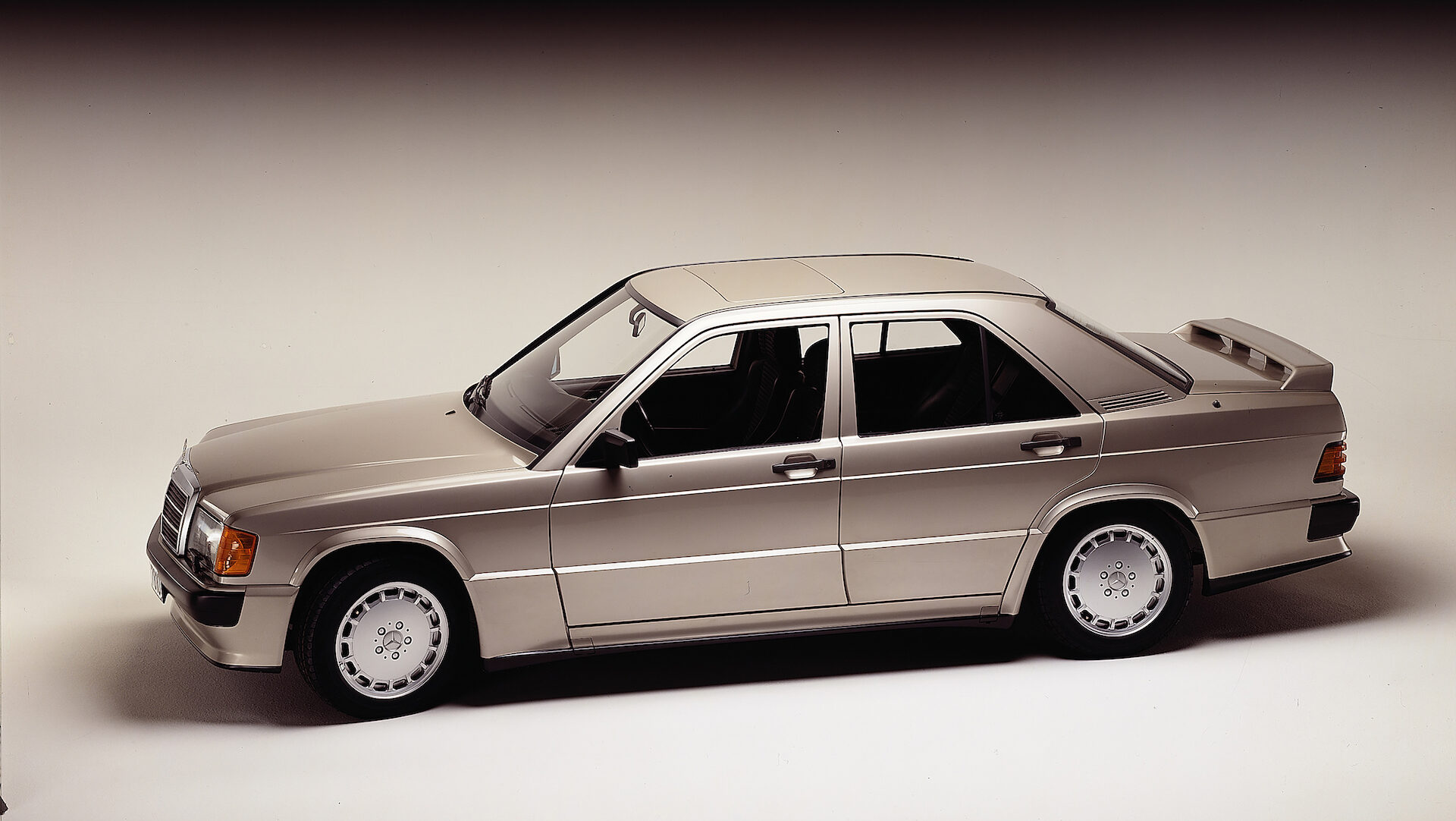
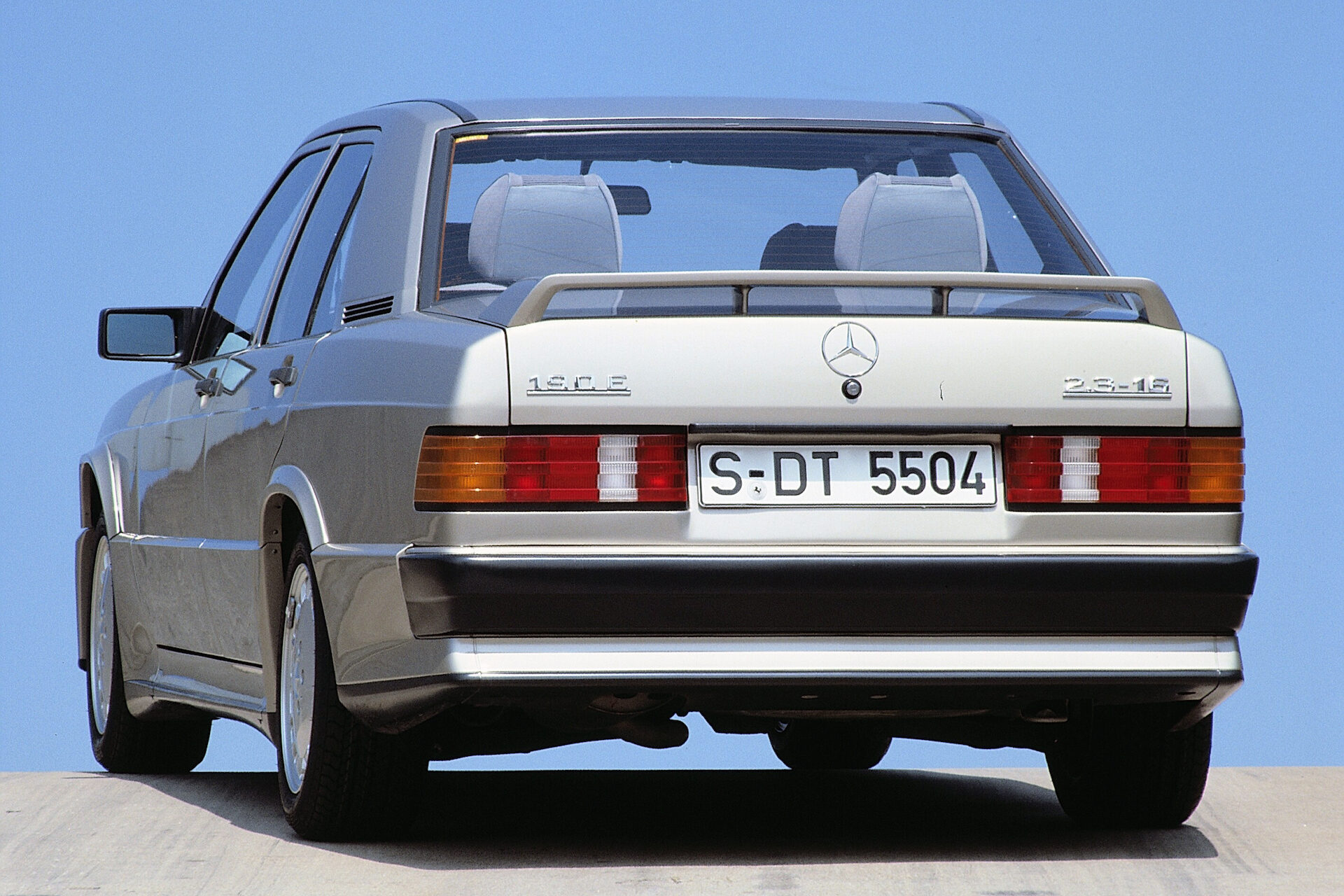
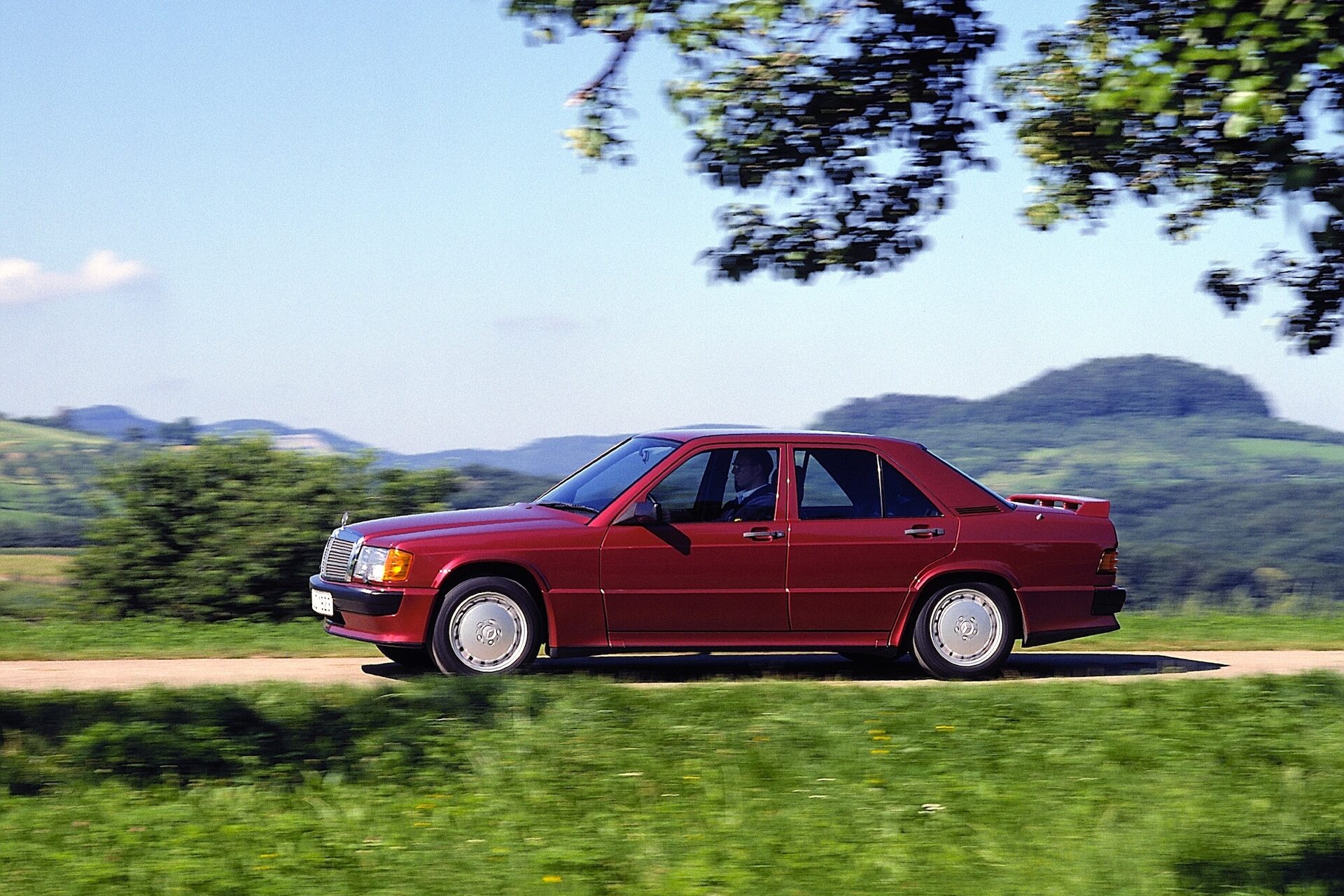
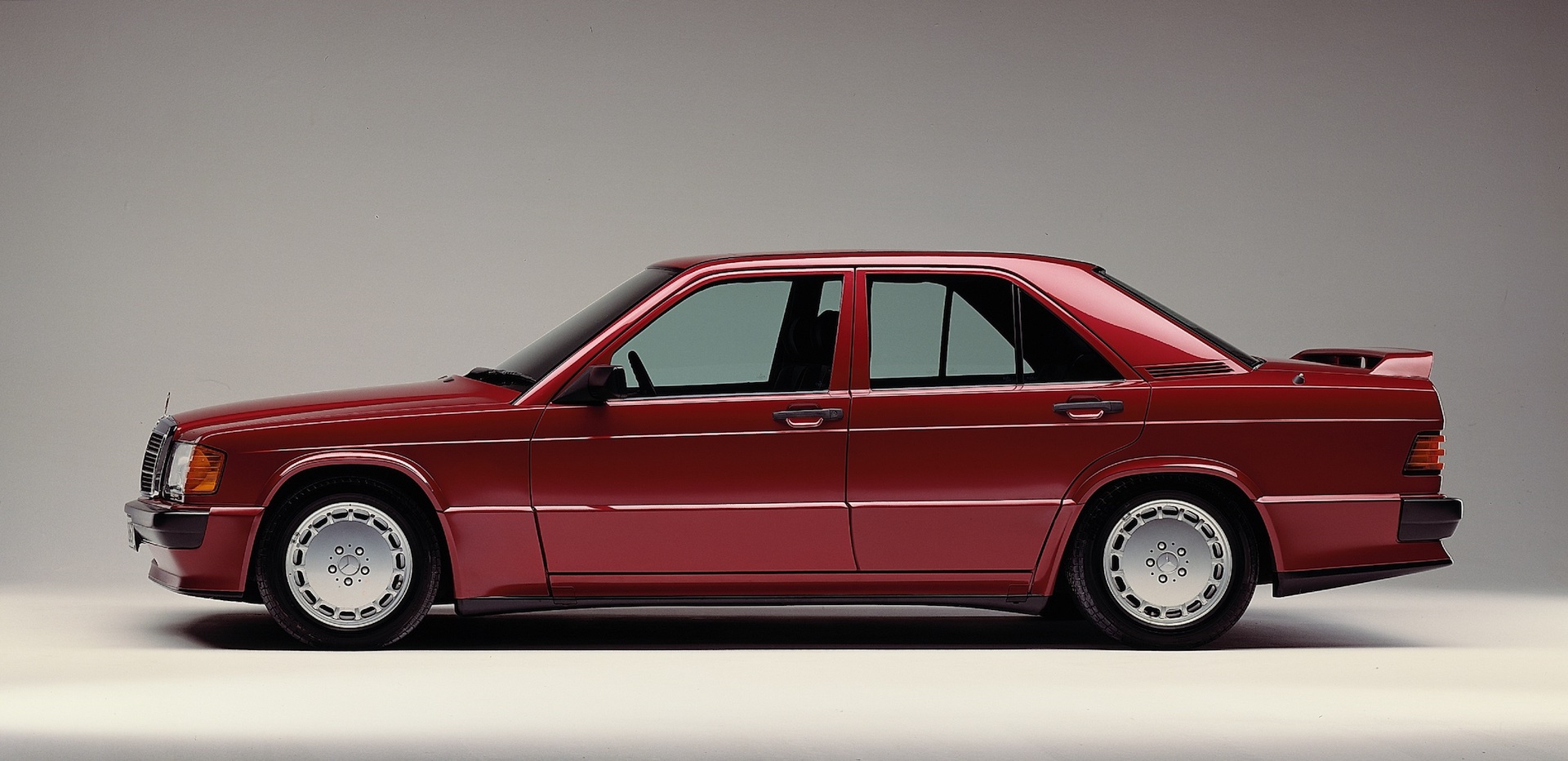
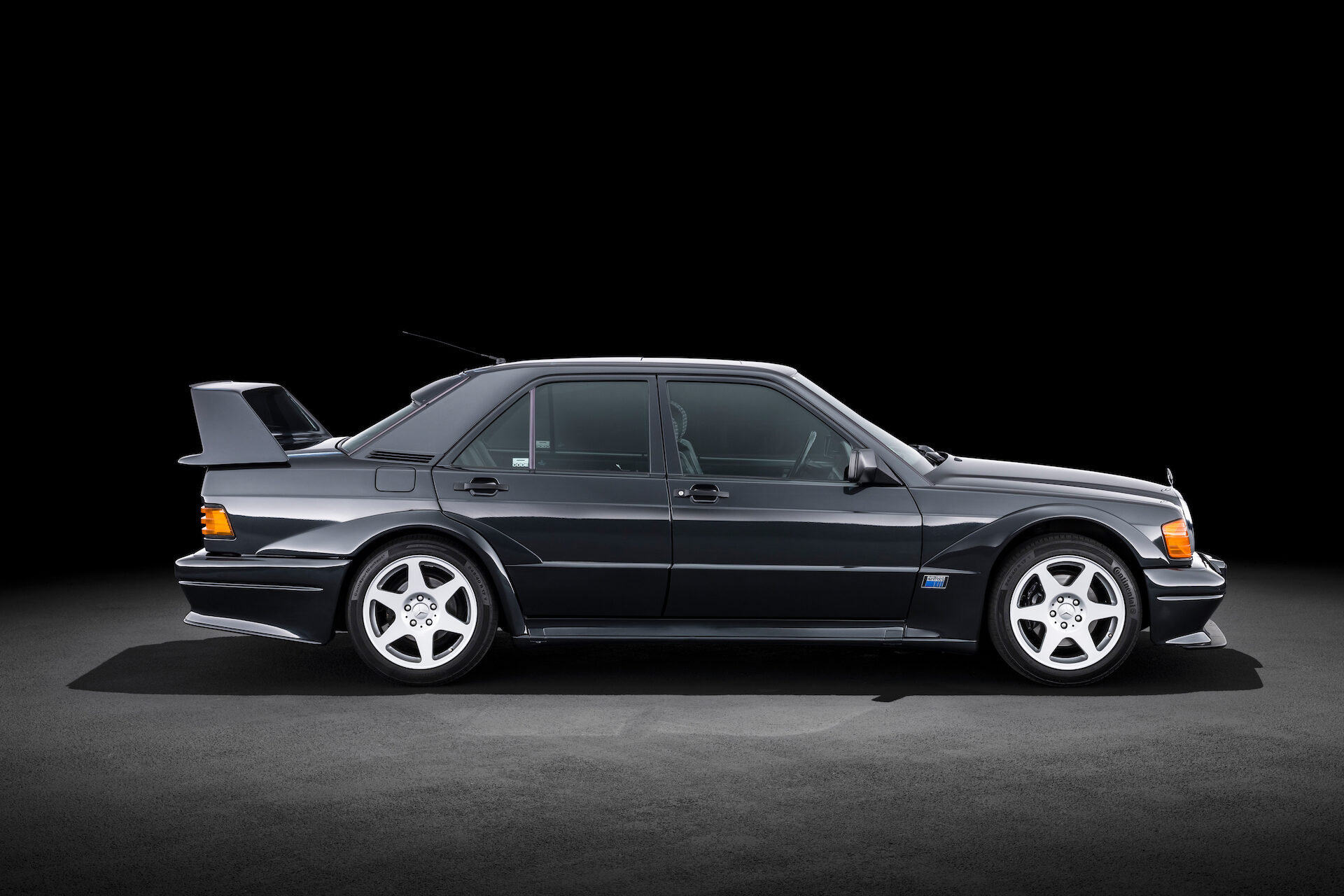
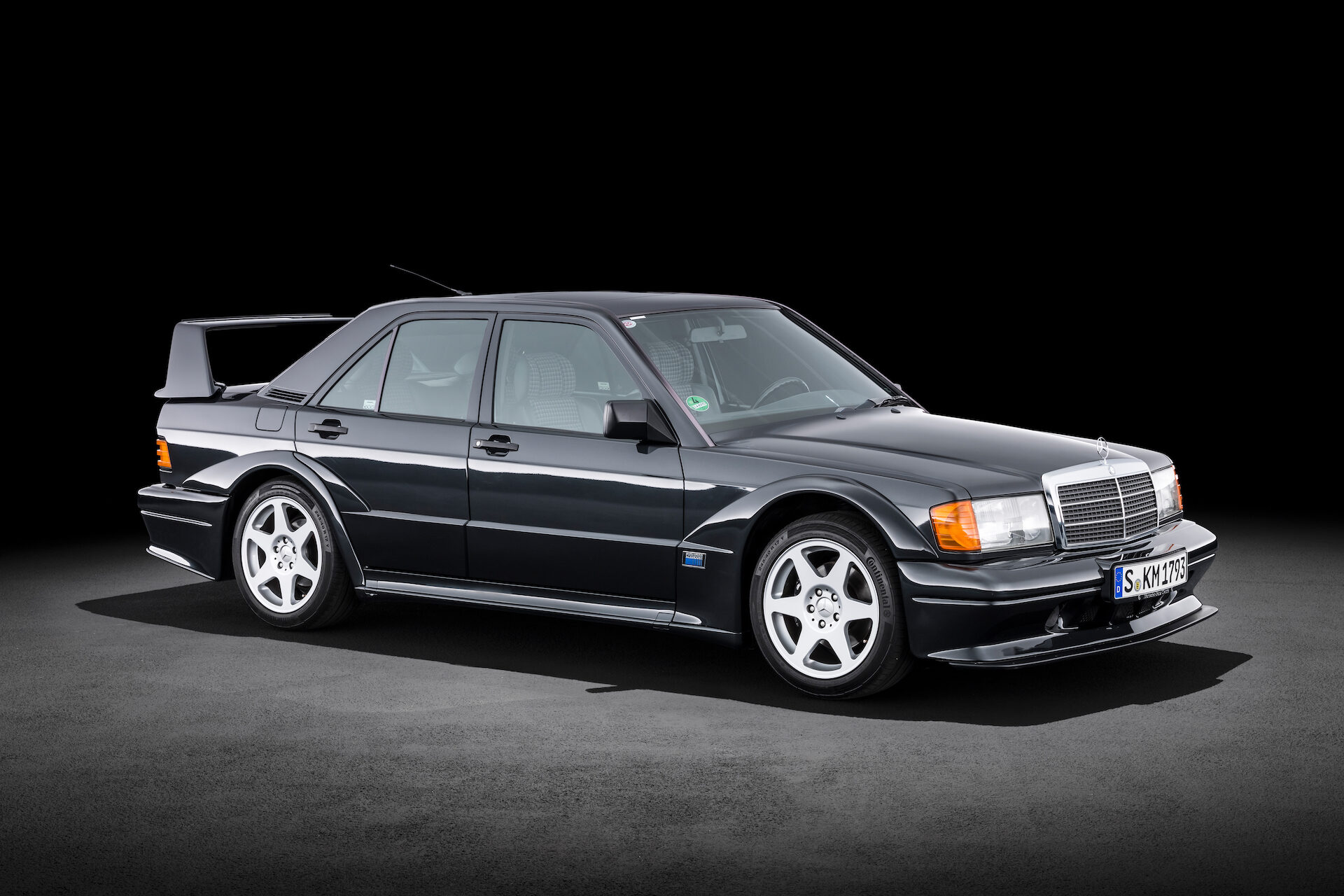
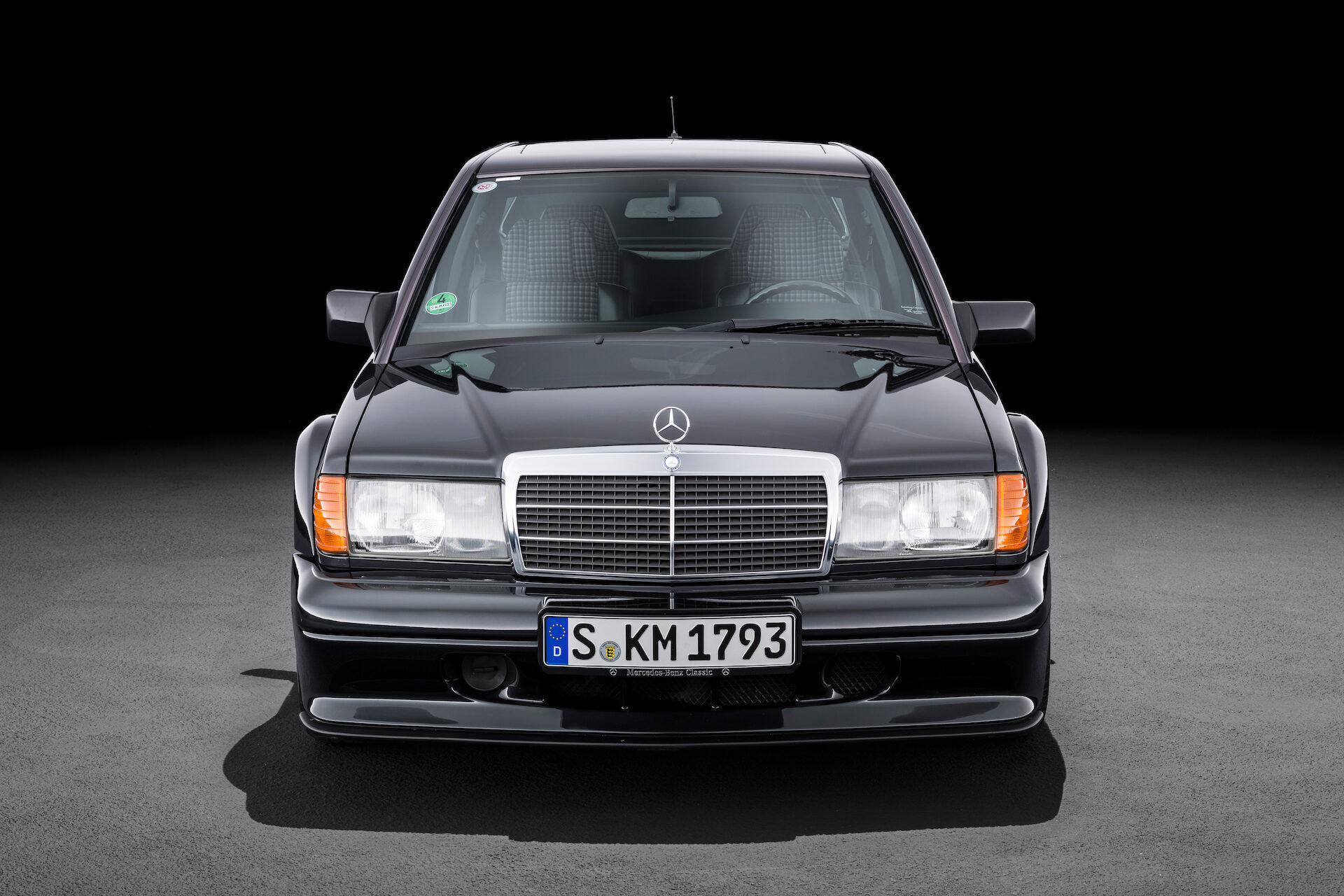
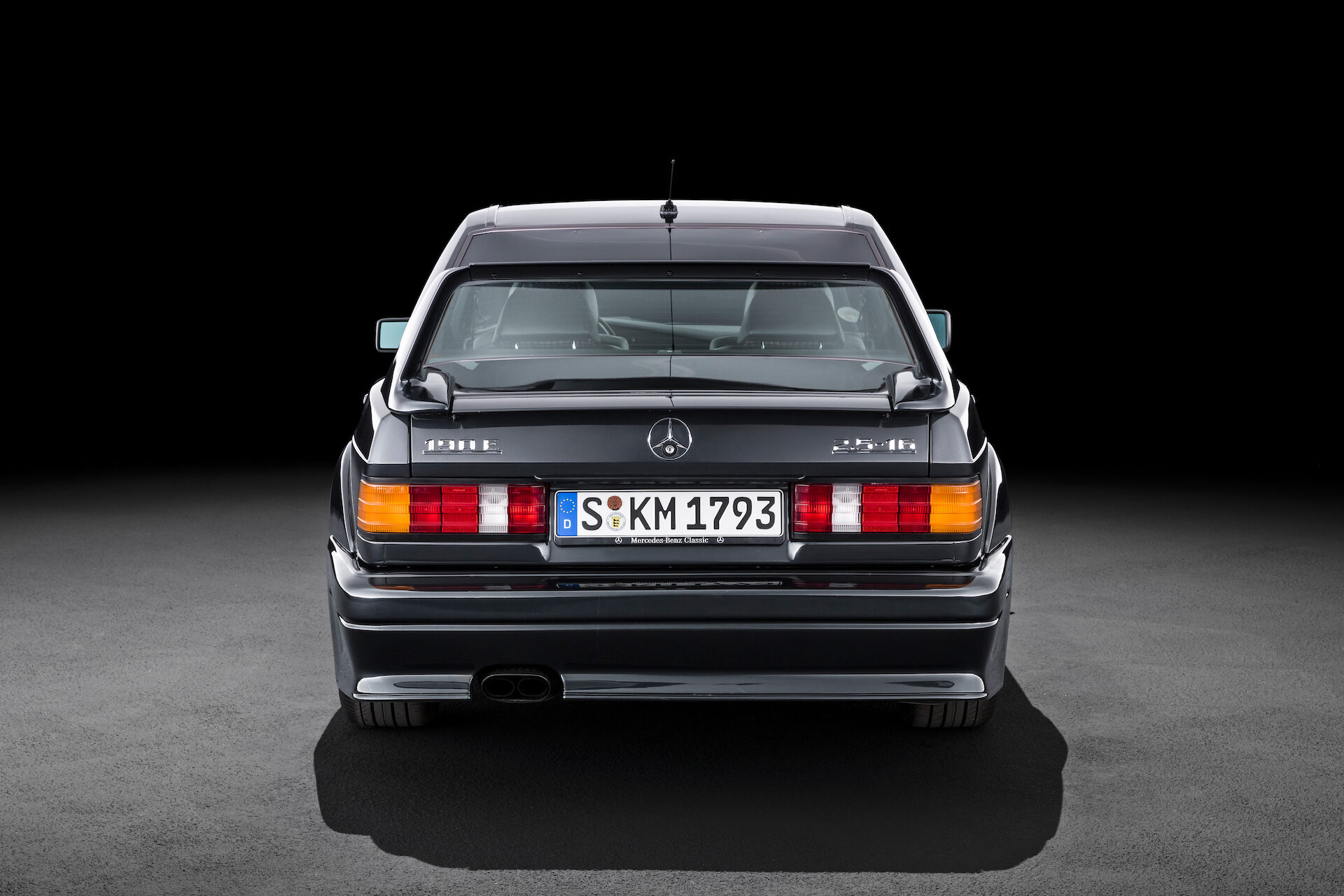
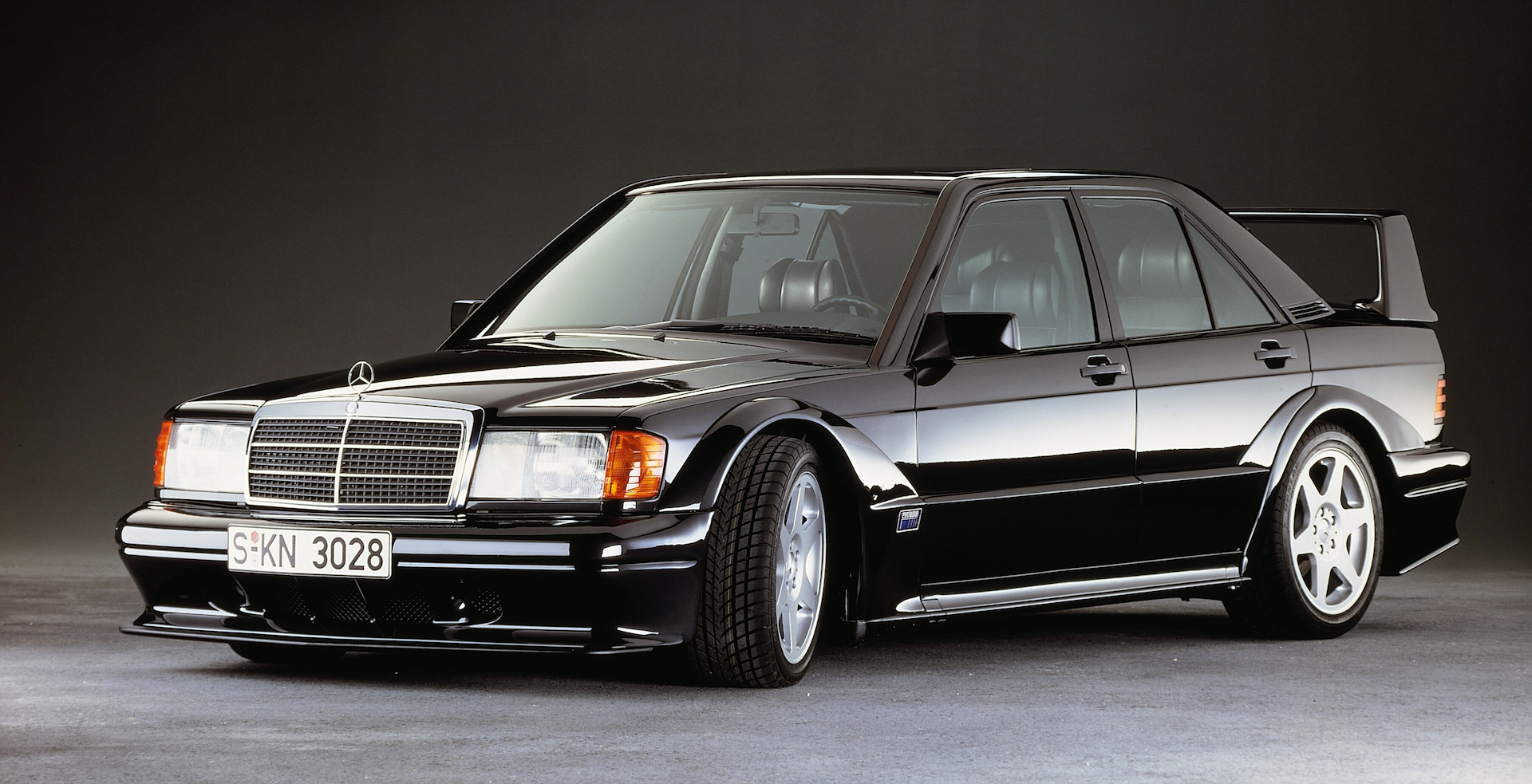
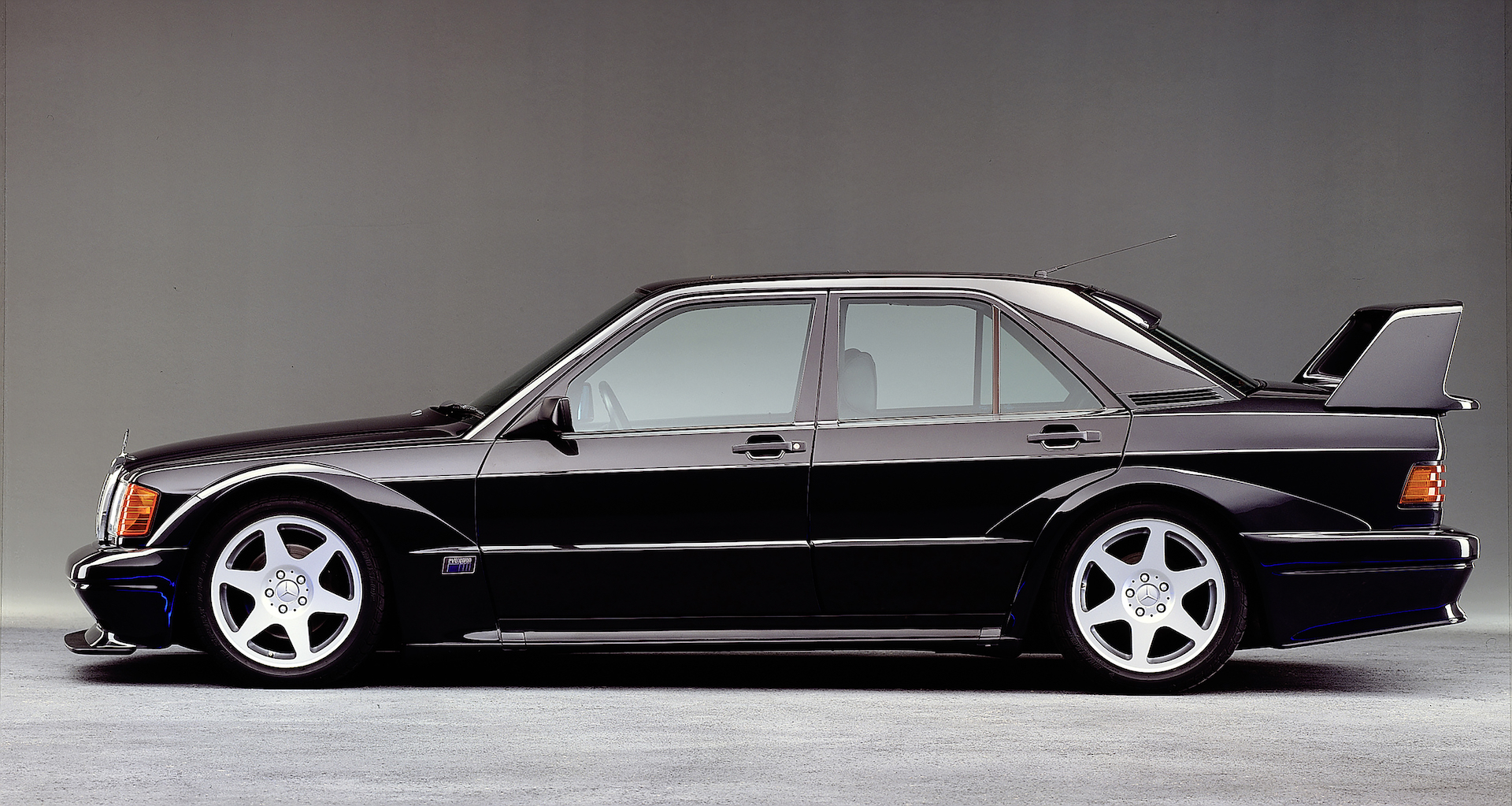
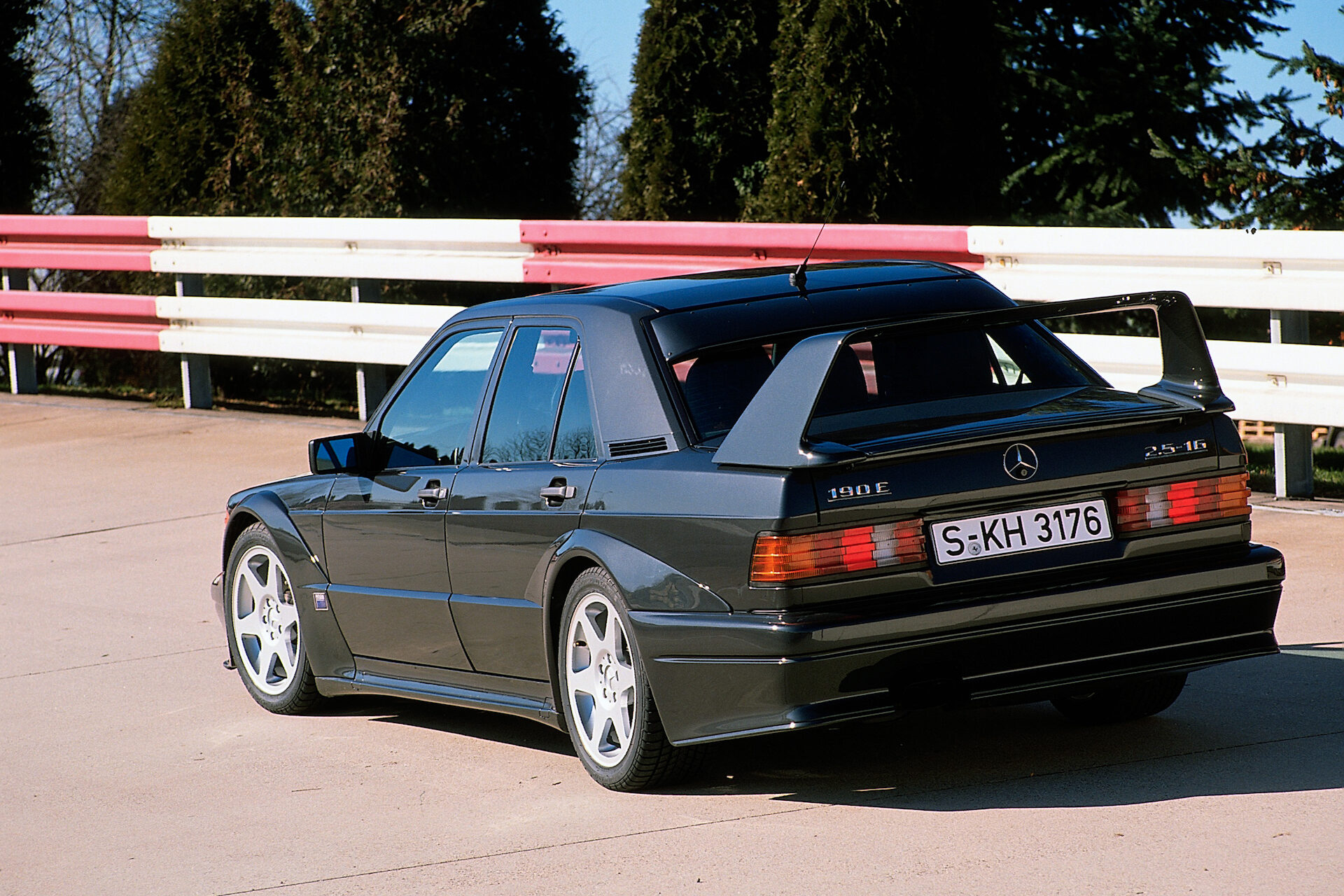
In 1982, with a conservative Mercedes-Benz still focused largely on big, luxurious sedans and wagons, the arrival of the smaller, lighter and nimbler 190E (W201) ‘Baby Benz’ was big news. Bigger still for performance enthusiasts was the news that Cosworth had been enlisted to develop a powerplant capable of contesting Group B rallying, an initiative that eventually produced the road-going M102 16V engine from which the legendary 190E 2.3-16 takes its name. The rest, as they say, is history.
Will there ever be a more epic launch of a new road car model? The occasion was the opening of the new, shortened version of motor sport’s most feared and revered circuit, the Nürburgring. And instead of a motley gathering of jet-lagged motoring hacks, the 20 drivers included no fewer than nine world champions.
The surprise winner was a F1 freshman named Ayrton Senna.
The May, 1984 event was a special launch for what was not immediately recognisable as a special car. In some ways, however, the Mercedes-Benz 190E 2.3-16 was a very significant model in the company’s history.
In these days of Mercs filling every market niche from city cars to SUVs to re-skinned Nissan utes, it’s easy to underestimate the impact of the 190E (W201) small sedan in November, 1982. The conservative company was all about big, luxurious sedans, like the then-flagship W126 S-class with its revolutionary airbags and anti-lock braking. The spectacularly popular, mid-sized W124 E-class was still a couple of years away.
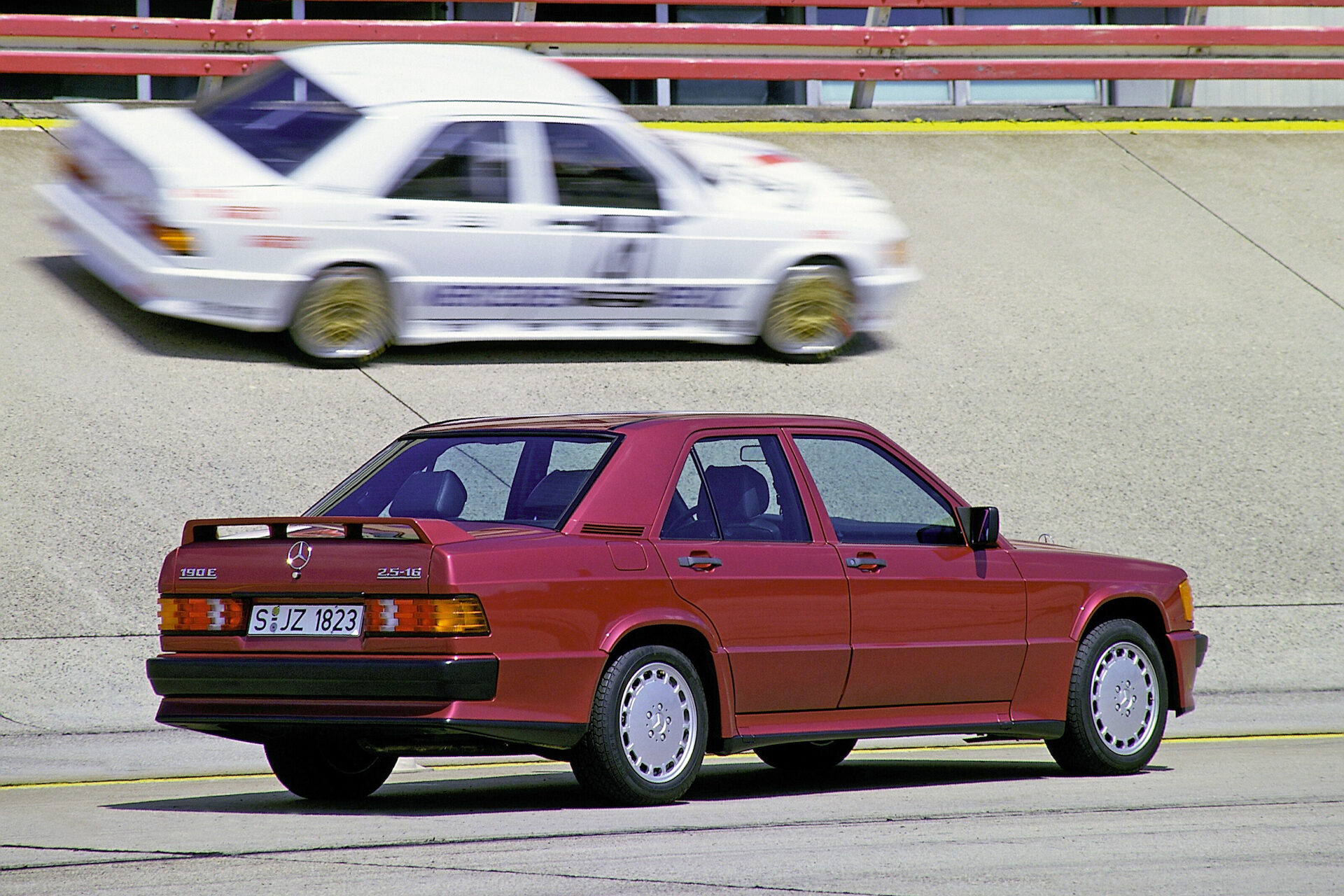
An all-new, relatively affordable “Baby Benz” was huge news – equivalent to Bentley today launching a BMW 3 Series rival. The 190E didn’t disappoint: among its technical highlights were a patented, five-link rear suspension and optional ABS and airbags, features still new to the S-class.
It was rumoured at the time that the development budget for the 190E’s rear suspension had been greater than BMW’s budget for its entire E30 3 Series model program.
Mercedes-Benz was still absent from motorsport, though it had supported often-successful rally programs during the 1960s and ’70s. Thus, with the 190E appealing to a younger demographic, Benz enlisted Cosworth to develop a powerplant for the wildly popular Group B rallying.
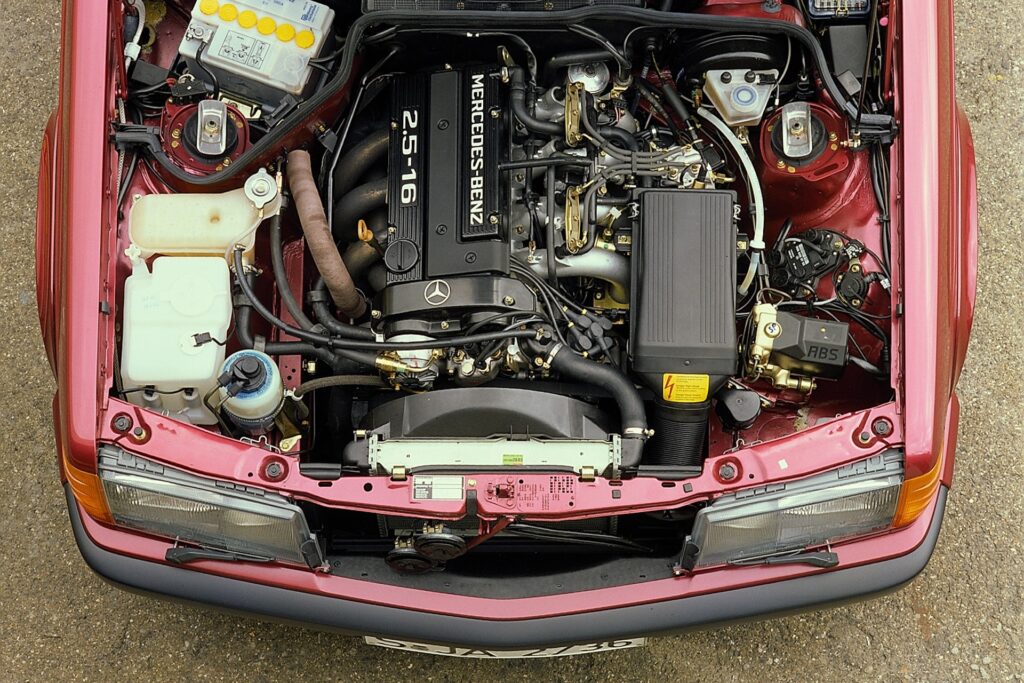
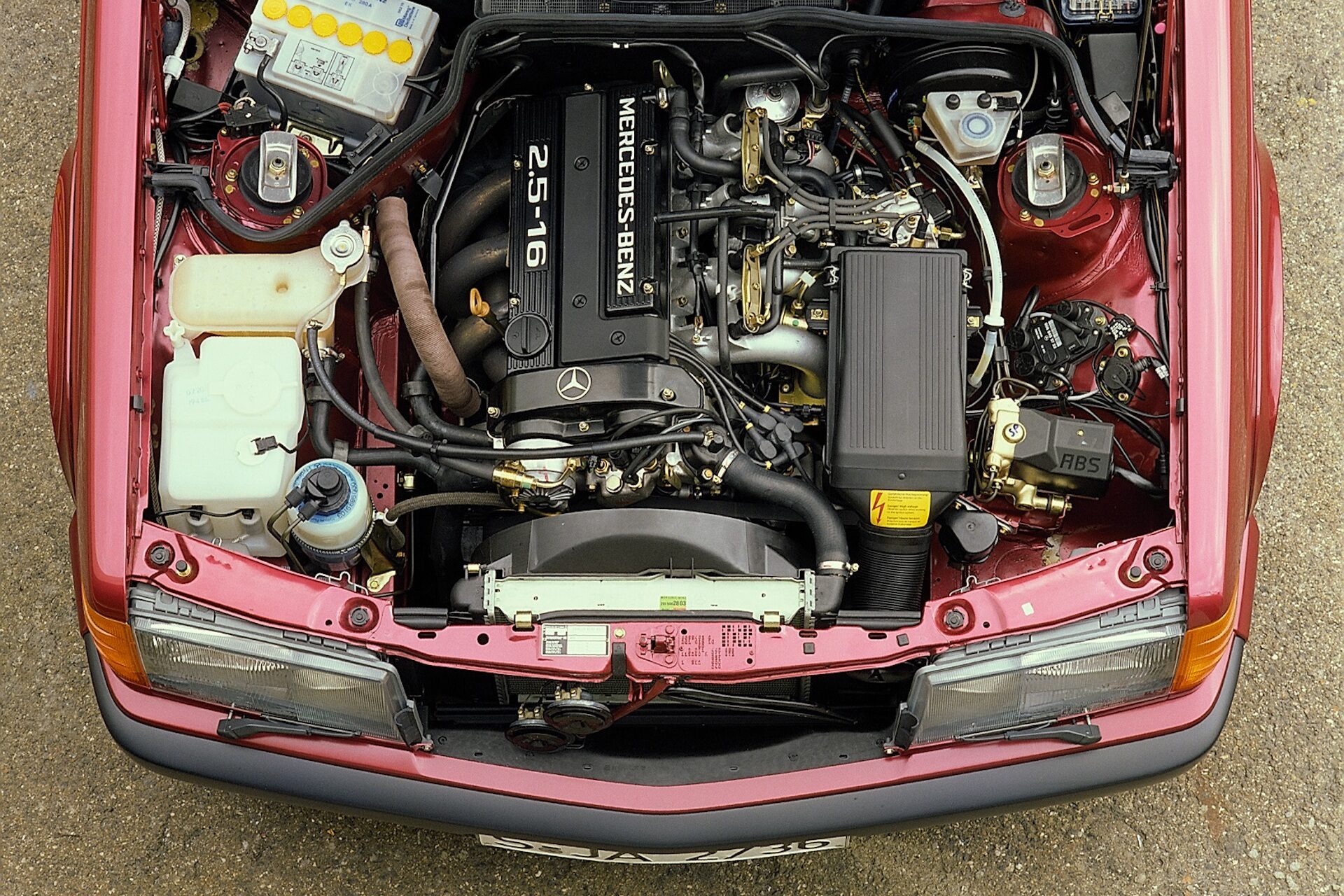
The target for a Group B competition engine was 240kW from the 2.3-litre, four-cylinder M102 engine, via a Cosworth DOHC 16-valve head designed by DFV and BDA mastermind, Mike Hall. Detuned for production, the M102 16V featured flat-top pistons and pent-roof combustion chambers, producing 137kW at 6000rpm and 235Nm at 4500rpm, and pushed the 2.3 to 100km/h in 8.0 seconds.
The 190E 2.3-16 may have been half useful against fellow rear-drive rivals, but by 1982, the Audi Quattro was already re-writing the book.
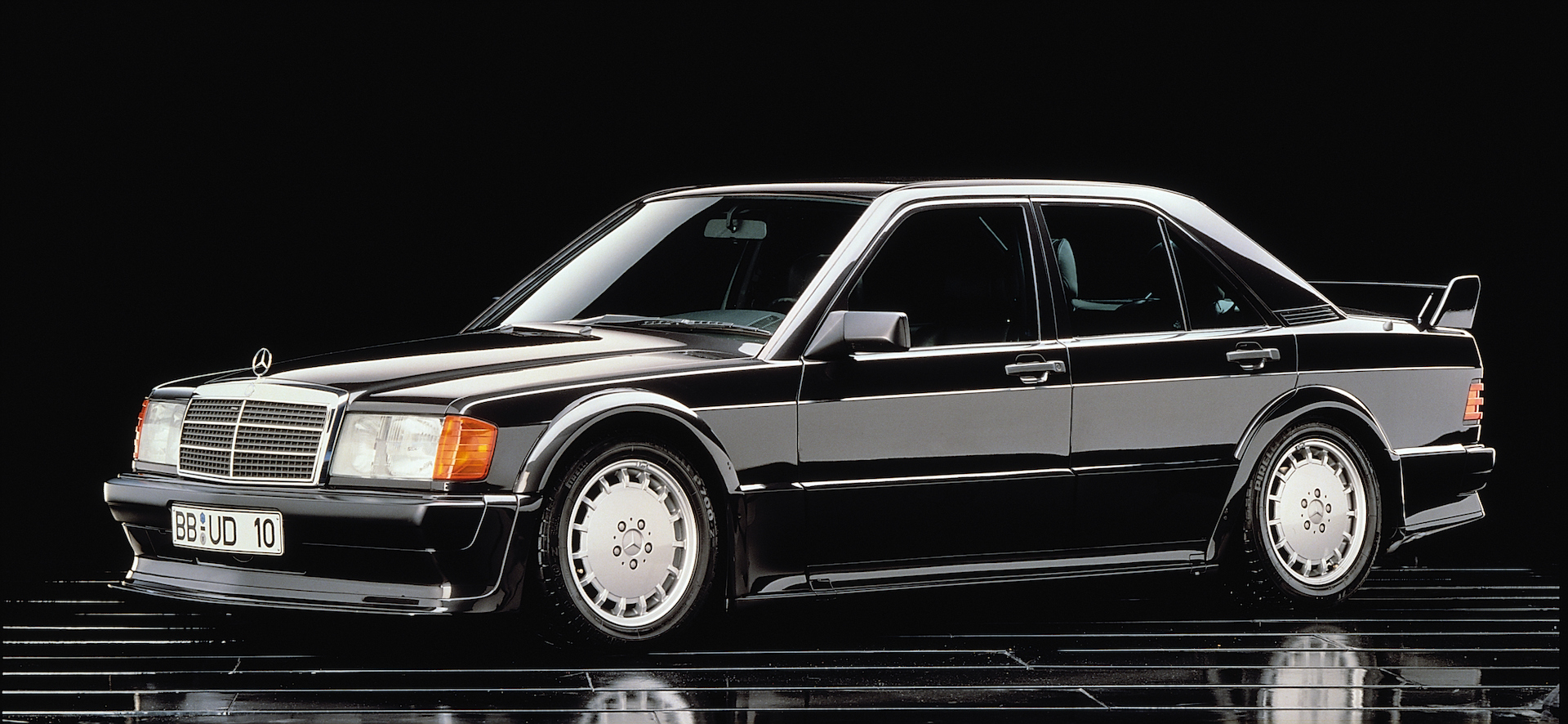
Germany’s touring car championship was rewriting its own, deciding to adopt Group A for a new Deutsche Tourenwagen Meisterschaft (DTM) formula in 1984. While Benz wouldn’t be officially represented, it clearly made sense to proceed with the 5000 homologation units.
The 190E 2.3-16 had its static reveal at the Frankfurt motor show in September 1983. A few weeks earlier, a trio of the cars had established a dozen speed and distance records at Italy’s Nardo speed bowl, including an average speed of 247km/h for 50,000km. However, it took a further 12 months before deliveries of the 137kW production cars commenced in September 1984.
The 2.3-16’s body mods were subtly effective: 24 kilograms of add-on aero kit lowered Cd just a tick to 0.32, but enhanced high-speed stability. The five-link rear suspension gained self-levelling as standard, extending to the front suspension as an option in 1985. A limited-slip differential was standard.
Senna’s victorious outing in the Nürburgring Race of Champions did wonders for the 190E 2.3-16’s career, and his own: the Brazilian had to date contested only four F1 Grands Prix, in a mid-field Toleman.
More than 8000 190E 2.3-16s were sold during 1985, priced at almost 50 percent higher than a standard 190E.
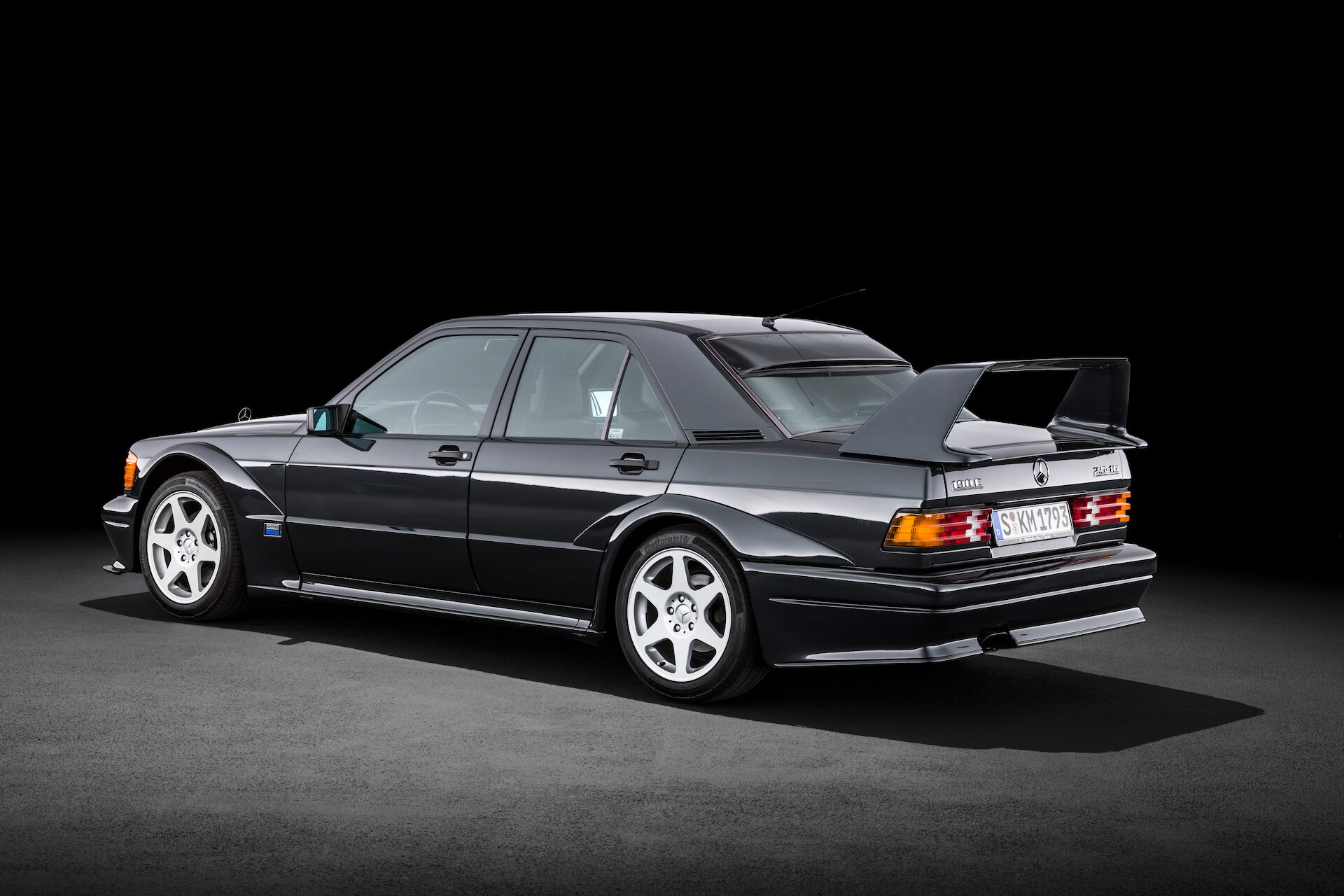
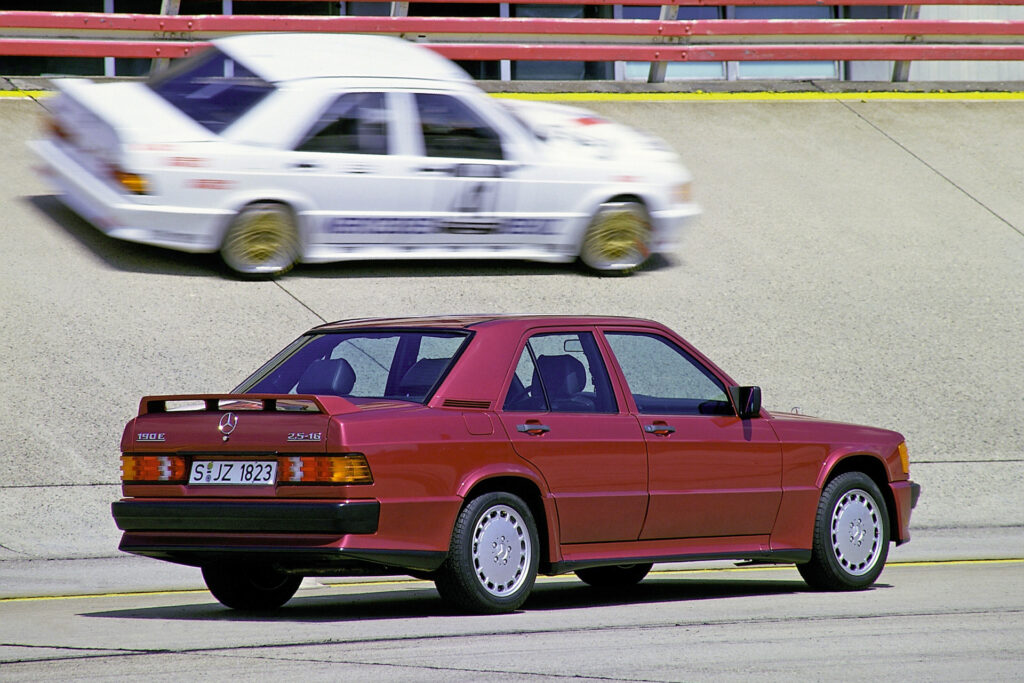
Motorsport duly followed. After early engine reliability problems, the 2.3-16s became a popular mount in DTM; an example took second in the 1986 DTM title. In 1988, the DTM 190E 2.3-16 was the vehicle that brought Benz officially back into motor racing.
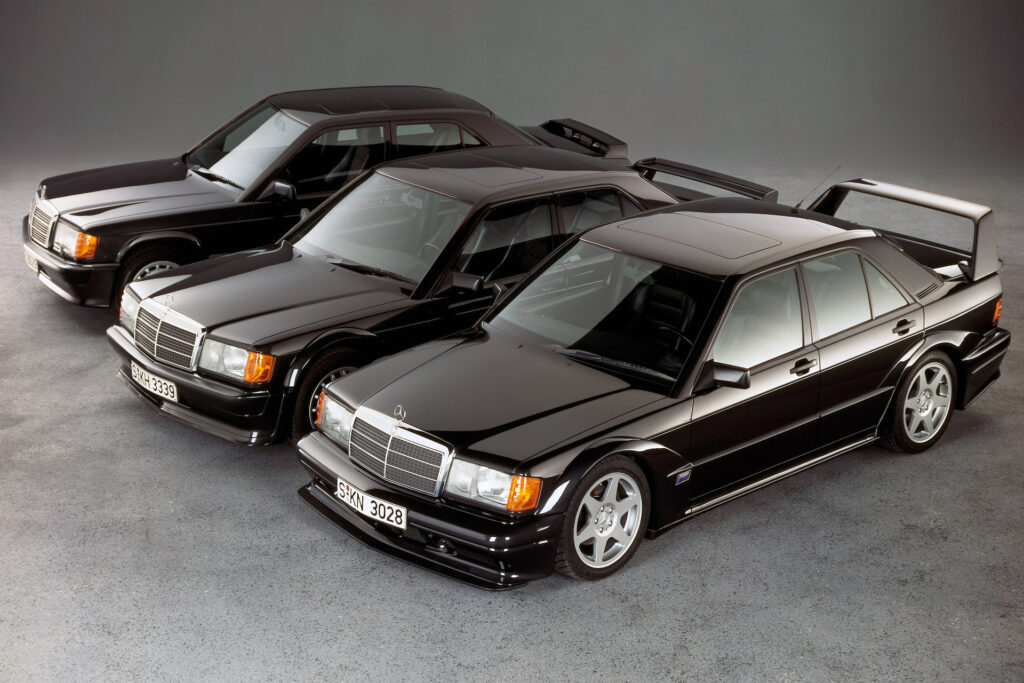
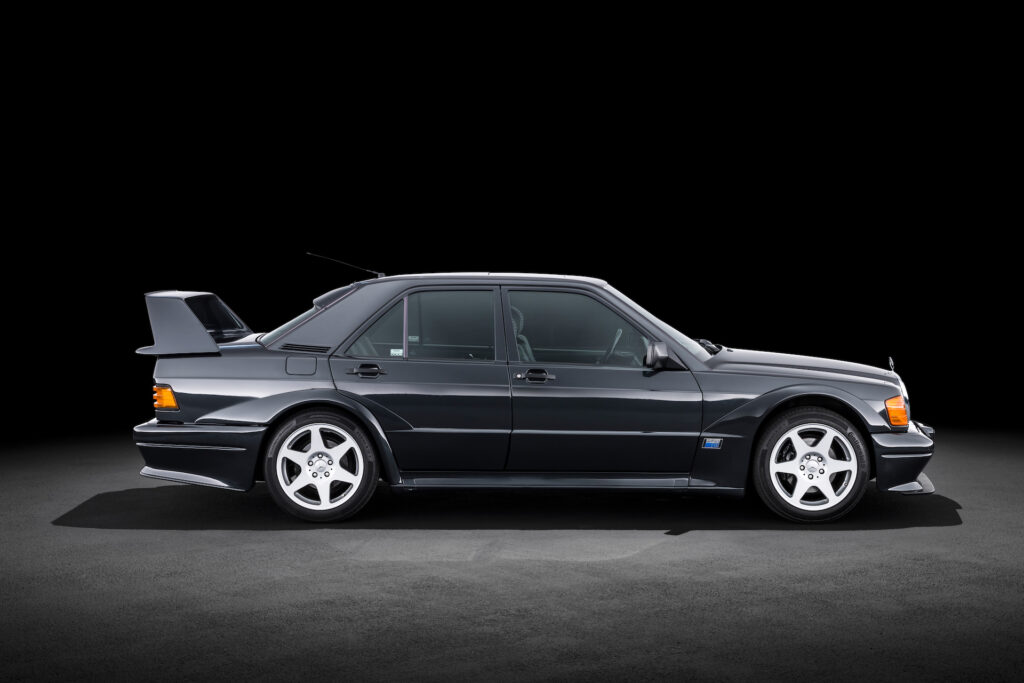
The same year, faced with competition from BMW’s more potent E30 M3 road car, the Merc’s capacity increased to 2.5-litres and power to 150kW. By then, DTM rules had taken a life of their own, prompting perhaps the sexiest of the baby Benzes, the aero-added, internally-tweaked 190E 2.5-16 Evo I in 1989 and Evo II in 1990.
Just 502 of each were built, and the Evo II finally nabbed the DTM crown in 1992. Australian trucking magnate Lindsay Fox is one of the 502 lucky owners of a 2.5-16 Evo II. The sainted Sydney heart surgeon Dr Victor Chang also had one of the rare 16-valvers.
Production of the 2.3-16s ceased in 1993 with the introduction of the all-new W202 C-Class, at which point around 26,300 16-valve 190Es had been built.
As a post script, Senna’s personal 1985 Mercedes-Benz 190E 2.3-16, purchased after his famous 1984 Nürburgring win in a similar car, was sold at auction in November 2025 for £230,000.