

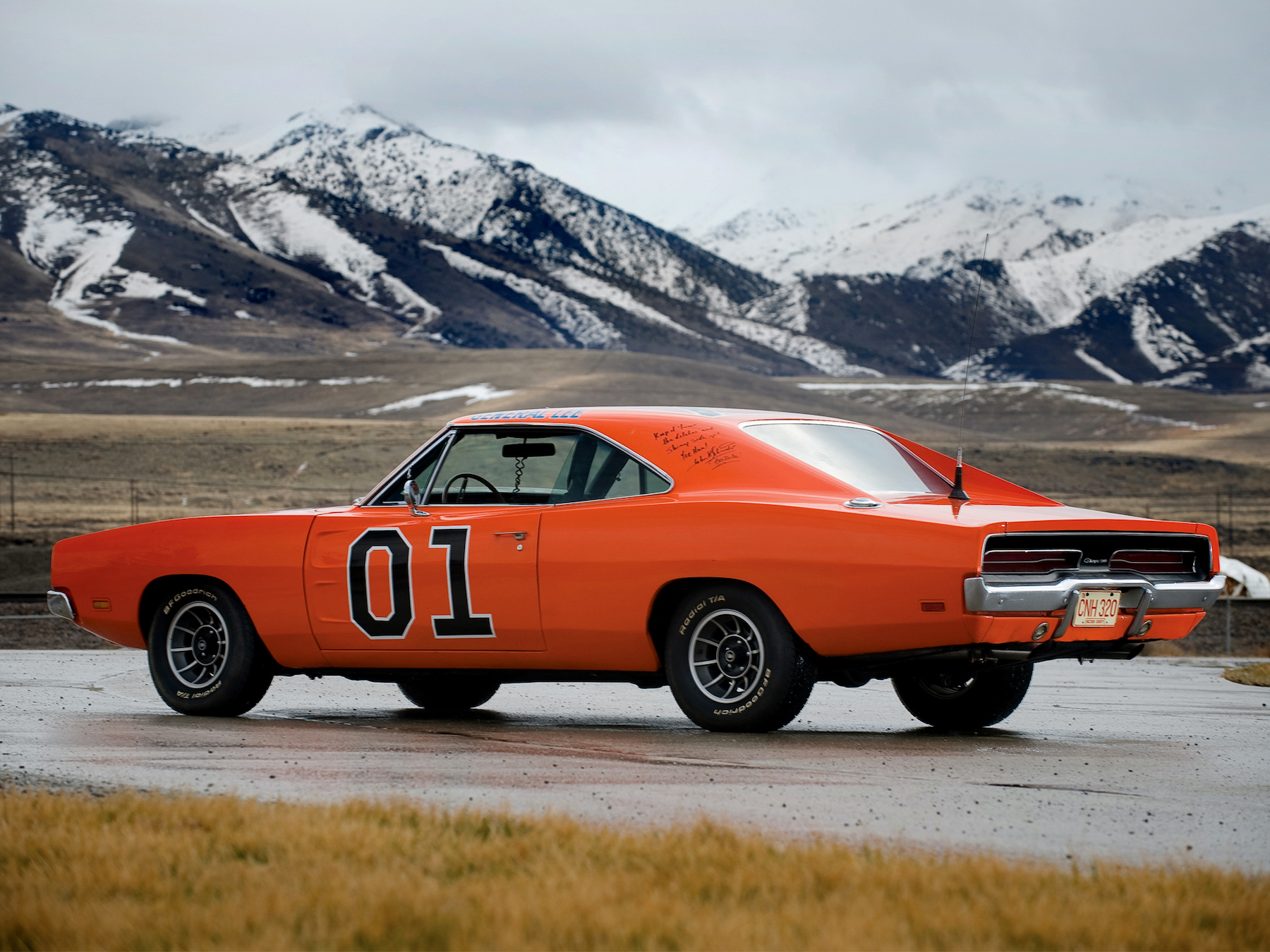
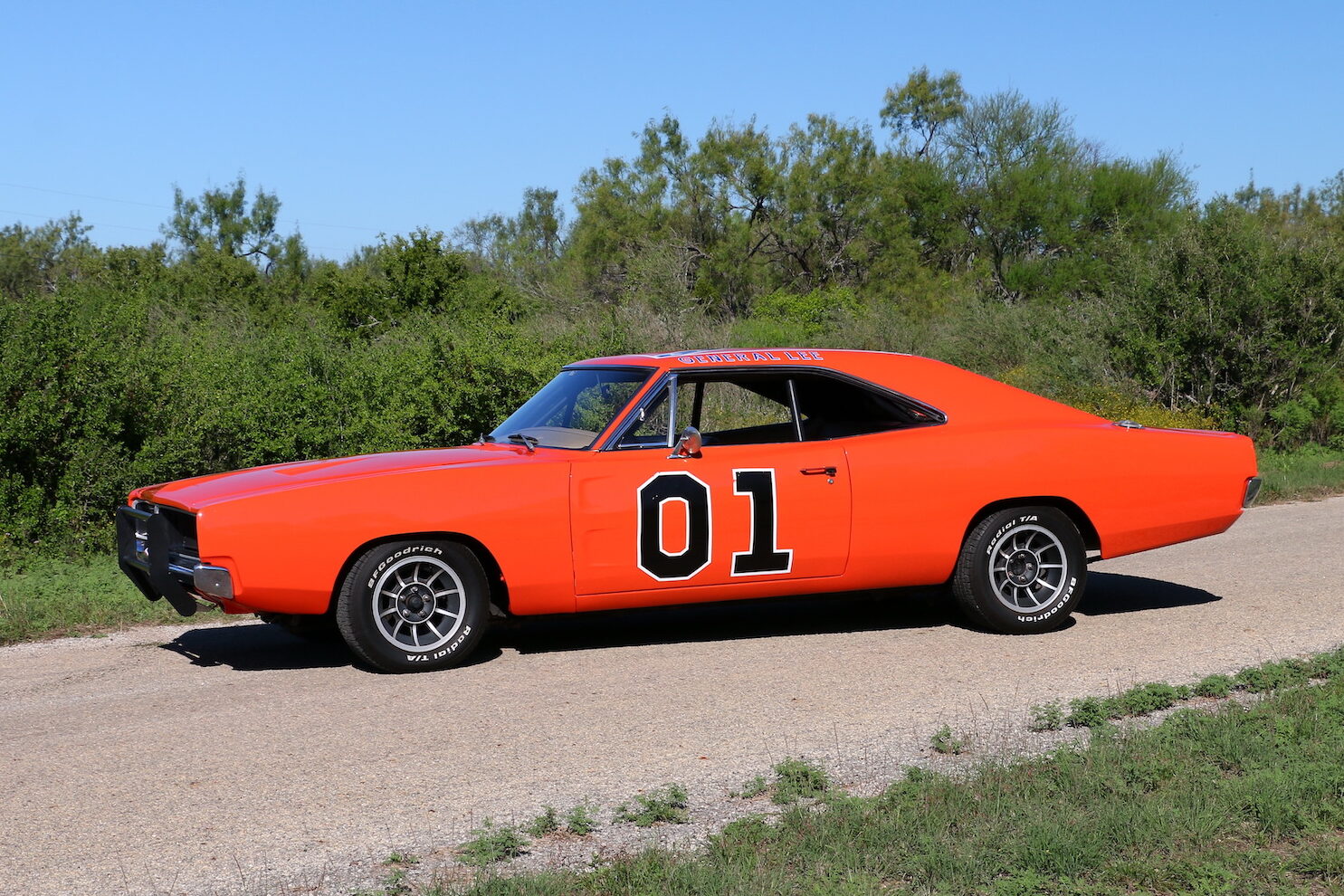
In our ‘Screen Gems’ series, we’re winding back the clock and taking a look at some of the iconic cars that became film and TV stars so recognisable that you’ll know them whether a car fan or not. This is the sixth of 10 instalments in this series.
If during the early 1980s you were flying low and slow across rural California, a strange sight might have unfolded in the fields of a property once owned by a famous actor.
About 50km north of Hollywood in the tranquil Santa Clarita Valley was Melody Ranch, once owned by shoot-em-up movie star Gene Autry and home to Hollywood archivists and car wranglers, the Veluzat Brothers.
At the time, the Veluzat movie ranch had become the resting place for around 200 cars, with more arriving each week. But this wasn’t any ordinary wrecking yard with the usual mix of mangled makes and models, instead every car at the Veluzat ranch was a Dodge Charger, each painted in a distinctive shade or orange. They had all been destroyed during production of the Dukes of Hazzard television series, one of the most popular series on American television screens between 1979 and 1985.
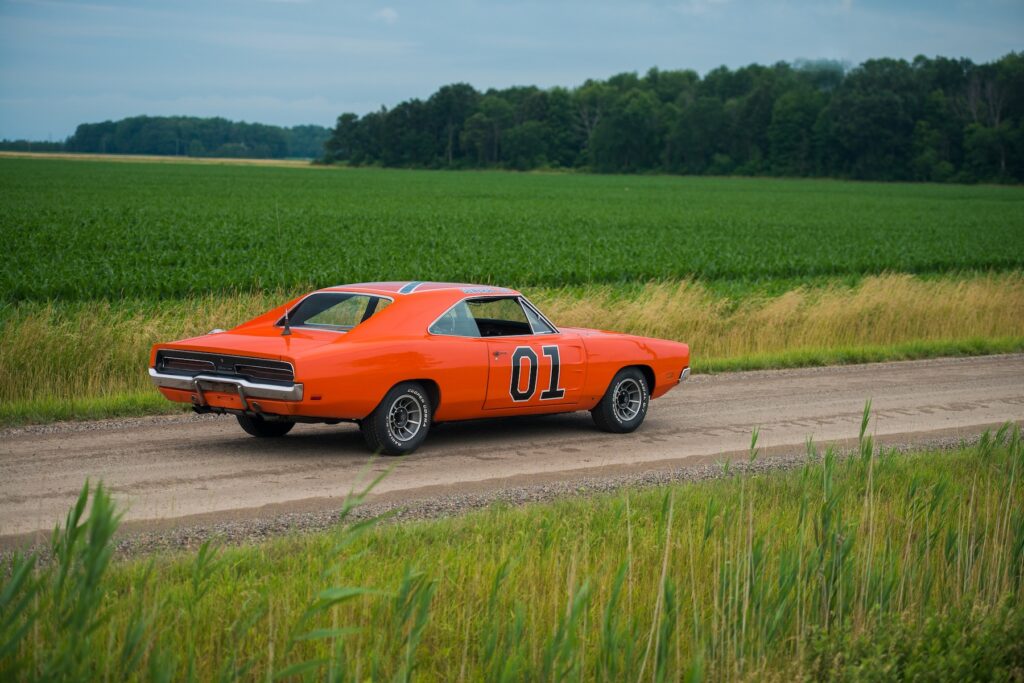
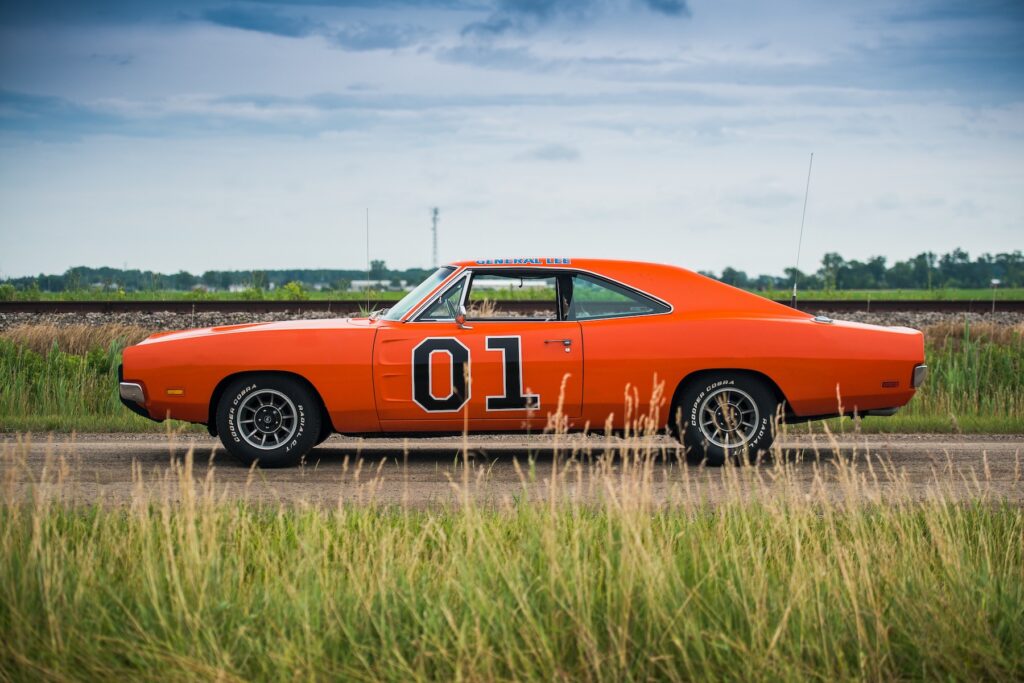
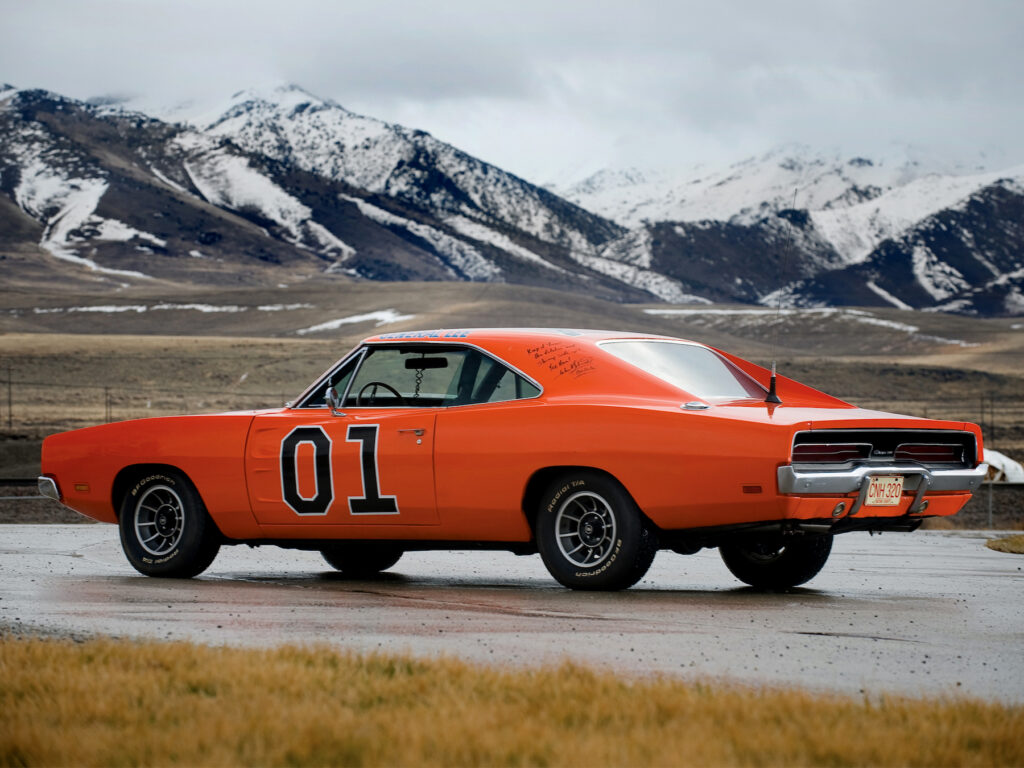
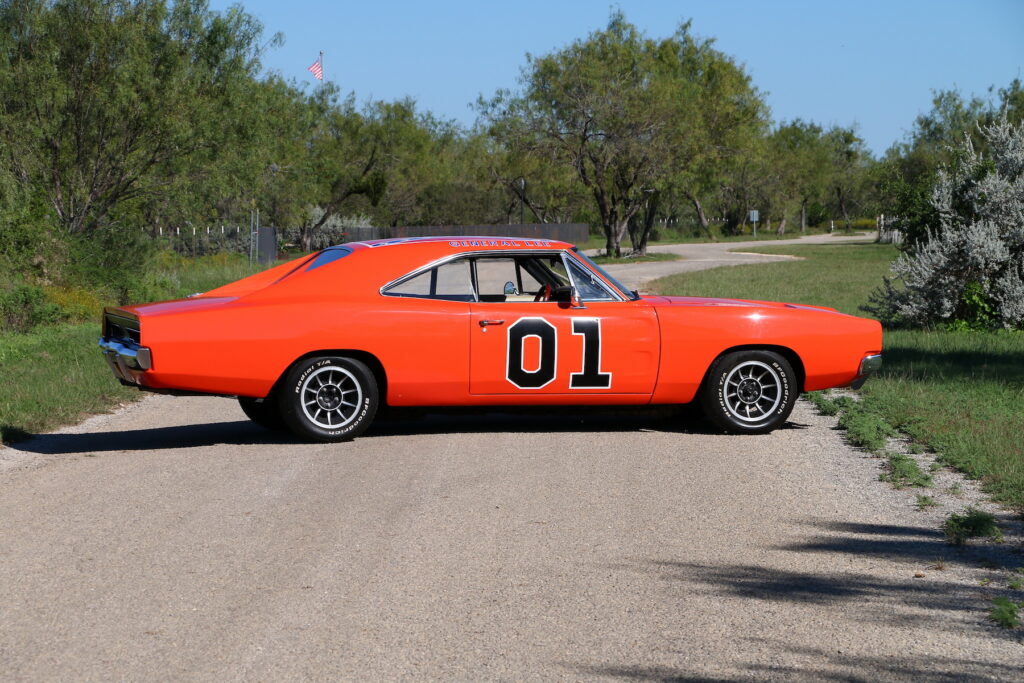
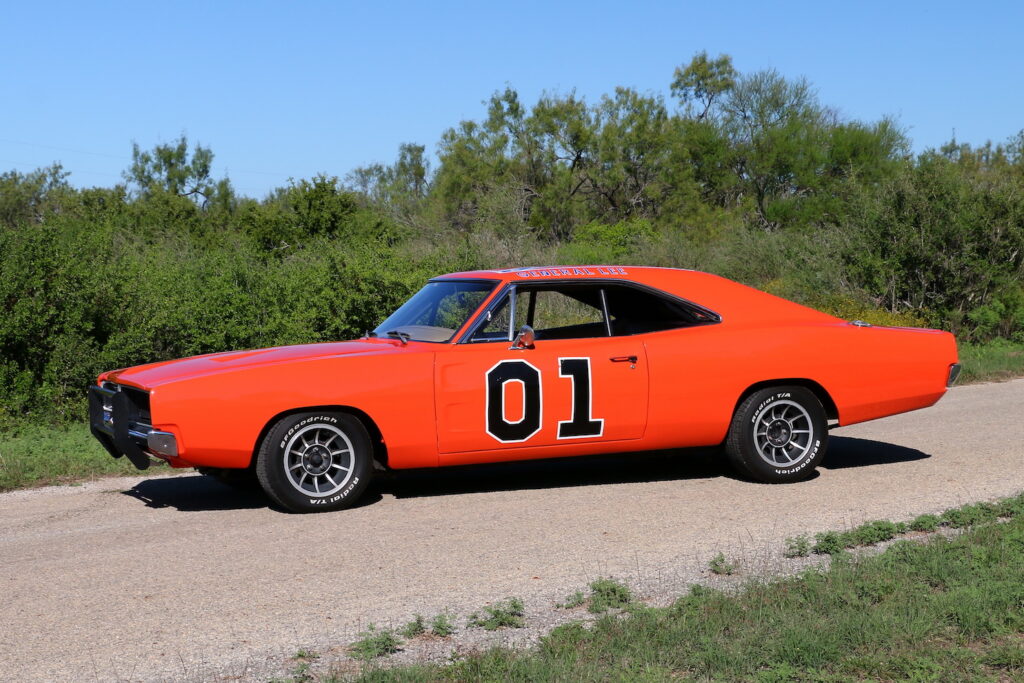
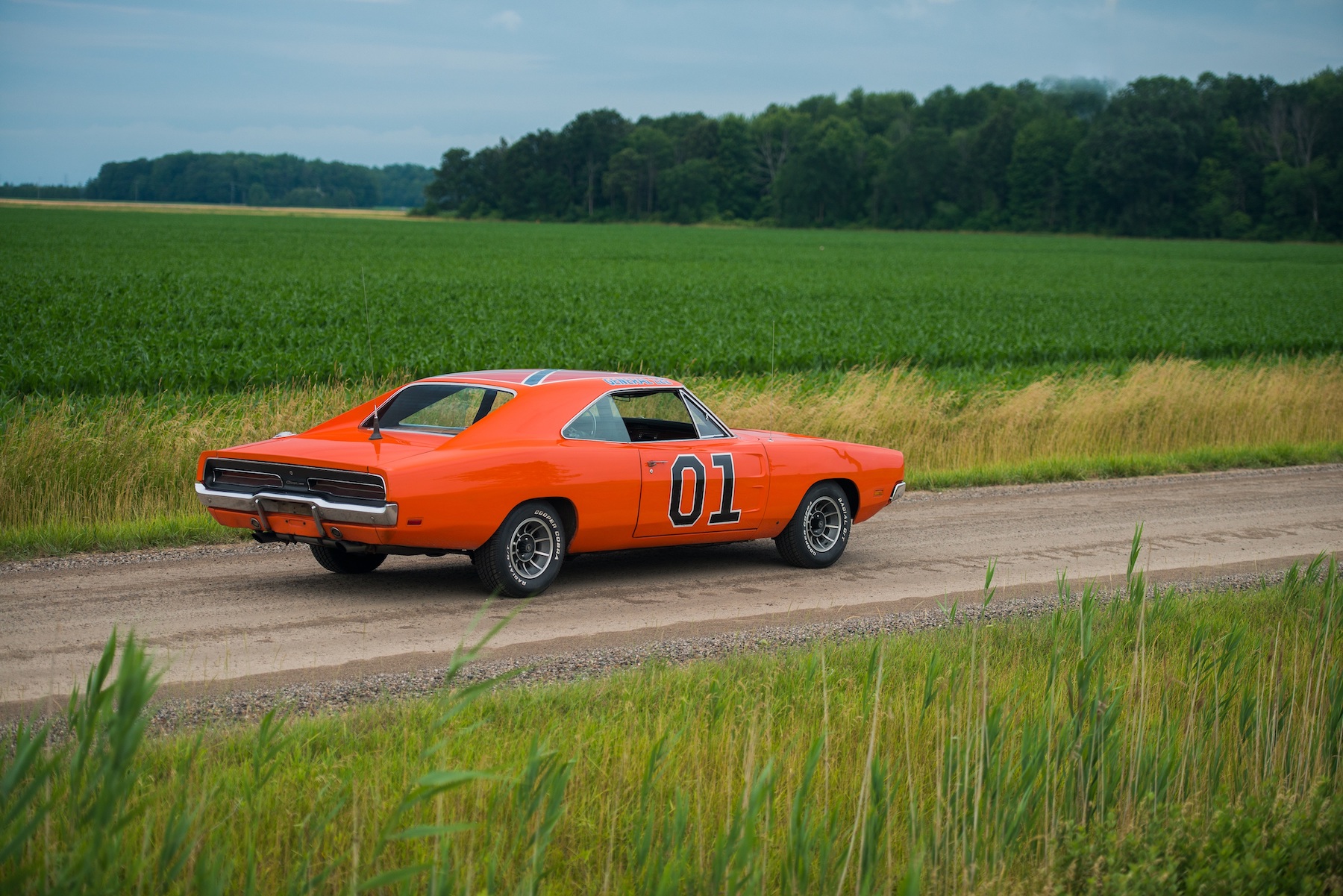
The reason for the doppelganger wrecks was the mechanical superstar of the series, a 1969 Charger nicknamed ‘The General Lee’, which starred alongside Bo Duke (John Schneider), his cousin Luke Duke (Tom Wopat), their cousin Daisy Duke (Catherine Bach) and patriarch Uncle Jesse Duke (Denver Pyle), among others.
For around half of the Dukes of Hazzard’s 147 episodes, Andre and Renauld Veluzat were responsible for locating, painting and preparing at least three Chargers per show, charging $250-300 rental per car and a $2000-3000 replacement fee for any that were bent beyond repair… of which there were many.

The Dukes of Hazzard weren’t royalty and Hazzard County where they lived didn’t exist but the action comedy focuses on the antics of Bo and Luke Duke, their extended family of bootleggers and the antics they get up to while thwarting the efforts of county commissioner Boss Hogg (Sorrell Booke) and Sherriff Rosco P Coltrane (James Best) to rein them in.
A family-oriented series based on a street-driven race car regularly driven at high speed and being involved in death defying stunts would likely not get greenlit today, but it became addictive viewing for millions of car-loving Americans.
The Dukes challenged the rising tide of political correctness of the late 1970s and early 1980s on a whole range of levels, including widespread public dislike for the USA’s ‘Double Dime’ (55mph) speed limit and over-policed road network, proving there was still plenty of love for fuel-guzzling V8-powered muscle cars, and especially ones like the General Lee which had its doors welded shut as per NASCAR regulations.
The show’s Southern, rebellious, and anti-authoritarian stereotypes were played to maximum effect, including the lovable rogues in their moonshine running Dodge with its ‘Dixieland’ air-horn, a wise patriarch, crooked cops working for a dodgy bar owner, and an attractive Jeep-driving girl cousin in short shorts.
Each week, the orange Dodge – with race number ‘01’ on its doors and a Confederate Flag painted on its roof, hence the General Lee monicker – would take on the inept Hazzard County police in perilous pursuits, with the cops inevitably ending up in a river or experiencing some other vehicle-borne disaster. It was a formula for small-screen escapism that could not fail, especially with the gritty baritone of country music star Waylon Jennings providing witty voiceover commentary.
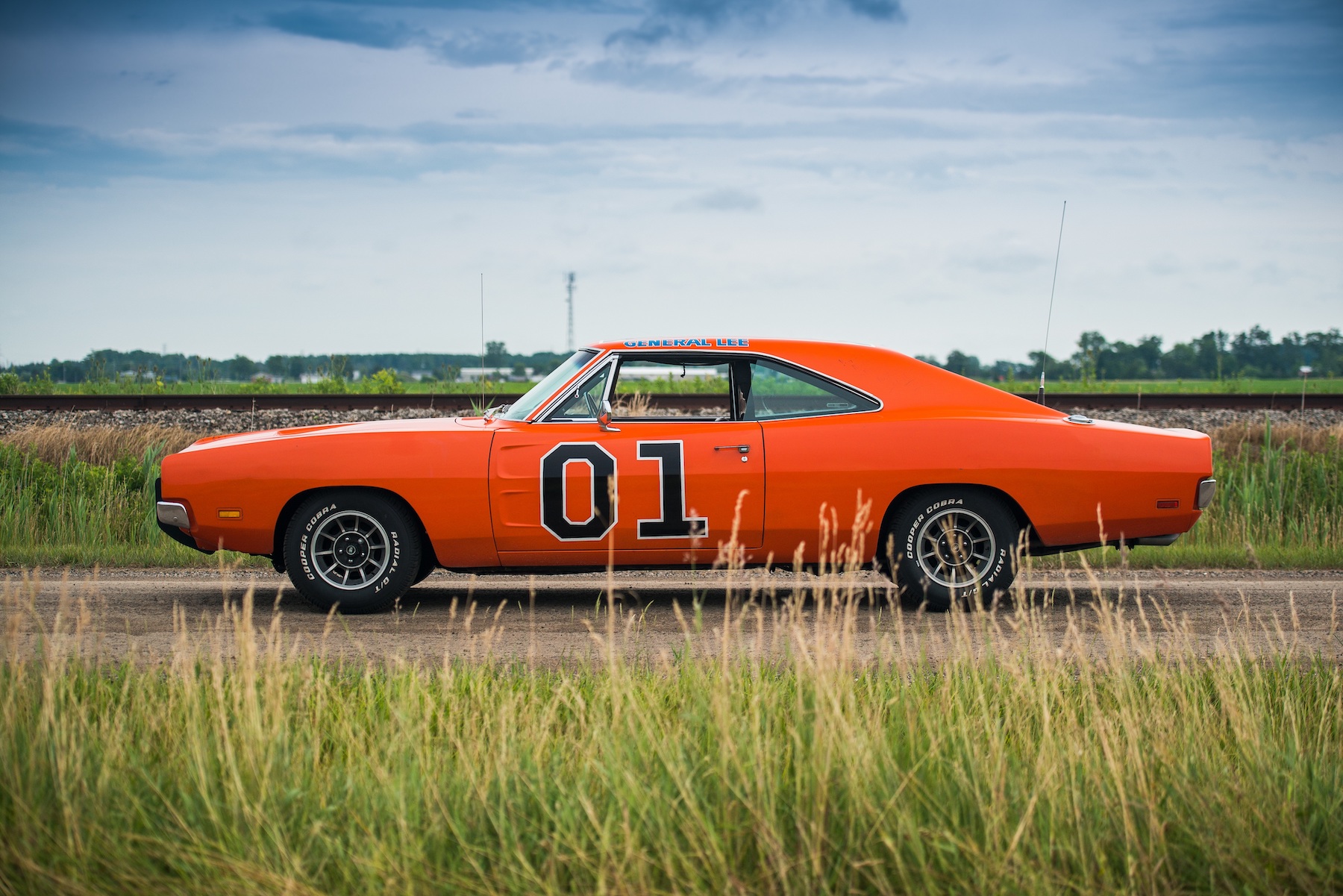
The story of how the Duke Boys acquire the car that becomes the General Lee Charger traces back to the junkyard purchase of a wrecked black 1969 Dodge Charger which the cousins require for an upcoming stock car race.
Hazzard County workshop proprietor and cousin Cooter Davenport works his magic on the 440-cubic inch Magnum V8, welds the doors shut and paints the car in its distinctive orange hue, before the boys add their touches with the door numbers and Confederate flag. The Duke Boys go on to win the race with its $10,000 prize, beating a car backed by Hazzard kingpin, Boss Hogg, and setting the scene for a long-running rivalry.
While the bigger 400ci V8 suited the racing narrative, not all the General Lee’s featured in the series ran the 440 Magnum V8, with the very first few cars filmed running Chrysler’s 383ci V8, and later cars running both 400ci and 318ci V8s.
The Dukes of Hazzard hero car was initially intended to be a Pontiac Trans Am, but between the series being mooted in 1975 and production beginning in late 1978, Burt Reynolds had already helped turn the Trans Am into a celluloid icon in 1977’s Smokey and the Bandit.
Inspiration for the TV series had come via the cheap and forgettable Moonrunners – a made for TV film from Dukes of Hazzard producer Gy Waldron, with several characters carrying over to the series.
The hero of that film was a 1955 Chevrolet Traveller but cars of its ilk were already entrenched as classics and becoming expensive. Producers may have feared a backlash from car enthusiasts if significant numbers of mid-50s Chevys were wrecked, given the destructive nature of the shows’ proposed stunts.
No such qualms surrounded decade-old Dodge Chargers, which were being dumped in record numbers at the time as higher octane fuels became expensive and insurance unaffordable.
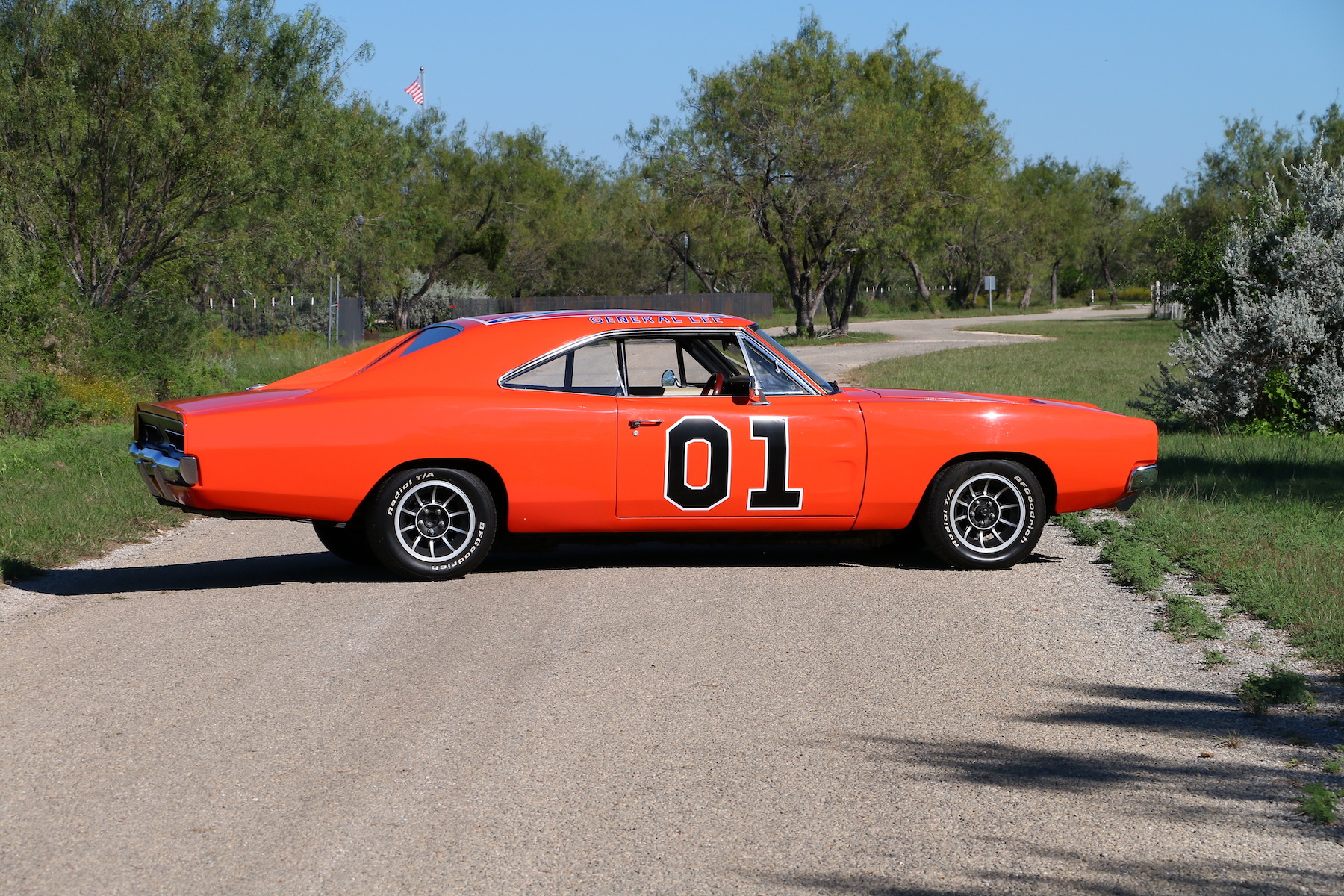
As it happens, more 1968 cars (96,100) were built than other Charger series, but the car chosen to be reborn as General Lee was a 1969 model. Around 89,000 of these had been sold and by the late 1970s they remained plentiful and cheap.
The first six episodes of the series were filmed in picturesque parts of Georgia, where Hazzard County was notionally located. However, the logistics of churning out a broadcast hour of action-packed television week after week proved daunting, so production shifted to the rural realms surrounding Hollywood.
Much of the action in second and subsequent seasons was shot in rural Californian locations that for decades had served as film sets. These included the famed Paramount Ranch where many westerns had been made, and Valencia Oaks where the Duke family home and the set for Boss Hogg’s Boar’s Nest tavern were built.
The cars remained largely unchanged for the entire TV series and into the telemovies that followed. They all carried the flag on the roof and ‘01’ on the doors, and all were painted the same distinctive shade of orange, which for many years was thought to be either Hemi Orange or General Motors’ Hugger Orange.
Recently and following research conducted by Dukes of Hazzard guru Travis Bell, it is said to be neither and originates very close to home for us in Australia.
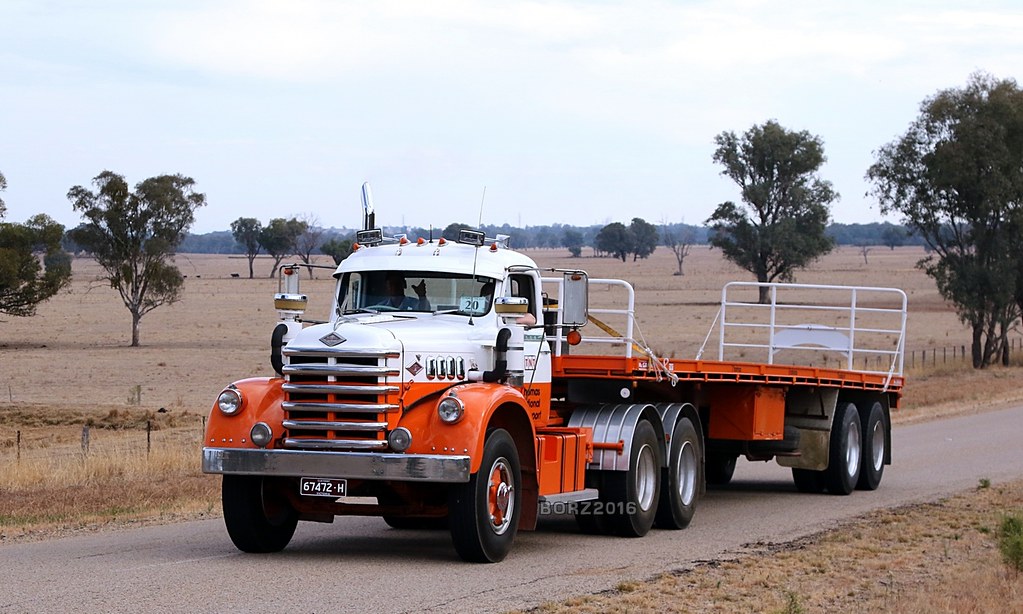
According to Bell, he found inside the boot-lid of a survivor car the words ‘TNT Express’ which he identified as the shade of orange used by trucks from the Australian-based Thomas Nationwide Transport fleet.
As years passed and stocks of viable 1969 Chargers diminished, it became increasingly difficult to meet a demanding production schedule or compensate for the cars being destroyed each week by ambitious stunts or over-exuberant driving.
The Veluzat brothers would reportedly pay owners of light aircraft to spot from above the shapes of late-1960s Chargers in scrapyards and backyards. Owners would then be approached to sell by agents of the Veluzats, with wads of cash as inducements.
As stocks really began running dry, cars that had been considered too badly damaged to continue were patched up to jump again. Others were robbed of undamaged panels which were then welded over the bodies of similar sized AMC Ambassadors.
Estimates of how many Chargers were eliminated during production of the TV series do vary, but recollections from people involved, including John ‘Bo Duke’ Schneider, all exceed 300. Estimates of surviving cars are much lower, with numbers ranging between 16 and 20, so your chances of finding a genuine ‘General’ in usable condition are minimal.
US$9.9 million was bid in 2007 for a car owned by John Schneider but that was later revealed to be bogus, leaving the highest confirmed sales all at less than US$250,000.
One apparently genuine survivor, rescued complete with body damage from the stunt troupe, made just US$88,000 when offered in 2019 by Mecum Auctions. Locally, a restored ‘promotional’ car was offered on several auction platforms at A$220-280k before being sold in 2024 for an undisclosed amount.
To find out more about the other cars featured in our ‘Screen Gems’ series, you can head back to the beginning by clicking here.