
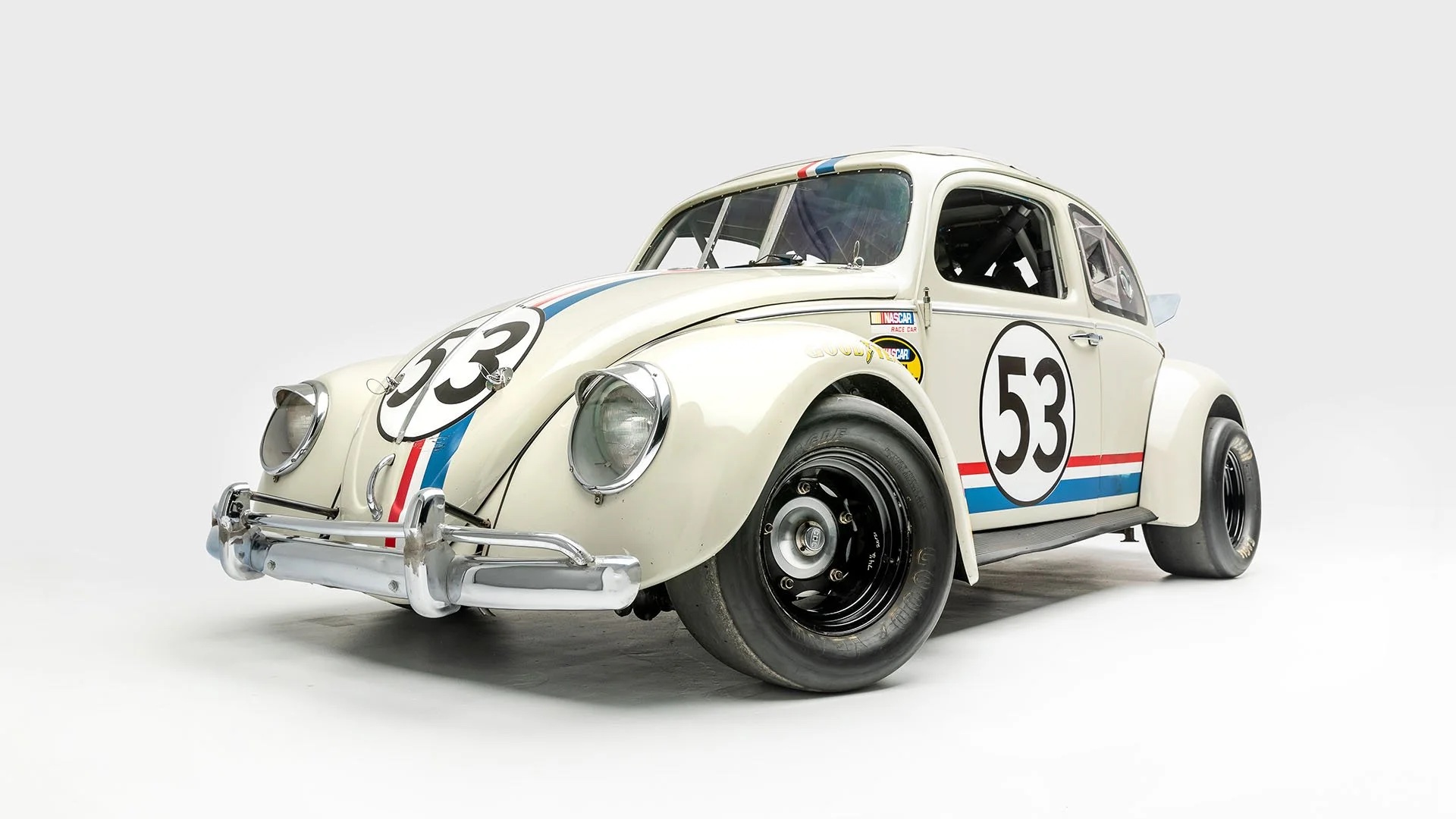
In our ‘Screen Gems’ series, we’re winding back the clock and taking a look at some of the iconic cars that became film and TV stars so recognisable that you’ll know them whether a car fan or not. This is the fifth of 10 instalments in this series.
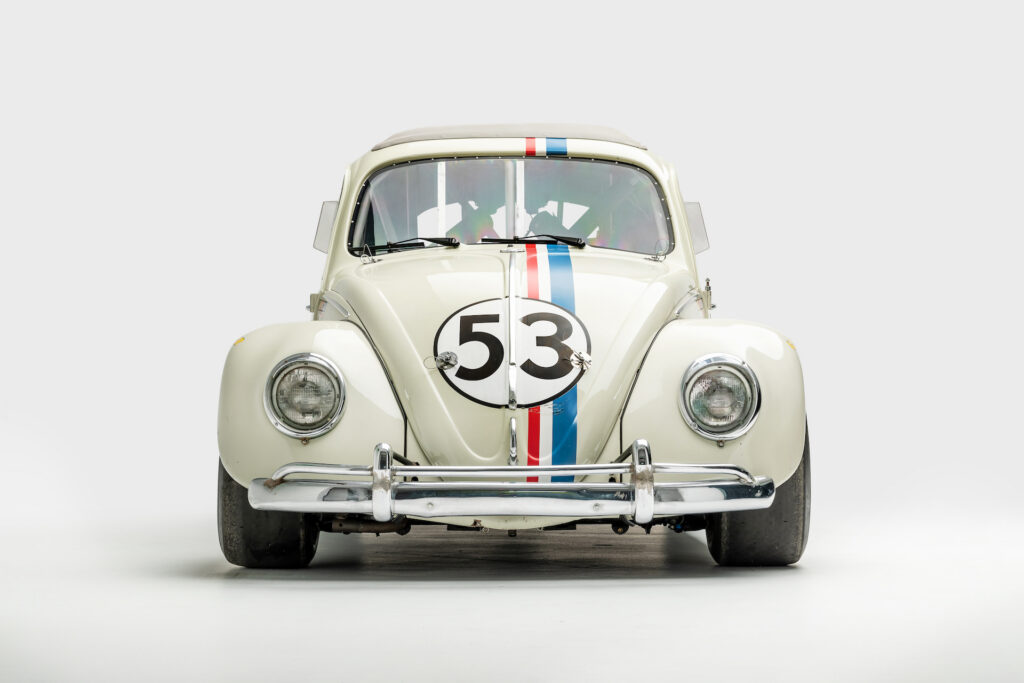
Since first appearing on cinema screens almost 60 years ago Herbie, the sentient anthropomorphic Volkswagen Beetle, has seen more reboots than a dodgy laptop. But the image and legacy of this clever and charming automotive character endure, so much so that that it went on to star in no less than six instalments of the franchise over four decades.
Herbie’s first appearance in 1968’s The Love Bug was shot decades before Computer Generated Imagery (CGI) allowed filmmakers to defy the laws of physics and bounds of credibility. Back then, most stunts were performed in actual time and with involvement from a troupe of skilled and brave performers.
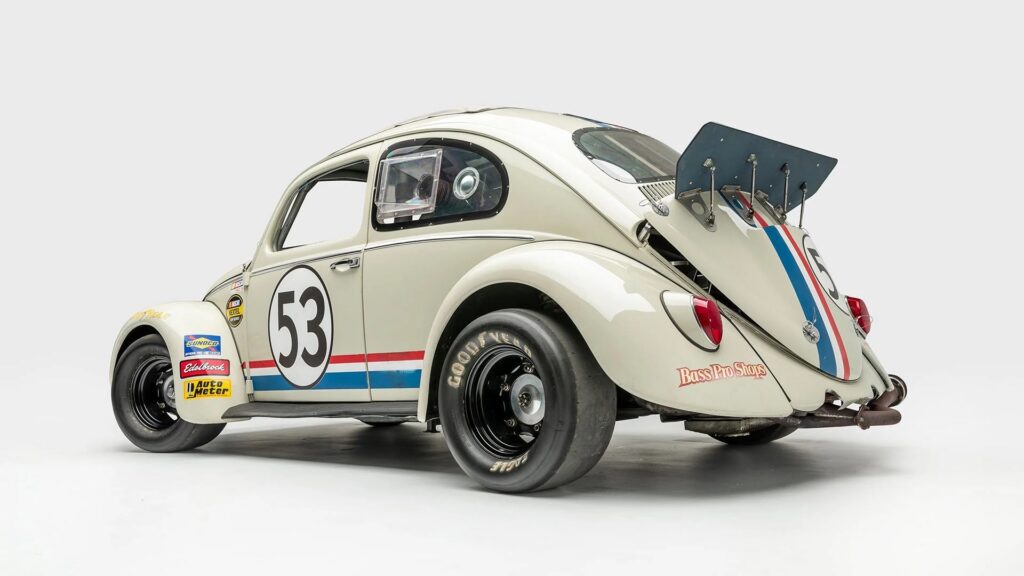
The Love Bug was released on Christmas Eve of 1968 and its creation involved the use of at least eight (note: recollections vary) Volkswagen Beetles. The ‘Bugs’ had been modified in ways that let them perform eye-popping feats without snapping in half, and to keep ostensibly faster cars in sight during race sequences.
Notable for being the last Disney live-action film to be personally approved by Walt Disney before his death in 1967 and completed in his memory, the screenplay was based on a little-known 1961 romance novel by Gordon Buford title “Boy, Girl, Car”.
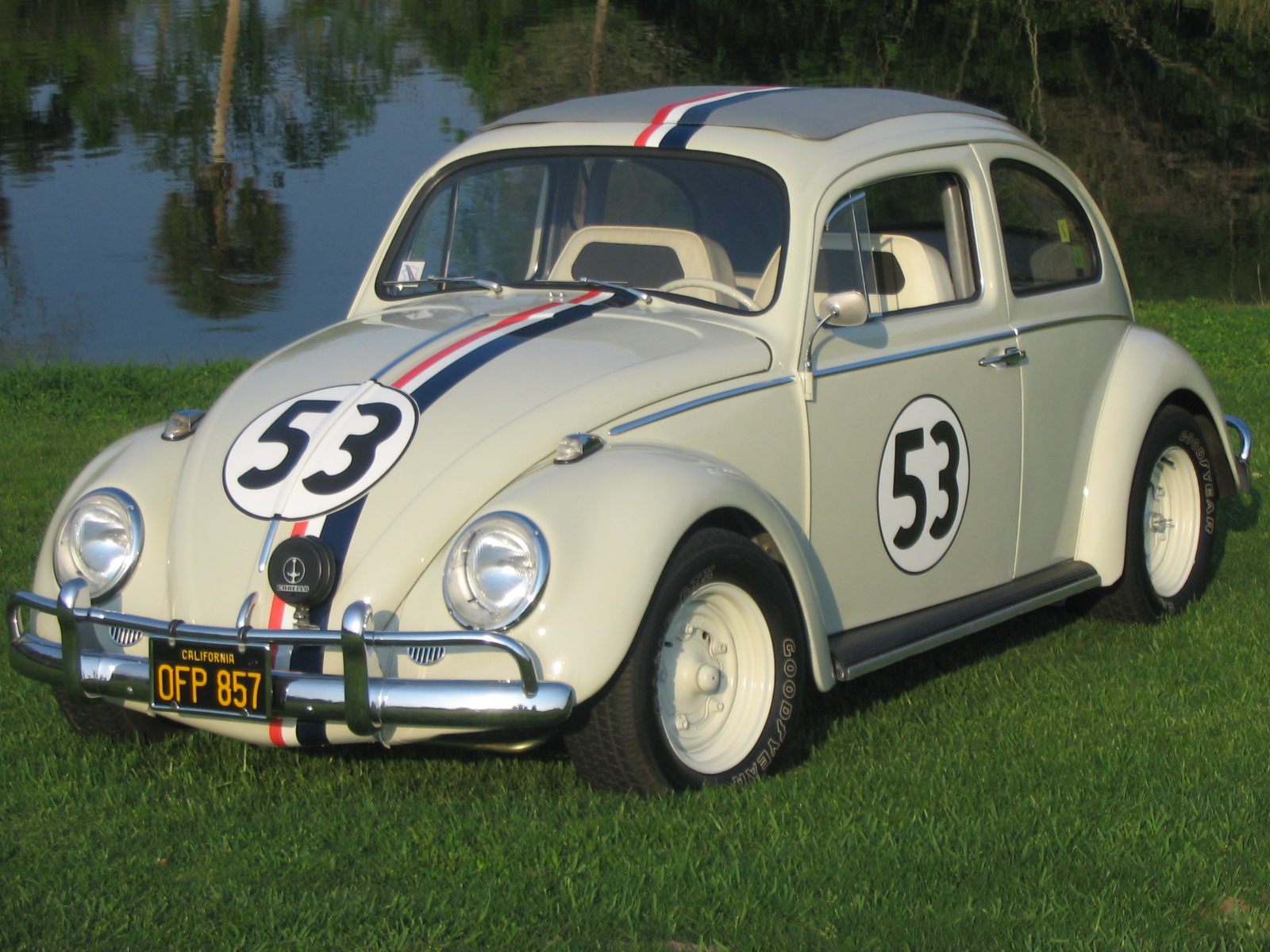
Ironically, the four-wheeled star is never referred to in the film as a Volkswagen, due to licensing requirements that saw logos removed from all the cars and no money change hands.
Despite this, VW dealerships in the various cities and towns where the film was shown throughout the USA and beyond weren’t shy about mocking up copies of Herbie for their showrooms, once the film’s broad-based appeal became obvious.
The basic plot sees the anthropomorphic white Beetle escape the clutches of an evil car dealer and joins forces with washed-up racing driver Jim Douglas – played by US TV actor Dean Jones.
In a feat requiring doting parents and cynical teens to suspend disbelief, the car inexplicably follows Douglas home from the dealer’s yard and refuses to be returned.
Douglas’ mechanic notices strange aspects of the car’s behaviour – moving without its engine running, winking headlights and autonomously opening doors, and names it when he comments that the car’s nose is similar in shape to that of his Uncle Herbie, an ex-boxer.
The film’s ‘love’ angle manifests early in the plot when Herbie’s car yard mechanic, Carole Bennett – played by a future Knots Landing star Michele Lee – joins Jim’s revitalised race team.
Once Herbie begins winning races and making money for his new owner, the villainous Peter Thorndyke, played by British actor David Tomlinson, wants the Bug back and enlists the inevitable crew of bumbling henchmen to retrieve it.
Despite spiking poor Herbie’s fuel with Irish Coffee to induce a hangover and having him split in two during the race that will decide his ownership, all ends well and Herbie’s final appearance in the film is as the wedding car when Jim and Carole are married.
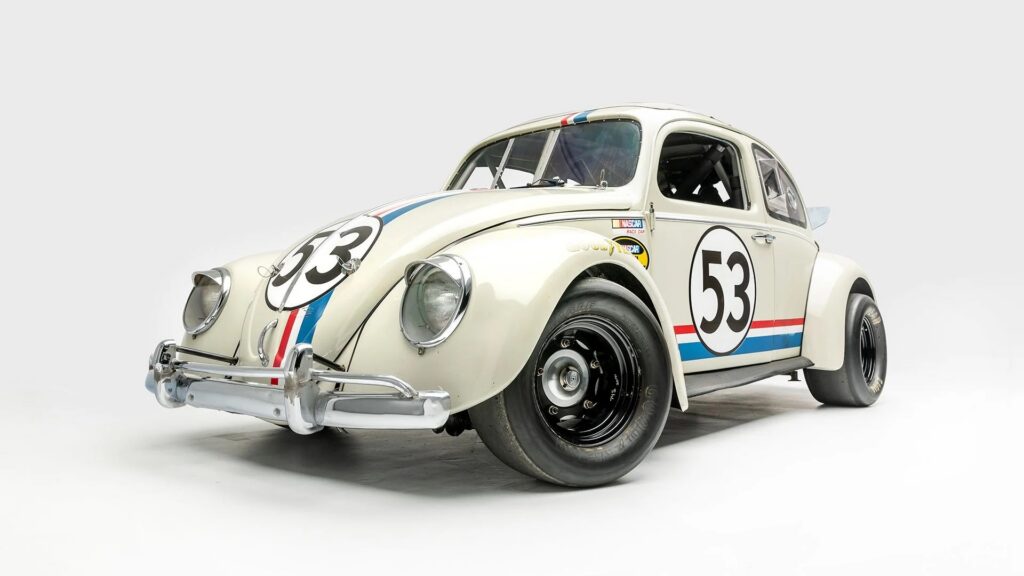
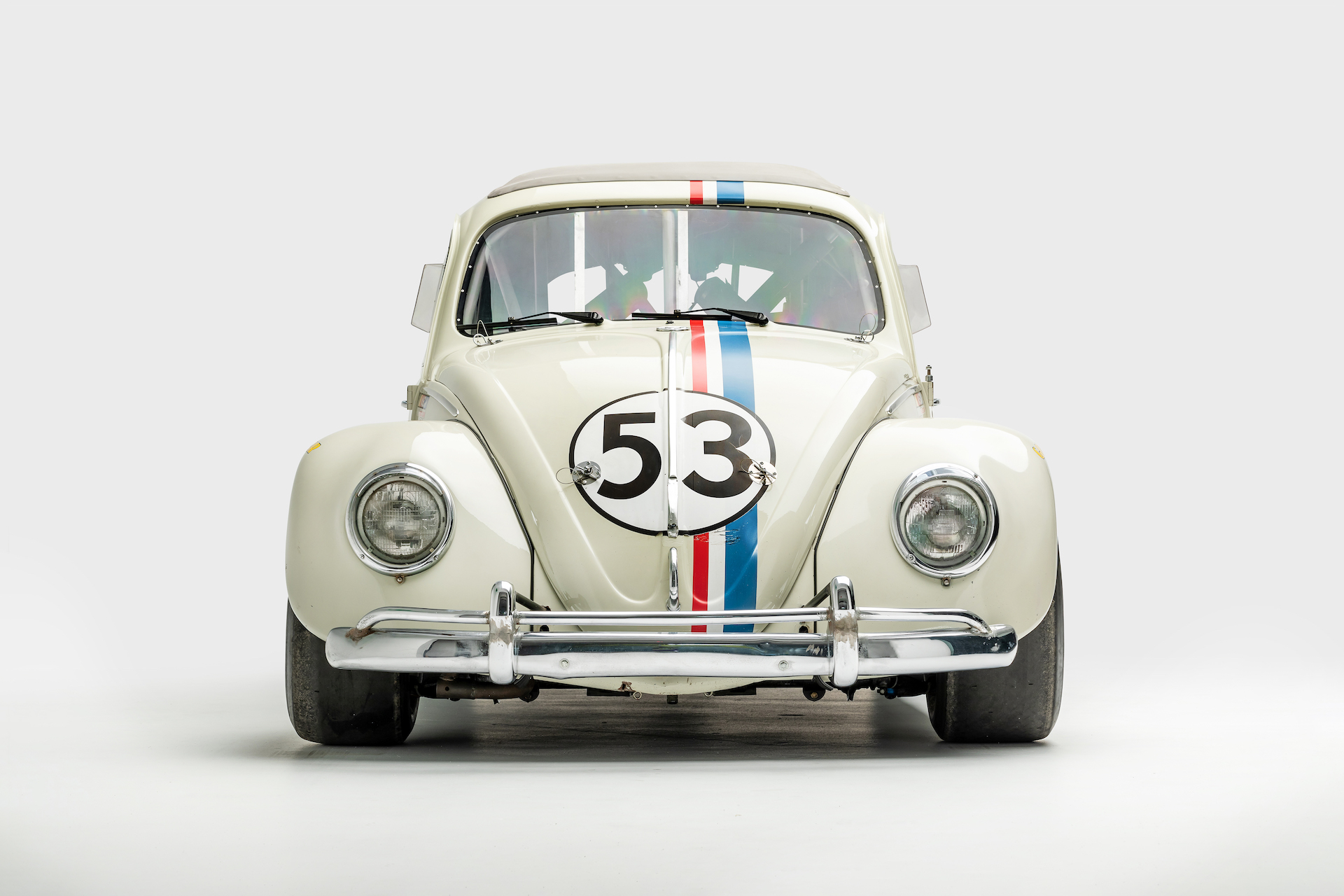
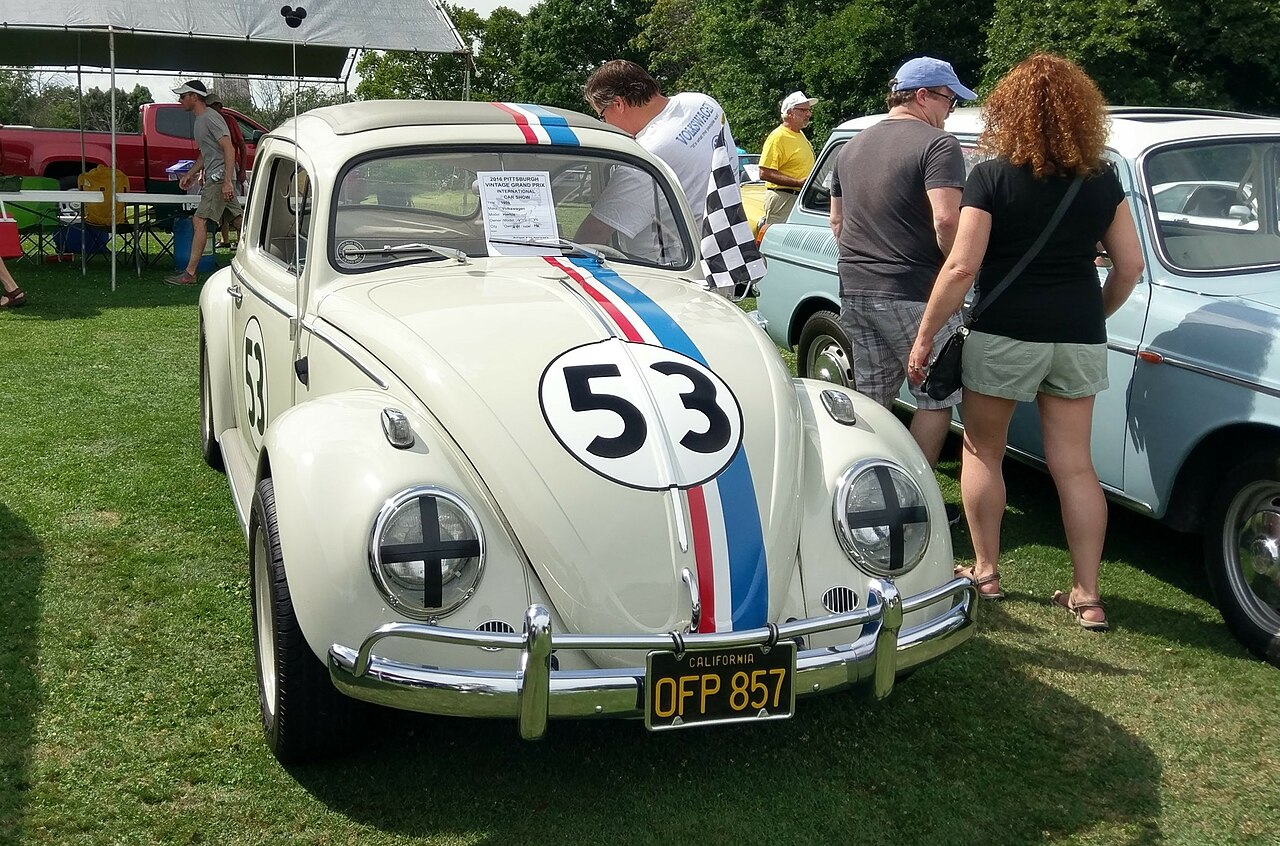
The choice of the car’s ‘53’ race number was harder to explain in the context of the film; it was chosen primarily because it was the player number carried by Don Drysdale, a famous pitcher with the Los Angeles Dodgers who was greatly admired by one of the film’s producers.
Those same producers had no idea when casting the film what kind of car should be the star (or presumably what it would be called), but after advertising for car owners in Hollywood to attend an automotive ‘cattle call’ the Beetle was quickly selected.
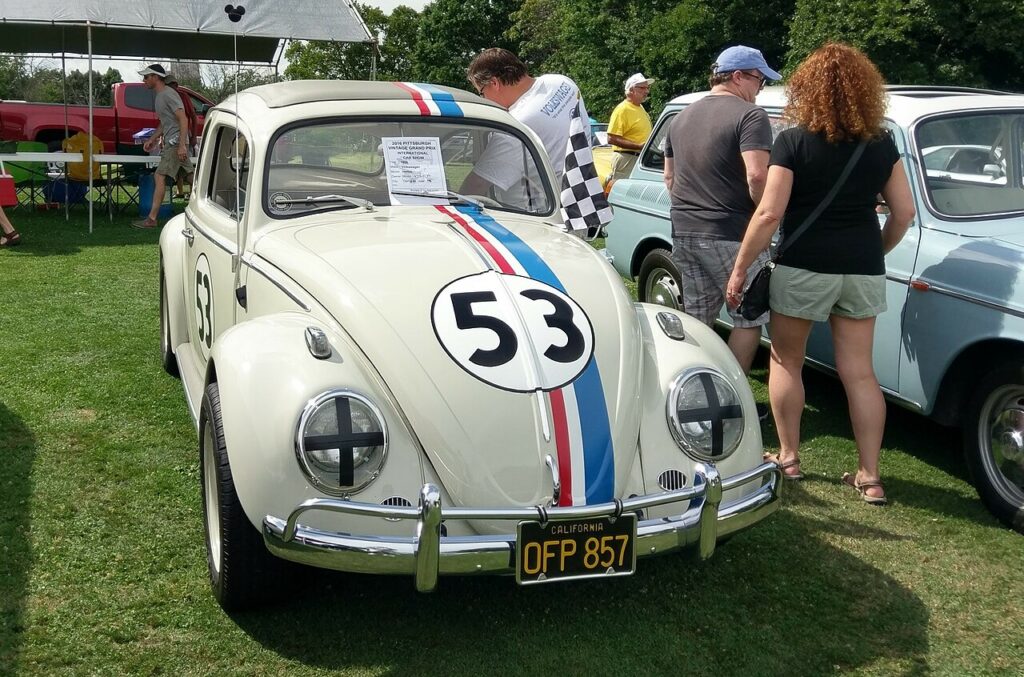
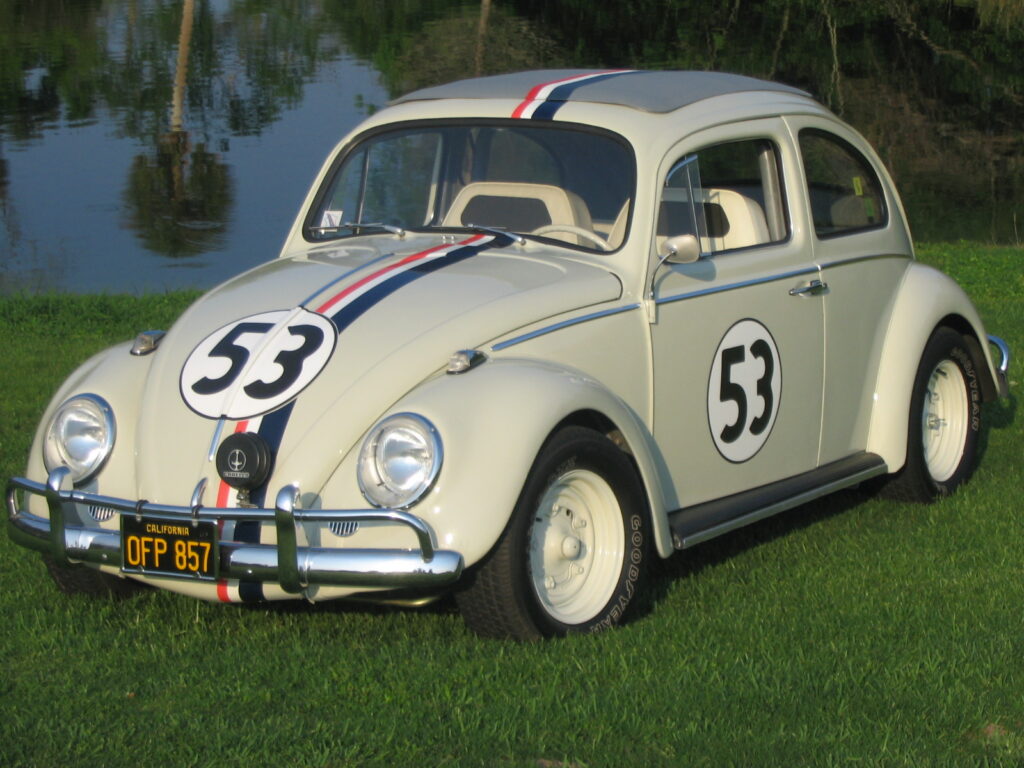
The original Herbie was a 1963 model – which in Australia would have been deemed a 1200 Deluxe – with double-height bumpers, extra chrome and indicators on the front mudguards, plus a roll-back fabric sunroof.
To perform his various on-screen antics Herbie received plenty of assistance from friends in the Visual Effects and Backroom Trickery Departments, but not all the stunts were contrived.
At least one of the cars used to film race sequences had a Porsche Super 90 engine with 90bhp (67kW) against the 36bhp normally available from a 1.2-litre Beetle flat-four.
Other versions included a ‘driverless’ Herbie which was controlled by a stunt performer lying out of sight on the back floor. There was (or were) ‘split in two’ Herbie as well, where the car separated and could be driven remotely using an engine and transmission fitted to each half.
There the tale does not end of course. In return for making US$51 million on a US$5 million production budget, Herbie reappeared five more times in cinema releases, in a telemovie and short-lived TV series.
Millions more would flow from merchandising, including sales of diecast models which could be expensive and often inaccurate.
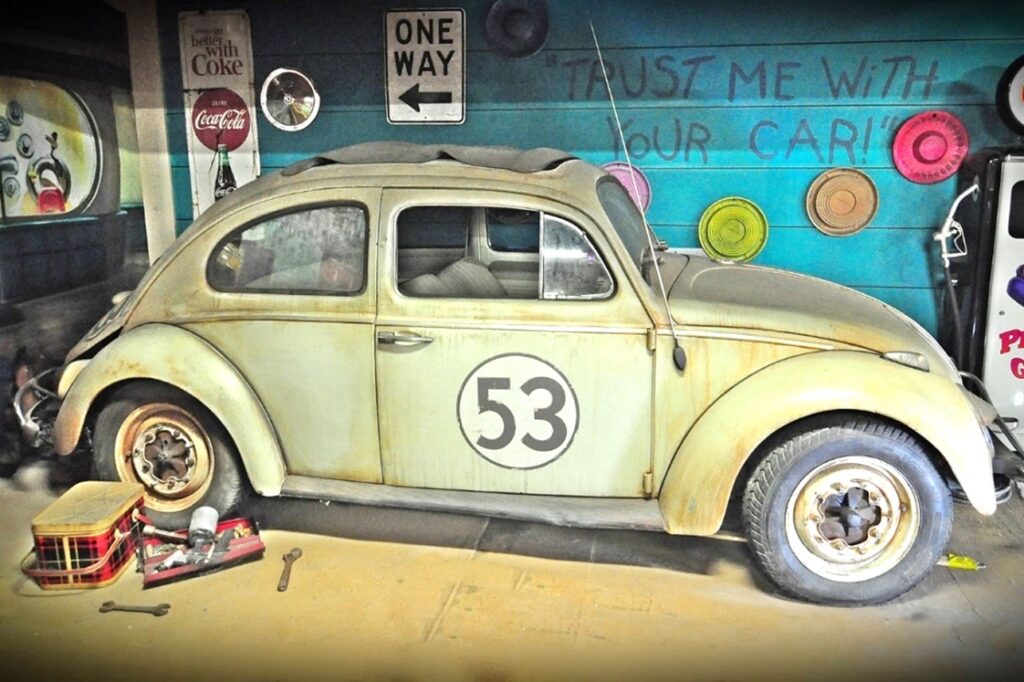
With multiple cars having appeared in the various movies plus many more on promotional duties, there should be a small army of ’63 Beetles out there with claims to Love Bug lineage, yet there are surprisingly few with documented links.
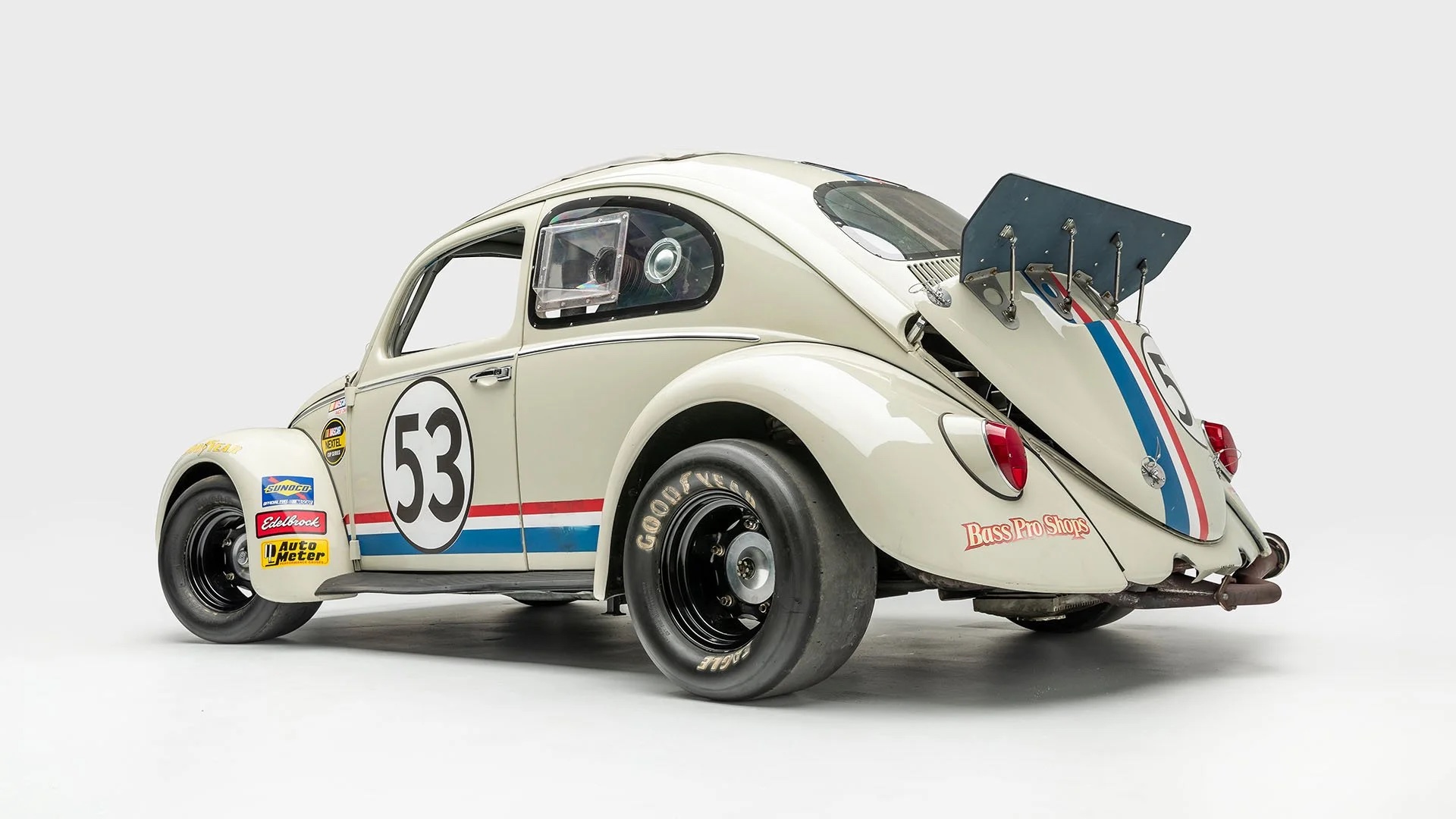
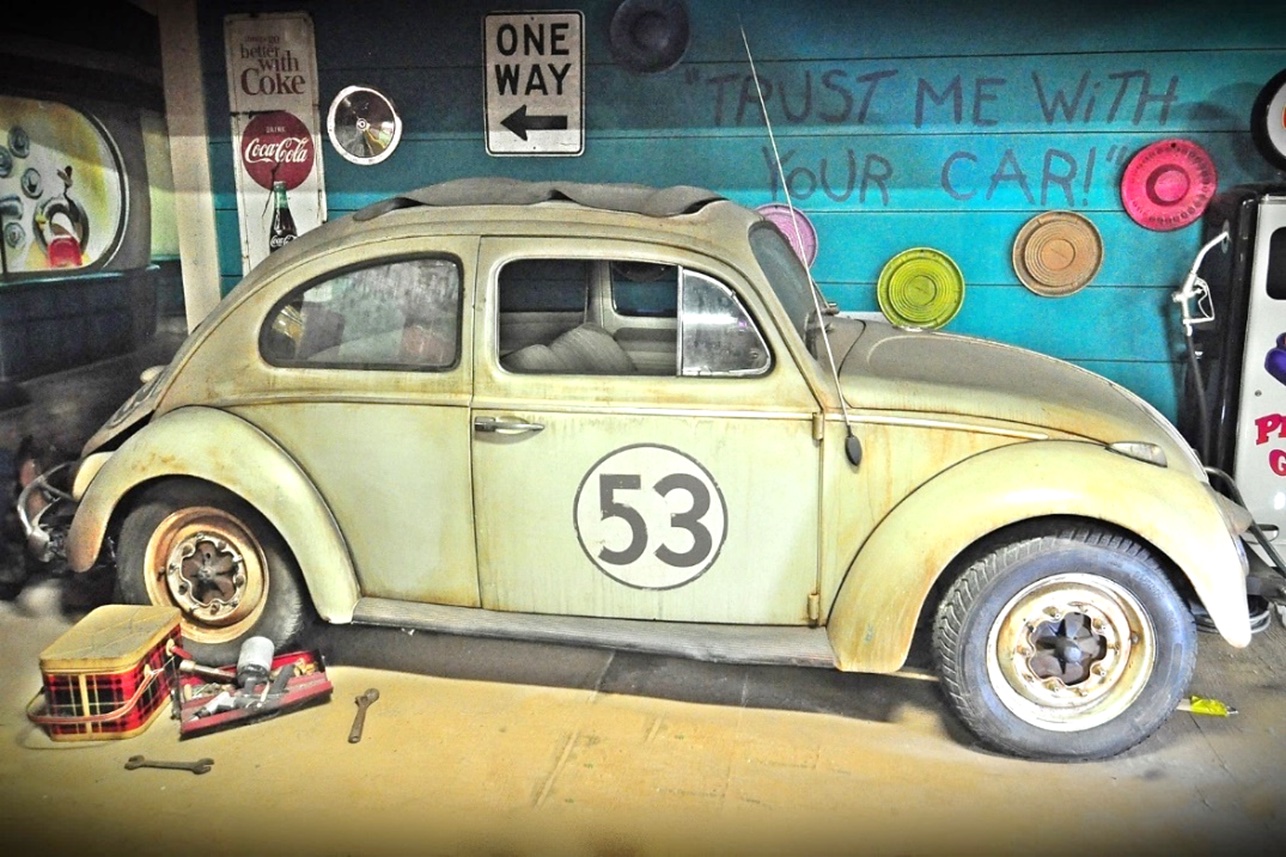
One reported sale in 2022 was of a car that had hung for many years from the ceiling of a Planet Hollywood restaurant in Las Vegas. When lowered to the ground it was identified as being from the first film in 1968 and sold by auctioneers Barrett-Jackson for US$212,000.
Confirming this car’s provenance was a modified back seat and floor, with a remote gearshift moved to the rear of the cabin. It also had holes cut in various sections of bodywork and was believed to have been modified to be driven so the driver wasn’t visible.
Another car in better condition but that featured in a later film, Herbie Goes to Monte Carlo, was sold in 2015, also by Barrett-Jackson, for US$126,500.
Beyond the 1968 original, the Love Bug’s cinematic legacy extends to 1974’s Herbie Rides Again, 1977’s Herbie Goes to Monte Carlo, 1980’s Herbie Goes Bananas, 1997’s Disney’s The Love Bug, and most recently 2005’s Herbie: Fully Loaded.
To find out more about the other cars featured in our ‘Screen Gems’ series, you can head back to the beginning by clicking here.