





In our ‘Screen Gems’ series, we’re looking back at the iconic cars that became film and television stars so instantly recognisable that you’ll know them whether a petrolhead or not. This is the fourth of 10 instalments.
If just half of the horror stories surrounding George Miller’s original 1979 post-apocalyptic dystopian action film Mad Max film are true, anybody engaged as an actor, crew member, or stunt performer is fortunate to have survived the experience at all.
Tight budgets and filming schedules meant that ‘take one’ was often the only chance to capture a particular action sequence. Once a car or other prop had been destroyed there was no replacement to go again.
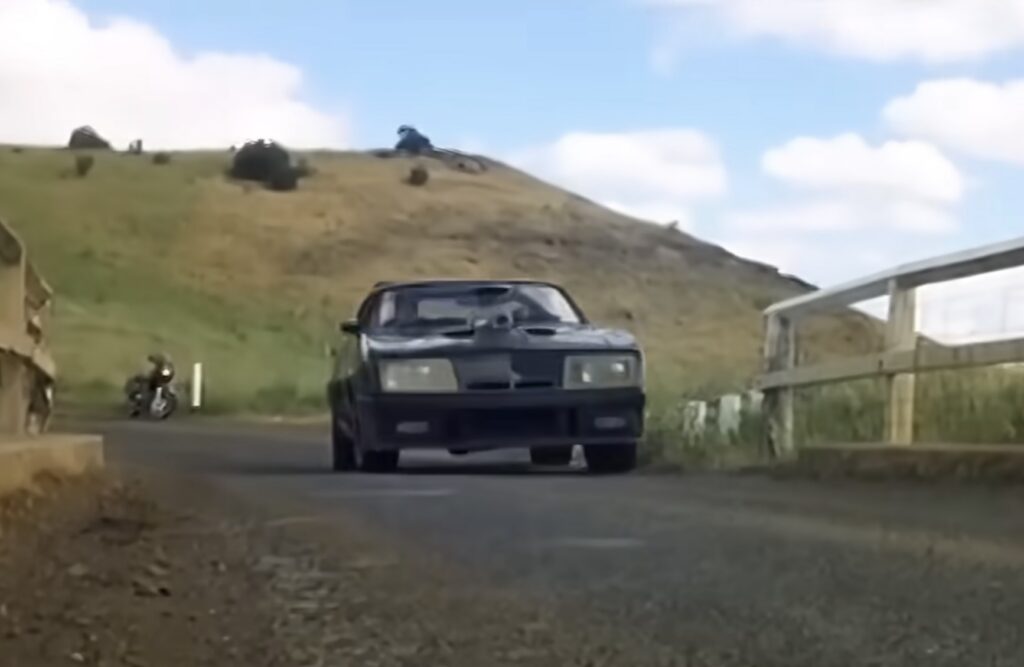
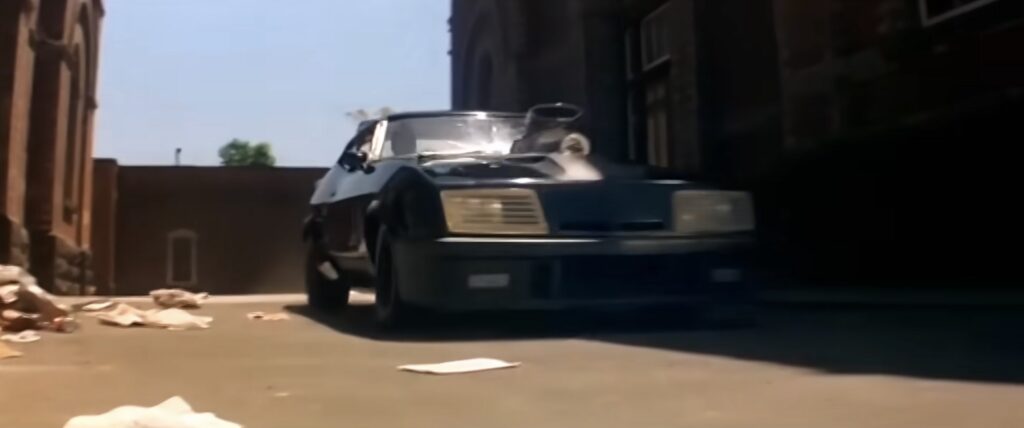
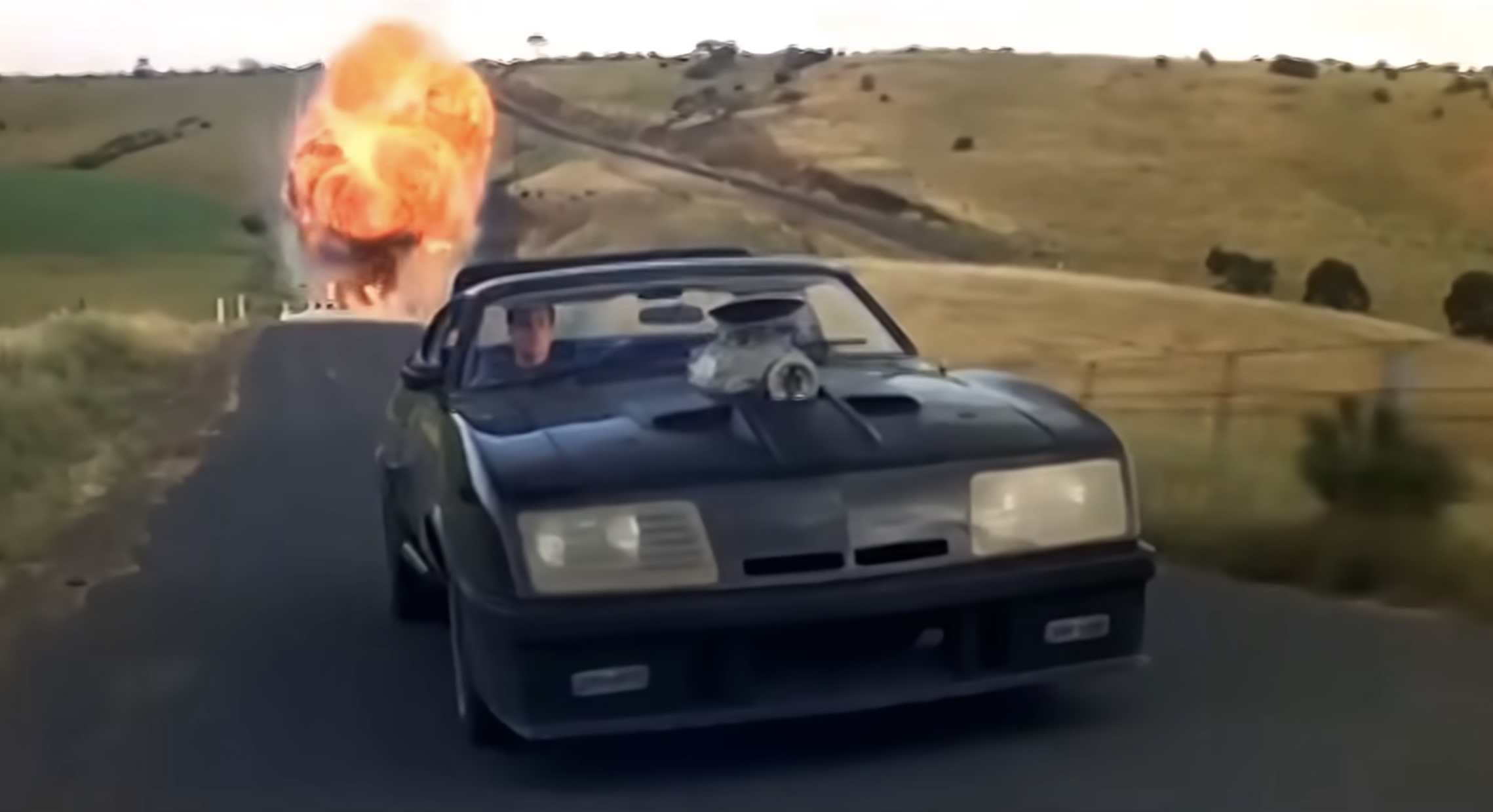
Fortunately, Max Racantowski’s all-black Pursuit Special was one iconic item that survived the original epic and returned to star in the sequel, 1982’s Mad Max 2.
The Ford Falcon-based movie car had reportedly begun life as an XB GT Hardtop before finding its way to a Melbourne ‘repo lot’ from where it was purchased as a prop for the film, along with two V8 Falcon sedans that may or may not have been ex-Police cars.
A feature on Mad Max cars that appeared some years back in Aussie custom car magazine Street Machine quoted a figure of $7500 as having been allocated to purchase and equip stunt vehicles for the film.
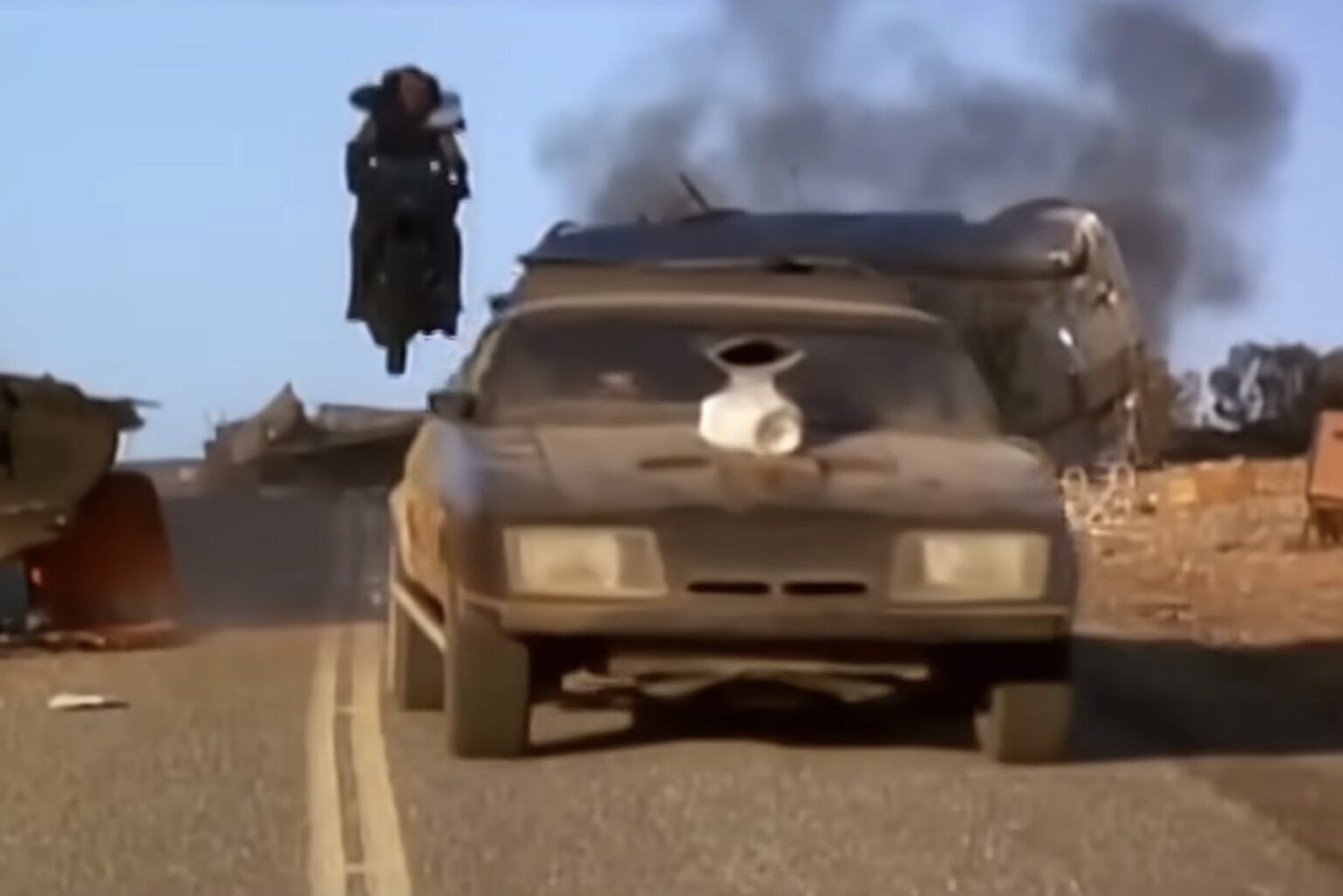
Most or all of that was likely eaten up by the three Fords, begging the question of how the producers managed to acquire the dozens of other cars, trucks and motorcycles featured in the film, including the Nightrider’s menacing black 1972 Holden Monaro HQ coupe, and the red Holden HJ Sandman panel van driven by Max’s wife Jessie.
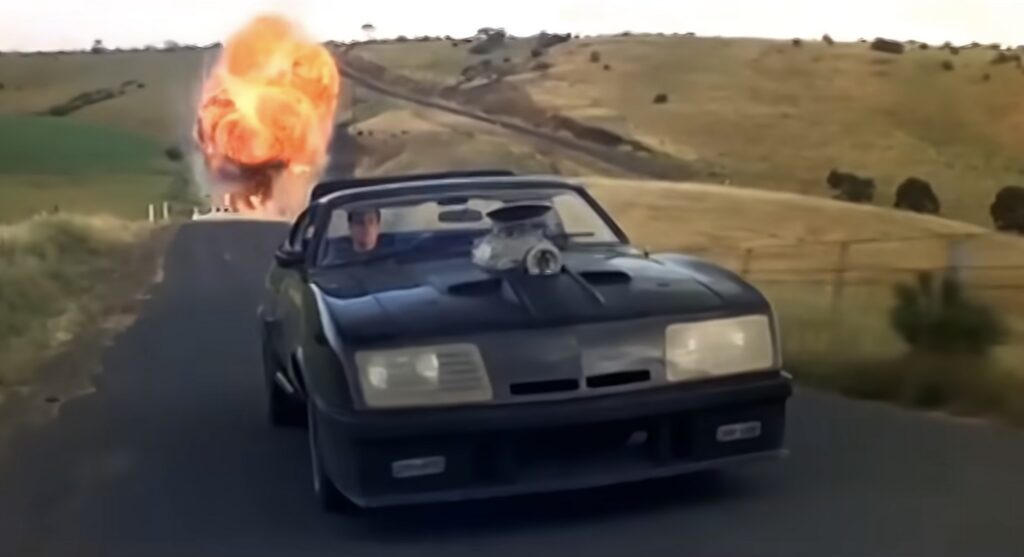
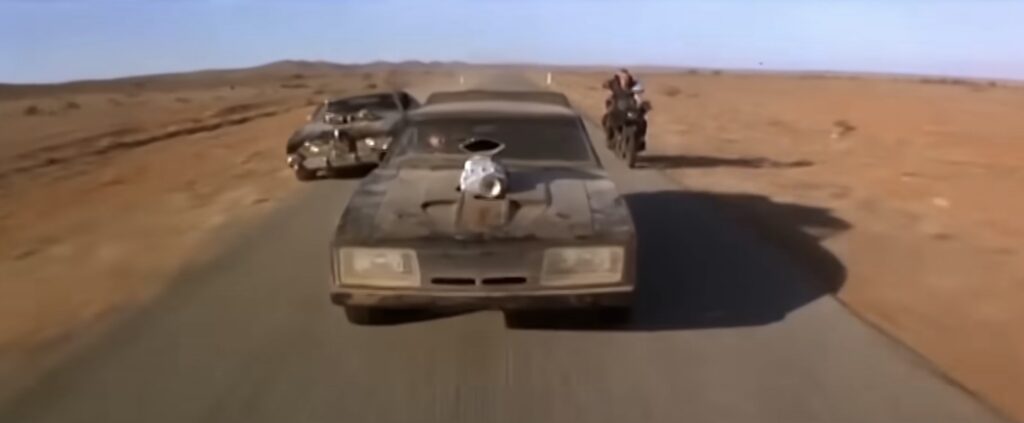
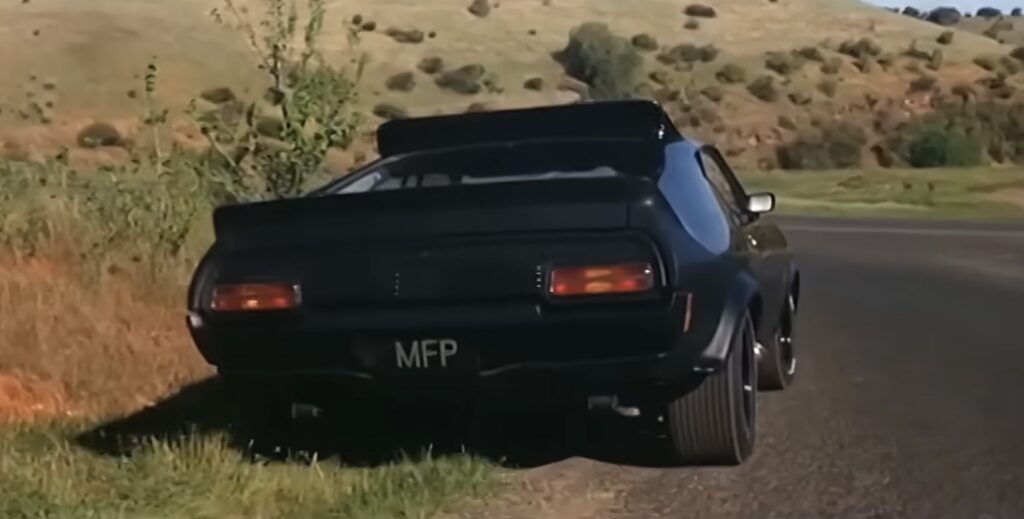
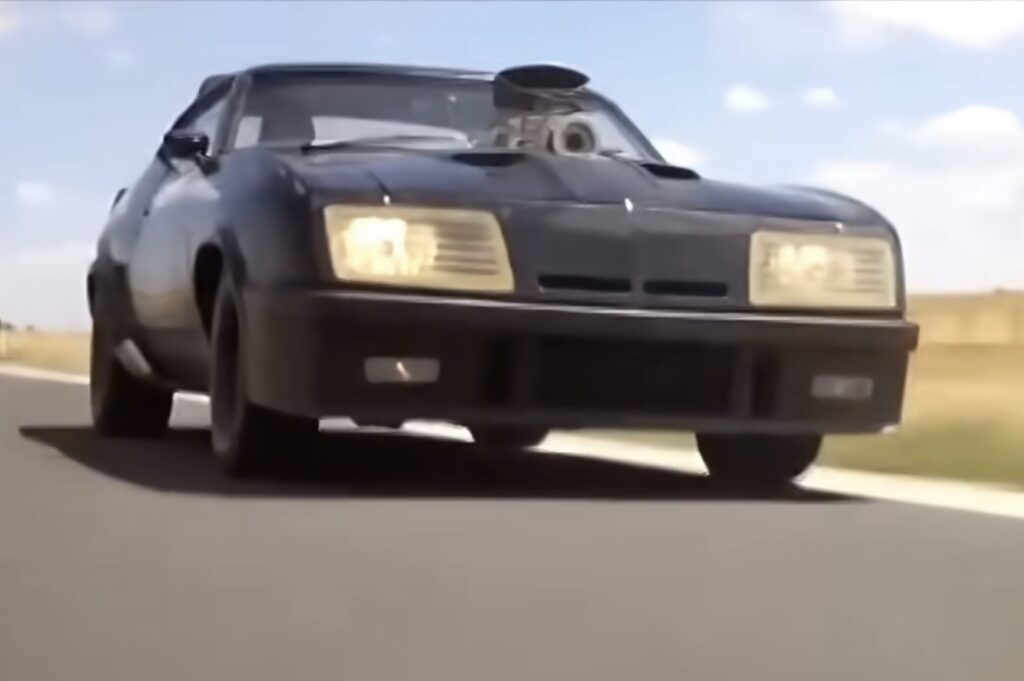
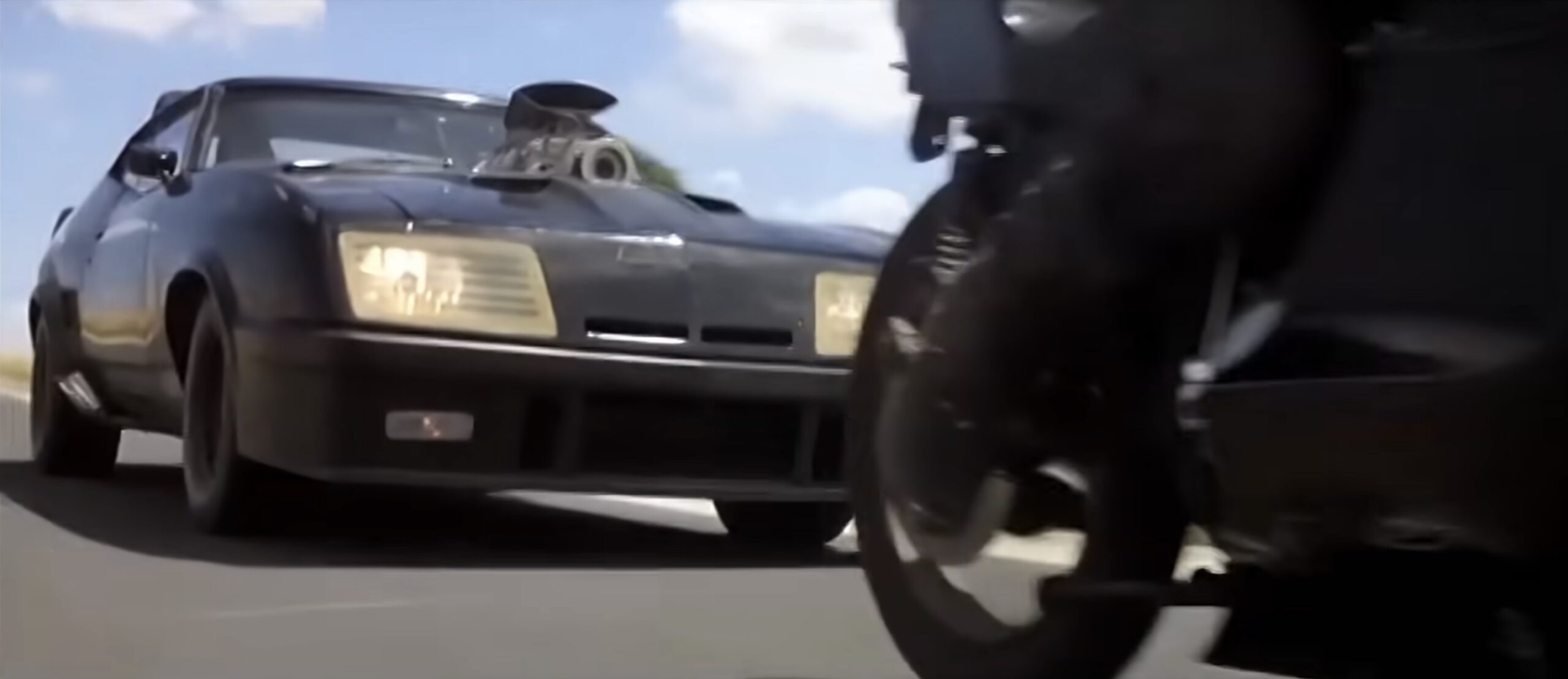
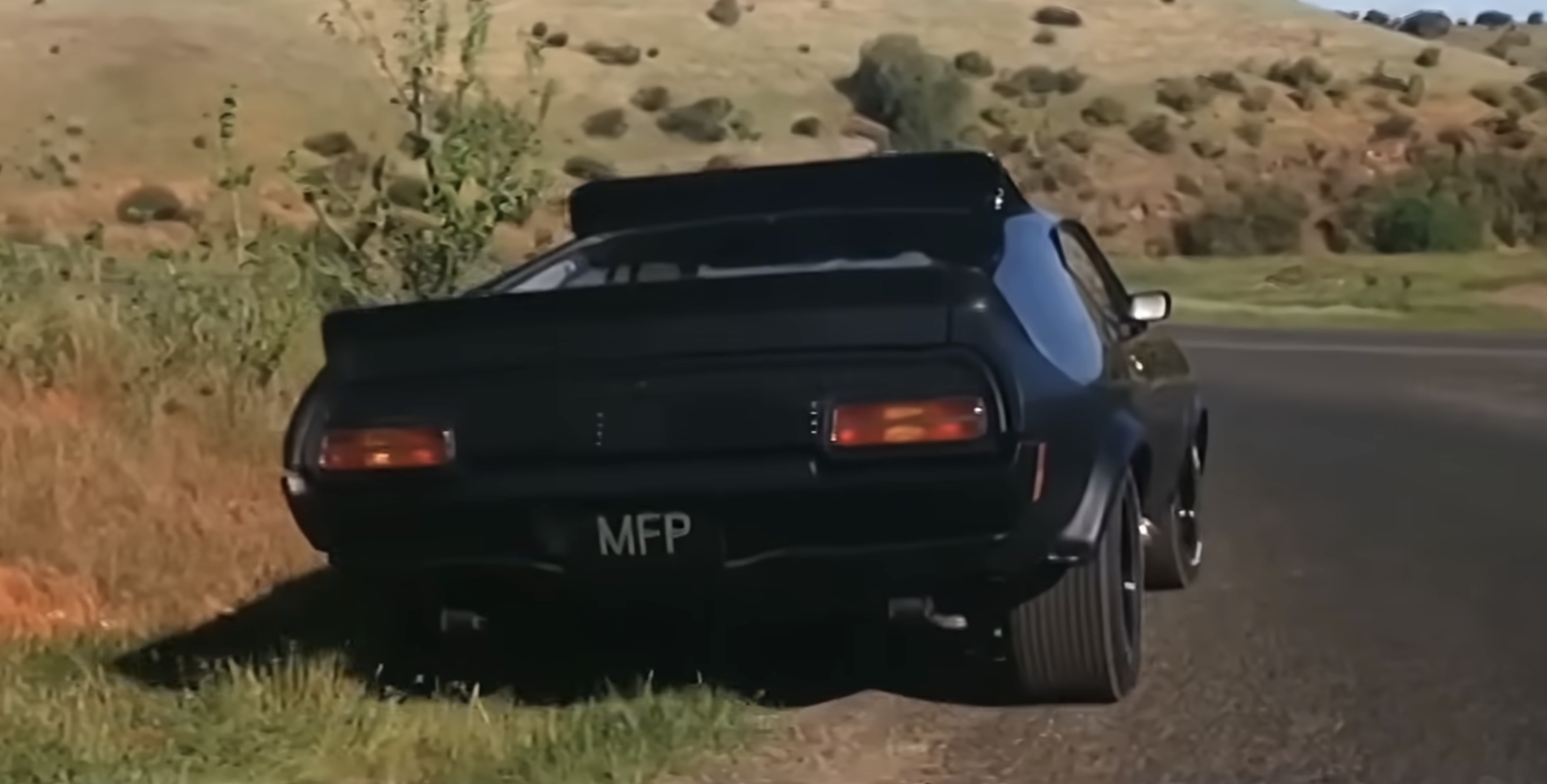
What we do know, is that the XB GT Hardtop was transformed by the film’s brilliantly creative car wranglers into the black and menacing ‘Interceptor’ that has become synonymous with the film.
The coupe and the four-door Falcons were farmed out to various Melbourne workshops with instructions to “make them look mean”. The two-door went to the premises of former Holden and Ford designer Peter Arcadipane whose newly launched business was producing fibreglass body enhancements for popular Australian cars.
Among them was the Concorde body kit Arcadipane had created for a Falcon panel van-based show car for the 1977 Melbourne Motor Show. One of the Mad Max crew had seen Arcadipane’s show car and suggested adding a Concorde nose section to the soon-to-be-black Hardtop.
The spoilers, fitted to the roof and rear were sourced from a different supplier and, according to Street Machine, were afterthoughts that were lying around after being salvaged from a Monaro sports sedan previously raced by Bob Jane.
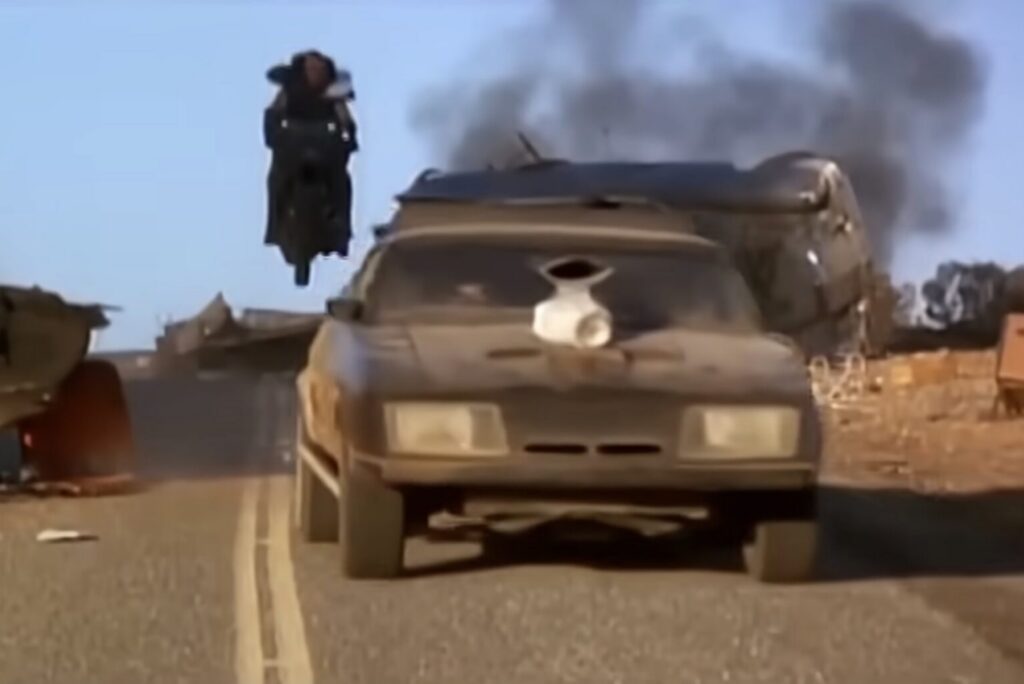
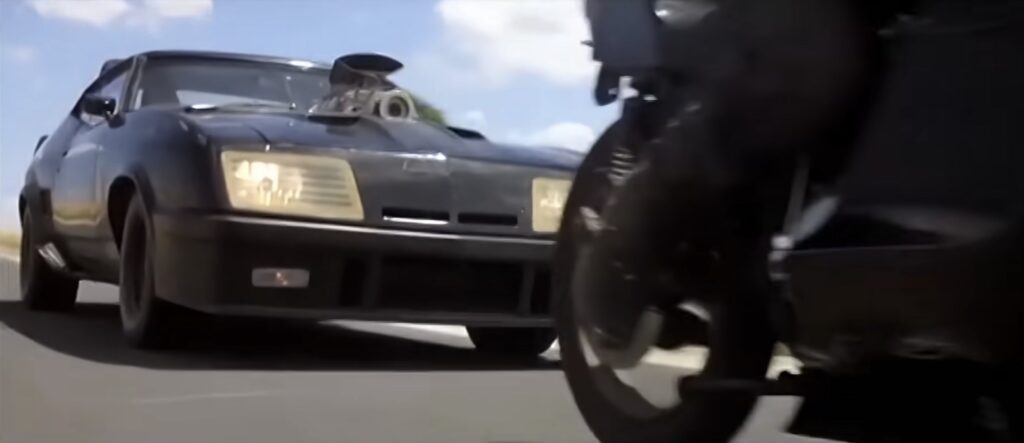
Next came the ‘supercharger’ which almost dwarfed the engine and looked every bit the business with its exposed pulleys and massive drive belt emerging from below the bonnet line.

As menacing as it looked, the ‘blower’ was purely for aesthetics and added nothing to the V8 coupe’s performance, its drive belt running not off the engine as God intended but via a small electric motor. Sound effects would be added later.
There was nothing fake about the Interceptor’s 351-cubic inch V8, however, nor the twin black liquorice strips it laid down when launching in pursuit of the vile Toecutter and friends.
Speeds and sound effects were other issues entirely, with no one saying very much about the velocities reached by cars and motorcycles as they crashed spectacularly through barriers or demolished plywood caravans.
While some of the vision is quite obviously sped up for added effect there was no CGI (Computer Generated Imagery) to craft the more difficult stunts, meaning the cars and their drivers were required to perform some astonishing feats before director George Miller called ‘wrap’ on his feature-length directorial debut.
There were no red carpet or chat show promos for the four-wheeled heroes of the production, with the car known on set as ‘Black On Black’ handed over to stunt driver Murray Smith as part payment for his work on the film.
Smith reportedly restored it to road-legal status and registered it in Victoria before trying to sell it for $7500. At the price there were no takers, which is just as well because it soon became apparent that this high-octane Aussie action flick – filmed on a tiny budget of A$400,000 – was garnering a global cult following.
Mad Max went on to gross over US$100 million worldwide, prompting Miller and his backers to quickly plan a sequel.
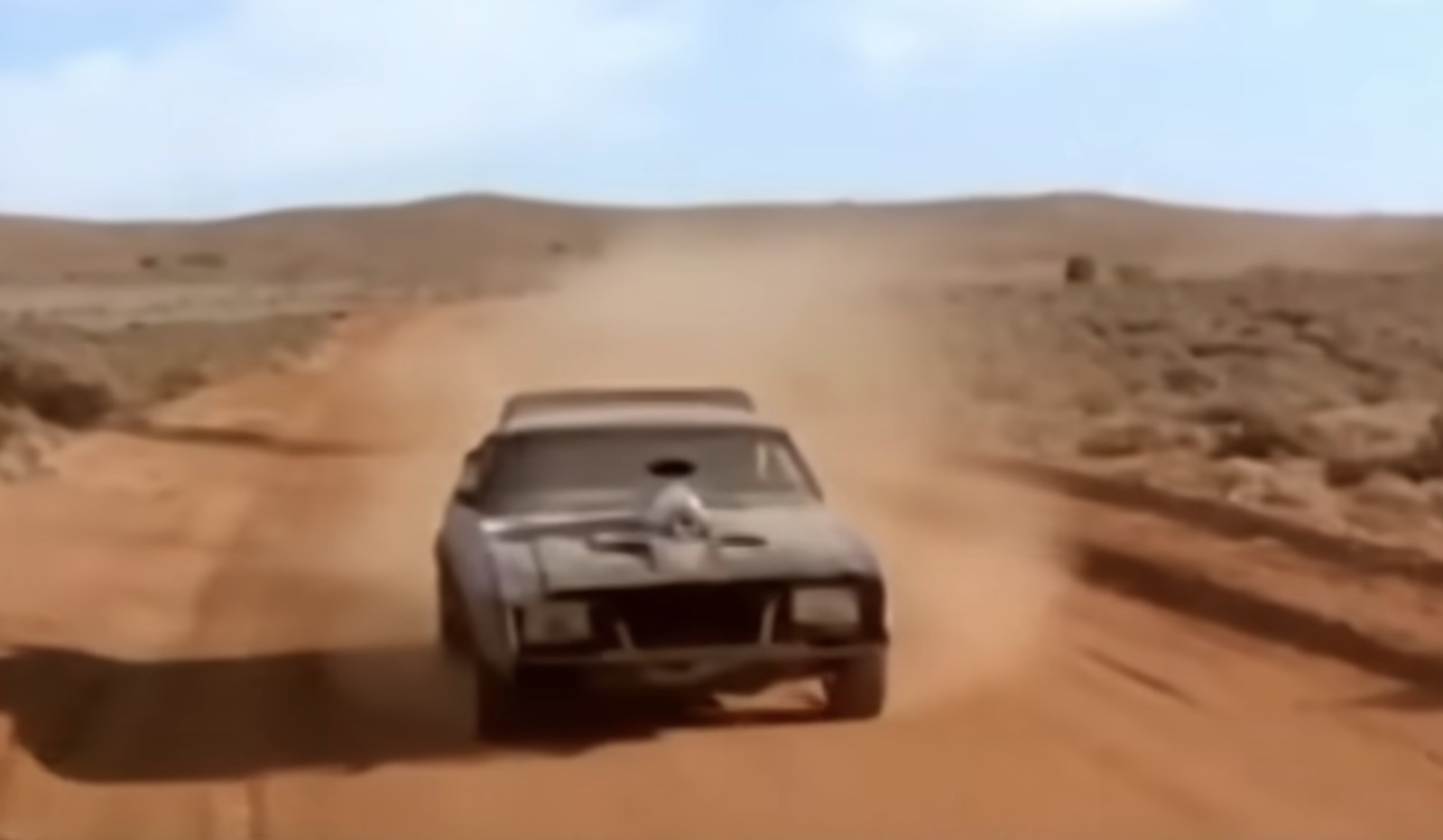
Preparations for Mad Max 2, known as The Road Warrior in the US, saw the Falcon coupe hacked mercilessly about, with two massive fuel tanks installed where the boot once had been. A stunt double was built as well but it was destroyed during filming of the sequel.
At the end of filming in 1981 the XB GT Interceptor was unwanted once again, a virtual wreck, it was left abandoned in the far western NSW town of Silverton where much of the filming for both movies had taken place. Later it found its way to an Adelaide wrecking yard and would have been crushed for scrap, were it not for the intervention of Detroit junkyard owner, Harry Warholak Sr.
A 2020 article by Liam Murphy on drive.com.au reports that the Falcon changed hands several times in North America before being purchased by Aussie enthusiast Bob Fursenko in the mid-1980s and shipped back across the Pacific to its homeland.
Fursenko restored the Interceptor to its original glory, complete with the Concorde front end but added a glossy black paint job it never had in the films.
The Interceptor toured Australian car shows and other events throughout the late 1980s and spent the years between 1990 and 1992 on display at the National Motor Museum in Birdwood, South Australia.
In 1992, the iconic Aussie machine again left the country after being sold to the Cars of the Stars museum in Keswick, UK, where it stayed until 2011 when the museum’s entire collection was sold to the Miami Auto Museum in Florida, USA.
The museum, owned by Israeli-American real estate developer, car collector, and billionaire Michael Dezer was restructured in 2025 with many of its significant movie/celebrity cars auctioned off to fund a new, permanent museum.
Dezer appears to have hung onto the Mad Max Interceptor along with other cars from his extensive collection, with the Aussie movie icon now located in the Orlando Auto Museum, at Dezerland Park, Florida.
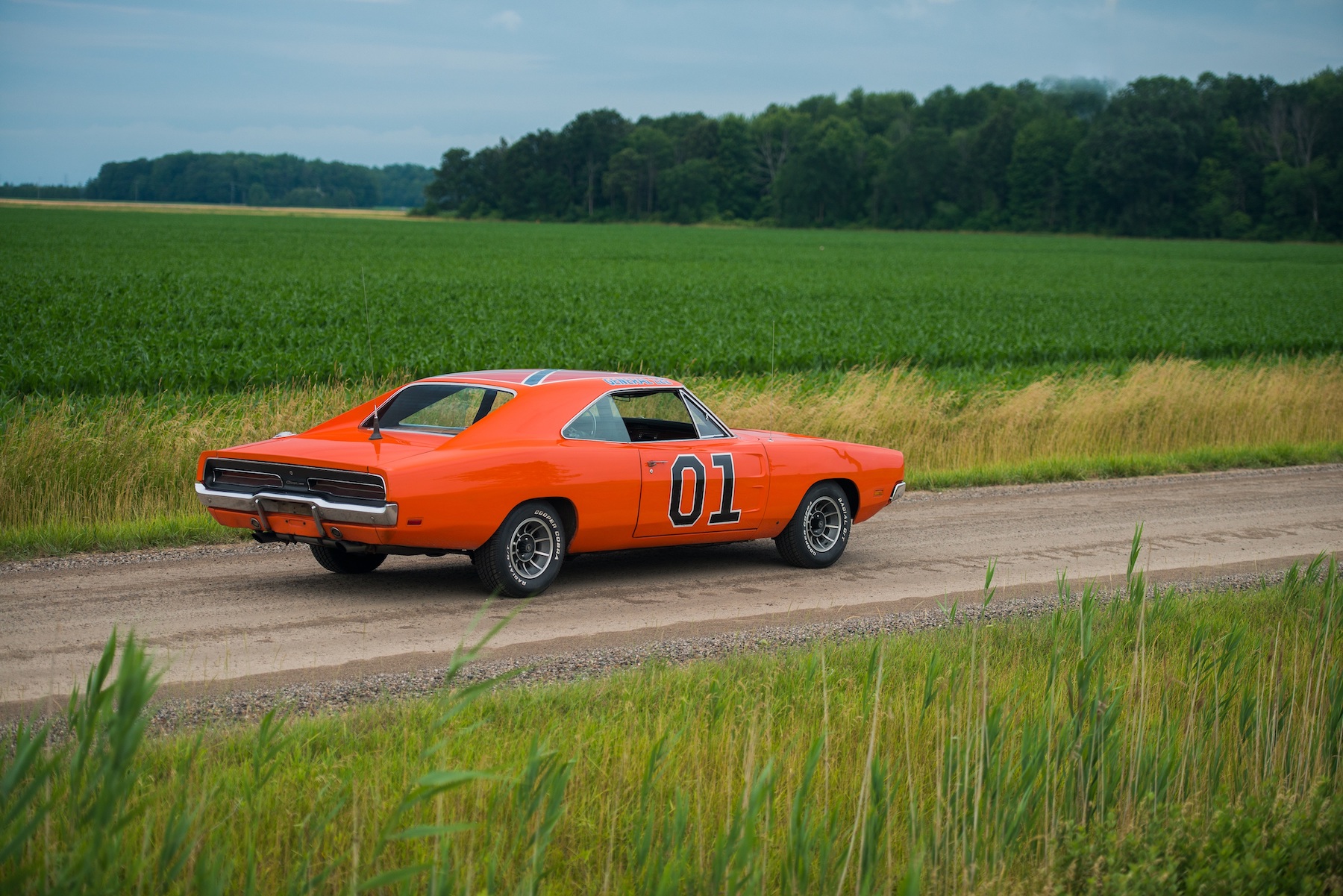
Hence, Max Rockatansky’s wild ride now forms part of the Hollywood Cars from the Stars exhibition alongside such notables as the Dukes of Hazzard Charger, the original ’48 Ford Deluxe “Greased Lightning” from Grease, the Gran Torino from the Starsky & Hutch movie, and dozens more.
To find out more about the other cars featured in our ‘Screen Gems’ series, you can head back to the beginning by clicking here.