
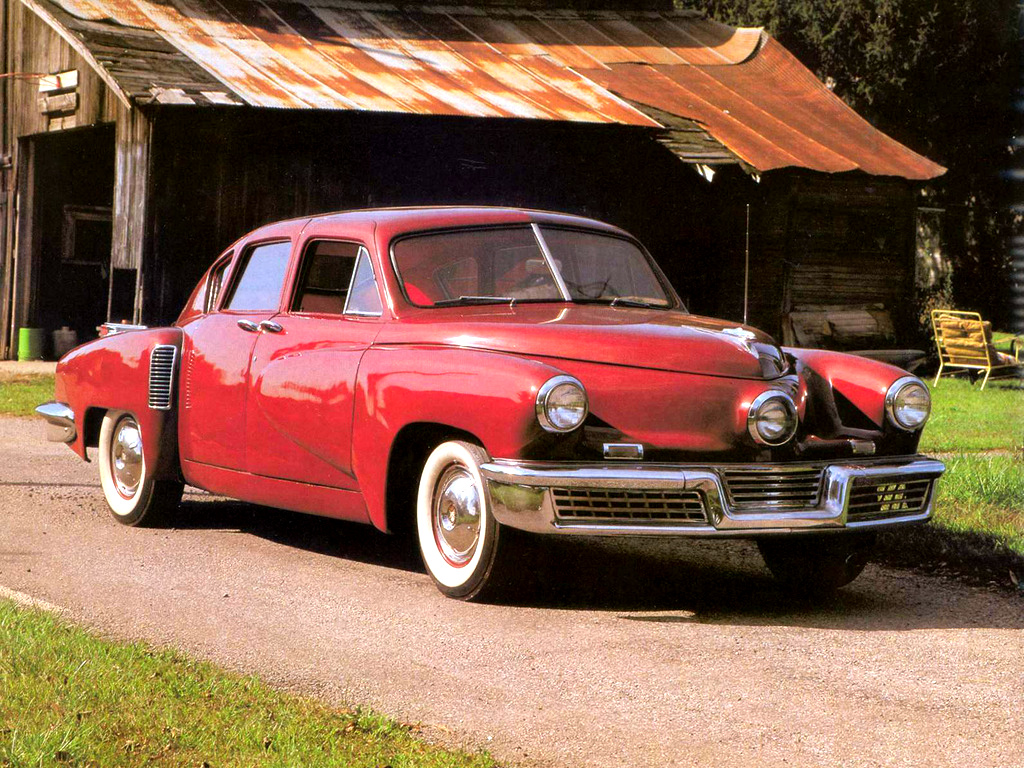










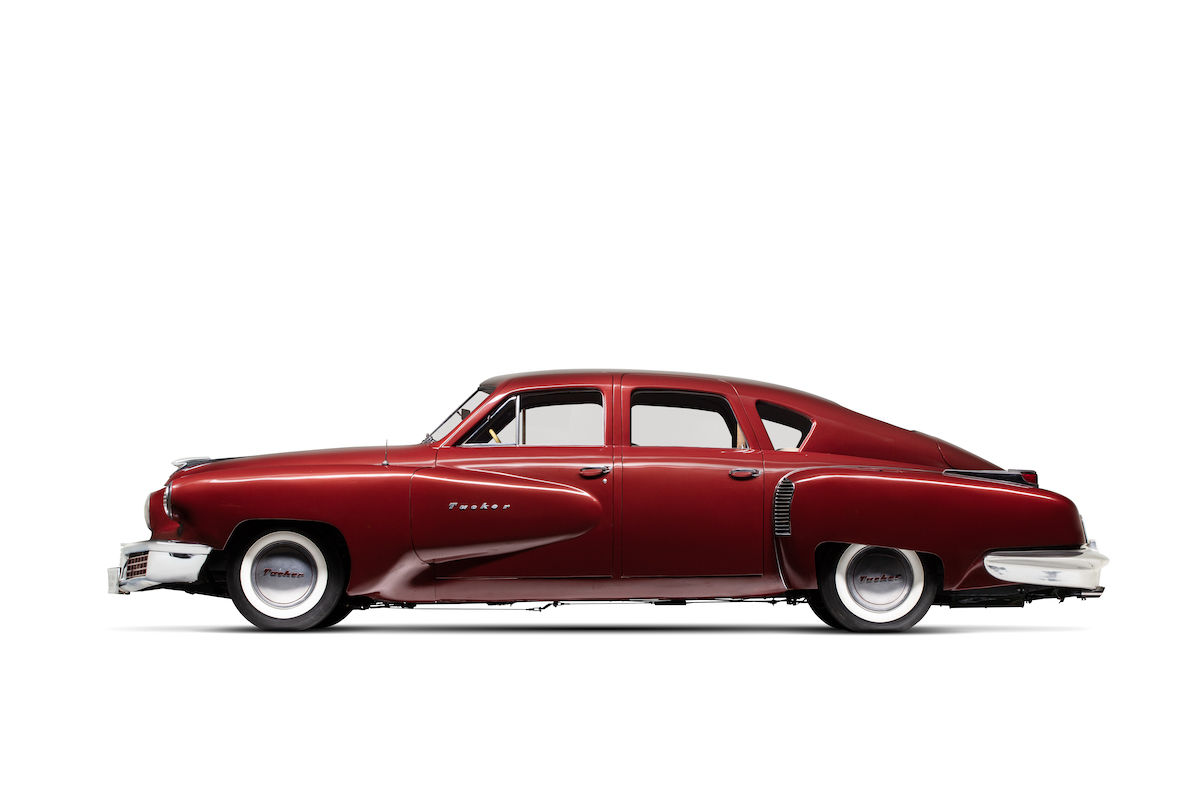
More than 75 years after the demise of Preston Tucker’s ambitious rear-engine Tucker Torpedo, the jury is still out on whether its Teflon-coated creator was a true automotive visionary or a polished flim-flam man.
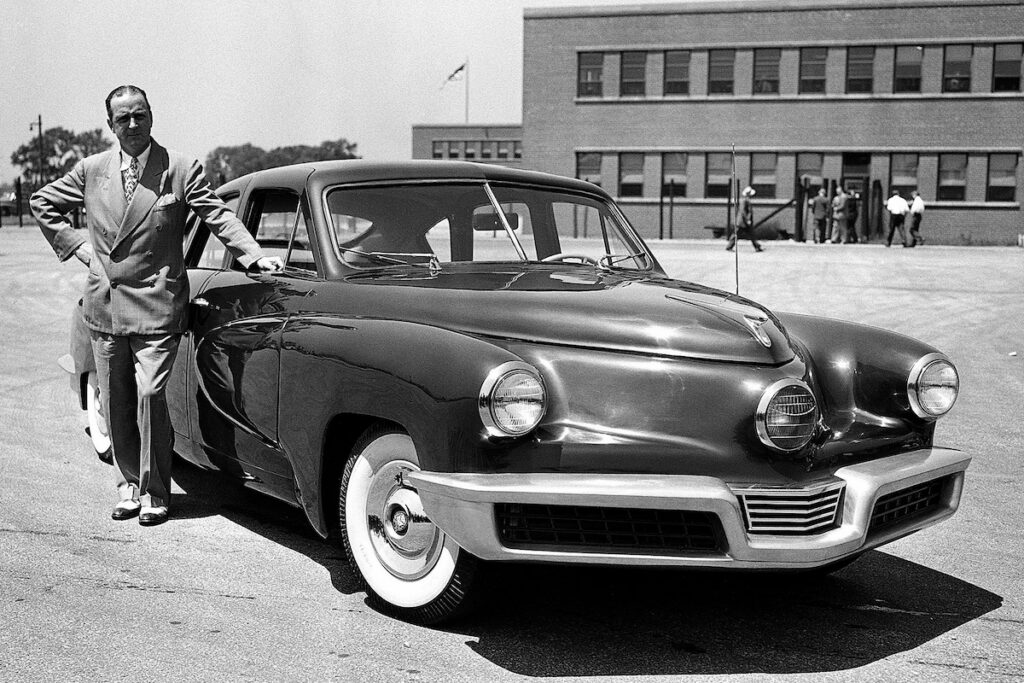
Preston Thomas Tucker was a big man who also talked and dreamed big. Now, more than 75 years after the demise of his ambitious rear-engine Tucker 48 (aka ‘Torpedo’) car, the jury is still out on whether Tucker was a true automotive visionary or a highly polished flim-flam man.
What’s beyond doubt is that Preston Tucker, born in 1903, had petrol in his veins. He left school in his mid-teens to be an office boy at Cadillac, joined a Michigan police force at 19 to drive pursuit cars, and perhaps inevitably gravitated to selling cars.
Tucker befriended genius engineer (but poor businessman) Harry Miller and in 1935 negotiated with Ford Motor Co to build 10 Ford V8-powered racing cars for that year’s Indy 500 – two months away. With no testing, the front-drive Miller-Fords were off the pace and unreliable.
Miller was all but bankrupted, but Teflon-coated Tucker turned his attention to the military, pitching (with Miller) a high-speed combat car and a fighter aircraft, both enterprises headquartered in his backyard in Michigan.
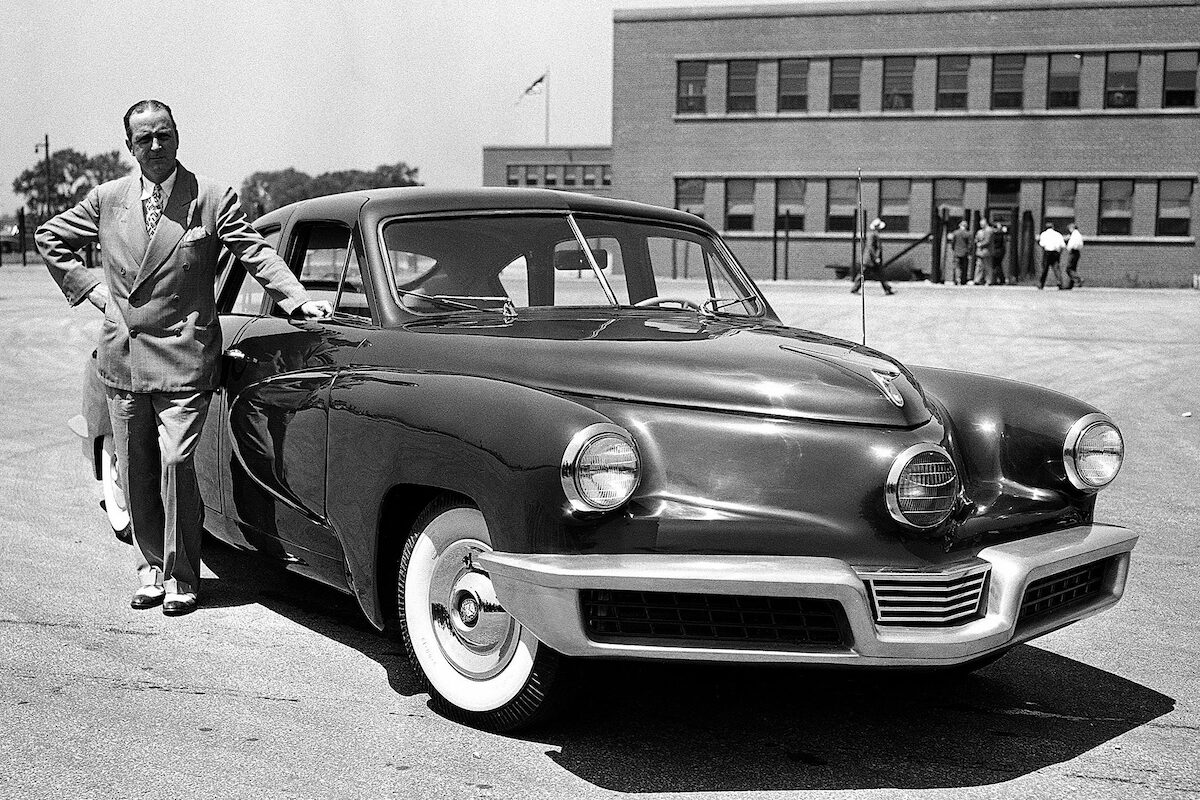
Detroit’s Big Three had developed no new cars during the war. Tucker figured he’d catch them napping. In 1946 he advertised the futuristic Tucker ‘Torpedo’ family car; in reality, no more than a rendering (by George Lawson, ex-Buick) and a doctored photo of a 1:8-scale model, with a vague wish-list that included a rear-mounted, flat-six engine and all-independent suspension.
That was enough for Tucker to promote it as “The Most Talked About Automobile in the World Today.”
Lawson’s design was taken over by Alex Tremulis, formerly of Auburn-Cord-Duesenberg, whose subsequent stint with the US Army produced renderings of alien aircraft – the now-familiar “flying saucers” – that only just pre-dated the Roswell incident and helped launch America’s fascination with UFOs.
Tucker, meanwhile, was vigorously selling stock options and dealership rights. By March 1947, when he began advertising the “Tucker 48” – after “15 years of testing” – he had raised US$17m. The Torpedo name was officially dropped after the initial promotion.
A prototype, built in an astonishing 60 days and nicknamed Tin Goose, was unveiled in June 1947.
Tucker had initially called for a monstrous, 589-cubic inch (yes, 9.65-litre!) flat six, with hydraulically actuated valves that would require unavailable 24-volt electrics. It clearly would need years of development. Tucker would soon instead buy Air-Cooled Motors of Chicago and its all-alloy “6 ALV-335” flat six, displacing 335ci (5.5-litres) and more usually found in Bell 47 helicopters.

The air-cooled helicopter engine was brilliantly adapted by Tucker engineer Eddie Offutt to fully-sealed liquid cooling – an industry first. It produced 124kW and 504Nm and was mated to a strengthened Cord 810 four-speed electro-vacuum manual transmission. Despite the car’s 1900kg kerb weight, tests proved 0-60mph in 10 seconds and 20mpg at cruise.
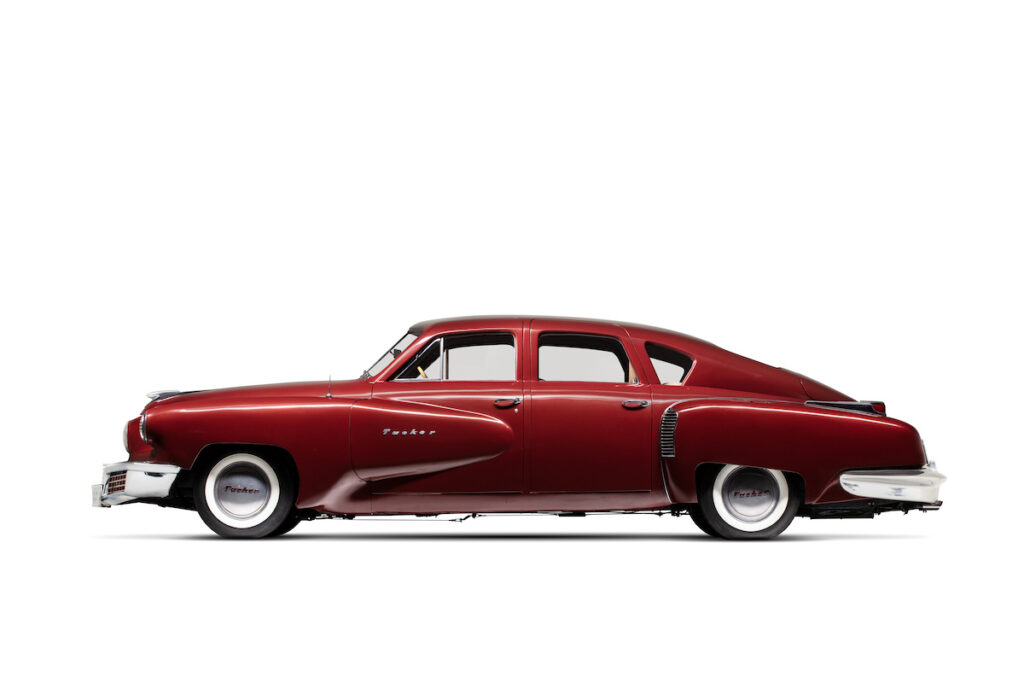
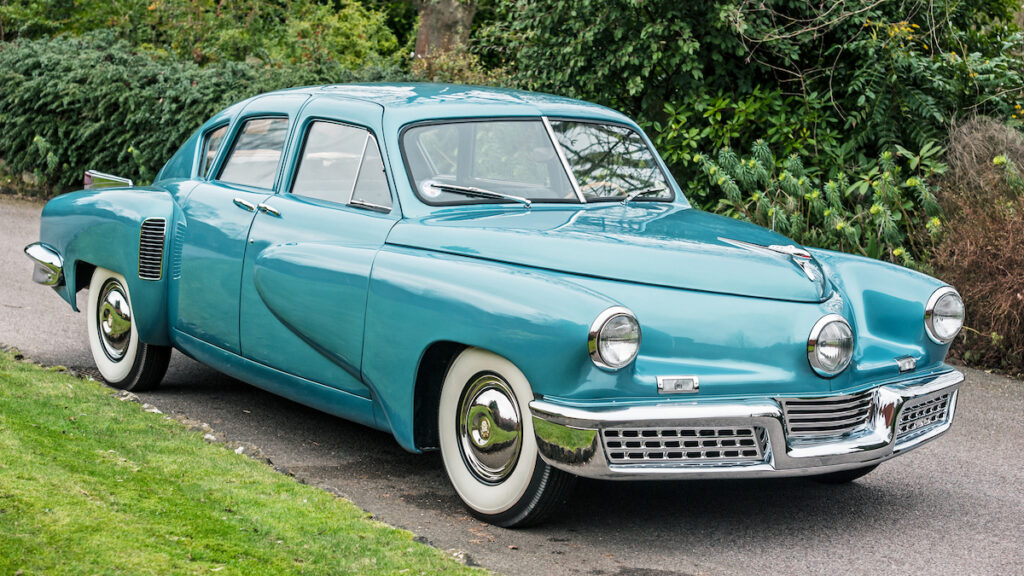
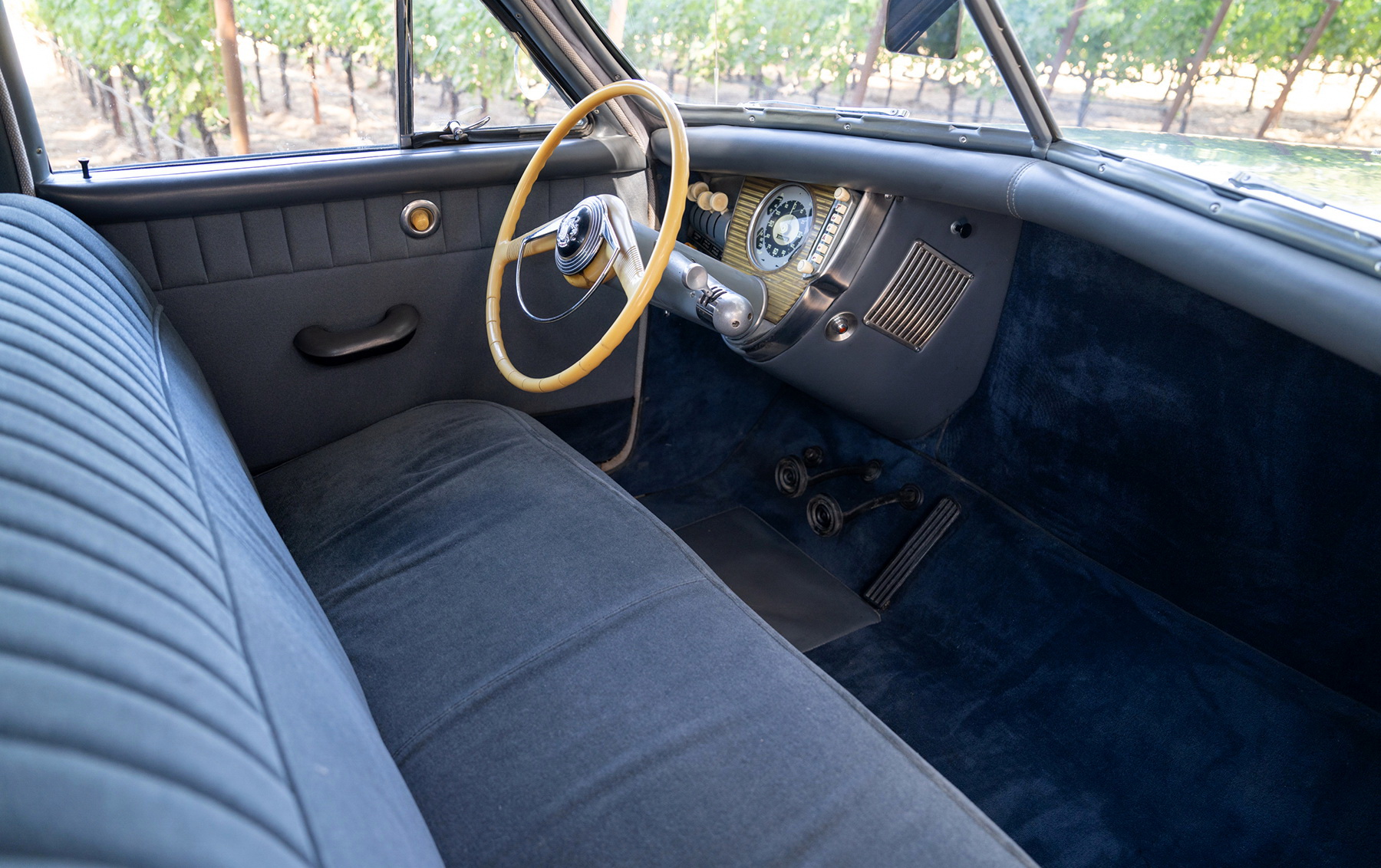
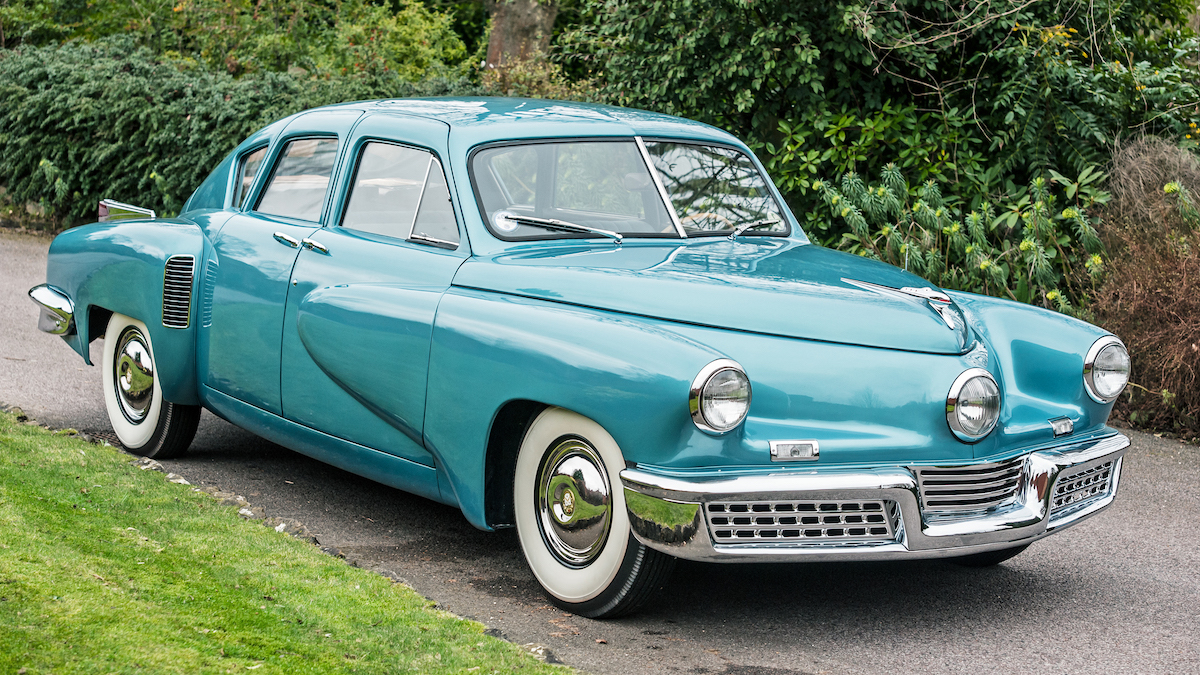
Tucker’s fastback 48 included plenty of innovations: independent suspension (by rubber-in-torsion, years before the Mini); a box-section perimeter chassis with front and rear subframes; padded dashboard; collapsible steering column; wrap-over doors; and the “cyclops” steering headlamp, 20 years before Citroën’s DS21.
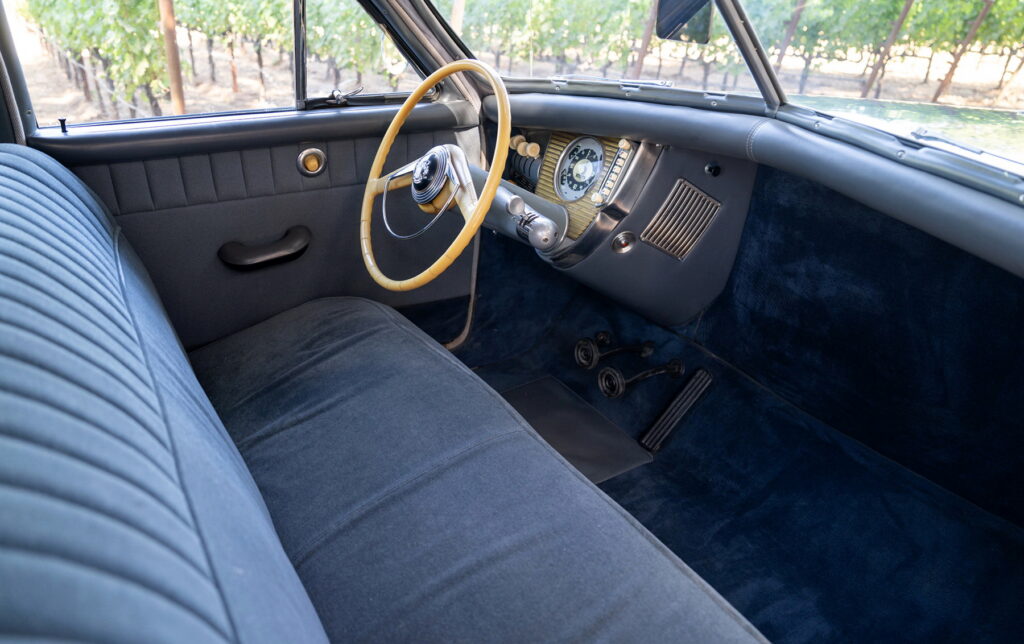
The box-section perimeter frame, which bucked the Detroit standard ladder frame, allowed a “step-down” floor and sleek roofline. The spacious six-seater’s front and rear benches were interchangeable, to even upholstery wear. Controls and knobs were concentrated away from front passengers, who could dive for the Safety Chamber below the padded dash in a collision.
However, assembled pilot cars were just as soon disassembled due to specifications continually changing.

Way back in June 1946, the Securities and Exchange Commission had warned investors of “grossly misleading and in many cases false” statements being made by Tucker. Highly publicised SEC investigations into Tucker Corp sparked further bad press about Tucker’s business history of dodgy deals and pocket-lining.
In June 1948, Tucker issued an open letter in which he told of spies being found in the Chicago plant, prospective dealers being harassed and investigated, and his (high) bid for a government steel plant being inexplicably rejected.
The flickering light had been the car itself – aside from its advanced features, tests showed it capable of 0-60mph in 10 seconds, a top speed of 120mph, and 20mpg economy. But the Tucker 48 was massively underdeveloped and the business completely disorganised.
While Preston Tucker squawked of a Motown conspiracy, in October 1949 he and seven associates were charged on 31 counts of conspiracy and securities and mail fraud. They were acquitted in January 1950, but Tucker’s big dream was dead, with just 51 cars (including the Tin Goose) built.