

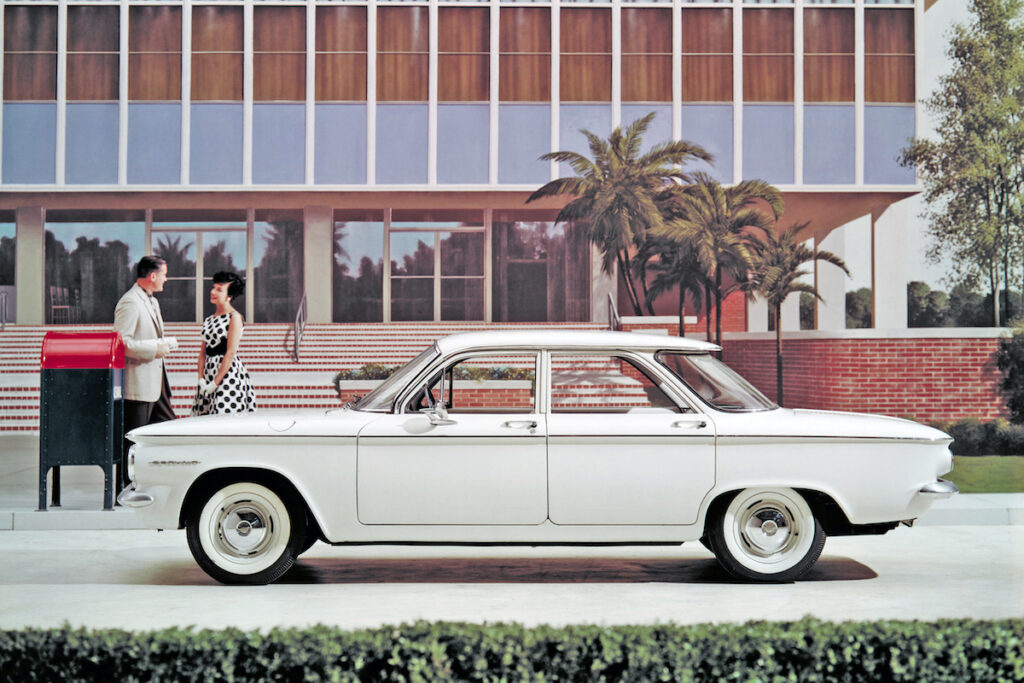



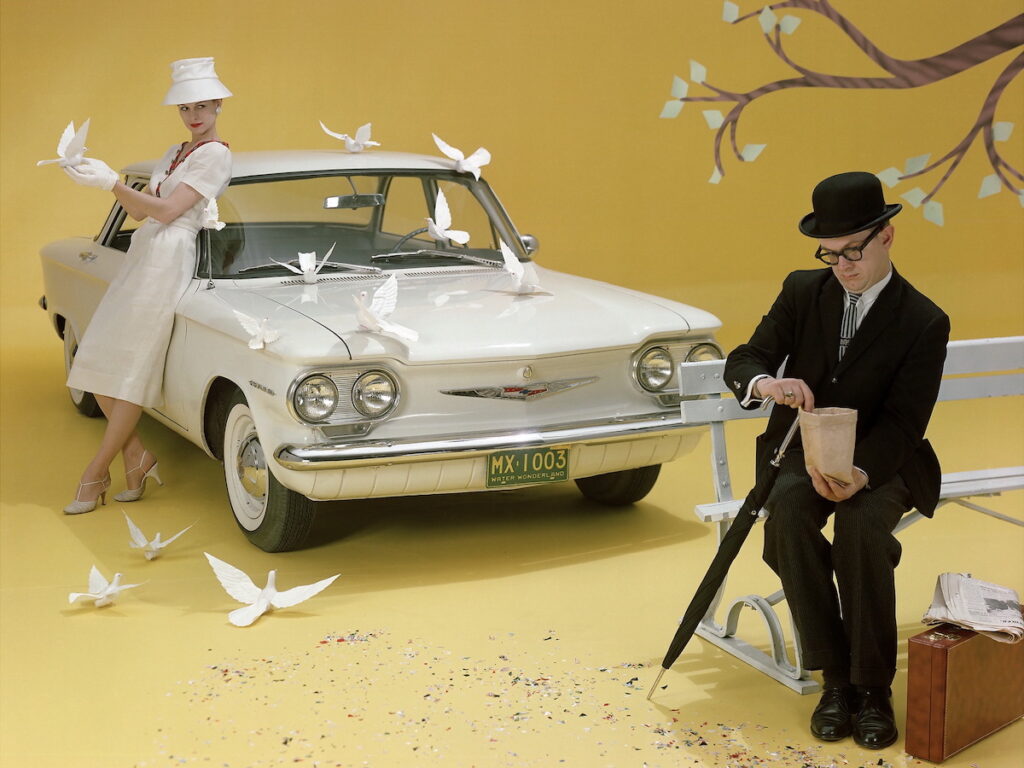


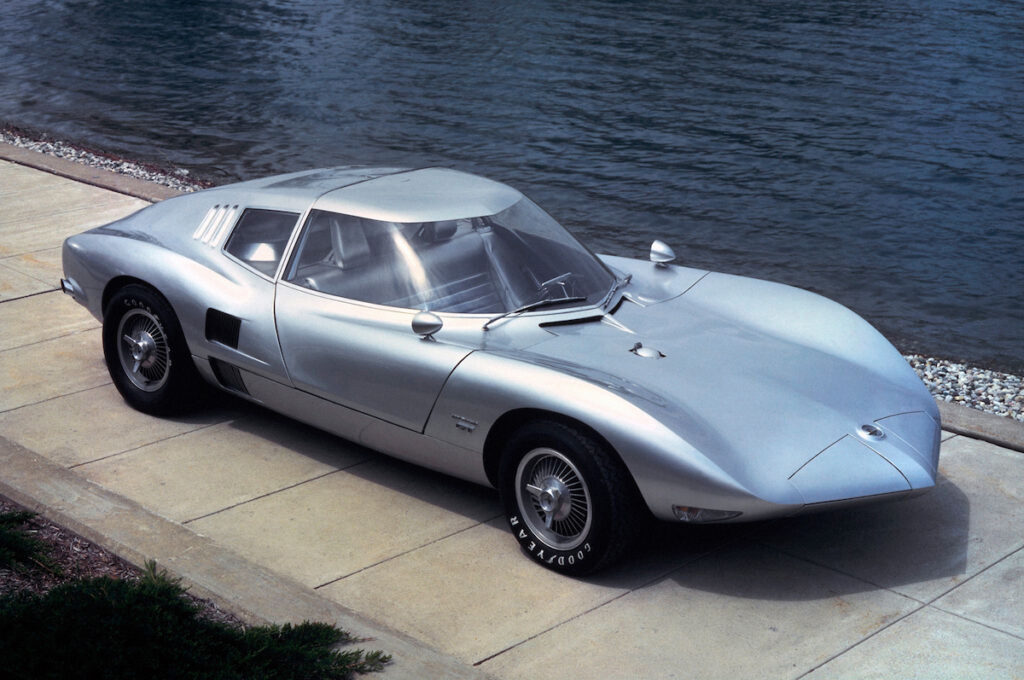


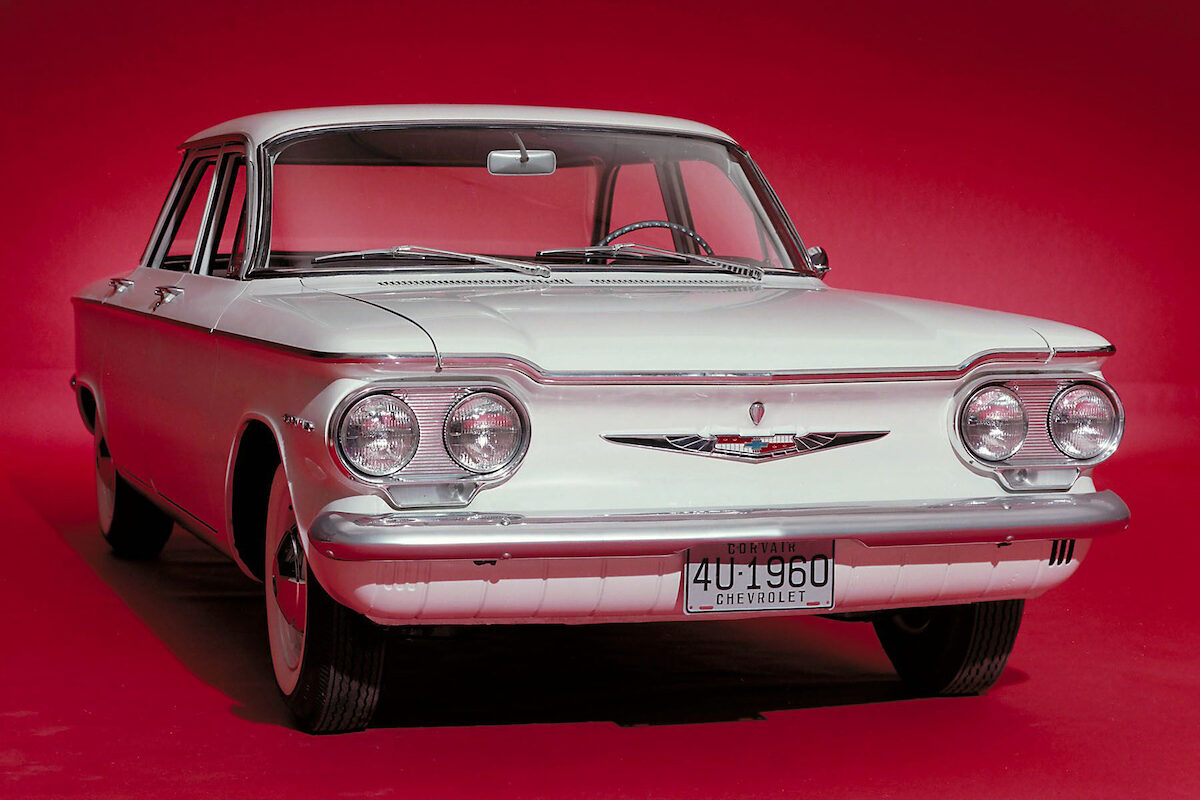
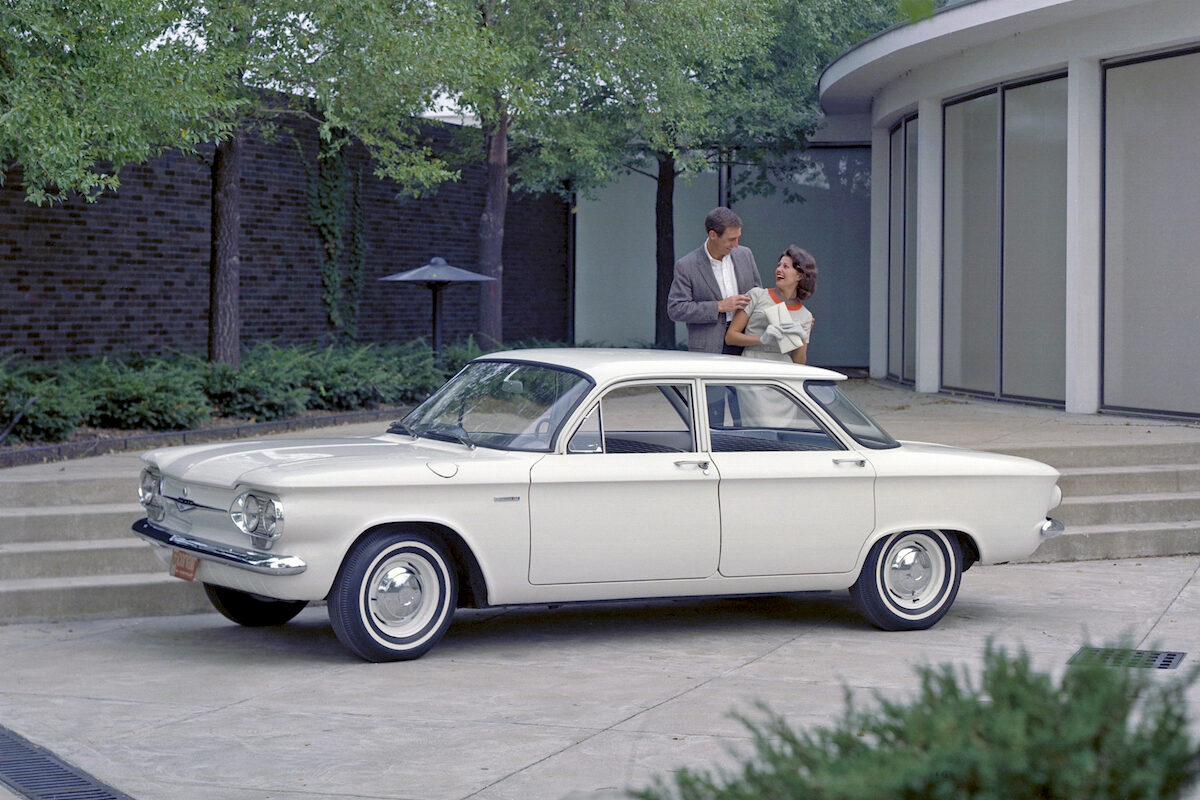
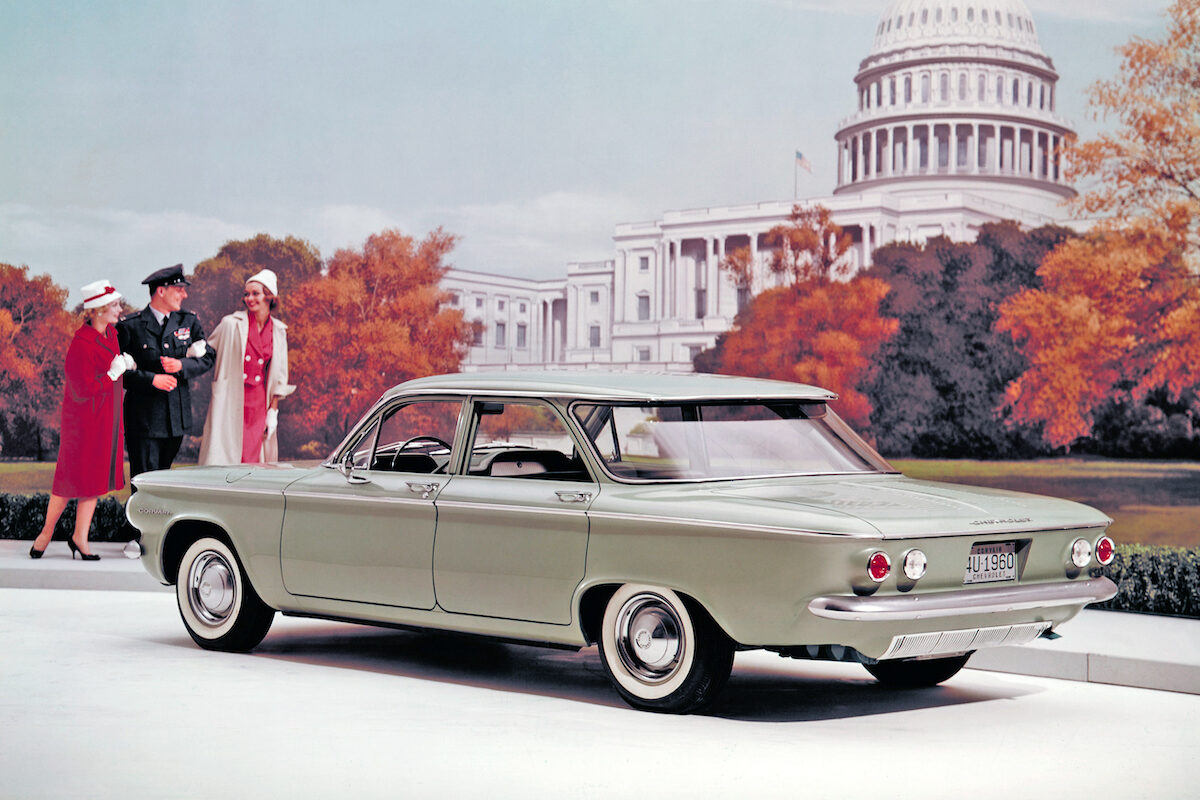
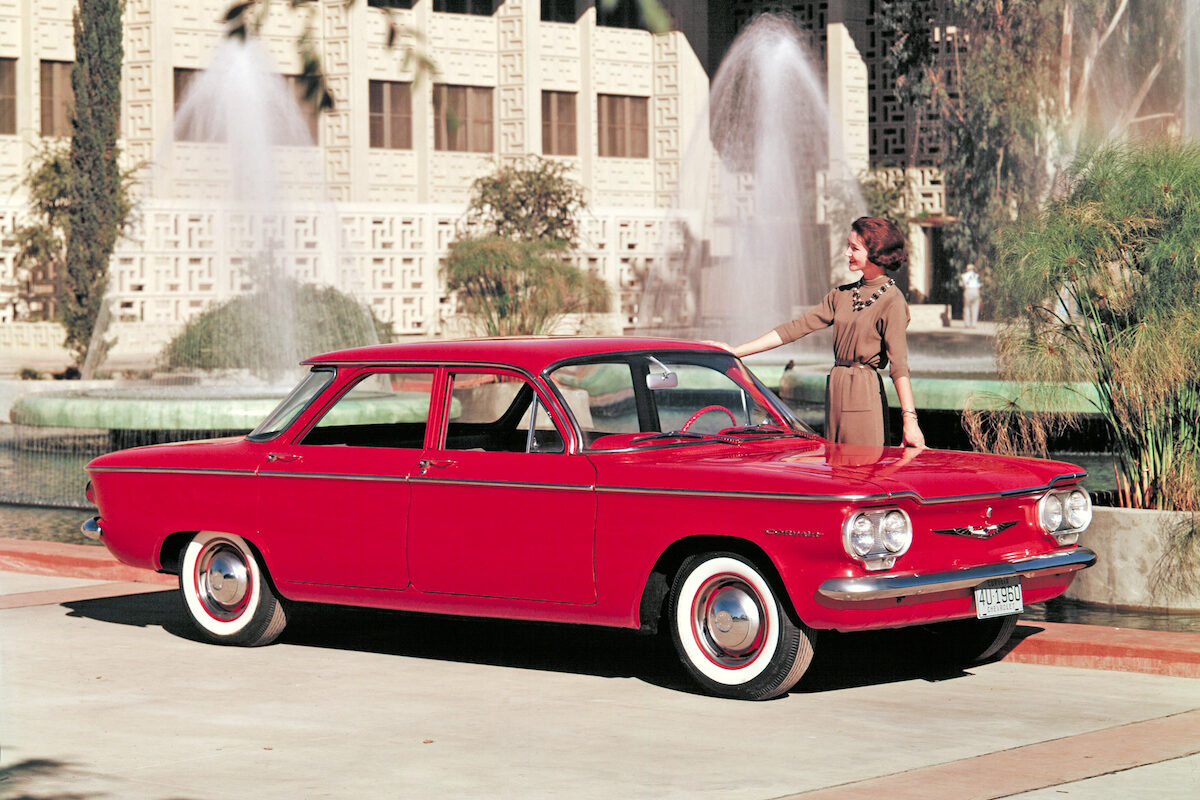

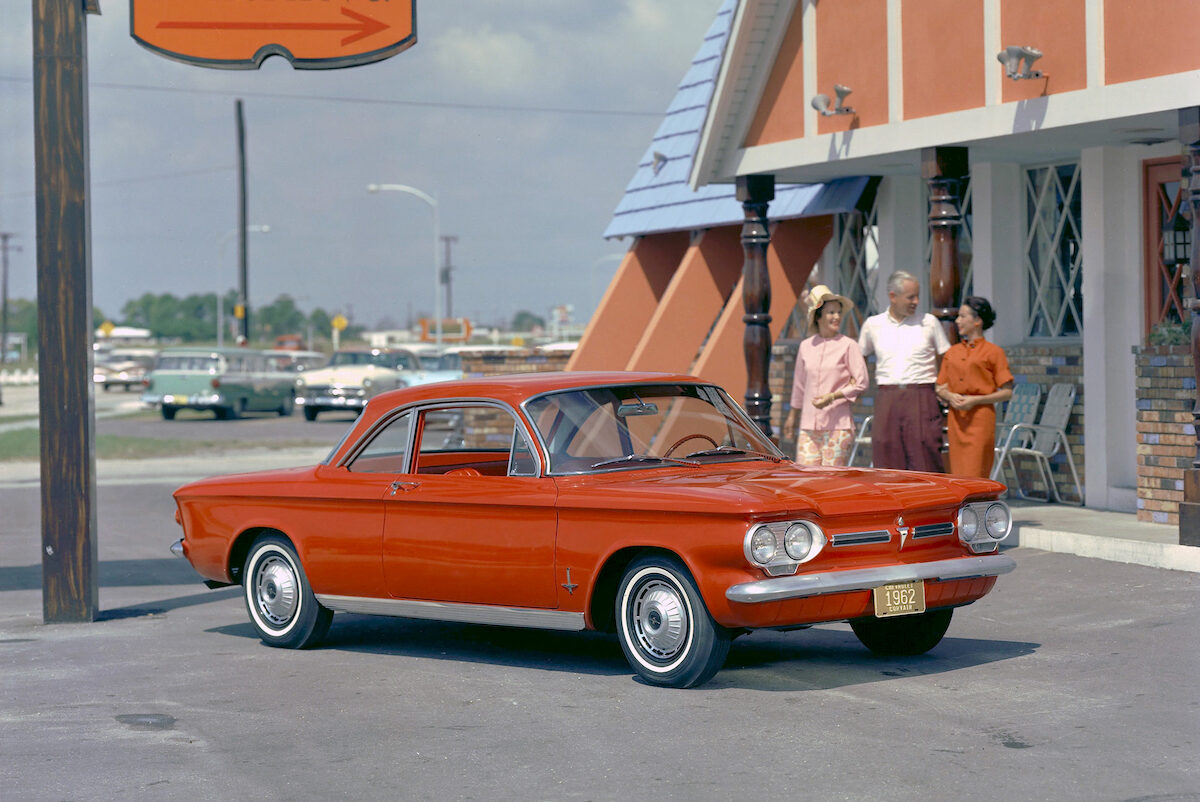


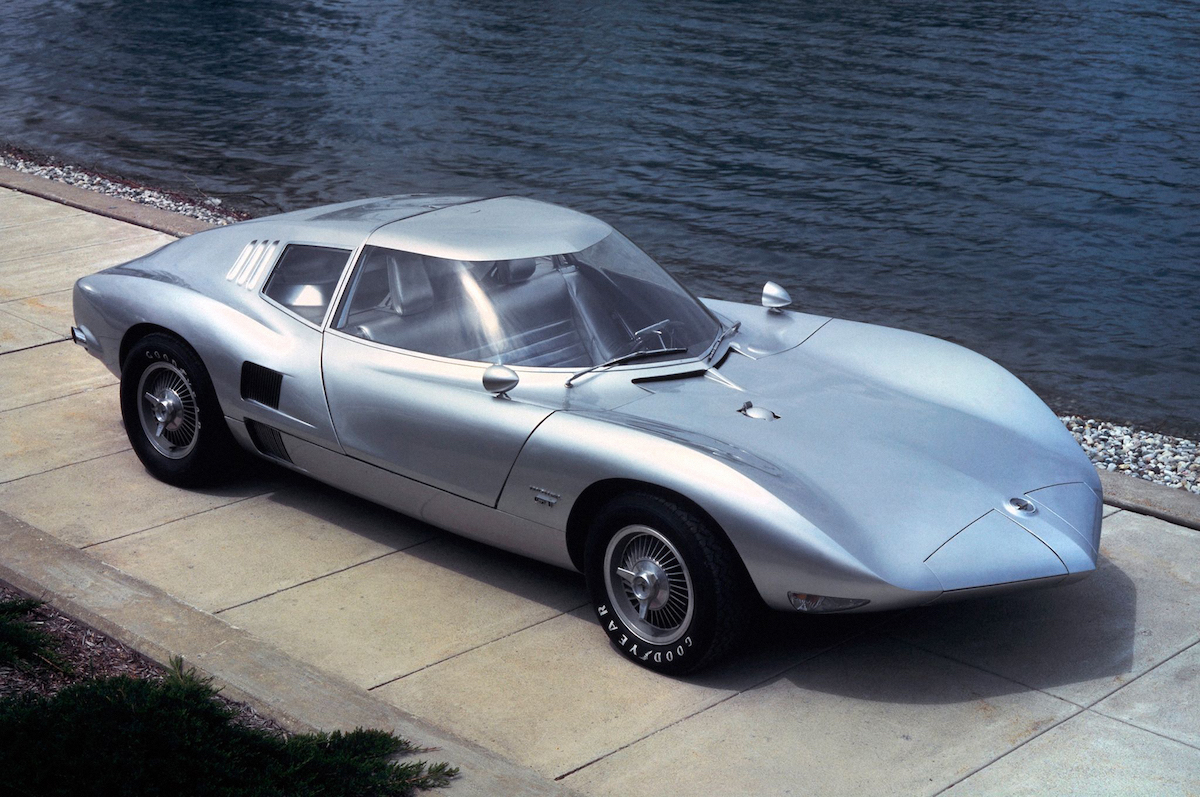
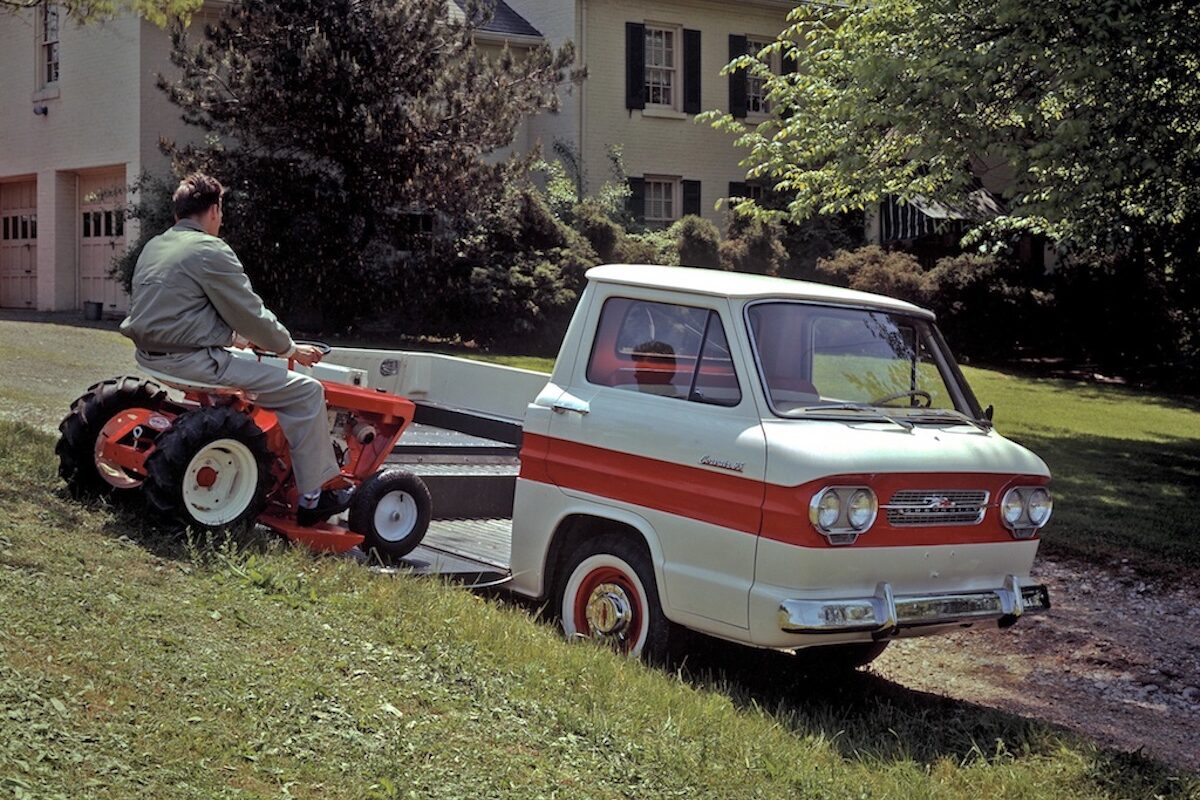


Vilified by consumer advocate Ralph Nader for its unstable handling in his landmark 1965 book Unsafe at Any Speed, the rear-engined Chevrolet Corvair is remembered as one of GM’s quirkier creations, but its dramatic beltline styling proved surprisingly influential and the sporty, affordable Corvair Monza paved the way for the Ford Mustang.
In the nation that had, until recently, manufactured more motor vehicles than any other, and which embraced the original Volkswagen like no other, an interesting footnote is the number of rear-engine cars ever produced by the USA. That number is two.
Easily overlooked, both historically and literally, is the King Midget of 1957 – a mini-wheeled kit car with a folded metal body and a single-cylinder mower engine.
Compactness was also on the minds of the Big Three at that time. While Detroit downsizing produced the conventional Ford Falcon and Chrysler Valiant in 1960, General Motors drew almost all its inspiration – but none of the expertise – from successful European rivals, to produce the Corvair.
Having an air-cooled, 2.3-litre flat six hanging behind its rear axle was only a part of the Corvair’s quirkiness. All-independent coil suspension looked great on paper, but the rear was a crude swing-axle design.
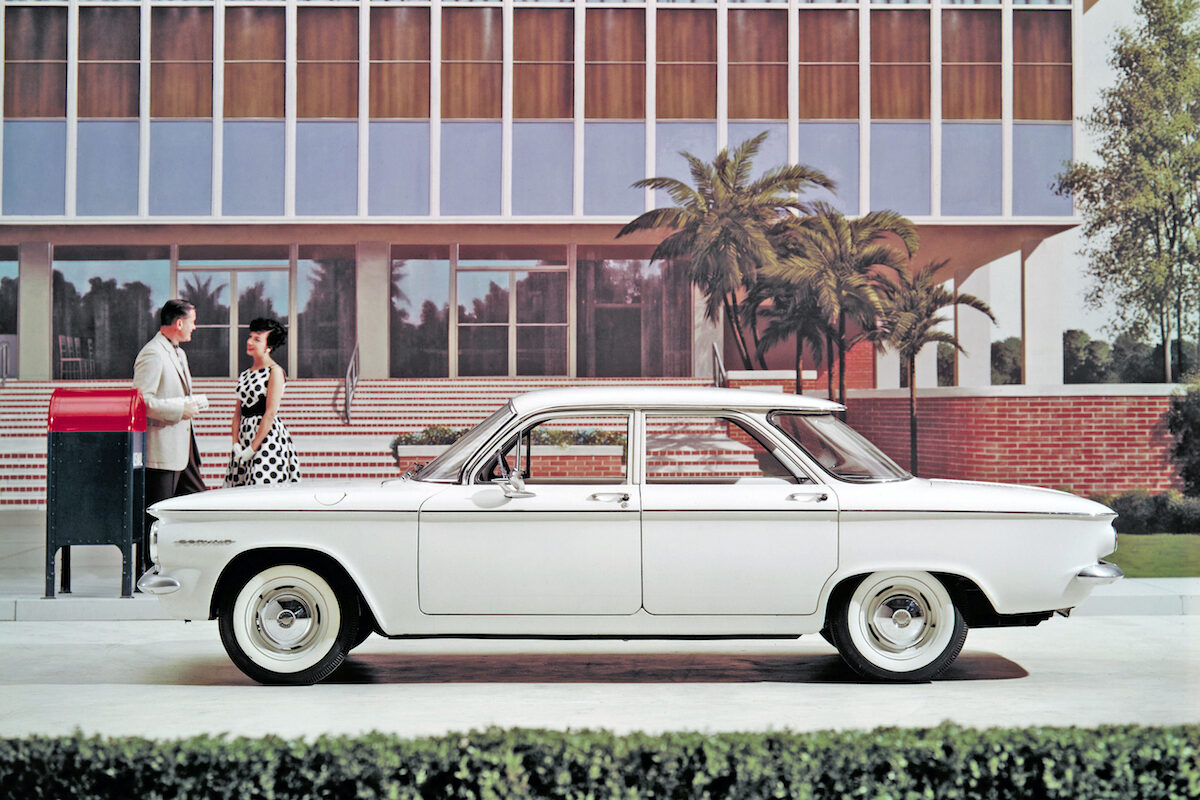
Built on a unique ‘Z-body’ platform, the Corvair’s 2743mm wheelbase was about 40mm shy of an XK Falcon’s, and overall length similarly shorter.
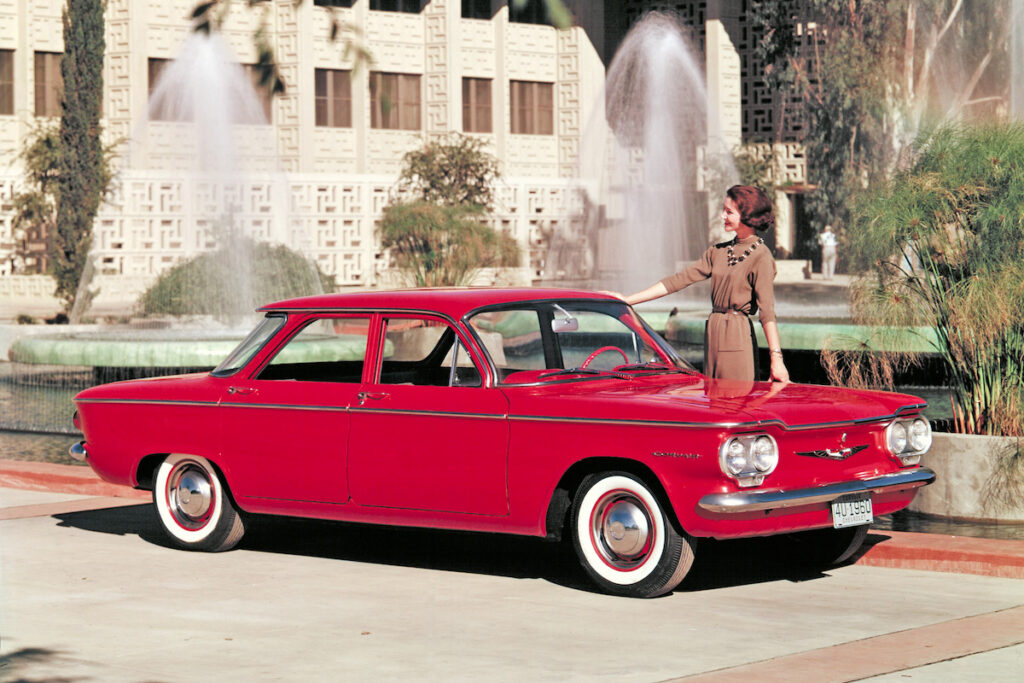
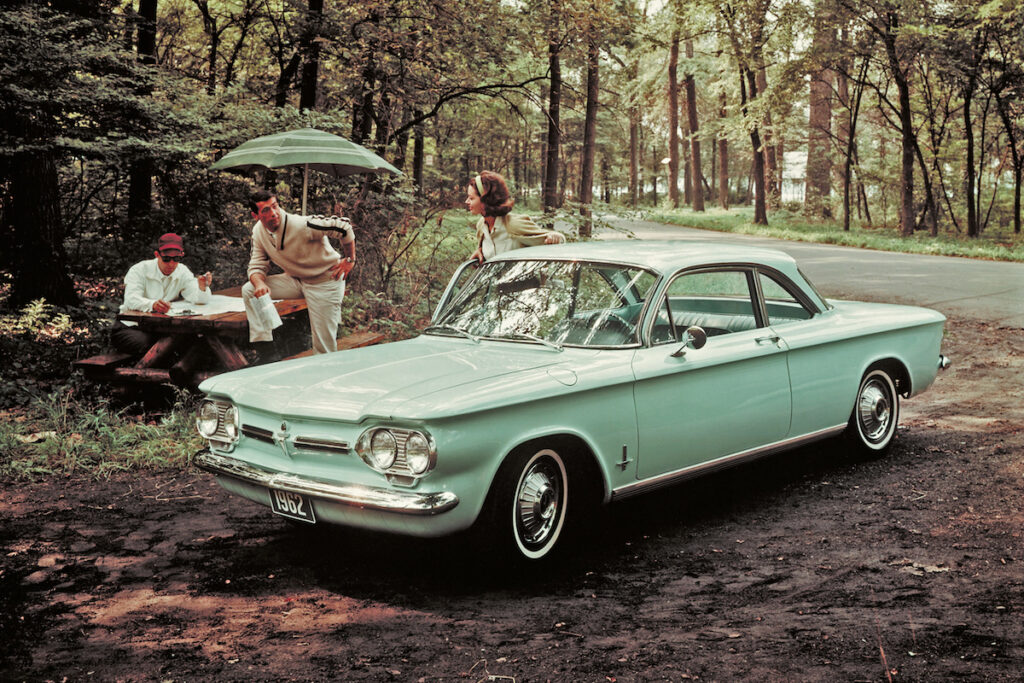
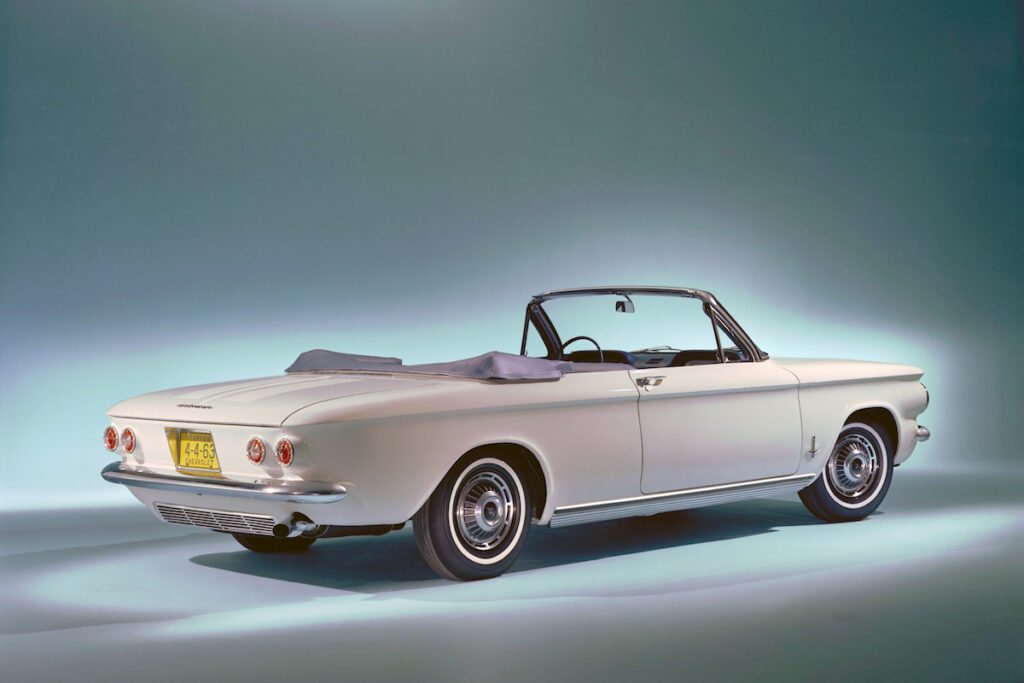
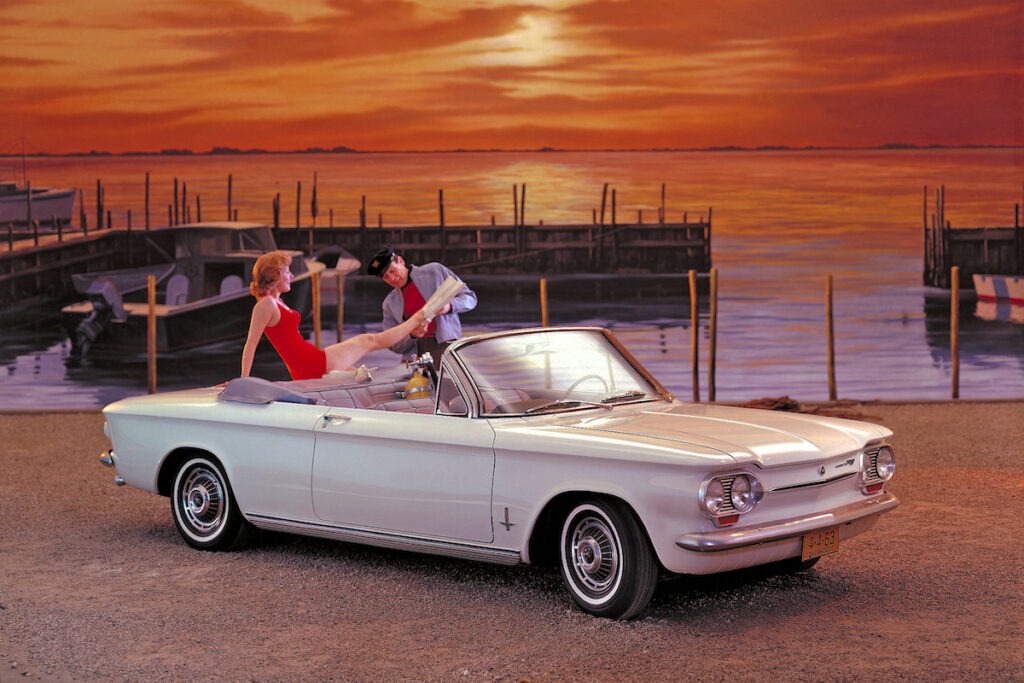
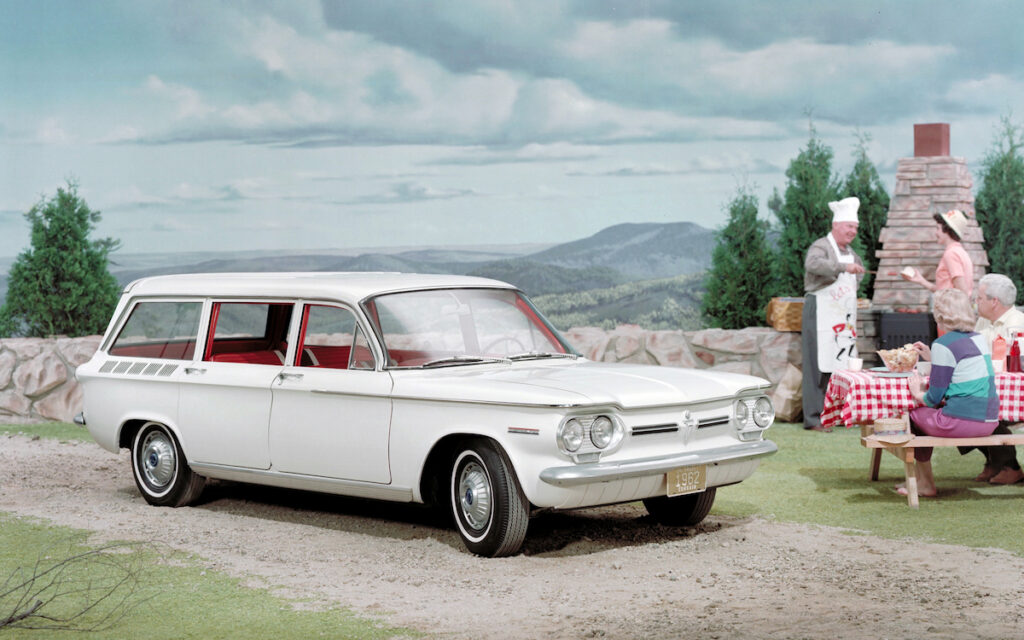
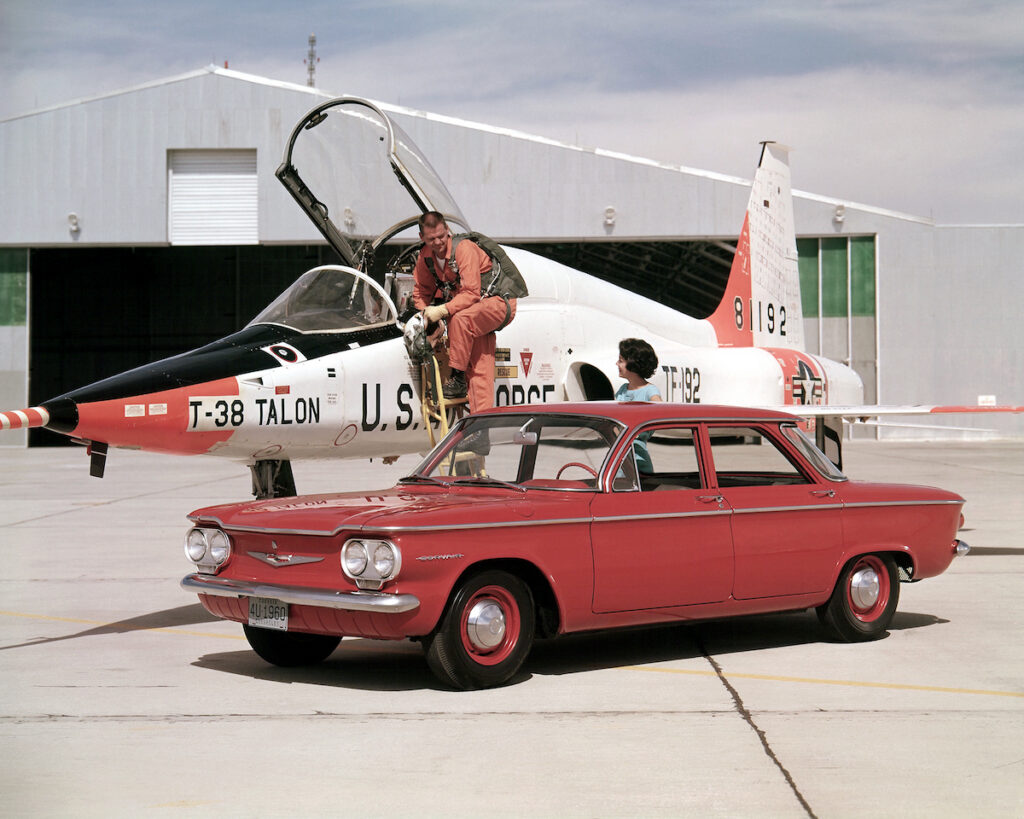
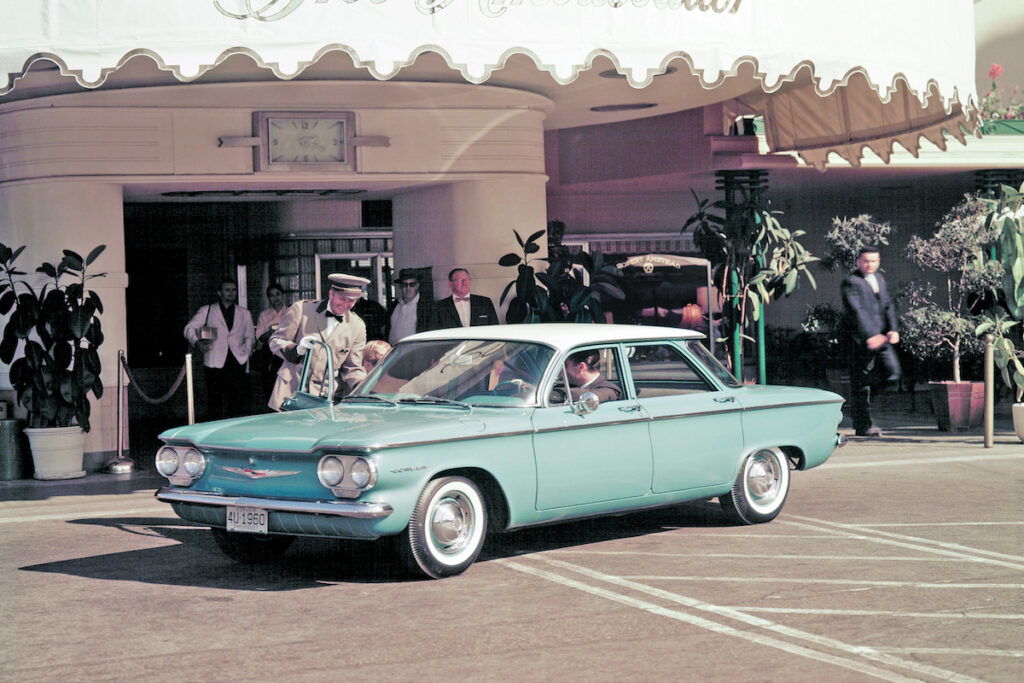
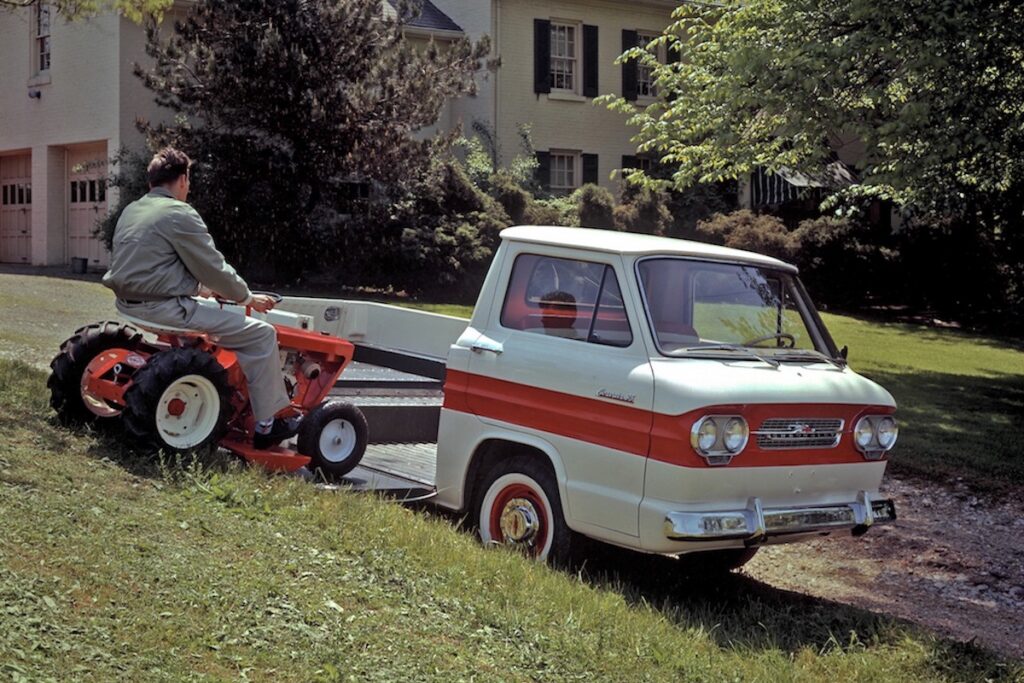
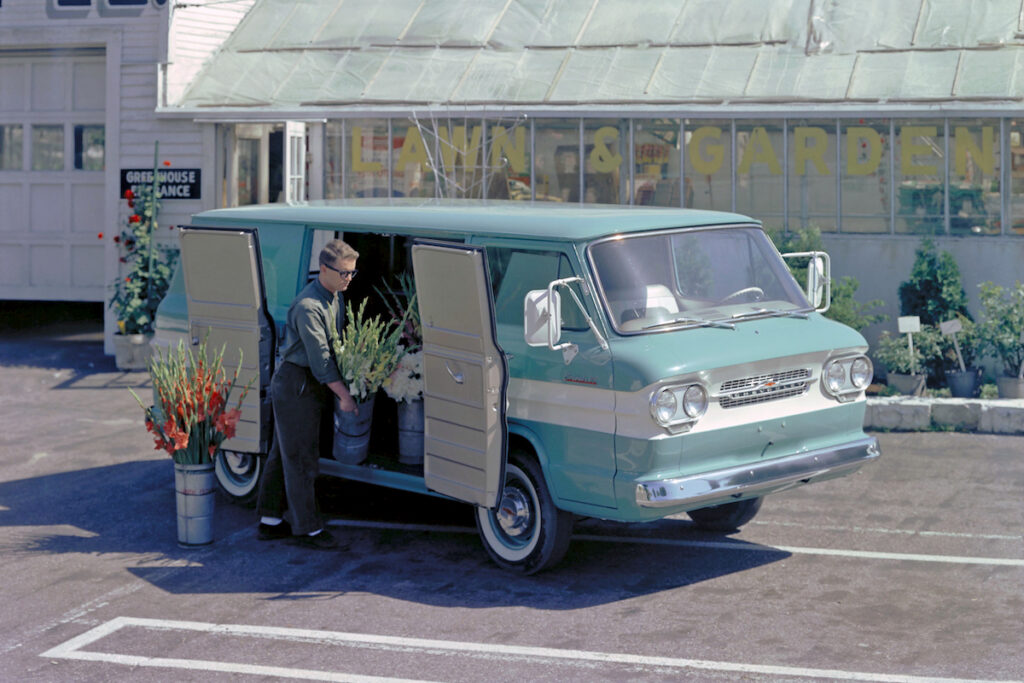
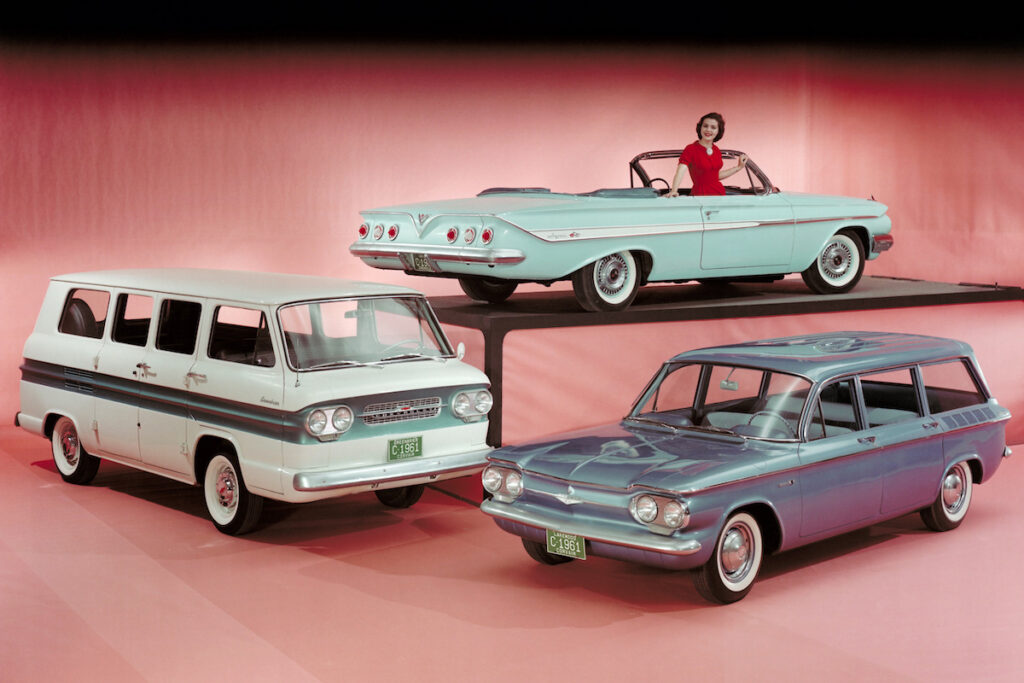
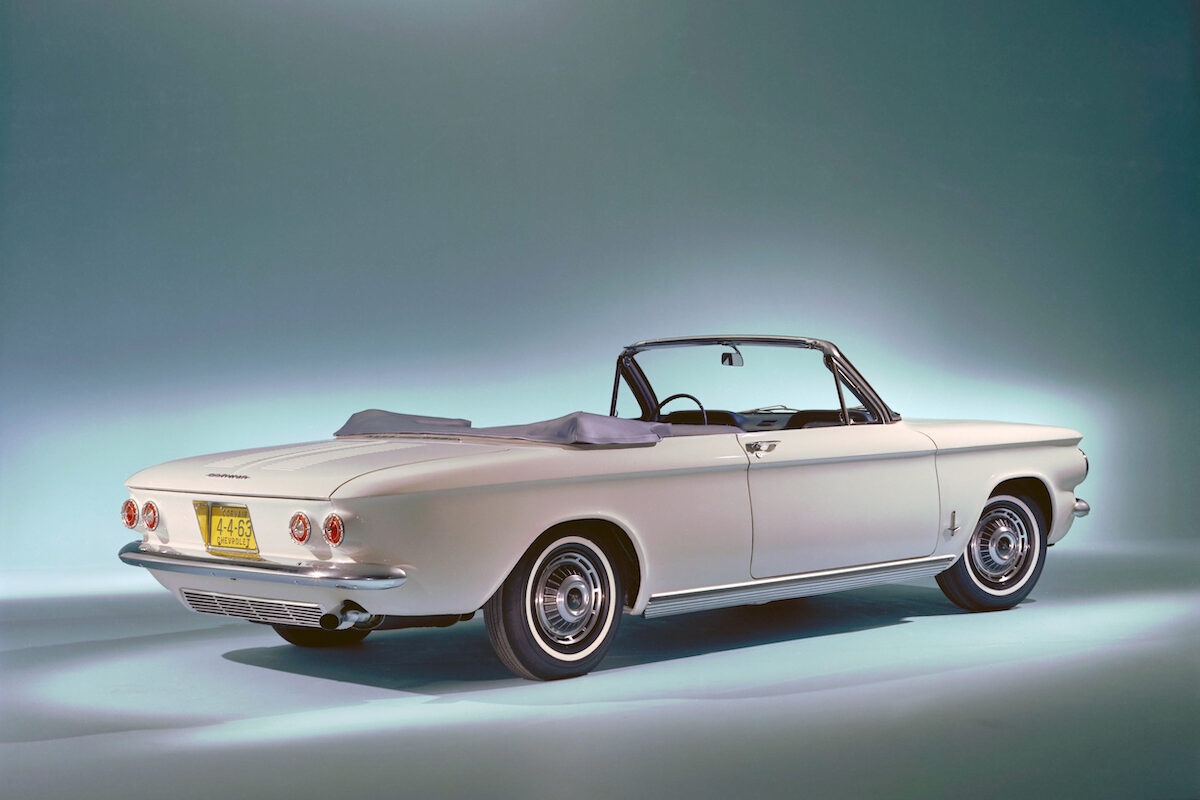
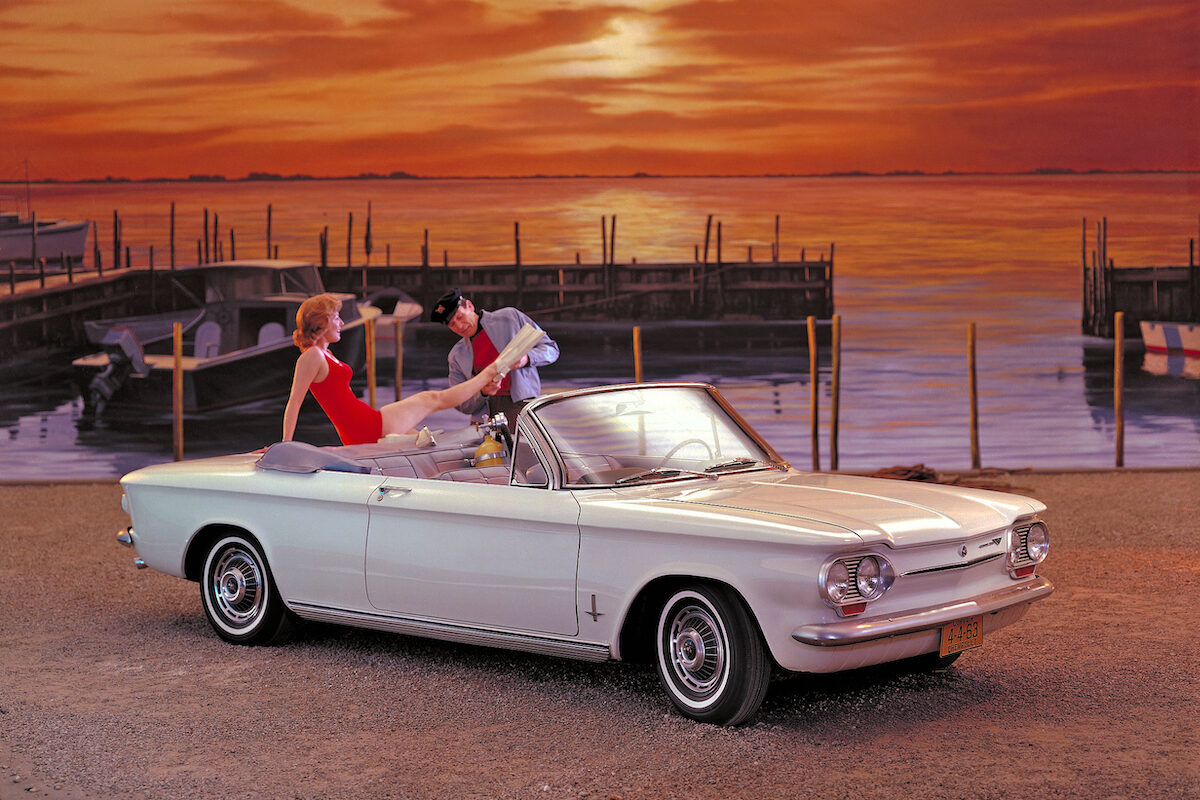
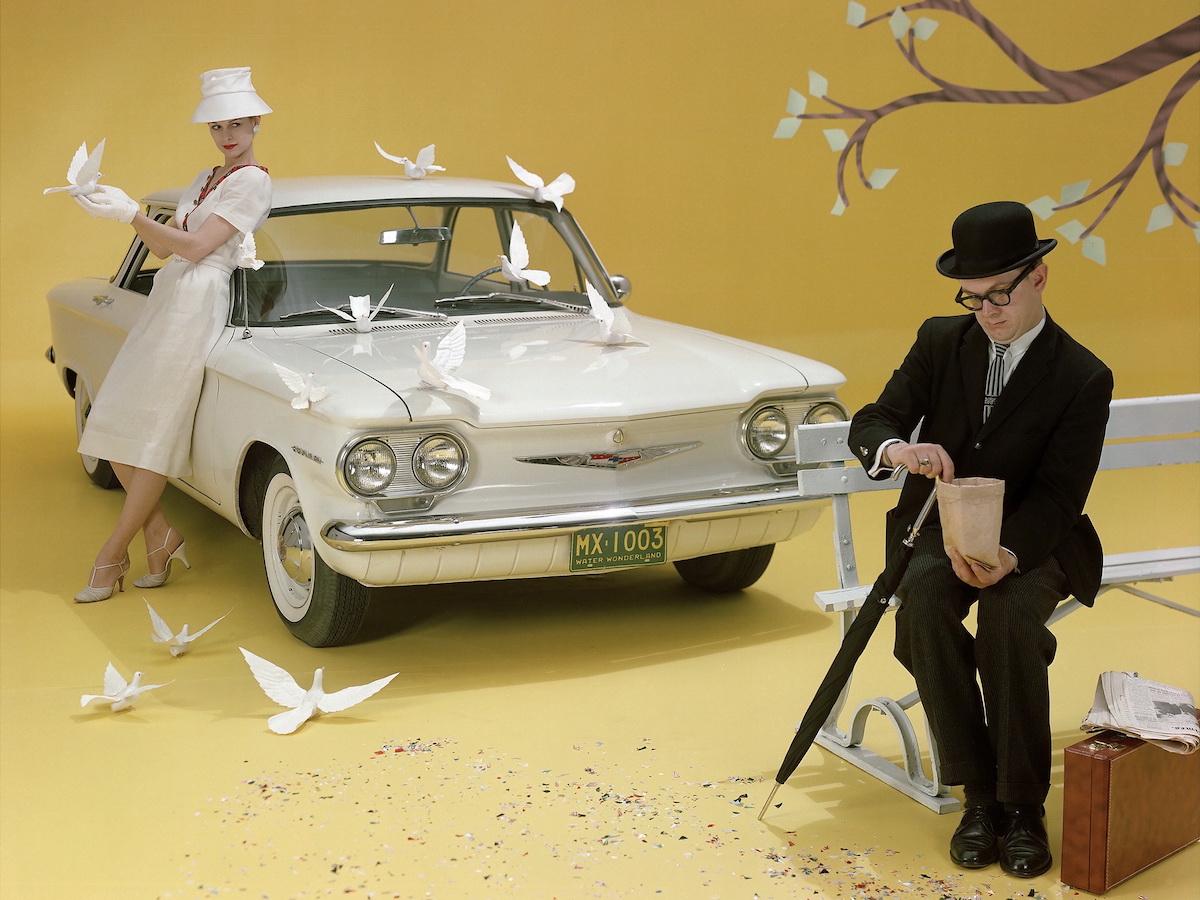
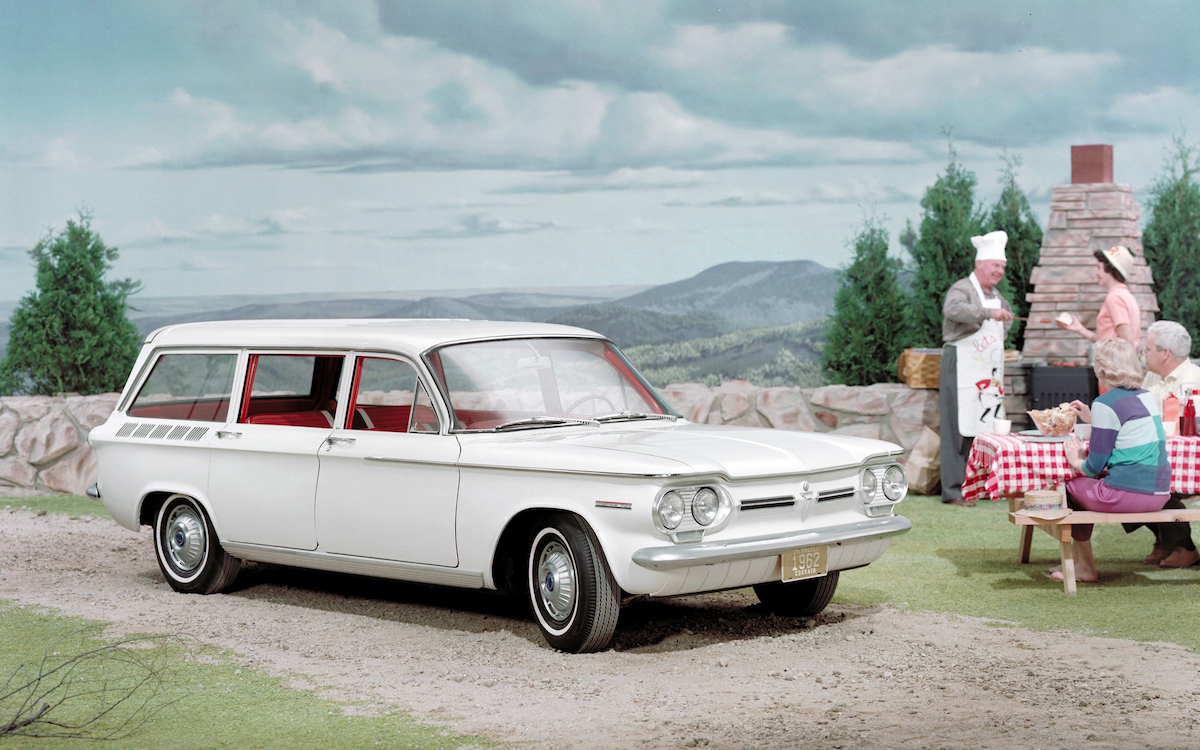
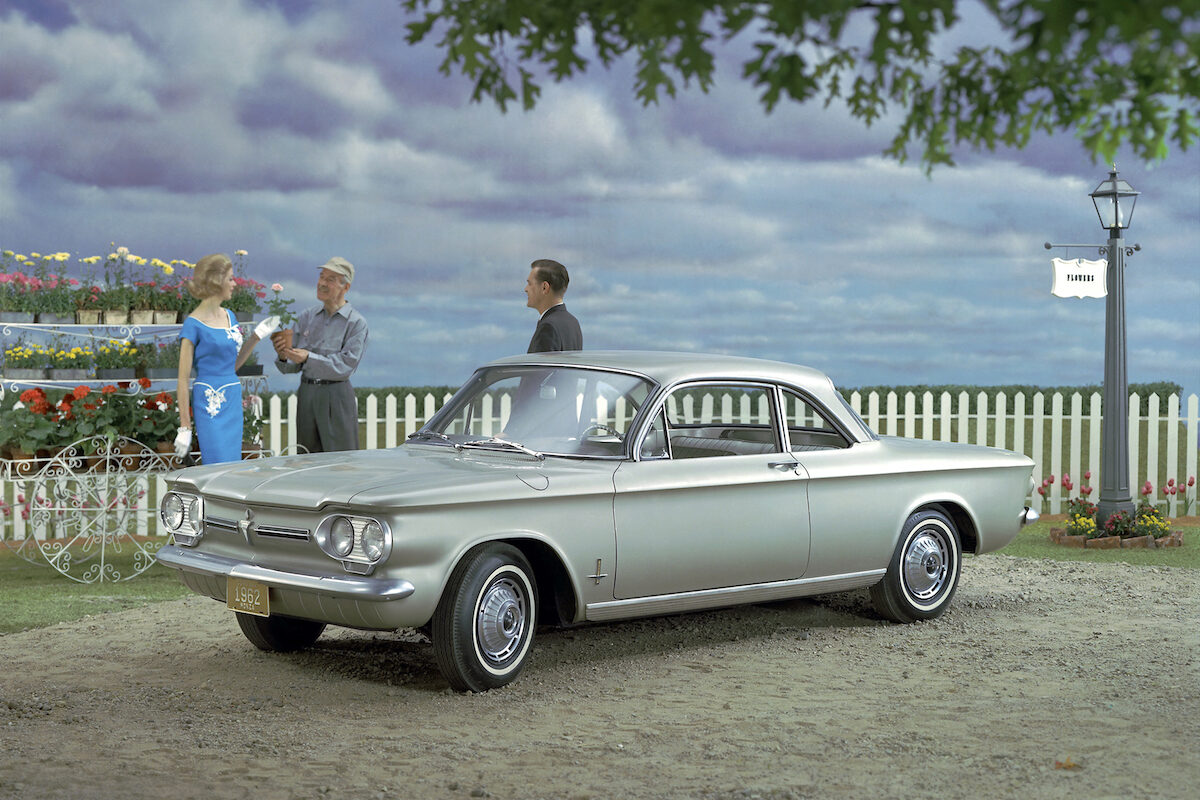
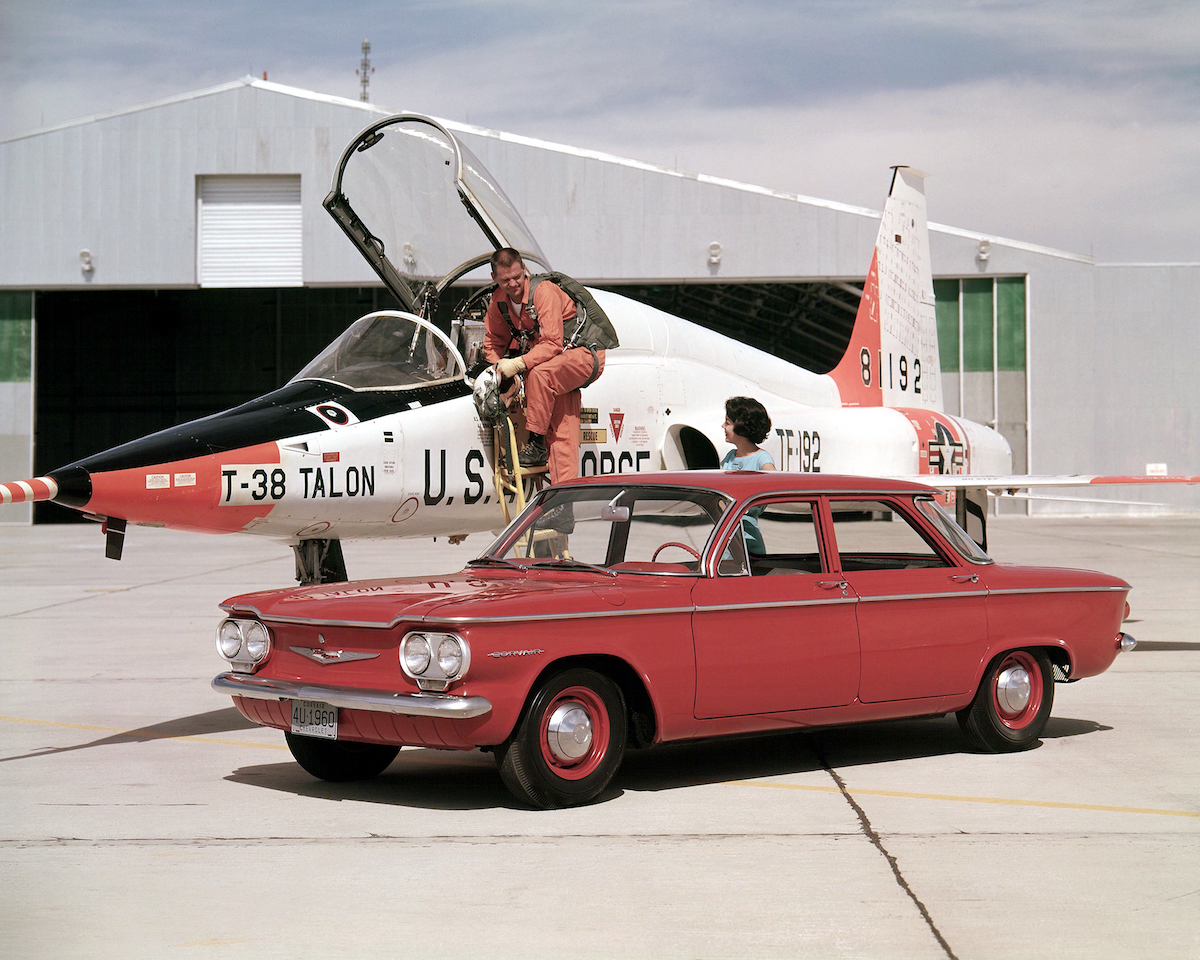
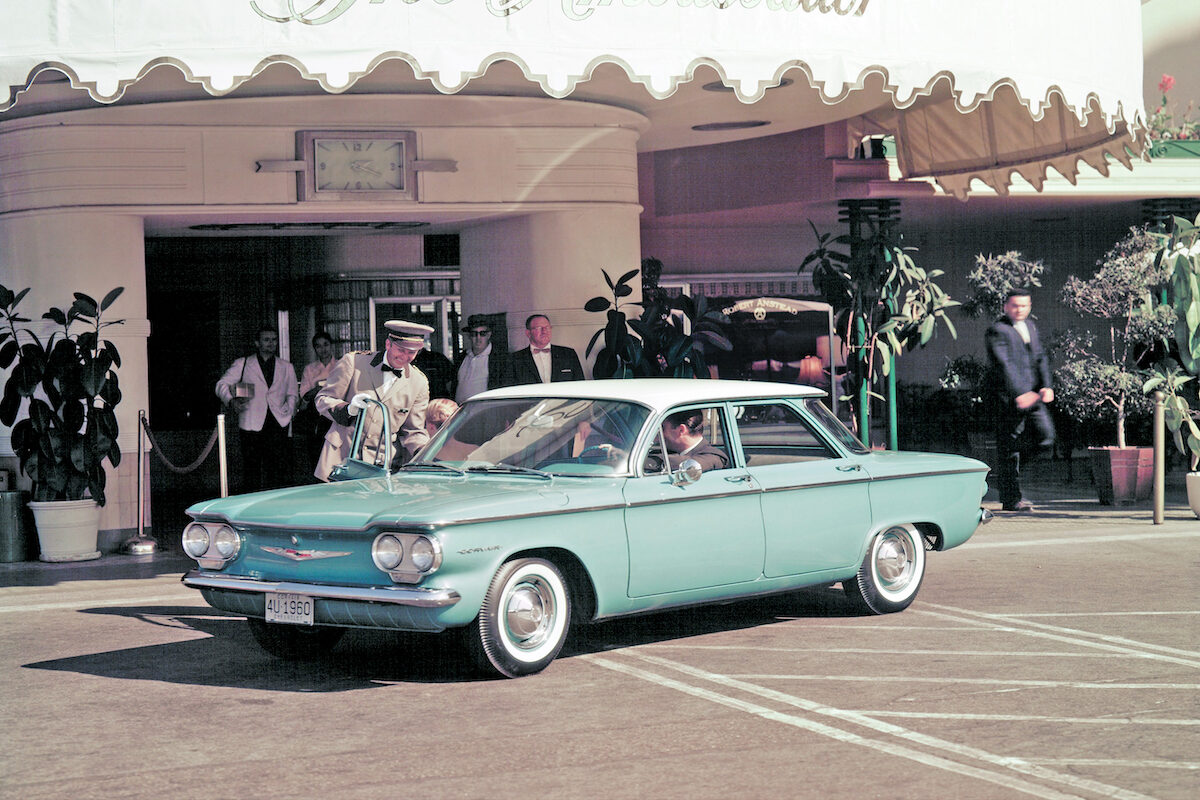
Buyers were spoiled for body styles, with a four-door sedan, five-door wagon, two-door and sporty Monza coupes and two-door convertible. Another VW-mimicking move – using a shortened Corvair platform – was the Corvair 95 van, Greenbrier minibus, and Loadside and Rampside pick-ups.
The Corvair’s dramatic ‘beltline’ design would be surprisingly influential, being copied by European small cars like the BMW 1500 neue klasse, Fiat 1500, NSU TT and Hillman Imp.
Chevrolet’s 1959 ads spruiked “the revolutionary Corvair, with the engine in the rear, where it belongs in a compact car”. However, next to rear-engine econo-Euros like the VW and Renault Dauphine, the Corvair was expensive. Next to front-engine domestic compacts, it was underpowered and weird.
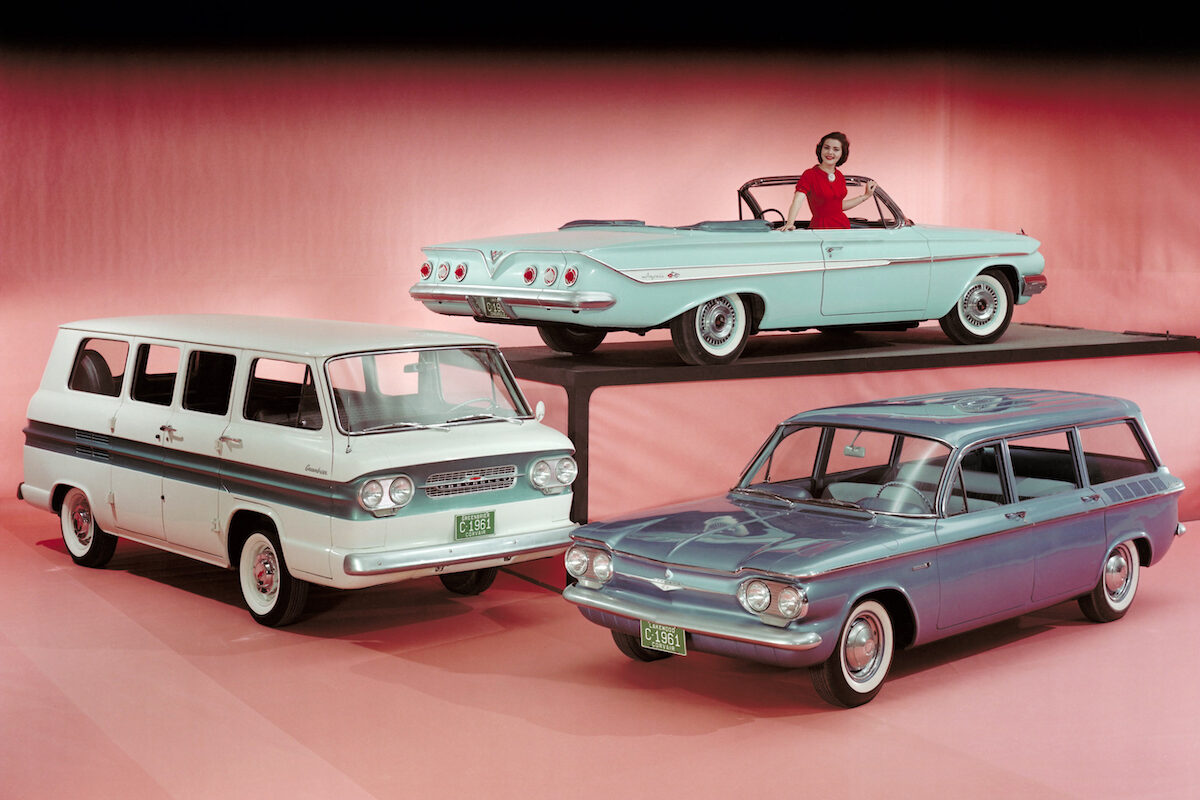
The distinctive handling of its 38/62 weight distribution wasn’t helped by GM’s beancounters nixing the engineers’ recommended anti-roll bars, and owners’ ignorance of the unusual tyre pressure requirements (15psi front, 26psi rear).
Performance and acceptance stepped up in ’62 with the “Spyder” option, which made the Corvair Monza Spyder the world’s first turbocharged production car; or at least, an honour shared with that year’s Oldsmobile Jetfire turbo V8.
Chevy engineering boss (later GM President) Ed Cole had earlier worked on flat-six tank engines. The Corvair’s alloy, pushrod-ohv flat six had separate barrels with one-piece heads. The base version displaced 2296cc for 60kW at 5200rpm, via a three-speed manual or two-speed auto; the sporty Monza got 71kW and four cogs. The Spyder turbo coupes and ragtops boasted 112kW.
Corvair’s interior was stark by American standards, but the car was intended as a cheap import-chaser. Early models had a steel dash and boring instrumentation, though the sporty Monza got better gauges. Convertibles roofs were manual fold, with power folding a $54 option.
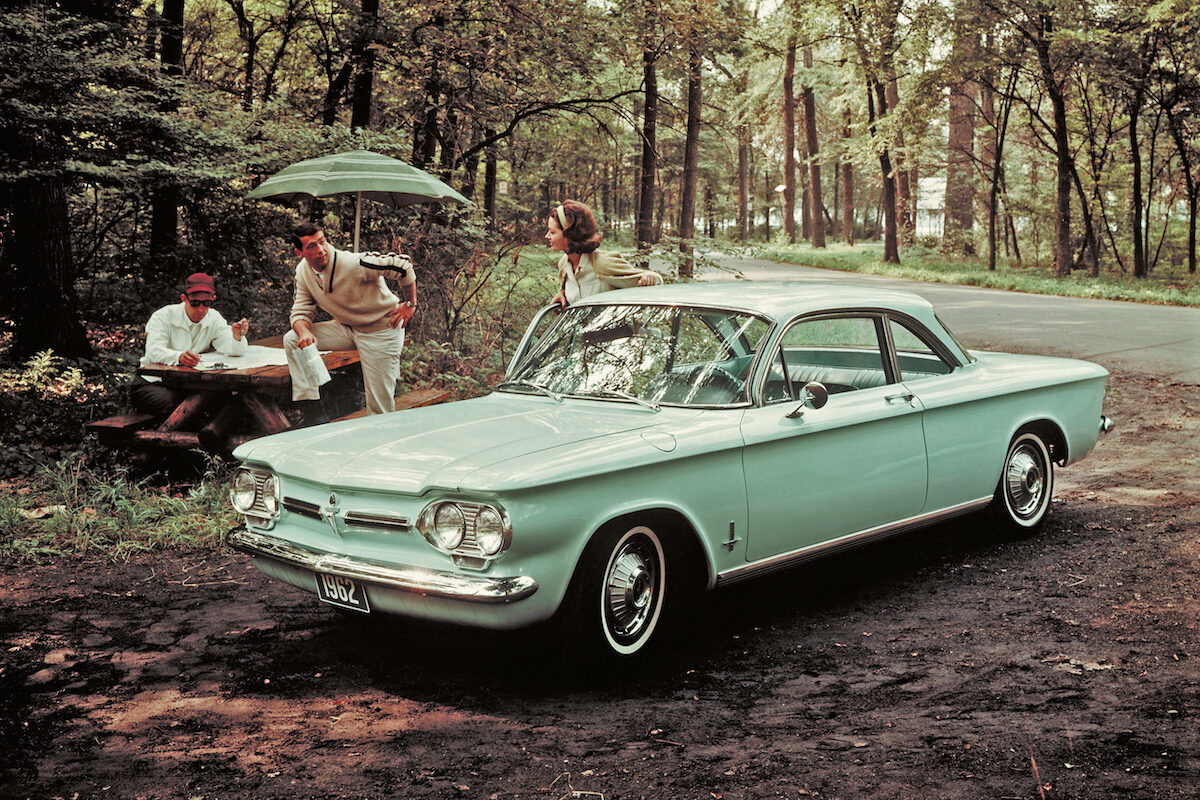
The elegant second-generation Corvair for ’65 was a virtually new and very competent car, and brought an engine capacity increase to 2.7-litres for 71kW, and a coil-sprung version of the ’63 Corvette’s acclaimed, upper and lower control arm rear suspension. Interiors were also much improved, with all-new dash, instruments and upholstery.
By then, however, the Corvair was facing two obstacles. The original car’s handling and GM’s penny-pinching were vilified in Ralph Nader’s landmark consumer bleat, Unsafe at Any Speed. A 1972 US congress report would conclude that the 1960-63 Corvair had been no more dangerous than the Falcon, Valiant or VW.
At the same time, the sporty, affordable Corvair Monza had exposed a market for a stylish, compact coupe – which Ford stampeded into with the 1964 Mustang.
GM froze Corvair development in April 1965, turning its attention to creating the Camaro, but the Corvair dragged its bum along for a further four years, by which time a total of 1,786,243 had been built.