
A British entrepreneur and a French engineer collaborated to bring the “Rolls-Royce of motorcycles” back from the dead in 2008, and the historic brand then went on to help produce the first ever Aston Martin-badged motorcycle, a rare example of which is currently up for sale in Australia.
If there is a name that instantly captures the attention of dedicated motorcyclists of a certain vintage, it is Brough Superior.
Founded in Nottingham, England, in 1919 by racer George Brough, the powerful and perfectly finished machines that bore his name went on to set multiple records for speed, celebrity ownership and collectability.
From sprints to hill climbs, to top-speed runs, or merely making a statement on the high street, Brough Superiors were both a dominant competition force and one of the most desirable machines on the planet for just over two decades, until production ceased in 1940 when the factory was requisitioned for military purposes.
In 2008 British entrepreneur and vintage motorcycle enthusiast Mark Upham acquired the rights to the Brough Superior name and set about looking for a technical collaborator to bring the brand back to life.
That search led him to French entrepreneur and motorcycle designer Thierry Henriette, who had form in the field of exotic motorcycle manufacture; he had previously ventured into the demanding field of in-house chassis construction to create a model bearing the prestigious Lamborghini name.
Henriette later founded Boxer Design and unveiled his first self-designed sports motorcycle at the 1999 Paris Motor Show, the VB1, powered by a unique 88-degree V-twin turbocharged engine developed in partnership with distinguished engine manufacturer Akira.
This pioneering background, plus Boxer Design’s growing reputation as a renowned design and engineering company made Henriette the obvious choice as the man to help revive and revitalise the Brough Superior brand.
Fast forward to 2013 and Henriette’s collaboration with brand owner Mark Upham resulted in the first, modern Brough Superior SS100 prototype debuting at the EICMA show in Milan.
The positive response led Henriette to acquire the rights to the Brough Superior name, moving production to his factory in Toulouse, from where the first hand-built production examples were delivered during 2015.
Using bespoke engines from Akira and produced by Thierry’s Boxer Design, the reborn Brough range was said to embody the same uncompromising dedication to advanced design and absolute quality that had characterised the original British entity.
Hand built, cost-no-object motorcycles were pivotal to the revived brand. When offered locally via Brough Superior Australia in 2017, the traditionally styled SS100 cost A$105,000 including full Australian compliance and a Two-Year warranty.
By 2020 the Brough Superior range had quadrupled in size, incorporating three road registrable bikes plus the extreme and extraordinary AMB 001.
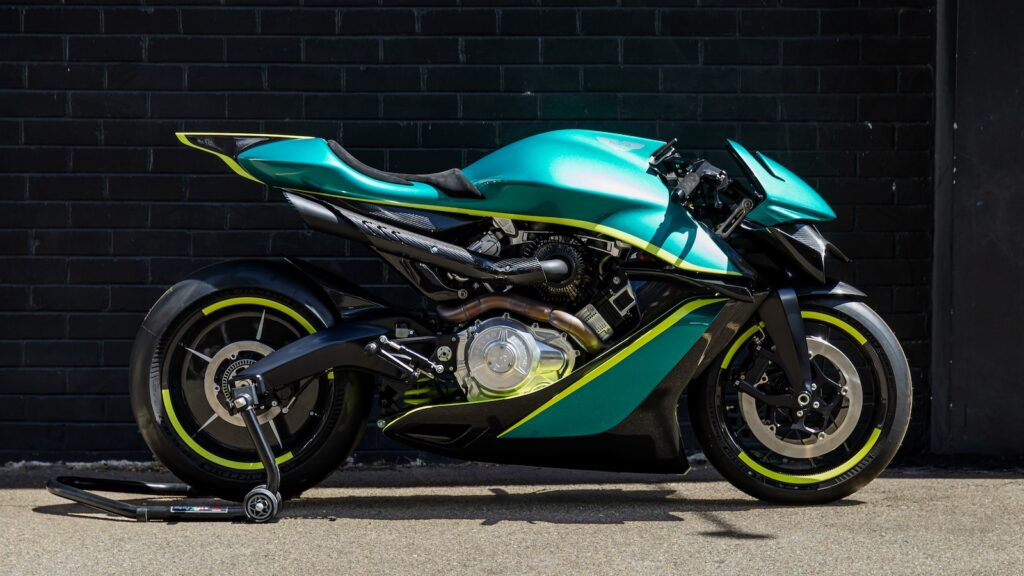
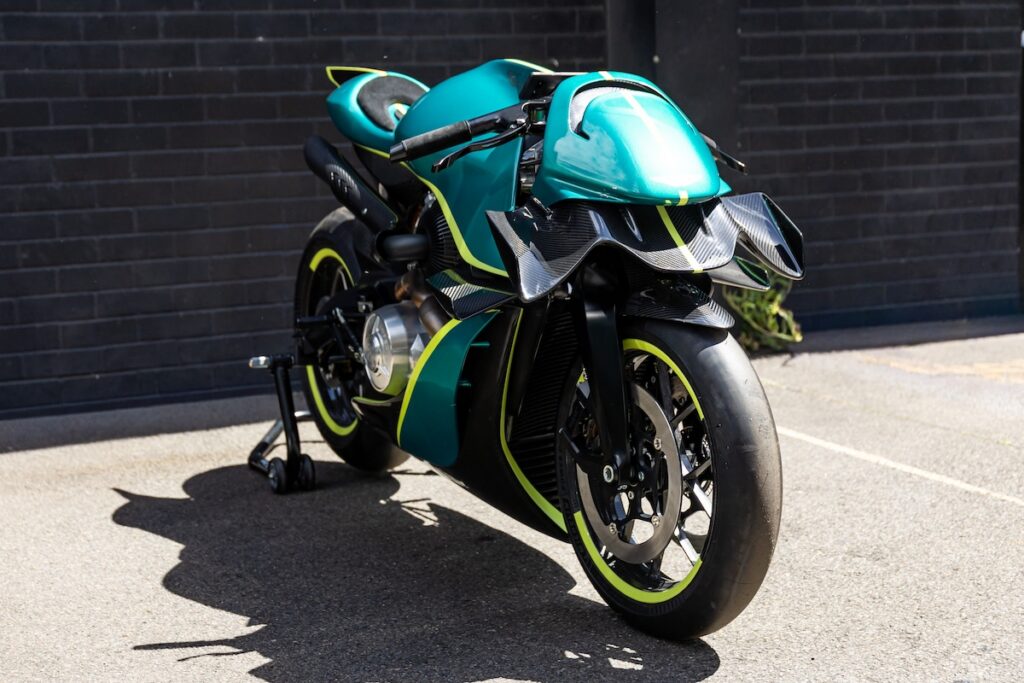
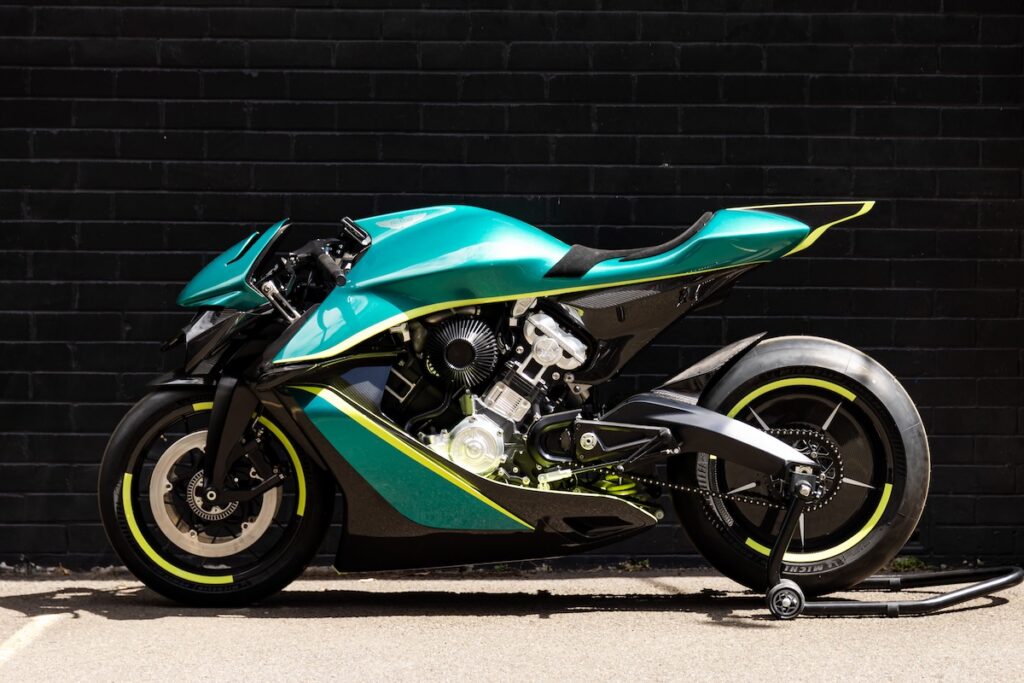
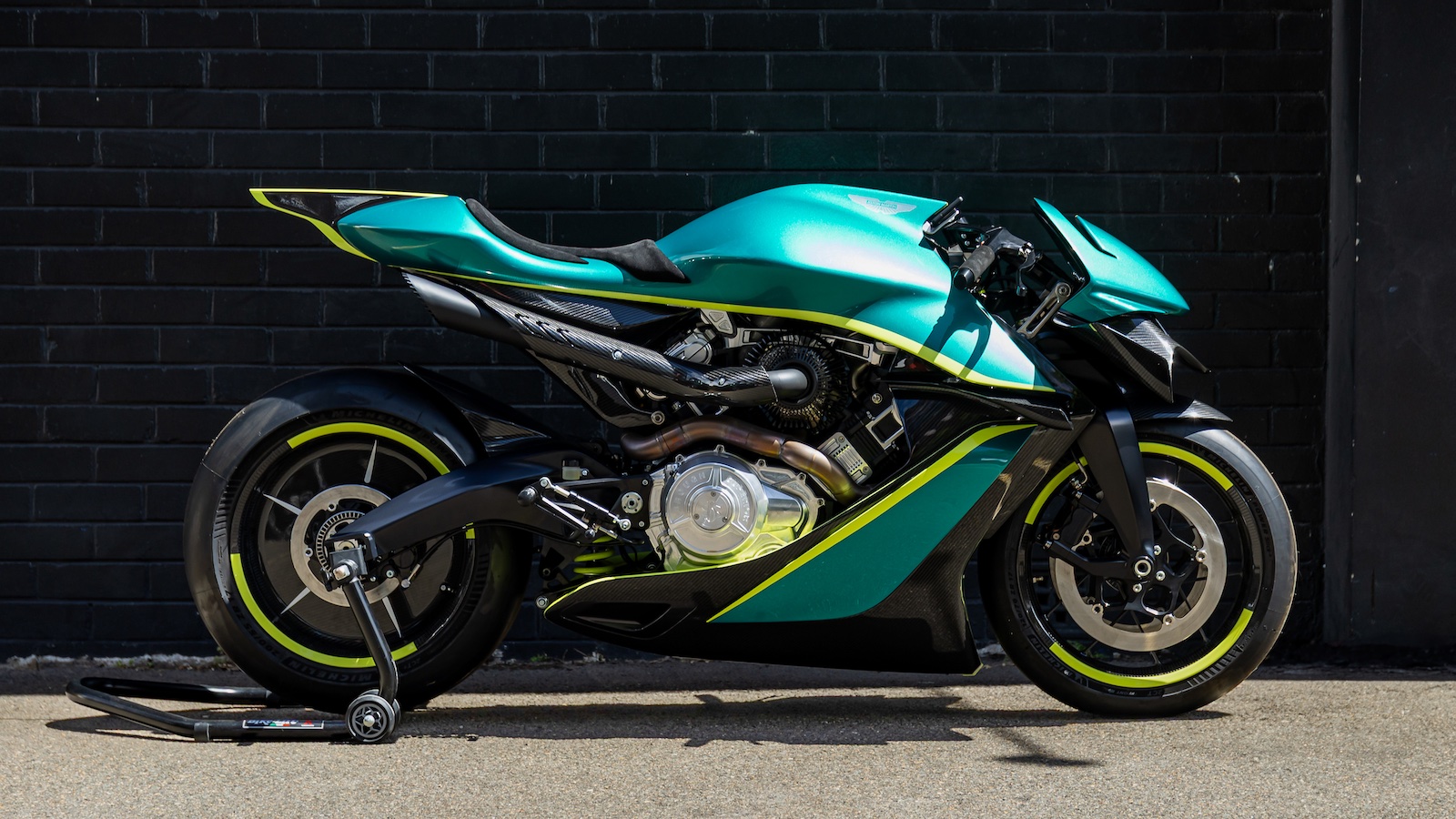
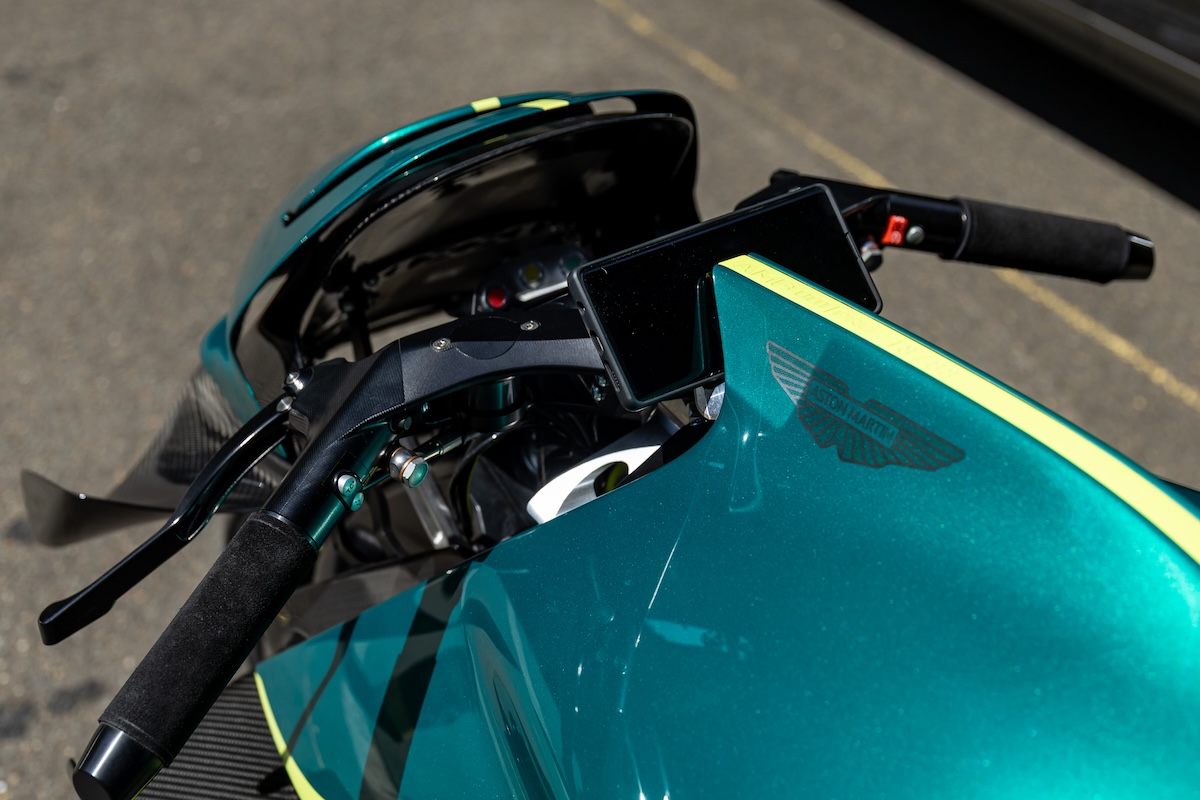
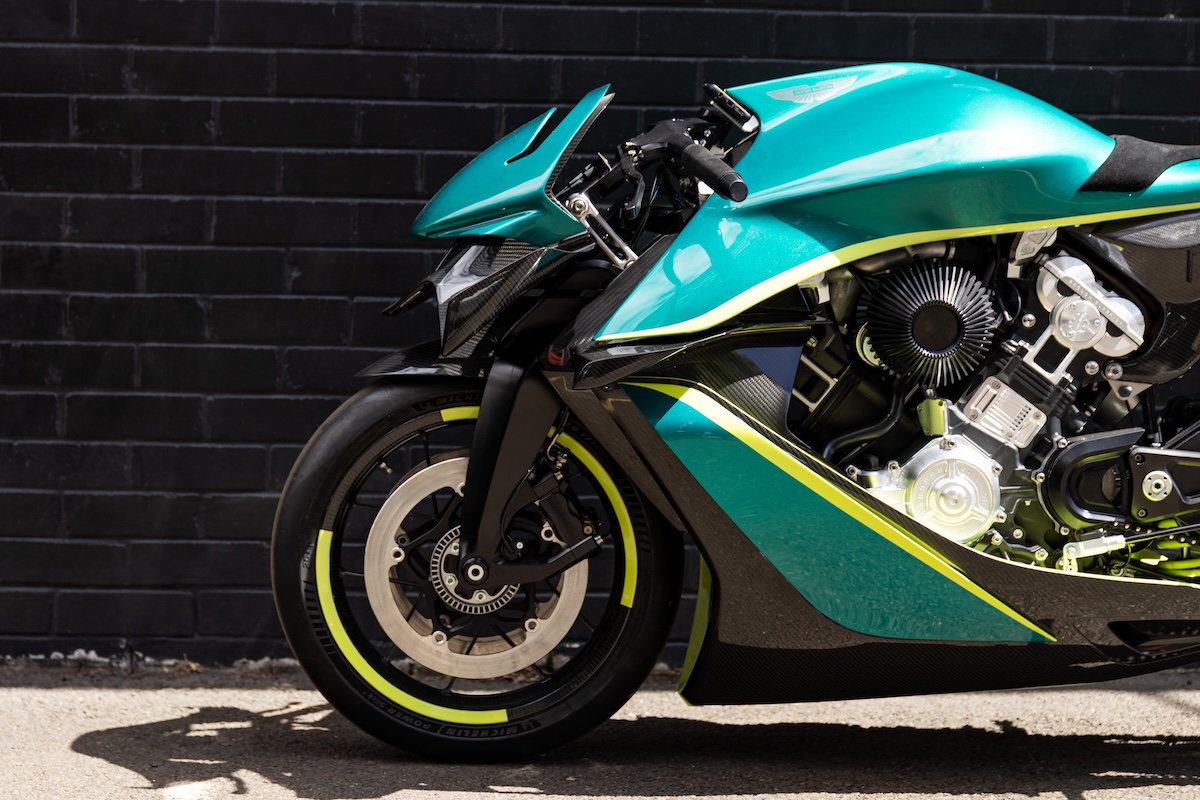
The first-ever motorcycle produced by Aston Martin, the AMB 001 was unveiled in 2019 at EICMA in collaboration with Brough Superior. The project united Aston Martin’s design team with Brough Superior’s technical expertise, with the bikes hand-assembled in Toulouse, France.
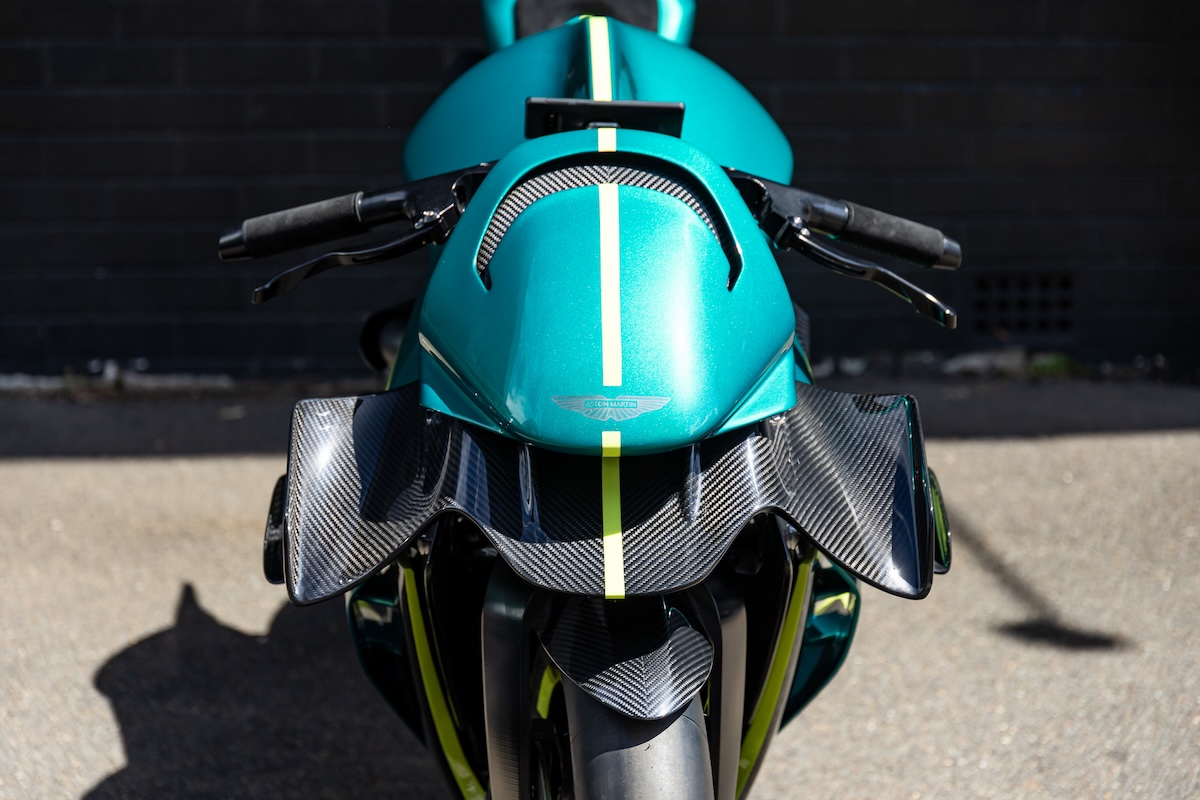
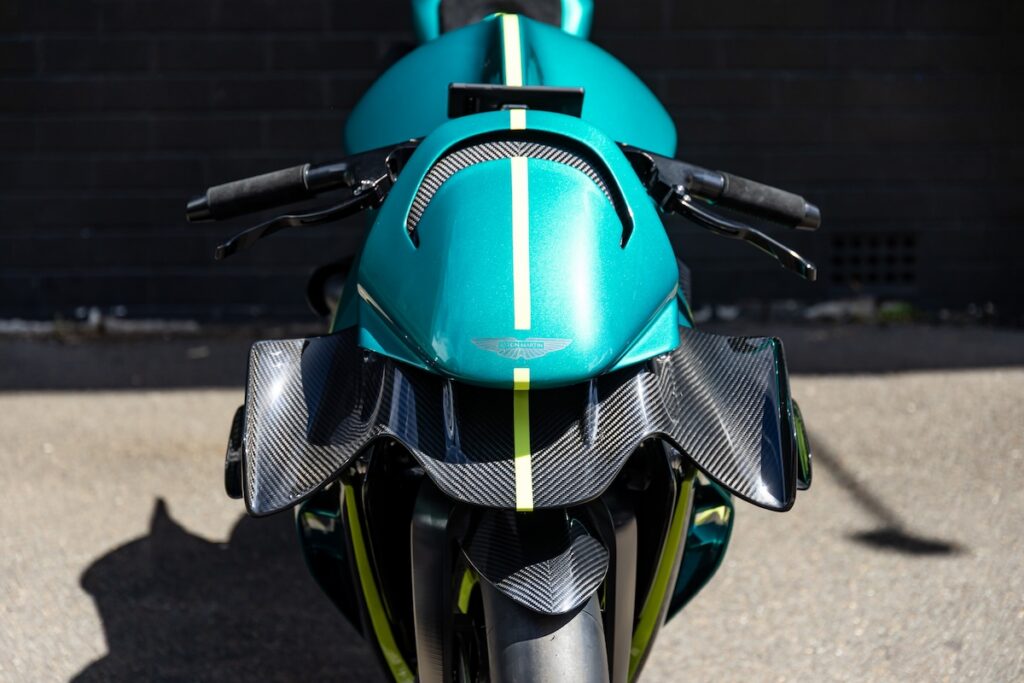
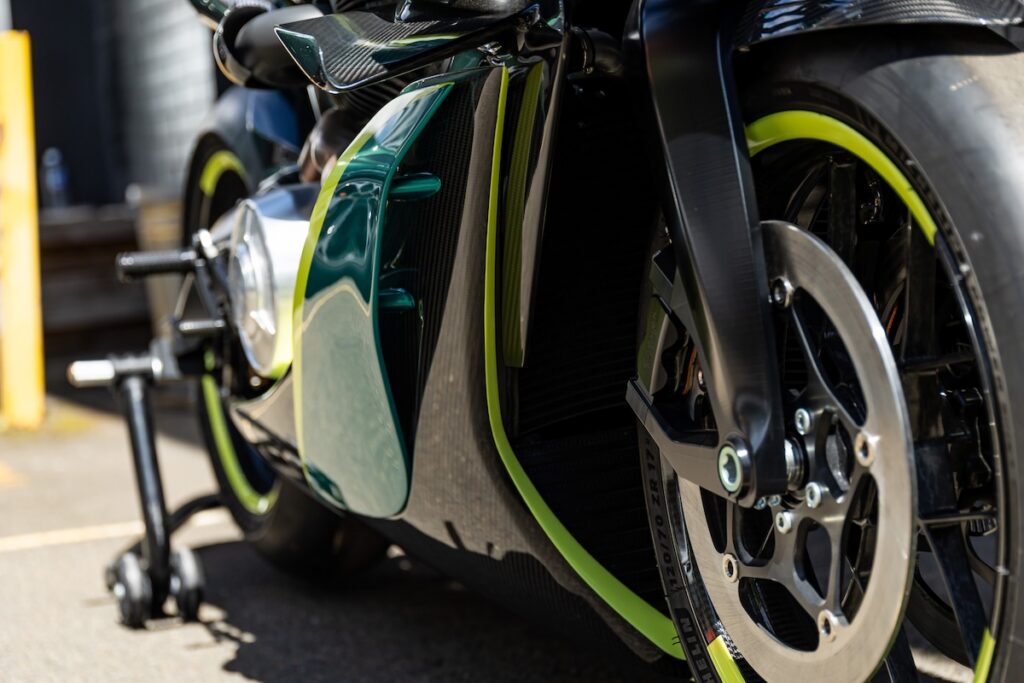
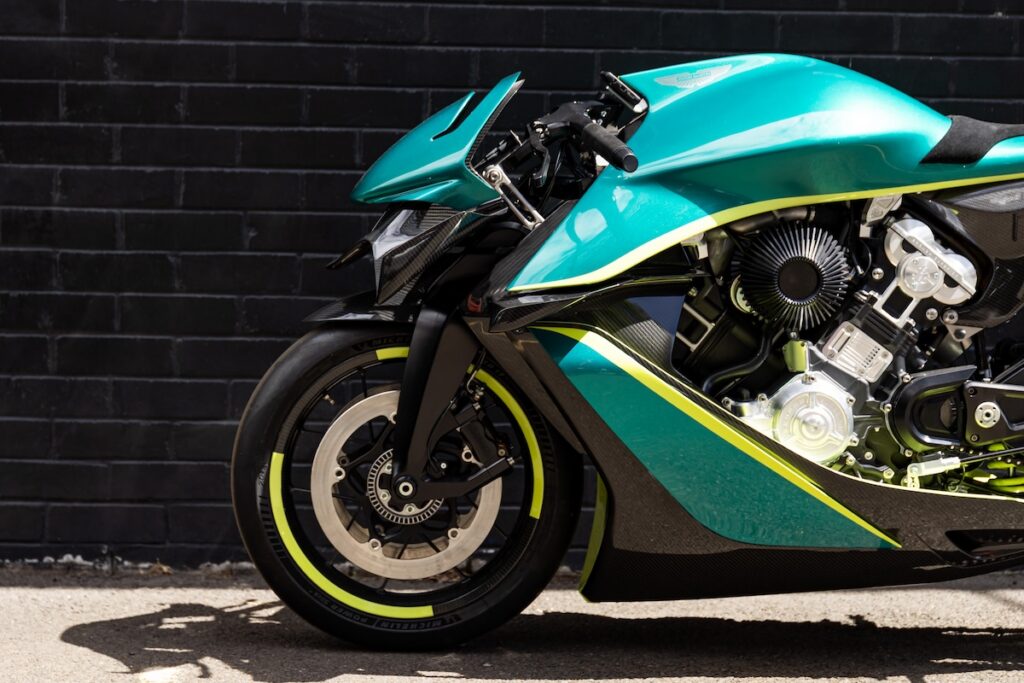
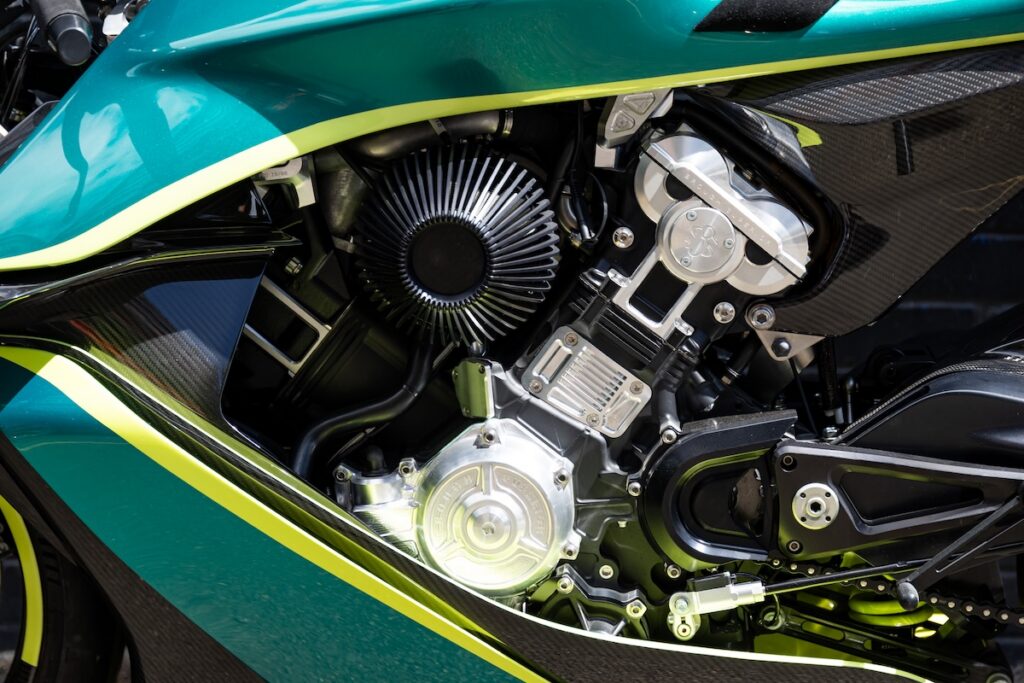
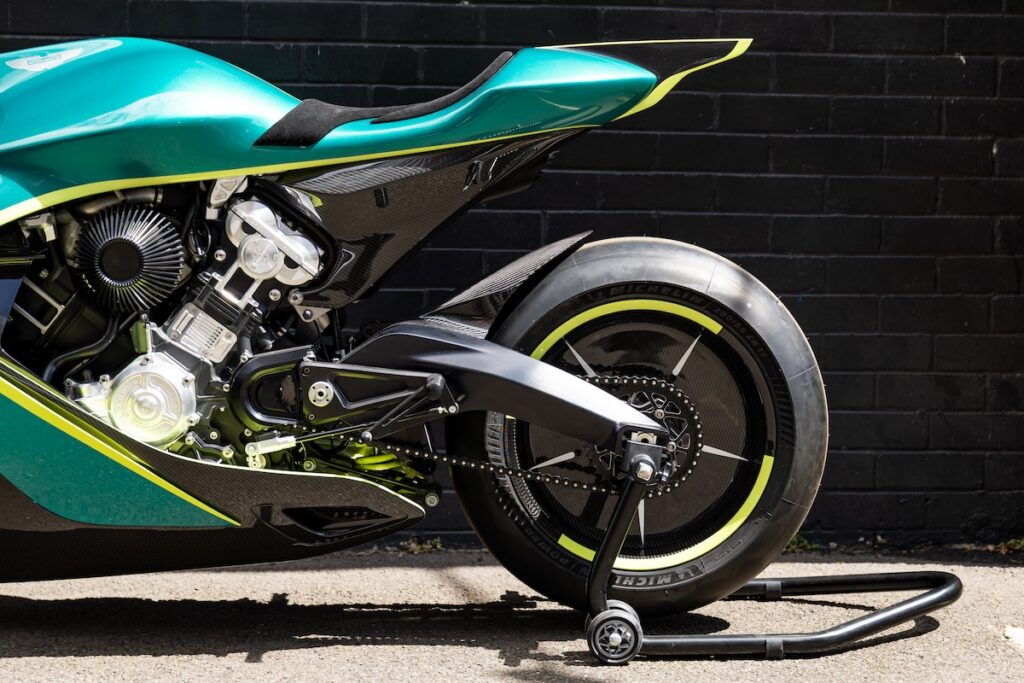
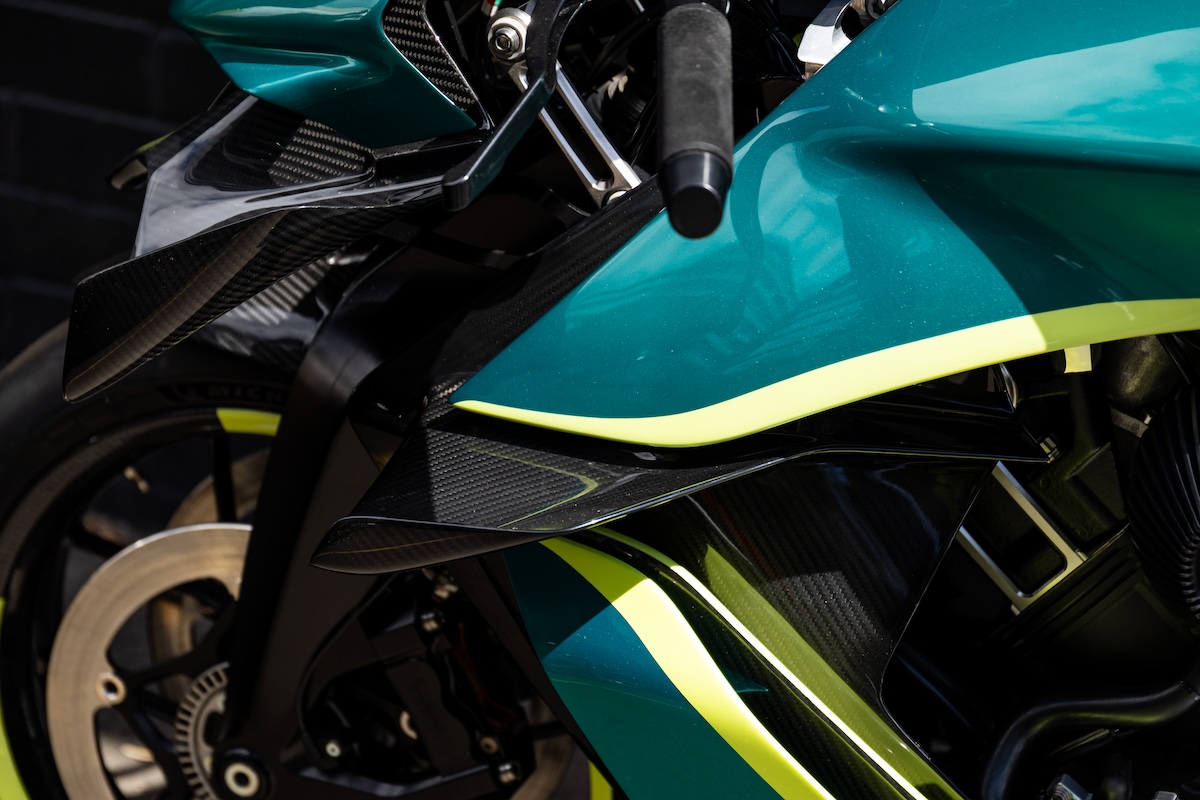
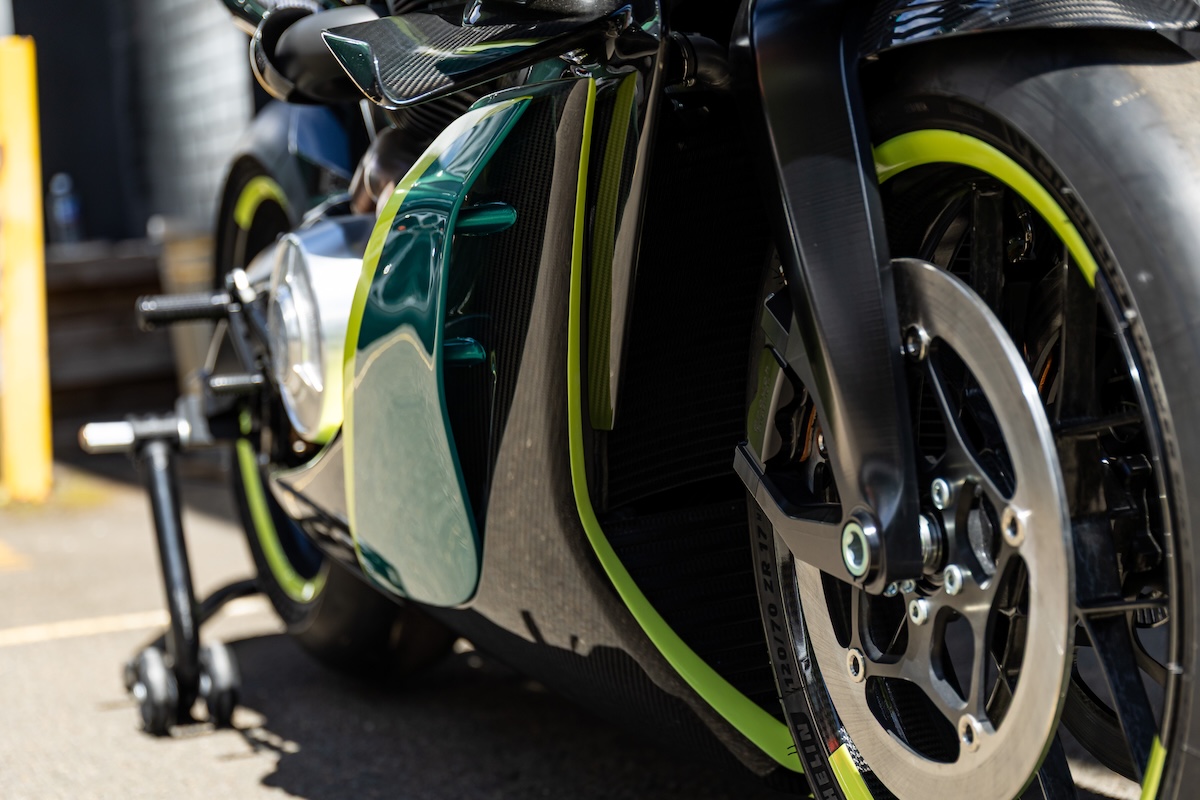
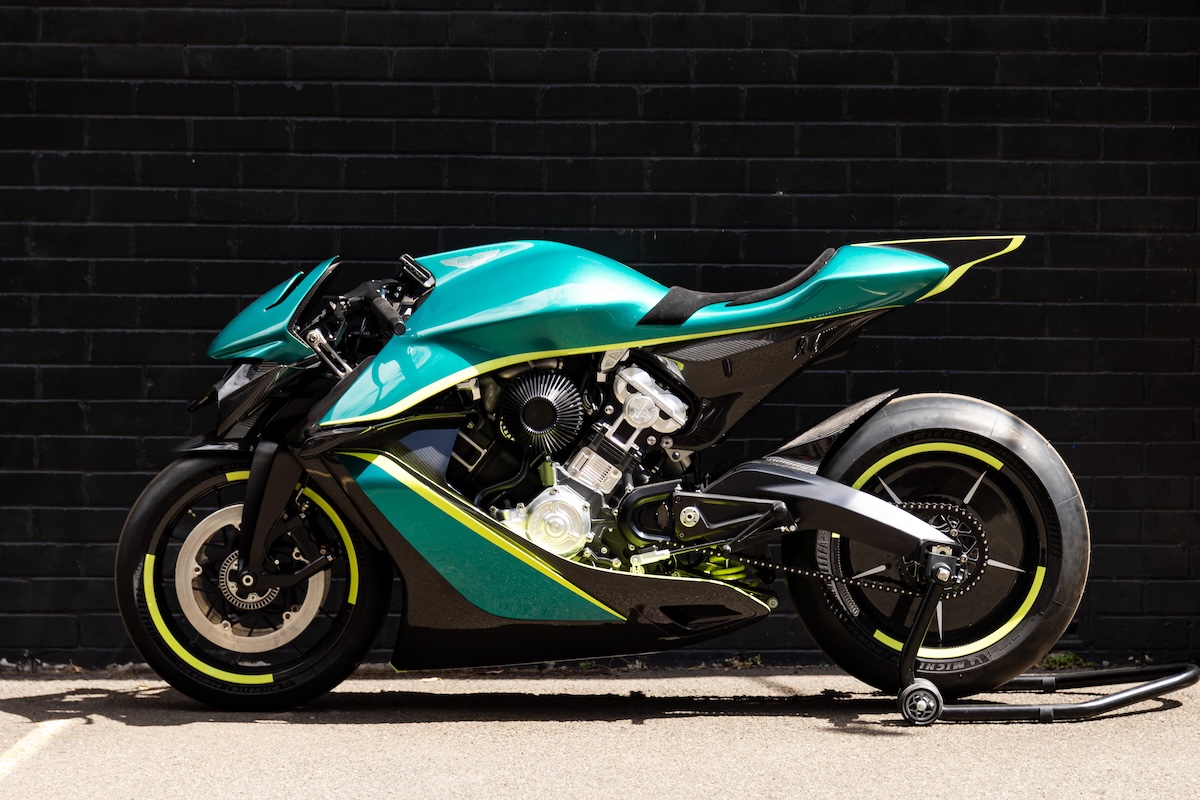
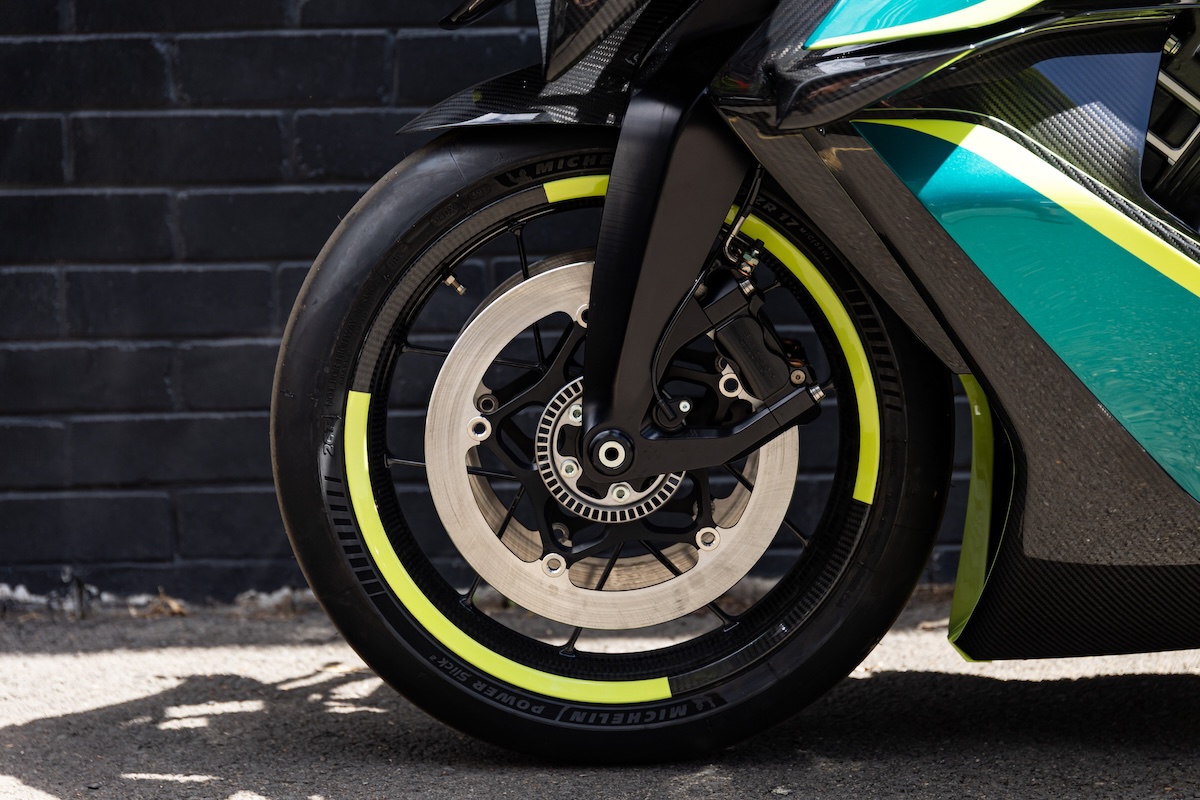
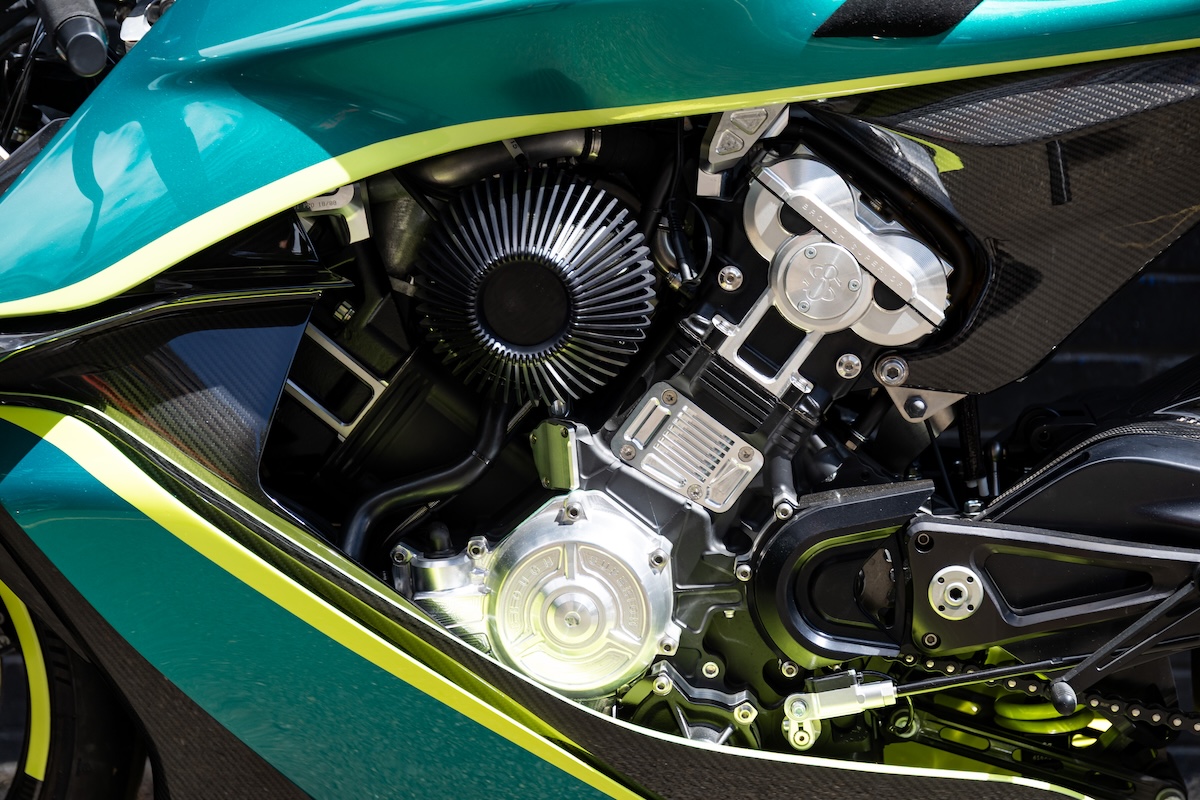
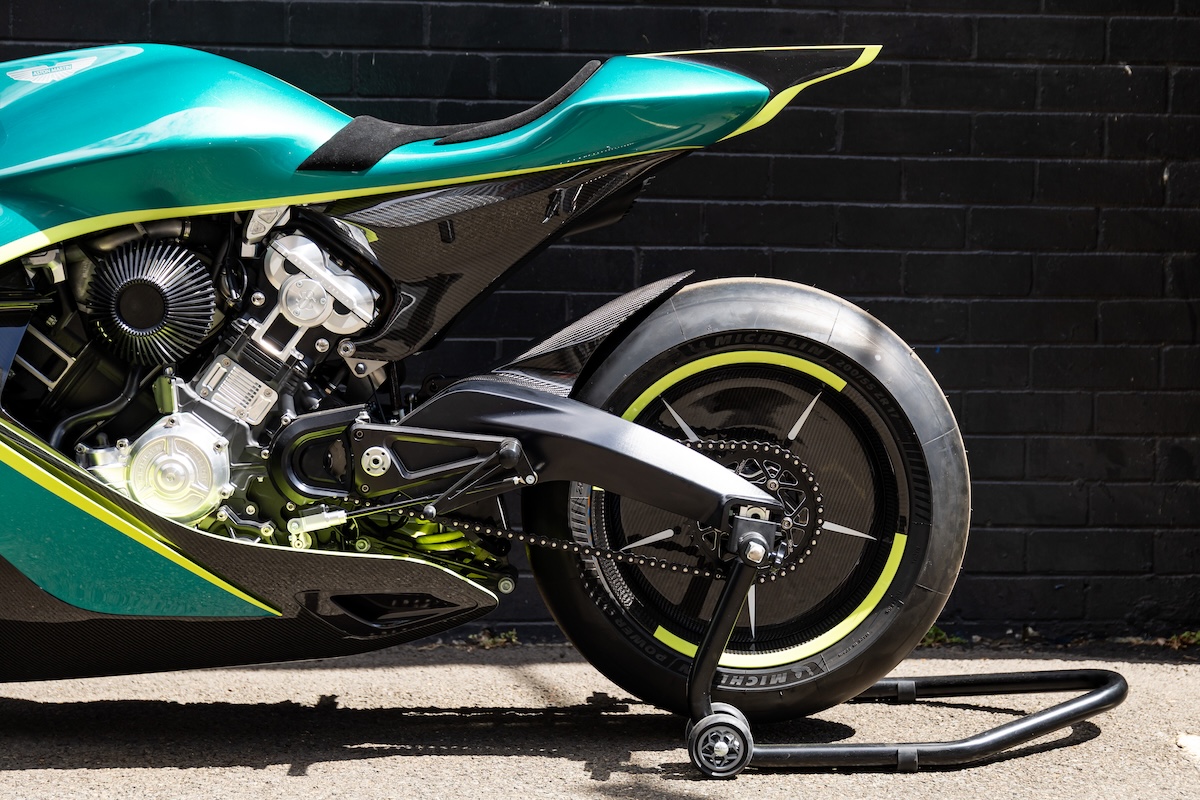
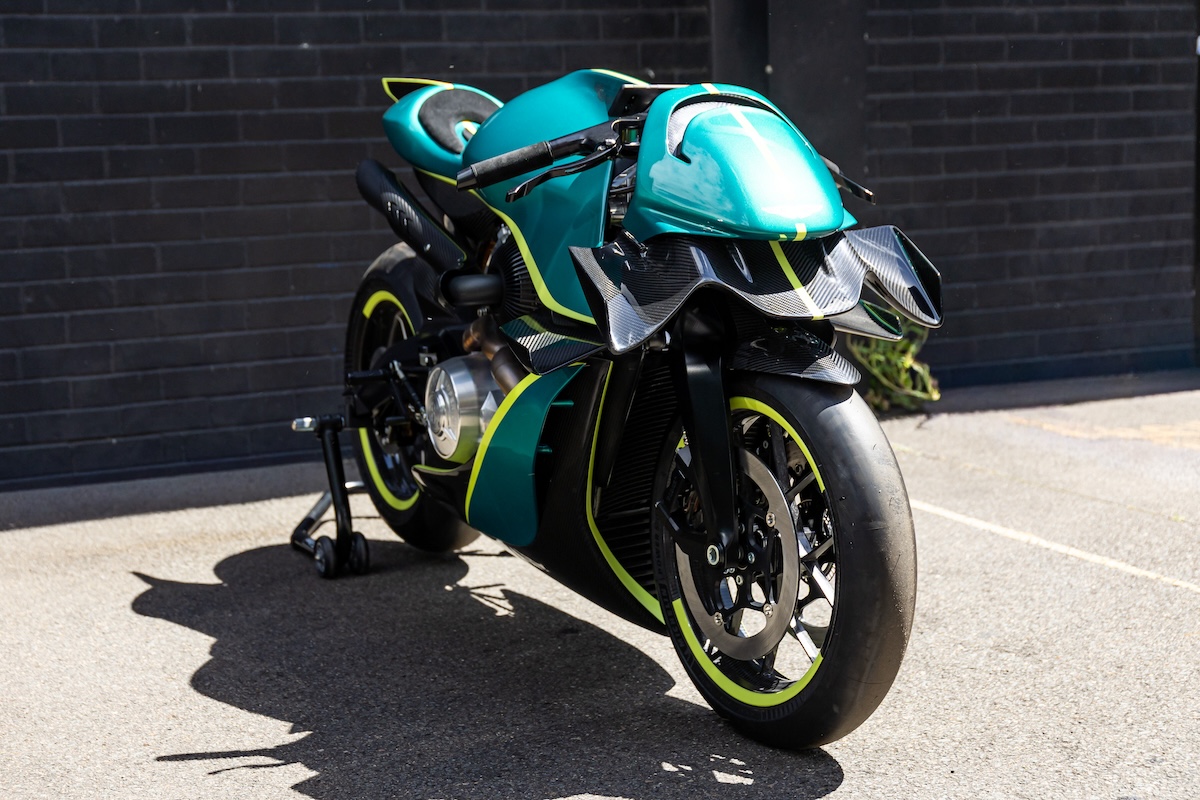
Inspired by Aston Martin’s Valkyrie hypercar, the AMB 001’s design features a carbon fibre body, a turbocharged engine, and a distinctive sterling green livery. Just 100 of the 180bhp (134kW) rocket-ships were to be available worldwide, and they were soon sold out, leading to the announcement in 2023 of the AMB 001 Pro.
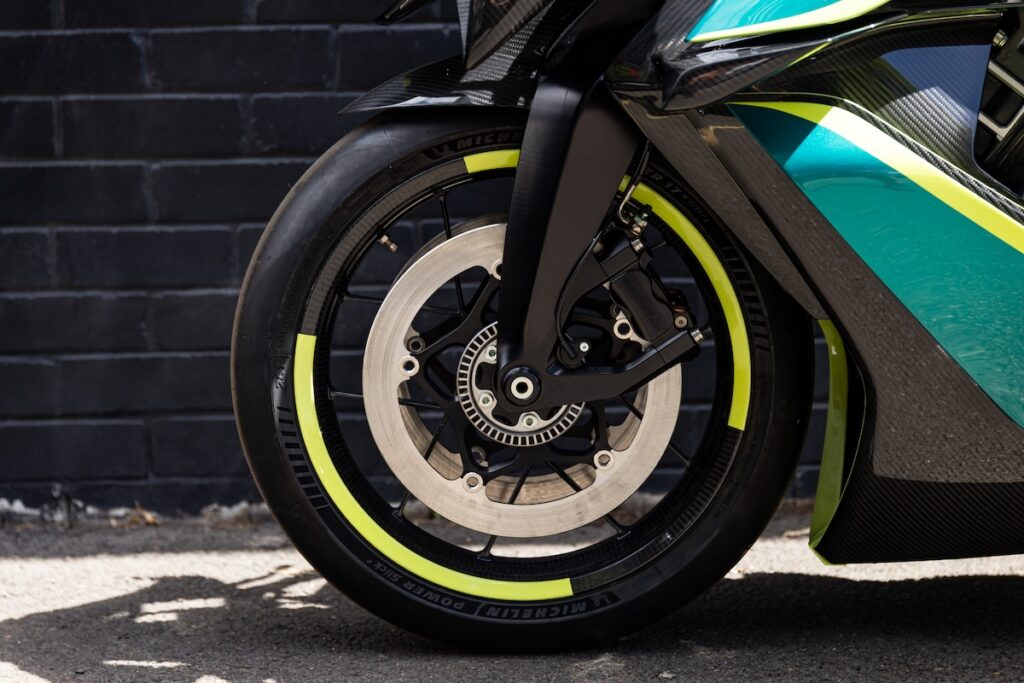
Strictly limited to a maximum of 88 motorcycles, the AMB 001 Pro is a track-only hyperbike created by Aston Martin and Brough Superior. Developed as the more extreme successor to the sold-out AMB 001, the AMB 001 Pro’s turbocharged V-twin has been tweaked to unleash 225bhp (168kW).
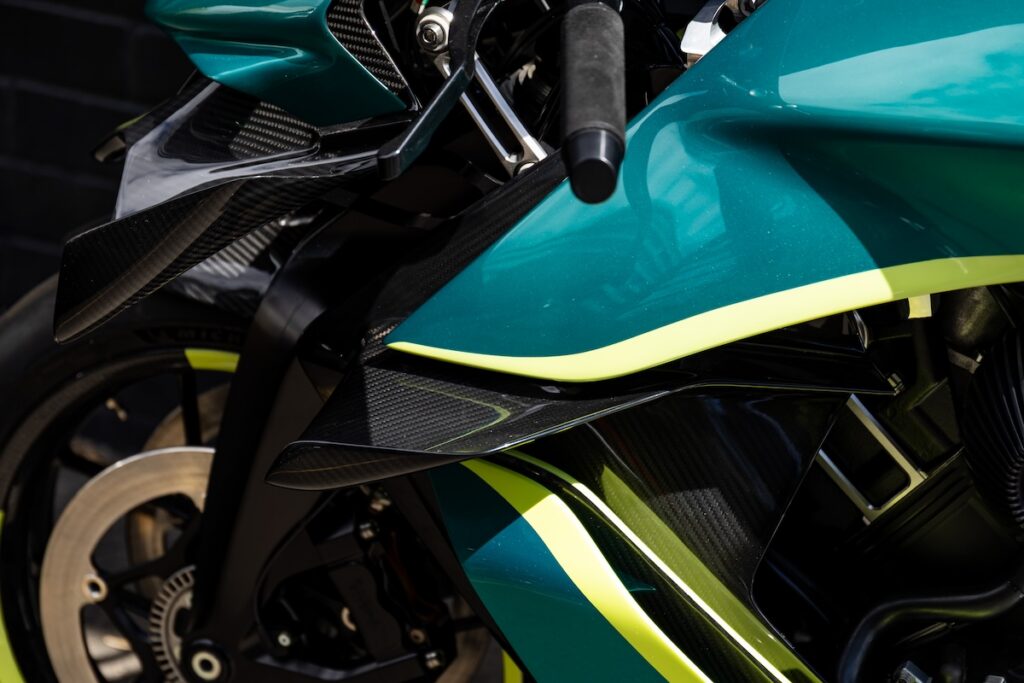
With a stated power-to-weight ratio of 1.28hp/kg, the exclusive modern track machine focuses heavily on aerodynamic efficiency and stability, with a comprehensive aero package that includes revised front bodywork and downforce-focused elements.
Power comes from a 997cc water-cooled DOHC 88° V-twin with a variable geometry turbocharger and intercooler, driving through a six-speed cassette-type gearbox and a hydraulic multi-plate wet clutch with APTC slipper – all engineered for high-intensity circuit use.
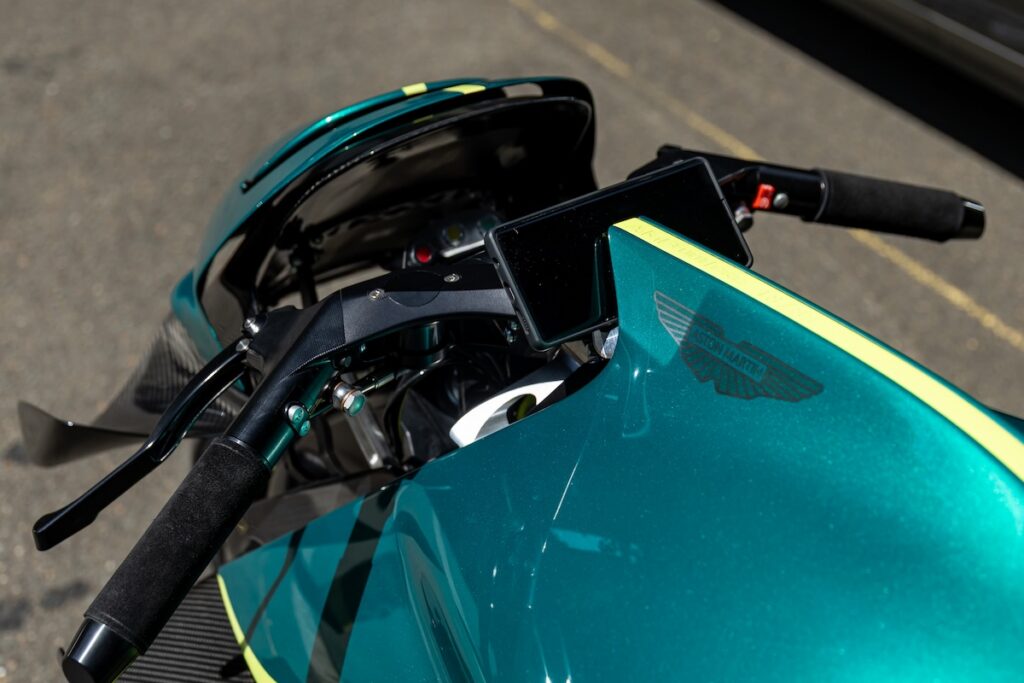
Chassis construction is equally exotic, pairing a CNC aluminium frame with the engine as a stressed member and extensive carbon fibre bodywork, painted to reflect links between the track-spec motorcycle and Aston-Martin’s Valkyrie.
One of these daunting and exclusive machines has found its way to Australia and been chosen to headline a collection of late-model superbikes offered in the inaugural RR Auctions timed sale, with bidding set to close on February 25, 2026.
A brief history of Brough Superior
Late-model products carrying the Brough Superior name echo the dedication of its founder to unique design and absolute quality.
Born into a family that would build motorcycles under the family name from 1902, George Brough was determined not to follow the trodden path of other motorcycle manufacturers when in 1919 he opened his own production facility in Nottingham (UK).
As a motorcycle racer, Brough was keen but also cautious. Born to a coal mining father with no engineering background, George competed in various events on machines designed by his father with the intention of finding flaws and improving the product.
Before the age of 25, George Brough had become an accomplished Trials rider, winning the London-Edinburgh event three times from 1910-1912.
World War I saw the Brough factory taken over for military vehicle production but once the conflict finished, George took the £1000 stake he had built in his father’s business and established his Nottingham factory where he intended to build a motorcycle that would be superior to anything in the British market.
According to records held by the Brough Superior Club, the machines were not called ‘Brough Superior’ until sometime after the first four or five were built when the name was suggested by one of George’s friends.
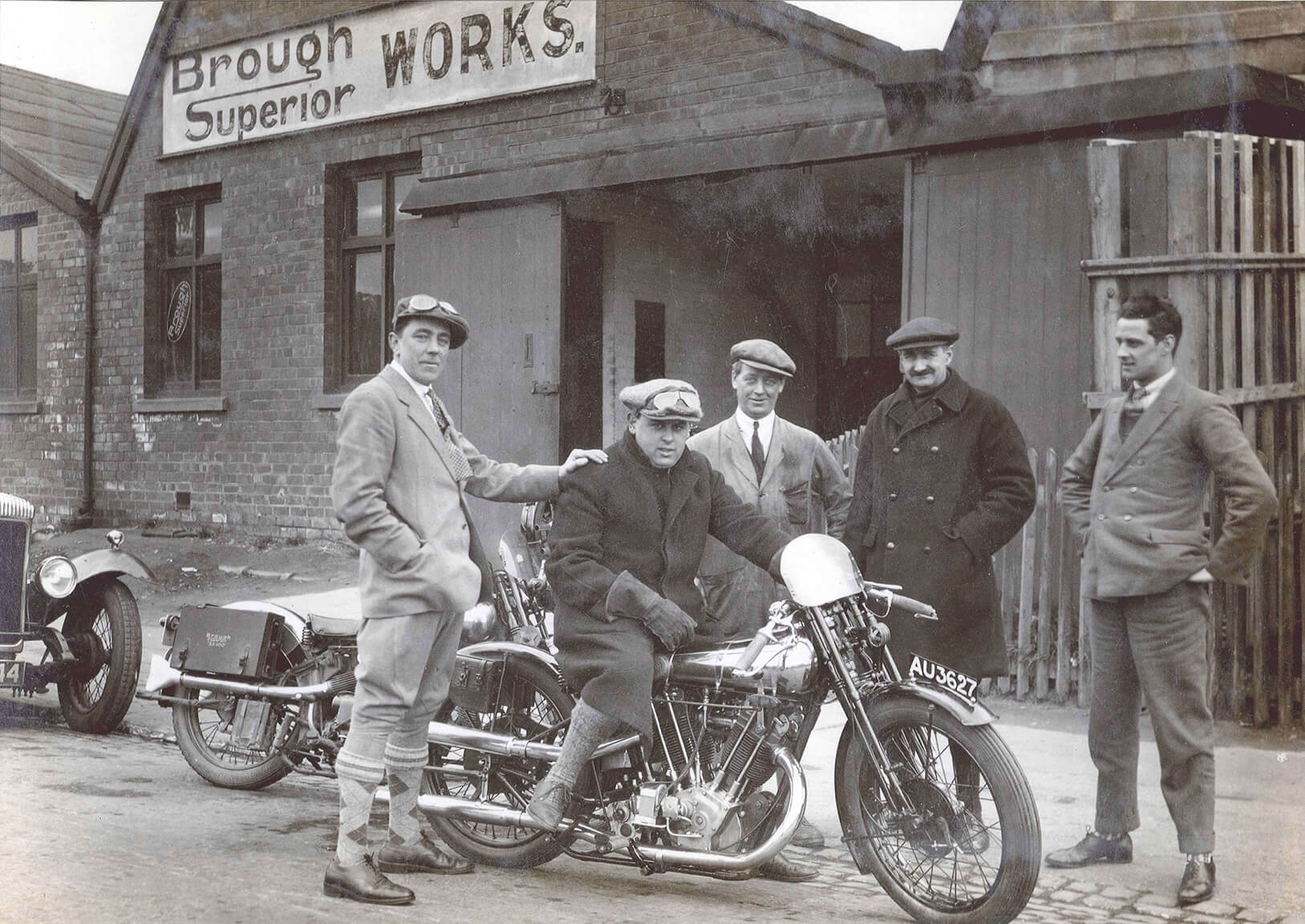
Brough’s early bikes had 800cc engines supplied by various manufacturers, set into hand-built frames. It was widely reported that Brough’s bikes cost so much because they were assembled twice. In the first instance it was a trial fit to check tolerances before parts were nickel plated, painted and submitted for the final build.
The first Brough Superiors, all regarded as prototypes, appeared in 1920 before production proper commenced. Brough’s first model, arriving in 1922, was the Super Sports (SS80) with a guaranteed top speed of 80mph (130km/h).
With its 1000cc side-valve engine manufactured by Matchless and producing around 38kW of power, the SS80 used a three-speed Sturmey Archer transmission – yes, the same people who made the gears for millions of pedal cycles – and was distinguished by an elongated fuel tank.
Brough’s next design was the one that survived longest – the SS100 produced from 1924 until 1940, and in standard form able to produce 75hp (56kW). Engines from inception until 1936 were produced by independent supplier J. A. Prestwich (‘J.A.P.’), followed during the final years by Matchless V Twins.
Brough frames from 1924 were inspired by the ‘double cradle’ design used by Brooklands circuit record-holder Bert le Vack, with front forks that followed the Harley-Davidson design and were superior to the earlier undamped Brampton forks.
A record attempt in 1927 using a modified SS100 recorded a one-way speed of 130mph (209.3km/h) but a mechanical problem prevented a return run and the official record was denied.

Most Broughs were ‘solos’ but could be configured to carry two where the buyer specified an extra seat. Standard features of early Superiors included nickel plated controls, side and centre stands, alloy exhausts and a luggage carrier.
Prices could vary alarmingly, depending on the alterations and additional equipment specified by individual customers, but the element Brough refused to compromise on was quality.
In an era before major cities had buildings filled with copyright lawyers, using someone else’s trade name to help describe the product of a different brand wasn’t uncommon. Far less common was a brand as prestigious as Rolls-Royce allowing use of its brand, but after inspection of Brough’s premises and quality procedures, it did.
This led to adoption of the slogan the “Rolls-Royce of motorcycles” – a description penned originally in 1923 by journalist H. D. Teague when writing a review of the new V-Twin SS100 Brough for The Motor Cycle newspaper.
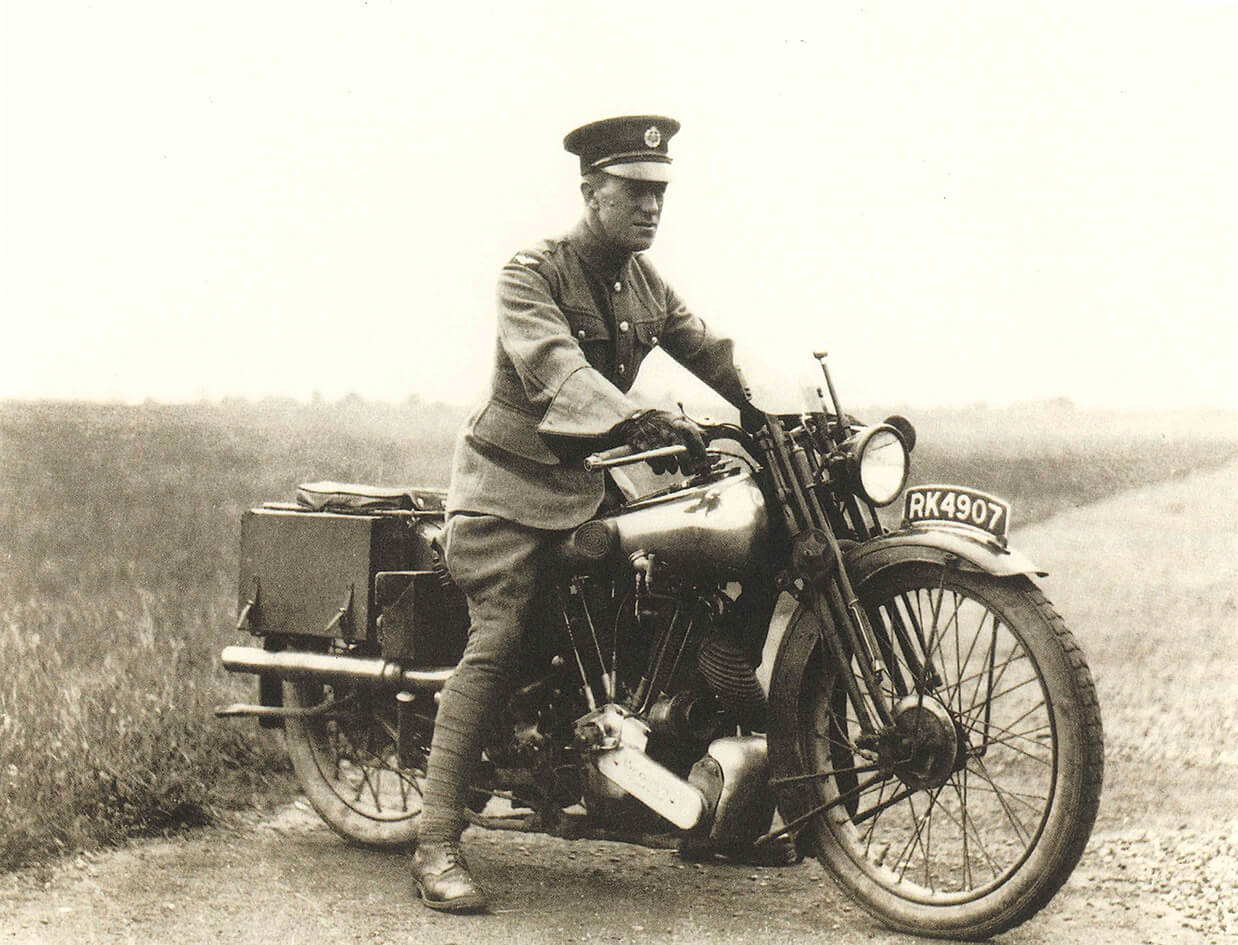
A prominent early Brough Superior customer was feted author, soldier and espouser of Arabic culture, Thomas Edward (‘T. E.’) Lawrence, also known as Lawrence of Arabia.
Lawrence bought his first Brough Superior in 1922 and was famously photographed astride the machine in 1925 in military uniform.
Despite spending much of his adult life in North Africa, Lawrence was back in Britain in 1935 when he crashed his seventh Brough Superior and was killed.
Other prominent figures to own Brough Superiors included playwright George Bernard Shaw, actors Orson Welles and Steve McQueen, rocker Elvis Presley, and celebrity collector Jay Leno. McQueen’s 1931 model was sold in 2018 for US$175,000, with other examples subsequently selling for more.
The highest recorded price came in 2019 when an SS100 with competition history was sold in the UK for £425,000 (about A$850,000). Values during the recent past have declined, however it was still possible for Bonhams Auctions during 2025 to achieve US$367,383 (A$495,000 approximately) for an unrestored SS100.
When released in 1931 and re-engineered in 1936, the Ariel Square Four had set new standards for mechanical smoothness in a motorcycle and prompted George Brough to devise a four-cylinder design that would be better again than the Ariel.
His Golden Dream (gold painted) motorcycle featuring a 996cc ‘flat vertical’ four-cylinder engine was displayed in 1938 but never entered serious production. Just five were built before World War II intervened and saw George Brough cease production of it and his other astonishing products.
From 1920 until 1940, 3048 motorcycles were built, with a third of those believed to survive. In addition, from 1935-39, there were approximately 85 Brough Superior cars produced, all based around US-made Hudson chassis and engines. These have been sold at upwards of £80,000 but don’t generate nearly the same excitement when auctioned as Brough’s two-wheeled machines.