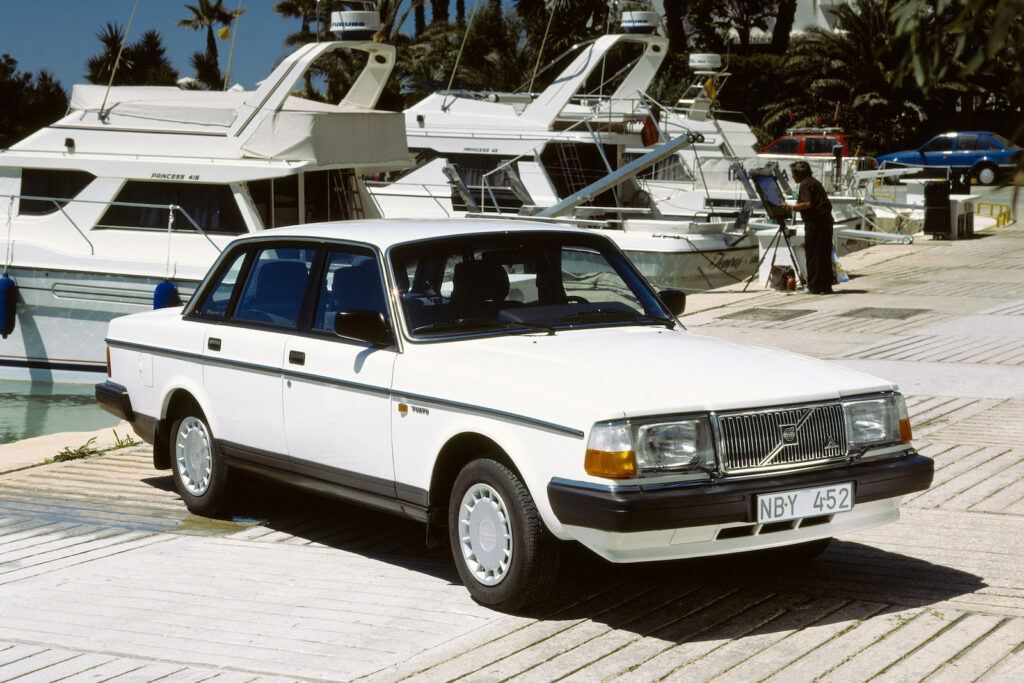

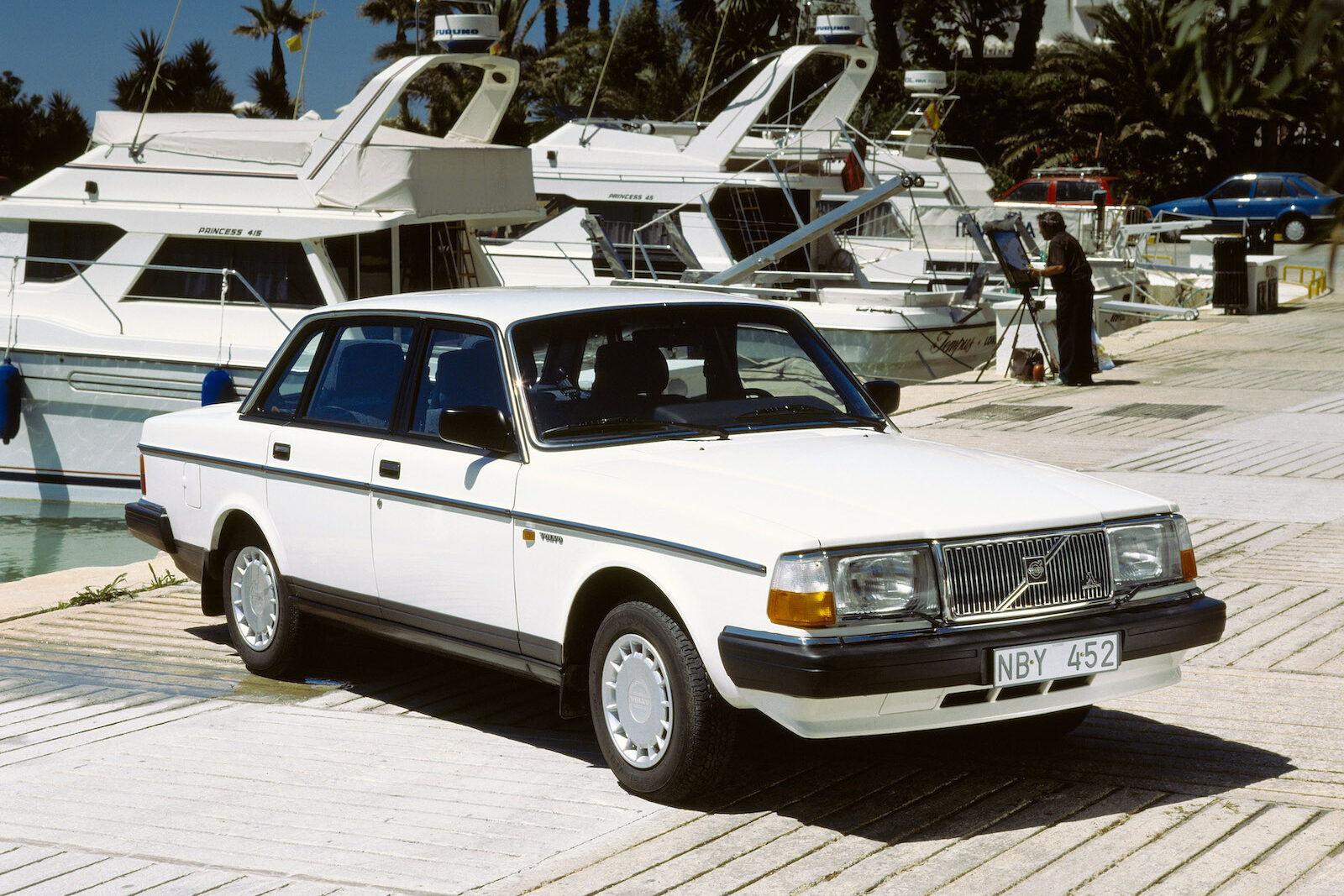
Almost three decades after the last Volvo 200 Series was manufactured, the model’s unique combination of safety, durability and distinctive design has helped make it an enduring common-sense classic.
For two generations of Aussies – today’s ‘Boomers’ and their now middle-aged kids – the Volvo 200 Series represented family transport with a dash more panache than a Ford Fairmont or a Holden Premier.
Arriving Down Under in 1975, a year after its overseas debut, the radical-looking Swede carried the implicit street-cred of a European brand and a price tag that sat above offerings from our domestic car makers, but below the likes of BMW and Audi.
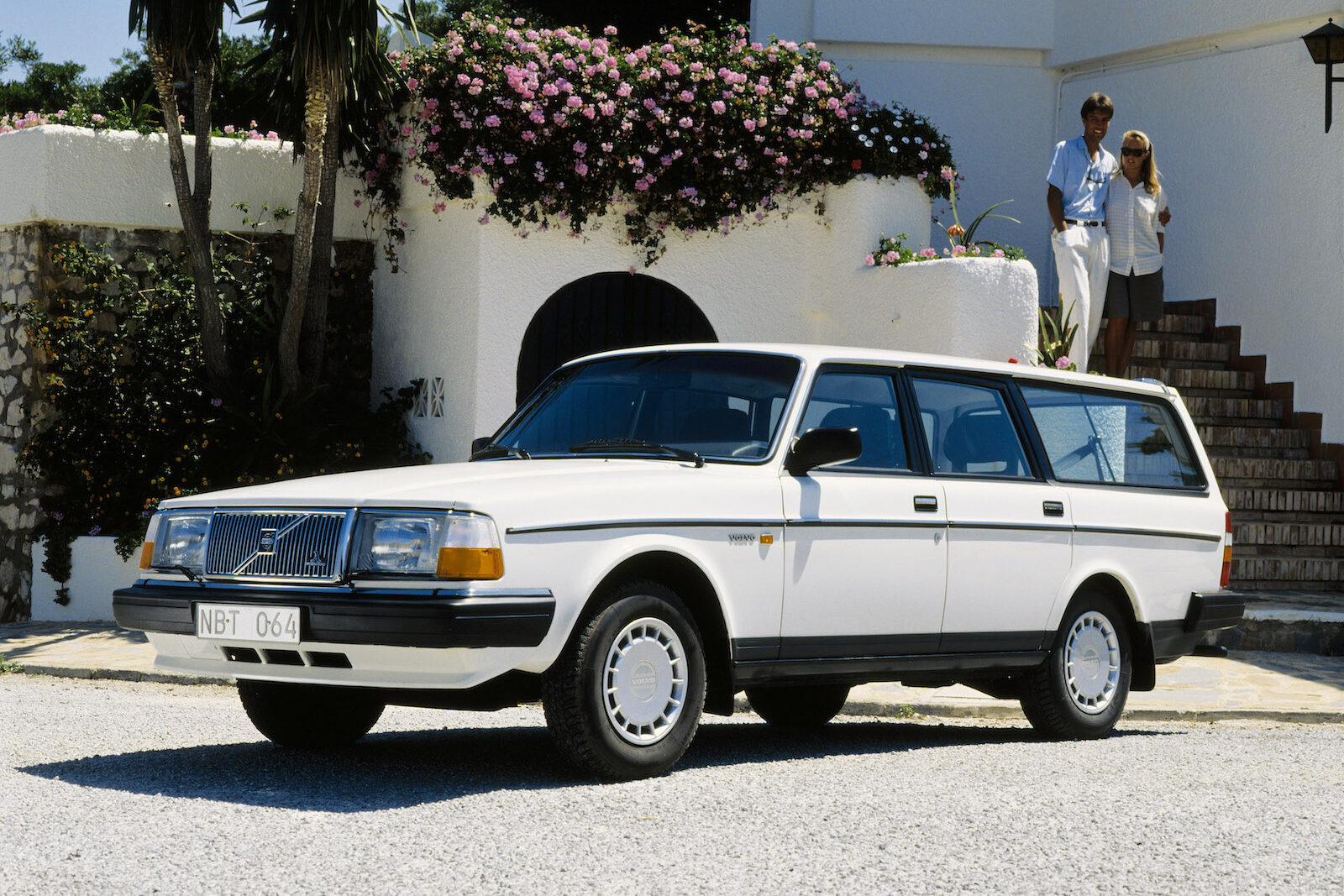
The diverse local model range comprised two- and four-door sedans, a wagon, four- and six-cylinder power, auto and manual transmissions, and several trim grades.
Model names followed simple Swedish logic, with the badges following a sequence that summarised engine and number of doors. Hence, a 242 was a 200 Series four-cylinder with two-doors, while a 265 was a 200 Series six-cylinder five-door wagon.
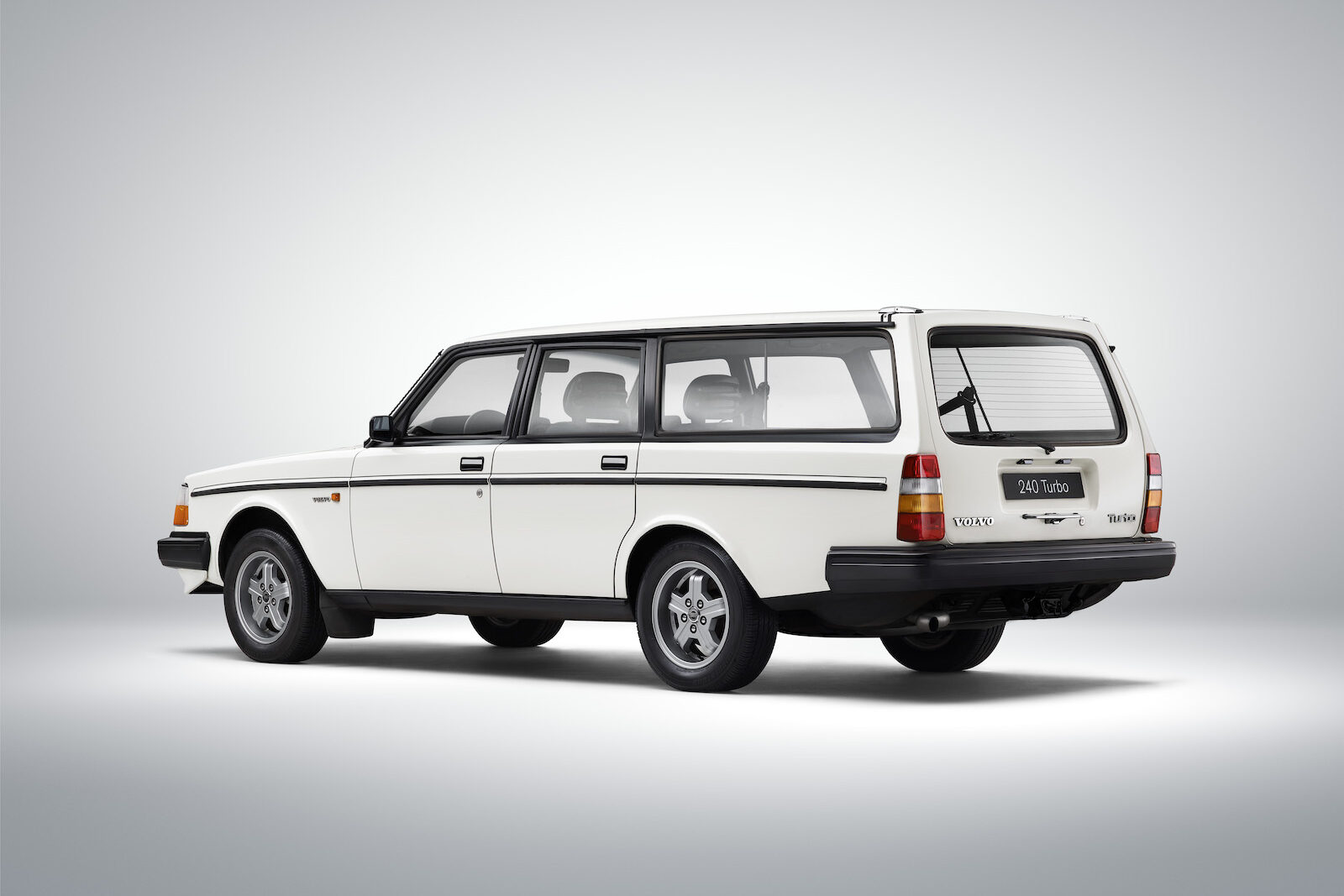
Lettering alongside the numeric model modes denoted the level of luxury, starting with the base DL, moving to the mid-spec GL, and culminating with the top-of-the line GLE.
The 200 Series was built on a platform that featured a MacPherson strut front suspension, rack and pinion steering (power-assisted on up-spec models), and a coil-sprung live-axle rear-end located by four forward links and a Panhard rod.
The ‘six-window’ sedan styling provided a bright, airy cabin, with deft design touches like the open headrests contributing to a sense of future-facing class.
The four-cylinder ‘red block’ engine was initially a carburetted 2.1-litre OHC unit that mustered 71kW, but this was soon replaced by the same engine fitted with mechanical fuel injection, delivering a more robust 90kW.
By way of comparison, Holden’s 2.8-litre (173ci) inline six-cylinder at the time was good for 88kW, while the larger 3.3-litre (202ci) unit made 101kW.
These Volvo four-pots were respected for their feisty performance and solid durability, but that wasn’t the case with the 2.7-litre V6. This alloy-block engine was known as the ‘PRV’ because it was jointly developed by Peugeot, Renault and Volvo. It produced 100kW so was down on the 130kW produced by Volvo’s own B30 3.0-litre inline six that had powered the earlier Volvo 164E.
Unfortunately, reliability issues and quirks make this engine, fitted to the Volvo 264 and 265 GLEs, the poorer collector car choice today.
For a while, the diverse Volvo 200 Series range even included a delivery van in the lineup, in the form of the 245L, a two-seat wagon with a large flat load area and cargo barrier.
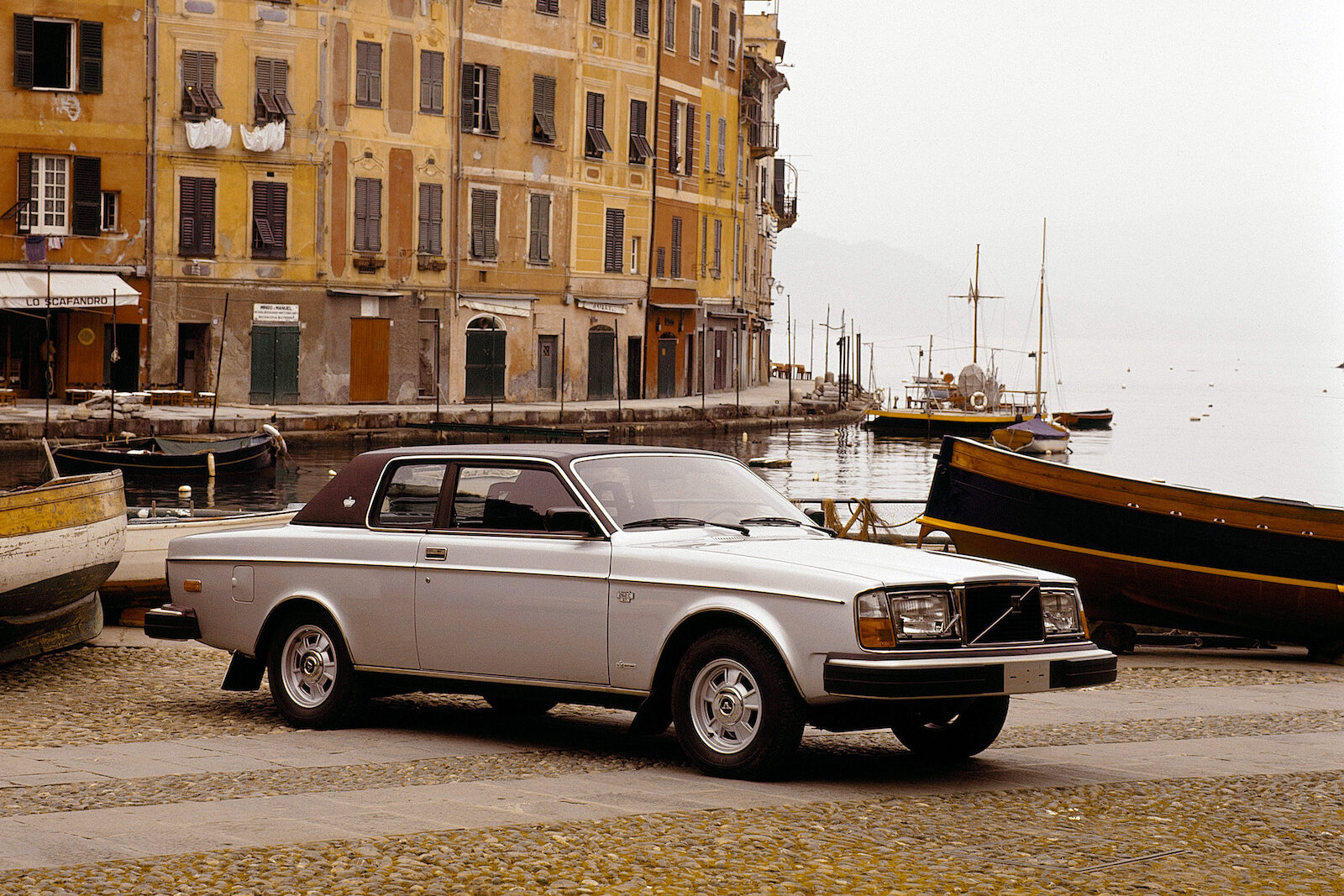
Another 200 Series oddity was the 262C Bertone, a horribly expensive limited-production V6-powered two-door that sat above the luxury 264 GLE. Manufactured in Italy for Volvo by Bertone and primarily targeting the US market, it featured a chop-top lowered roof, sloping windshield, wide C-pillar and pimp-like ruched leather trim. An estimated 6600 examples of the 262C Bertone were manufactured between 1977 and 1981, with 100 making their way to Australia.
A little-known fact is that Australian-delivered Volvo 200 Series comprised both locally-assembled and fully imported models, with the former contract-assembled in a factory in Clayton, Vic, that also assembled Volkswagen and later Nissan/Datsun cars.
Also less well known, perhaps, is the fact that Volvo scored two remarkable results in Aussie motorsport in 1979. The first came when a Volvo 244 driven by Ross Dunkerton, Peter McKay and Geoff Jones claimed fourth place after the Marlboro Holden Dealer Team Commodores famous 1-2-3 finish in the gruelling 20,000km Repco Round Australia Reliability Trial.
Two months later, at the 1979 Hardie-Ferodo 1000 at Mt Panorama, Bathurst, Volvo’s new 242 GT finished an impressive 20th from a starting field of 62 cars.
The production version of this Bathurst campaigner had arrived earlier in the year featuring a larger capacity 2.3-litre four-cylinder engine that made a healthy 105kW. The engine came hitched exclusively to a four-speed manual transmission with electric overdrive while the car came in a single silver-only livery with orange and black side stripe. The sporty two-door Swede also featured stiffer suspension, alloy wheels and driving lights.
For Bathurst, the Scuderia Veloce-entered 242 GT was lightly modified with a bolt-in roll cage, stiffer suspension, driver harness and a side-exit exhaust. While the 1979 race is mostly remembered for Peter Brock and Jim Richards claiming their second successive victory in the Holden Dealer Team A9X SS Hatchback Torana, including Brock breaking the lap record on the last lap, the Volvo’s 20th place was no mean feat, especially considering the fact it ran the distance on Uniroyal road tyres, not racing slicks.
As we entered the 1980s the 200 Series received freshened styling including wrap-around taillights and a smoother boot profile. By 1981, the four-cylinder engine had grown in capacity to 2.3-litres, offering more power and torque. The following year, Volvo released its new and more luxurious 700 Series range in Australia, prompting a consolidation of the 200 Series range to four-cylinder power, with the cars simply badged 240GL sedan and wagon.
In 1993, following a remarkable production span of 19 years, during which time an impressive 2.8 million 200 Series were produced, the curtain finally came down on this revolutionary, safety-focused Swede.
The sturdy and tank-like 200 Series has left a lasting impact on the automotive industry and earned its place in the hearts and minds of Volvo enthusiasts worldwide. Highly regarded and still sought after to this day, collectors here and abroad remain committed to keeping these durable brick-like Volvos powering on for another half century and beyond.