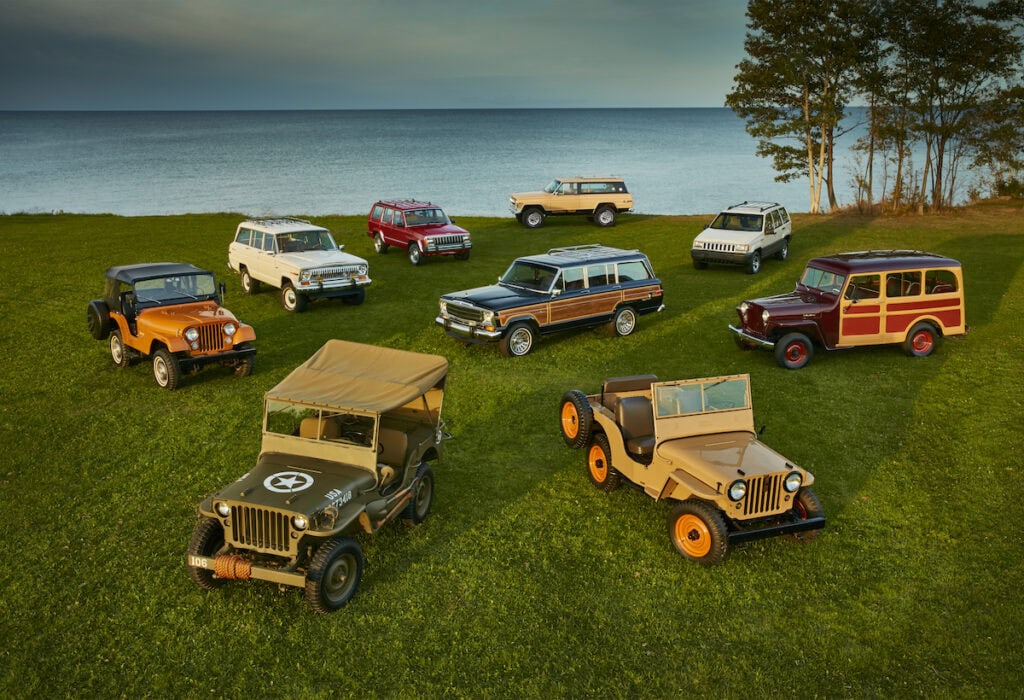
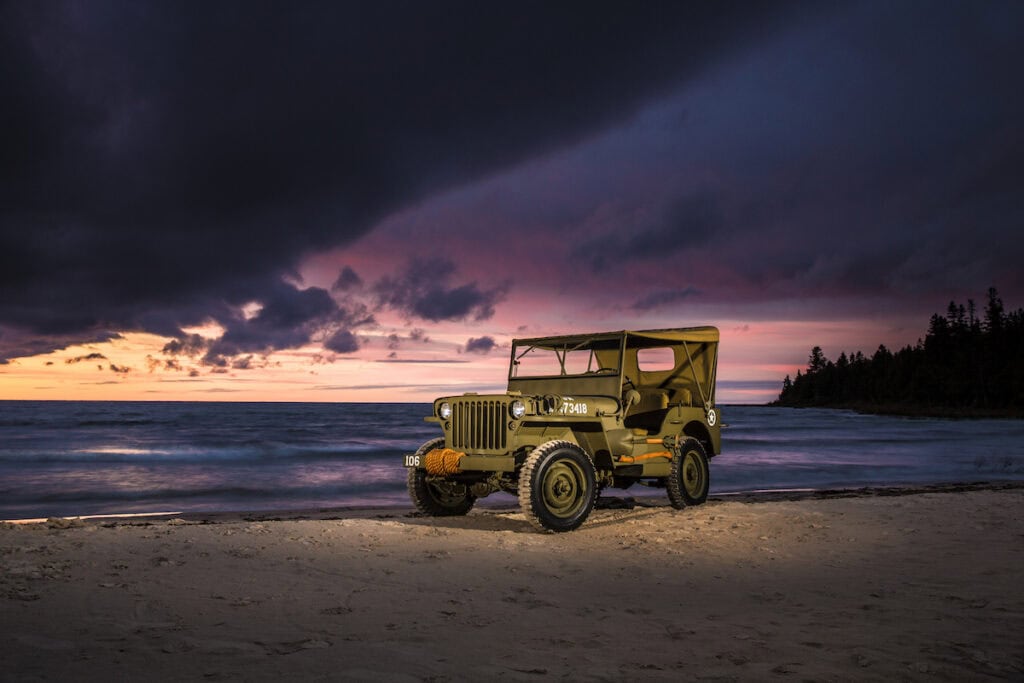



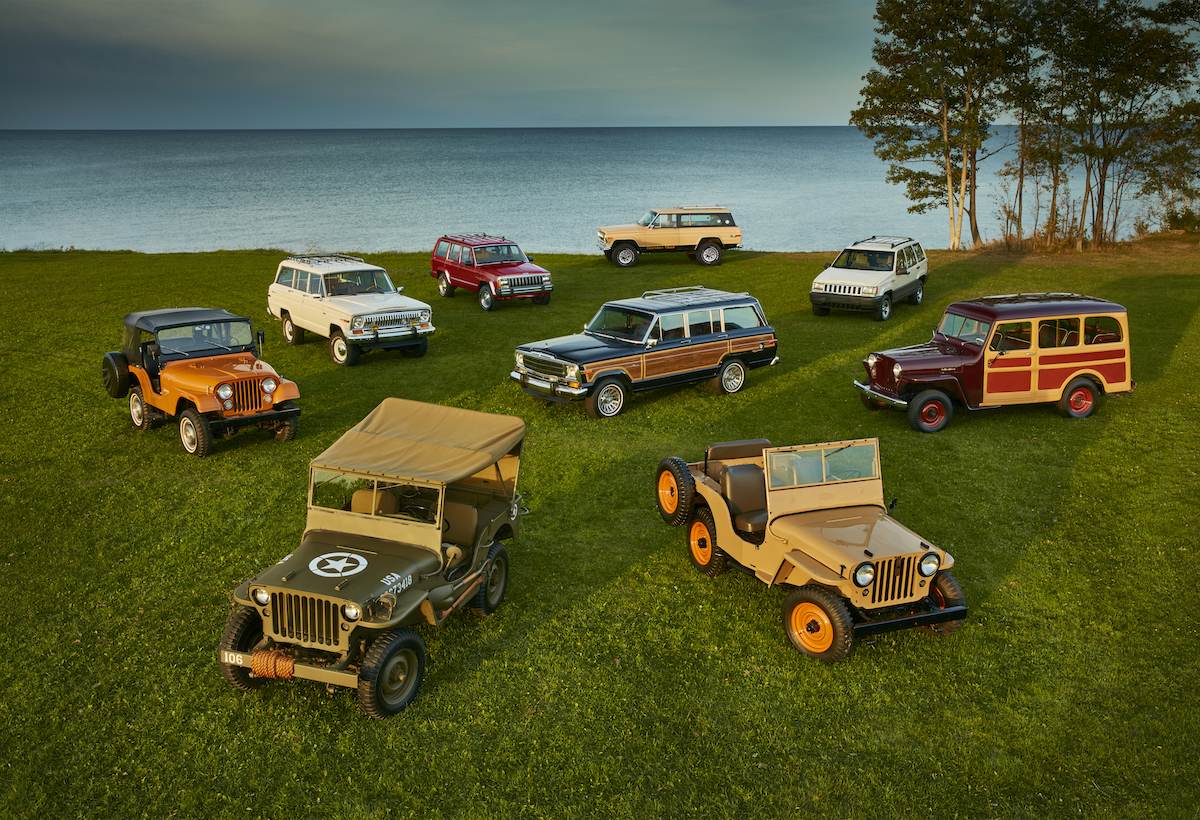
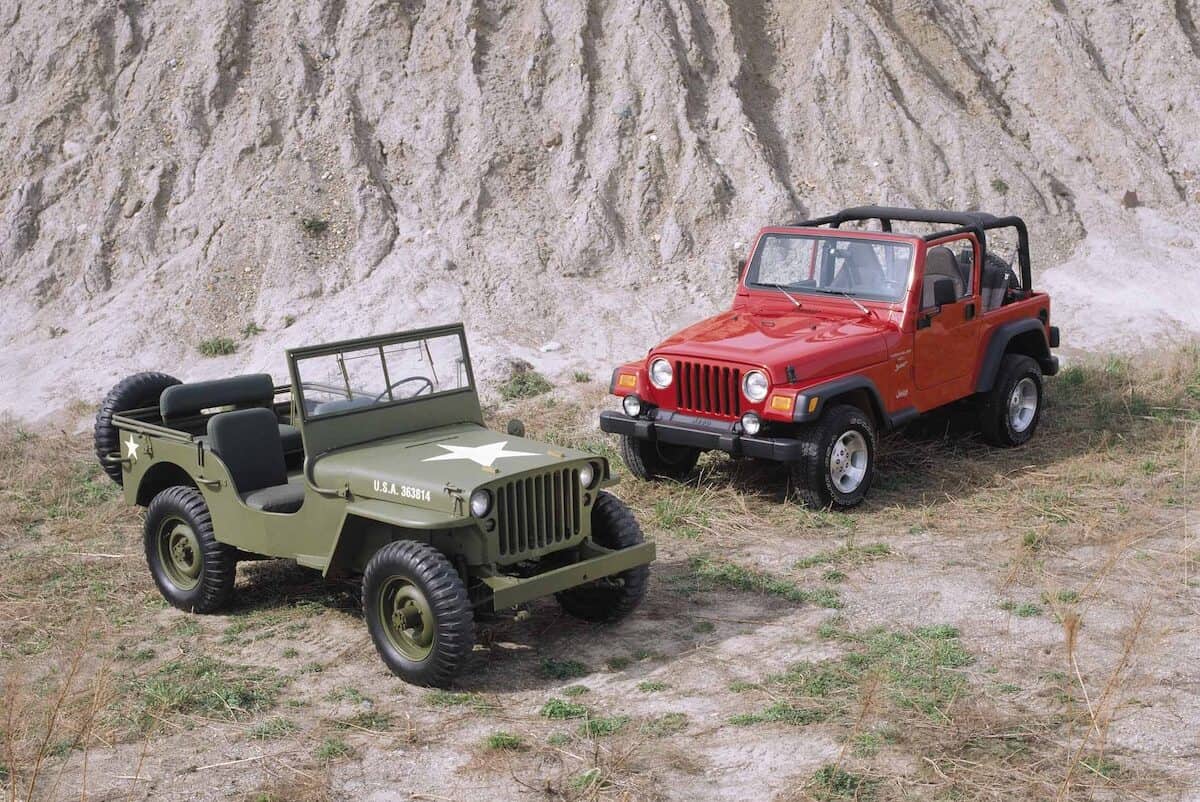
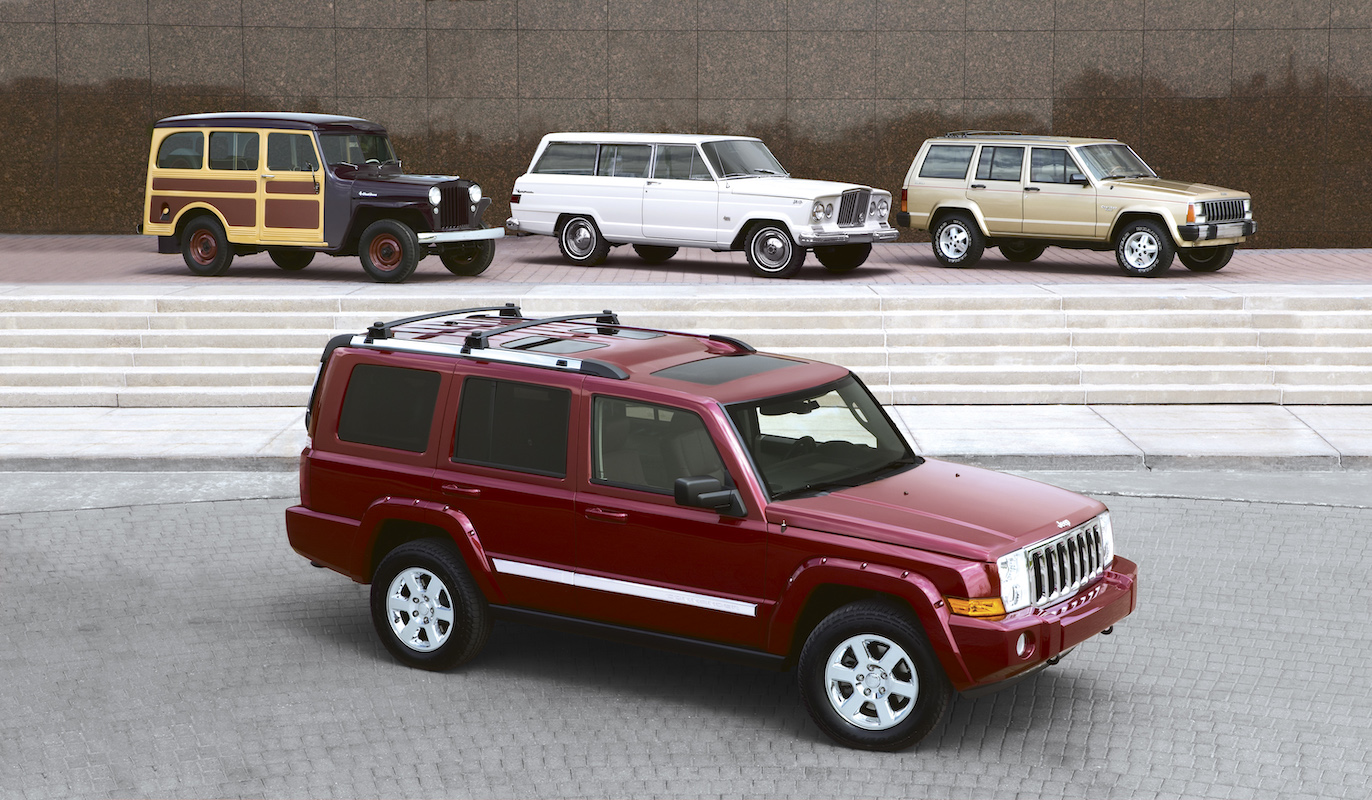
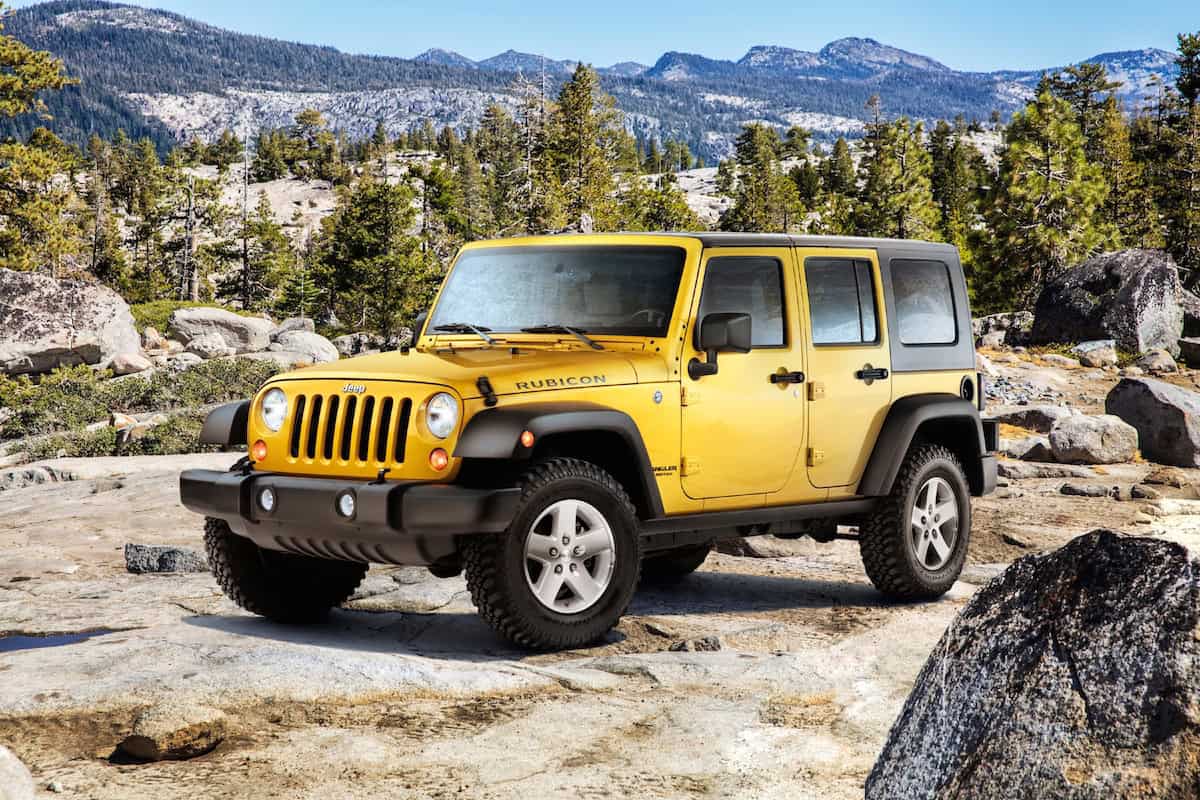
Storied off-road brand Jeep refuses to reach for the rocking chair as it roars into its 85th anniversary celebrations.
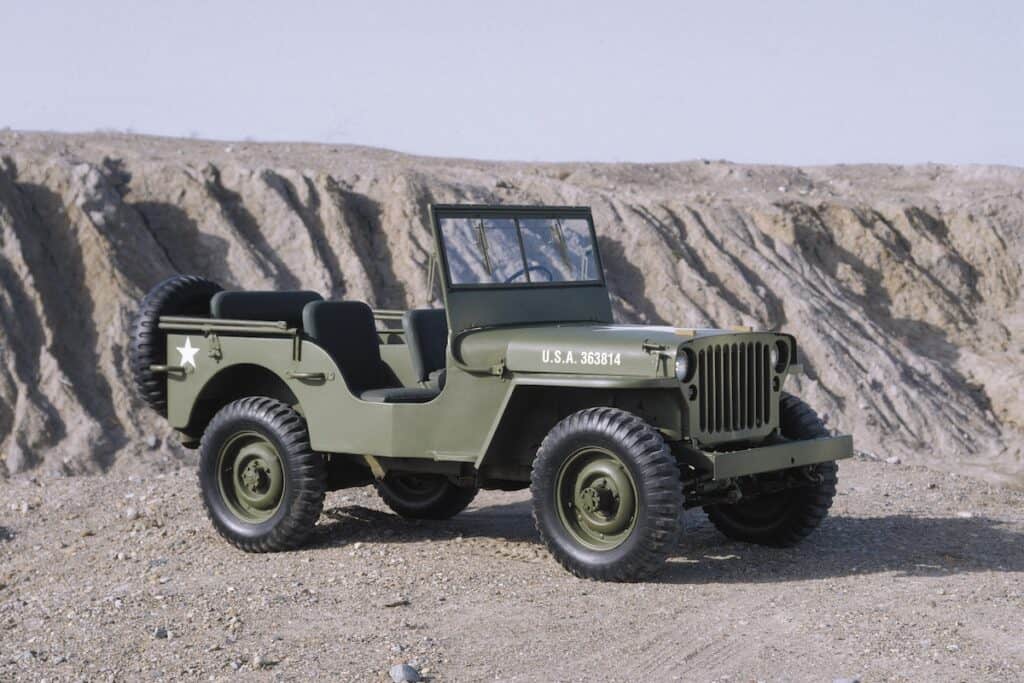
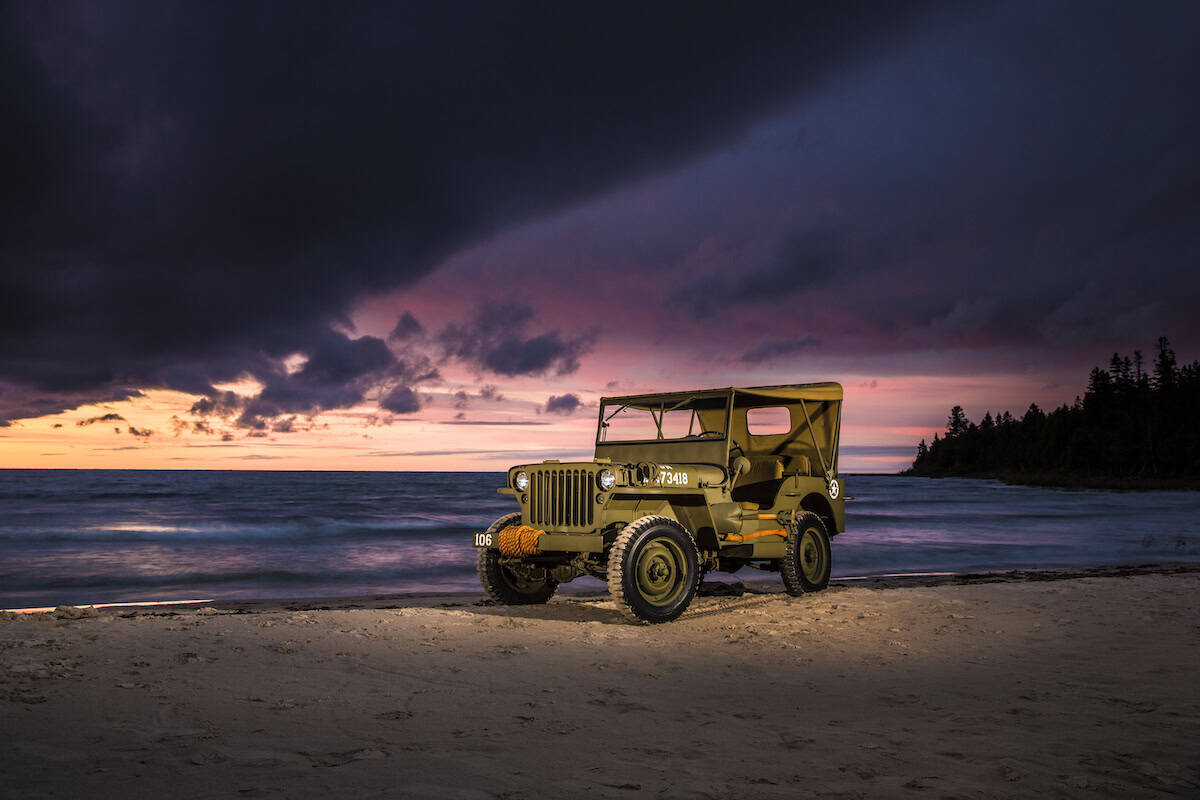
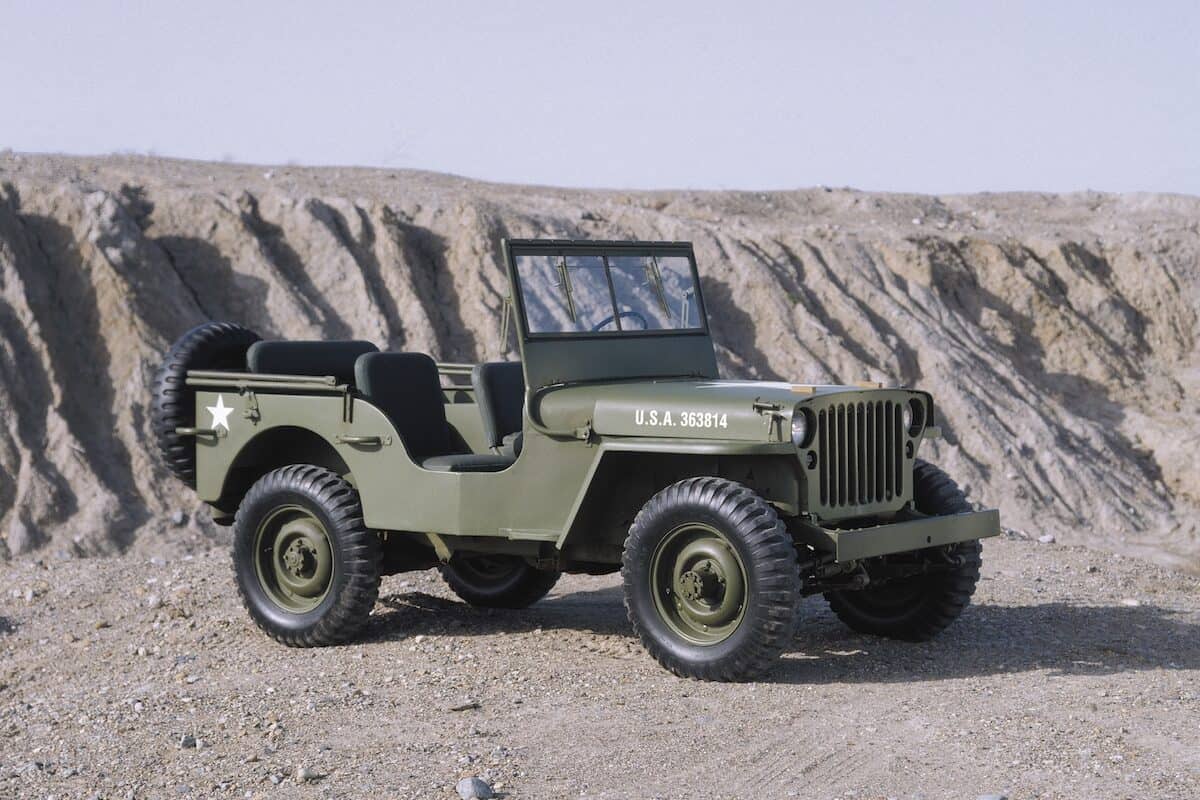
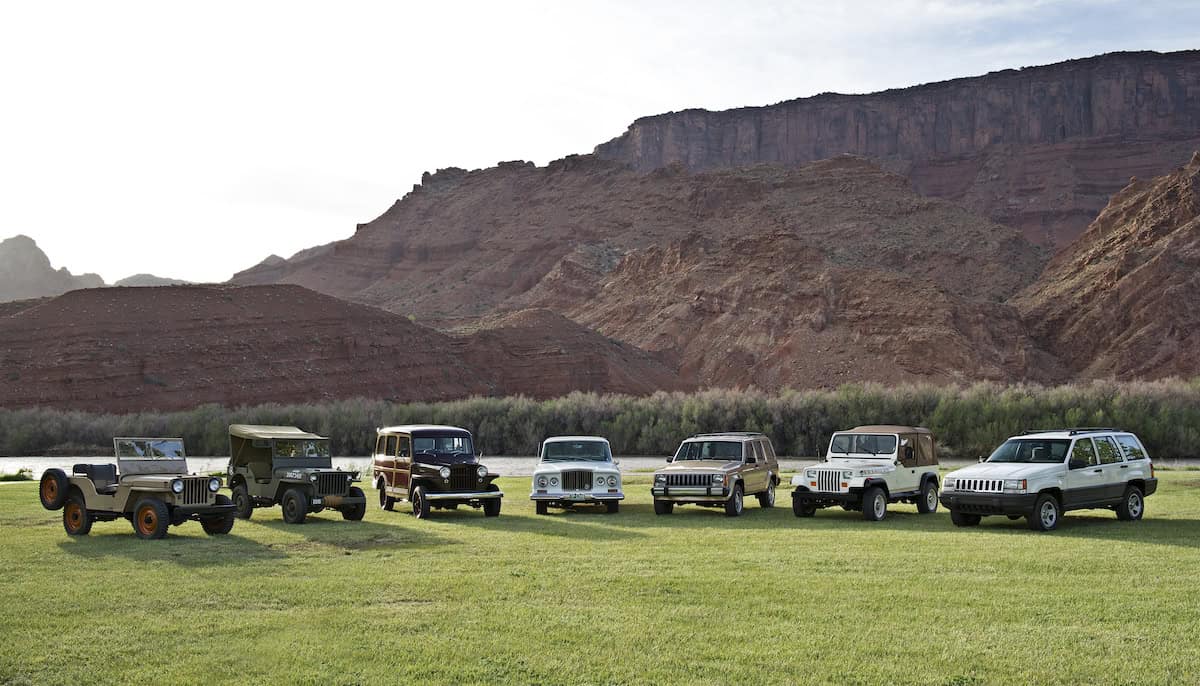
In 1945, at the end of WWII a legendary American brand forged in the fires of the greatest conflict the world had ever known took its first tentative steps in civilian life.
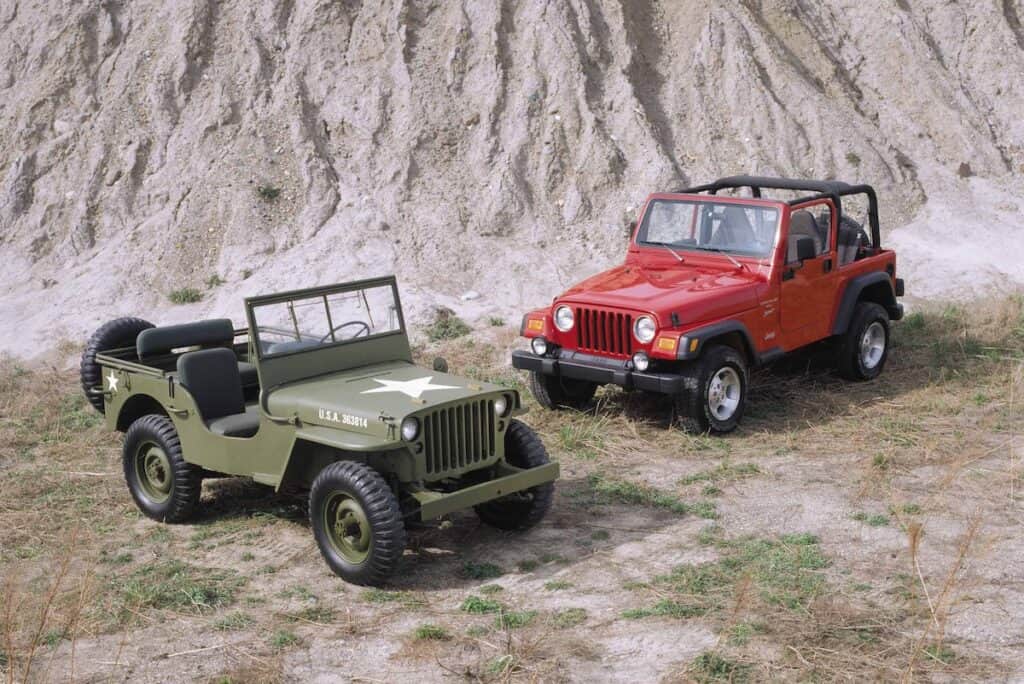
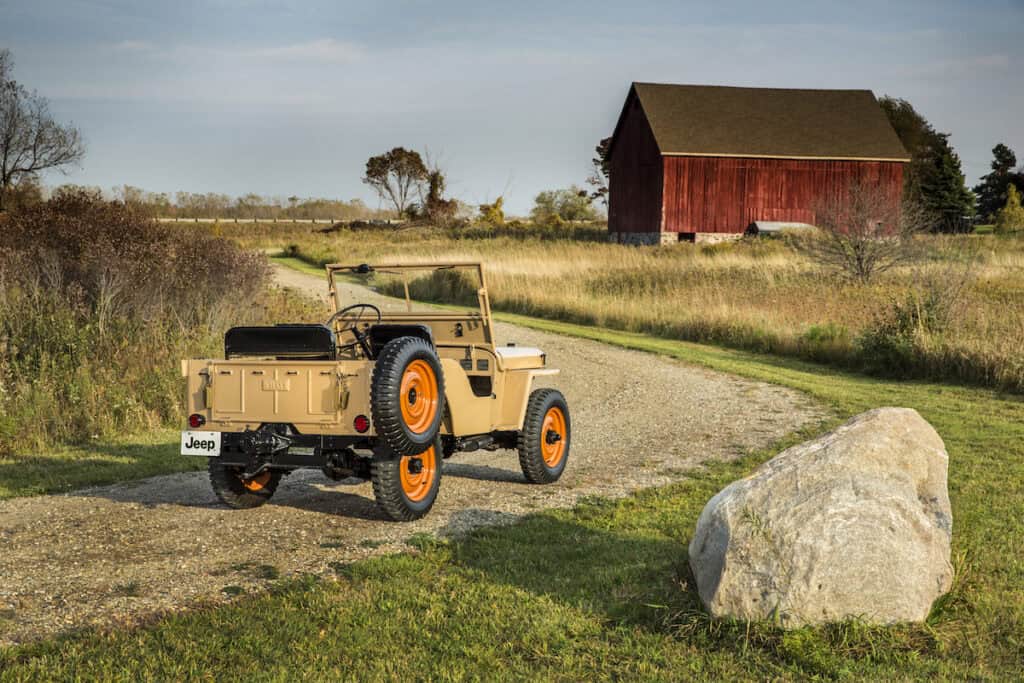
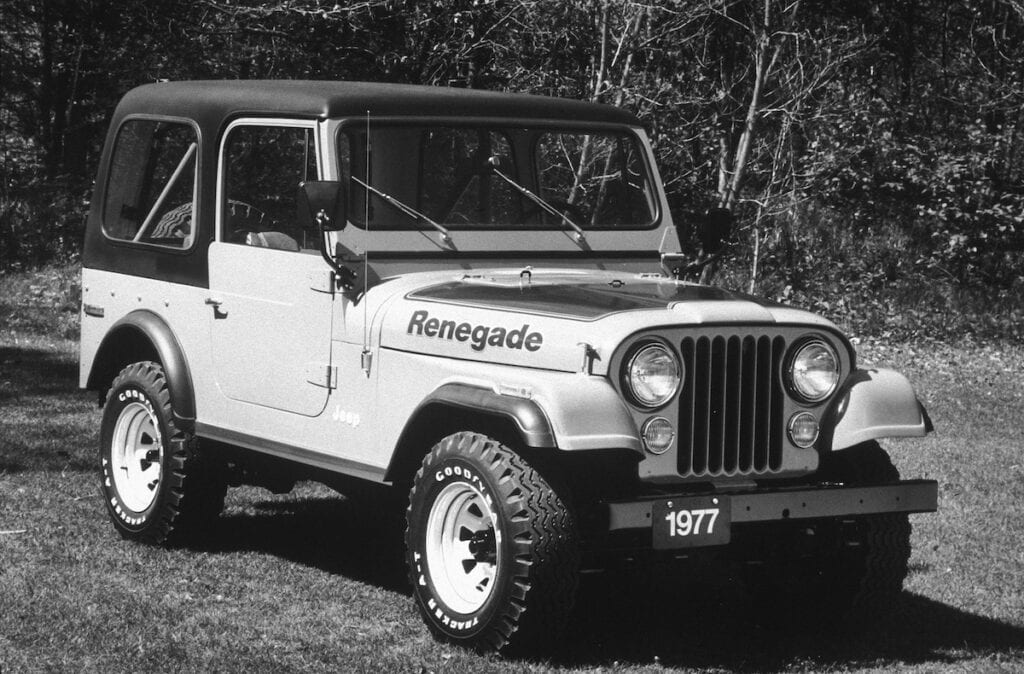
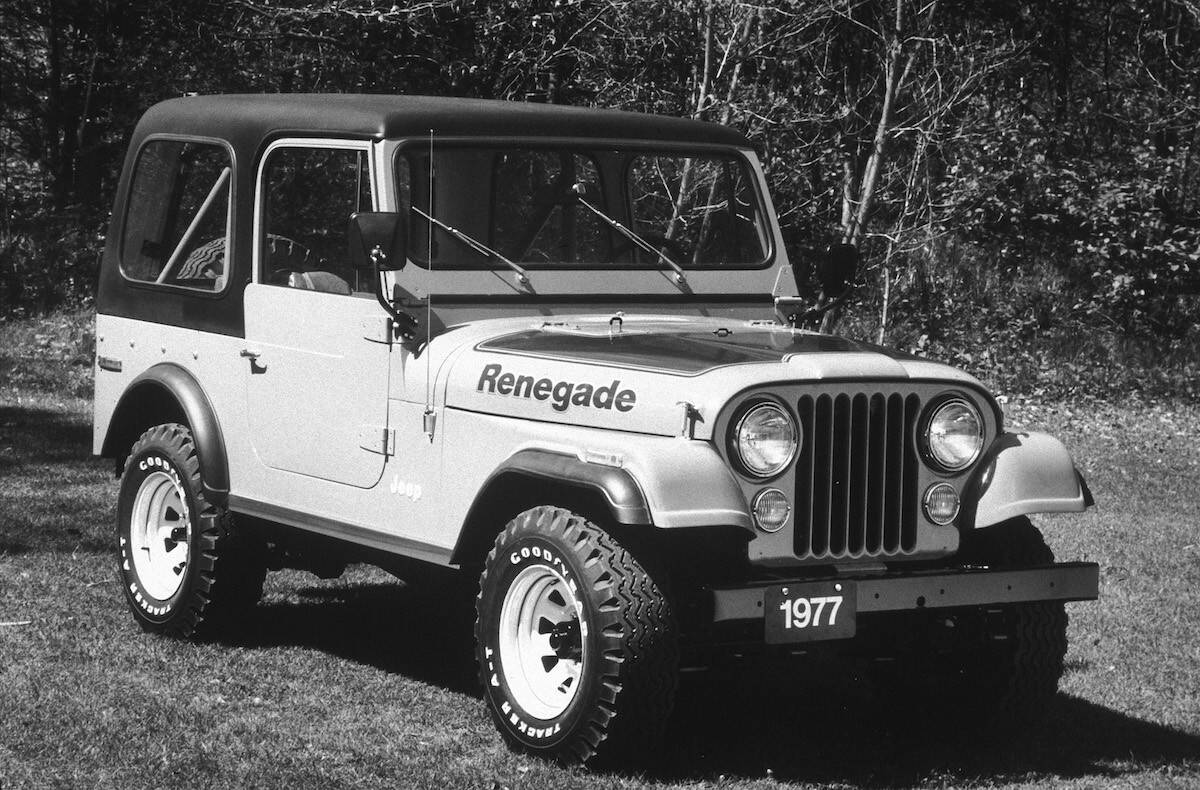
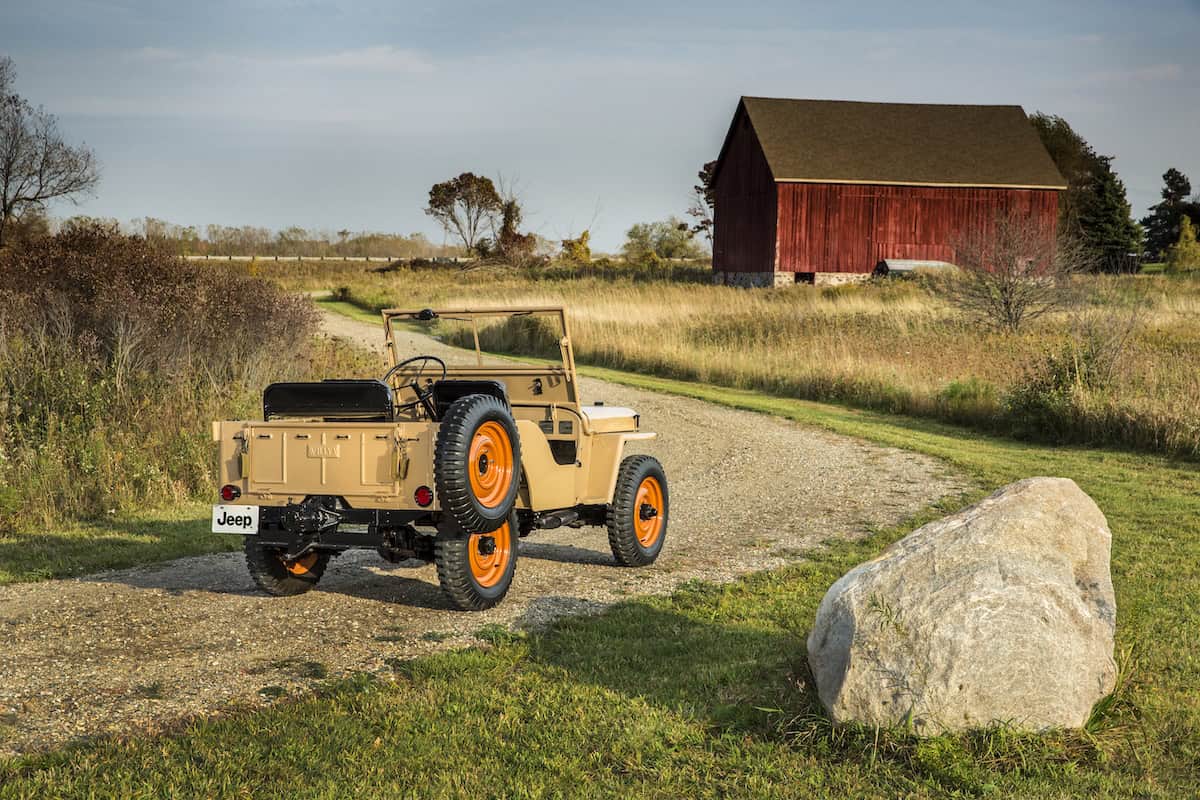
While its wartime predecessor, the 1941-1945 Willys MB, had created the template for the civilian model that followed, the Willys CJ-2A introduced in 1945 was the first Jeep model offered to North American customers.
The legendary G.I. workhorse was converted by Willys-Overland into a CJ with the aim of putting farm workhorses out to pasture. Willys-Overland reckoned there were 5.5 million farmers in the U.S. at the time and of these, more than 4 million had neither a truck nor a tractor.
The Willys CJ-2A was designed as a rugged, durable and relatively low-cost vehicle suitable for farming, ranching and other industrial applications. Featuring the now-iconic seven-slot grille, a fold-down tailgate, low-range 4×4 and a versatile power take-off unit, the versatile CJ-2A was marketed by Willys-Overland as “The All-Around Farm Work-Horse”. What that meant exactly was that it could do the job of two heavy draught horses, operating at a speed of four miles per hour, 10 hours a day, without overheating the engine.
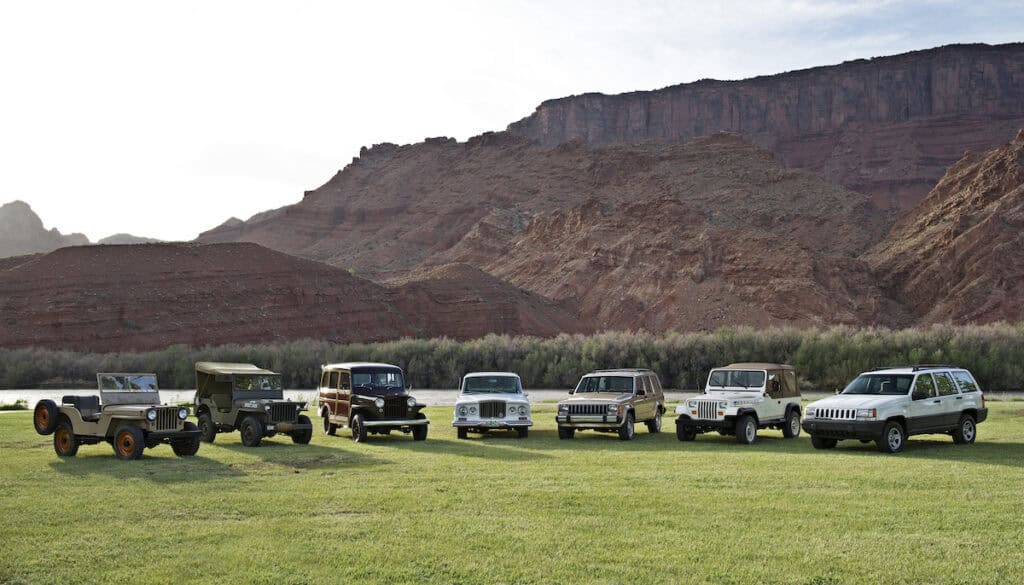
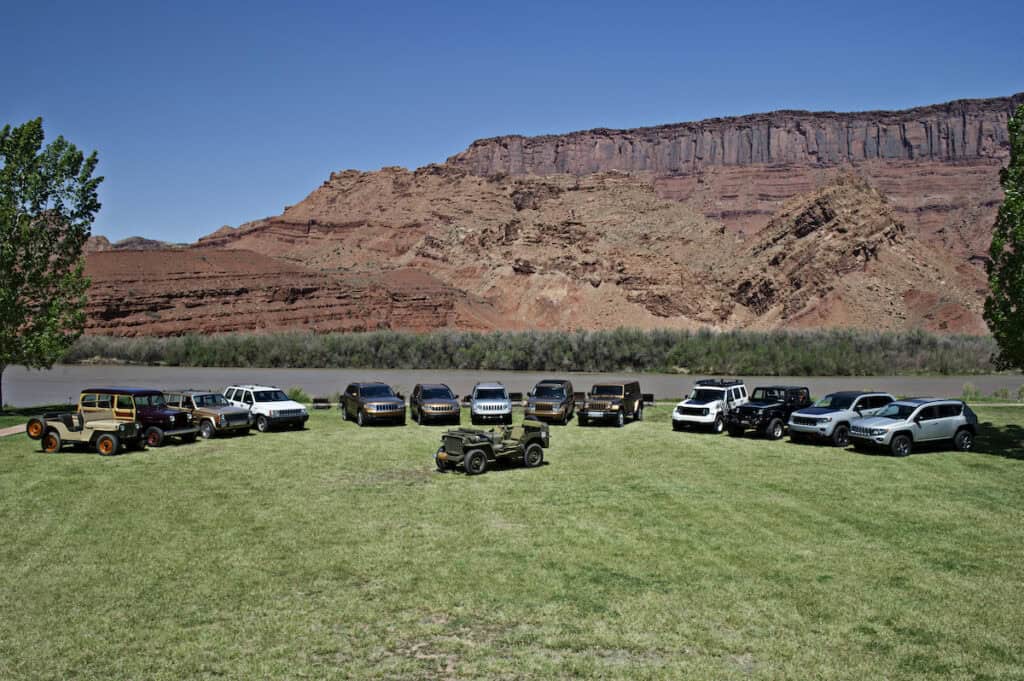
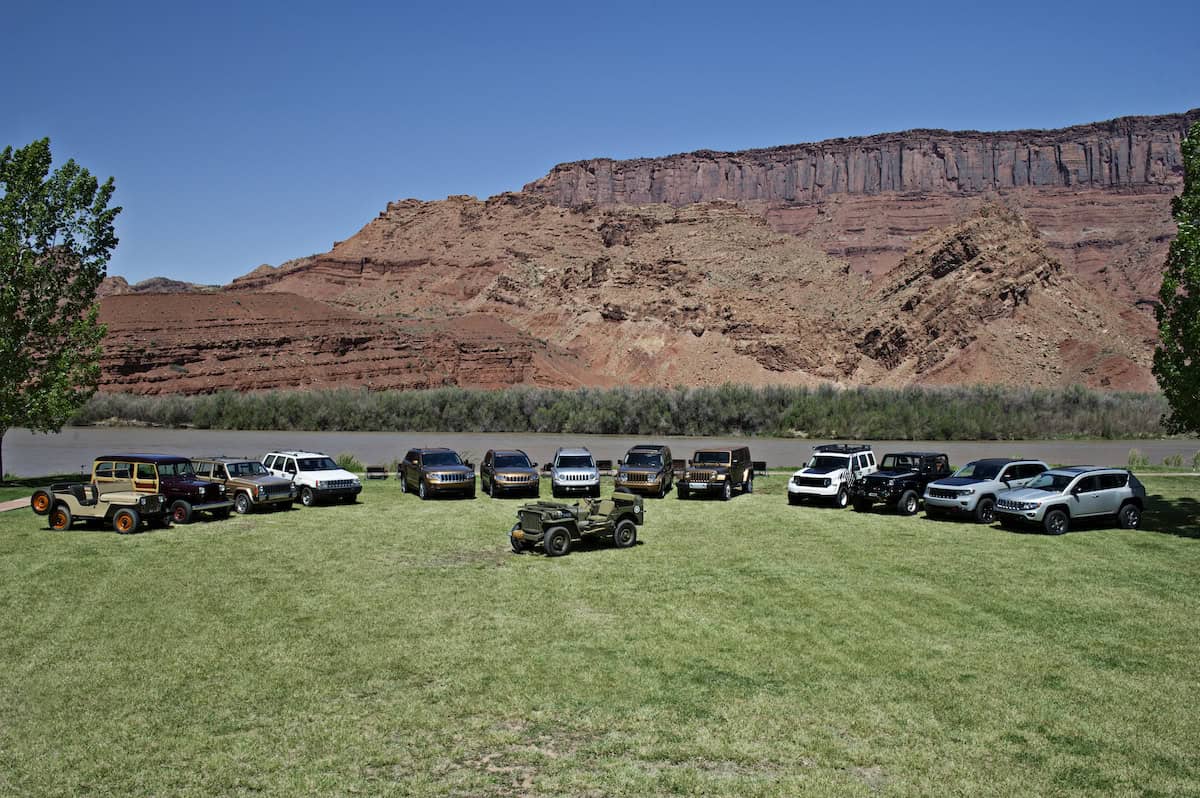
Few could have anticipated at the time that this ruggedly simplistic workhorse would come to be regarded as the civilian grandaddy of the legendary Jeep brand, which this year celebrates its 85th anniversary.
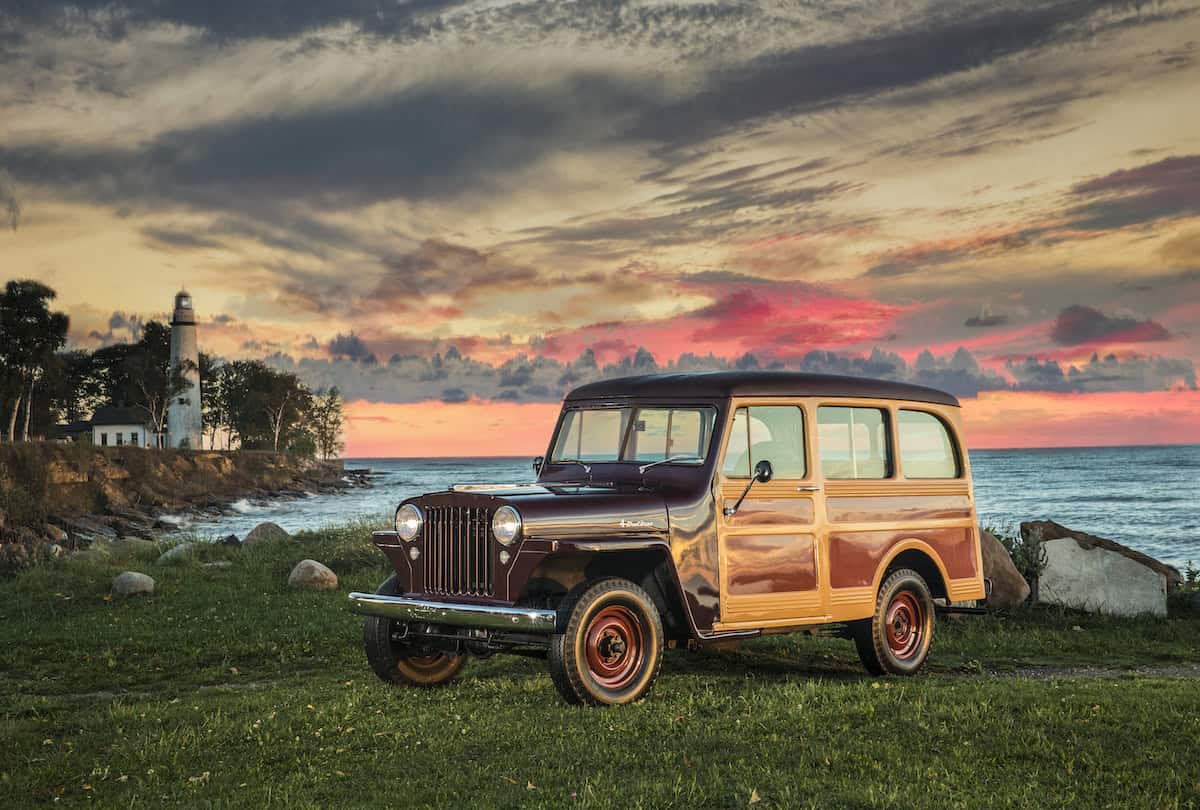
Along the way Jeep has notched up many remarkable firsts, including the 1946-1965 Willys Wagon, which it claims as the first utility vehicle to feature four-wheel drive and an all-steel construction.
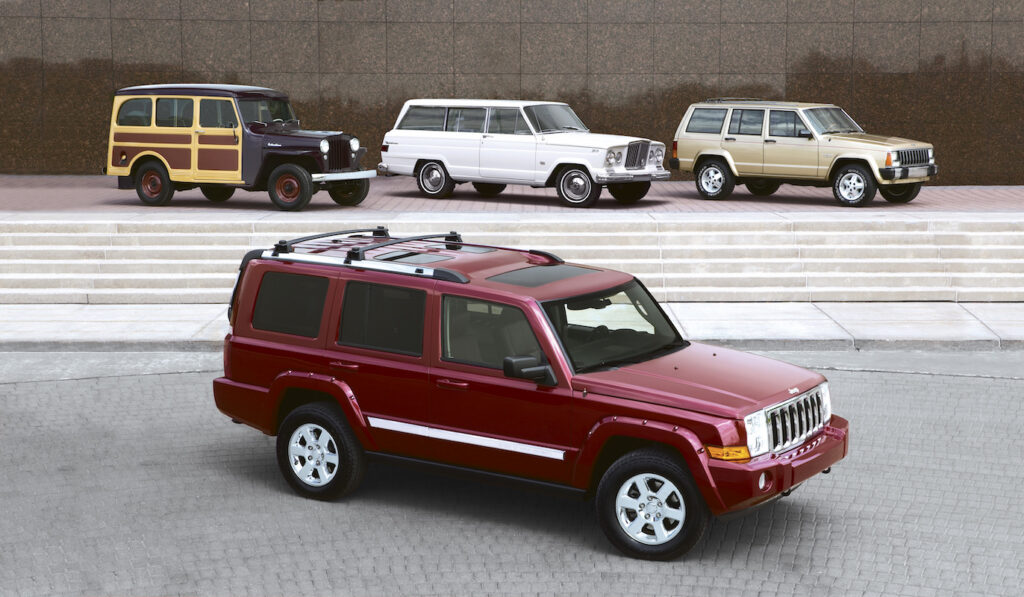
Making its debut in July 1946 as the model 463 Jeep Station Wagon, the Willys Wagon featured three-tone paintwork that simulated the “woodie” look but avoided the weathering, peeling and squeaks of genuine “woodies”.
The Wagon’s fold-down tailgate hatch is also claimed by Jeep to be the originator of that most American of celebrations, the “tailgate party”. When four-wheel drive was added in 1949, the Willys Wagon became the forerunner of the Grand Cherokee (WK).
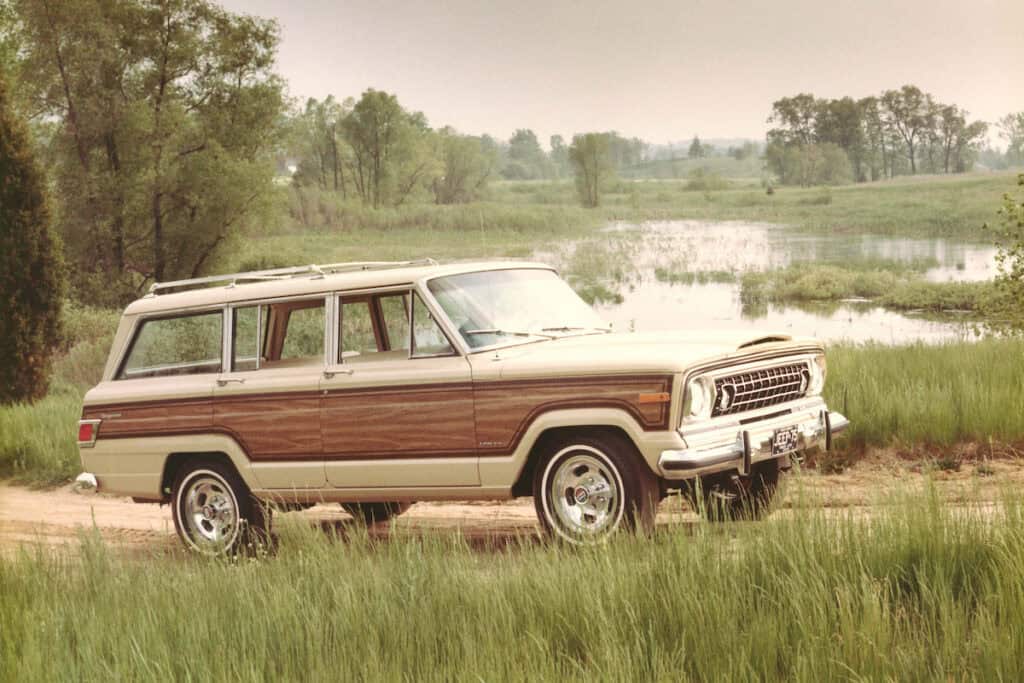
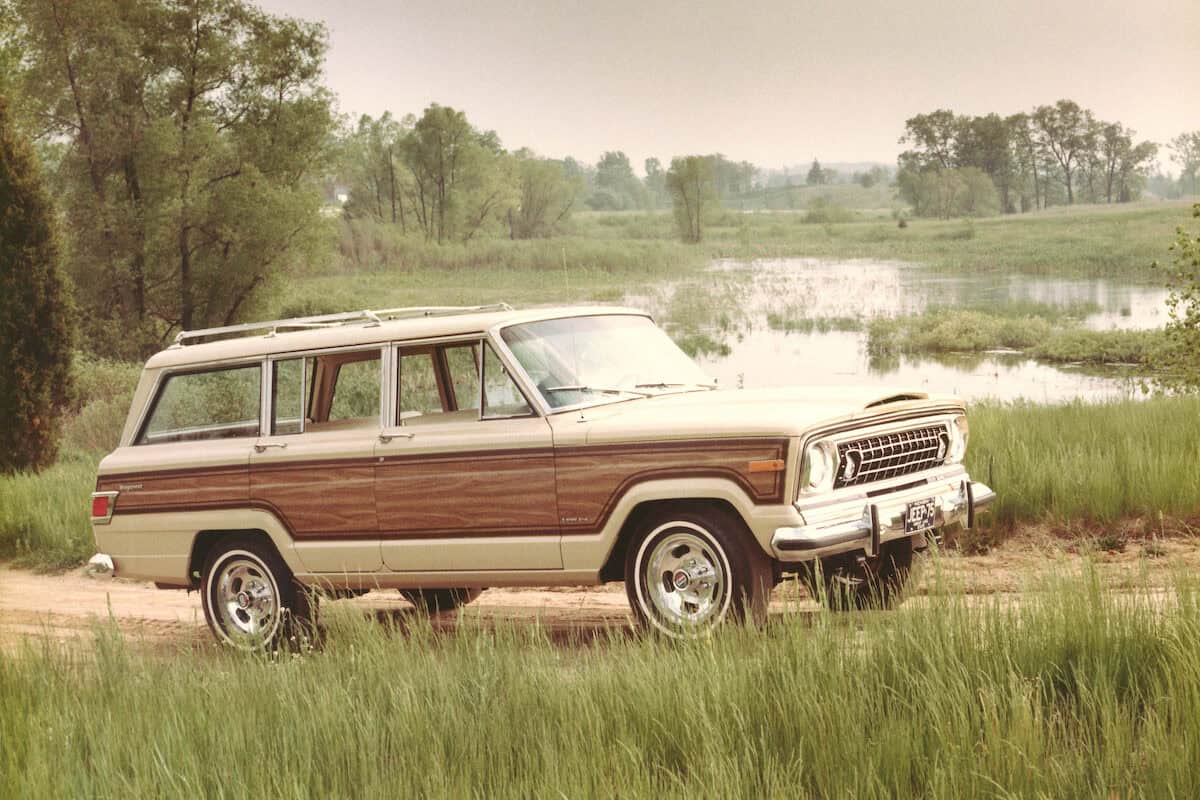
In 1963 Jeep created what is regarded by many as the father of all luxury 4x4s, with the launch of the Jeep Wagoneer. The Wagoneer was designed to provide passenger-car styling, comfort, and convenience with the advantages of four-wheel drive.
Among its many industry firsts over the course of its model life the Wagoneer introduced the first automatic transmission in a 4×4 vehicle; the first overhead-cam six-cylinder truck engine; the first 4×4 vehicle with an independent front suspension; and the first automatic full-time 4×4 system with the revolutionary Quadra-Trac 4×4 system introduced in 1973.
Styled by the famed industrial designer Brooks Steven, the SJ Wagoneer was in production for more than 28 years with only minor technical changes. In fact, Jeep claims it as the longest continuous automotive production run, on the same platform, in U.S. automotive history.
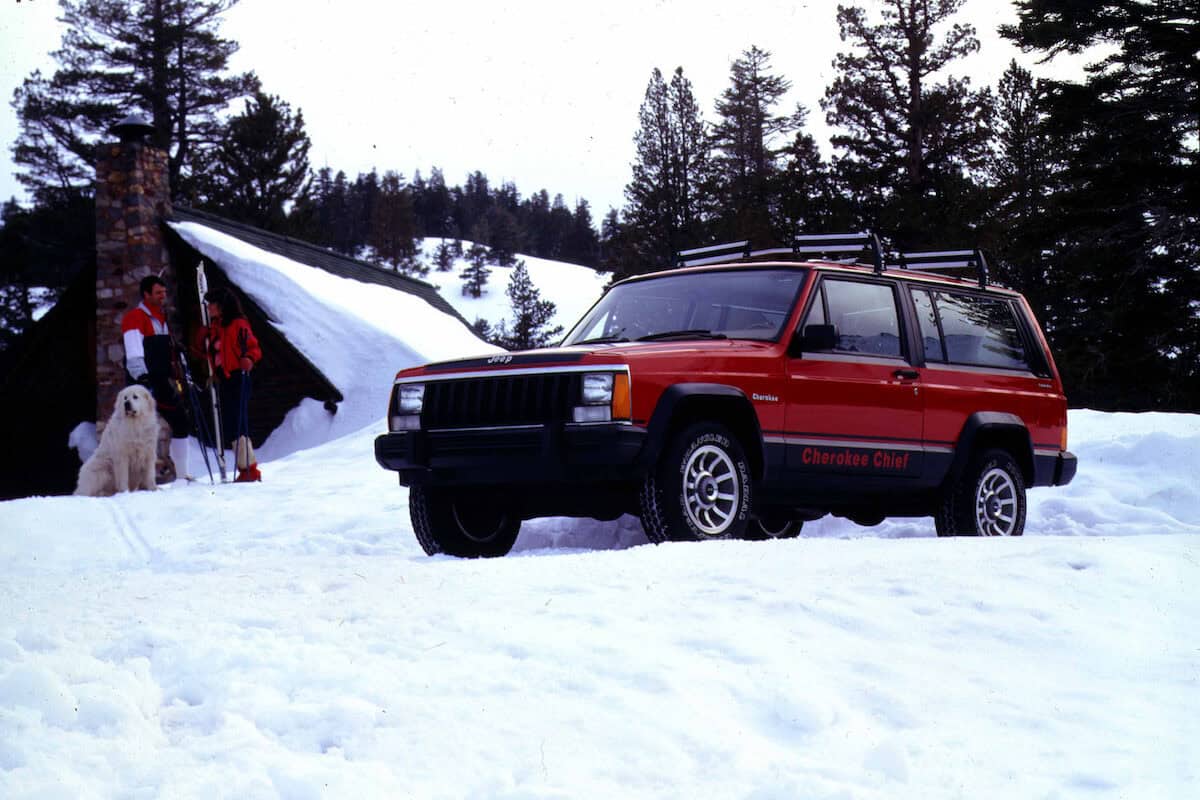
The Wagoneer was renamed the Grand Wagoneer in 1984 to coincide with the introduction of the downsized Wagoneer and Cherokee (XJ) models, with the latter regarded by many as the genre-defining modern SUV.
After its own market research convinced brand owner AMC that the future lay in compact SUVs, the automaker pumped $250 million into the design and production of the new compact XJ Cherokee and Wagoneer sports wagons.
Manufactured between 1984 and 2001 the Cherokee XJ is one of the most instantly recognisable 4×4 designs on the planet, its design dating to 1978 when a team of AMC and Renault engineers drew sketches and made clay models from the existing SJ Cherokee.
Shorter, narrower, lower and lighter than the full-size Wagoneer, the Cherokee XJ was also built on a revolutionary unibody design, instead of a traditional chassis-and-frame.
The XJ was the first vehicle to offer two available 4×4 systems: Command-Trac part-time and Selec-Trac full-time 4×4 systems, and until 1988 was the only compact SUV in the States to offer both two- and four-door models.
Originally fitted with the choice of a 2.5-litre four-cylinder petrol engine or a 2.8-litre V6 petrol, the engine the XJ is best known for the lusty 4.0-litre inline-six cylinder that it adopted in 1987.
In 1993 Jeep again showed it had its finger on the pulse with its move into premium SUVs, launching the ZJ series Grand Cherokee with a spectacular reveal at the 1992 North American International Auto Show in Detroit.
As launch stunts go it was hard to op, with legendary “car guy” and Chrysler President Bob Lutz crashing the new model through a plate glass window to showcase its durability.
The mid-sized luxury SUV set new standards for on-road ride, handling and comfort in an SUV, while its distinctive design soon had rival automakers rushing to imitate.
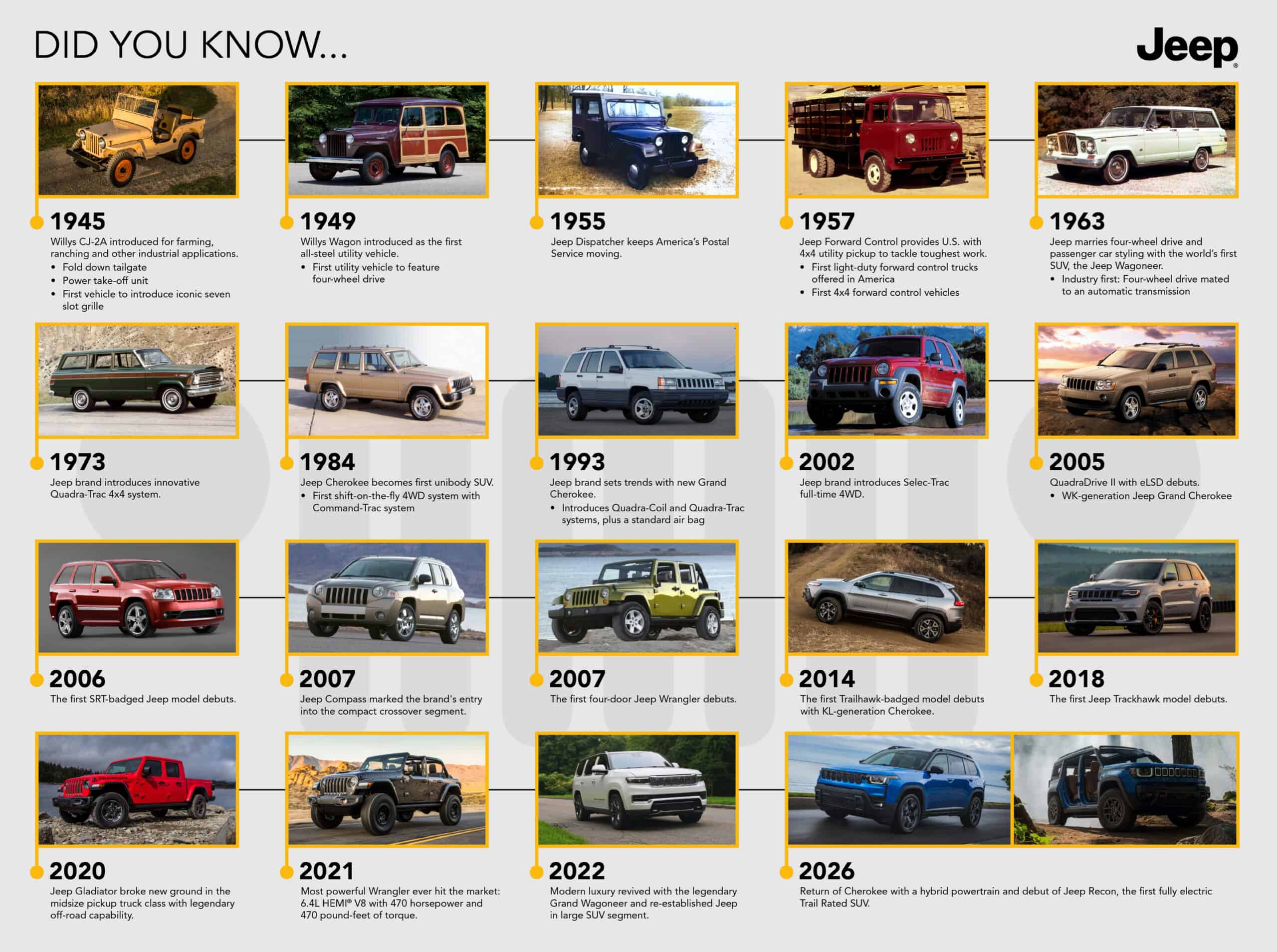
The Jeep brand has been responsible for many more innovations during its lifespan, some of which are listed below.
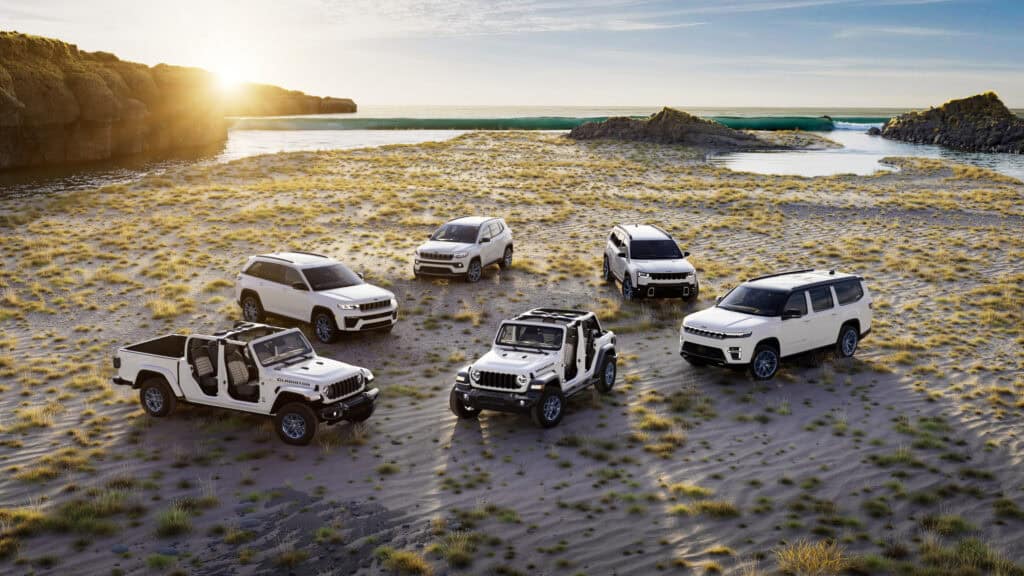
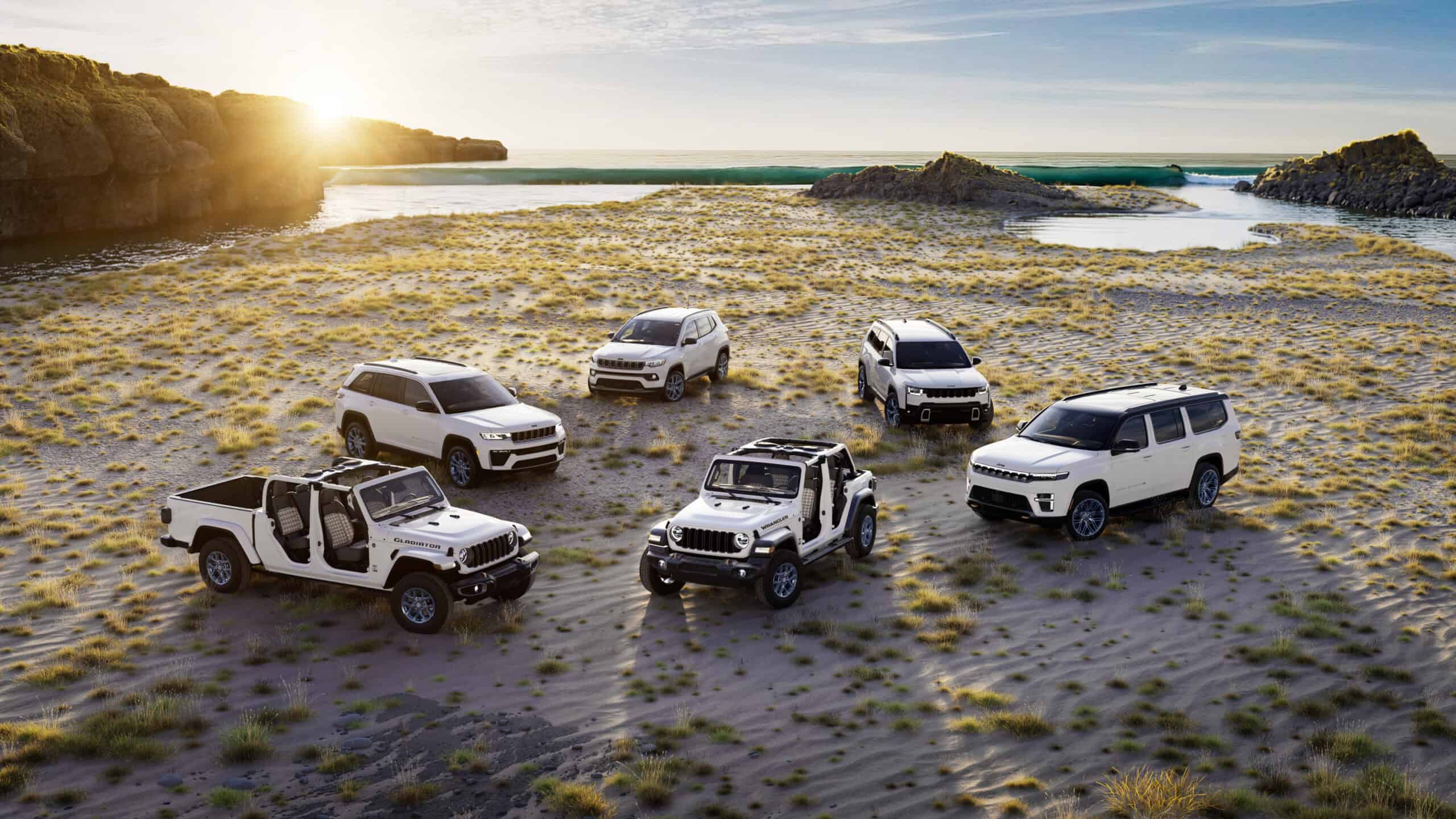
In its US home market Jeep plans on marking the occasion with a series of 85th Anniversary limited editions for the Jeep Wrangler, Gladiator, Cherokee, Grand Cherokee, Grand Wagoneer and Compass.
At this stage only the limited-edition Wrangler has been confirmed for Australia, but it’s not quite the anniversary model Aussie off-road enthusiasts would most love to get their hands. That model, available Stateside, is the HEMI V8-powered Jeep Wrangler Moab 392, which Jeep describes as being “engineered with a no-frills, back-to-basics philosophy”.
The short-wheelbase off-roader packs a 6.4-litre V8 punching out 350kW/637Nm and rides on 17-inch beadlock-capable wheels, clad with 35-inch all-terrain tyres. An 8,000 lb. Warn winch, rock protection sill rails, and tow hooks are also on the specs list for this off-road oriented beast.
Jeep: 85 Years of All-Terrain Innovation
- 1945: Willys CJ-2A becomes the first civilian Jeep, introduced for farming, ranching and other industrial applications.
- 1949: Willys Wagon introduced as the first all-steel utility vehicle and the first utility vehicle to feature four-wheel drive.
- 1955: Jeep Dispatcher keeps America’s postal service moving.
- 1957: Jeep Forward Control provides U.S. with 4×4 utility pickup to tackle toughest work.
- 1963: Jeep marries four-wheel drive and passenger-car styling with the world’s first SUV, the Jeep Wagoneer, mating four-wheel drive to an automatic transmission.
- 1973: Jeep brand introduces Quadra-Trac 4×4 system.
- 1984: Jeep Cherokee becomes first unibody SUV and the first with shift-on-the-fly 4WD system.
- 1993: Jeep Grand Cherokee introduces Quadra-Coil and Quadra-Trac systems, plus a standard airbag.
- 2002: Jeep brand introduces Selec-Trac full-time 4WD.
- 2005: WK-generation Jeep Grand Cherokee debuts QuadraDrive II with eLSD.
- 2006: WK-generation Jeep Grand Cherokee debuts the first SRT-badged Jeep model.
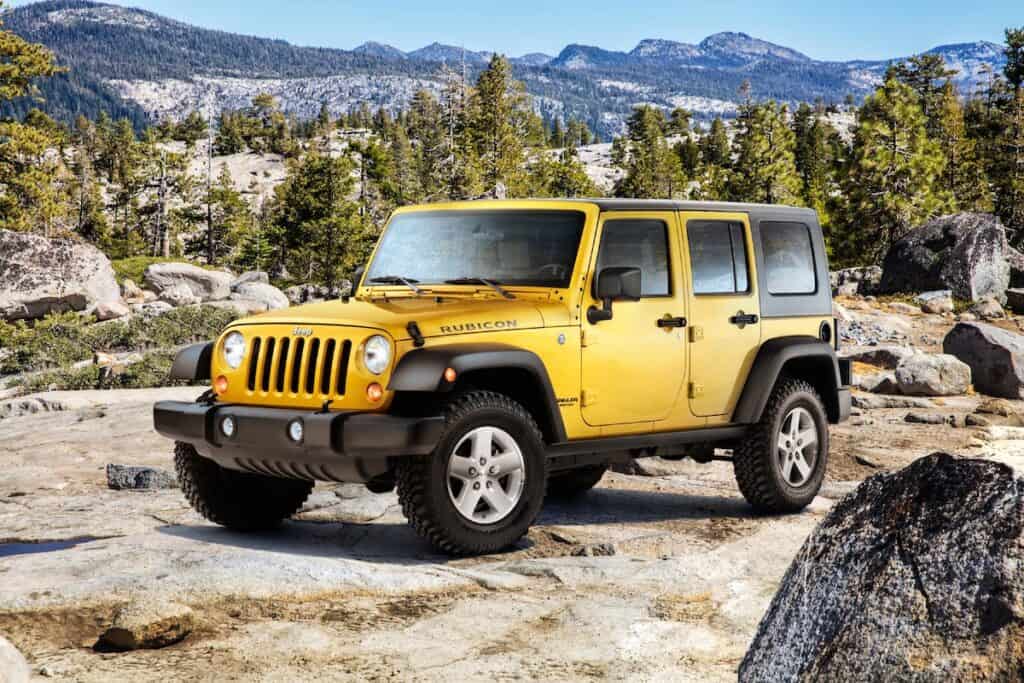
- 2007: The four-door Jeep Wrangler debuts.
- 2014: The first Trailhawk-badged model debuts with KL-generation Cherokee.
- 2018: The first Jeep Trackhawk debuts, its 527kW HEMI V8 making this the fastest Jeep ever.
- 2020: The Jeep Gladiator debuts as the first open-air midsize pickup truck.