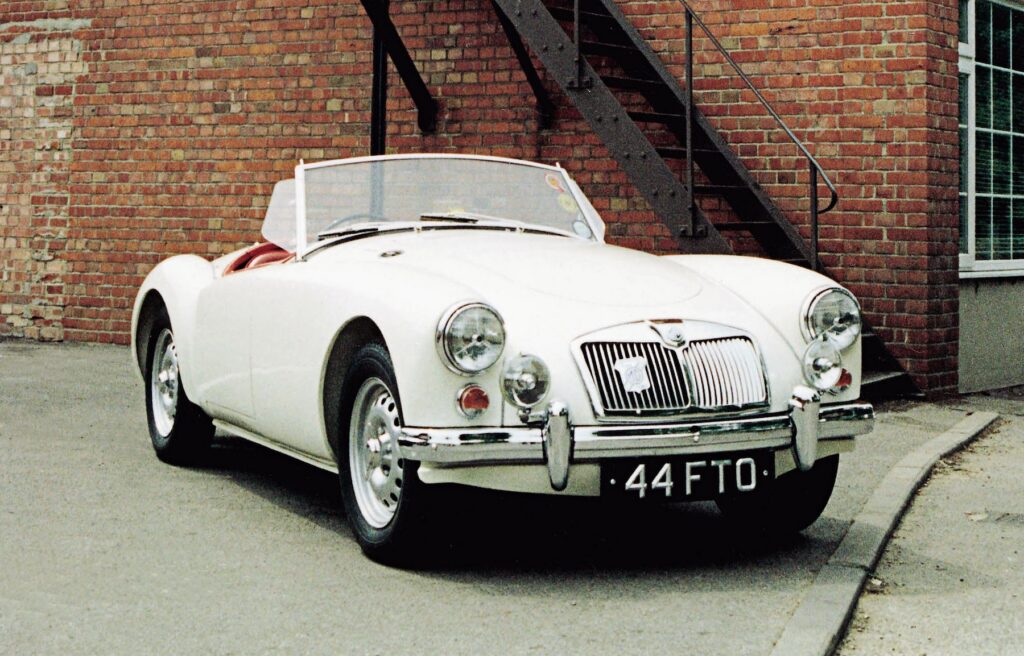
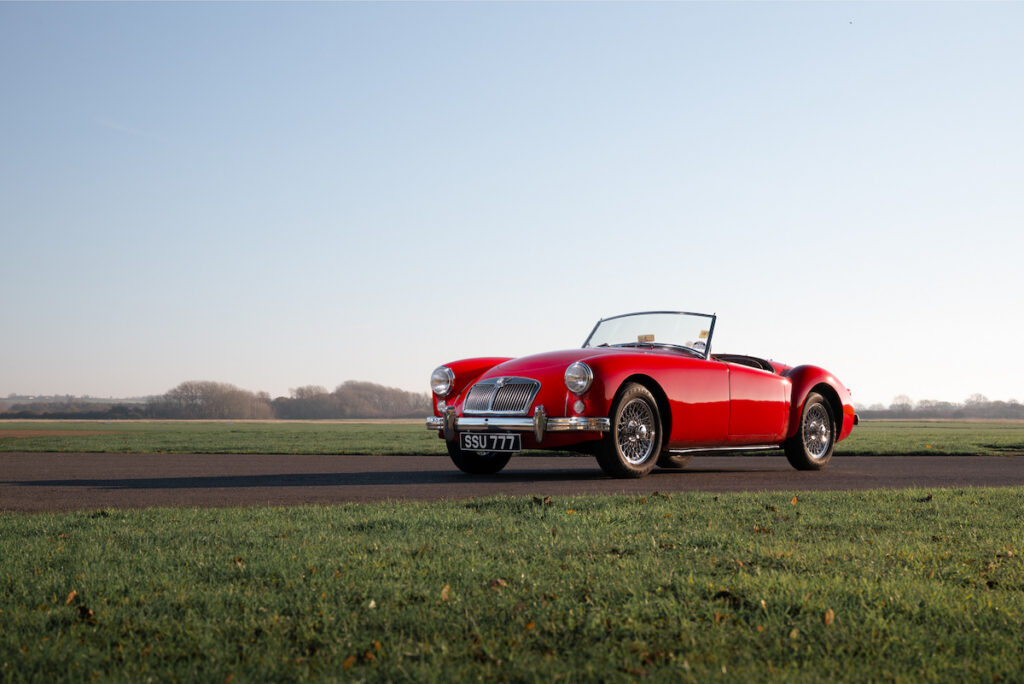
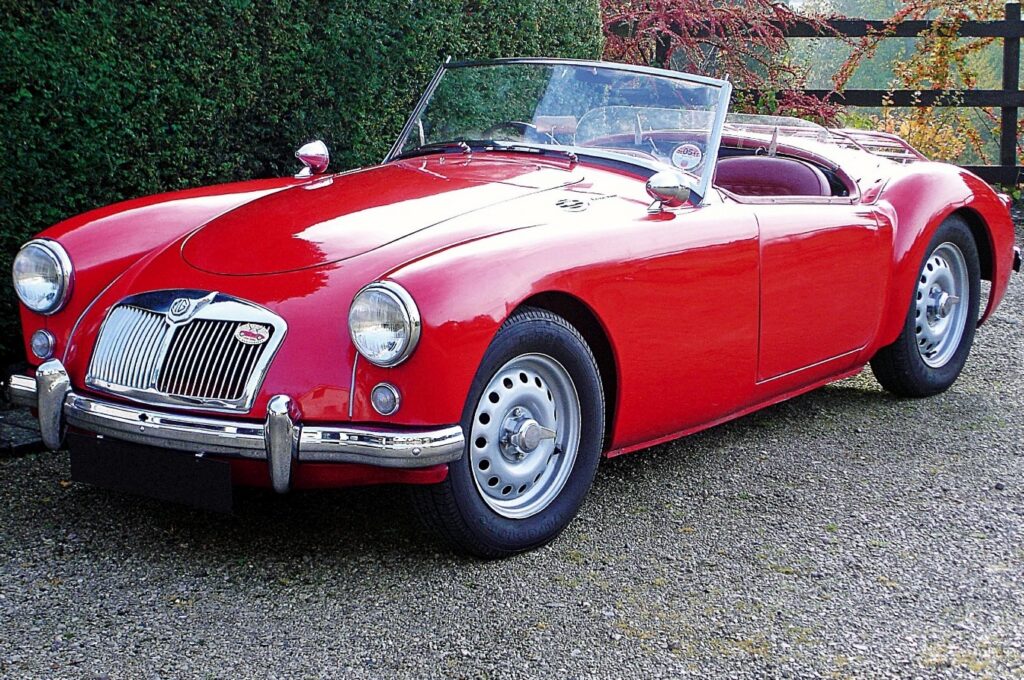
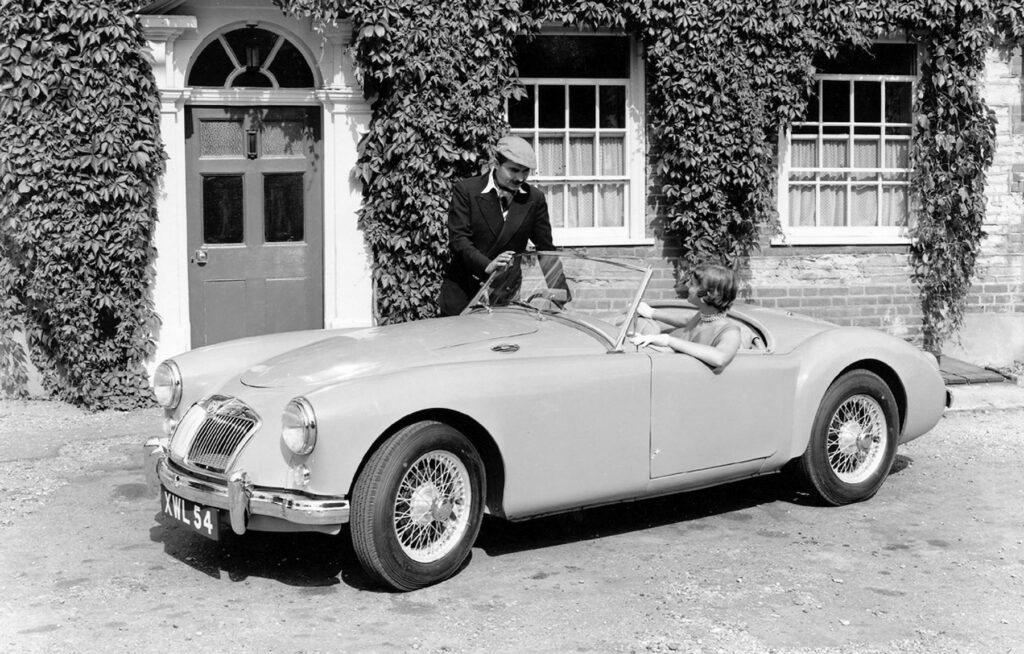
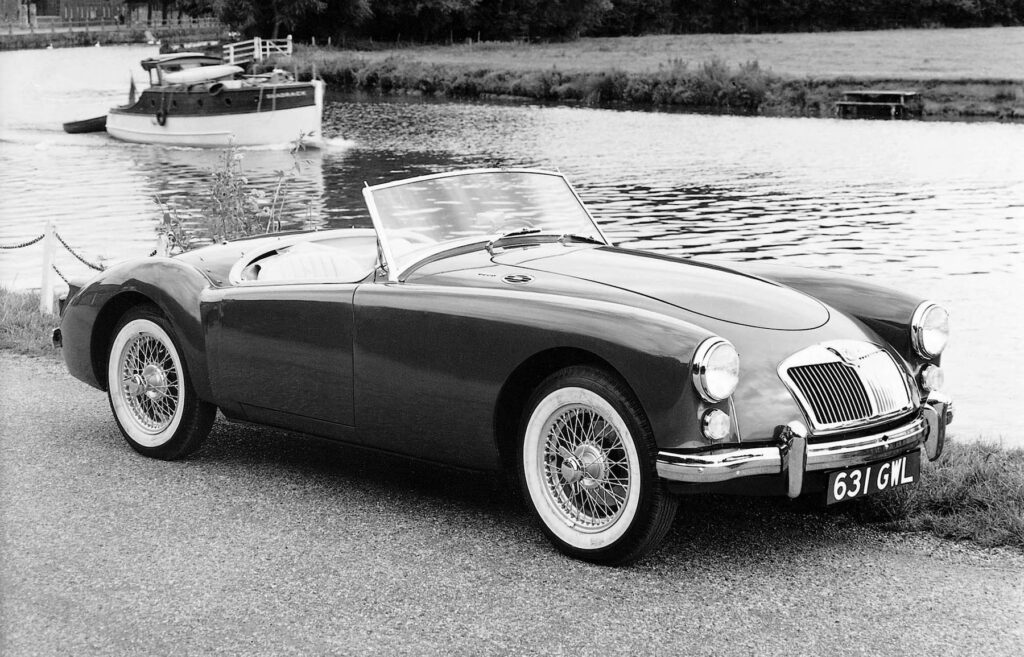

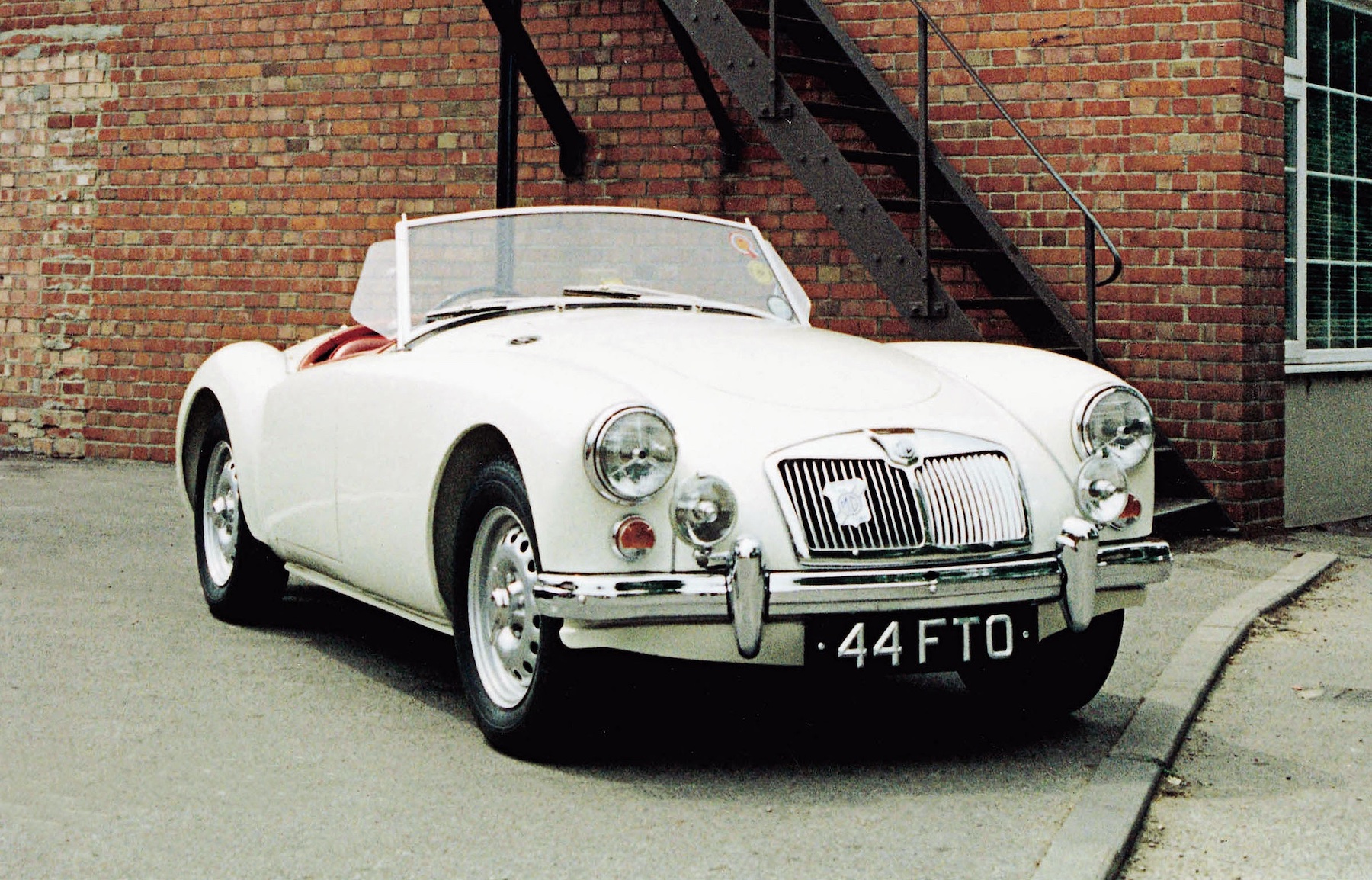
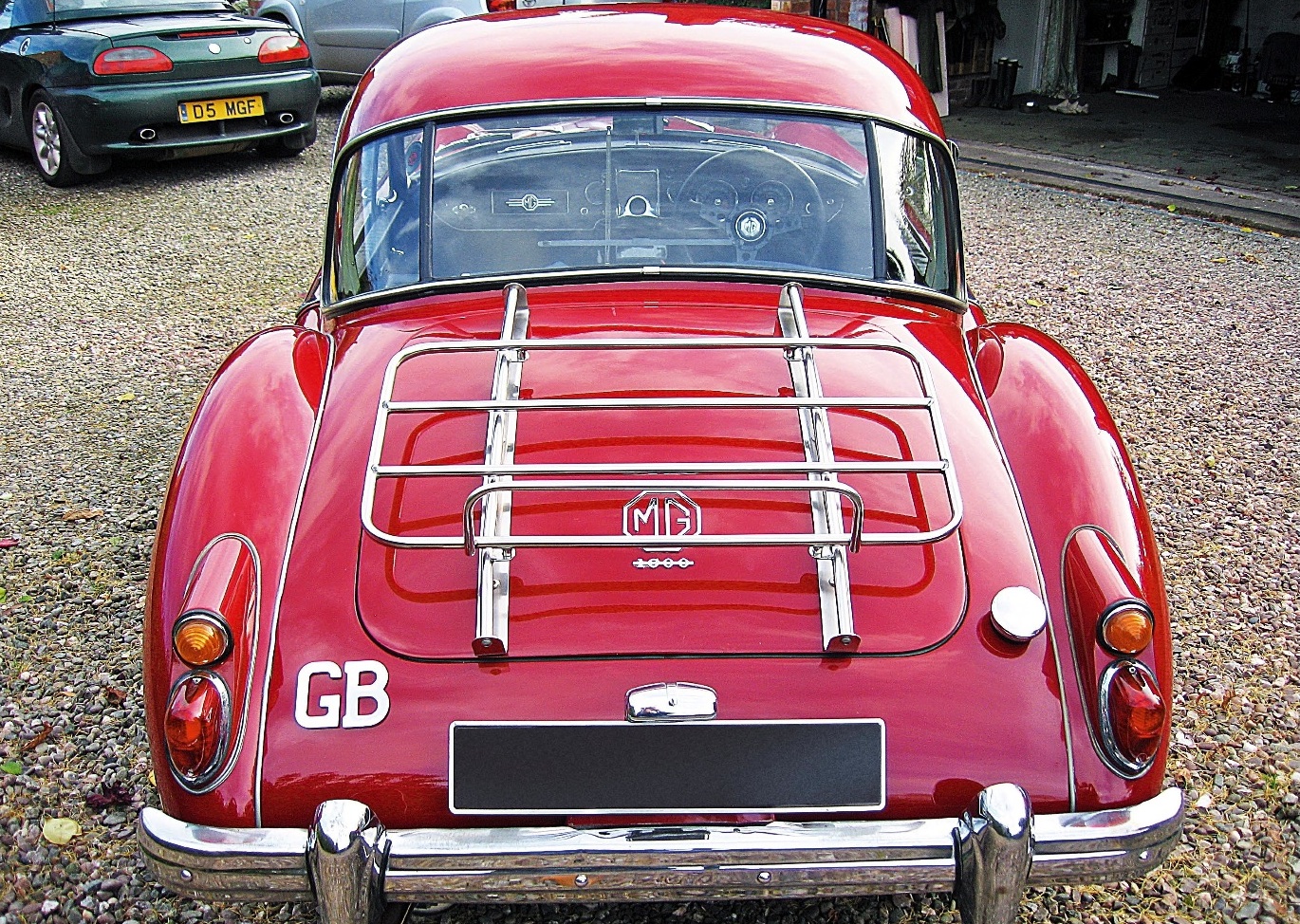
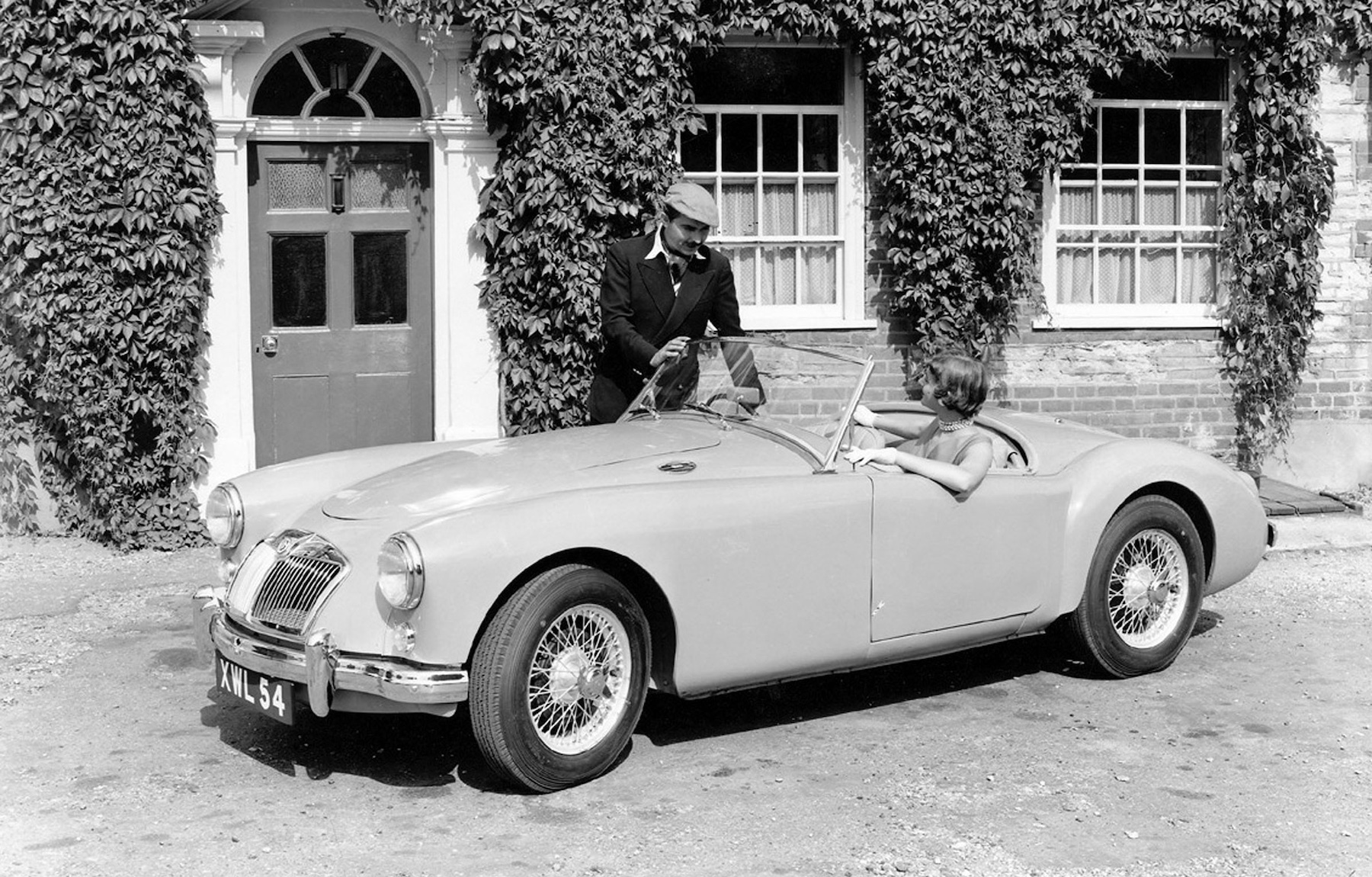
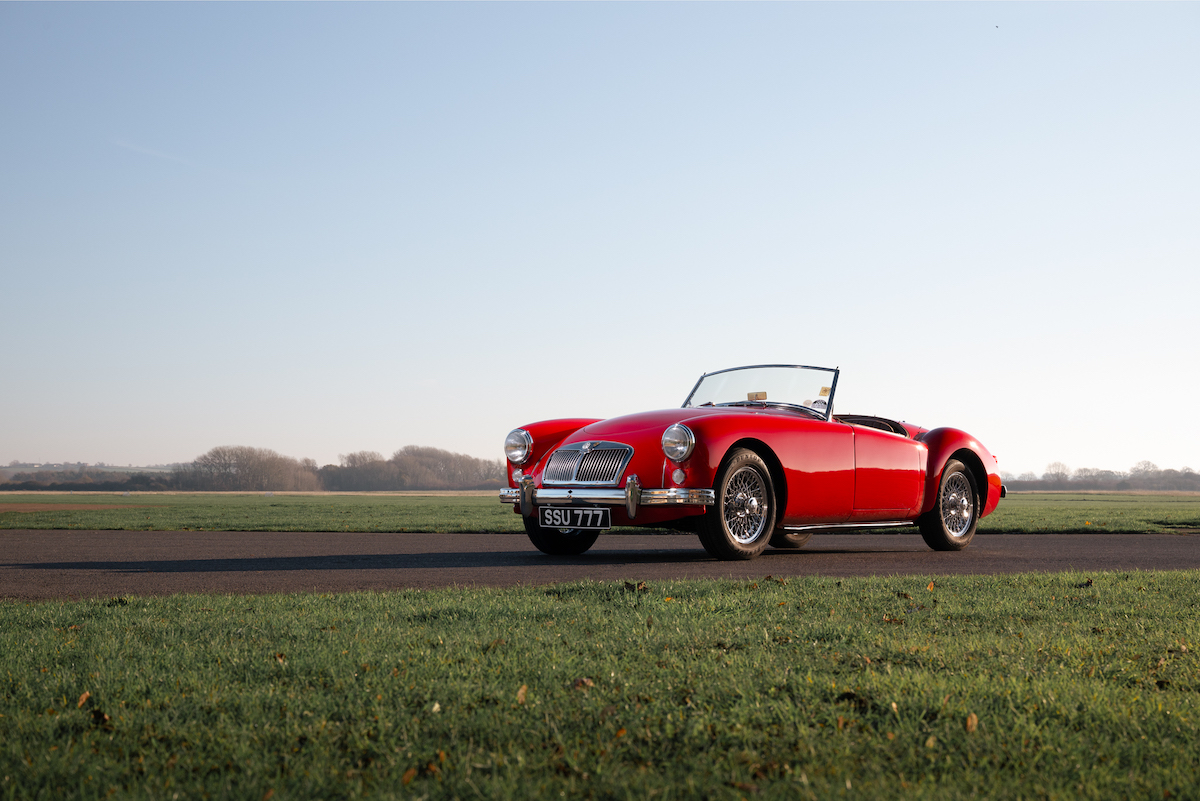
Britain’s MGA is that rarest of automotive entities: a sports car that never shows its age.
Early versions of these ground-breaking two-seaters are now over 70 years old yet deliver the same kinds of practicality and driving enjoyment they did when first created.
With new-found competition from rivals Triumph and Austin-Healey, MG needed to leave behind the ‘square rigged’ T-Type and showcased its design thinking at Le Mans in 1955 with a slinky new ‘prototype,’ the EX182.
While the race that year was overshadowed by an horrific crash that killed over 80 spectators, two of the three MGs that were entered went on to finish 12th and 17th outright, beating the rival TR Triumphs.
The curvaceous EX182 body displayed obvious styling influences from the XK Jaguar and had been devised in 1952, with underpinning comprised a TD chassis and mechanicals.
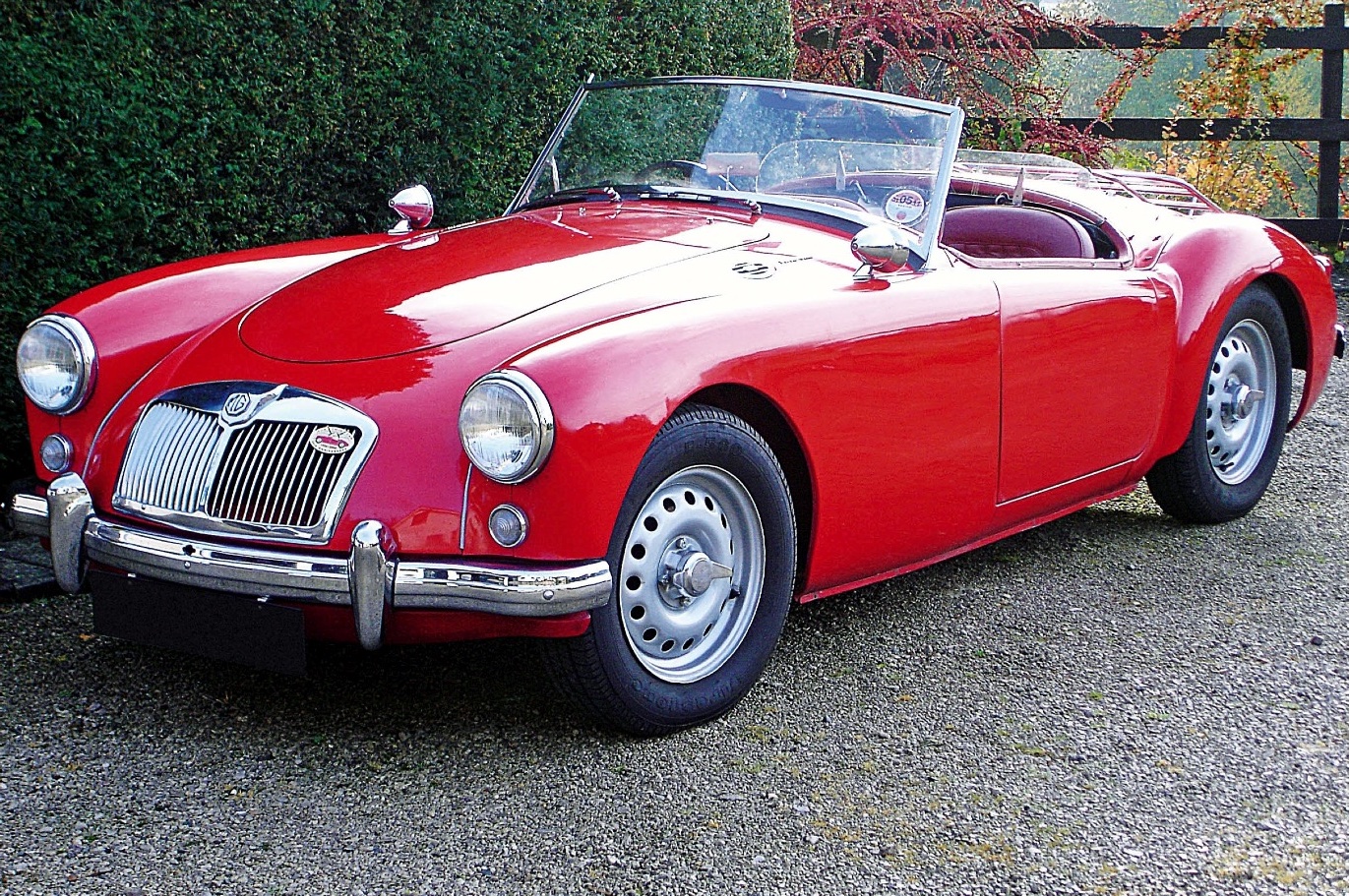
Originally known as EX175, that car was scheduled to debut at Le Mans in 1953 before entering production as a replacement for the TF. However, as part of the newly formed British Motor Corporation, MG was beset by politics and budget wrangling so funds were in short supply. When the field lined up on the Circuit de la Sarthe that year the EX175 remained parked beneath its dust cover.
Two months after the EX182’s Le Mans appearance, the dream of an all-new MG became reality when the MGA 1500 was released.
It was a design clearly aimed at export markets and the overseas order books were soon overflowing. North American sales for 1957 reached 13,496 cars, a figure topped in 1958 by a record 16,250.
No sales figures were found for Australia in 1957, but at $2750, with a Triumph TR3 with overdrive costing $3262 and an FE Holden Special $2422, MGA sales would have been good.
Beneath its race-inspired body the newcomer was well-equipped to challenge Triumph and BMC’s own Austin-Healey 100. Although just 20cc larger than the TF1500 unit it replaced, BMC’s new B-Series engine delivered 10kW more at 50.5kW.
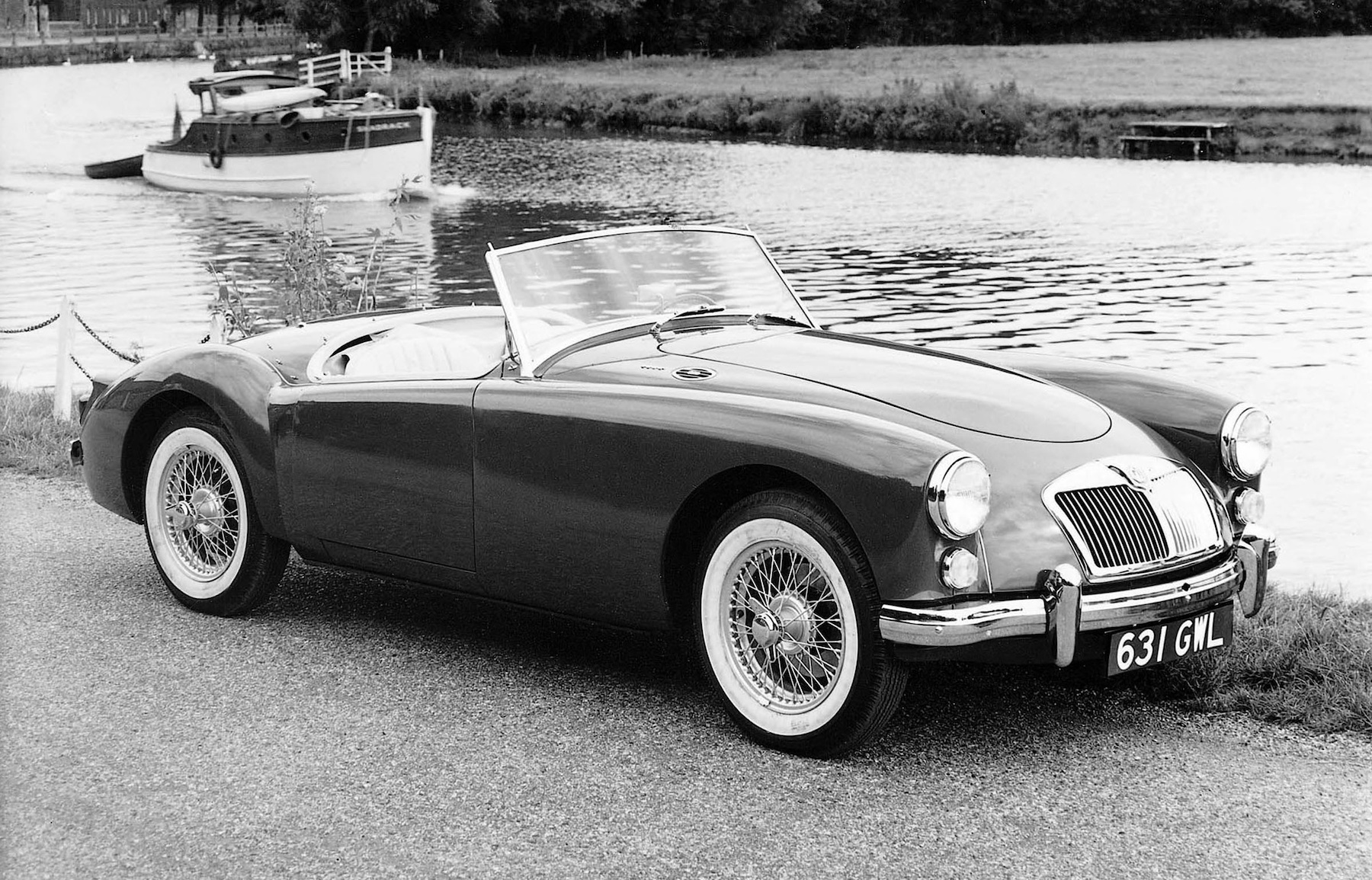
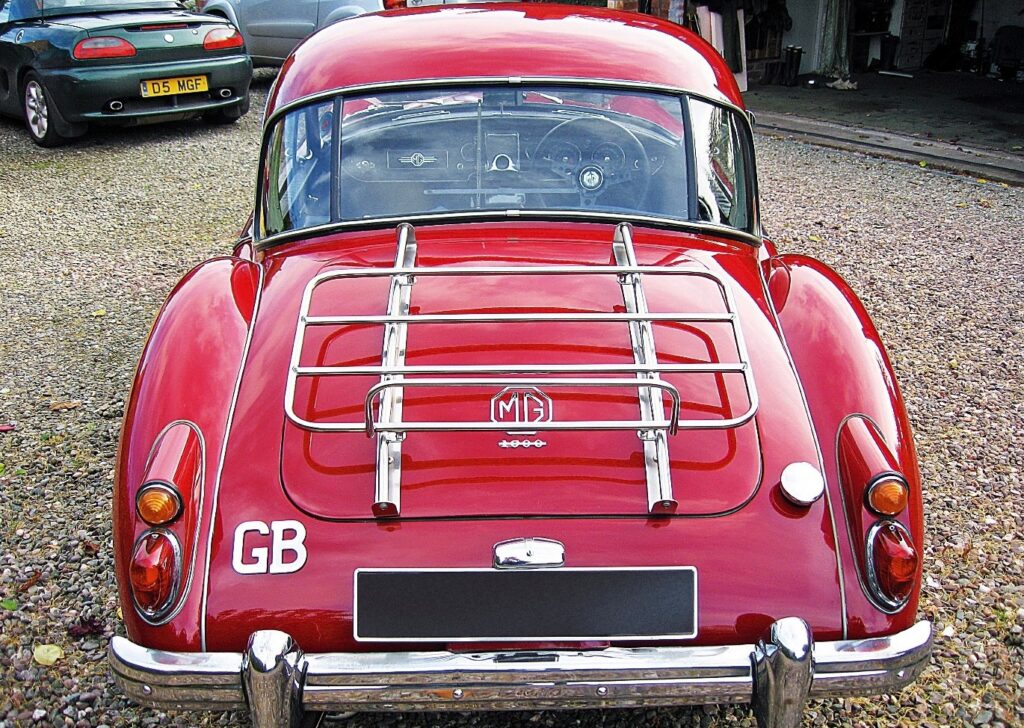
The extra output combined with slipperier bodywork boosted top speed to 158km/h and there were other improvements including a proper boot in place of the TF’s slab fuel tank, and a hood that let in less water.
Most obvious was replacement of the TF’s 1930s chassis and improvements to the twitchy handling. Brakes were all-drum but the MGA boasted rack-and-pinion steering allied to independent front coil suspension.
More power was on MG’s agenda when it introduced a Twin-Cam model in 1958, still of 1.6-litre capacity but producing a more robust 82kW.
These Twin-Cams were expensive and never intended to be big sellers, but durability problems with the engines saw cars intended to shine in competition events fail to deliver. The model lasted barely a year and with 2100 built they remain the rarest and most expensive MGAs.
Front disc brakes arrived in 1959 as standard equipment on the MGA 1600. Its 1588cc engine pushed power to 54kW and top speed beyond the magic 100mph (161km/h) mark.
In June 1961 and with its new MGB still under development, BMC enlarged the engine to 1622cc and released a Mark 2 version. Updated cars produced 64kW, with visible changes including a recessed grille and horizontal taillamp clusters. Just 8719 of the MGA Mk 2 were built, making these the hardest pushrod MGA to find.
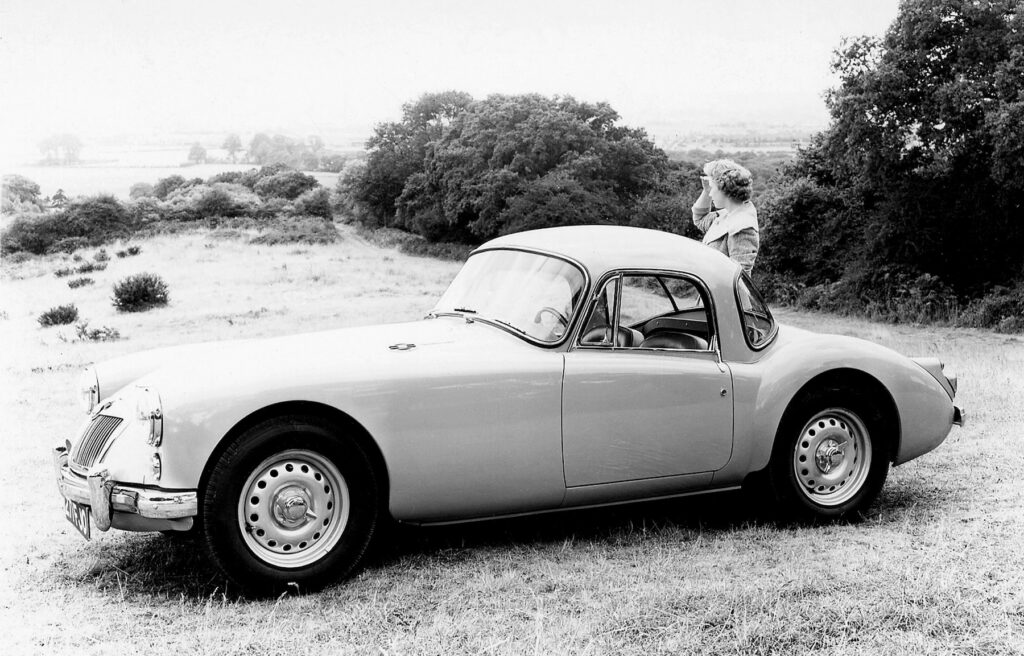
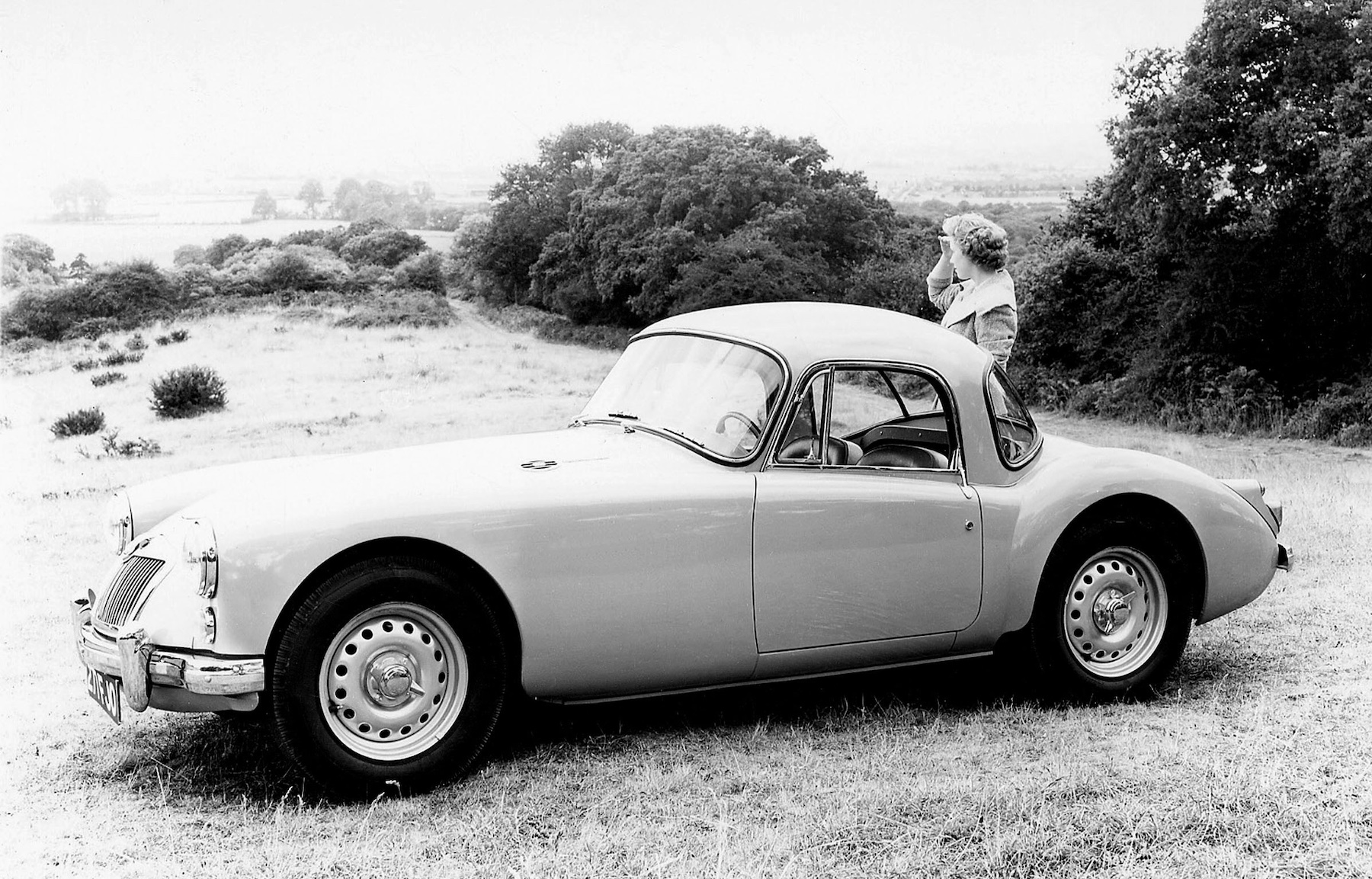
Most MGAs are Roadsters, however from 1956 a Fixed Head Coupe version was offered. While these were popular with UK and US buyers, Australians preferred the less-claustrophobic environment of an open-top car.
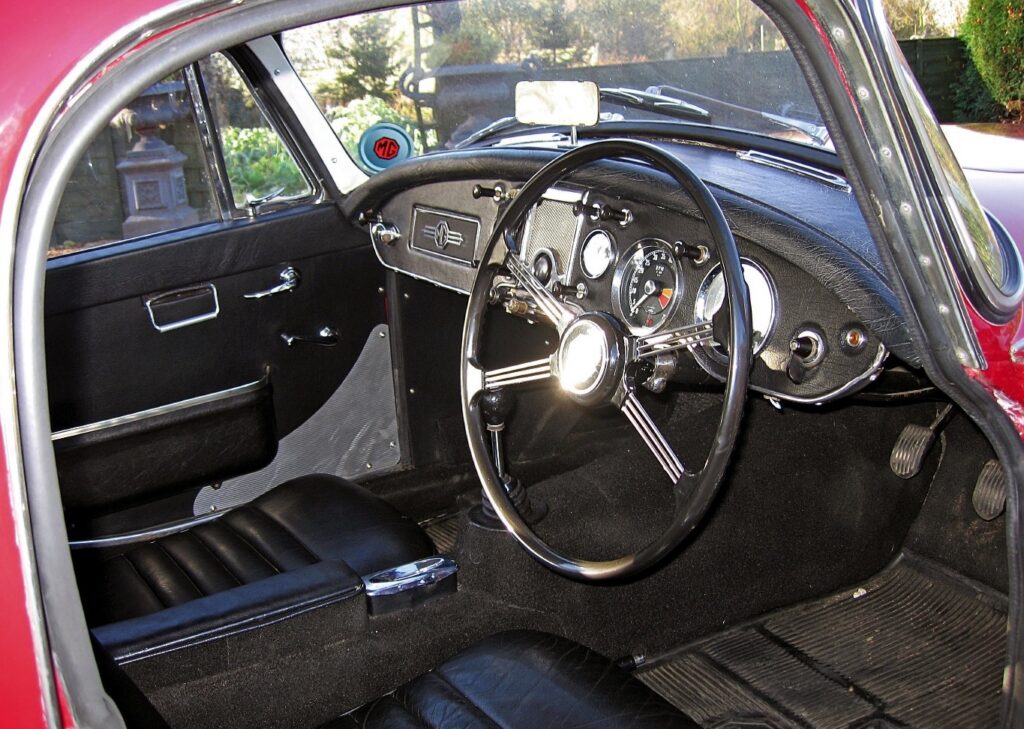
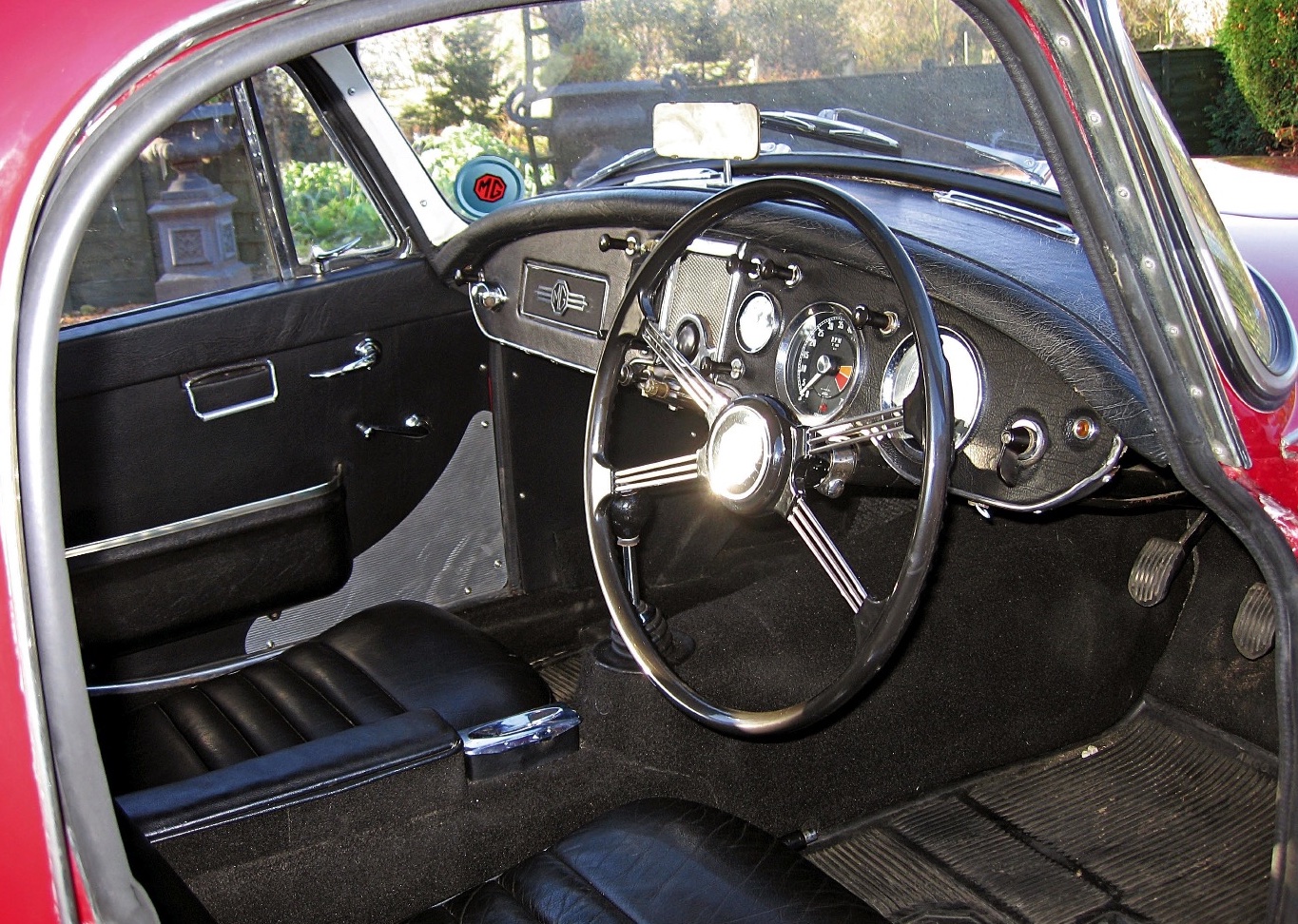
MGA Roadsters are the only post-war MGs without external door handles, so accessing the cockpit involves reaching through the side-screen and tugging on a cunningly concealed chain or cable. Or, when the top is down, some drivers just step over the side.
Once aboard there’s plenty of space although shortish drivers might struggle to find a driving position which doesn’t put them uncomfortably close to the steering wheel.
The gear lever sits atop a tall transmission tunnel with short throws between ratios. At just two and a bit turns lock-to-lock the steering is equally effective, offering plentiful feel and minimal road-shock.
The leaf-sprung rear end doesn’t support much weight and will skip sideways across imperfect surfaces. Fortunately, pin-sharp steering makes for fast and accurate correction.
Disc brake cars stop faster and will resist fade for longer than all-drum versions. MG didn’t fit a power booster, and the brakes really don’t need one, but they do require a good push on the pedal when cold.
Despite aluminium doors, boot lid and bonnet the MGA still weighs 930kg, with most of that concentrated ahead of the front bulkhead. They were strongly built and even over unmade roads it takes a decent set of corrugations to induce ‘scuttle shake’ where the windscreen and its supporting pillars rattle.
Most MGAs you see on the road will be running with the hood down and there is a reason for that. The vinyl top and its various pieces of framework lives in a bag and assembling it beside the road during a downpour is challenging. Side screens are irritating as well, but if you want the convenience of wind-up windows, buy an MGB.
MGA prices have never been unreasonably high and fluctuations due to economic conditions are minimal. In the 2026 market, $25-30k buys an older restoration needing some mechanical and cosmetic refurbishing, with immediately usable cars below $40,000.
Recent restorations cost $10,000 more than that and cars with trophy-winning potential reach $70,000. Very early drum-brake cars attract collectors and are more valuable than later ones, but if your MGA will be on the road regularly, a disc-brake 1600 is the way to go.
Our very own RR Auctions platform recently handled the sale of beautifully restored 1960 model – upgraded to a specification inspired by the EX182 – for $60,000 after a 120-bid frenzy during February 2026, indicating there is a strong market for examples as fine as this.
Things to Watch Out for When Buying a Used MGA (1956-62)
- Rust in sills, windscreen supports and floors.
- Engine oil leaks and exhaust smoke.
- Hesitant acceleration due to worn or poorly-tuned carburettors.
- Fuel pump that doesn’t tick when the ignition is switched on; may need a gentle tap.
- Clicking from unsynchronised first gear due to chipped teeth.
- Slipping wheels due to worn splined hubs and rims.
- Battery box corrosion.
- Wet floor and rotting timber flooring due to poor hood sealing.
Valuation Timeline: Valuation Timeline: MGA (1956-62)
-
1985$10,500
-
1995$23,500+123.81%
-
2005$31,500+34.04%
-
2010$30,000-4.76%
-
2015$39,000+30%
-
2020$44,500+14.1%
-
2026$55,000+23.6%1500/1600 Roadster