
Utter the word ‘Callaway’ within earshot of a Chevrolet enthusiast and likely responses will encompass various versions of the ZR1 Corvette and perhaps the legendary ‘Sledgehammer’ C4 with its 560kW and 409km/h top speed. But how many will remember the car that in its day was the fastest and most powerful production Holden?
Local exposure to the mystique of Reeves Callaway was brief but memorable. While the cars that brought Callaway performance to Australian roads may have been less confronting than the modified Corvettes that built his reputation, they were also less expensive and more practical than a Corvette priced at US$150,000.
Holden had introduced the US-sourced, alloy-block 5.7-litre LS1 V8, also known as the Gen III, to the VT Series II Commodore in mid-1999. Some died-in-the-wool fans lamented the demise of the locally-manufactured 5.0-litre iron-block V8, but with outputs of 220kW/443Nm the Gen III easily eclipsed the old V8’s 179kW/400Nm.
HSV soon followed suit with an enhanced version of this engine fitted to its VT Series II Clubsport and R8. The addition of a cold ram-air intake, headers, a tweaked computer and performance exhaust boosted power and torque to a more assertive 250kW and 473Nm.
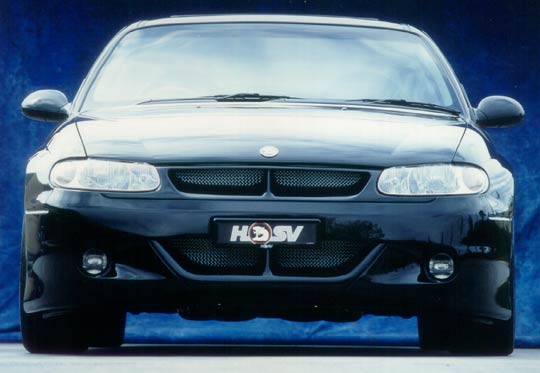
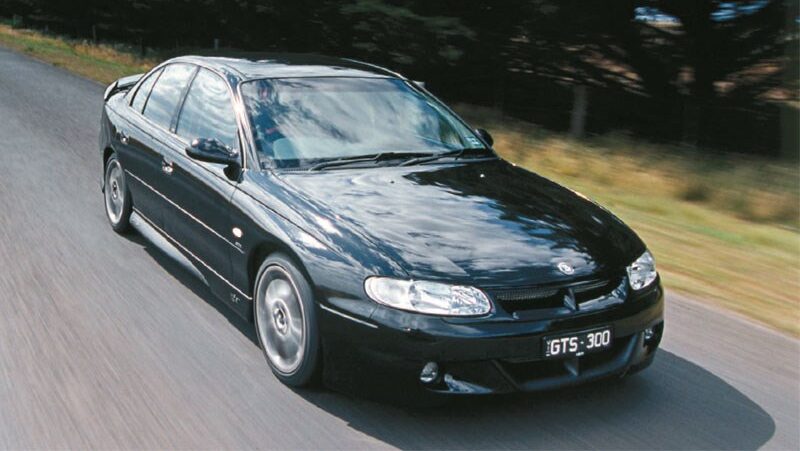
Holden and HSV fans were ecstatic at having the mumbo to kick sand in the face of their Ford and Tickford rivals, and would soon become even more fired up when HSV whipped the covers off the Callaway C4B powered VT Series III GTS 300 at the Sydney Motor Show in October 1999.
The black beast with its garish red interior was a revelation, sporting on its front guards and tailgate a trio of 300kW badges that promised to settle the traffic light grand prix argument once and for all.
There was no need for extensive revamping of Holden designer Mike Simcoe’s still-fresh VTII shape, but HSV-specific styling was entrusted to talented Scotsman Ian Callum, as it had been since the VN Clubsport of 1990.
Callum, who would later turn his talents to moulding the products of Jaguar and Aston Martin, added unique 18-inch alloy wheels with Shadow Chrome finish, distinctive ‘double-D’ exhaust pipes, spoilers front and rear plus other aerodynamic aids to help the GTS 300 maintain composure when approaching its 250km/h-plus top speed.
Callaway’s C4B-coded engines were essentially a more high-performance version of Chevrolet’s own LS6 V8, featuring CNC-ported heads, a more aggressive cam, new valves and a lighter valvetrain. Other HSV-specific addition included an upgraded, free-flowing exhaust system, anodised alloy big-bore throttle body, and a larger intake pipe without the mass air-flow meter used in other HSVs and LS1-powered Holdens.
Running on its preferred premium fuel the C4B made its 300kW of peak power at 6000rpm, the V8 providing a thrilling soundtrack on its way to redline, with 510Nm of peak torque available at a lofty 4800rpm.
Available as a manual only, the C4B was matched to the same Tremec T56 six-speed gearbox fitted to other Holden and HSV models, but gained a lower 3.9:1 diff ratio. In combination with a Hydratrak limited-slip differential and 235/40R18 Bridgestone rubber, the GTS 300 provided almost Porsche-like acceleration for skilled drivers able to get the power down cleanly. But aside from when trying to launch it cleanly and quickly it wasn’t a particularly highly-strung or challenging car to drive.
Aussie performance car bible MOTOR put one down the 400m strip and nailed an impressive 13.57secs at 176km/h, just three-tenths of a second off HSV’s official claim of 13.3 seconds. Along with an official 0-100km/h sprint time of 5.1 seconds, the GTS 300 was faster than far more expensive Euro-rivals like the AMG E55 and BMW M5.
Stopping power wasn’t shabby either, with upgraded Harrop-supplied four-pot calipers clamping massive cross-drilled, 343mm front and 315mm rear discs. The handling was better too, thanks to extra rear suspension links to help brace the trailing arms and combat the well-known self-steering tendencies of Holden’s independent rear suspension.
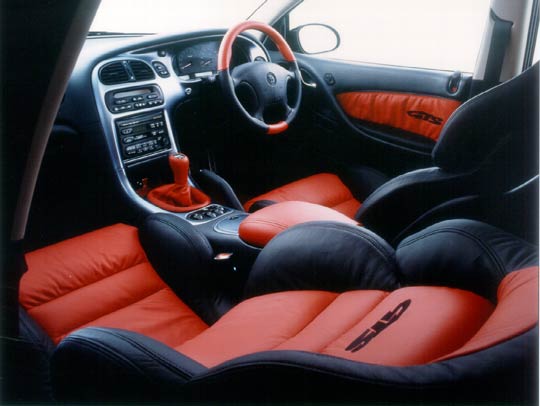
List price for this Aussie-engineered missile was $95,397 with few possible options in a car loaded with kit. The interior featured heavily bolstered GTS-embossed leather seats, with black-backing and garish red facing, plus a short-throw manual shift lever and two-tone steering wheel in the same lurid red. Other standard equipment included dual front airbags, power front seat adjustment, fast glass, multi-function trip computer, climate-control air-con and 10-disc CD sound system.
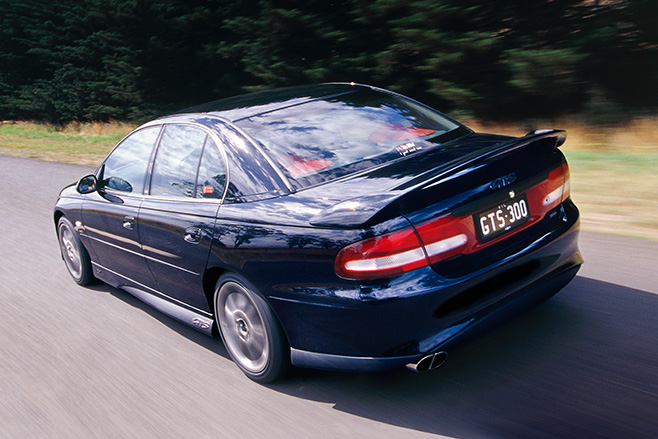
The GTS 300 was announced in April 2000, with just 117 cars made from then until the model was replaced in October by the HSV VX Series. The initial batch of GTS 300s came in Sting Red or Phantom Black, with interior trim in strident red and black.
Switching from VTII to VX in September 2000 didn’t make a huge difference to specification but took some weight off buyer wallets. The shape of the nose changed a little and velour replaced leather inside, with 19-inch alloy wheels clad with 245/35R19 Pirelli P-Zero tyres. The price also plummeted by $8000 to $87,950 but mechanically the meanest HSV lion was unchanged.
Limited clearance makes these cars easy prey to underbody damage, so start down low before beginning your test drive, looking for cracked plastics and loose bumpers. Items of GTS 300 body embellishment don’t appear often on the used market and those that do are expensive.
The paint after 25 or so years may be starting to fade and suffer clear-coat delamination. These aren’t insurmountable issues but will affect authenticity and ultimately the price a car can command if repairs are obvious.
Surviving GTS 300s will often have seen limited use and some owners may skimp on maintenance, so look for evidence of annual oil changes, even if the car has hardly been moved.
Other problems associated with advancing age include brake deterioration and perished suspension bushings, cracked or buckled wheel rims, and ageing spare wheels.

With fewer than 400 of the four-door 300kW cars built – including 117 VTII, 134 VX, 142 VY/VYII, and 33 VX Senator 300s – they are understandably hard to find, yet still not prohibitively expensive.
A car showing more than 100,000km is going to miss the mark as a collectible but still deliver entertaining and exclusive motoring. These with six digits on the odometer sell in the region of $50,000 and may bring a bit less if they have been in the market for a while and the owners are getting impatient.
Top-of-the-heap collector cars with fewer than 50,000km on the ‘clock’ and near-perfect presentation rarely come onto the general market and will generally be priced at or above $100,000.
Cars like these will most likely be offered through specialist dealers and sites like RetroRides.com.au but joining your local branch of the HSV Owners Club and making known your desire to own one will at least get you on the radar of possible vendors.
Things to Watch Out for When Buying a Used HSV VTII GTS 300 (2000-2002)
- Kerb and speed bump damage to air-dams and sill skirts
- Engine oil leaks, especially around cylinder heads
- Stale fuel in seldom used cars. Plan on a fuel drain and system clean if you buy one of these
- Coolant leaks from old hoses and welch plugs
- Brake rotors that are warped and lock prematurely
- Edge wear on tyres, especially at the rear
- Cracked or creased leather seats, wear patterns in velour
- Damp carpets caused by ventilation system leaks behind the dash
Valuation Timeline: Valuation Timeline: HSV VTII GTS 300 (2000-2002)
-
2005$57,500
-
2010$31,500-45.22%
-
2015$32,000+1.59%
-
2020$70,000+118.75%
-
2025$84,000+20%VTII