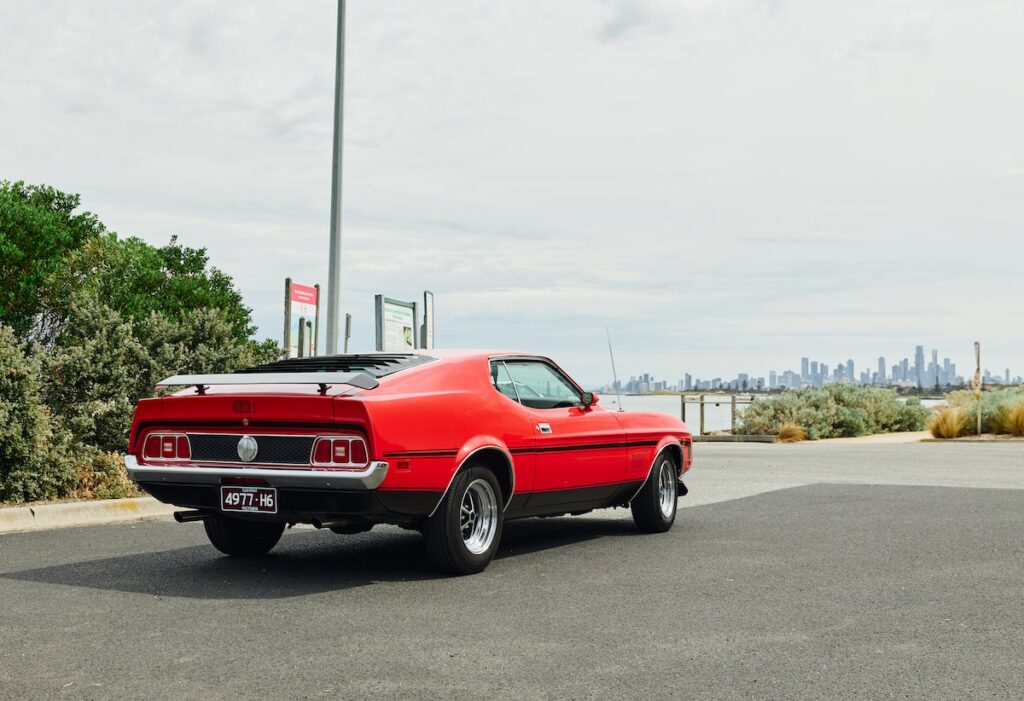
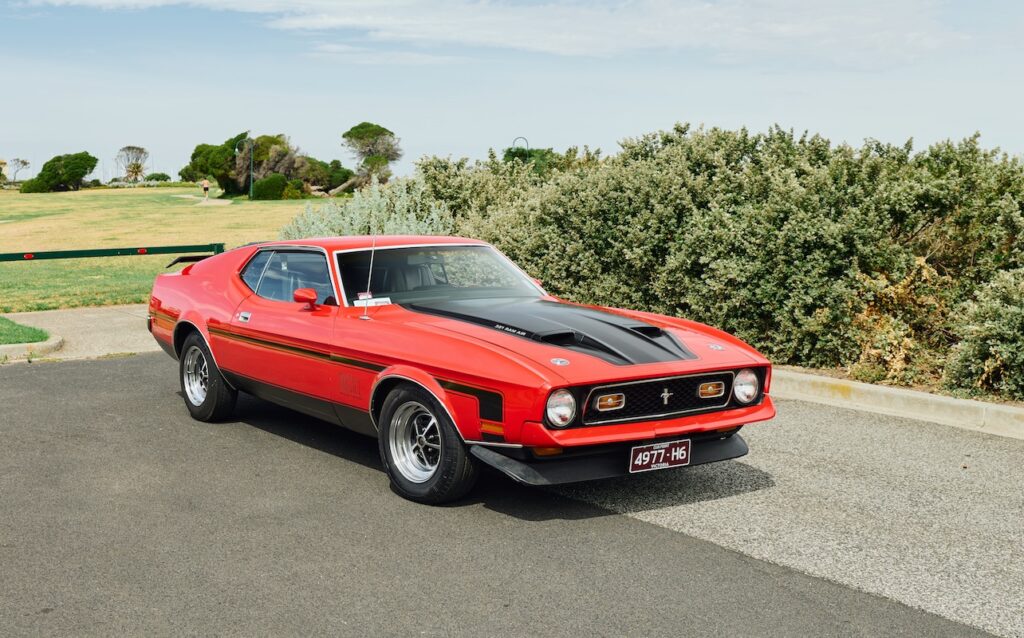
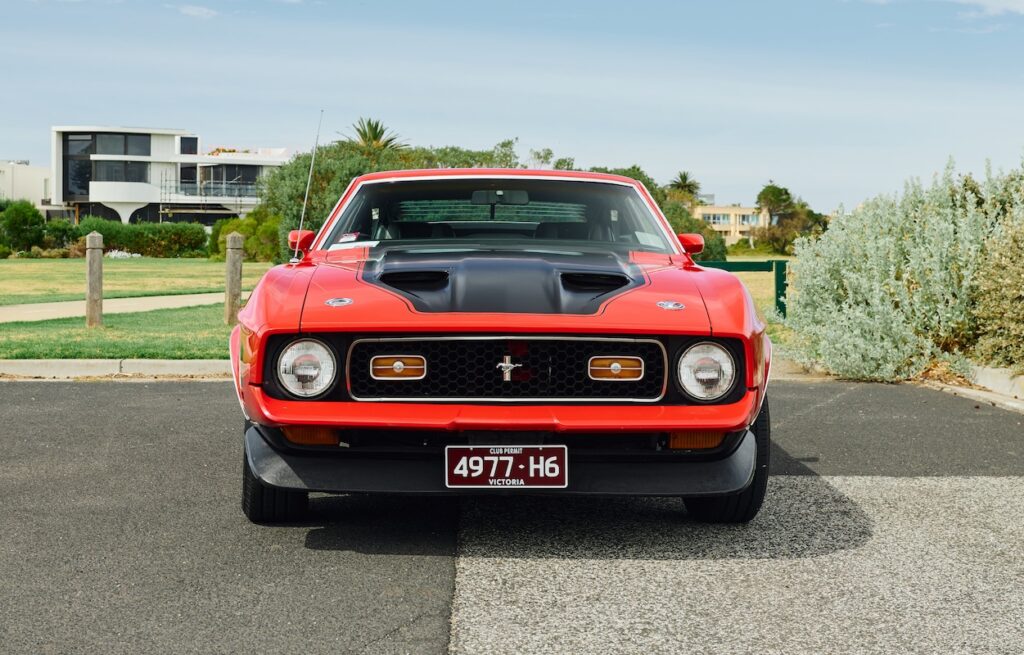

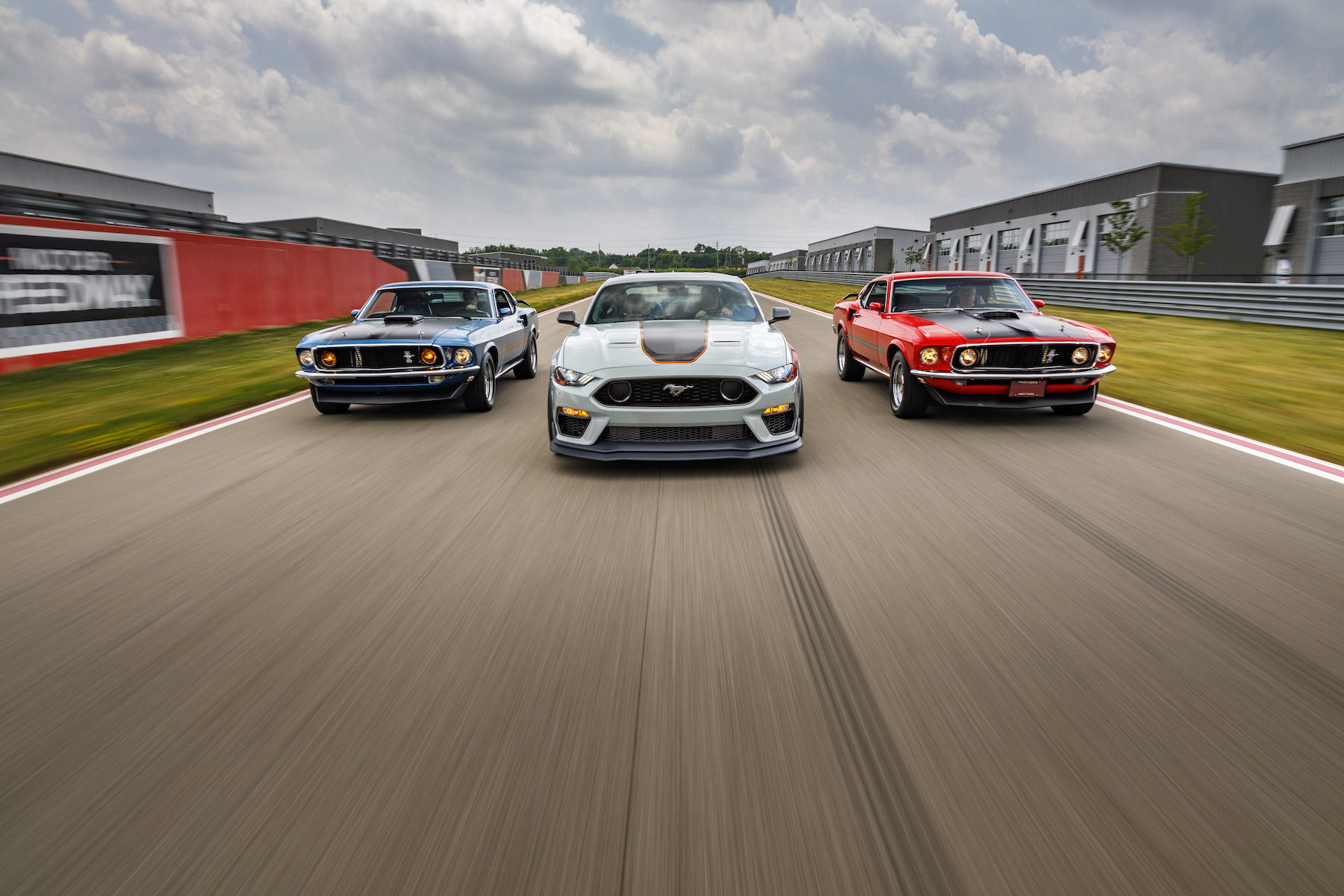
When you create a car that changes your nation but then the nation moves on without you, something about the car needs to change as well.
In 1964, Ford challenged America’s automotive perceptions with its wildly successful Mustang, a stylish coupe based on humble underpinnings that helped make it both relatively affordable and hugely desirable.
Four years later, America was a different place and the Mustang was no longer a trend setter, but it wasn’t giving up that easily. The New Mustang that swamped US Ford dealerships in September 1968 sat on the same 2745mm wheelbase as the original but was 100mm longer and 35mm wider than the car it replaced.
Three body styles were available – the sports coupe, convertible and new Sportsroof fastback. All could be Big Block V8 equipped thanks to enlarged engine bays to allow the biggest of Ford’s production engines to be more easily installed.
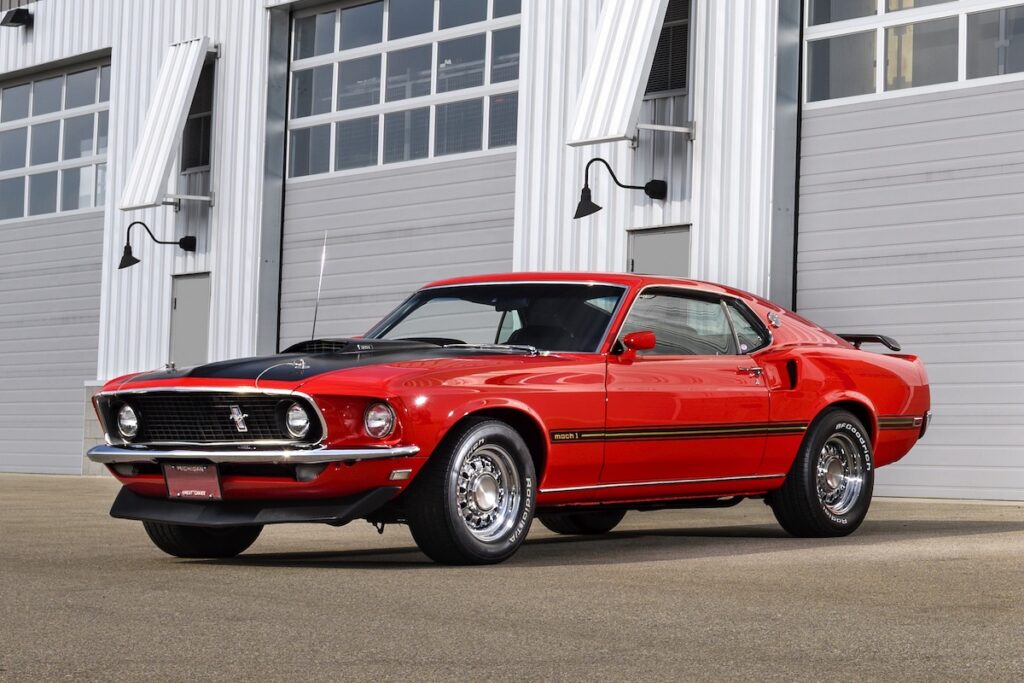
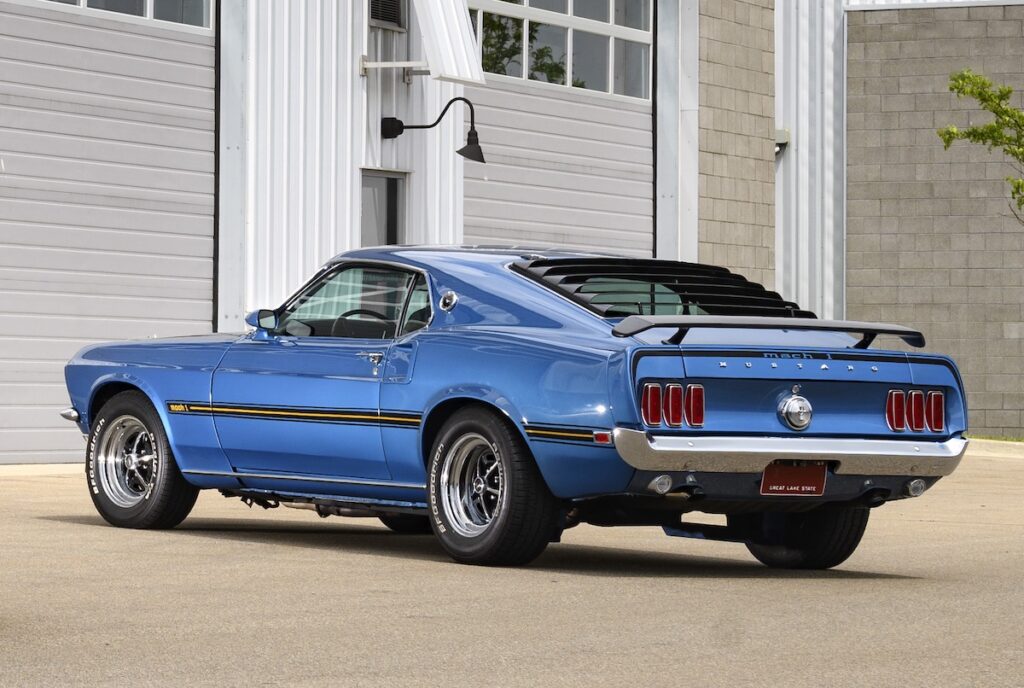
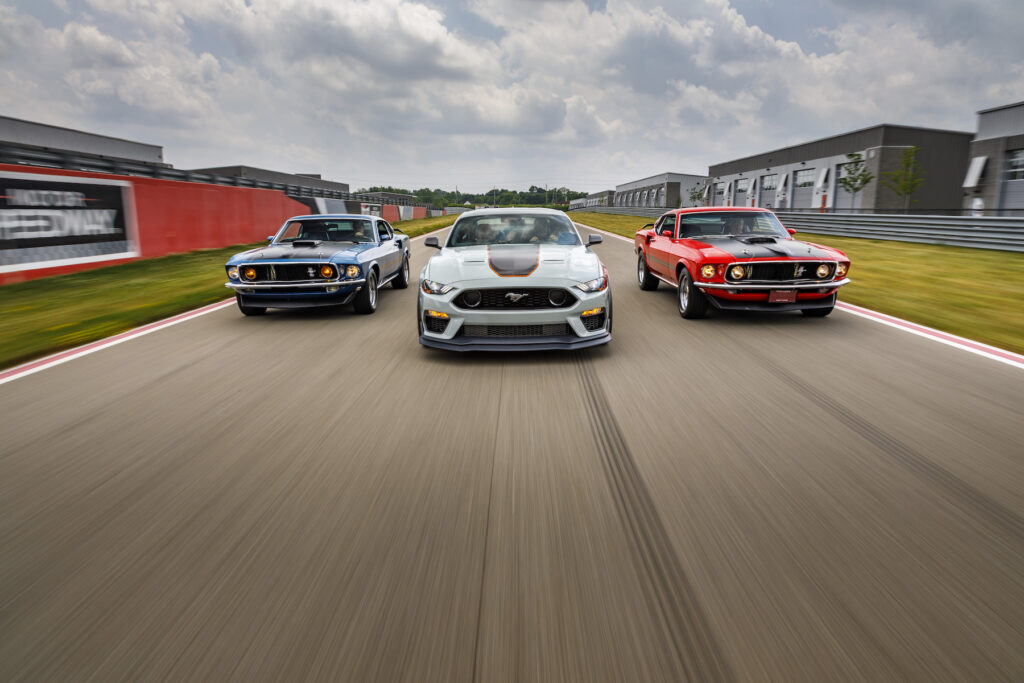
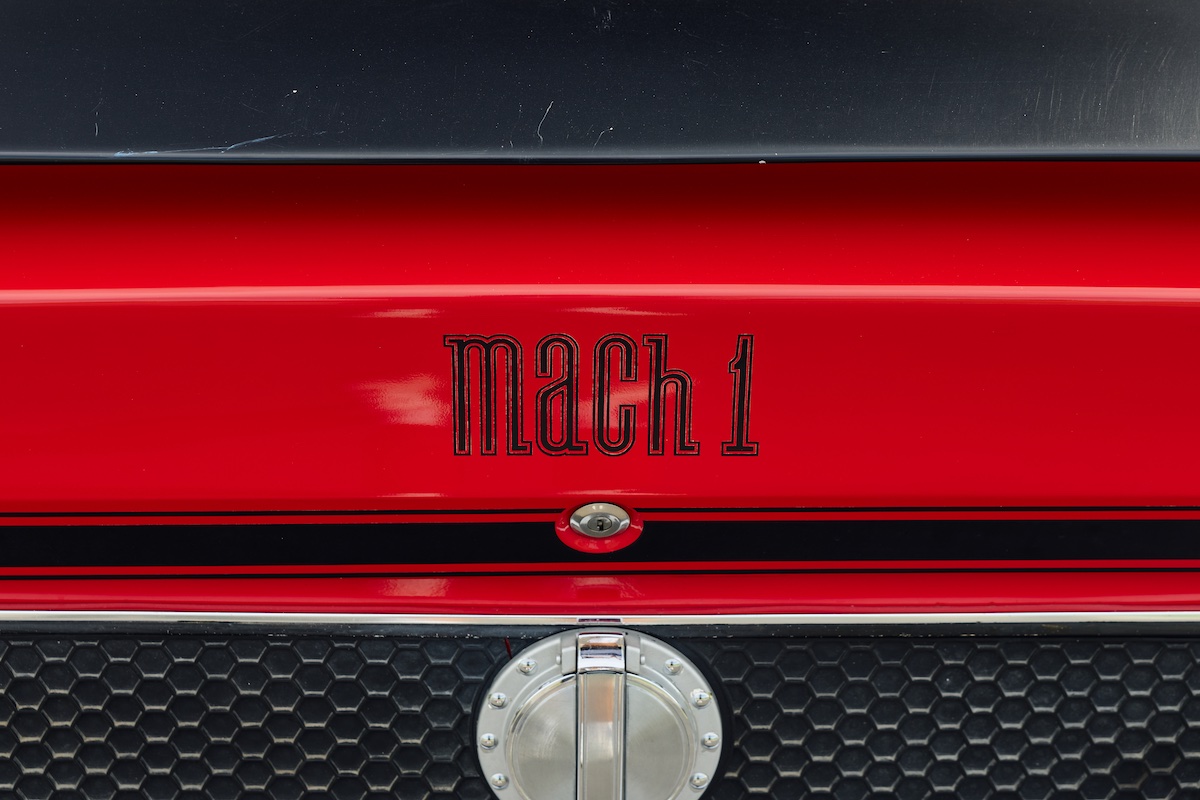
New names helped position various models in the 1969 Mustang range: Grande for the luxury version, Boss 302 and 429 for competition cars, and Mach 1 for a new everyday muscle car.
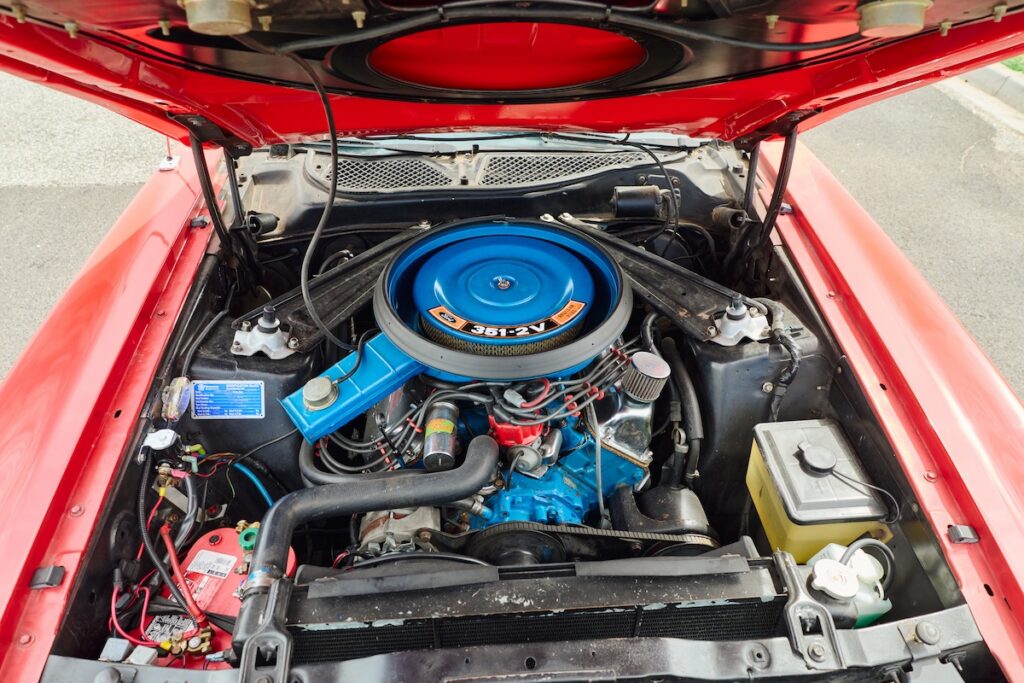
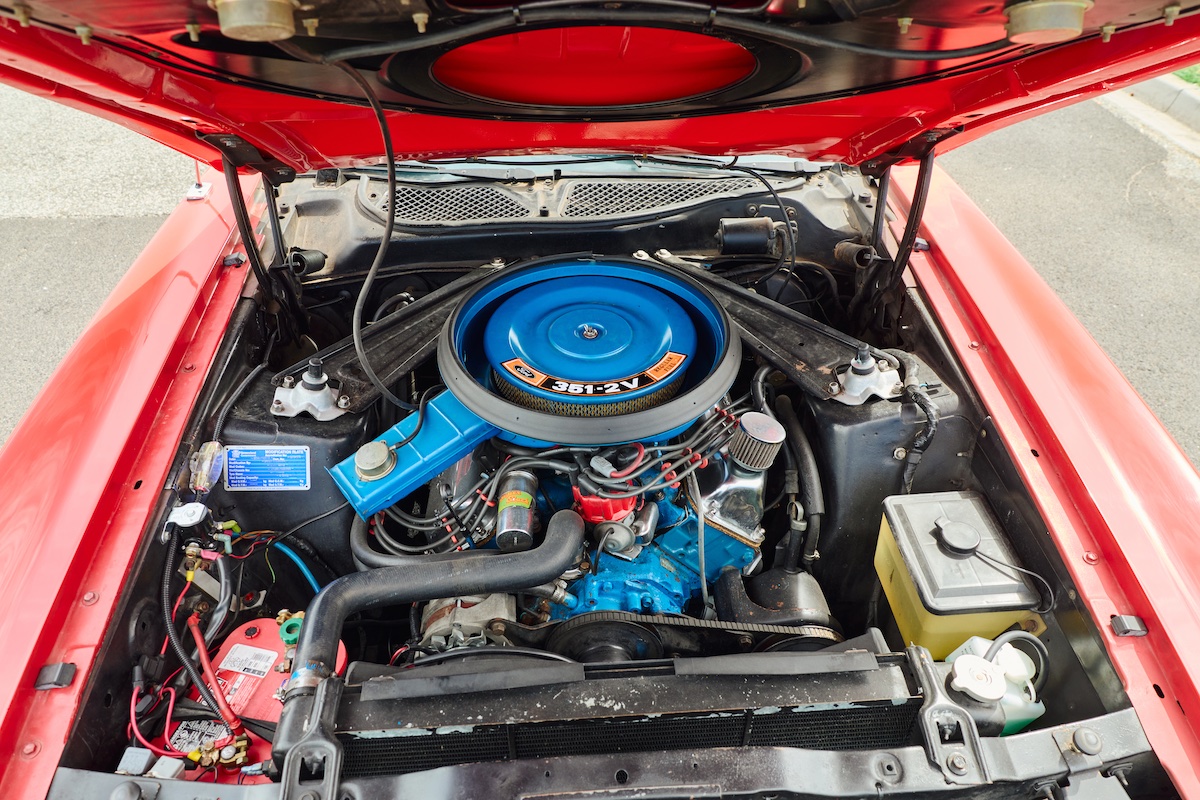
In basic form, the Mustang Mach 1 cost roughly US$3122 which was just US$500 more expensive than a six-cylinder coupe, but came standard with a 5.8-litre (351-cubic inch) V8 producing 168kW along with a three-speed manual transmission, power assisted front disc brakes and bias-belted tyres on 14-inch steel rims.
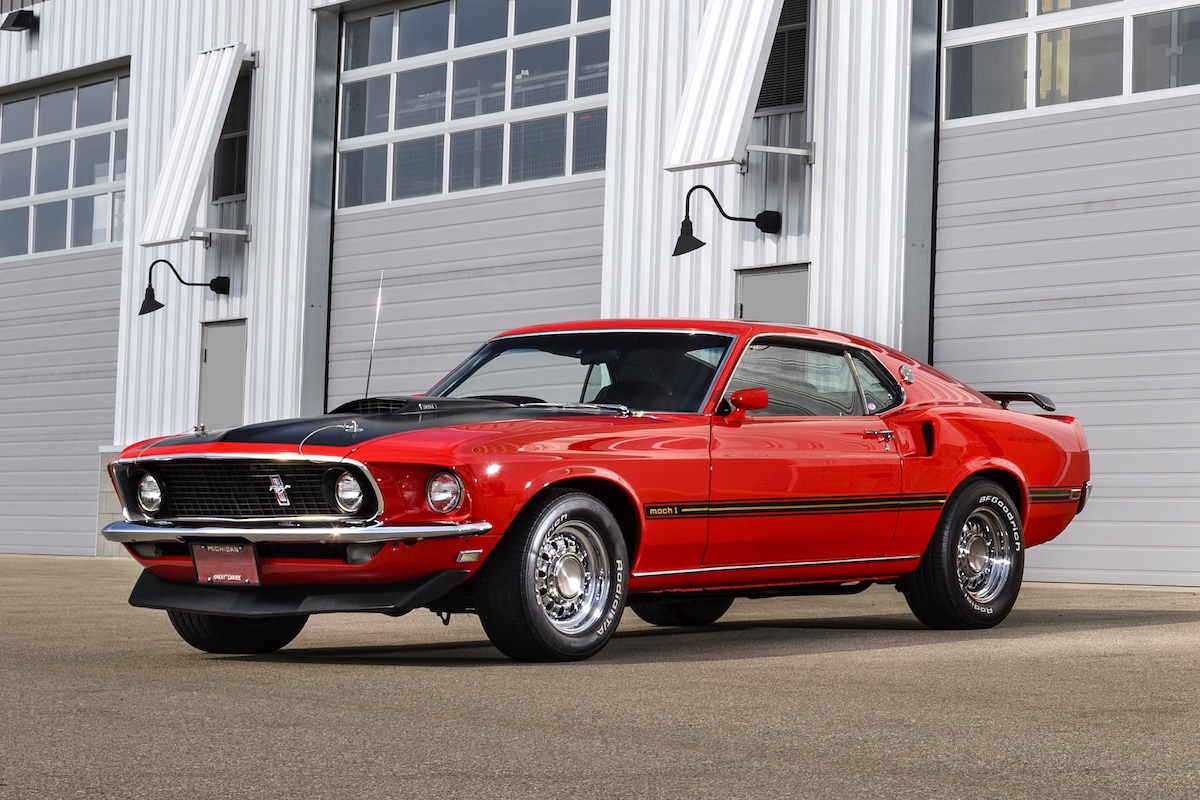
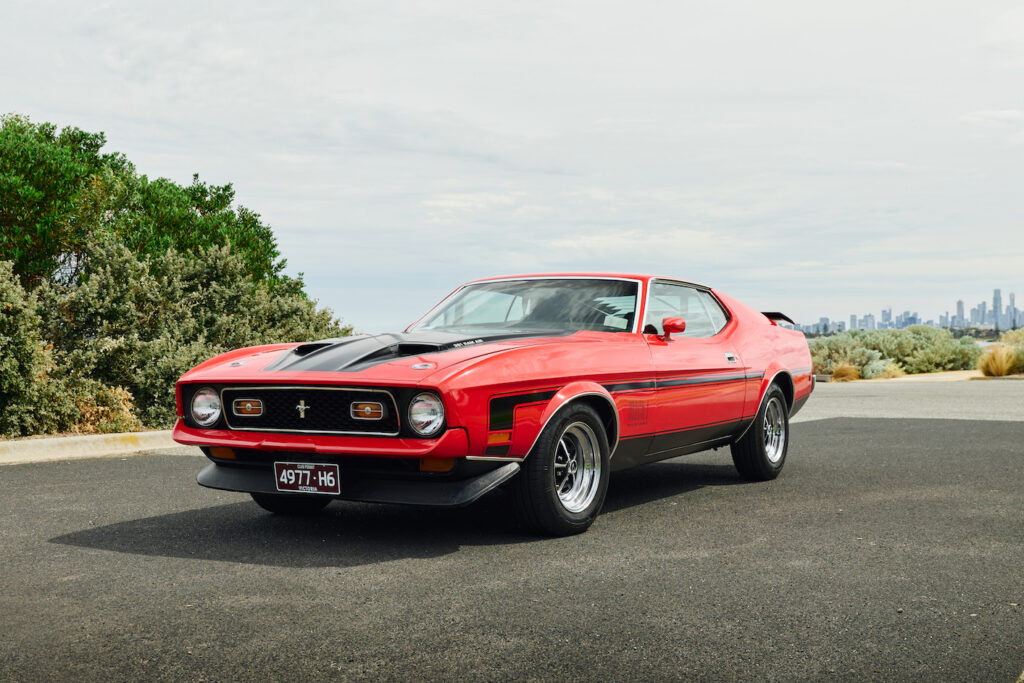
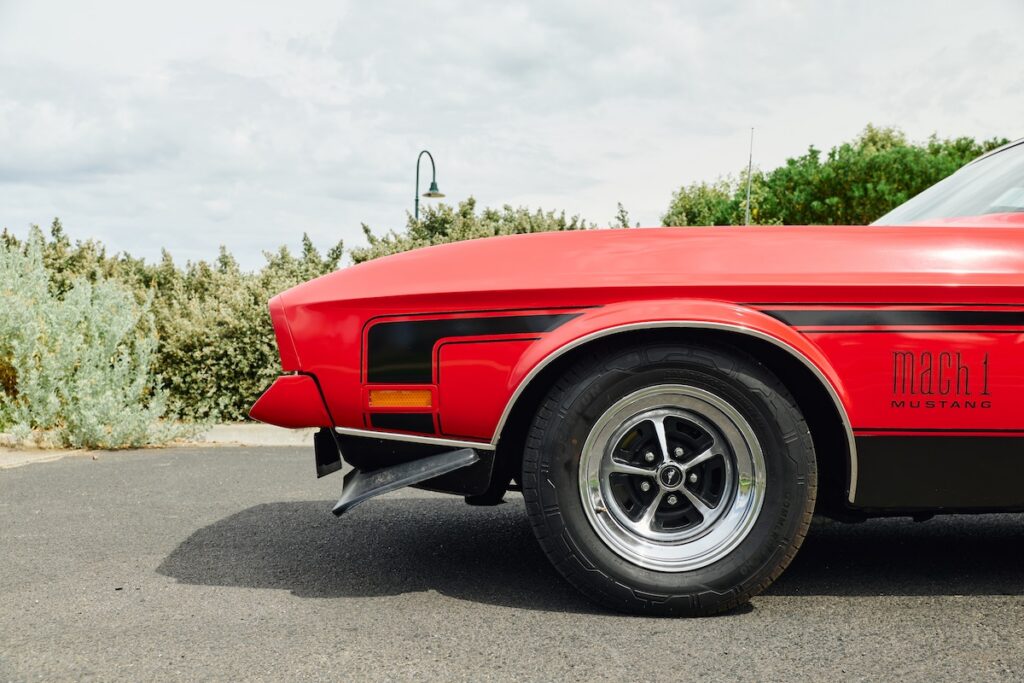
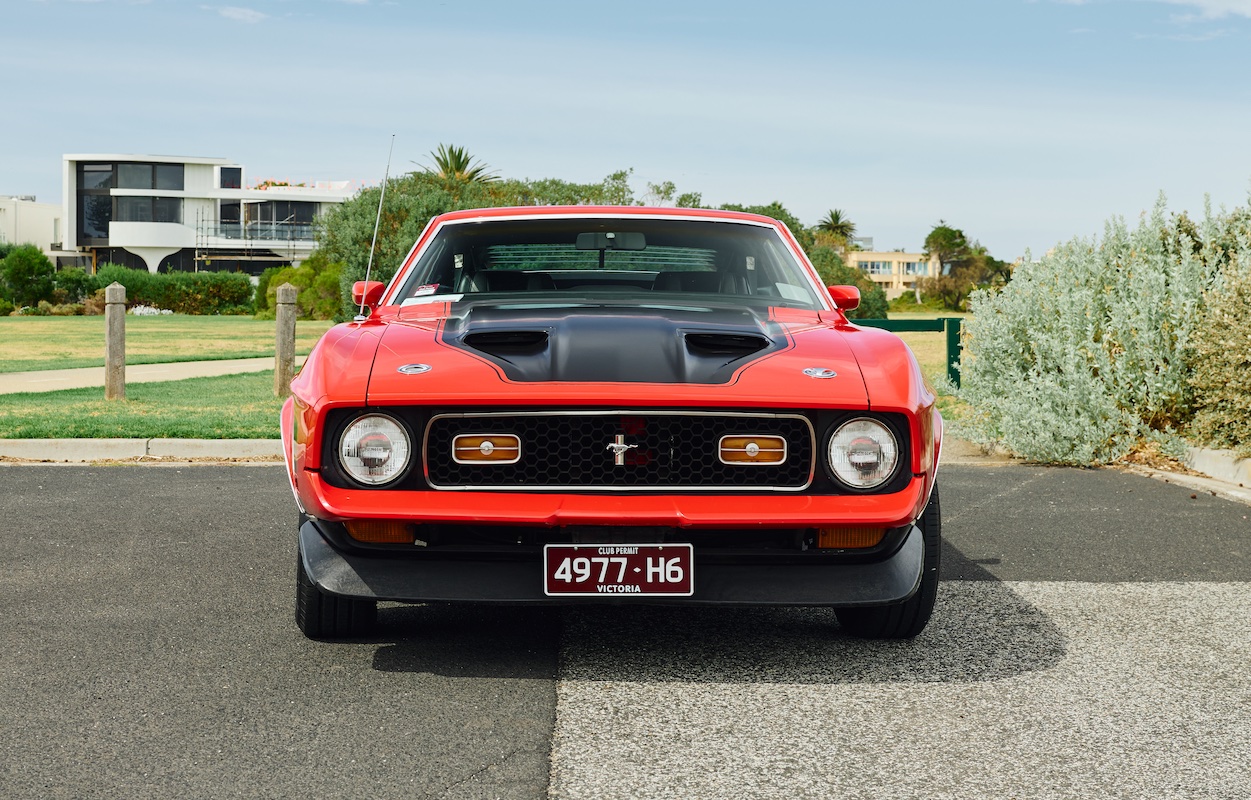
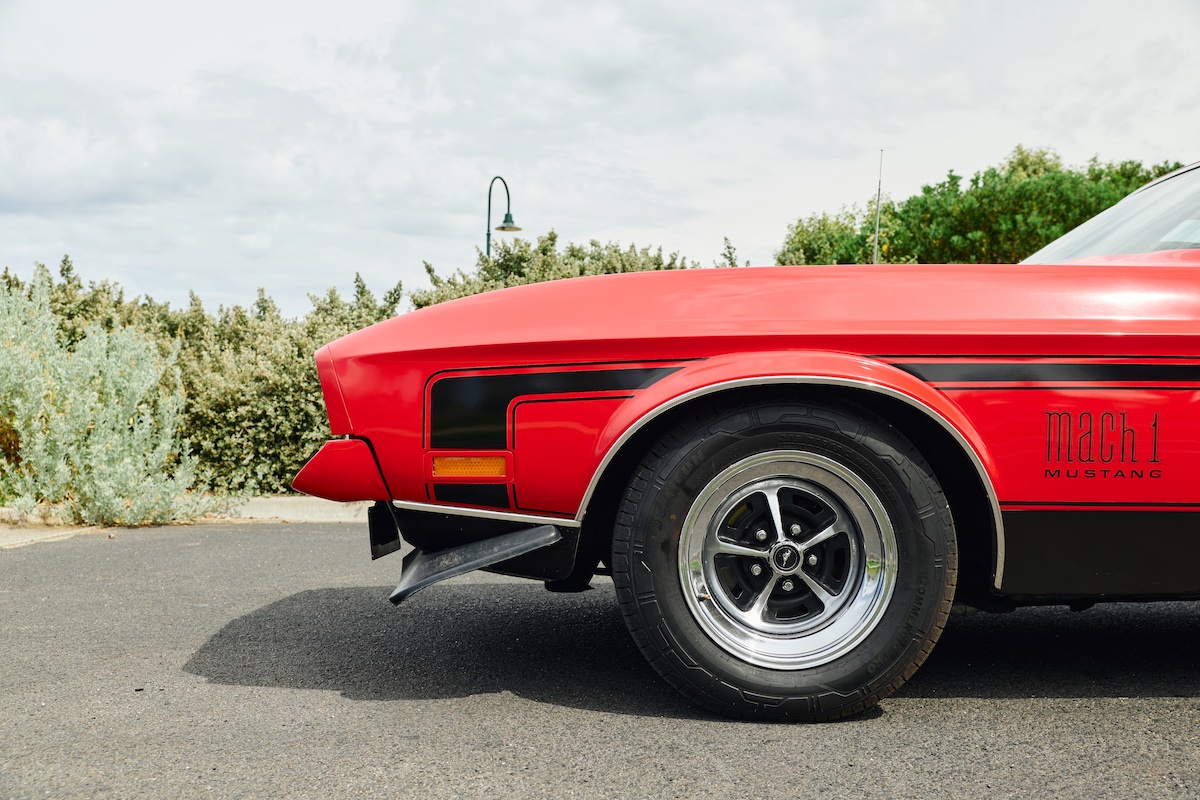
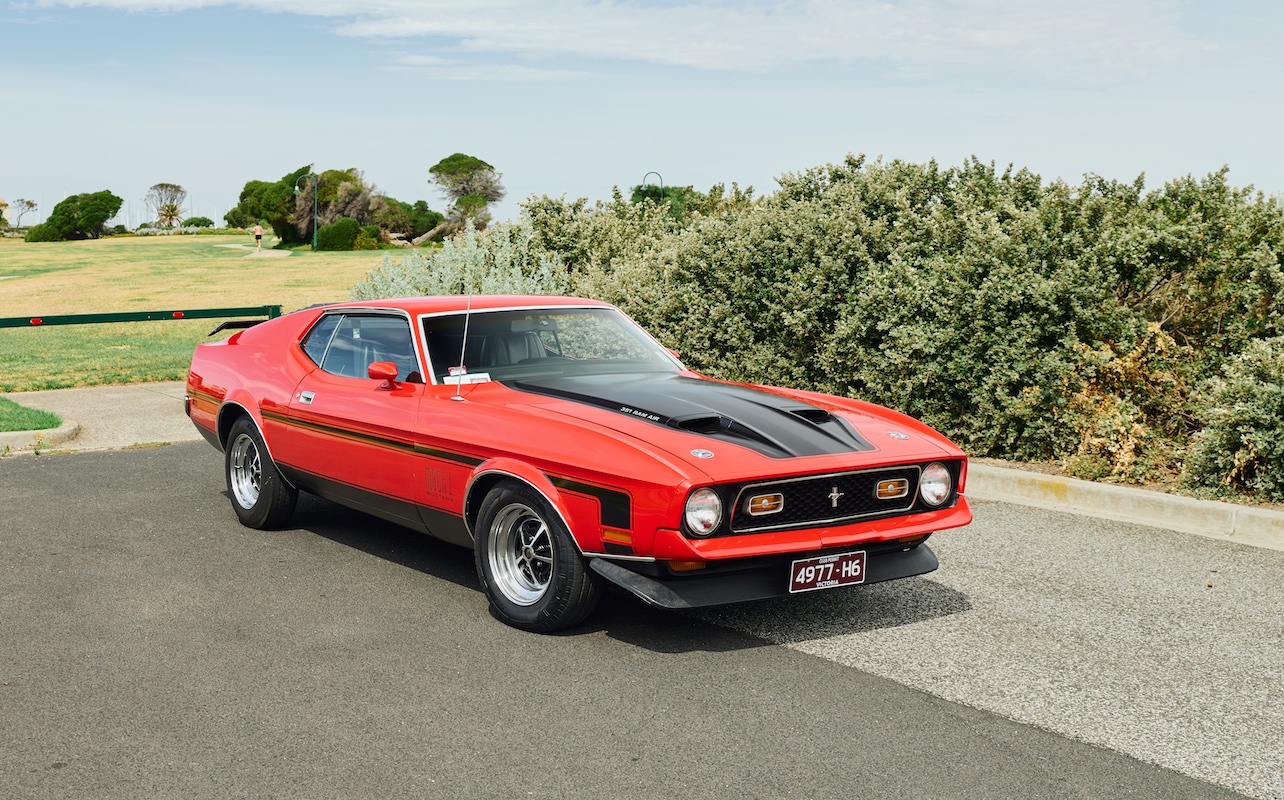
Making the performance version stand out from the crowd were stripes and blacked-out body panels, a unique grille, body-colour mirrors and 12-slot steel wheels with ‘dog dish’ hubcaps.
Spending a measly US$24 on upgrading to the ‘4V’ (four barrel) version of the 351 delivered 30kW of extra power (reaching 216kW), while adding a four-speed top-loader manual transmission cost US$205.
Optional engines for 1969 and 1970 were the ‘police spec’ 390-cubic inch (6.4-litre) four-barrel and the 428 cubic-inch (7.0-litre) Super Cobra Jet. The Cobra Jet notionally delivered 250kW (335hp) and 596Nm (440lb-ft) but these figures were purposefully underrated by Ford to appease insurance companies, with real-world performance often exceeding 400-plus horsepower.
Mach 1s weren’t an uncompromising performance car in the manner of the Boss 302 or 429, but they obviously hit the spot with US enthusiasts as sales during its first year in the market topped 72,000 units.
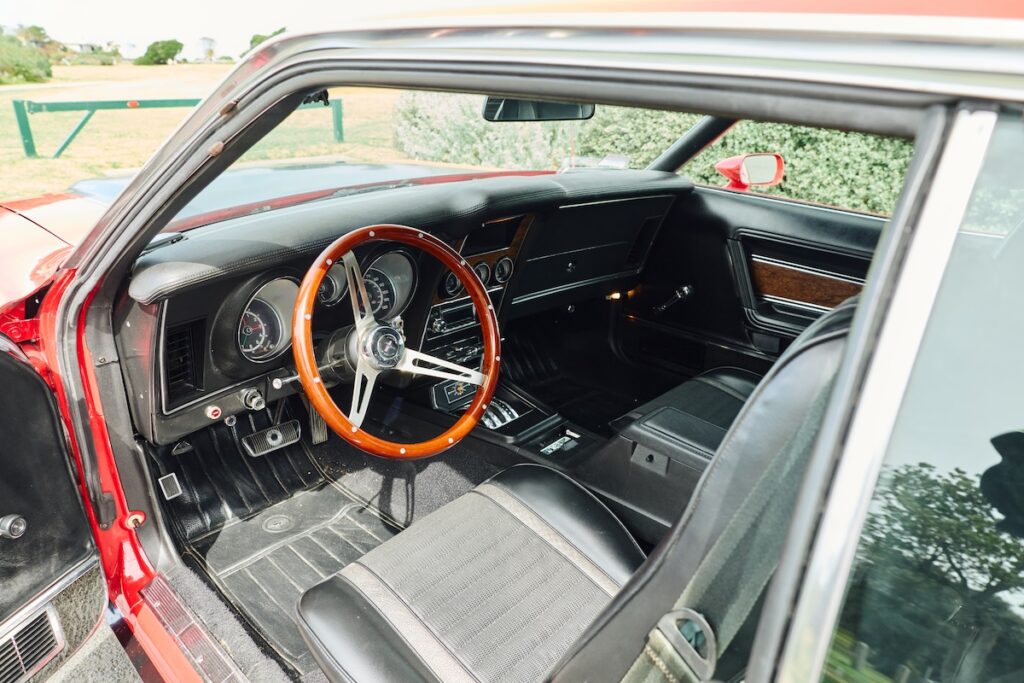
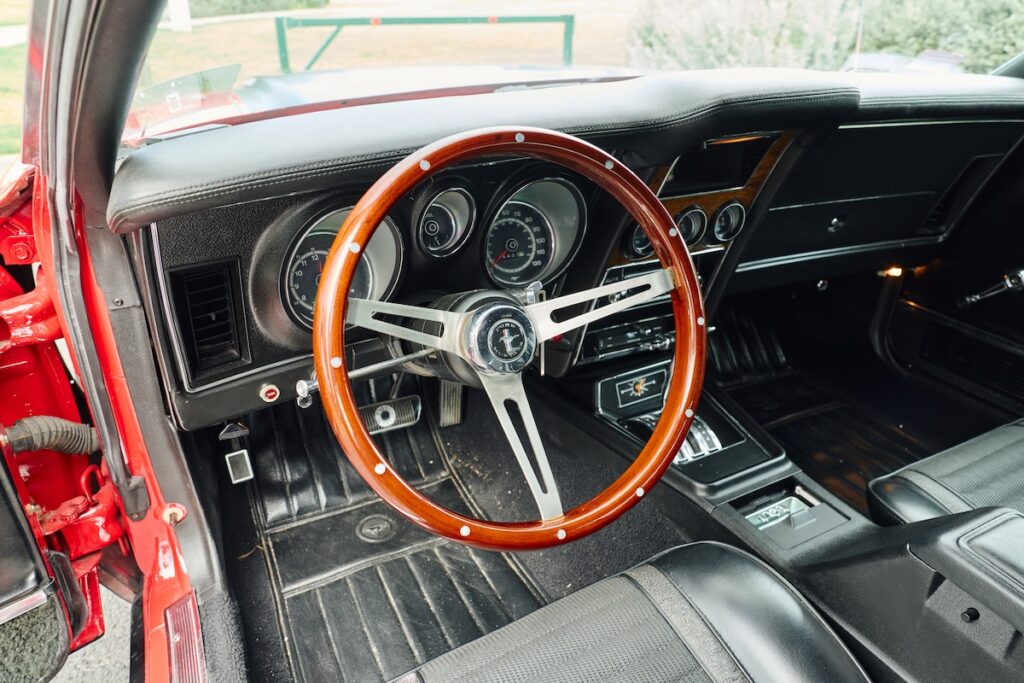
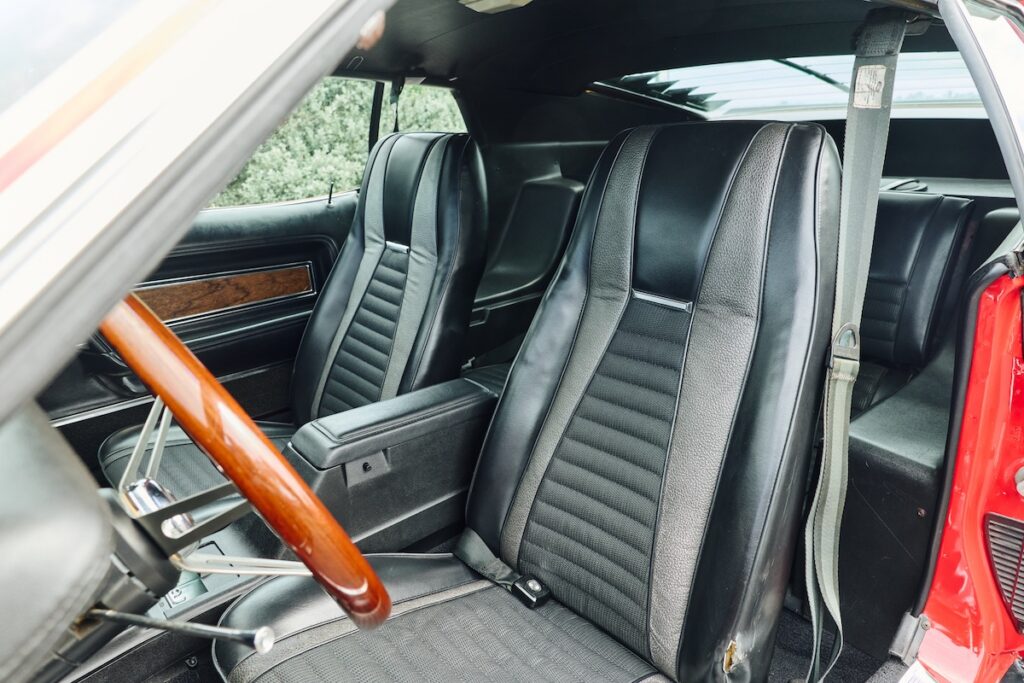
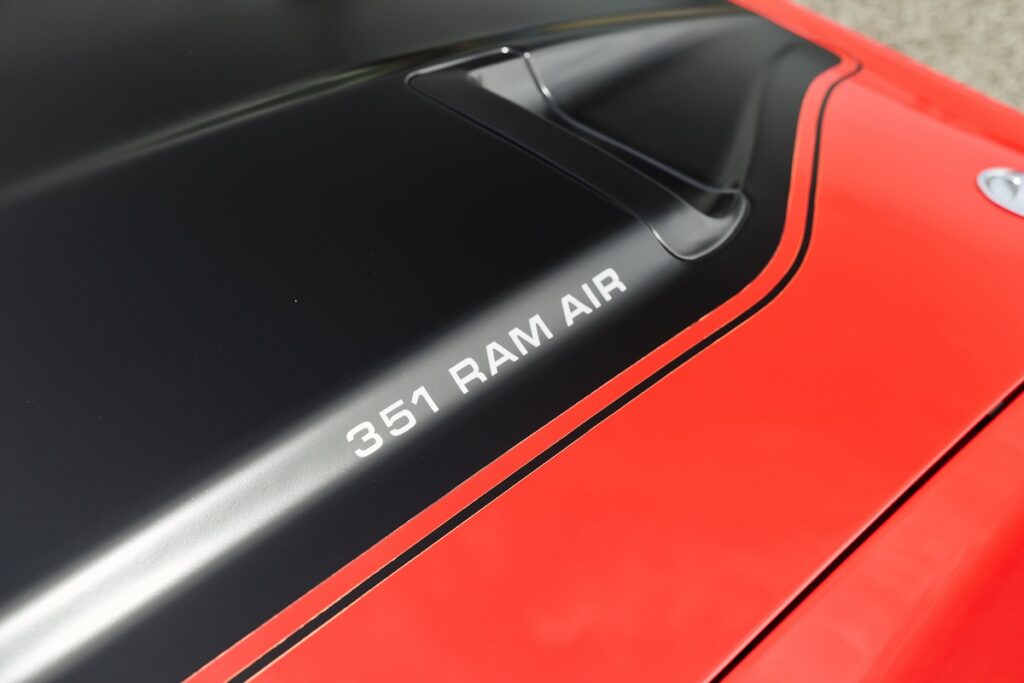
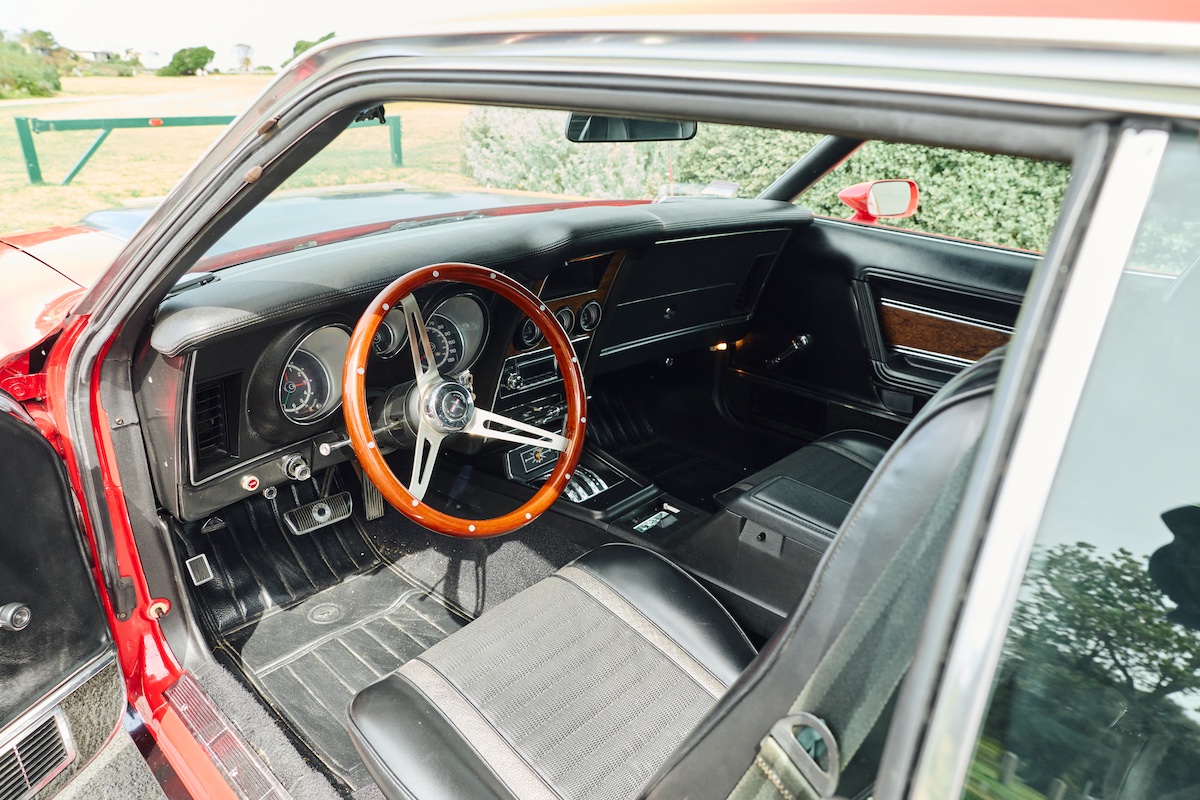
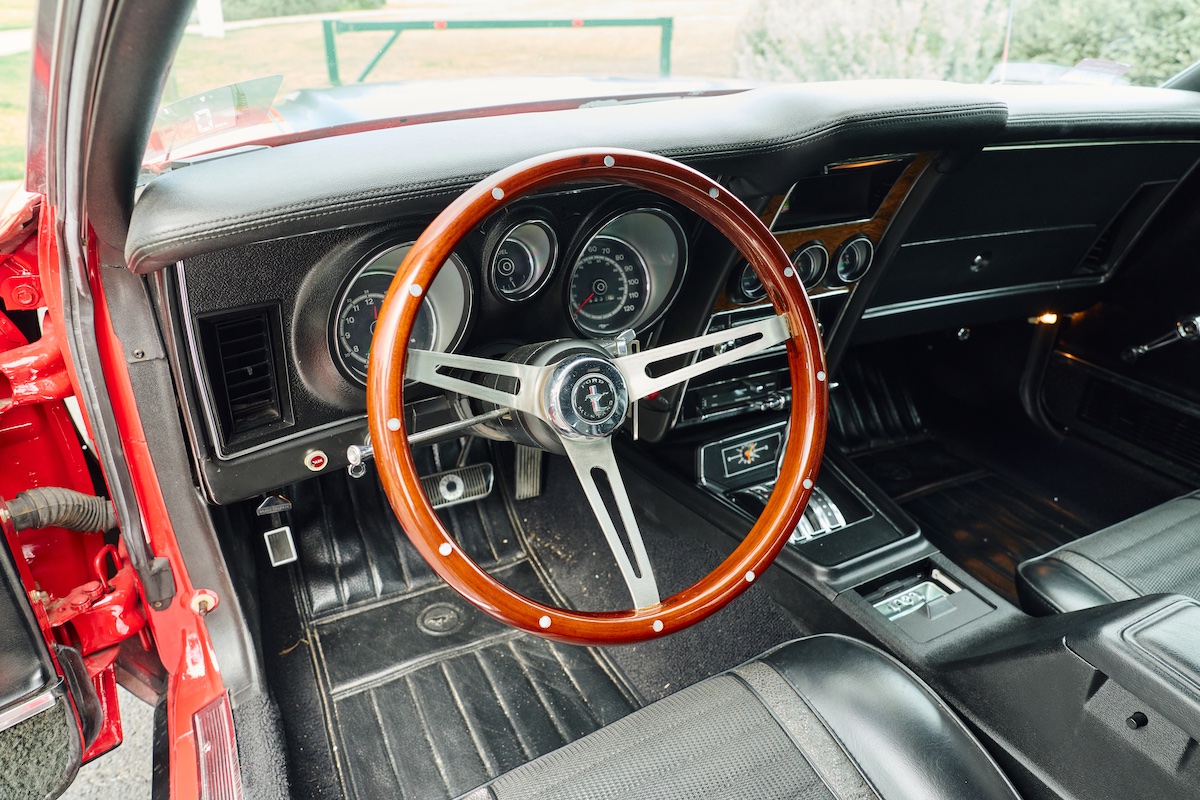
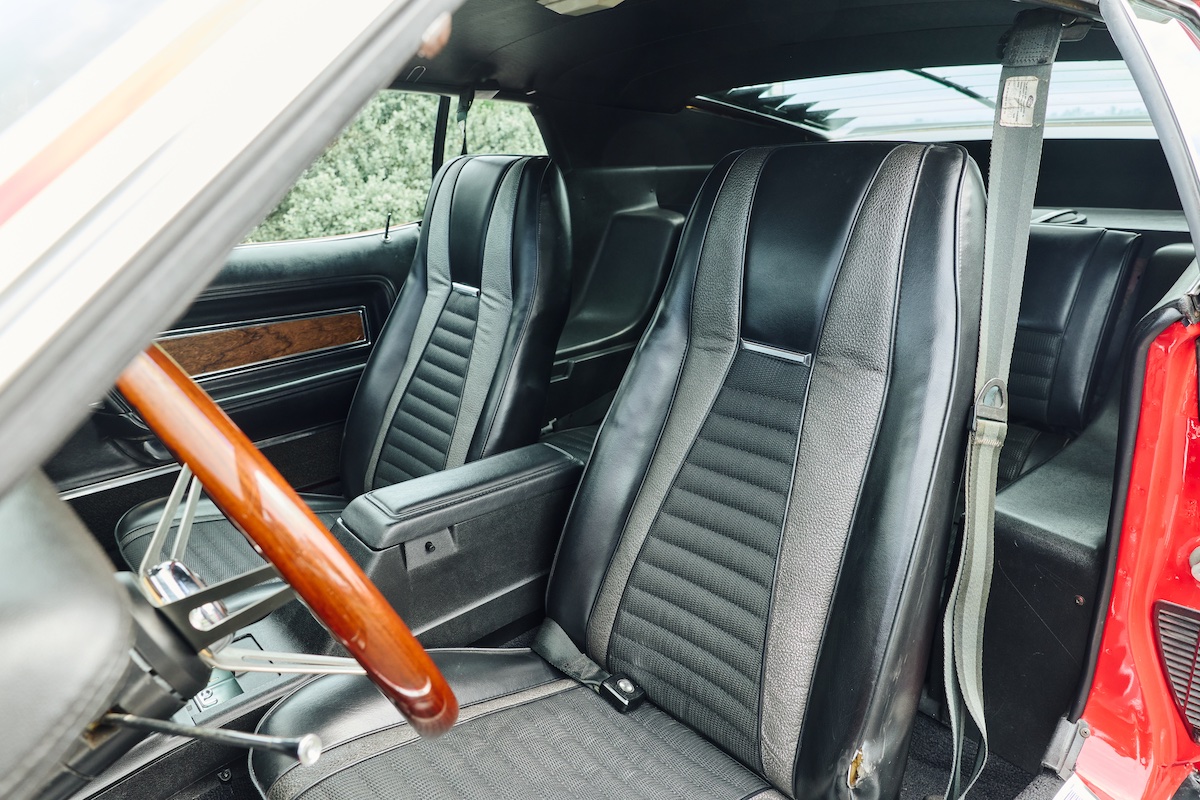
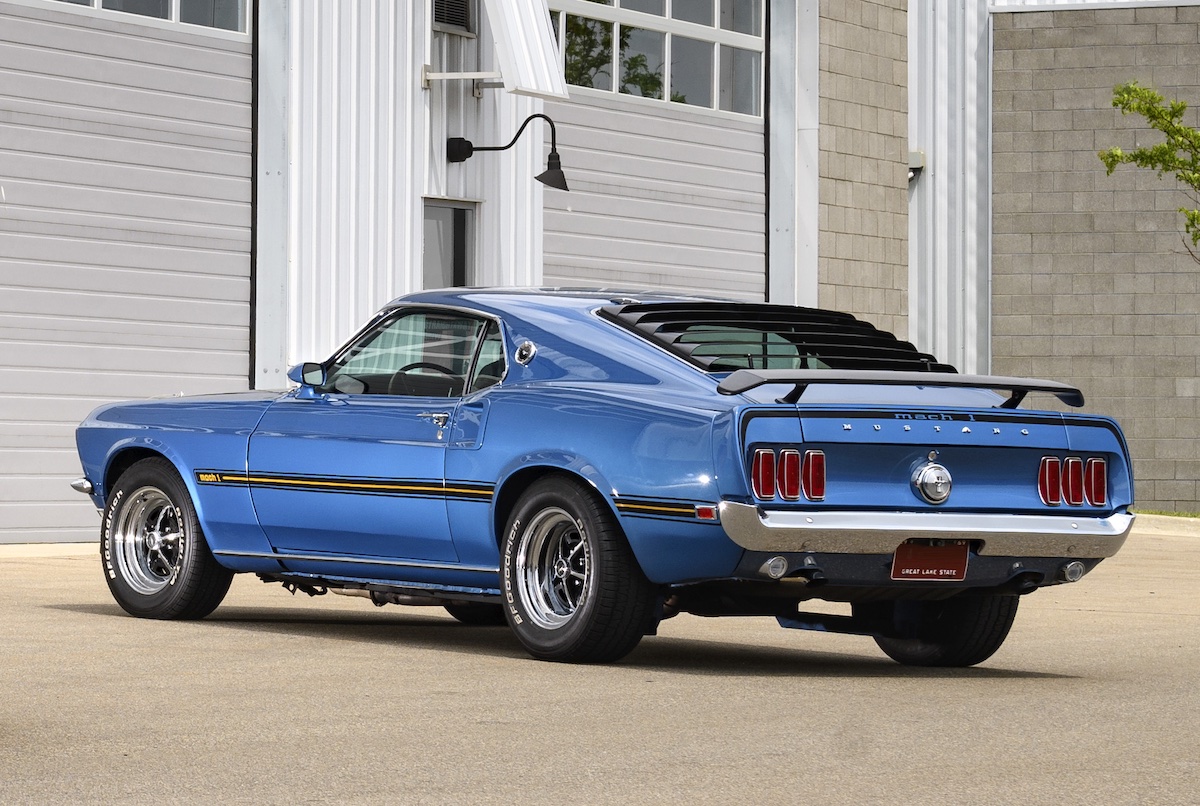
Minor changes for the 1970 model included reshaping of the nose and tail panels and improved seats. A ‘rim blow’ steering wheel – featuring a soft rubber ring embedded inside the rim that activates the horn, as fitted to local Falcon GS and GT models – was now standard, with a distinctive ‘Shaker’ air intake on Cobra Jet versions.
The price of a Mach 1 rose just $122 on where it had been a year earlier to US$3240 but sales dropped dramatically to an annual total of 40,270.
Almost certainly, this decline had less to do with the car itself than the combative nature of the American vehicle insurance industry, which during 1970 would introduce more stringent underwriting rules and higher premiums for performance cars.
With the familiar Mustang shape now well overdue for replacement, 1971 brought a brand-new design, created by members of the team which had produced the original.
Under the direction of Gale Halderman, who is credited with penning the timeless shape of the original Mustang, the new generation car was aimed at a market which was showing a liking for bigger cars with more presence and power.
This new Mustang in all its forms was longer, wider and lower than the preceding car, on a wheelbase that was 25mm longer as well.
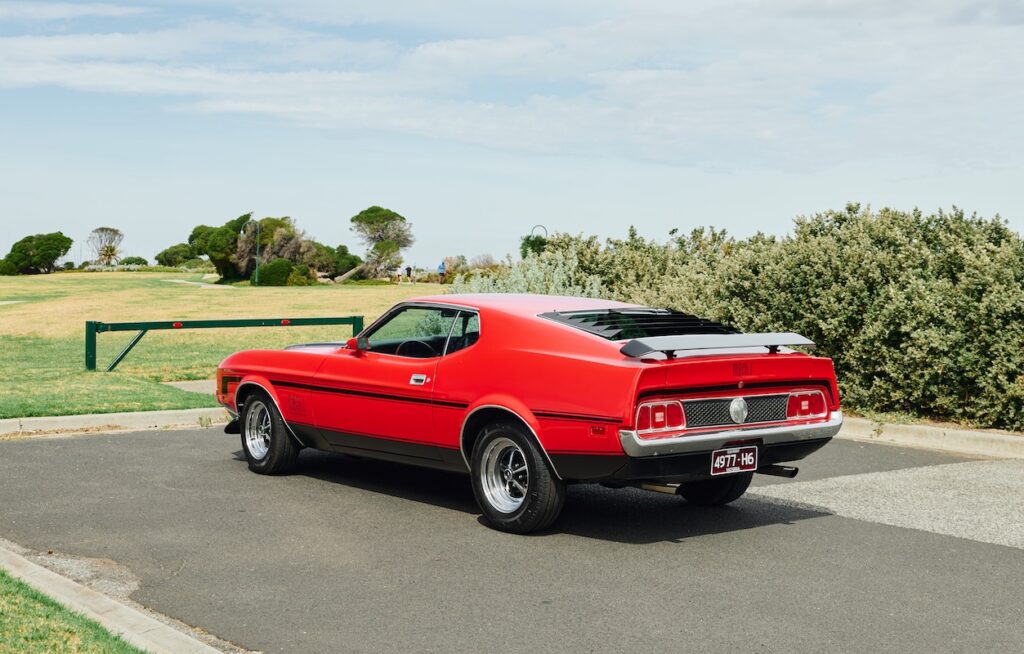
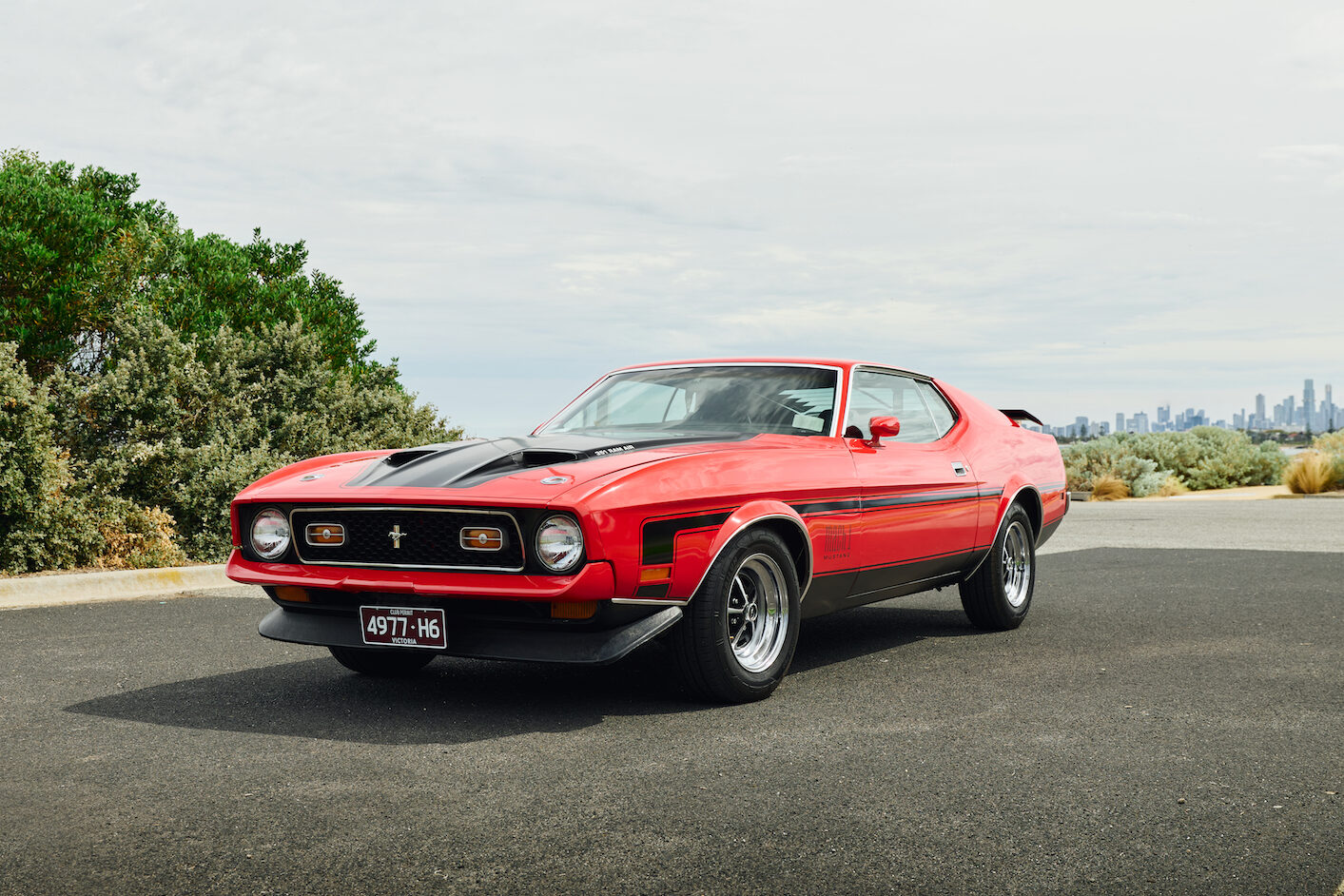
Mach 1s were gifted a dramatic new Sportsroof design that echoed the shape of the Ford Torino GT, which in 1968 had replaced the drab-looking Fairlane GTA and went on to sell an impressive 172,000 units that year.
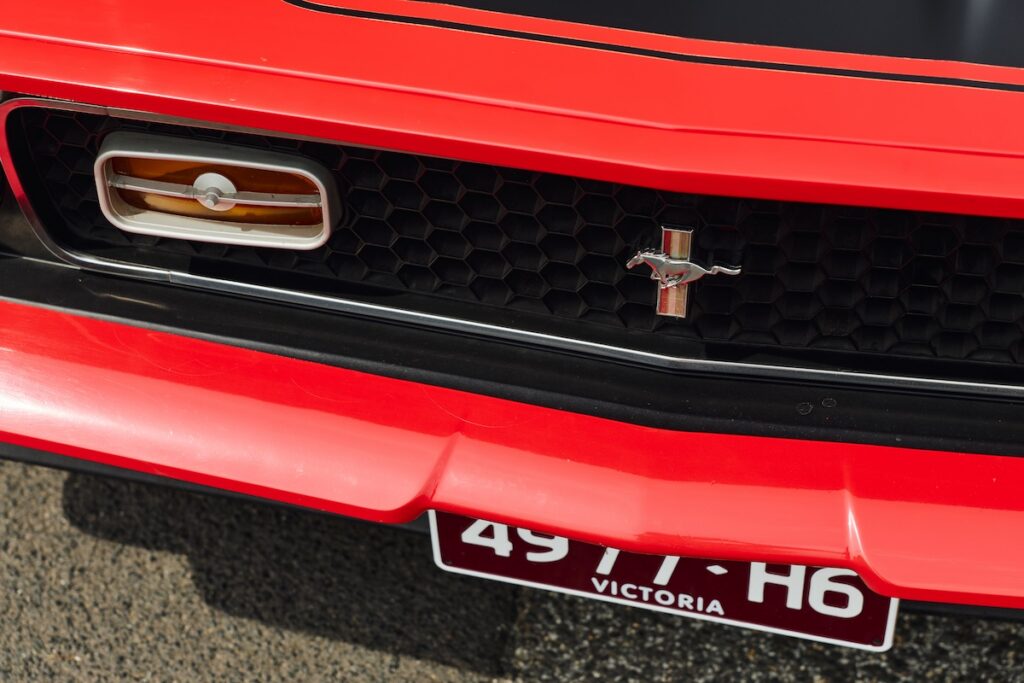
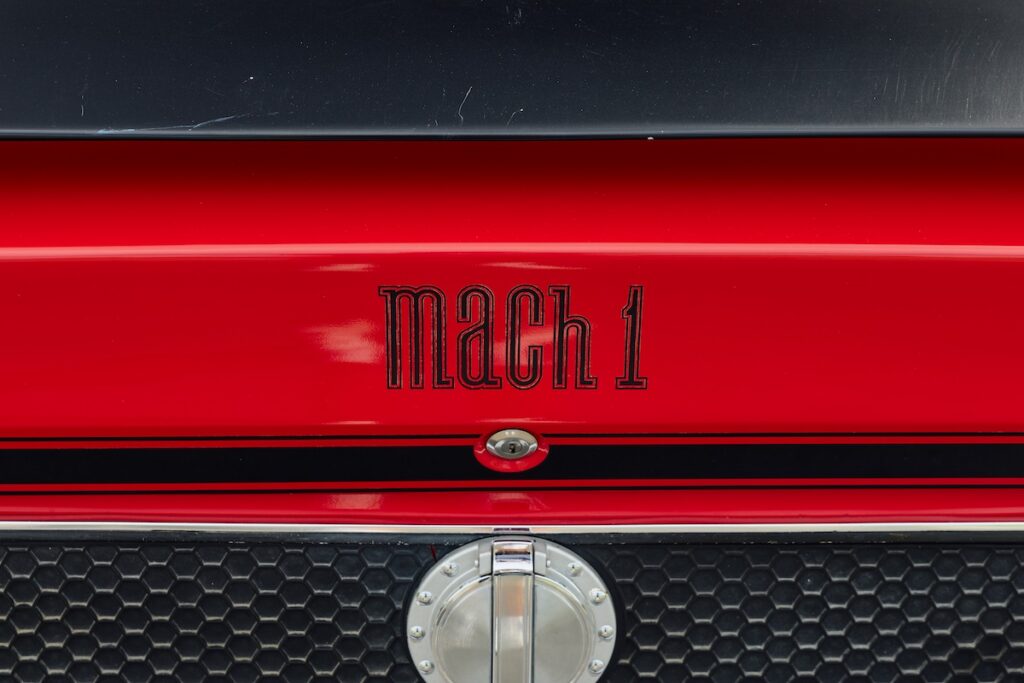
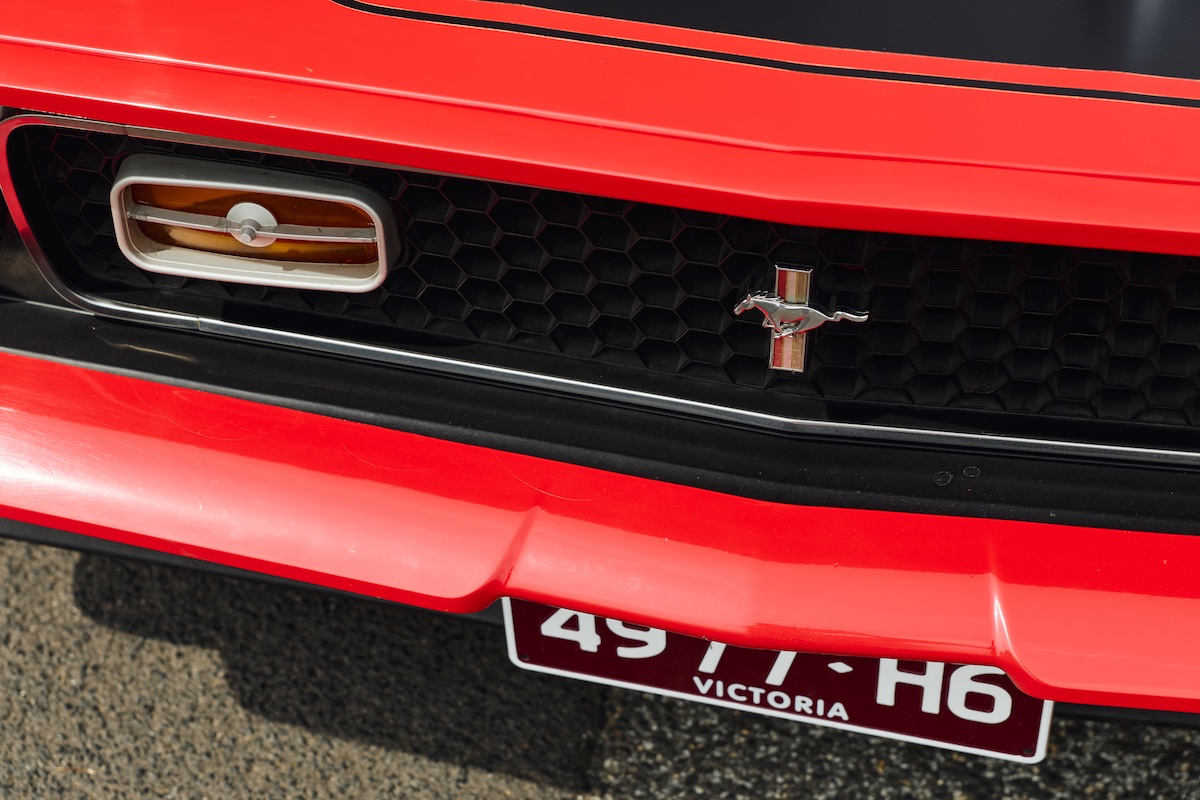
The Mustang’s rear window was virtually horizontal and more suited to observing passing aircraft than approaching traffic. The nose also changed significantly, with a honeycomb grille and new badging plus a urethane bumper to comply with new 5mph ‘no damage’ crash rules.
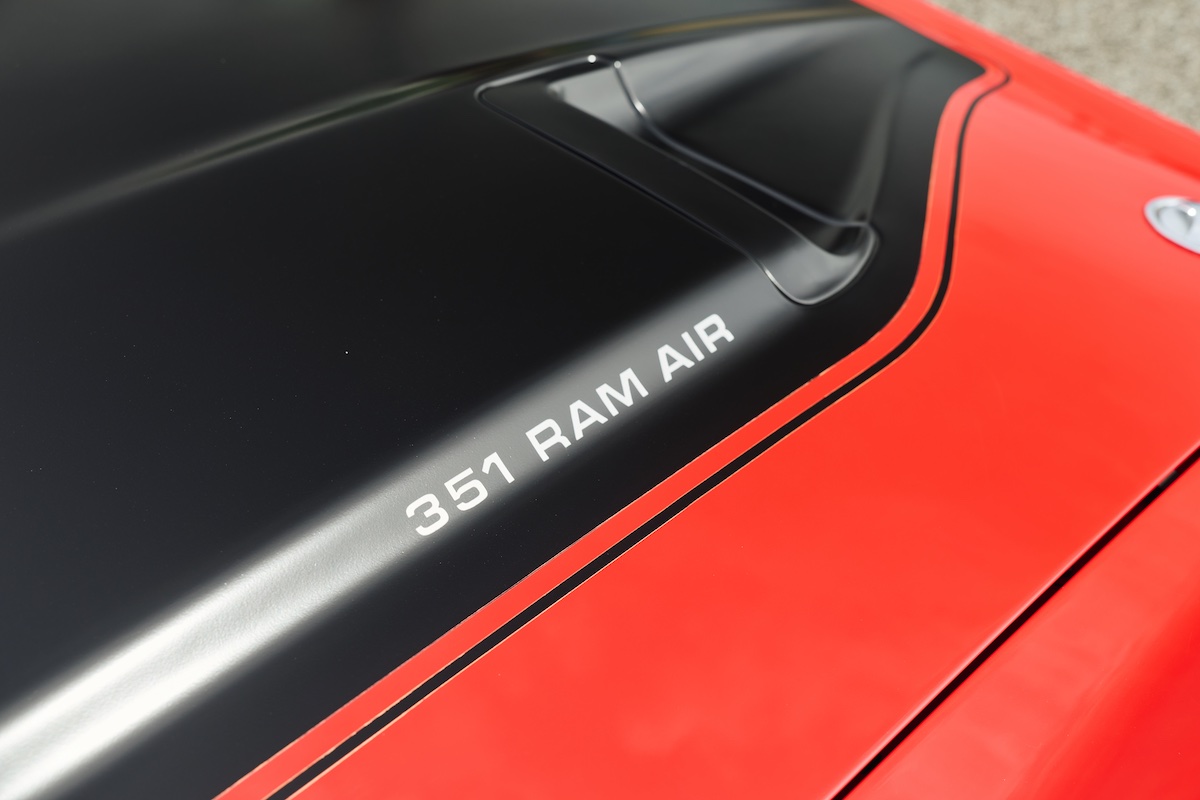
The Shaker bonnet scoop disappeared and was replaced by three different bonnet (hood) designs including one with twin NART ducts feeding a reshaped Ram Air intake. The base Mach 1 engine had by this time become a 4.9-litre (302-cubic inch) V8 but with a variety of 5.8-litre Cleveland motors as options.
Above these but only available for 1971 was the 429-cubic inch SCJ (Super Cobra Jet) V8. It was claimed to produce 279kW (375hp) and 610Nm (450lb-ft). Its status as part of Ford’s Drag Pack option endowed it with such high-performance fare as reinforced internals, solid lifters, a Holley 780-800 CFM carburettor, and a four-bolt main block.
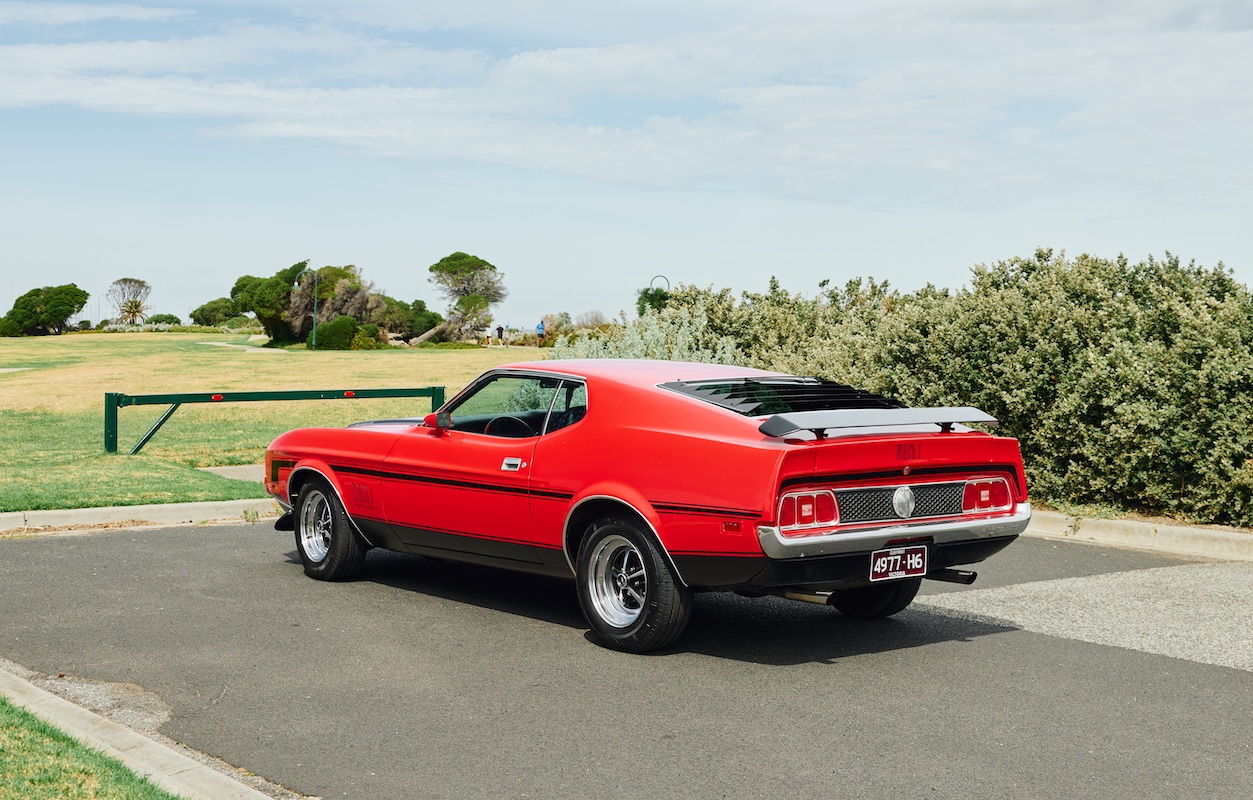
Super Cobra Jet’s with the SCJs with four-speed manual transmission are a scarce car and have topped US$100,000 at auction, with three-speed automatic cars running the same engines US$30-35k cheaper.
Any 1971-73 Mach 1 Mustangs seen in Australia will typically have 351-cubic inch engines, in 2V (two-barrel) or 4V (four-barrel) carburettor form, and usually with an automatic transmission. These cars as standard had a limited slip differential, rear leaf springs and staggered shock absorbers to help control axle tramp when accelerating.
Survivors from the batches of Mach 1s that arrived here as new cars will be fitted with factory options such as the sports interior, power windows and remote mirror adjustment. Air-conditioning was available in the USA but cars here would have been equipped with our more powerful Mark IV or Smiths A/C units.
All of this plus the cost of right-hand drive conversion added substantially to the cars’ cost while enhancing the exclusivity of owning a Mustang.
A Mustang Mach 1 tested by a local motoring magazine in 1971 was quoted as costing $14,000 including the conversion, which would have bought a Porsche 911S or three Falcon GTHOs at the time.
That car was one of four 1971 model Mach 1s imported by Sydney-based Peter Warren Ford, but it’s likely other Ford dealers were doing the same at the time.
Ford Australia had been known to import various US models for ‘evaluation’ but on only two occasions did it get involved in large scale local sale of Mustangs. The first was late in 1965 when about 200 cars – all V8-engined coupes – were converted at the Homebush (NSW) assembly plant and allocated in small numbers to major dealerships. These cars sold very quickly and survivors are occasionally still offered for sale.
The second and far less successful attempt came in 2001 when Ford and its performance partner Tickford went to extreme lengths to ‘Australianise’ an estimated 370-380 US-sourced SVT Cobra coupes and convertibles.
The cars were meticulously converted to right-hand drive by Tickford Vehicle Engineering, including reshaping the Mustang transmission tunnel to maximise footwell space, and came equipped with Ford’s 4.6-litre 32-valve V8, which produced a handy 240kW/430Nm and came with a five-speed manual or six-speed auto.
Such diligence came at significant cost though, and at $85,000 for the coupe or $89,000 for a convertible, the imported ‘Stangs were expensive and faced an uphill battle in the popularity stakes versus Holden’s reborn Monaro, which debuted around the same time and started form $56,990 for the 5.7-litre LS1-powered CV8.
Most Mustang Mach 1s in the market today will be more recent arrivals than the few that came here in the 1970s, and may be eligible for Concessional Registration, avoiding the need for costly conversion. Not only do left-hand drive cars generally cost less than their right-hand drive brethren, they’re also claimed to drive better when left in their natural state.
Naturally, left-hand drive Mustangs will also be easier to restore and maintain, thanks to having suspension, steering and interior parts identical to those sold aftermarket in the USA.
Among the downsides of the Mustang Mach 1 is poor visibility to the rear and both sides, so you need to aim the mirrors very precisely to avoid blind spots. Their massive doors can also be a hindrance in narrow parking slots too, something owners of Ford Falcon coupes will also have experienced. Their high-compression V8 engines also have a profligate thirst for 98RON premium fuel, which is gulped at a rate of 18L/100km.
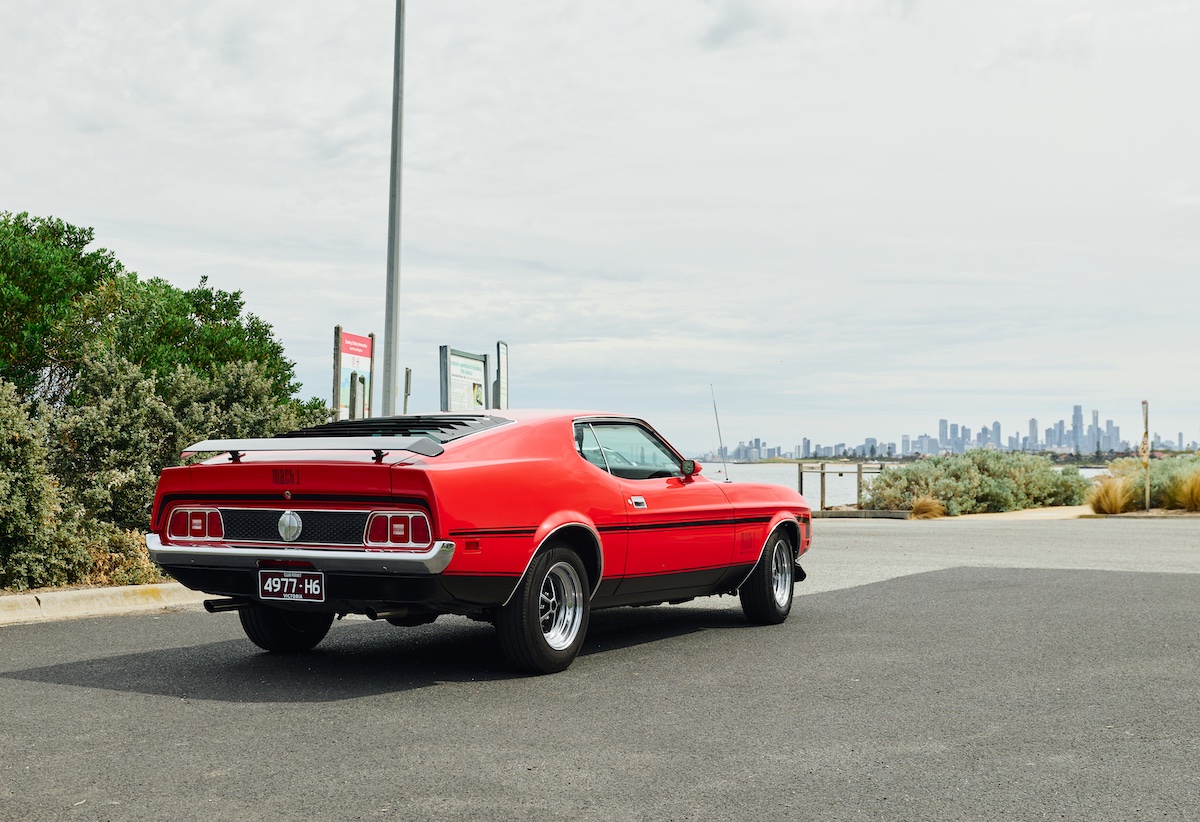
Things to Watch Out for When Buying a Used Ford Mustang Mach 1 (1969-73)
- Rust in the boot due to water entering through damaged seals. Also check the lower rear quarters and front mudguards.
- Doors that are hard to close due to hinge wear (new hinges are readily available).
- When looking at convertibles, watch and listen when the top is being raised and lowered, checking for untoward noises or shuddering. Also look for worn patches in the fabric and split stitching.
- Oil leaks from cylinder heads, valley gasket and oil pressure sender.
- Worn shift-linkage bushings that show up as difficult gear selection.
- Clunks and creaks from the front suspension which may be caused by worn ball joints or control arm bushings.
- Faulty fuel gauges that give false readings or don’t work at all, usually due to a failed sender unit in the tank.