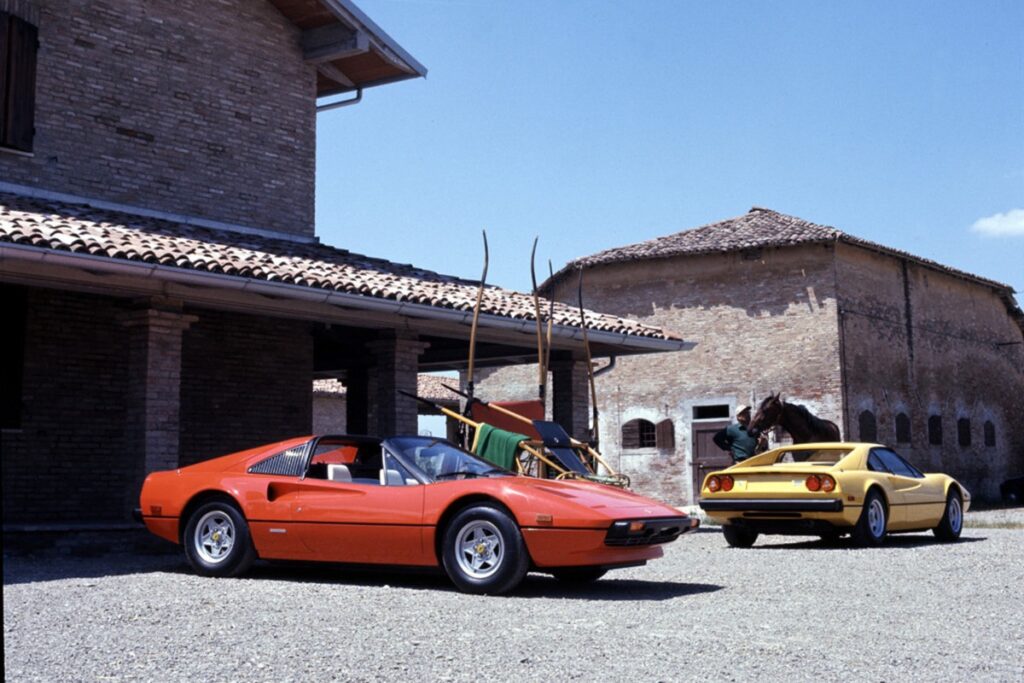
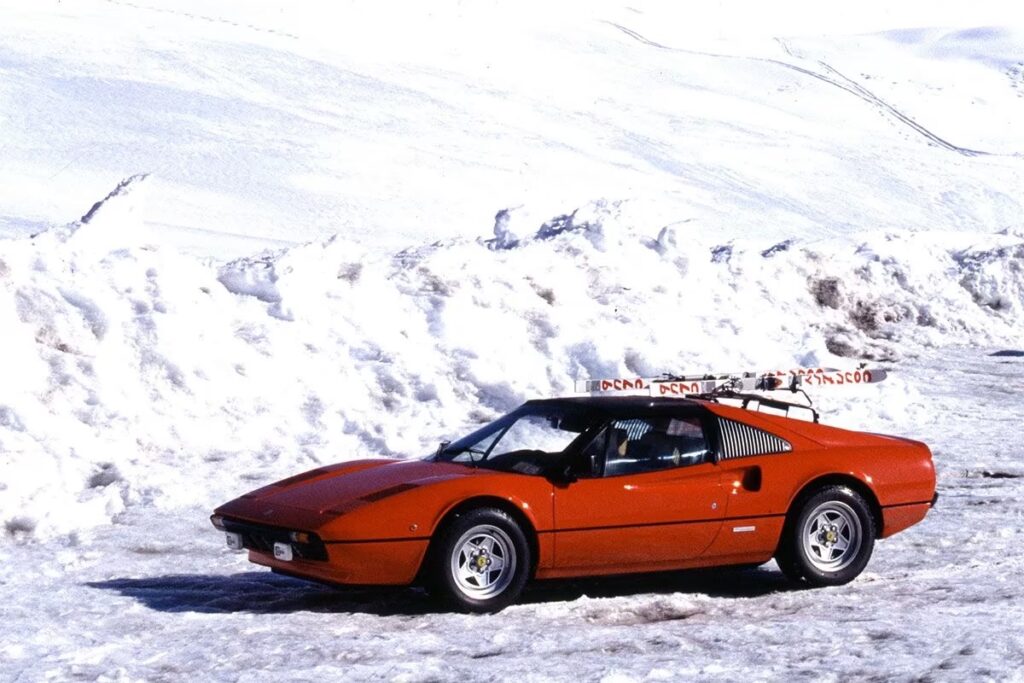
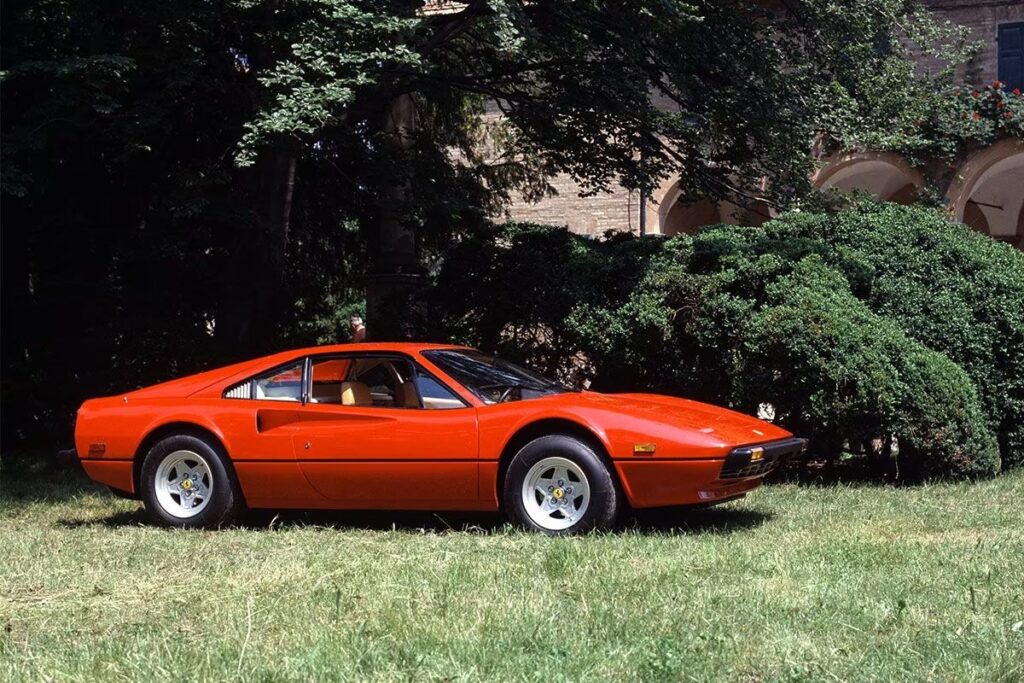
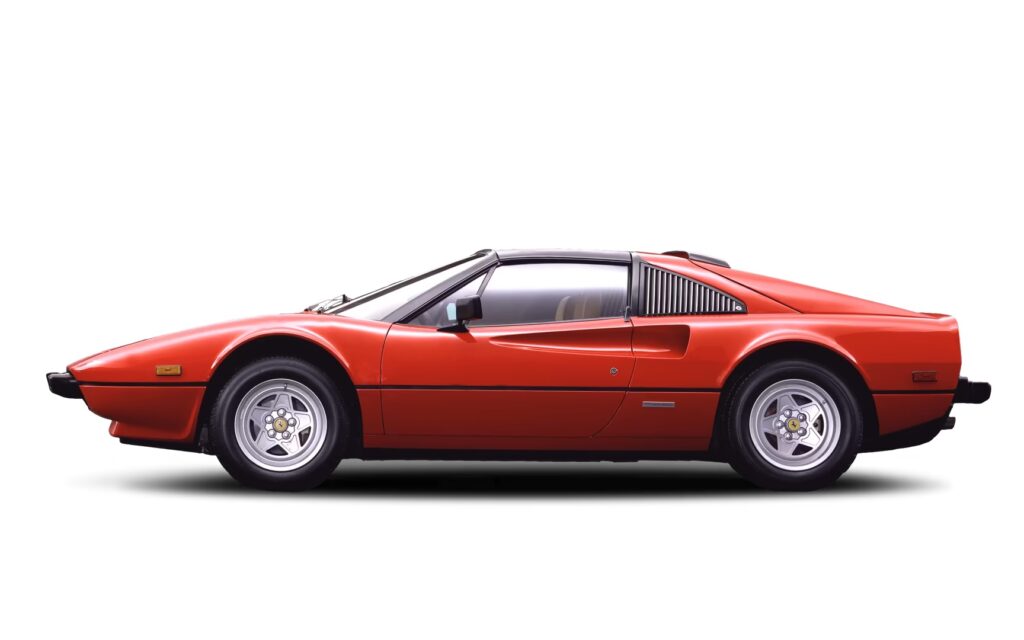
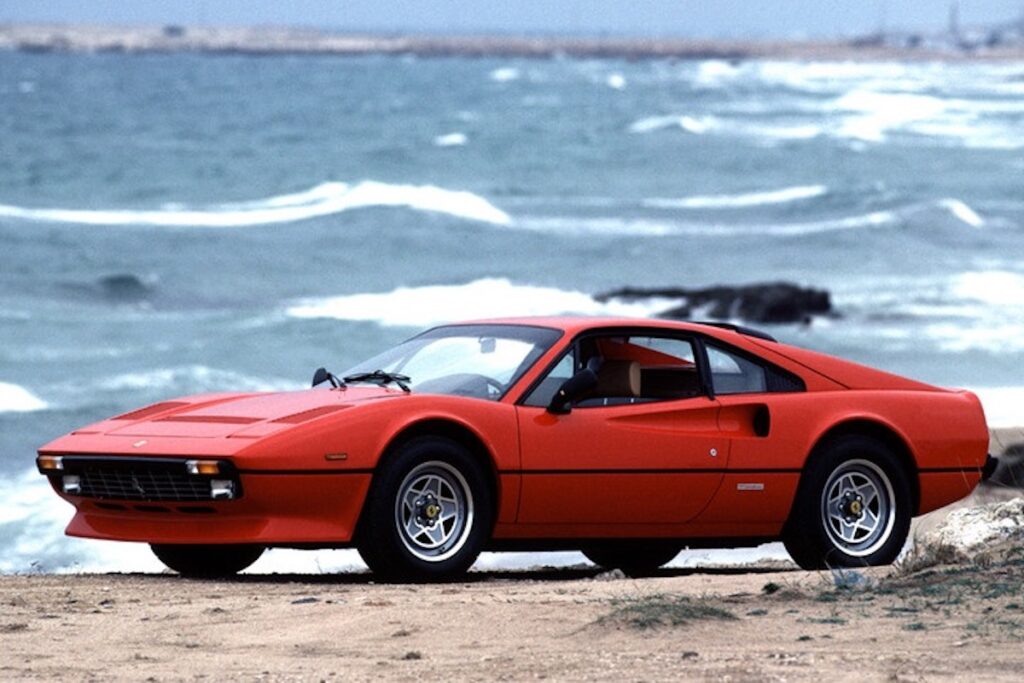
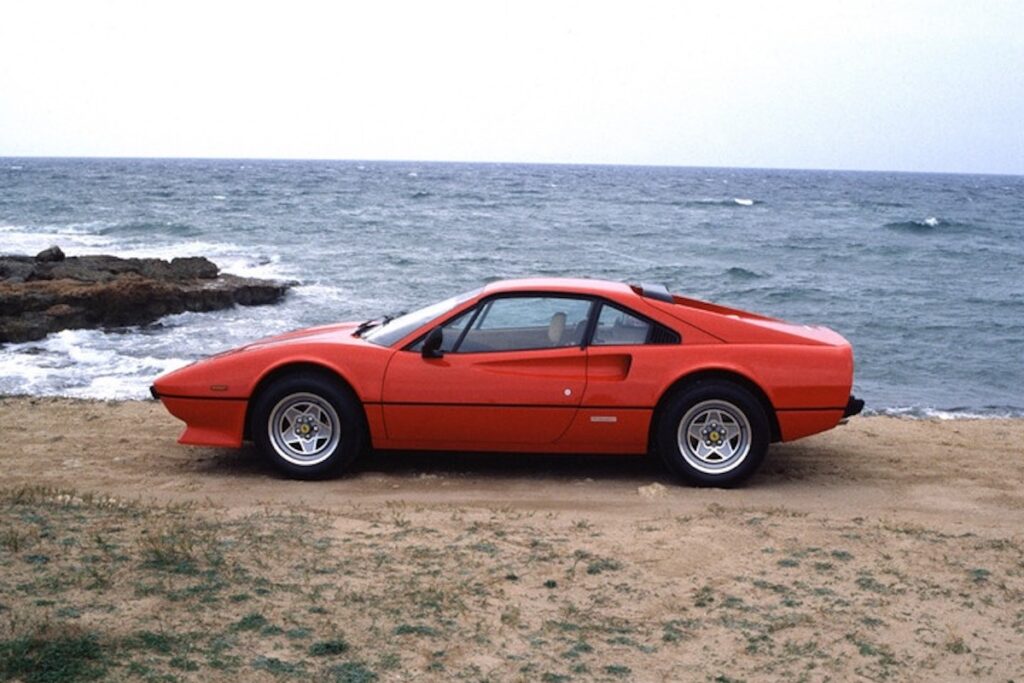
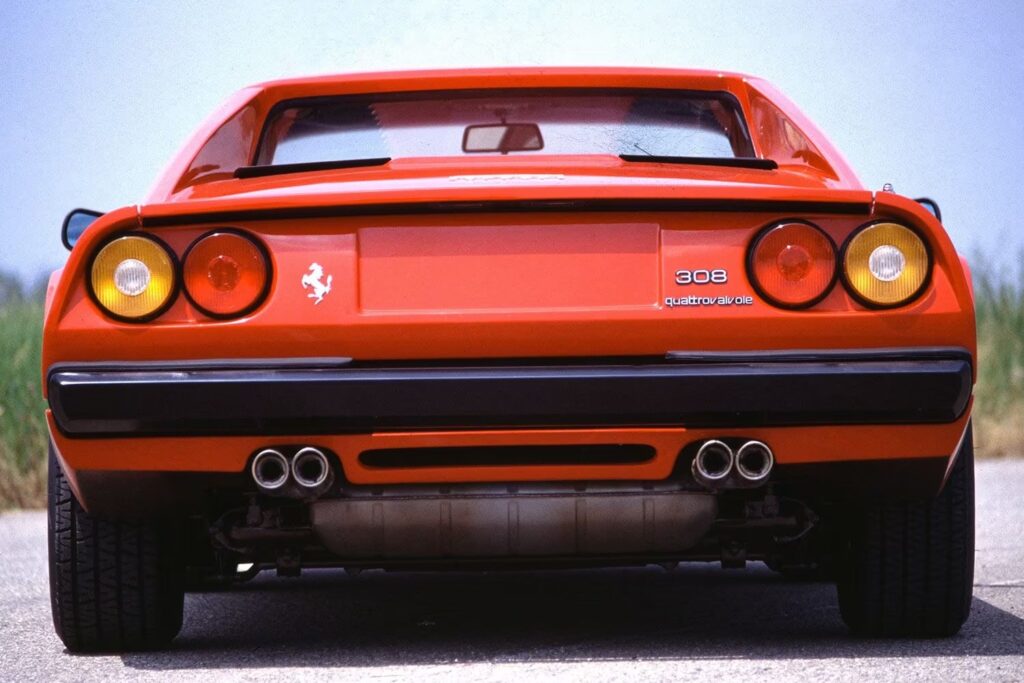

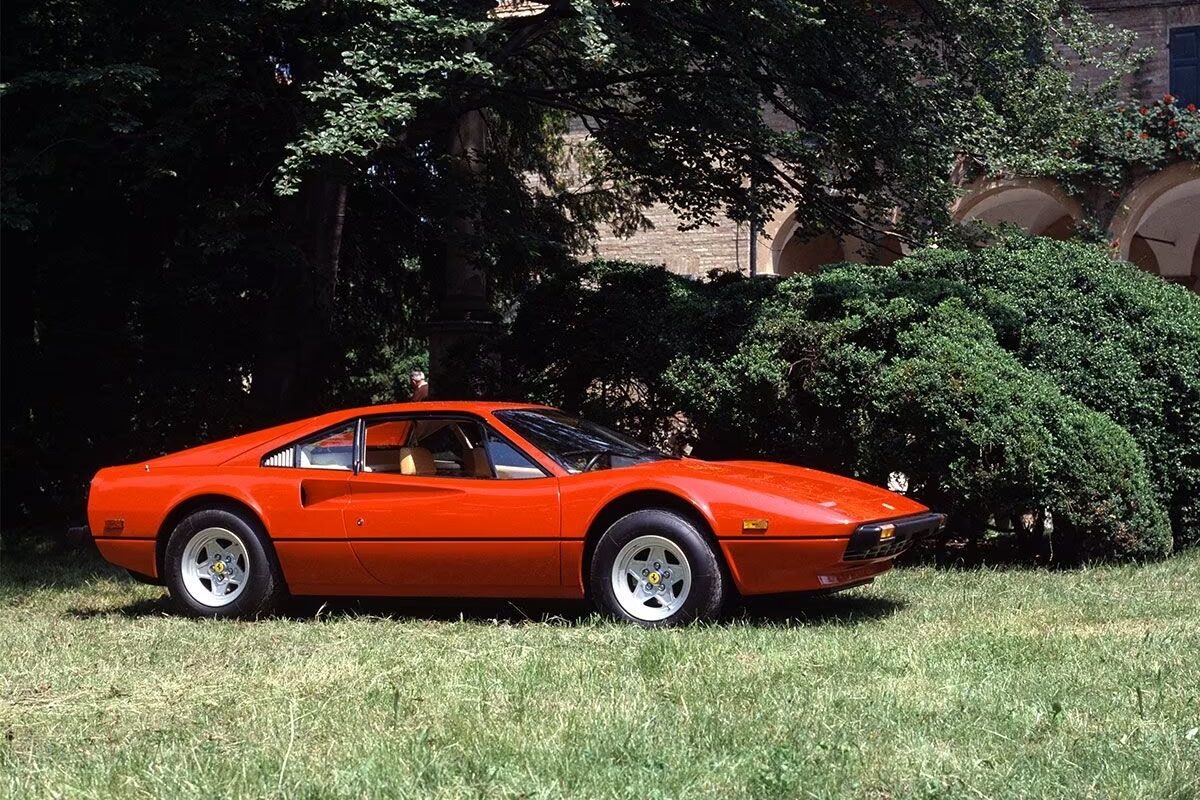
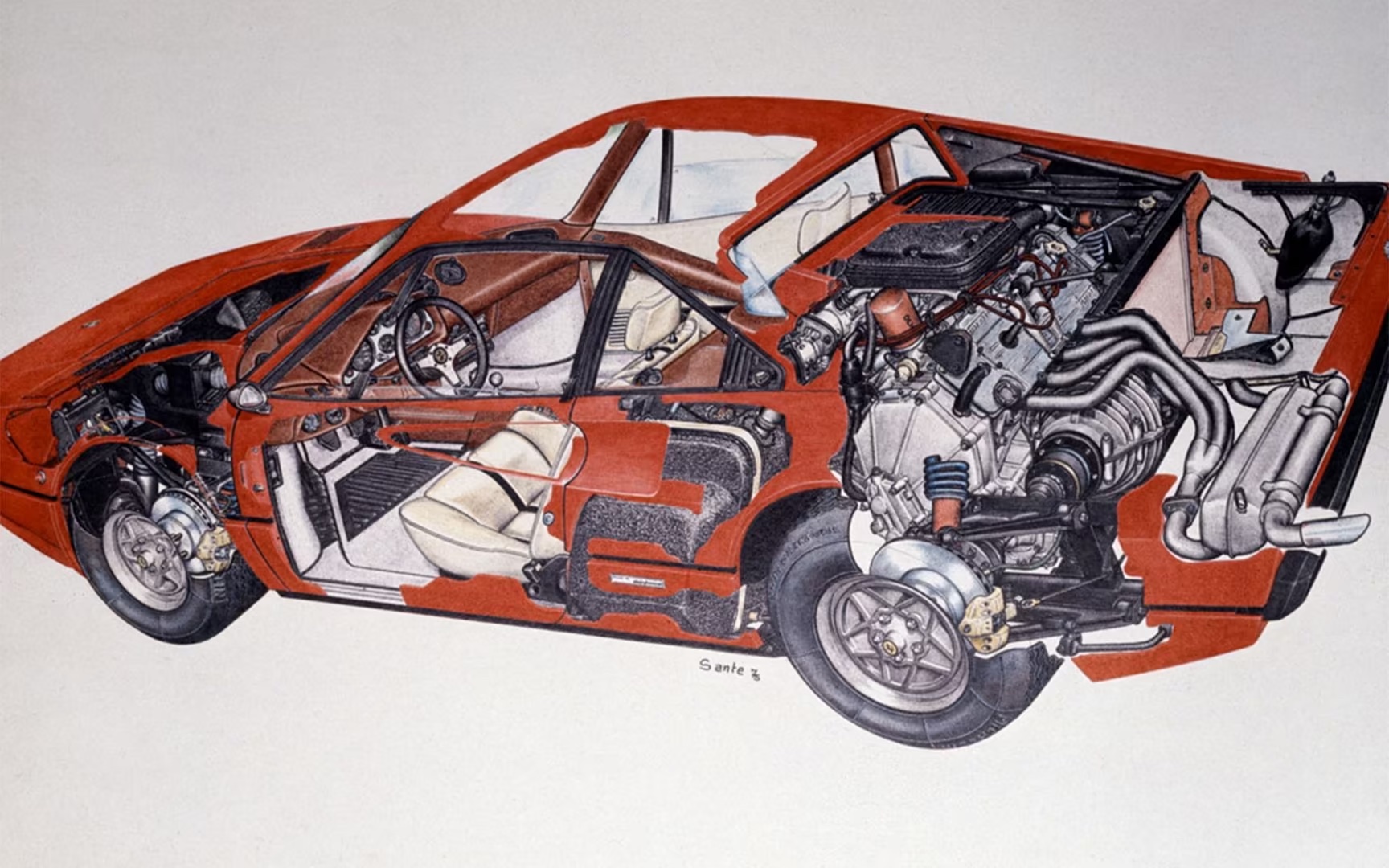
Who or what inspired Ferrari to abandon exclusivity in favour of mass production is hard to determine, but we do know that it happened during the 1970s and coincided with the company’s adoption of V8 power.
Barely a decade earlier, Ferraris were being supplied in limited numbers to wealthy buyers or as ‘customer’ cars to dedicated racers. Production of individual models would rarely top a thousand, but by the late 1970s – despite increased regulation, more stringent speed limits, and higher fuel costs – a new generation of mid-engined V8 Ferrari were selling at three times the rate of their predecessors.
The first mid-engined production Ferrari was also its first production V6; the lovely 246 GT Dino. It would be followed in 1973 by a very different kind of Dino – the Bertone-penned, four-seat 308 GT4.
The 2+2 would remain in production until 1980 and not be replaced until Ferrari released its four-seat Mondial, but from 1975 it was joined by another mid-engined Ferrari with a similar name but very different in concept and construction.
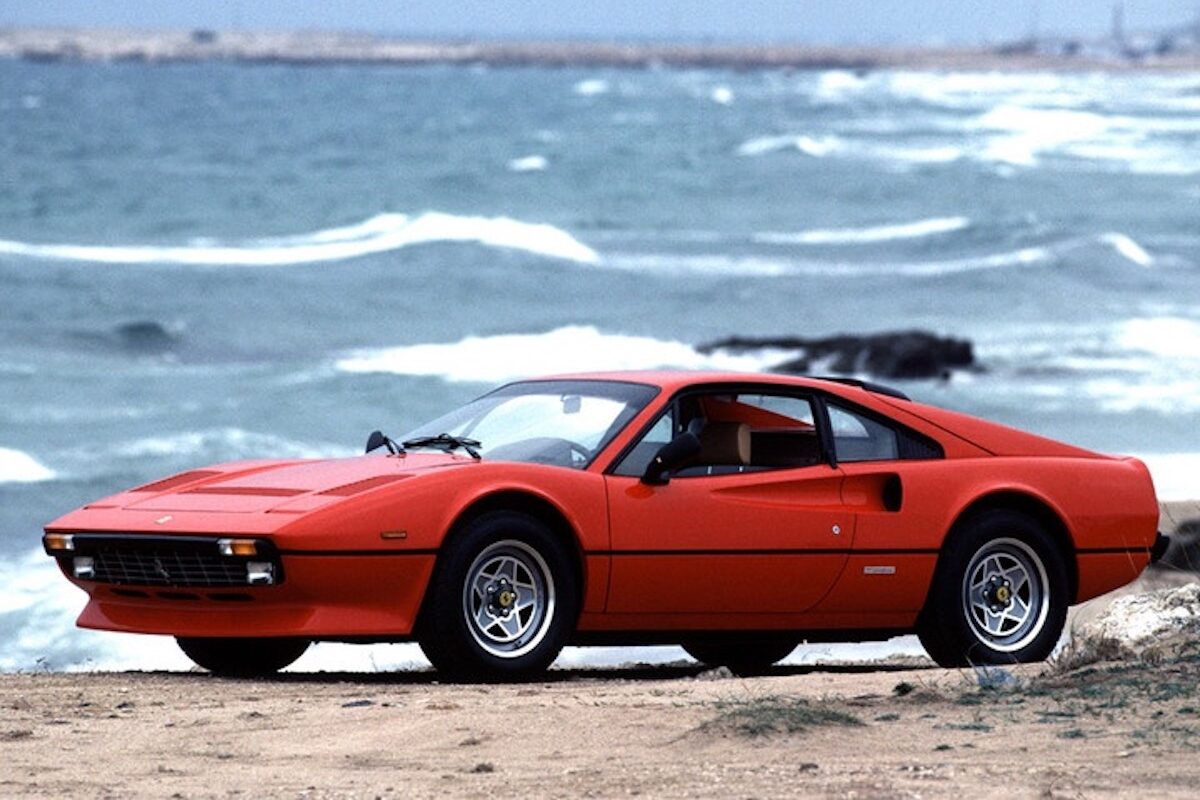
Somewhat confusingly, Ferrari chose to name its new two-seat model the 308 GTB, despite it initially selling alongside the established four-seat 308 GT4.
Tifosi will know that the connecting tissue here is the “308” comes from the engine’s displacement of approximately 3.0-litres from its eight cylinders, but for the great unwashed looking back through the haze of time it can create some confusion.
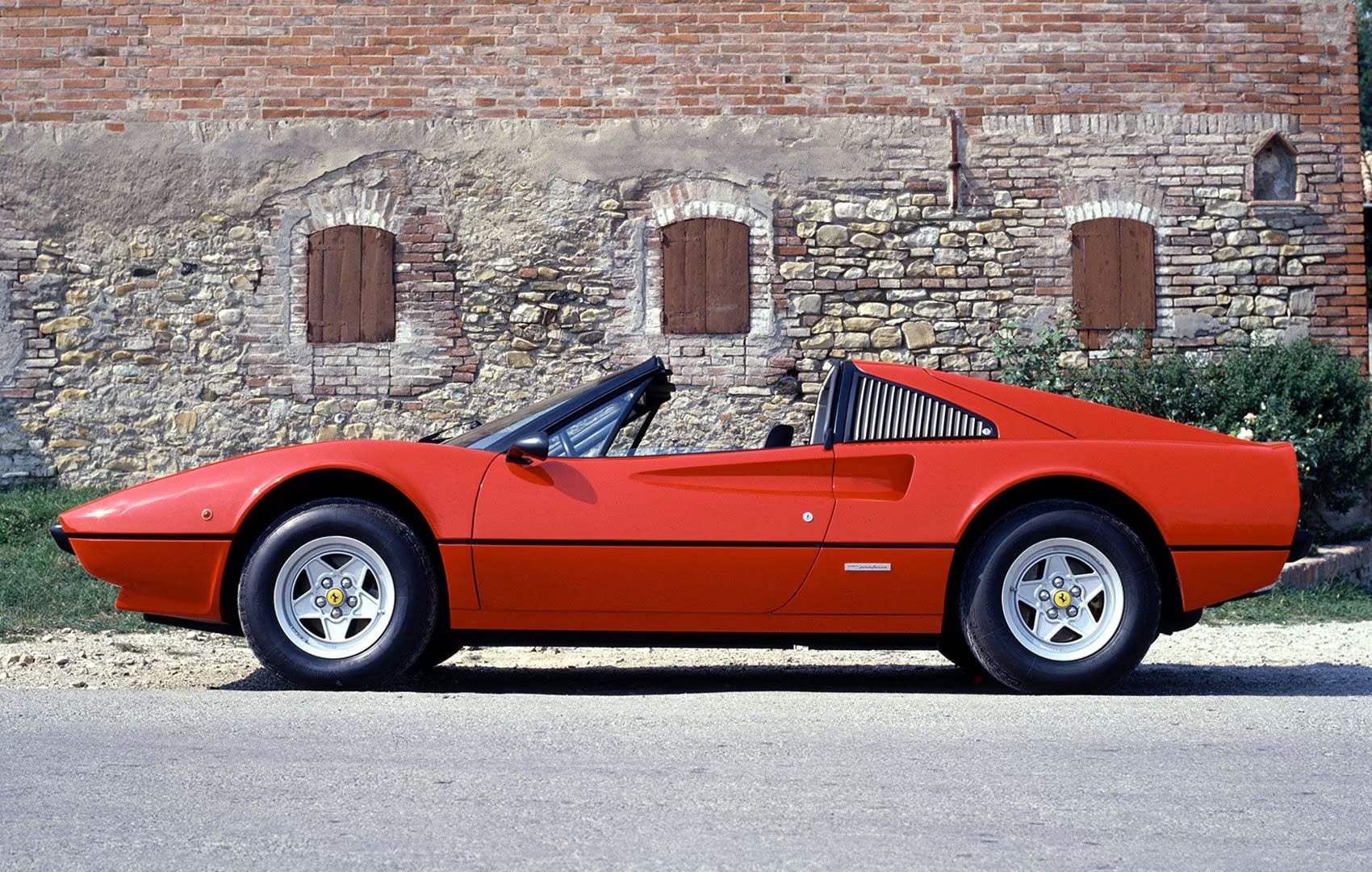
The 308 GTB and 308 GT4 also shared common tube-frame chassis but the new model rode on a shorter wheelbase than the 2+2 and was designed by Italian styling house Pininfarina, where the 308 GT4 was designed by Bertone.
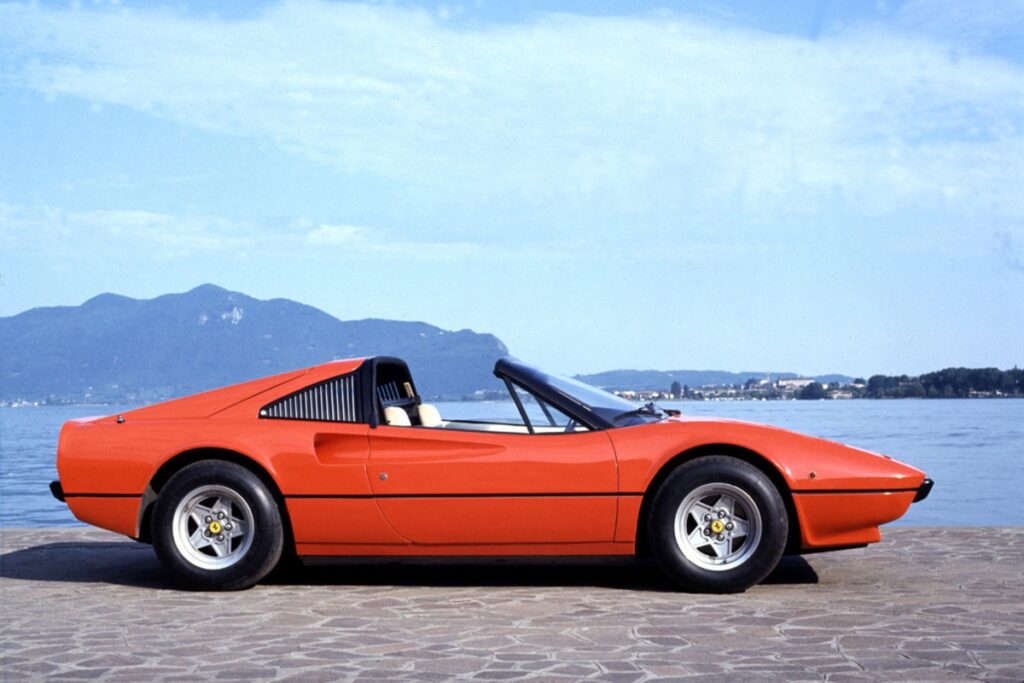
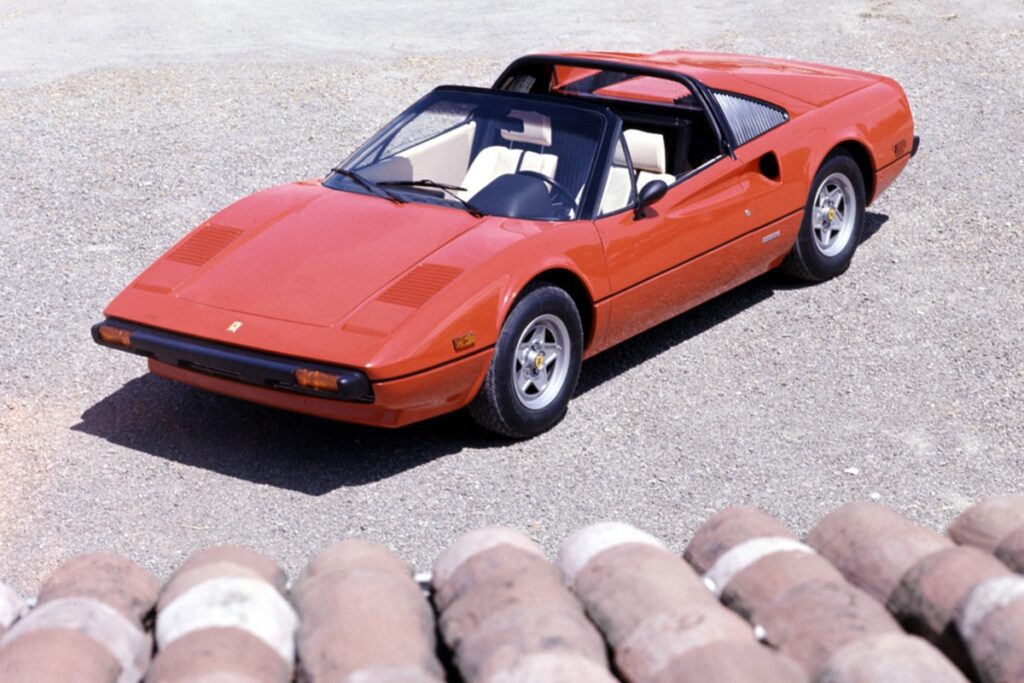
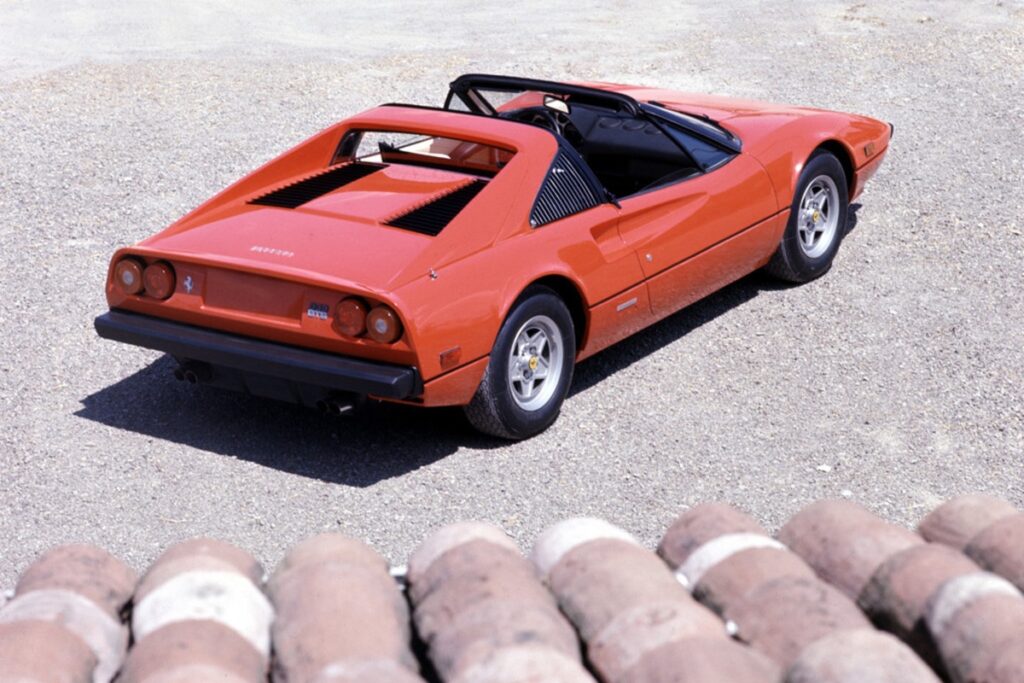
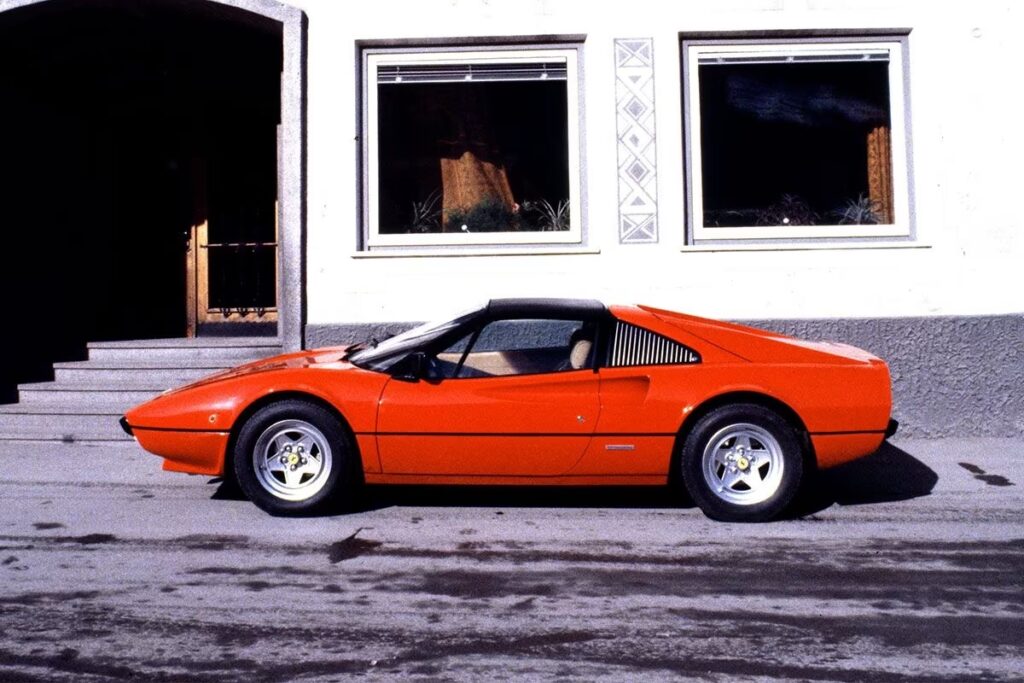
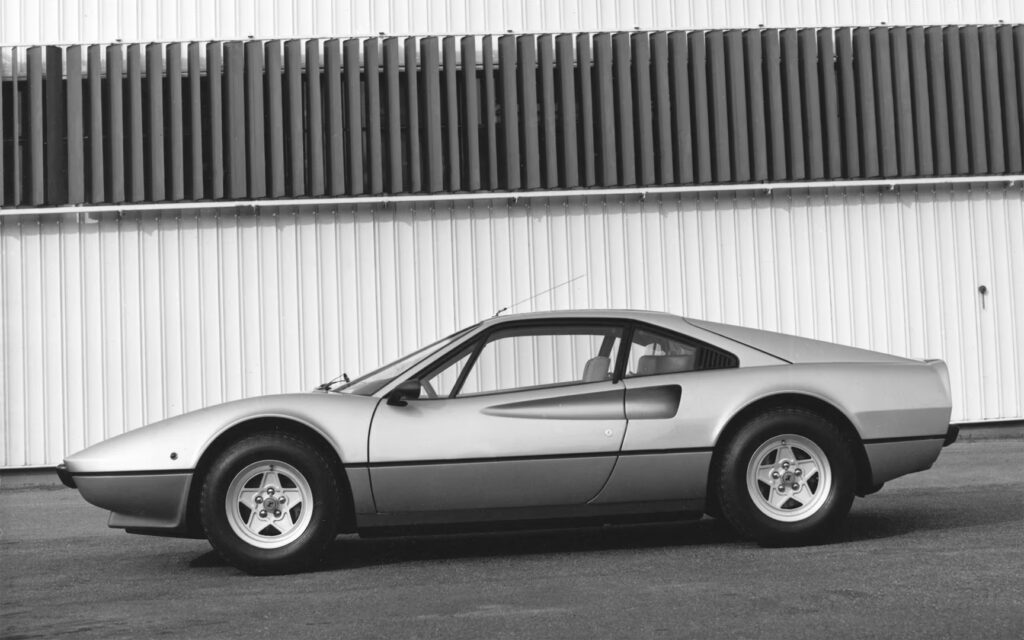
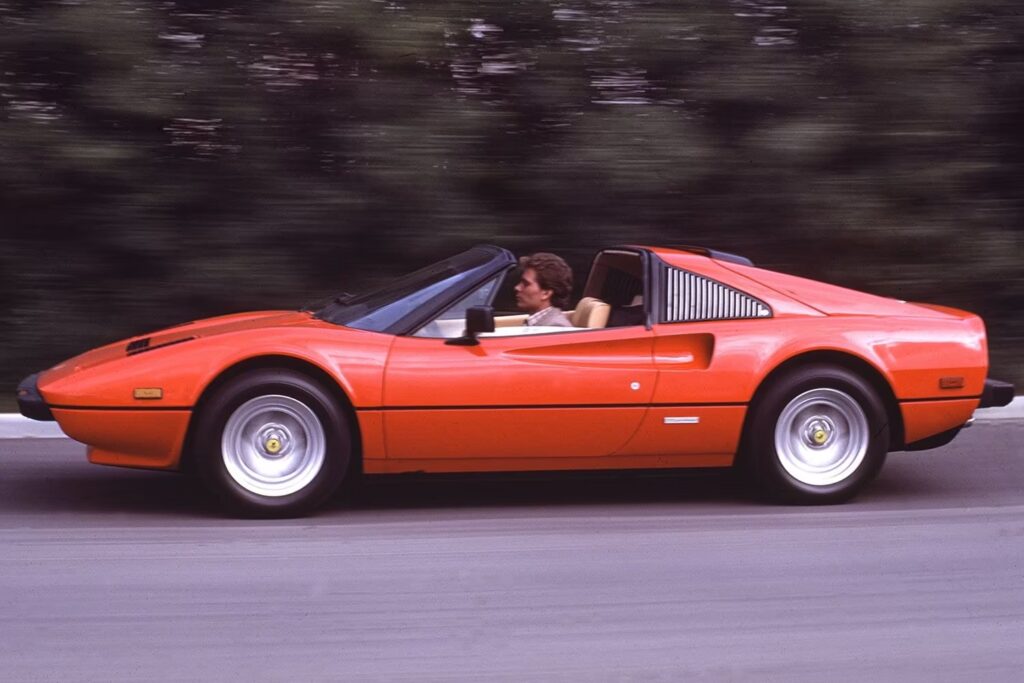
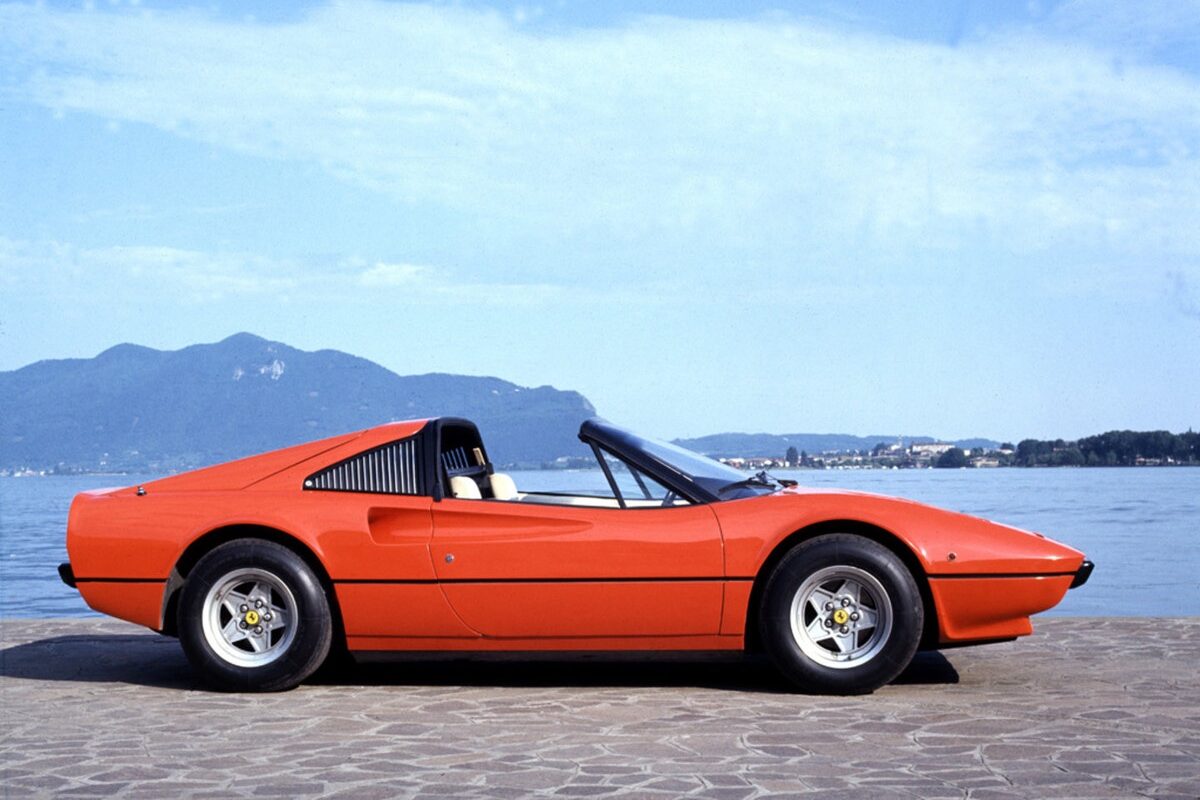
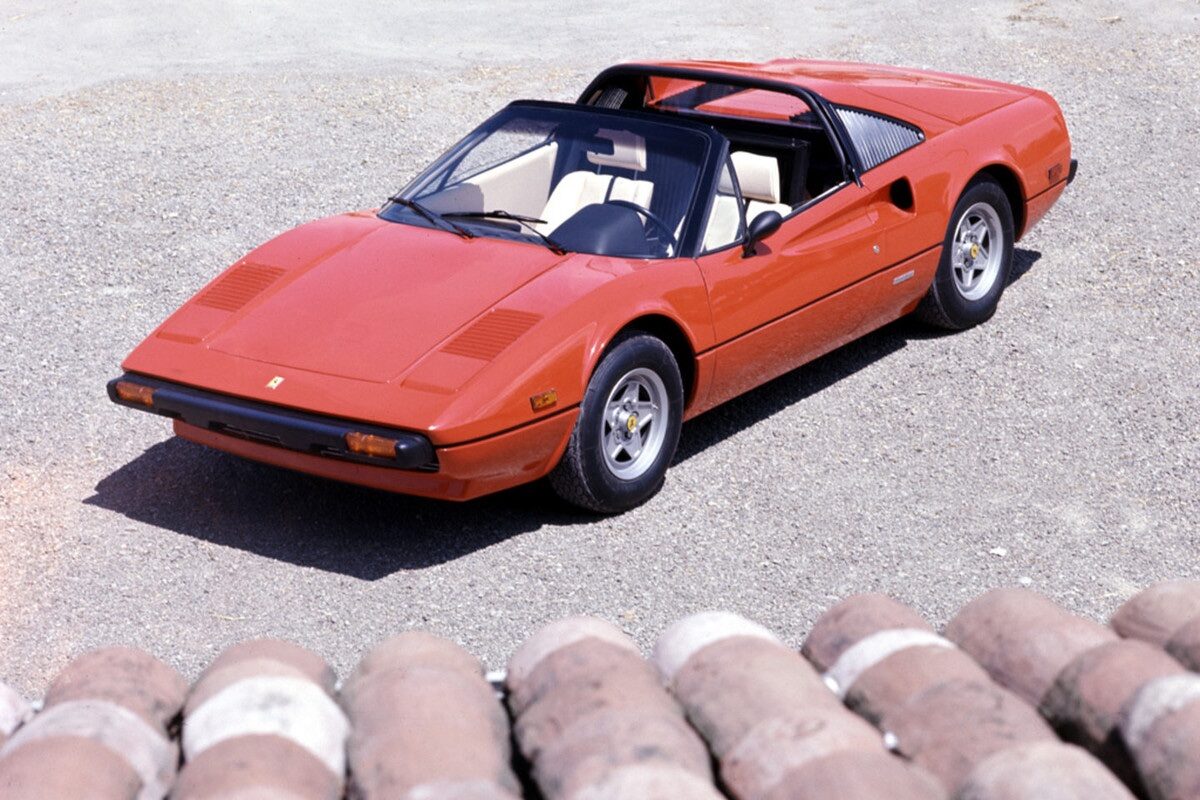
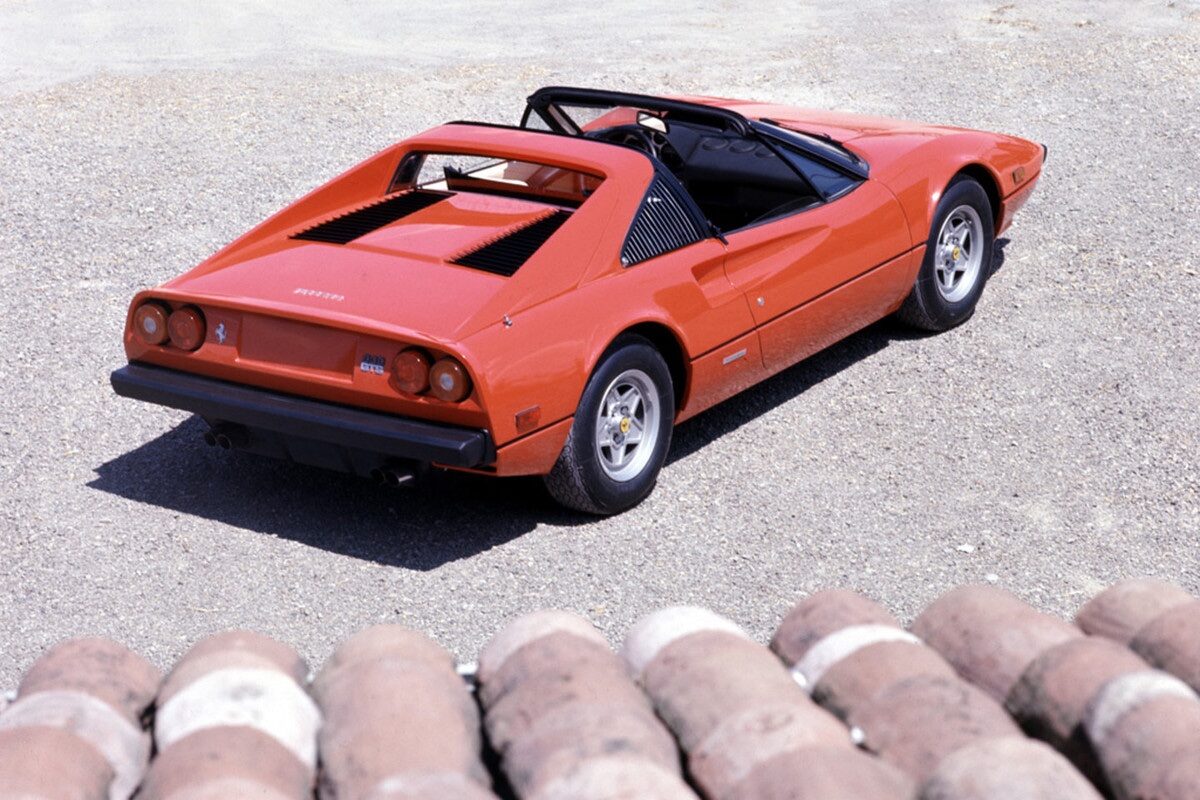
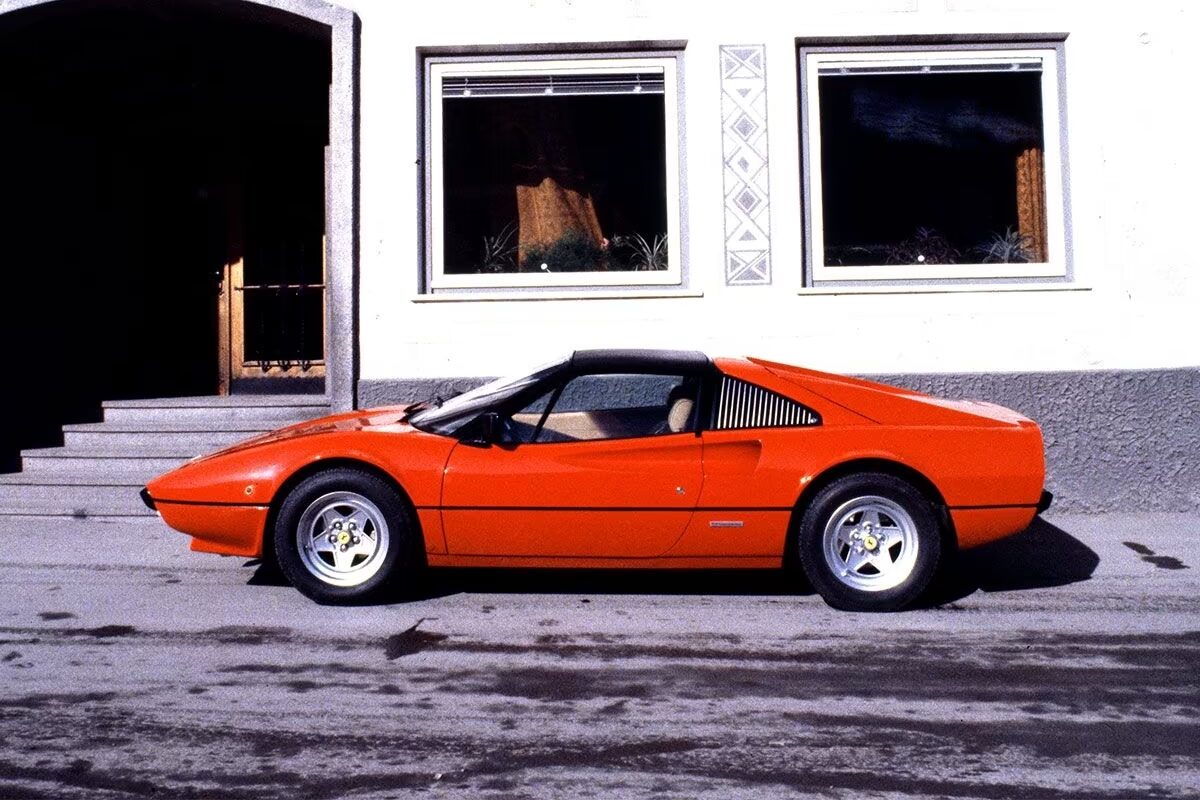
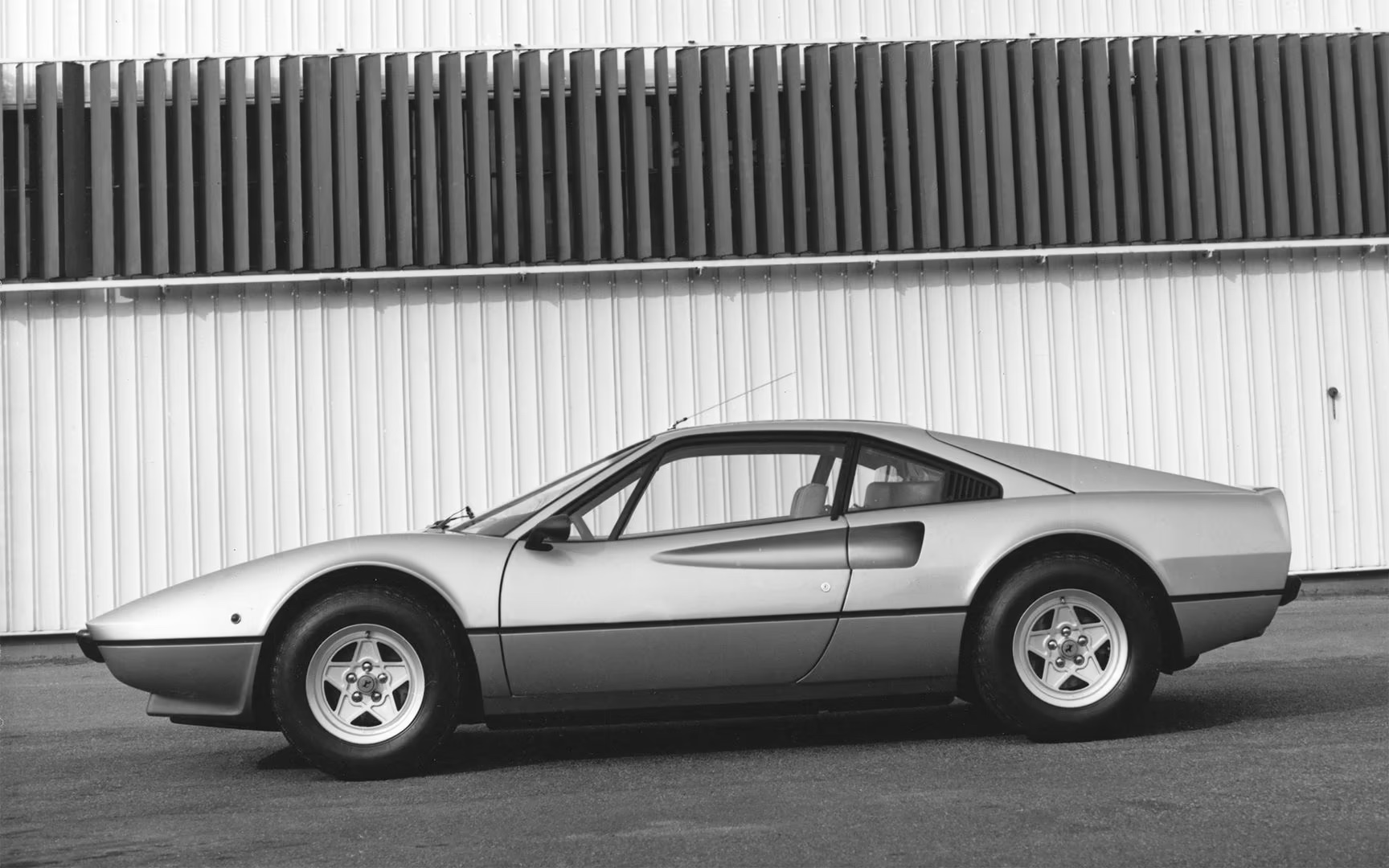
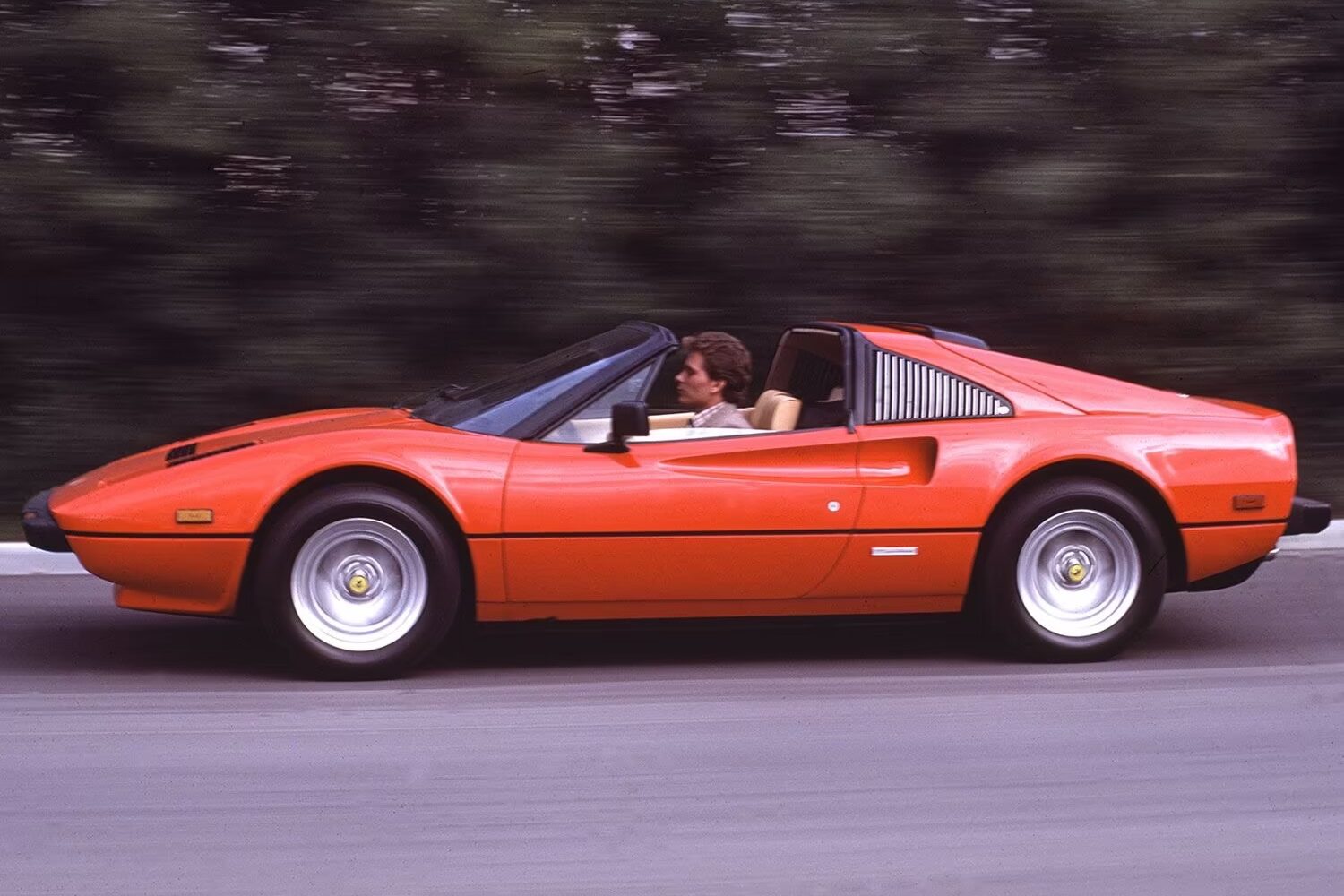
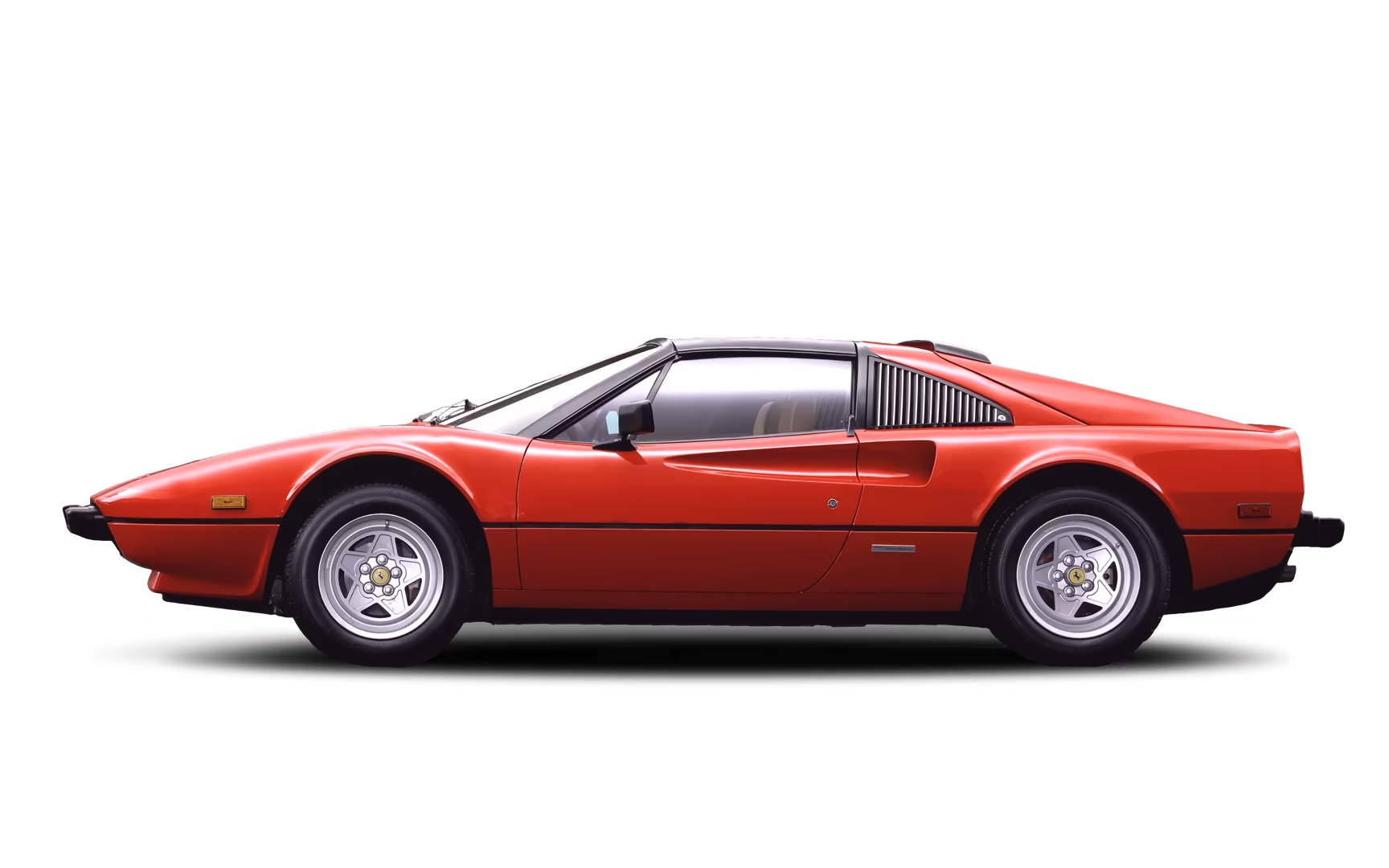
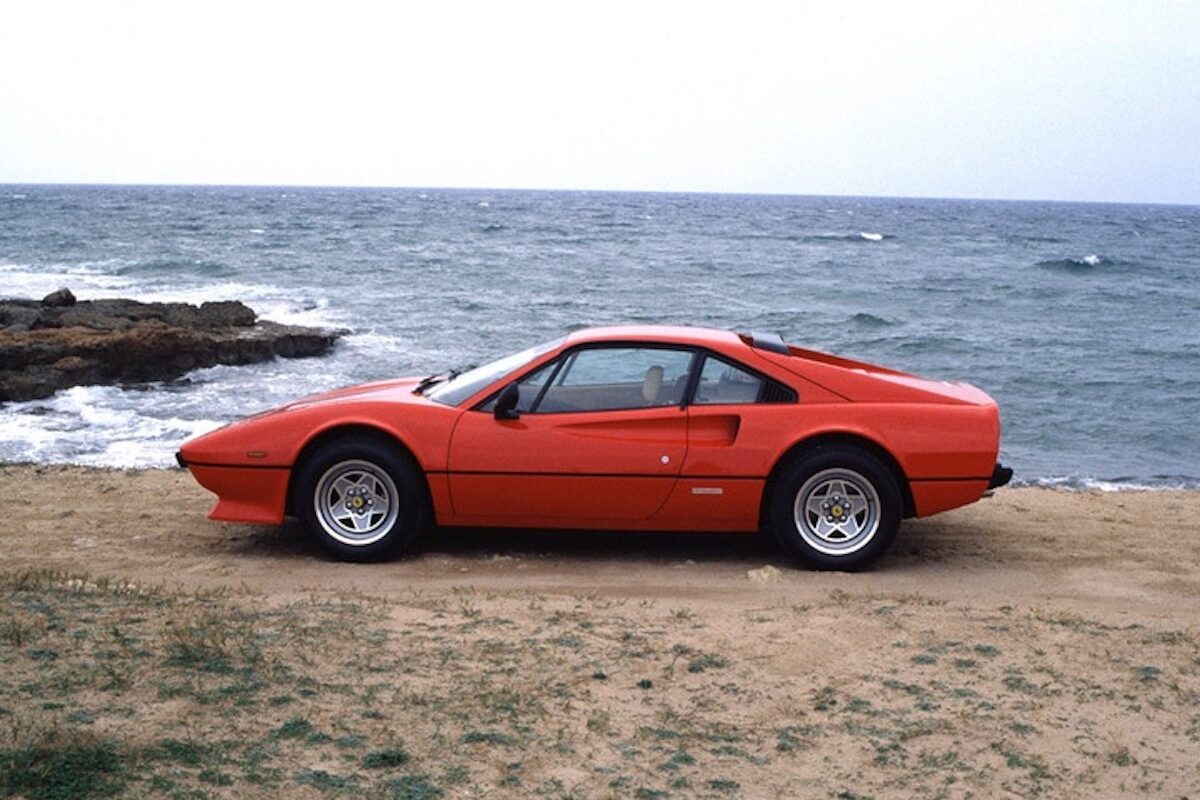
Pininfarina’s Leonardo Fioravanti is credited with designing the body of the 308 GTB Berlinetta and later targa-topped 308 GTS, with the influence of his earlier Ferrari Daytona, Dino and Berlinetta Boxer models evident in the new model’s shape.
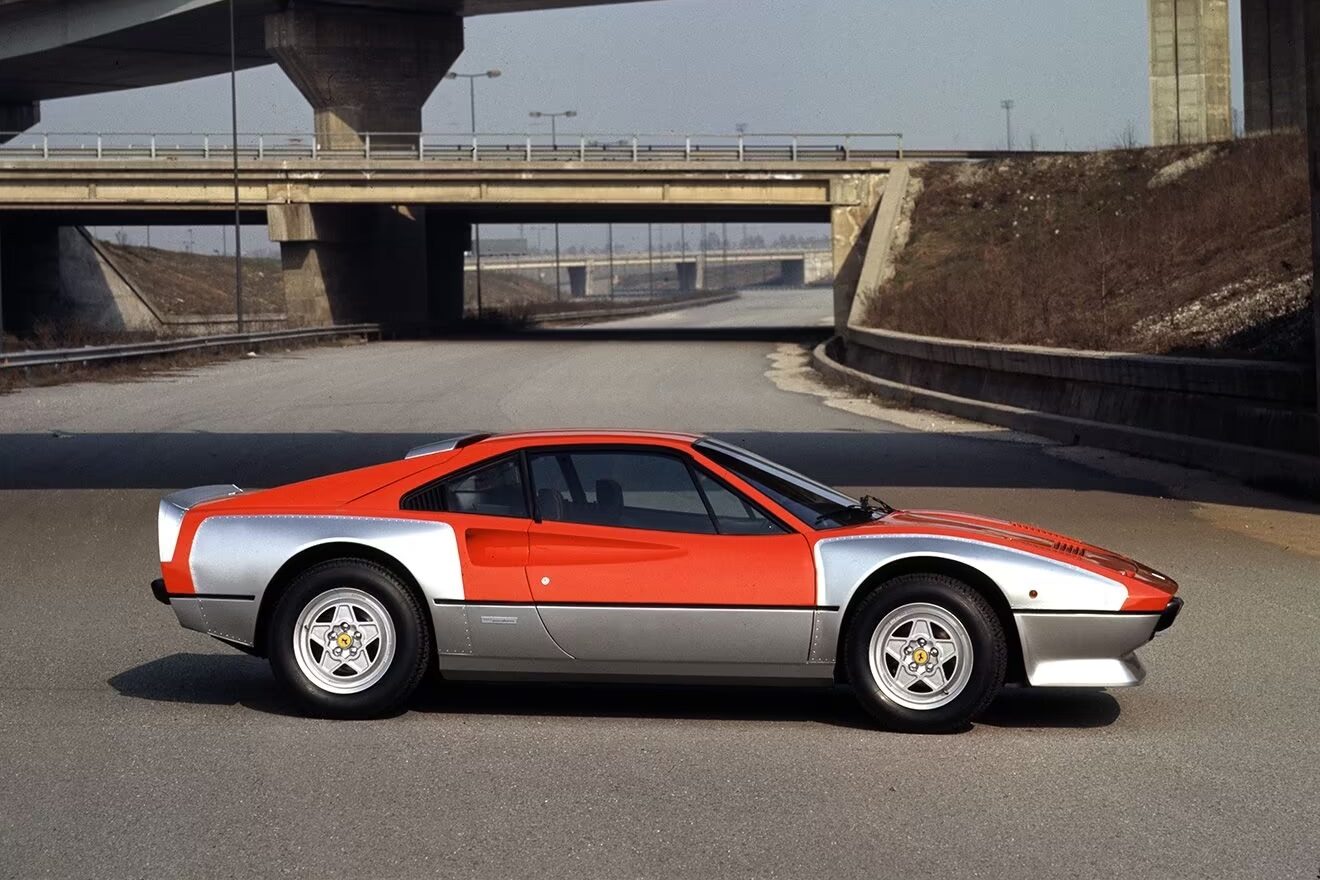
In addition to offering a shape that differed significantly from both the Dino 246 GT it replaced and the 308 GT4 it sold alongside, a defining characteristic of early 308 GTB models was that the bodies were made entirely of lightweight, glass-reinforced plastic.
These vehicles are known as ‘Vetroresina’, the Italian word for fibreglass, and despite being derided at the time by some ‘purists’, they are now worth significantly more than steel-bodied 308 GTBs.
The reasons for choosing fibreglass have been attributed to the 150kg weight advantage these early cars had over the replacement steel-body version, which arrived in June 1977. Other considerations included the speed with which coachbuilder Carrozzeria Scaglietti could produce the bodies in fibreglass.
Given that rust was the enemy of most 1970s Italian cars, Vetroresina models also minimised, if not entirely avoided this problem. The steel tube framework could still corrode unless treated internally with wax.
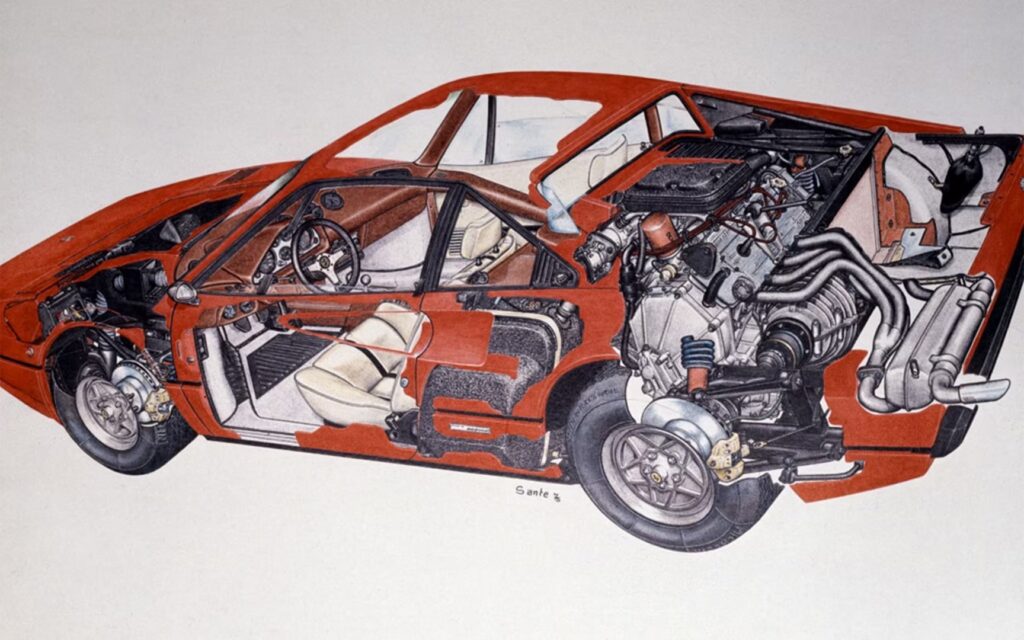
Early cars in US trim weighed 3085lbs or around 1400kg – still hefty for a two-seat sports car. However, with four Weber carburettors feeding its flat-plane crankshaft, quad-cam 90-degree V8, the 308 GTB made a healthy 170kW at 6600rpm and 270Nm at 5000rpm.
A transaxle transmission assembly attached to the transversely-mounted V8, with a fully synchronised five-speed dog-leg manual gearbox accessed via Ferrari’s traditional ‘gated’ shift selector.
With a 3.71:1 final drive ratio the 308 GTB was good for a claimed top-speed of 240km/h, although the best US-based Road & Track magazine managed in its own testing at the time was 212.5km/h.
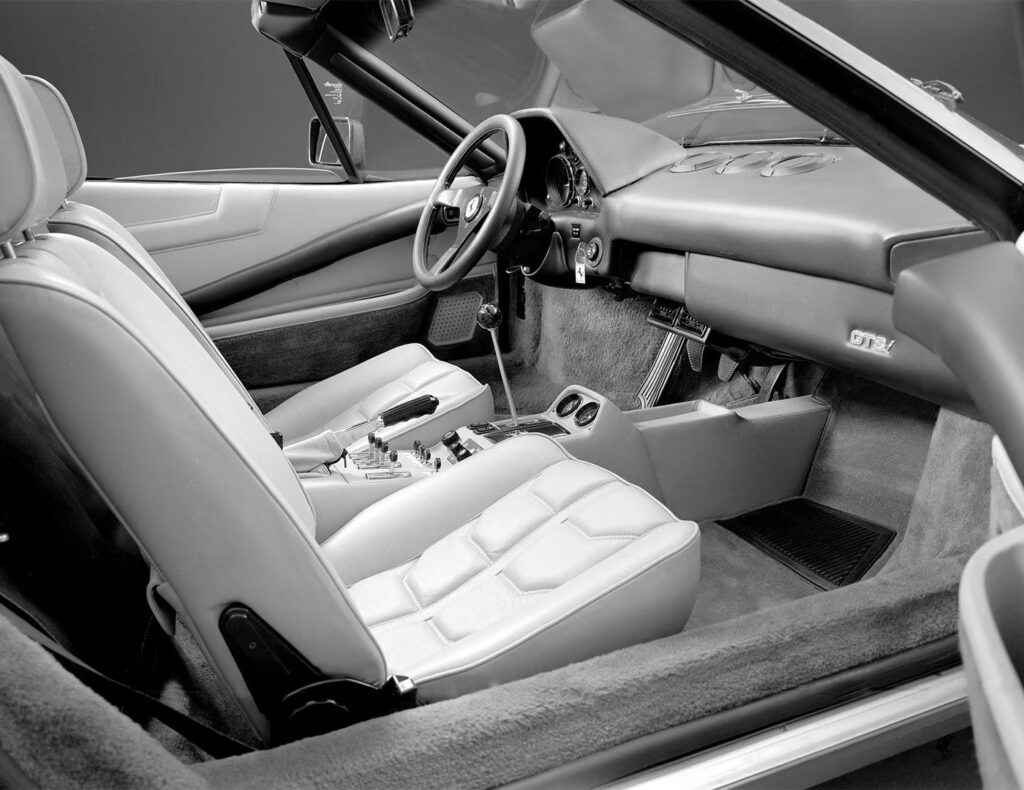
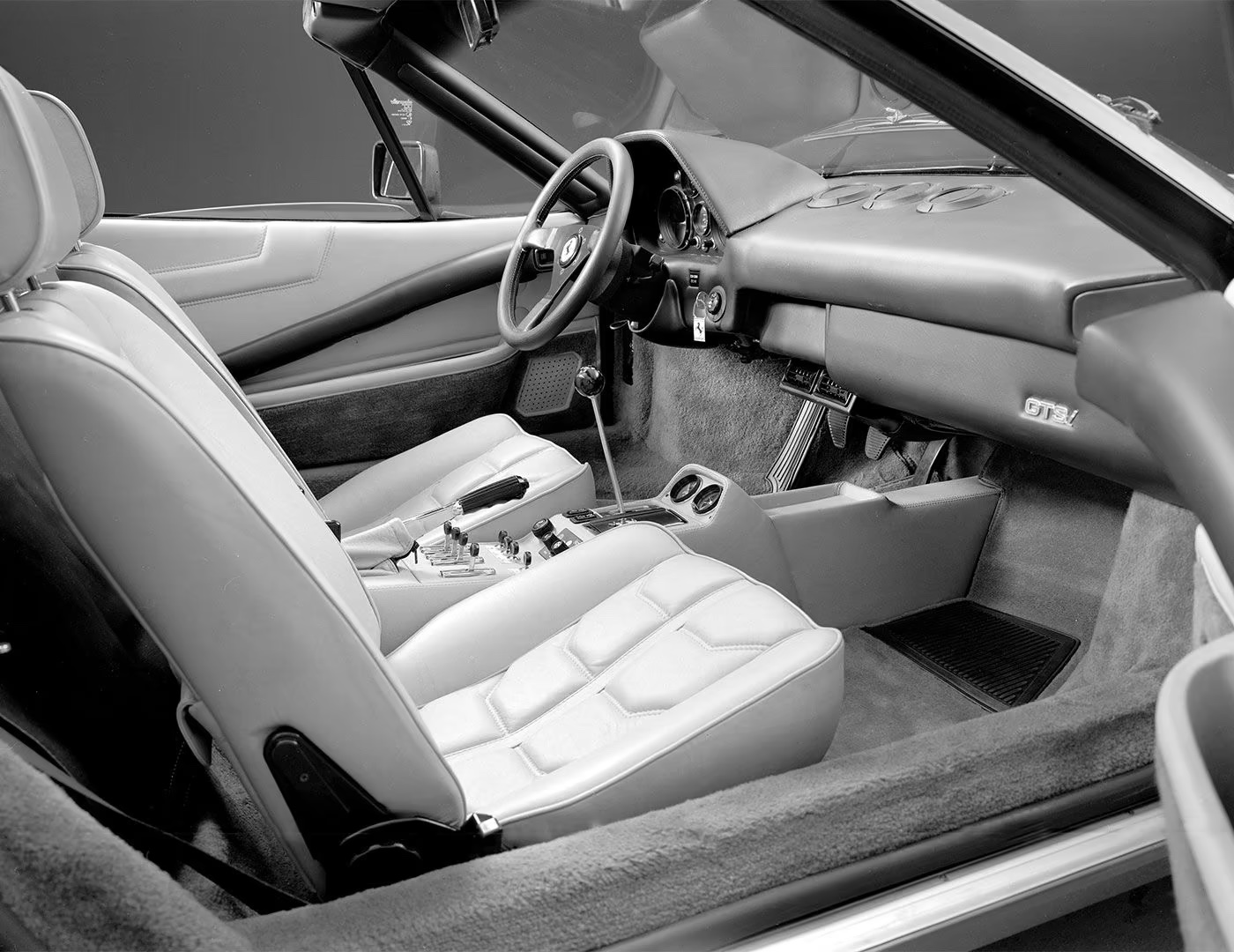
Australia’s earliest 308 GTBs arrived in 1976, priced at $31,050 before rising within five years to more than $72,000. Even then, the Ferrari remained cheaper than a Maserati Merak which ended 1981 at $80,000 and the $76,000 Porsche 930 Turbo. Australian-delivered cars came standard with air-conditioning, power windows and leather seats.
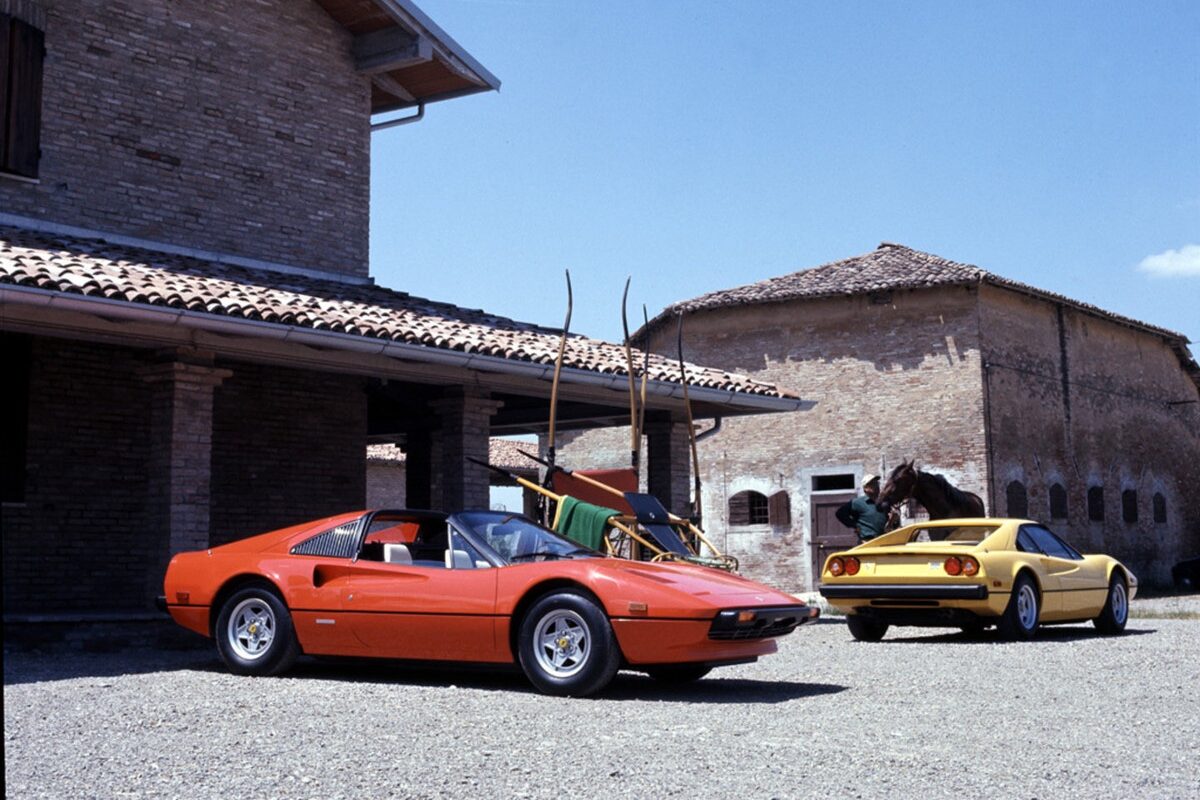
By 1977 fibreglass body production had ended and we began seeing the new generation steel-bodied 308s, followed soon after by the targa-roof 308 GTS which featured a wet-sump engine and carried a $5000 price premium.
Ferrari at the time claimed a 0-400 metre acceleration time of 14.1 seconds for the 308, but a March 1980 test by Australia’s Wheels magazine of a 308 GTS managed only a 15.3 second pass, with legendary tester and journalist Peter Robinson at the wheel. Similar disappointment greeted the 0-100km/h time of 8.3 seconds, but mid-range performance in the same test proved strong with the GTS leaping from 80-110km/h in 3.6 seconds in third gear.
Come 1980 in Europe and from 1981 locally both 308 variants adopted Bosch K-Jetronic fuel injection, designated by the new naming protocols 308 GTBi and GTSi. The aim of the new injection system was to lower emissions but it also resulted in a decline in power and torque to 158kW/245Nm.
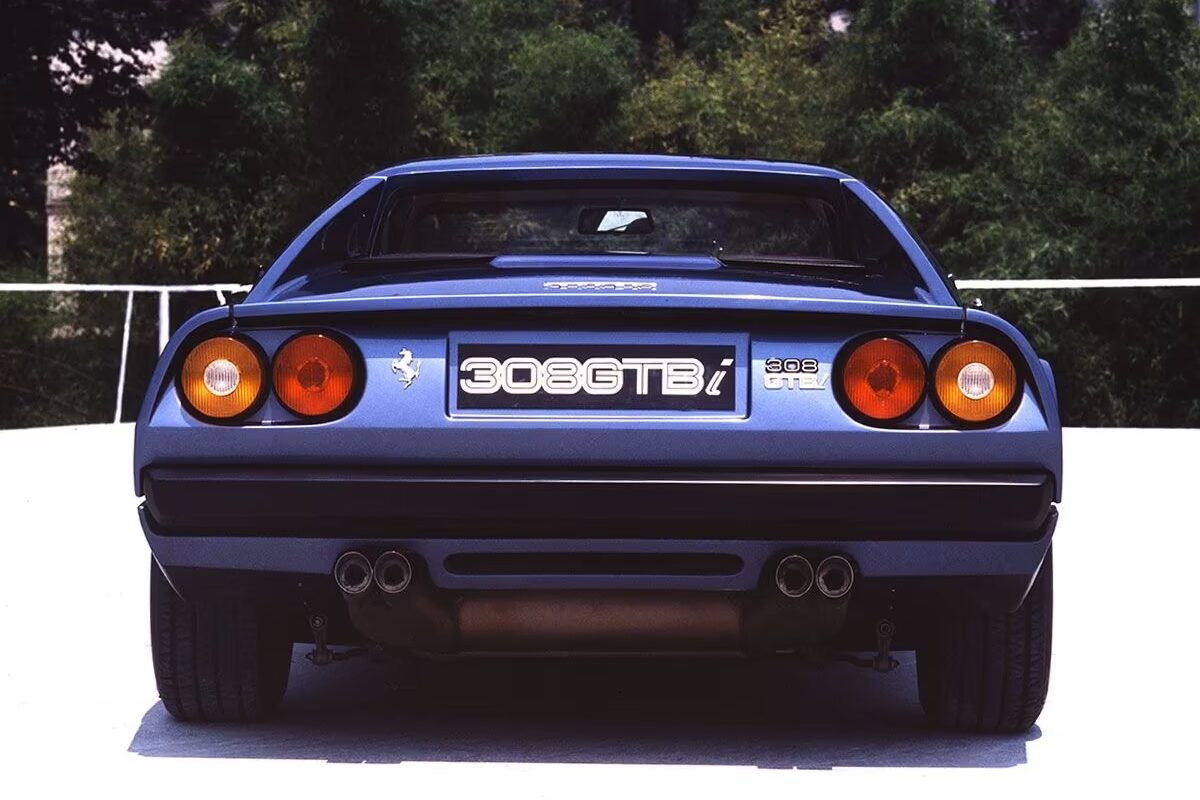
Fuel injection was intended primarily to reduce fuel consumption and emissions for the all-important US market, but tests of a US-spec GTSi found the injected car using 21.0L/100km (adjusted to account for the smaller US gallon) while a carb-fed GTS tested in Australia managed 16.9L/100km.
Grip levels, aided by a new generation Michelin XWX rubber and all-wishbone suspension, were said to be exceptional and the brakes even better. Just be cautious though if you buy a mid-engined Ferrari from the pre-ABS era as they do lock front brakes, especially on wet roads.
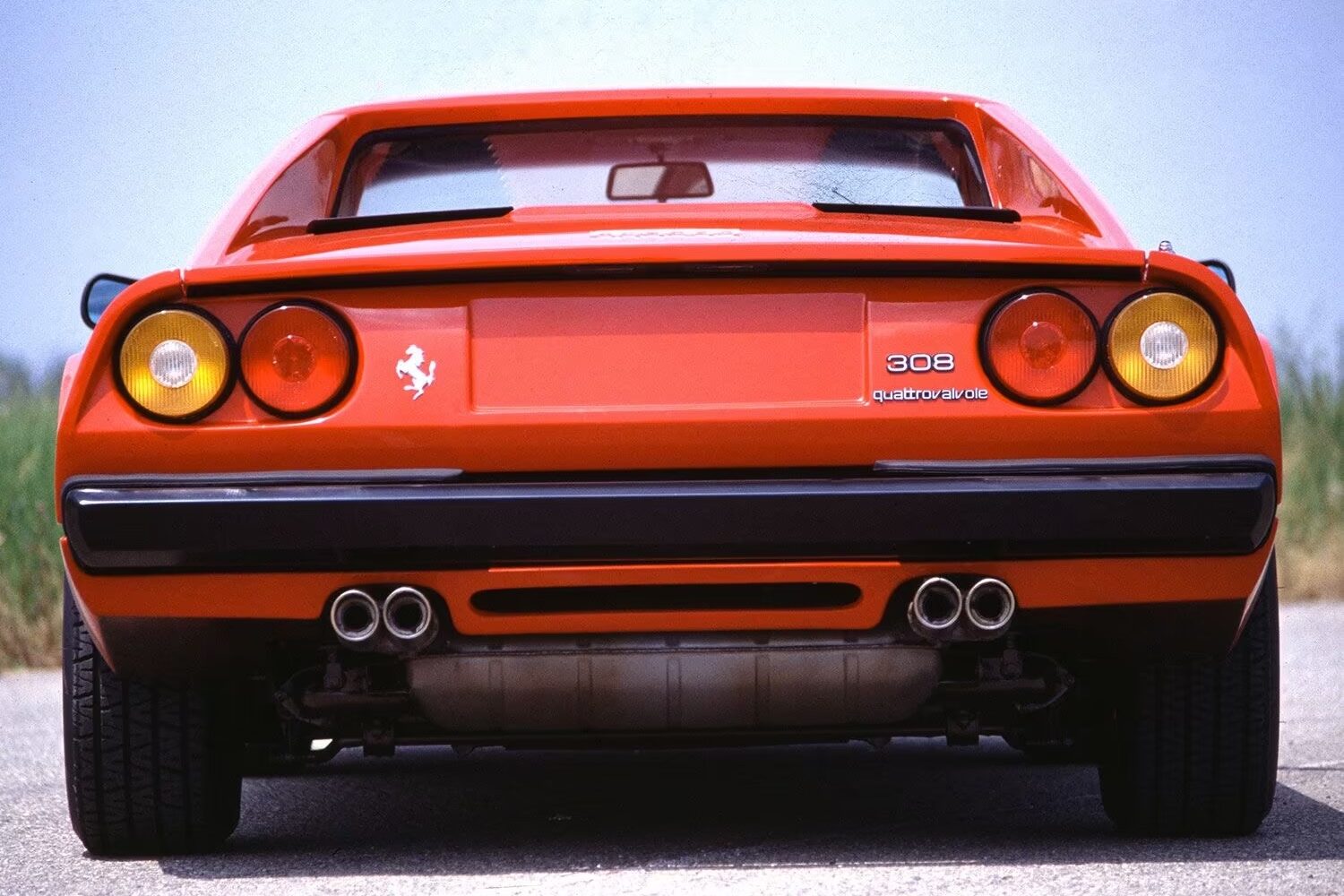
At the 1982 Paris Motor Show Ferrari introduced the 308 quattrovalvole in GTB and GTS form. The new model replaced the GTBi and GTSi, with the four-valves-per cylinder head design boosting power back to a healthier 176kW/260Nm.
When it comes to buying any used Ferrari 308, their age and complexity make it vital to attain a pre-purchase inspection by a Ferrari specialist. However, even a test drive by a reasonably mechanically-sympathetic enthusiast can be enough to reveal flaws that tell a potential buyer to be wary. Suspension noise, a shuddering clutch and soggy brakes are all costly to correct and negate any perceived benefit of buying a cheap Ferrari.
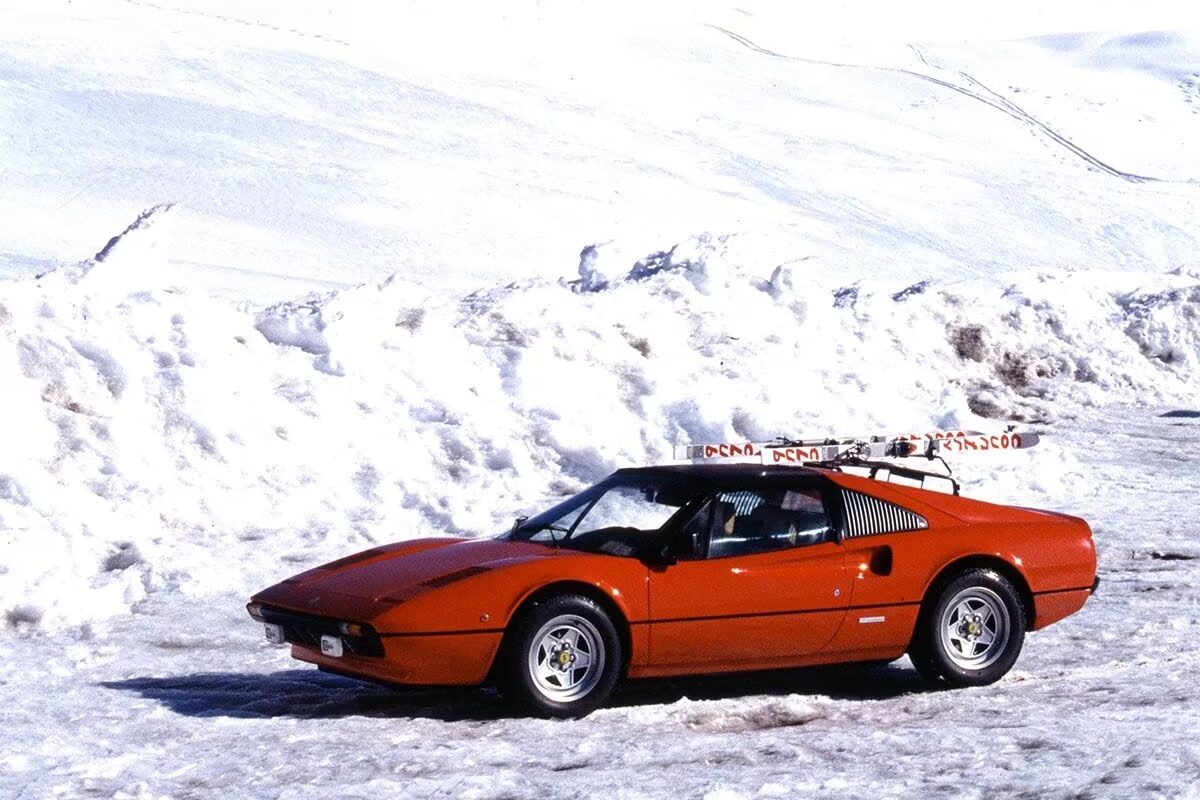
Personal imports that have spent time in icy, Northern Hemisphere locations including the USA may come with sketchy histories and be harbouring rust.
Steel-bodied Australian cars with cosmetic problems but decent mechanicals can be found at less than $120,000 with exceptional examples nearer to $200,000. Some fibreglass cars have been seen at figures above $400,000 which sits in line with the best price recently achieved overseas of US$257,600.
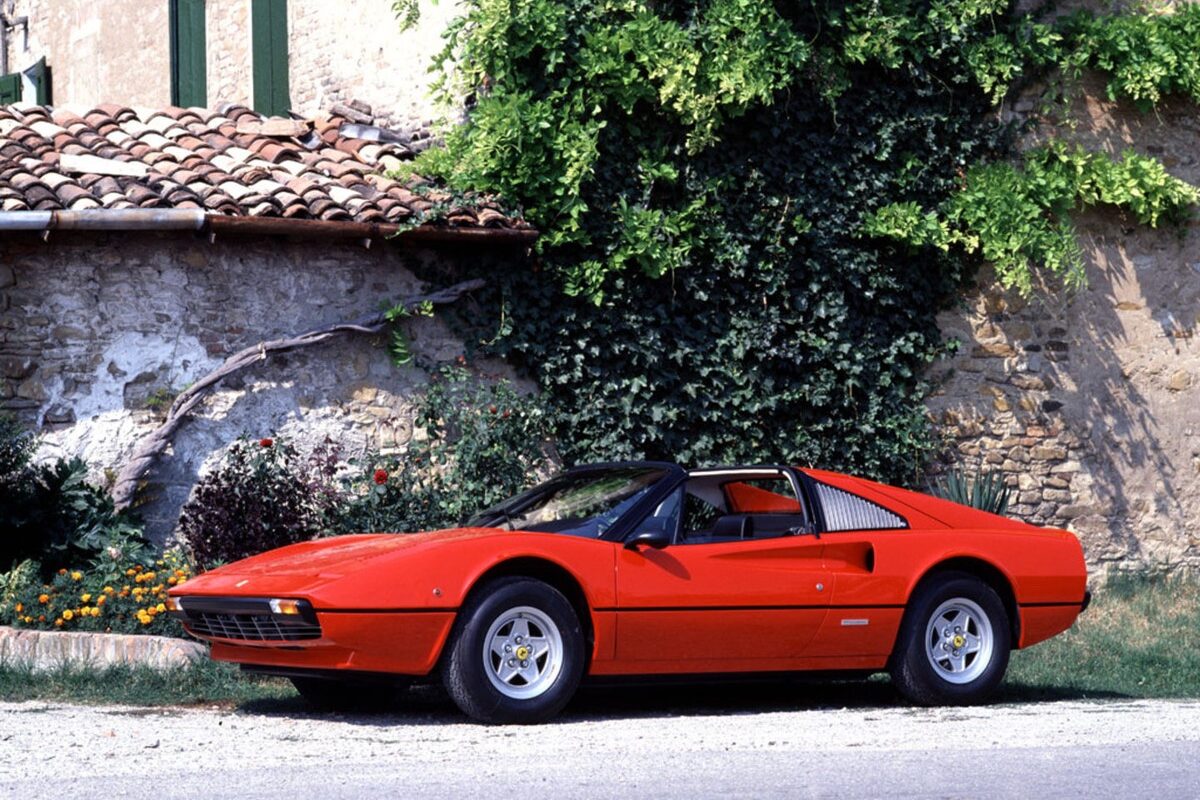
Things To Watch Out For When Buying a Used Ferrari 308 GTB/GTS (1975-85)
- Complete service history, especially for cars sold new outside Australia.
- On-hoist inspection looking for rusted lower panels in steel-bodied cars and framework in all versions.
- Paint imperfections indicating deteriorating repairs to fibreglass cars.
- Cars that are due (or overdue) for a costly cam belt change.
- Clutch shudder and transmission whine.
- Coolant loss from old hoses and the water pump seal.
- Power windows that shudder; headlamps that take more than two seconds to appear.
- Worn roof seals allowing water into the cabin.
Valuation Timeline: Valuation Timeline: Ferrari 308 GTB/GTS (1975-85)
-
1999$78,000
-
2005$87,500+12.18%
-
2010$72,500-17.14%
-
2015$78,500+8.28%
-
2020$175,000+122.93%
-
2025$187,500+7.14%(308 GT/GTi Coupe, steel body)